ASM-N-8 CORVUS
The 1950’s was a decade of rapidly changing technologies andthreats throughout the super-power militaries. In addition to advances in traditional weapons such as aircraft, ships, and submarines, new weapons were becoming prevalent. Missiles were just as popular as nuclear weapons in providing solutions to tactical as well as strategic challenges. In many cases, a combination of the two were employed. Smaller tactical nuclear warheads made itpossible to arm battlefield weapons with earth-searing destruction .More and more missiles found themselves armed with these versatile warheads including the surface-to-air Nike Hercules andTalos, the air-to-air Genie, and Lacross and Honest John for close support of battlefield troops.
In the early 1950’s the USAF had a developmental project to produce an anti-radiation missile. The GAM-67 Crossbow was to be carried on the B-50 Superfortress and B-47 Stratojet bombers asthe first missile designed to destroy radars sites. The US Navy felt the need for an anti-radiation missile as well to defeat the Soviet early warning radar and surface-to-air missile threat against strike packages. Removing these assets would allow strike formations some anonymity and safety from ground-to-air threats. The air-to-air threat still existed, but that was a well-known risk and countered by escorting fighters. Specialized SEAD (Suppression of Enemy Air Defenses) aircraft didn’t exist at the time and wouldn’tbe developed until the Vietnam War.
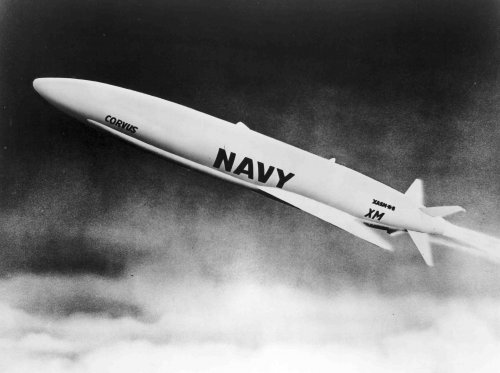
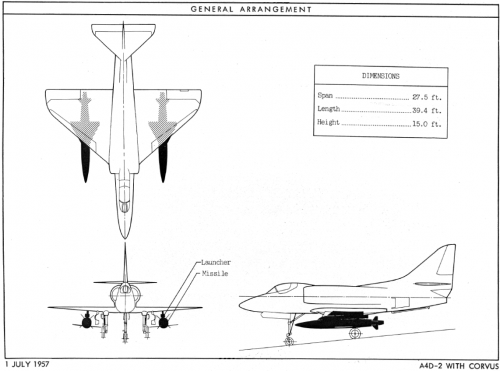
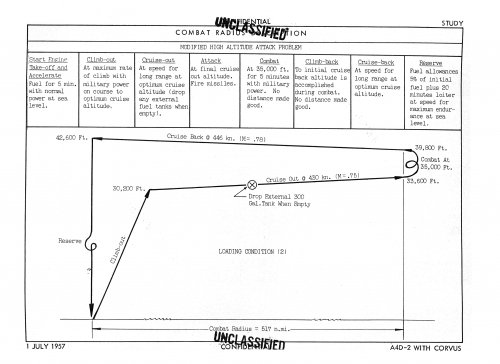
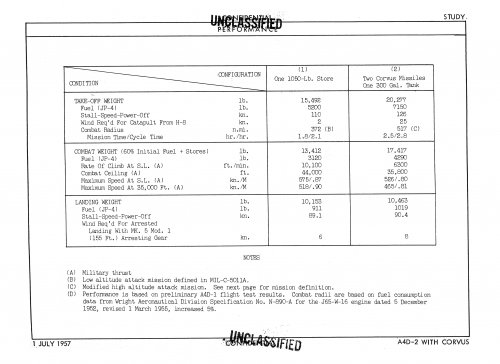
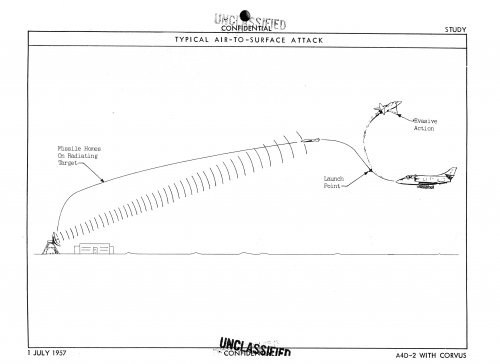
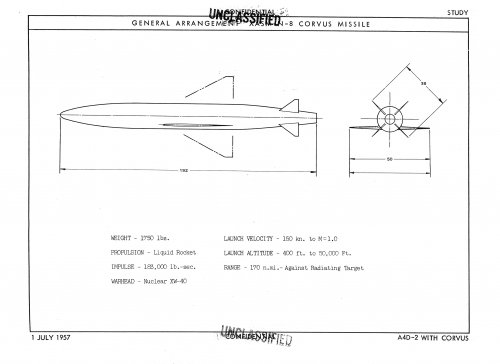
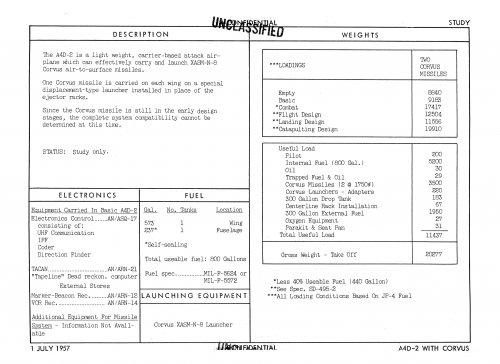
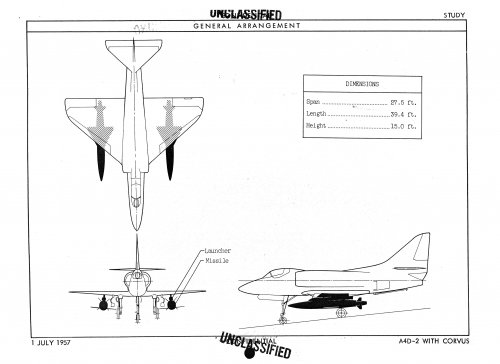
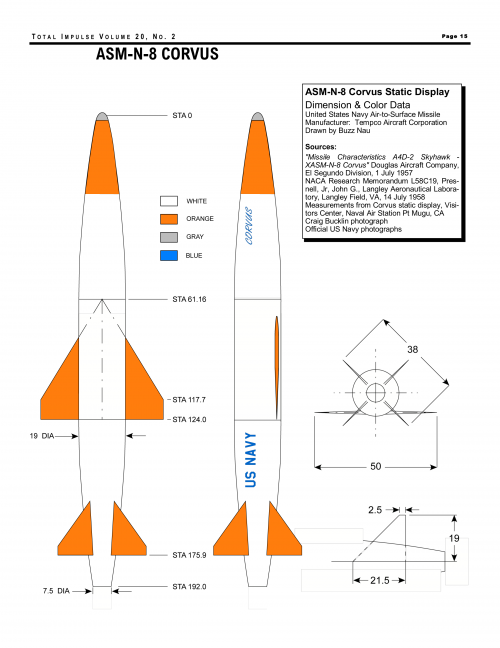
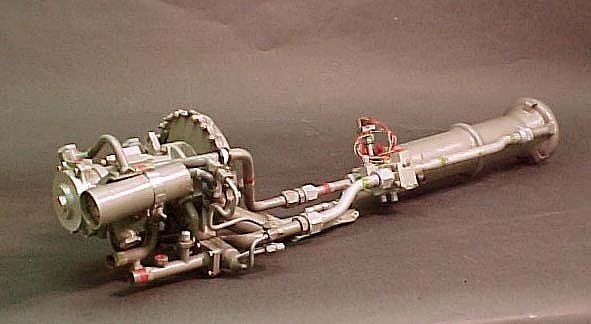
The ASM-N-8 Corvus was a US Navy project to develop an air-tosurface anti-radiation missile capable of destroying enemy radar installations from stand-off ranges. The contract was awarded inJanuary 1957 to Tempco Aircraft as the prime contractor for the entire weapon system including aircraft interfaces. The fuselage was an elliptical shape with a mid-body mounted delta wing and cruciform tail fins offset 45 degrees from the wing. It was 19” indiameter, 192” long, had a wingspan of 50”, and weighed 1750 lbs making it a rather large missile for tactical aircraft at the time. Aircraft delivery platforms included the A4D Skyhawk, F4H PhantomII, and A3J Vigilante. Its power plant was a Reaction Motors Division of Thiokol, XLR-48 hypergolic fuel rocket engine producing 4.6kN of thrust enabling a speed in excess of Mach 3. This was a pre-packaged LPRE that used nitric acid and a mixed amine propellant that also fueled a small turbopump and gas generator. The planned W40 fusion-boosted fission nuclear warhead had a 10ktyield and weighed 385 lbs. If launched from a high altitude theCorvus could reach targets to just under 200 miles and approximately 100 miles from a low altitude delivery.
The state-of-the-art radiation seeker outfitted in Corvus began development in 1953 from the Naval Ordnance Laboratory’s Bat II air-launched, threat radar guided bomb. The seeker would ultimately be developed further and produced by Texas Instruments.In addition to the seeker and RMI hypergolic motor, the Corvus also incorporated an inertial navigation system to constrain the missile within a specific area to engage targets. Guidance options included a semi-active mode and data link allowing the launching aircraft to guide it towards radar sites or enemy ships until it could acquire radio emissions from the target on its own. Overall, it was an ambitious project for 1957, perhaps too ambitious and expensive.
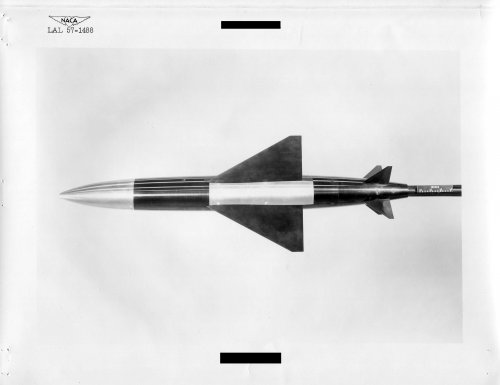
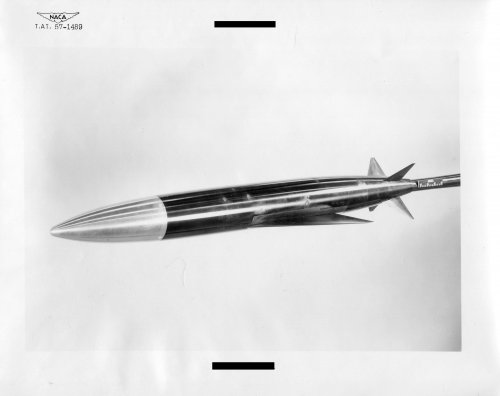
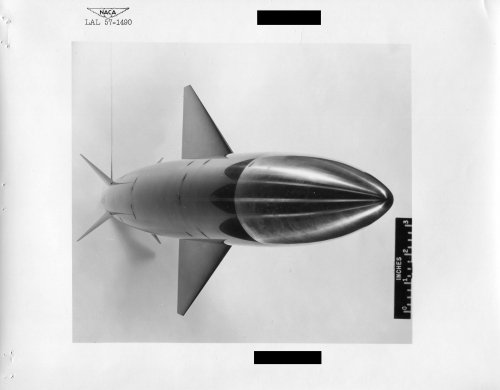
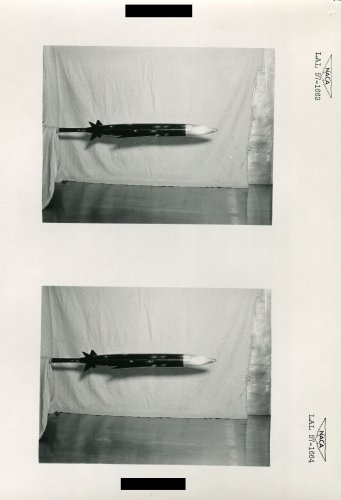
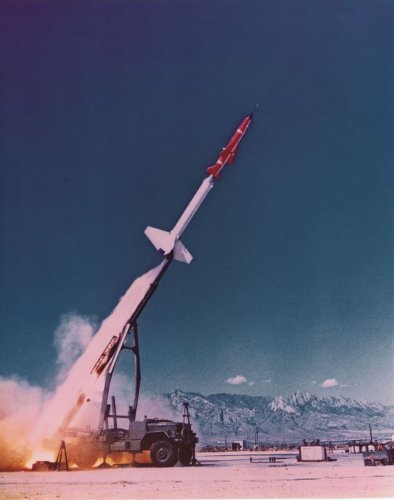
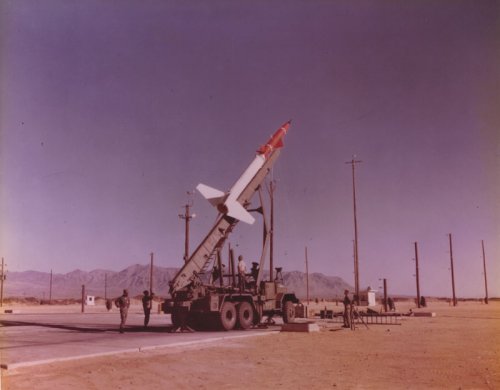
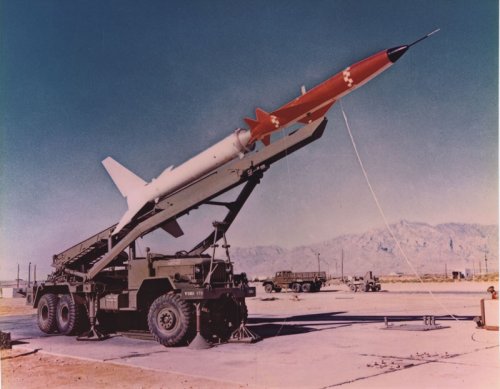
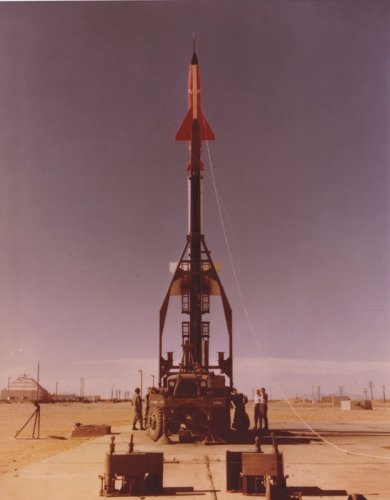
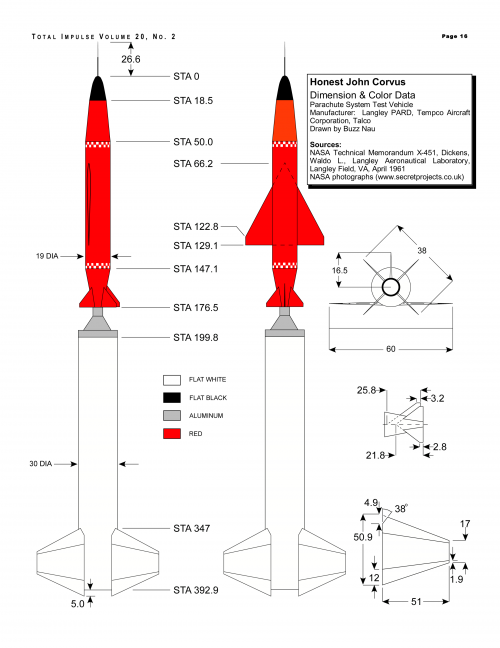
The majority of the Corvus testing occurred at NavalAir Station (NAS) Pt Mugu, CA, but an interesting investigation took place at the Wallops Island FlightTest Range prior to the first Corvus test flight. Because Corvus was so expensive, a parachute recovery system was sought allowing the reuse of test rounds. A sub-contractor, Talco, was tasked with development of a system that could achieve a 3 out of 4 flight success rate up to Mach 1.7 for the Navy to consider the recovery system. Working with Temco and Wallop Island’s Pilotless Aircraft Research Division(PARD), Talco conceived that a design with a nearly full scale Corvus model launched atop an Honest John booster could meet the objectives. The Corvus models were rudimentary using conical sections instead of the actual missile’s curved lines. It was 15.5”shorter, had a larger wingspan of 60”, and an additional tail fin to assist boost stability. Eight flights in total were made between 6 November 1958 and 22October 1959, five at Wallops and three at the WhiteSands Missile Range. The first five flights were all failures for various reason, but the three at White Sandswere for the most part successful. The project was halted after the eighth flight as more refinement and development was needed, but the experience was useful in future project including the Mercury Little Joe.
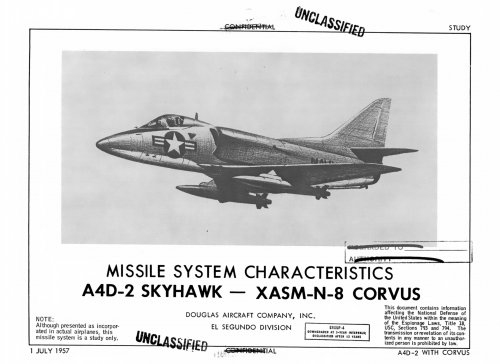
The first Corvus test flight occurred on 18 July 1959 from an A4D Skyhawk at the Pt Mugu Pacific Missile Range (PMR). The Corvus test program involved atotal of 20 launches up to March 1960. Among thosewas a successful engagement against a radar site ata range of 165 miles. Despite that success the system was costly, and the Navy was not keen on storing hypergolic fueled missiles aboard ships. The program was cancelled in July of 1960 in order to “permit increased emphasis upon other weapons systems offering a wider scope of employment.” Also, at the same time, the Navy had several other expensive and single purpose systems competing for limited funding including the Missileer/Eagle long range air-to-air platform and Typhon surface-to-air missile system. By November 1963, all three would be cancelled.
Development of the anti-radiation seeker by Texas Instruments would see life in the AGM-45 Shrike, thefirst anti-radiation missile (ARM) to enter service and be deployed in combat. The legacy of Shrike would continue later on with the AGM-88 HARM, considered to be the most lethal anti-radiation missile and is still in service today.
- References:"Missile Characteristics A4D-2 Skyhawk - XASM-N-8Corvus", Douglas Aircraft Company, El Segundo Division, 1 July 1957
- NACA Research Memorandum L58C19, Presnell, Jr,John G., Langley Aeronautical Laboratory, LangleyField, VA, 14 July 1958
- NASA Technical Memorandum X-451, Dickens, Waldo L., Langley Aeronautical Laboratory, Langley Field,VA, April 1961
- The Station Comes of Age: History of the Navy at China Lake Volume 4, CA, Lawson, Cliff, Naval Air Warfare Center Weapons Division, Chine Lake, CA, 2017,pg 182-183
- A New Dimension, Wallops Island Flight Test Range:The First Fifteen Years, Shortal, Joseph Adams, Wallops Flight Center, Wallops, VA, December 1978, pg199, 561-563
- Evolution of Navy Air-to-Surface Guided Weapons,Lunch, Frederick H., AIAA 41st Aerospace ScienceMeeting and Exhibit, 6-9 January 2003, pg 5
- United States Naval Aviation 1910-1995, Grossnick,Roy A., Naval Historical Center, Department of theNavy, Washington DC, 1997, pg 238
- America’s First Rocket Company: Reaction Motors,Inc., Winter, Frank H., AIAA, Reston, VA, 2017, pg161-162, 285
- History of Liquid Propellant Rocket Engines, Sutton,George P., AIAA, Reston, VA, 2006, pg 323-324
- Measurements from Corvus static display, VisitorsCenter, Naval Air Station Pt Mugu, CA
- Craig Bucklin photograph
- Official US Navy photographs
- NASA photographs (www.secretprojects.co.uk)