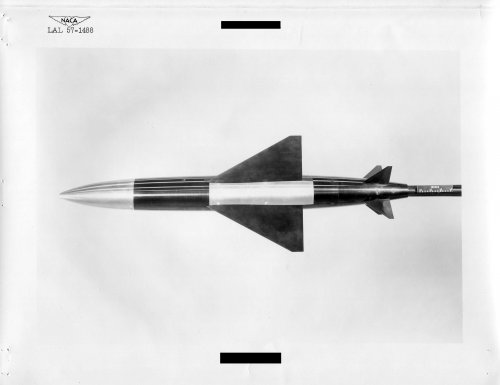
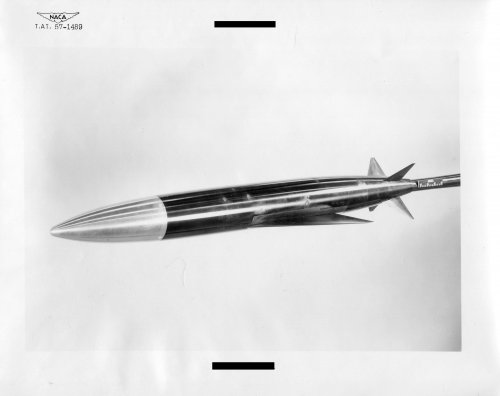
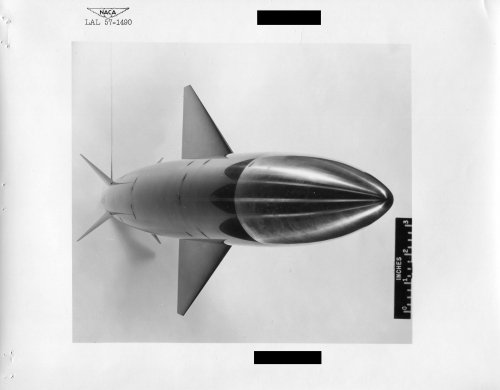
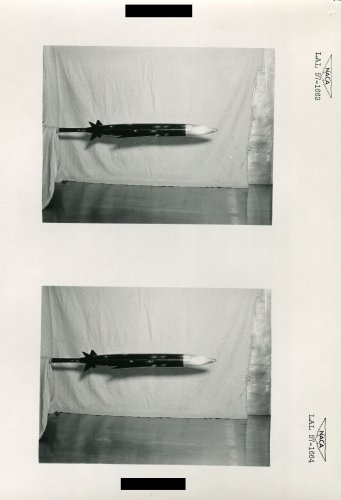
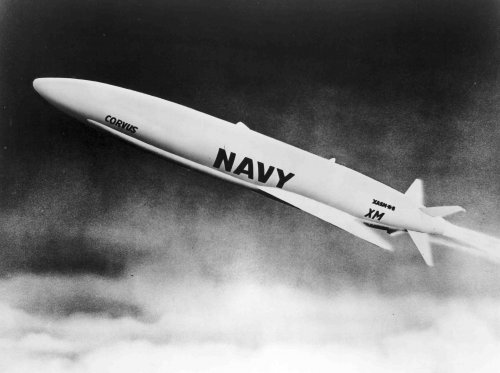
Temco ASM-N-8 Corvus

Stargazer

ACCESS: USAP
Top Contributor
Senior Member
Joined
25 June 2009
Messages
15,515
Reaction score
9,426
A missile project by Convair (apparently with Temco) which I have never heard before:

http://crgis.ndc.nasa.gov/historic/1251_Models_A-C#Project_31

Why the name "Fenice" associated to the project? I have no idea, but it sure sounds like a strange name for a missile.

[Edited to correct URL after NASA changes - this is actually the Corvus - Admin]
 

Attachments

  • LAL_57-1488.jpg
    LAL_57-1488.jpg
    277.3 KB · Views: 411
  • LAL_57-1489.jpg
    LAL_57-1489.jpg
    276.8 KB · Views: 372
  • LAL_57-1490.jpg
    LAL_57-1490.jpg
    316.5 KB · Views: 328
  • LAL_57-1663_and_LAL_57-1664.jpg
    LAL_57-1663_and_LAL_57-1664.jpg
    481.3 KB · Views: 315
Last edited by a moderator:
Could "Fenice" have been a mistranscription of "Phoenix"?? I know it's different from the Phoenix missile, but it could have been a competing design. Just a thought.
 
I believe it's a model of the Temco ASM-N-8 Corvus. In fact, I'm pretty sure of it:
http://www.designation-systems.net/dusrm/app1/asm-n-8.html
xasm-n-8.jpg
 
Tailspin Turtle said:
I figured you were good for connecting the dots between Fenice and Corvus...

Fenice is, I think, Italian for "Phoenix," while Corvus is Latin for "raven." Apart from that, I got nuthin'. Given the vaguaries of the NACA images and their naming and backup data, "Fenice" could jsut as easily have been the name of the primary investigator for these tests.
 
If one was to write "Corvus" in cursive (badly), I would imagine it likely that a later reader could guesstimate "Convair"...

On "Fenice" - I've got nut'in - unless you write "Temco" (again, sloppily in cursive) and squint really hard...

Looking at some of the Tunnel Log Book pages that are posted...this may not be too unlikely.
 
They really need to enable commenting, cos there's a whole bunch of errors we could help them fix :)
 
Ohmygod, NASA letting a BUNCH of internetters HELPING them correcting their mistakes ??? NASA doesn't do mistakes, only has different opinions of the reality.
 
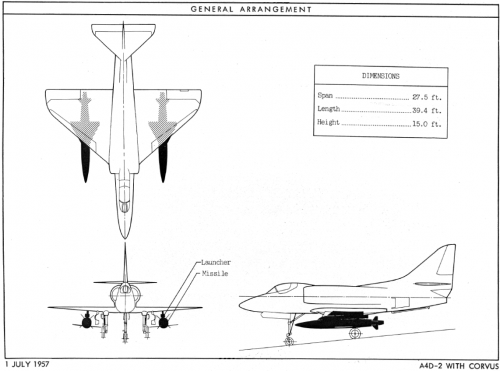
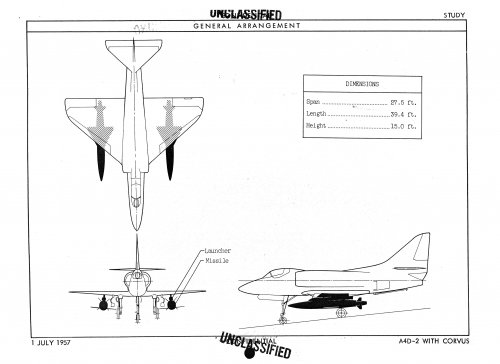
I've just come across this Corvus missile for the first time in one of my favourite books The Illustrated Encyclopaedia of the Worlds Rockets & Missiles by Bill Gunston! It states that it was intended to be the primary weapon of the Douglas A4D Skyhawk! So a little search on the web and I found the following ......

Regards
Pioneer
 

Attachments

  • 3-view drawing of Douglas A4D-2 Skyhawk with two of the cancelled Temco ASM-N-8 Corvus ASM's.PNG
    3-view drawing of Douglas A4D-2 Skyhawk with two of the cancelled Temco ASM-N-8 Corvus ASM's.PNG
    155.3 KB · Views: 311
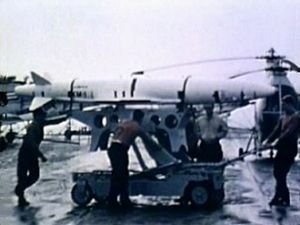
  • Preparations for test launch of Temco ASM-N-8 Corvus ASM at China Lake in 1958.jpg
    Preparations for test launch of Temco ASM-N-8 Corvus ASM at China Lake in 1958.jpg
    13.4 KB · Views: 320
Last edited:
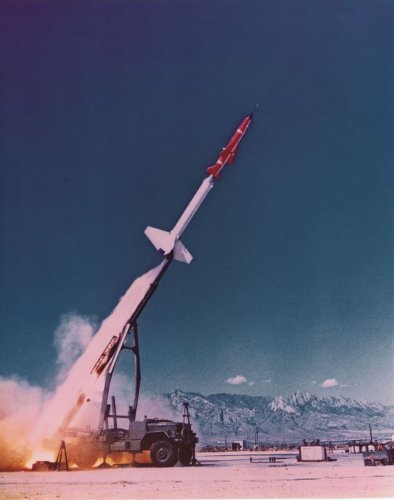
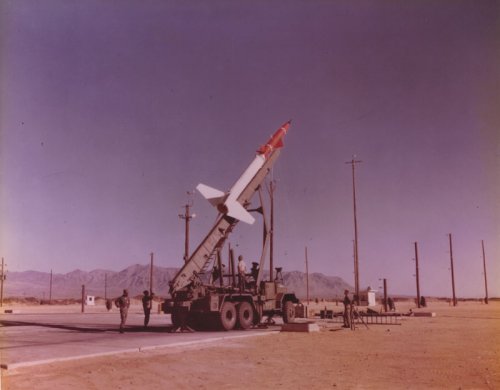
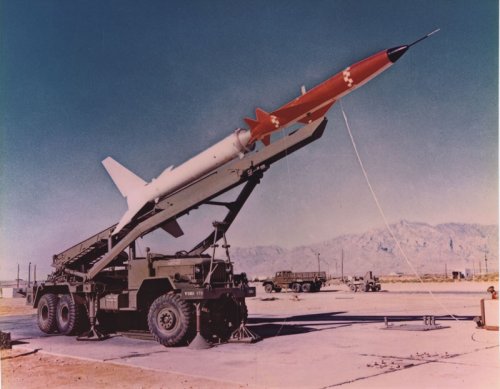
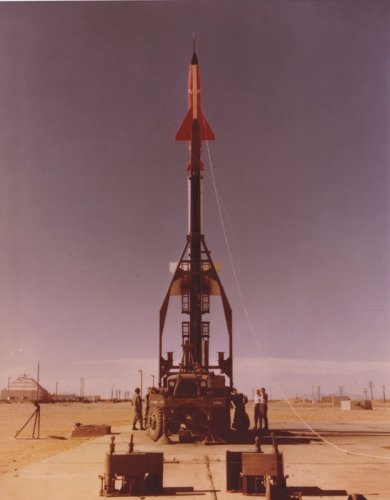
Here are some color shifted and airbrushed images of a Corvus launch at White Sands Missile Range.
VAHF archive


bill
 

Attachments

  • Corvus-Launch-WSMR-VAHF-4.jpg
    Corvus-Launch-WSMR-VAHF-4.jpg
    59 KB · Views: 118
  • Corvus-Launch-WSMR-VAHF-3.jpg
    Corvus-Launch-WSMR-VAHF-3.jpg
    50.9 KB · Views: 107
  • Corvus-Launch-WSMR-VAHF-2.jpg
    Corvus-Launch-WSMR-VAHF-2.jpg
    84.2 KB · Views: 104
  • Corvus-Launch-WSMR-VAHF-1.jpg
    Corvus-Launch-WSMR-VAHF-1.jpg
    47.4 KB · Views: 122

Attachments

  • Corvus-7.jpg
    Corvus-7.jpg
    876.4 KB · Views: 144
  • Corvus-6.jpg
    Corvus-6.jpg
    710.2 KB · Views: 154
  • Corvus-5.jpg
    Corvus-5.jpg
    361.3 KB · Views: 162
  • Corvus-4.jpg
    Corvus-4.jpg
    401.9 KB · Views: 156
  • Corvus-3.jpg
    Corvus-3.jpg
    835.2 KB · Views: 162
  • Corvus-2.jpg
    Corvus-2.jpg
    643.3 KB · Views: 159
  • Corvus-1.jpg
    Corvus-1.jpg
    706.7 KB · Views: 167
In Vought Aeronautics report AER-E1R-TIA-2 26OCT61
It discusses a Target Identification and Acquisition (TIA) subsystem for the B-70.


The system "is basically a passive Electronic Intelligence (ELINT) device having
inherent capabilities for rapid display of information on multiple types and patterns
of communication and radar emitters."


Towards the end of the report is shows a CORVUS Azimuth display, CORVUS RF/PRF-
Tuning panel, and an CORVUS armament panel. In the notes it states that a B-52
installation could have an additional CORVUS Armament panel.


bill
 
Seems quite a shame this missile system was cancelled: It seemed a great idea and I think it could have been a good benefit to the USAF honestly as well as the USN. While it didn't quite have the range of the WS-121, it was smaller and lighter, more aircraft could carry it, and larger aircraft could carry more of them (apparently this wasn't something lost on its designers, as @Bill S pointed out).

The hypergolic propellant left a lot to be desired: While the USAF seemed less concerned about this (they developed the Titan II which used UDMH and N2O4). While the propellant was pre-packaged, which avoided the hazards of fueling it up aboard ship: If it sprung a leak, you'd have everything from gassing a bunch of sailors to triggering a rather respectable explosion (it wouldn't be as bad as the Damascus disaster -- not as much propellant, but it'd be impressive).
 
Last edited:
The hypergolic propellant left a lot to be desired: While the USAF seemed less concerned about this (they developed the Titan II which used UDMH and N2O4). While the propellant was pre-packaged, which avoided the hazards of fueling it up aboard ship: If it sprung a leak, you'd have everything from gassing a bunch of sailors to triggering a rather respectable explosion (it wouldn't be as bad as the Damascus disaster -- not as much propellant, but it'd be impressive).
The USN's default is that anything with fluids in it WILL leak.
 
Didn't the USN use the liquid fuel sparrows for a minute?

No, that was the USAF, it deployed the AIM-7D (Initially called the AIM-101A) on the F-110A Spectre (Which was quickly reclassified as the F-4C Phantom II under McNamara's new tri services designation system).
 
No, that was the USAF, it deployed the AIM-7D (Initially called the AIM-101A) on the F-110A Spectre (Which was quickly reclassified as the F-4C Phantom II under McNamara's new tri services designation system).
I think I confused it for the liquid fuel bullpup which I think the navy used?
 
It's not exactly a ban on liquid fuels.

Tomahawks, for example, run on some flavor of jet fuel (JP10?). Some of that spills and the only thing that happens is your boot treads get a little melted.

But it's a hard ban on hypergolics.
 
The USN's default is that anything with fluids in it WILL leak.
Generally true...
It's not exactly a ban on liquid fuels. . . . But it's a hard ban on hypergolics.
I'm not sure I can really hold that one against them...

No, that was the USAF, it deployed the AIM-7D
Actually, if I recall, the missile was called the AAM-N-6a with the USN. I don't exactly know when the developent was signed off on, but designation-systems listed it as starting production in 1959.

I'm not exactly sure what propellant was used on the AAM-N-6a/AIM-7D, admittedly...

BTW: Thanks @CTimm, that was awesome.

Edit: 03/13/2026
 
Last edited:
I'm not exactly sure what propellant was used on the AAM-N-6a/AIM-7D, admittedly...

The AIM-7D was unique in that it used a prepackaged storable hypgergolic liquid-propellant LR44-RM-2 made by Thiokol (A larger variant was used to propel the AGM-12 Bulldog ASM).
 
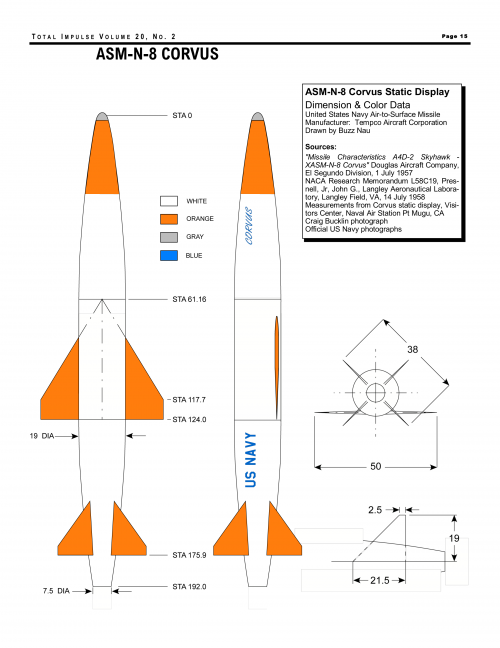
Excellent article by Buzz Nau. Original source: https://cv41.org/newsletters/V20I2.pdf. Text extracted below:

ASM-N-8 CORVUS

The 1950’s was a decade of rapidly changing technologies andthreats throughout the super-power militaries. In addition to advances in traditional weapons such as aircraft, ships, and submarines, new weapons were becoming prevalent. Missiles were just as popular as nuclear weapons in providing solutions to tactical as well as strategic challenges. In many cases, a combination of the two were employed. Smaller tactical nuclear warheads made itpossible to arm battlefield weapons with earth-searing destruction .More and more missiles found themselves armed with these versatile warheads including the surface-to-air Nike Hercules andTalos, the air-to-air Genie, and Lacross and Honest John for close support of battlefield troops.

In the early 1950’s the USAF had a developmental project to produce an anti-radiation missile. The GAM-67 Crossbow was to be carried on the B-50 Superfortress and B-47 Stratojet bombers asthe first missile designed to destroy radars sites. The US Navy felt the need for an anti-radiation missile as well to defeat the Soviet early warning radar and surface-to-air missile threat against strike packages. Removing these assets would allow strike formations some anonymity and safety from ground-to-air threats. The air-to-air threat still existed, but that was a well-known risk and countered by escorting fighters. Specialized SEAD (Suppression of Enemy Air Defenses) aircraft didn’t exist at the time and wouldn’tbe developed until the Vietnam War.

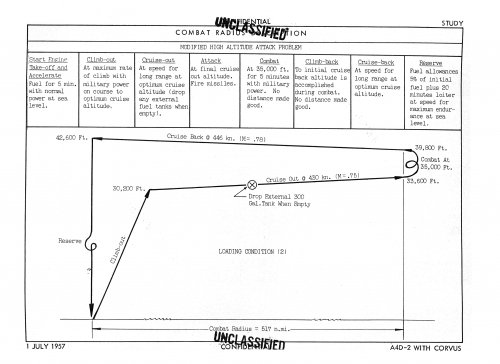
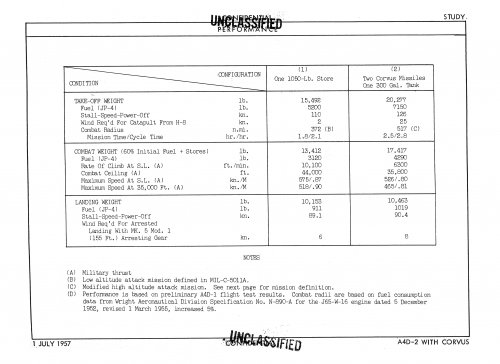
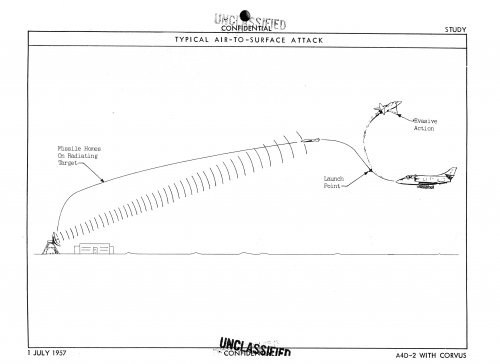
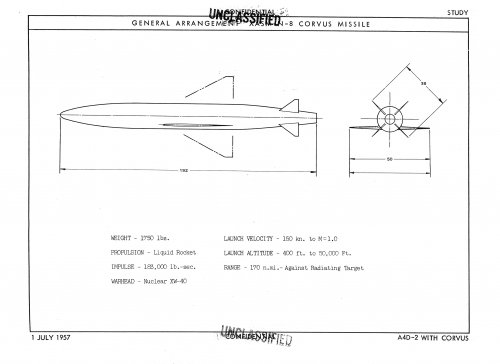
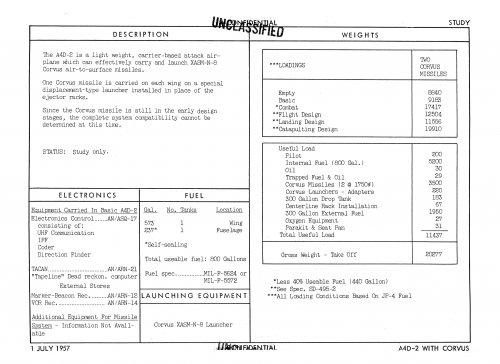
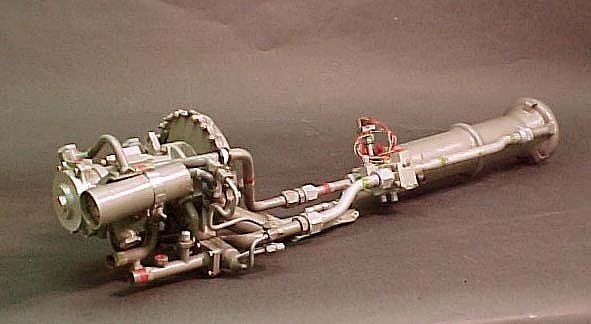
The ASM-N-8 Corvus was a US Navy project to develop an air-tosurface anti-radiation missile capable of destroying enemy radar installations from stand-off ranges. The contract was awarded inJanuary 1957 to Tempco Aircraft as the prime contractor for the entire weapon system including aircraft interfaces. The fuselage was an elliptical shape with a mid-body mounted delta wing and cruciform tail fins offset 45 degrees from the wing. It was 19” indiameter, 192” long, had a wingspan of 50”, and weighed 1750 lbs making it a rather large missile for tactical aircraft at the time. Aircraft delivery platforms included the A4D Skyhawk, F4H PhantomII, and A3J Vigilante. Its power plant was a Reaction Motors Division of Thiokol, XLR-48 hypergolic fuel rocket engine producing 4.6kN of thrust enabling a speed in excess of Mach 3. This was a pre-packaged LPRE that used nitric acid and a mixed amine propellant that also fueled a small turbopump and gas generator. The planned W40 fusion-boosted fission nuclear warhead had a 10ktyield and weighed 385 lbs. If launched from a high altitude theCorvus could reach targets to just under 200 miles and approximately 100 miles from a low altitude delivery.

The state-of-the-art radiation seeker outfitted in Corvus began development in 1953 from the Naval Ordnance Laboratory’s Bat II air-launched, threat radar guided bomb. The seeker would ultimately be developed further and produced by Texas Instruments.In addition to the seeker and RMI hypergolic motor, the Corvus also incorporated an inertial navigation system to constrain the missile within a specific area to engage targets. Guidance options included a semi-active mode and data link allowing the launching aircraft to guide it towards radar sites or enemy ships until it could acquire radio emissions from the target on its own. Overall, it was an ambitious project for 1957, perhaps too ambitious and expensive.

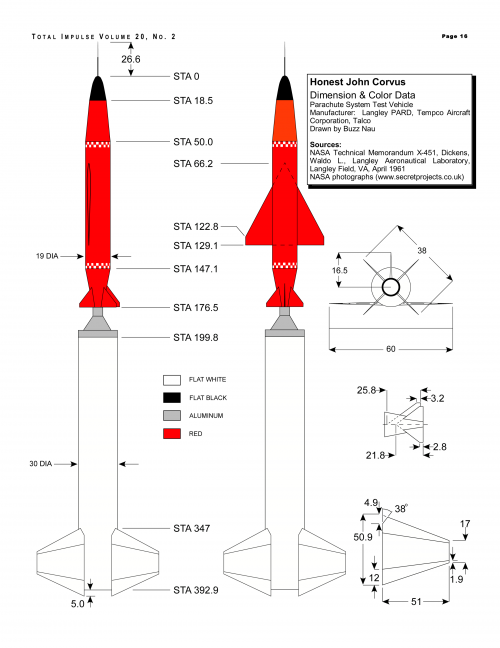
The majority of the Corvus testing occurred at NavalAir Station (NAS) Pt Mugu, CA, but an interesting investigation took place at the Wallops Island FlightTest Range prior to the first Corvus test flight. Because Corvus was so expensive, a parachute recovery system was sought allowing the reuse of test rounds. A sub-contractor, Talco, was tasked with development of a system that could achieve a 3 out of 4 flight success rate up to Mach 1.7 for the Navy to consider the recovery system. Working with Temco and Wallop Island’s Pilotless Aircraft Research Division(PARD), Talco conceived that a design with a nearly full scale Corvus model launched atop an Honest John booster could meet the objectives. The Corvus models were rudimentary using conical sections instead of the actual missile’s curved lines. It was 15.5”shorter, had a larger wingspan of 60”, and an additional tail fin to assist boost stability. Eight flights in total were made between 6 November 1958 and 22October 1959, five at Wallops and three at the WhiteSands Missile Range. The first five flights were all failures for various reason, but the three at White Sandswere for the most part successful. The project was halted after the eighth flight as more refinement and development was needed, but the experience was useful in future project including the Mercury Little Joe.

The first Corvus test flight occurred on 18 July 1959 from an A4D Skyhawk at the Pt Mugu Pacific Missile Range (PMR). The Corvus test program involved atotal of 20 launches up to March 1960. Among thosewas a successful engagement against a radar site ata range of 165 miles. Despite that success the system was costly, and the Navy was not keen on storing hypergolic fueled missiles aboard ships. The program was cancelled in July of 1960 in order to “permit increased emphasis upon other weapons systems offering a wider scope of employment.” Also, at the same time, the Navy had several other expensive and single purpose systems competing for limited funding including the Missileer/Eagle long range air-to-air platform and Typhon surface-to-air missile system. By November 1963, all three would be cancelled.

Development of the anti-radiation seeker by Texas Instruments would see life in the AGM-45 Shrike, thefirst anti-radiation missile (ARM) to enter service and be deployed in combat. The legacy of Shrike would continue later on with the AGM-88 HARM, considered to be the most lethal anti-radiation missile and is still in service today.

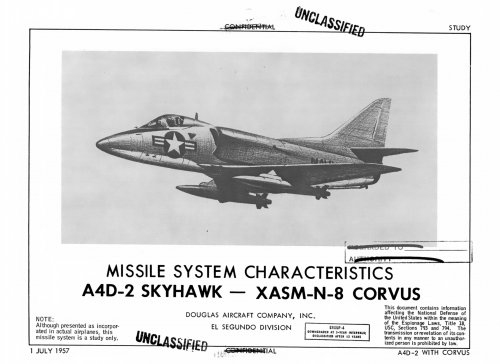
  • References:"Missile Characteristics A4D-2 Skyhawk - XASM-N-8Corvus", Douglas Aircraft Company, El Segundo Division, 1 July 1957
  • NACA Research Memorandum L58C19, Presnell, Jr,John G., Langley Aeronautical Laboratory, LangleyField, VA, 14 July 1958
  • NASA Technical Memorandum X-451, Dickens, Waldo L., Langley Aeronautical Laboratory, Langley Field,VA, April 1961
  • The Station Comes of Age: History of the Navy at China Lake Volume 4, CA, Lawson, Cliff, Naval Air Warfare Center Weapons Division, Chine Lake, CA, 2017,pg 182-183
  • A New Dimension, Wallops Island Flight Test Range:The First Fifteen Years, Shortal, Joseph Adams, Wallops Flight Center, Wallops, VA, December 1978, pg199, 561-563
  • Evolution of Navy Air-to-Surface Guided Weapons,Lunch, Frederick H., AIAA 41st Aerospace ScienceMeeting and Exhibit, 6-9 January 2003, pg 5
  • United States Naval Aviation 1910-1995, Grossnick,Roy A., Naval Historical Center, Department of theNavy, Washington DC, 1997, pg 238
  • America’s First Rocket Company: Reaction Motors,Inc., Winter, Frank H., AIAA, Reston, VA, 2017, pg161-162, 285
  • History of Liquid Propellant Rocket Engines, Sutton,George P., AIAA, Reston, VA, 2006, pg 323-324
  • Measurements from Corvus static display, VisitorsCenter, Naval Air Station Pt Mugu, CA
  • Craig Bucklin photograph
  • Official US Navy photographs
  • NASA photographs (www.secretprojects.co.uk)

HonestJohnCorvus.png Corvus.png
 
A nuclear-tipped anti-radiation missile seems like overkill.
Makes sure that you take out the whole site even if the radar is offset from the SAMs/AAA.

The ASM-N-8 Corvus was a US Navy project to develop an air-tosurface anti-radiation missile capable of destroying enemy radar installations from stand-off ranges. The contract was awarded inJanuary 1957 to Tempco Aircraft as the prime contractor for the entire weapon system including aircraft interfaces. The fuselage was an elliptical shape with a mid-body mounted delta wing and cruciform tail fins offset 45 degrees from the wing. It was 19” indiameter, 192” long, had a wingspan of 50”, and weighed 1750 lbs making it a rather large missile for tactical aircraft at the time. Aircraft delivery platforms included the A4D Skyhawk, F4H PhantomII, and A3J Vigilante. Its power plant was a Reaction Motors Division of Thiokol, XLR-48 hypergolic fuel rocket engine producing 4.6kN of thrust enabling a speed in excess of Mach 3. This was a pre-packaged LPRE that used nitric acid and a mixed amine propellant that also fueled a small turbopump and gas generator. The planned W40 fusion-boosted fission nuclear warhead had a 10ktyield and weighed 385 lbs. If launched from a high altitude theCorvus could reach targets to just under 200 miles and approximately 100 miles from a low altitude delivery.
Ewwwwwwwww.....

Oh, hell no, do not want that on my ship!!!
 
Okay, that explains some things, but I'm honestly not totally sure how it was incompatible with their doctrines given
  • The missile could be equipped with either a conventional or nuclear warhead
  • The ranges would be reasonable for attacking ships from a decent distances
  • The ranges would also be good for interdiction missions that involved rolling-back enemy air defenses (even with the high-explosive warhead).
While I would imagine the Hound-Dog would be far more beneficial to the Corvus on the B-52 owing to it having a superior range and a bigger warhead: The missile would have numerous advantages on smaller aircraft such as...
  • B-47: While I'm not sure how much longer they intended to keep the aircraft operational past 1960: The missile would have certainly been better than the GAM-67 Crossbow. Whether the Longbow was better or not, I'm not sure. On one hand it was longer-ranged, may arguably have been more versatile, but it was slower and heavier.
  • B-66: The aircraft was essentially a heavily modified A3D (which was capable of carrying the Corvus), and the size of the Hound-Dog would have almost certainly precluded its use on this aircraft, and the size of the Longbow would likely have not been a good fit.
  • B-57: While I'm not sure how many B-57's were used for the nuclear strike role, but these missiles would allow the plane to operate higher up and thereby fly further. Normally, nuclear strike favored coming in low, but this was to escape increasingly stiffening air defenses, but when you have an anti-radiation missile, enemy radars actually become very effective targets and locking-up the plane would be suicidal.
 
The Soviets put the Kh-28 (AS-9 Kyle) which was of similar size to Corvus and also liquid fueled on quite a variety of aircraft, so I imagine in *theory* it could have been put on aircraft like the Phantom or F-105 as well if there was the desire.
 
The Soviets put the Kh-28 (AS-9 Kyle) which was of similar size to Corvus and also liquid fueled on quite a variety of aircraft, so I imagine in *theory* it could have been put on aircraft like the Phantom or F-105 as well if there was the desire.
The problem is usually the nasty oxidizers. Kh-28 used (edit) non-inhibited RFNA and needed to be fueled basically immediately before the plane launched.

The USN has a thing about aggressive oxidizers on ship, and especially about hypergolics on ship.
 
Last edited:

Similar threads

Back
Top Bottom