LMFS
ACCESS: Top Secret
- Joined
- 19 March 2019
- Messages
- 577
- Reaction score
- 1,020
You are talking about a 8 km range reduction decision from 2012...TBH, i tend believe to the historically consistent numbers, rather than this picture.

You are talking about a 8 km range reduction decision from 2012...TBH, i tend believe to the historically consistent numbers, rather than this picture.
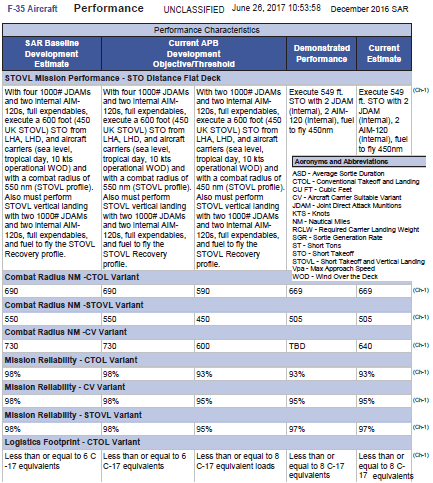
And...? Look my update in my previous post and the picture below. The figure of ~2200 km flight range is the common thing for all sources i saw since JSF requirements were released to the public for the first time. 2700+ km?! Excuse me my scepticism, but i don't buy it.You are talking about a 8 km range reduction decision from 2012...
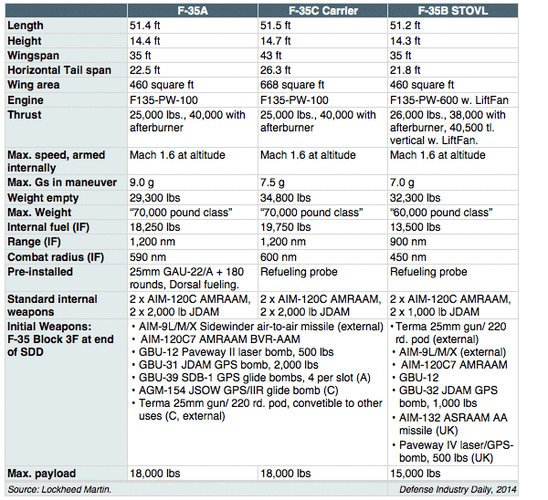
There are other official documents stating 670 nm for CTOL variant, it all depends on the load and flight profile. The figure of >750 nm on A2A is easy to find, there are many instances where this has been mentioned. The combat radius the services demand vary on the flight profile they are considering their reference, it is not like in Russia where a max range on internal fuel is take as the logical reference, a practice which I would agree more than the US one BTW.And...? Look my update in my previous post and the picture below. The figure of ~2200 km flight range is the common thing for all sources i saw since JSF requirements were released to the public for the first time.
The plane carries more than 8 t fuel, probably even more than the LTS2700+ km?! Excuse me my scepticism, but i don't buy it.
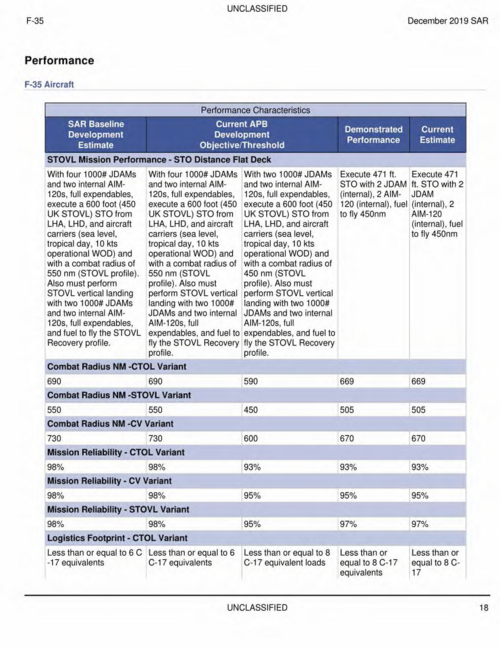
Ok, you're probably right and this 590nm figure was the lowerest requiremen/threshold. But even this 669nm figure gives 91nm shorter combat radius than those 760nm stated by IAF.There are other official documents stating 670 nm for CTOL variant, it all depends on the load and flight profile. The figure of >750 nm on A2A is easy to find, there are many instances where this has been mentioned. The combat radius the services demand vary on the flight profile they are considering their reference, it is not like in Russia where a max range on internal fuel is take as the logical reference, a practice which I would agree more than the US one BTW.
As well as it carries a monstrous F135 engine... Again, you delivered to me really new and interesting info i wasn't aware about, and thank you for this, seriously...but i still don't know what to believe...The plane carries more than 8 t fuel, probably even more than the LTS

They just publish what they're told by officials vs. what happens in the real world.TASS just publishes what they hear from the government or industry officials.
Maybe I can explain the confusion with range. When talking about combat radius majority of people usually understand this as a half of combat range when in fact is approximately one third of combat range.
590nm and 760 are are both technically correct, but 590 nautical miles is "real world" combat radius.


Actually it is that "radius" is 50% of "range" - at least in the US.Maybe I can explain the confusion with range. When talking about combat radius majority of people usually understand this as a half of combat range when in fact is approximately one third of combat range.
590nm and 760 are are both technically correct, but 590 nautical miles is "real world" combat radius.
Combat range is 50% of combat radius.
Combat radius is approx. one third of ferry range, as a general and rough rule of thumb for fighters. Note ferry range is unknown. The range given is combat radius x2 so it is combat range.
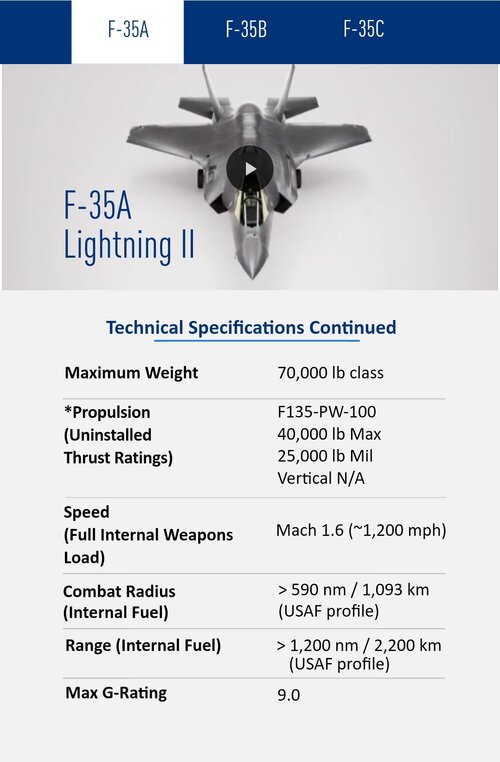
590 nm is combat radius @ USAF A/G profile, 760 nm is combat radius @ optimised A/A profile.

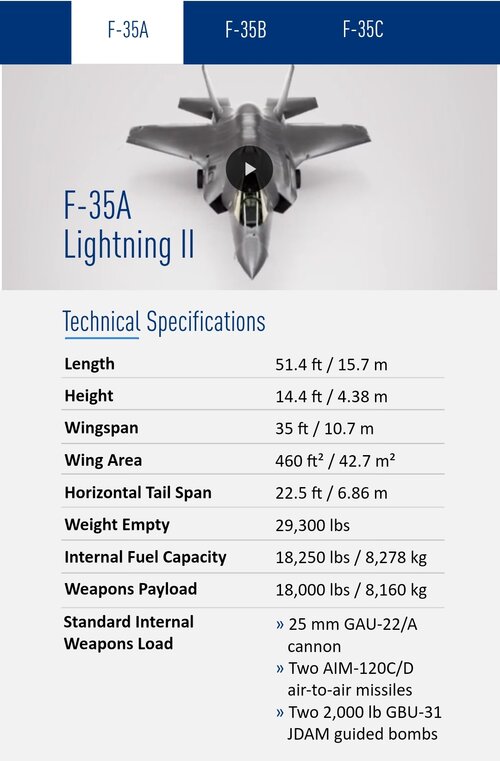
For comparison, the official numbers provided by the manufacturer:F-35A flight range - 2752 km
air-to-air range: 2752 km * 0.35 = 963 km
air-to-ground range: (2752 km - (2752 km * 0.05)) : 2 = 1307 km, where 0.05 or 5% is the aeronautical fuel reserve
When they "freeze" the range data, then we'll see. 2200 km has been outdated for several yearsFor comparison, the official numbers provided by the manufacturer:


FYI 590 nautical miles was the program threshold requirement; the actual demonstrated performance as per the DoD Selected Acquisition Reports since ~2017 or so is 669 nautical miles for A2G for the F-35A variant (and then 760nmi is an air-to-air profile advertised by Lockheed to Israel [only a few years ago, so very likely based on demonstrated performance]).Combat range is 50% of combat radius.Maybe I can explain the confusion with range. When talking about combat radius majority of people usually understand this as a half of combat range when in fact is approximately one third of combat range.
590nm and 760 are are both technically correct, but 590 nautical miles is "real world" combat radius.
Combat radius is approx. one third of ferry range, as a general and rough rule of thumb for fighters. Note ferry range is unknown. The range given is combat radius x2 so it is combat range.
590 nm is combat radius @ USAF A/G profile, 760 nm is combat radius @ optimised A/A profile.
For comparison, the official numbers provided by the manufacturer:F-35A flight range - 2752 km
air-to-air range: 2752 km * 0.35 = 963 km
air-to-ground range: (2752 km - (2752 km * 0.05)) : 2 = 1307 km, where 0.05 or 5% is the aeronautical fuel reserve
https://www.f35.com/f35/about.html
FYI 590 nautical miles was the program threshold requirement; the actual demonstrated performance as per the DoD Selected Acquisition Reports since ~2017 or so is 669 nautical miles for A2G for the F-35A variant (and then 760nmi is an air-to-air profile advertised by Lockheed to Israel [only a few years ago, so very likely based on demonstrated performance]).Combat range is 50% of combat radius.Maybe I can explain the confusion with range. When talking about combat radius majority of people usually understand this as a half of combat range when in fact is approximately one third of combat range.
590nm and 760 are are both technically correct, but 590 nautical miles is "real world" combat radius.
Combat radius is approx. one third of ferry range, as a general and rough rule of thumb for fighters. Note ferry range is unknown. The range given is combat radius x2 so it is combat range.
590 nm is combat radius @ USAF A/G profile, 760 nm is combat radius @ optimised A/A profile.
How so? The 669nmi figure is directly compared to the 590nmi threshold / 690nmi objective requirement of the USAF:I realise that. However, some requirements were loosened for the demonstrated radius iirc, so the 590 and 669 nm are not comparable 1:1.FYI 590 nautical miles was the program threshold requirement; the actual demonstrated performance as per the DoD Selected Acquisition Reports since ~2017 or so is 669 nautical miles for A2G for the F-35A variant (and then 760nmi is an air-to-air profile advertised by Lockheed to Israel [only a few years ago, so very likely based on demonstrated performance]).Combat range is 50% of combat radius.Maybe I can explain the confusion with range. When talking about combat radius majority of people usually understand this as a half of combat range when in fact is approximately one third of combat range.
590nm and 760 are are both technically correct, but 590 nautical miles is "real world" combat radius.
Combat radius is approx. one third of ferry range, as a general and rough rule of thumb for fighters. Note ferry range is unknown. The range given is combat radius x2 so it is combat range.
590 nm is combat radius @ USAF A/G profile, 760 nm is combat radius @ optimised A/A profile.
Safe to say tough combat radius is at least 590 nm (USAF profile) and combat range is at least 1200 nm (USAF profile).

Let us put that in context:I would think the smaller aircraft would make for a more potent airwing, albeit probably at shorter ranges. Easier deck handling and more airframes. But I think a navalized fighter is a relatively minor consideration for Russia.
Depends on how you set your design priorities.I would think the smaller aircraft would make for a more potent airwing, albeit probably at shorter ranges. Easier deck handling and more airframes. But I think a navalized fighter is a relatively minor consideration for Russia.
Plane strengthening would increase mass and kill range, just like it did with Su-33 vs baseline Su-27. SU-27P has 3900, Su-33 3000km range.bringing the topic back to the Su-75 range (too much posting on the F-35 here).
if its as good as its claimed to be..
I am wondering if the 75 could potentially be the better base for a carrier aircraft than the 57, especially since there's been some news media claiming a carrier version is under consideration. In the Su-57 thread theres some concern about whether there is enough space for a tailhook due to the tandem bays (I think there is), but with the 75 there should definitely be enough space.
while it may not have the same potential range as the 57, it could be sufficient enough?
as a smaller aircraft, it could be a better fit for the current and perhaps future carrier space
I think it was pretty clear in the news that VKS is not interested in Sukhoi LTS and that the only version they might get is the unmanned version. Pretty sure that it's the same situation with the Navy.
I wonder how much of a range increase a unmanned version would have (bigger internal fuel tanks, reduced drag...)?
I think it was pretty clear in the news that VKS is not interested in Sukhoi LTS and that the only version they might get is the unmanned version. Pretty sure that it's the same situation with the Navy.
I wonder how much of a range increase a unmanned version would have (bigger internal fuel tanks, reduced drag...)?
Where did you see these news?
All I saw was Borisov and the VKS going "we might very well be interested" which I translated as "Sure, we can take it if the circumstances are right" -----> meaning they are not shouldering development costs, and will take it if the Gov/Rostec incentivizes it enough.
Eeeeeeeeegh...nd new STOVL fighter.
Eeeeeeeeegh...nd new STOVL fighter.
Is there an English version of that?
Eeeegh uuuugh aaaaarghhh some work was already part of the ГПВ-2027.
https://www.google.com/amp/s/tass.ru/armiya-i-opk/5475420/amp
Is there an English version of that?
Eeeegh uuuugh aaaaarghhh some work was already part of the ГПВ-2027.
https://www.google.com/amp/s/tass.ru/armiya-i-opk/5475420/amp
For some reason, my phone is refusing to translate that from Russian into English...

Is there an English version of that?
Eeeegh uuuugh aaaaarghhh some work was already part of the ГПВ-2027.
https://www.google.com/amp/s/tass.ru/armiya-i-opk/5475420/amp
For some reason, my phone is refusing to translate that from Russian into English...
Yes:
https://www.google.com/amp/s/tass.com/defense/1018022/amp
Is there an English version of that?
Eeeegh uuuugh aaaaarghhh some work was already part of the ГПВ-2027.
https://www.google.com/amp/s/tass.ru/armiya-i-opk/5475420/amp
For some reason, my phone is refusing to translate that from Russian into English...
Yes:
https://www.google.com/amp/s/tass.com/defense/1018022/amp
So now it is official, Russia to begin to design a new vertical take of fighter.
Sure-sure. And YET it saw much less real work aside from vague conceptualization outside of any proper R&D, unlike, and has MUCH less place in current or furure structure of russian armed forces, unlike.Eeeeeeeeegh...nd new STOVL fighter.
Eeeegh uuuugh aaaaarghhh some work was already part of the ГПВ-2027.
https://www.google.com/amp/s/tass.ru/armiya-i-opk/5475420/amp
Sure-sure. And YET it saw much less real work aside from vague conceptualization outside of any proper R&D, unlike, and has MUCH less place in current or furure structure of russian armed forces, unlike.Eeeeeeeeegh...nd new STOVL fighter.
Eeeegh uuuugh aaaaarghhh some work was already part of the ГПВ-2027.
https://www.google.com/amp/s/tass.ru/armiya-i-opk/5475420/amp
No. This link contains the word "samolet" (aircraft), but not the word "istrebitel" (fighter).So now it is official, Russia to begin to design a new vertical take of fighter.

With respect the Su-57 clearly won’t be able to take off from runway lengths as short as the F-35B can, and definitely won’t be landing at any of comparable length.Does a VTOL fighter make any sense in general? My impression is. that the F35B is used in a STOVL configuration, if it is to have any meaningful combat load. With the focus on STOL performance (which as I've read the on the Su-57 is quite good, and will probably get better with the new engines), I think it will be able to take off of runways that are similar in length to the F35-B ones.