Grey Havoc
ACCESS: USAP
- Joined
- 9 October 2009
- Messages
- 24,421
- Reaction score
- 17,891
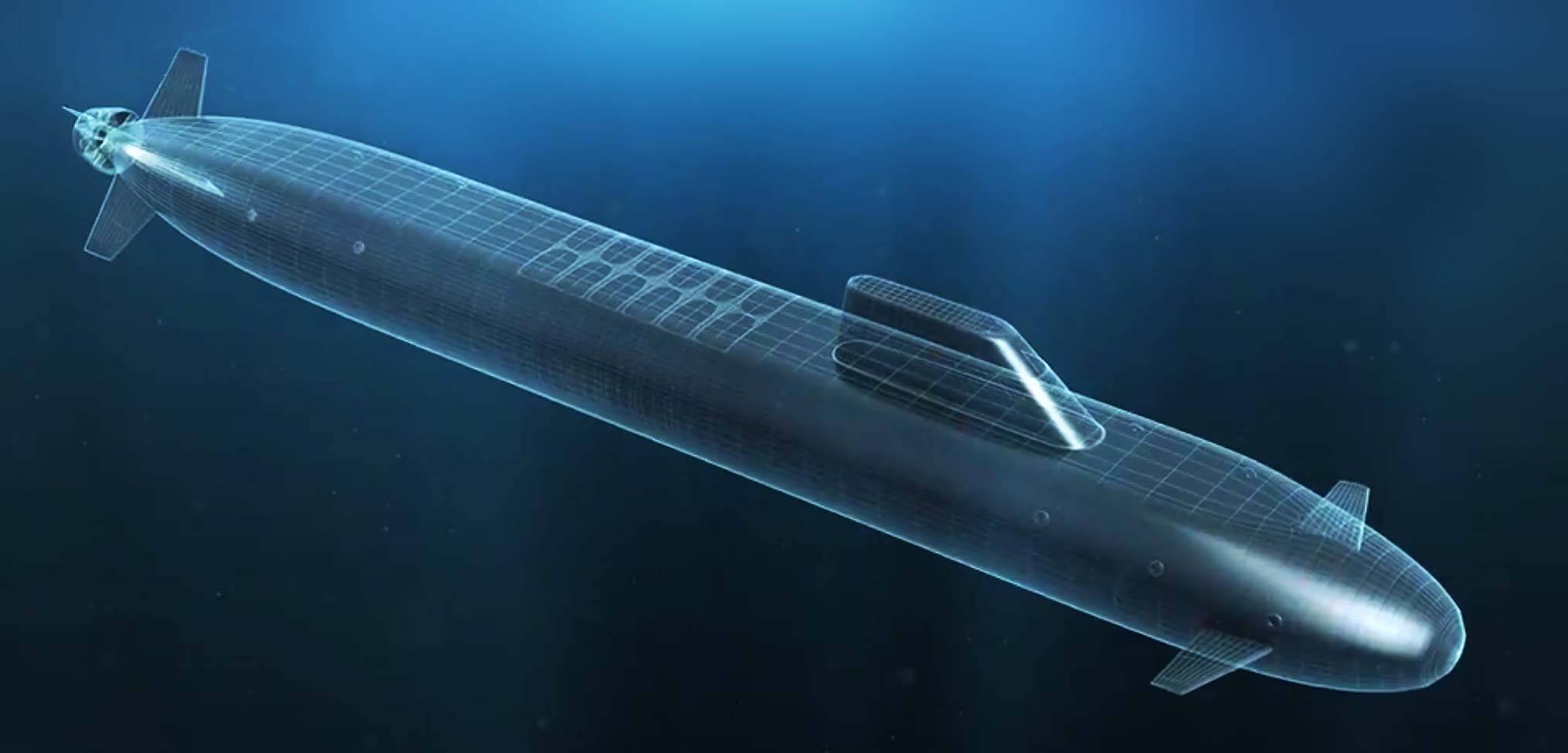
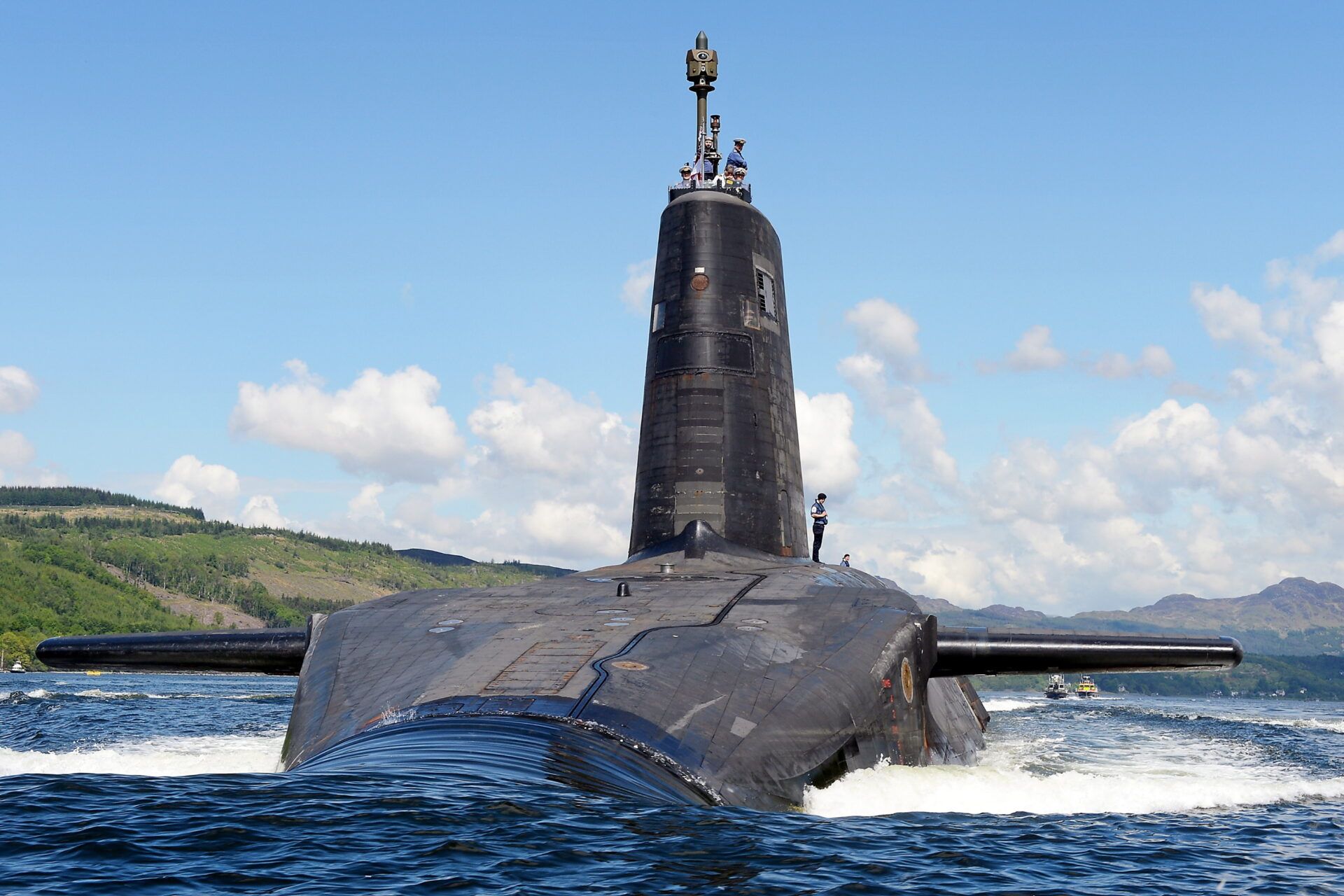
One problem that will have to be urgently addressed is that parts of the design are arguably rather badly out of date, only 12 SLBM tubes for example.


While four or five boats with sixteen tubes, fully bombed up, is an appealing thought - it's worth remembering that the current UK bombers sail with only eight missiles with less than half their maximum payload.One problem that will have to be urgently addressed is that parts of the design are arguably rather badly out of date, only 12 SLBM tubes for example.
Probably cheaper than scrambling to add another four tubes into a boat under construction. Finding the missiles and warheads to upload even a 4x12 fleet would probably pose challenges, though. The defence nuclear enterprise hasn't operated at that scale in a generation for missiles, and never for warheads.Solve problem with a 5th sub.
I thought that was pre February 2022- It’s certainly it’s been reported this has been revised, but what is the question.- it's worth remembering that the current UK bombers sail with only eight missiles with less than half their maximum payload.
Do they?it's worth remembering that the current UK bombers sail with only eight missiles with less than half their maximum payload.
While four or five boats with sixteen tubes, fully bombed up, is an appealing thought - it's worth remembering that the current UK bombers sail with only eight missiles with less than half their maximum payload.
Probably cheaper than scrambling to add another four tubes into a boat under construction. Finding the missiles and warheads to upload even a 4x12 fleet would probably pose challenges, though. The defence nuclear enterprise hasn't operated at that scale in a generation for missiles, and never for warheads.
 thebulletin.org
Can't refit a sub to have more tubes, that's something you need to do at the design step.One problem that will have to be urgently addressed is that parts of the design are arguably rather badly out of date, only 12 SLBM tubes for example.
Generally understood to be 40 warheads on 8 missiles - though how those are distributed isn't public knowledge, of course.Do they?
I thought one had a single RV....
Technically you can cut the hull and insert a plug with additional tubes. You shouldn't, especially if the line is still hot for additional boats. Plays havoc with ballast & trim calculations. But you could, if you really wanted to.Can't refit a sub to have more tubes, that's something you need to do at the design step.
Astrea/mk4 is the next generation.AIUI, the increase in permitted warheads is to allow manufacturing of new ones to replace HOLBROOK, not to increase the number deployment.

????Can't refit a sub to have more tubes, that's something you need to do at the design step.
Absolutely shreds your reserve buoyancy levels.Technically you can cut the hull and insert a plug with additional tubes. You shouldn't, especially if the line is still hot for additional boats. Plays havoc with ballast & trim calculations. But you could, if you really wanted to.
That can possibly work if the fast attack design has lots of reserve buoyancy and the missile compartment is neutrally buoyant. The question is then "neutrally buoyant at what waterline?"????
"George Washington was originally laid down as the attack submarine USS Scorpion (SSN-589). During construction, she was lengthened by the insertion of a 130 ft (40 m)-long ballistic missile section and renamed George Washington; another submarine under construction at the time received the original name and hull number." Wikipedia

Wikipedia is not quite wrong, but a bit misleading. When the original Scorpion was re-ordered as an SSBN, she was essentially just a pile of steel. I'm not sure any hull cylinders were welded up when the re-ordering decision was made. So the cutting was done on paper instead of literally at the shipyard. It probably would have been possible to take a completed SSN and convert her into an SSBN, but that would have been much harder.????
"George Washington was originally laid down as the attack submarine USS Scorpion (SSN-589). During construction, she was lengthened by the insertion of a 130 ft (40 m)-long ballistic missile section and renamed George Washington; another submarine under construction at the time received the original name and hull number." Wikipedia
One more reason in the 'don't do this' list. But there are ways to add ballast tanks, if you're really insistent it's a thing you want to do for some reason.Absolutely shreds your reserve buoyancy levels.
Combined response:Which tradeoff (or mix) was selected for the GW class, and how did that work out operationally?
Looks like the answer for the "emergency" SSBNs was "Missile Compartment neutrally buoyant at surface, add bigass ballast tanks."The addition of the missile compartment ended up requiring large internal main ballast tanks to be added to the Skipjack design. It worked out in the end but the solution was not really optimal.
As I understand it, the keel had been laid and needed to be cut to install the missile compartment.Wikipedia is not quite wrong, but a bit misleading. When the original Scorpion was re-ordered as an SSBN, she was essentially just a pile of steel. I'm not sure any hull cylinders were welded up when the re-ordering decision was made. So the cutting was done on paper instead of literally at the shipyard. It probably would have been possible to take a completed SSN and convert her into an SSBN, but that would have been much harder.
You're misunderstanding. The quads get put into a hull cylinder and then the cylinder is welded into a complete missile compartment. The whole thing including the hovering and missile compensation tanks on the ends are part of the missile compartment.The Dreadnought & Columbia SSBN classes do not have a single missile compartment.
Which is going to be difficult, since the Dreadnought already has a partial double hull for smaller ends. Hard to add more/larger ballast tanks.The common missile compartments for the Dreadnought and Columbia classes are designed in 4 tube units. 3 units in a Dreadnought and 4 in a Columbia. So, in theory just add another unit.
[...]
So that leaves the question of buoyancy to be resolved.
At least 16, probably more like 32.Also resolves that the missile tubes seem to be being built in the UK. So how many have shipped to the US?
Just like they make extra missiles for spares and testing, it's probably the same with tubes.75 missile tube assemblies contracted, but Dreadnought class only need 48....so 27 excess. Presumably for USN.
However it's not certain that of the then contract, how many would be needed for Dreadnoughts or how many more might be contracted in future for the USN.
All depends on schedules.
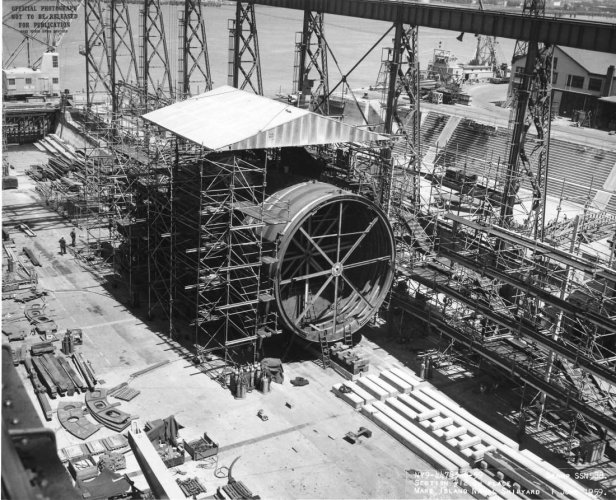
Like I said, she was basically just a pile of steel when the decision to reorder happened. The term "keel-laying" for modern submarines is essentially ceremonial in that there is no actual keel to speak of. The original Scorpion was laid down on 1 November 1957 and she was reordered as an SSGN(FBM) on 31 December 1957. To give you an idea of the pace of construction, this is a photo of the Scamp about six months after she was laid down:As I understand it, the keel had been laid and needed to be cut to install the missile compartment.
That is a major part of the problem, yes.Can't refit a sub to have more tubes, that's something you need to do at the design step.
On the other hand, strategic Arms Control considerations are pretty much on the road to extinction.The shorter, single file tubes in the modified Virginia class minimize any potential arms control or proliferation controversy. Exporting a dual use SSBN/SSGN is a potential proliferation issue. Keep in mind that the Virginia class tubes are the correct diameter but are too short for Trident. Arms control seems dormant at the moment but is bound to resurface before the AUKUS class hits the water. Basically, all of the nuclear powers are facing debt crisies of varying severity, hence the inevitable return of nuclear arms control.
Agreed. Any new strategic arms control treaty would have to be trilateral at a minimum, and I don't see China agreeing to any such limitations.On the other hand, strategic Arms Control considerations are pretty much on the road to extinction.

 www.telegraph.co.uk
‘The very best of British engineering’ (but built with French steel)
The UK does not produce the materials needed for its latest generation of submarines
I'm not even certain that the US HY-whatever submarine steel is produced in the US. It's certainly QAed here, but it's a pretty exotic alloy.It's been that way for a while, including Astute.

That link is dead - Navsource has moved their site to a .net address instead of the old .org address.Like I said, she was basically just a pile of steel when the decision to reorder happened. The term "keel-laying" for modern submarines is essentially ceremonial in that there is no actual keel to speak of. The original Scorpion was laid down on 1 November 1957 and she was reordered as an SSGN(FBM) on 31 December 1957. To give you an idea of the pace of construction, this is a photo of the Scamp about six months after she was laid down:
Unless a hull cylinder was already constructed between frames 37 and 42, there will have been no cutting.

Turbo-electric drive: Electric motor drives the screw directly, no reduction gears on the shaft.I've heard the words 'turbo-electric drive' and 'shaftless drive' thrown around in relation to both the Columbia-class SSBNs and these Dreadnought-class SSBNs - what is this, why is it useful, and will it be equipped to these boats?