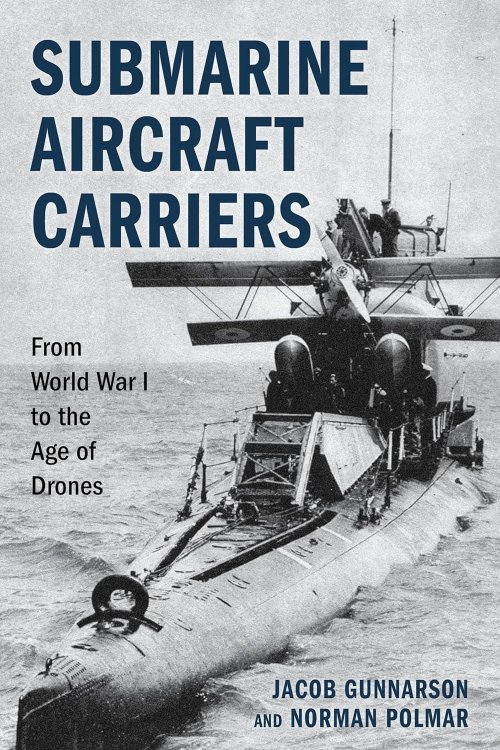
Submarine Aircraft Carriers: From World War I to the Age of Drones by Jacob Gunnarson and Norman Polmar

Vepr157

I like submarines
Joined
20 December 2015
Messages
134
Reaction score
347
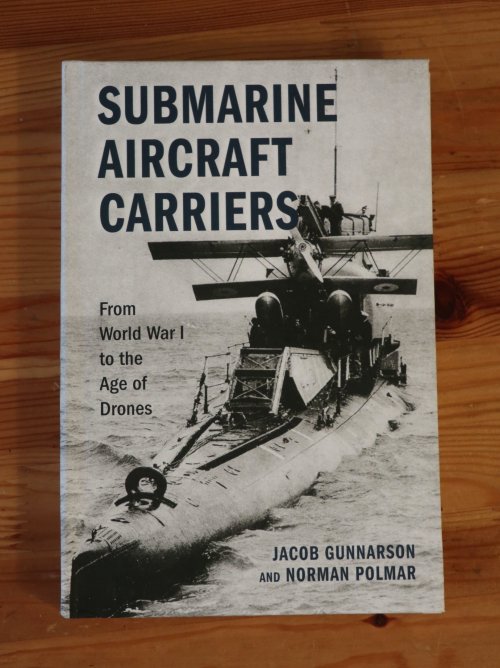
Hi all, I have spent the last nine years writing a comprehensive history of aircraft-carrying submarines with Norman Polmar. I think this book may be of interest to members of this forum given that the submarines and aircraft detailed in it are mostly highly obscure. Indeed I had help finding sources from a few kind members of this forum, namely @Orionblamblam and @CJGibson. The book also covers many unbuilt designs (see below). The book covers all aircraft-carrying submarines built and all the instances we have been able to find of proposed designs for such craft.

If the subject interests you, you can pre-order the book, which will be published on 16 December of this year (note that the description has a few errors which will be updated):


Here is the table of contents to give an idea of what is covered in the book:
  1. Early Efforts (WWI German and British aircraft-carrying submarines)
  2. Between the Wars - United States (U.S. Navy efforts, including submersible battle cruisers and trials on the USS S-1)
  3. Between the Wars - Europe (The British M-2, French Surcouf, Italian Ettore Fieramosca, and Soviet and Polish projects)
  4. Europe at War (The Surcouf's service and loss during WWI; German efforts to develop submarine-launched helicopters and autogyros)
  5. Japan Prepares for War (Development of Japanese submarine aircraft carriers from 1922-1941)
  6. War in the Pacific - Part 1 (Scouting missions of Japanese aircraft submarines during 1941-1942)
  7. War in the Pacific - Part 2 (Bombing of Oregon; reconnaissance flights during 1943-1944)
  8. The Ultimate Underwater Carriers (Development of the Japanese Sentoku/I-400 submarines, designed to carry three Seiran bombers)
  9. Underwater Tankers - Part 1 (Japanese and German submarine-seaplane refueling operations, including Operation K)
  10. Underwater Tankers - Part 2 (U.S. and Soviet plans for seaplane striking forces refueled by submarines)
  11. Cold War Concepts (Bizarre concepts for aircraft-carrying submarines, flying submarines, and CIA-launched manned reconnaissance balloons during the Cold War)
  12. The Atomic Age (U.S. Navy concepts for nuclear-propelled aircraft-carrying submarines for nuclear strike)
  13. Sailing into the Future (Primarily U.S. Navy development of submarine-launched drones)
  • Appendix A - Aircraft-Carrying Submarines (Data tables)
  • Appendix B - Submarine-Launched Aircraft (Data tables)
  • Appendix C - Flights from Japanese Submarines during World War II (List of all recorded flights)
We used as much primary source material as possible, and I spent quite a lot of time digging in the National Archives, Navy Yard archives, and Air & Space Museum. Where we used secondary sources, we tried to use as much as possible sources from the country in question (e.g., the French sections almost entirely cite French books and articles).

The following is a semi-comprehensive list of submarines and aircraft covered in the book:

Britain
  • Trials on the E-22
  • HMS M-2
  • Parnall Peto
  • Other projects contemporaneous with the M-2
France
  • Normand shipyard design ca. 1921
  • Project Q (the Surcouf)
  • Besson MB 35
  • Besson MB 41/411
  • Dorand G 20 helicopter
  • Project W
Germany
  • Trials on the U-12
  • Hansa-Brandenburg W 20
  • LFG V 19 (and other WWI submarine-launched aircraft projects)
  • Cruiser submarine projects
  • Caspar-Heinkel U 1
  • Type XI submarine
  • Arado Ar 231
  • Type IXD2 submarine
  • Flettner Fl 265 and 282
  • Focke Achgelis Fa 330
  • Refueling operations in the Arctic between Type VII U-boats and BV 138 flying boats
Italy
  • Trials on the Andrea Provana of the Dornier Libelle II
  • Ettore Fieramosca
  • Piaggo P.8
  • Macchi M.53
  • "Oceanic colonial" submarine design by Roberto Galeazzi
Japan
  • Kugisho No. 1
  • Kugisho No. 2/E6Y1
  • Watanabe E9W1
  • Watanabe E14W
  • Kugisho E14Y1
  • Kugisho E14Y2
  • Aichi M6A1 Seiran
  • Kugisho MXY7 Okha
  • Junsen Type submarines
  • Type A and B submarines
  • Sentoku Type submarines
  • Unbuilt submarine and aircraft designs
  • Refueling operations (e.g., Operation K)
Poland
  • Nikol A-2
  • Orzeł
Soviet Union
  • Chetverikov SPL
  • Project 621 submarine
  • Beriev P-10B
  • Kamov Ka-56
  • Ushakov SPL
  • Seaplane refueling concepts (e.g., Bartini A-55)
United States
  • USS S-1
  • Martin MS-1 and Cox-Klemin XS-1
  • Cox-Klemin XS-2
  • Submersible battlecruiser designs
  • Loening XSL-1 and XSL-2
  • Martin P6M Seamaster, Convair P5Y/R3Y Tradewind, Convair Skate, Convair F2Y Sea Dart
  • Unbuilt seaplane refuleing concepts (e.g., submersible tender for nuclear-propelled flying boats)
  • Convair "Sub-Plane"
  • RAND submersible seaplanes
  • CIA submarine-launched spy balloon
  • Project Champion/Hazel
  • Project Flying Carpet
  • Project Dipper
  • Project Strike (100,000-ton submarine aircraft carrier)
  • Other unbuilt submarine aircraft-carrier projects
  • Submarine-launched UAVs

If you have any questions about the book or the topic in general, I would be more than happy to answer them!
 

Attachments
  • g1w1cz5kxfif1.jpeg
    g1w1cz5kxfif1.jpeg
    625.7 KB · Views: 73
Last edited:
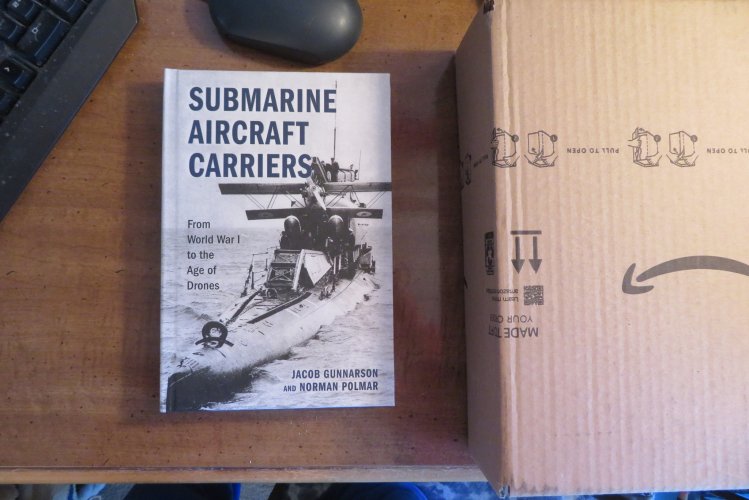
Arrived today & in a nice box too.
Paged through it right quick, looks good.
Right now need to go cook food and eat lunch, will look closer and do some reading later today.

1765910695139.jpeg
 
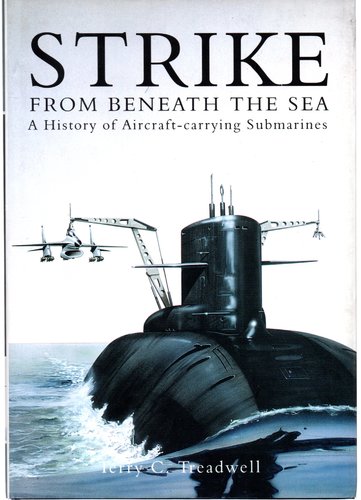
I am curious as to how it compares with the following:

177480-758272f65789c74c64376ba5ae8bacdb.jpg
 
Hi all, I have spent the last nine years writing a comprehensive history of aircraft-carrying submarines with Norman Polmar....
Arrived today & in a nice box too.
Paged through it right quick, looks good.
Right now need to go cook food and eat lunch, will look closer and do some reading later today.
I am curious as to how it compares with the following:

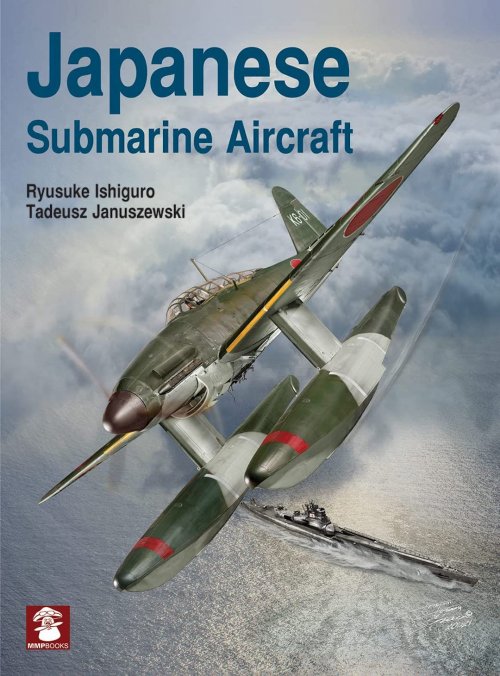
And also with this new one, GTX. (But I will probably buy them both.)

Congratulations on the publication of your and Norman Polmar's comprehensive (and as you said, long-researched) book, Mr Gunnarson. Best wishes for its success.
 

Attachments

  • sub_cover.jpg
    sub_cover.jpg
    227.9 KB · Views: 41
The comment below ended up being much longer than I anticipated, so I'll summarize: Strike from beneath the Sea is terrible and should be avoided. Japanese Submarine Aircraft is probably quite good based on the authors' previous work, although I have not yet read it since it came out recently; I would recommend it.

Our book covers the entire history of aircraft-carrying submarines, from 1912 to present. About a third of the book is dedicated to Japanese submarines and aircraft. I think the Ishiguro and Januszewsk book would be a good complement to our book as (based on their previous books) it will have more drawings and photos, and additional technical information.

__________________________________________________________________________________________________________________________

@GTX To my knowledge, there are only four books that cover all (or most) aircraft-carrying submarines, not counting a handful of books which just focus on Japanese aircraft-carrying submarines:
  • Submarines with Wings by Terry Treadwell (1985)
  • Strike from beneath the Sea by Terry Treadwell (2009)
  • Samolet i podvodnaya lodka (Aircraft and Submarine) by V. A. Lesnichenko and A. N. Gusev (2001)
  • Submarine Aircraft Carriers by myself and Norman Polmar (2025)
The first Treadwell book is ok. It's quite short and does not go into depth on any particular submarine or aircraft, but it does have some good primary source information on the Loening XSL and a forward by Ed Heinemann about his foray into submarine-launched aircraft. It has a few errors, like stating that the Leoning M-2 and M-3 floatplanes were meant to be carried on submarines, but nothing eggregious.

The second Treadwell book is dreadful. The author confuses the British submarine X-1 (which did not carry an aircraft) with the German Type XI U-boat (which was intended to carry an aircraft). There is also a substantial section devoted to Operation Pelikan, in which the author claims that a Type VII U-boat was intended to carry disassembled Ju 87 dive bombers to attack the Panama Canal. As far as I am aware, at least the submarine-aircraft portion of this purported plan is a complete post-war fabrication. The book is poorly written, full of errors, and I would not recommend it.

The Lesnichenko and Gusev book is very good, at least for Russian projects. I was able to find a lot of interesting information on the Chetverikov SPL and other Soviet aircraft-carrying submarine designs. It's hard to find though; the only one for sale was on the Vladivostok Craigslist, local pickup only (eventually I got the NY public library's copy via interlibrary loan).

@Owens Z Following on the above, there are five or so books I am aware of that are dedicated solely to Japanese aircraft-carrying submarines:
  • Japanese Submarine Aircraft by Tadeusz Januszewski (2002)
  • Kugisho E14Y Glen by Ryusuke Ishiguro and Tadeusz Januszewsk (2012)
  • I-400: Japan’s Secret Aircraft-Carrying Strike Submarine by Henry Sakaida, Gary Nila, and Koji Takaki (2006)
  • Operation Storm by John Geoghegan (2013)
  • I400 To Seiran Zen Kiroku: Kaitei Zoho-ban (Complete Record of the I-400 and Seiran: Revised and Expanded Edition)
    by Koji Takaki
The books by Januszewski and Ishiguro are good, really the only decent sources on Japanese aircraft-carrying submarines other than the I-400s. I found the original Japanese Submarine Aircraft to be a bit sparse in comparison with the later book just focusing on the Glen, but I would guess this new 2025 edition has more information. I only wish it had come out sooner so that I could have read it before publishing my book, but I am excited to read it. The drawings are very nice and in the Glen book there were some fascinating photos and drawings excerpted from the Glen's flight manual. My only complaint is that these books aren't really properly referenced, at least the two that I have read. There is only a brief reference list at the end which does not appear to be comprehensive. Although I have no reason to believe the authors are misrepresenting anything or in error, it would make the book more authoritative if it had been properly referenced (for comparison, our book has about 600 endnotes).

I-400: Japan’s Secret Aircraft-Carrying Strike Submarine is an interesting large-format book with many good photos, although it's a bit light on text. Its account of how the I-400s came to be is less comprehensive than Operation Storm.

Operation Storm has excellent information on the I-400 class, but fully half of the book is dedicated to the USS Segundo, the submarine that the I-401 surrendered to at the end of the war. I suppose the author meant to contrast the American and Japanese submarines and their crews, but it feels like padding since the Segundo's war patrols have absolutely nothing to do with the I-401 until their paths briefly intersected at the end of the war. The book has a few photos and drawings, but nothing compared to the Sakaida, et al. book.

I400 To Seiran Zen Kiroku has a narrative section about the I-400 and Seiran which is presumably fine (I did not bother to read it since reading via Google Translate takes a very long time), but the real value are the original IJN drawings of the I-400. Sadly there are no good drawings of the submarine's general arrangements (I produced one for my book), but there are some fascinating drawings of the original, two-aircraft hangar design and the unique "figure-eight" section pressure hull. It's a bit annoying to have the drawings inside a book, where the book spine interrupts them, but you can find these drawings nowhere else.
 
Last edited:
Arrived today & in a nice box too.
Paged through it right quick, looks good.
Right now need to go cook food and eat lunch, will look closer and do some reading later today.

View attachment 795460
It's very satisfying to see the book out in the real world after staring at it as a Word manuscript on my computer for so long haha. I hope you enjoy it!
 
I'm already reading the book.

First sight: It's a handy book made of yellowish, low quality paper with a handful of line art/B&W photos. Looks and feels like being produced in the 60's. Looks pretty humble compared with most gorgeous books I've bought from the beginning of the present century. But, it's ok to me, it brings me sensations from my teen years.

After a preliminary inspection: the unbuilt projects illustrated are amazing. The photographs are carefully selected thus very informative.

At reading: excellent and comprehensive contents. A well written and developed story. I love it. Congratulations to the author. Clearly better than older books on the subject.

It's an amazing book for unbuilt projects enthusiast, because it shows why what seems to to be a good idea could be wrong, or beyond contemporary technology or surpassed by different approach.
Unbult designs do not always correspond to missed opportunities. There are simply failed concepts.

I strongly recommend the book for both naval and aircraft unbuilt designs enthusiast. This is now the reference book for the subject.
 
@Antonio thank you very much for your kind words! My aim was to write the definitive reference on the subject, so it was particularly gratifying to read your last sentence. And my hope is that all of the references and footnotes will help others if they want to dive into their own research.
 
Very cool subject matter. A little bit outside of my price range, but its definitely on my to get list.
 
Hi all, I have spent the last nine years writing a comprehensive history of aircraft-carrying submarines with Norman Polmar. I think this book may be of interest to members of this forum given that the submarines and aircraft detailed in it are mostly highly obscure. Indeed I had help finding sources from a few kind members of this forum, namely @Orionblamblam and @CJGibson. The book also covers many unbuilt designs (see below). The book covers all aircraft-carrying submarines built and all the instances we have been able to find of proposed designs for such craft.

If the subject interests you, you can pre-order the book, which will be published on 16 December of this year (note that the description has a few errors which will be updated):


Here is the table of contents to give an idea of what is covered in the book:
  1. Early Efforts (WWI German and British aircraft-carrying submarines)
  2. Between the Wars - United States (U.S. Navy efforts, including submersible battle cruisers and trials on the USS S-1)
  3. Between the Wars - Europe (The British M-2, French Surcouf, Italian Ettore Fieramosca, and Soviet and Polish projects)
  4. Europe at War (The Surcouf's service and loss during WWI; German efforts to develop submarine-launched helicopters and autogyros)
  5. Japan Prepares for War (Development of Japanese submarine aircraft carriers from 1922-1941)
  6. War in the Pacific - Part 1 (Scouting missions of Japanese aircraft submarines during 1941-1942)
  7. War in the Pacific - Part 2 (Bombing of Oregon; reconnaissance flights during 1943-1944)
  8. The Ultimate Underwater Carriers (Development of the Japanese Sentoku/I-400 submarines, designed to carry three Seiran bombers)
  9. Underwater Tankers - Part 1 (Japanese and German submarine-seaplane refueling operations, including Operation K)
  10. Underwater Tankers - Part 2 (U.S. and Soviet plans for seaplane striking forces refueled by submarines)
  11. Cold War Concepts (Bizarre concepts for aircraft-carrying submarines, flying submarines, and CIA-launched manned reconnaissance balloons during the Cold War)
  12. The Atomic Age (U.S. Navy concepts for nuclear-propelled aircraft-carrying submarines for nuclear strike)
  13. Sailing into the Future (Primarily U.S. Navy development of submarine-launched drones)
  • Appendix A - Aircraft-Carrying Submarines (Data tables)
  • Appendix B - Submarine-Launched Aircraft (Data tables)
  • Appendix C - Flights from Japanese Submarines during World War II (List of all recorded flights)
We used as much primary source material as possible, and I spent quite a lot of time digging in the National Archives, Navy Yard archives, and Air & Space Museum. Where we used secondary sources, we tried to use as much as possible sources from the country in question (e.g., the French sections almost entirely cite French books and articles).

The following is a semi-comprehensive list of submarines and aircraft covered in the book:

Britain
  • Trials on the E-22
  • HMS M-2
  • Parnall Peto
  • Other projects contemporaneous with the M-2
France
  • Normand shipyard design ca. 1921
  • Project Q (the Surcouf)
  • Besson MB 35
  • Besson MB 41/411
  • Dorand G 20 helicopter
  • Project W
Germany
  • Trials on the U-12
  • Hansa-Brandenburg W 20
  • LFG V 19 (and other WWI submarine-launched aircraft projects)
  • Cruiser submarine projects
  • Caspar-Heinkel U 1
  • Type XI submarine
  • Arado Ar 231
  • Type IXD2 submarine
  • Flettner Fl 265 and 282
  • Focke Achgelis Fa 330
  • Refueling operations in the Arctic between Type VII U-boats and BV 138 flying boats
Italy
  • Trials on the Andrea Provana of the Dornier Libelle II
  • Ettore Fieramosca
  • Piaggo P.8
  • Macchi M.53
  • "Oceanic colonial" submarine design by Roberto Galeazzi
Japan
  • Kugisho No. 1
  • Kugisho No. 2/E6Y1
  • Watanabe E9W1
  • Watanabe E14W
  • Kugisho E14Y1
  • Kugisho E14Y2
  • Aichi M6A1 Seiran
  • Kugisho MXY7 Okha
  • Junsen Type submarines
  • Type A and B submarines
  • Sentoku Type submarines
  • Unbuilt submarine and aircraft designs
  • Refueling operations (e.g., Operation K)
Poland
  • Nikol A-2
  • Orzeł
Soviet Union
  • Chetverikov SPL
  • Project 621 submarine
  • Beriev P-10B
  • Kamov Ka-56
  • Ushakov SPL
  • Seaplane refueling concepts (e.g., Bartini A-55)
United States
  • USS S-1
  • Martin MS-1 and Cox-Klemin XS-1
  • Cox-Klemin XS-2
  • Submersible battlecruiser designs
  • Loening XSL-1 and XSL-2
  • Martin P6M Seamaster, Convair P5Y/R3Y Tradewind, Convair Skate, Convair F2Y Sea Dart
  • Unbuilt seaplane refuleing concepts (e.g., submersible tender for nuclear-propelled flying boats)
  • Convair "Sub-Plane"
  • RAND submersible seaplanes
  • CIA submarine-launched spy balloon
  • Project Champion/Hazel
  • Project Flying Carpet
  • Project Dipper
  • Project Strike (100,000-ton submarine aircraft carrier)
  • Other unbuilt submarine aircraft-carrier projects
  • Submarine-launched UAVs

If you have any questions about the book or the topic in general, I would be more than happy to answer them!
Hello,
Is there any Japanese S48 and S49A plans remaining? The book only mention they were designed.
 
Hello,
Is there any Japanese S48 and S49A plans remaining? The book only mention they were designed.
Not to my knowledge. In general, original Japanese submarine drawings are extremely scarce. This may be due to records being lost and/or destroyed at the end of the war. I have also noticed that even when drawings do survive, they can be very hard to locate. For example, there are some excellent drawings of the Type J Mod. 2 and Type B submarines that survived the war. But as far as I know, they were only published in 1975 in a book titled "Plans of Ships of the Imperial Japanese Navy" (https://search.worldcat.org/zh-cn/title/25343656) which can be hard (and expensive) to obtain today.

I would have loved to dig more into original Japanese material while researching for the book, but the combination of the missing/destroyed records and the steep language barrier made it very difficult.
 
Looks to be an interesting volume for the reference shelf. Is there much on Project Dipper ?

Cheers, Joe
Unfortunately no. To my knowledge, the only place on the internet or otherwise that this project is mentioned is on this very website (and my book, which was sourced from photos Chris provided me after I saw the thread):


There's just a few more sentences which are quoted in the book. My assumption is that it was a short-lived proposal given that I have seen no other reference to it in the (U.S.) archives. The fact that these studies were classified and that they never came to anything makes them doubly hard to find: not only are they obscure, probably no one has bothered to declassify them.

Project Dipper was probably quickly dismissed once it got to anyone involved in decision making in BuOrd or BuShips. At that time, the Polaris submarine program was proceeding with extreme urgency, nominally to provide a deterrent against the Soviets, but maybe more importantly for the Navy to prevent a permanent Air Force monopoly on nuclear weapons. So something like Dipper, which would taken away resources from Polaris program and equipped submarines with a less effective nuclear delivery system probably seemed laughable.
 
Is there much on Project Dipper ?

Unfortunately no. To my knowledge, the only place on the internet or otherwise that this project is mentioned is on this very website (and my book, which was sourced from photos Chris provided me after I saw the thread):

https://www.secretprojects.co.uk/threads/dipper-ssbn-launched-aircraft.32781/
There's just a few more sentences which are quoted in the book. My assumption is that it was a short-lived proposal given that I have seen no other reference to it in the (U.S.) archives.

The name Project Dipper has been borrowed for a modern drone project according to this which I just found while playing in Google because why not now that the Artemis 2 splashdown is done.

https://www.dronemediaimaging.co.uk/project-dipper-a-drone-that-swims-and-soars/

and

https://roboticsconference.org/2021/program/papers/048/index.html

Dipper: A Dynamically Transitioning Aerial-Aquatic Unmanned Vehicle

Friedrich M Rockenbauer (ETH Zürich),
Simon Jeger (ETH Zürich),
Liberto Beltran (ETH Zürich),
Maximilian Berger (ETH Zürich),
Marvin Harms (ETH Zürich),
Noah Kaufmann (ETH Zürich),
Marc Rauch (ETH Zürich),
Moritz Reinders (ETH Zürich),
Nicholas Lawrance (ETH Zürich),
Thomas Stastny (ETH Zürich),
Roland Siegwart (ETH Zürich) Paper Website
Paper Website
Code
Paper #048
Abstract

The locomotion for many modern robotic systems is optimized for a single target domain - aerial, surface or underwater. In this work, we address the challenge of developing a robotic system capable of controlled motion in air and underwater. Further, we explore the particular challenge of dynamic transitions between air and water. We propose Dipper, an aerial-aquatic hybrid vehicle. Dipper is a light-weight fixed-wing UAV with actively swept wings. The bio-inspired system is not only capable of maneuvering efficiently during flight and underwater, but can also perform dynamic aerial-aquatic transitions. We describe the design, construction and testing of the Dipper prototype, and demonstrate repeatability and robustness especially during the transition phases.
 
Back
Top Bottom