Forest Green
ACCESS: USAP
- Joined
- 11 June 2019
- Messages
- 12,791
- Reaction score
- 27,530
Last edited:



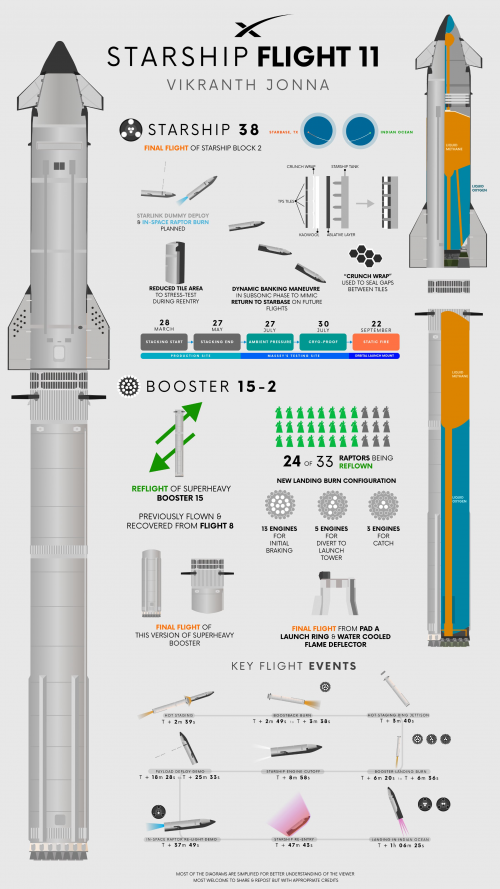
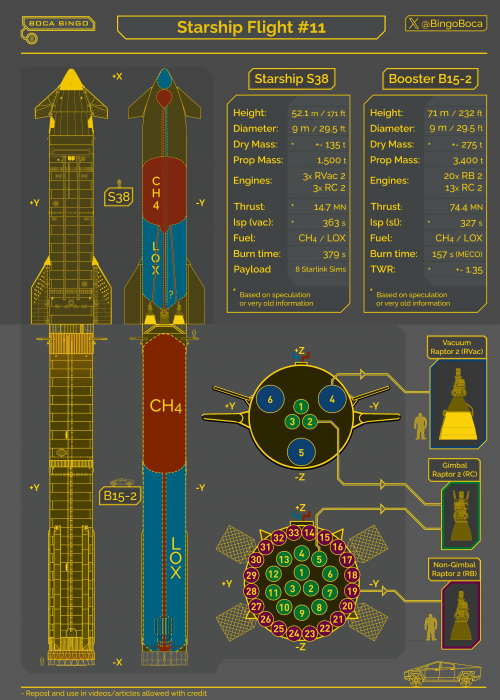
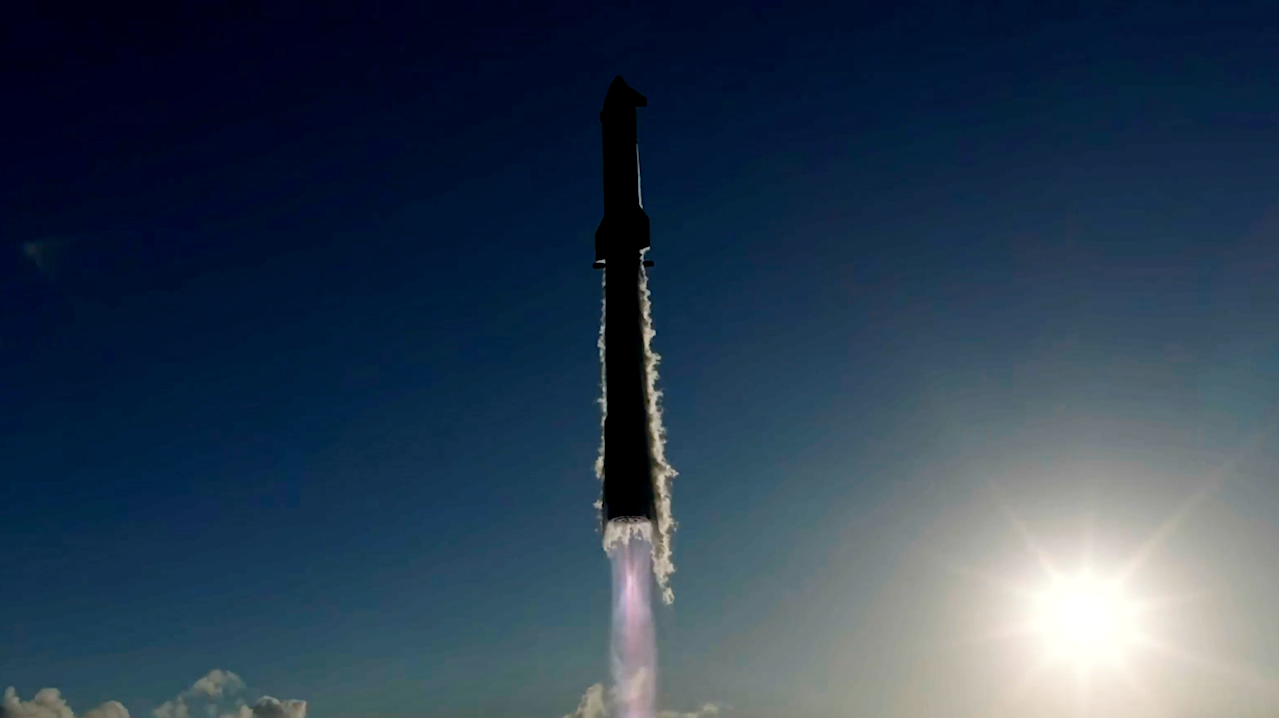
For the final time with a V2 variant Starship test article, this afternoon SpaceX launched an eleventh time, and like usual, it was eventful. This flight included the reuse of a Super Heavy booster that was previously used back on Flight 8 in March.
As for the launch, the test included a unique engine startup sequence for the booster landing burn in preparation for the next generation of boosters. We also saw the upper stage complete a more aggressive reentry profile with missing tiles to gather data and prepare for future ship catch attempts. Here I will go more in-depth into the launch, mission milestones, upper stage splashdown, and more.
Credit:
SpaceX -/ spacex
https://www.youtube.com/c/SpaceX
Chapters:
0:00 - Intro
0:31 - Mission Overview

 nasawatch.com
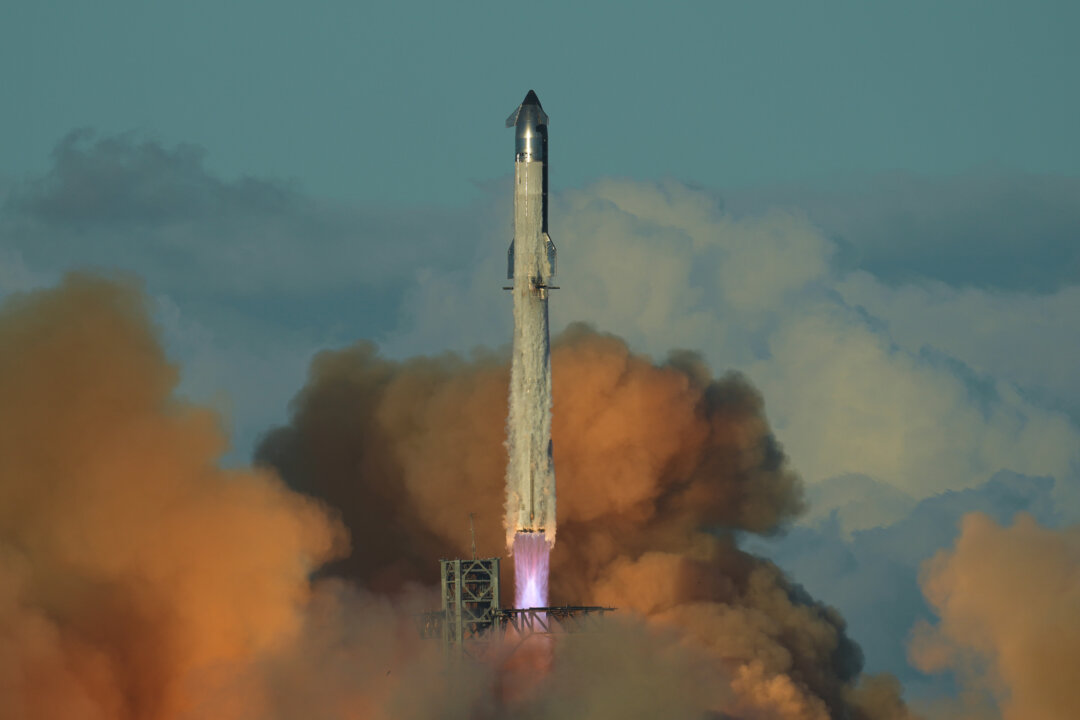
SpaceX's Starship Program makes its final flight of its V2 Booster and Starship, delivering a mission which appears to have met all the planned goals with no unexpected failures or explosions.Now SpaceX will be transitioning to the next, and hopefully final version, with upgraded engines, redesigned structures, and maybe the confidence to put it in orbit.


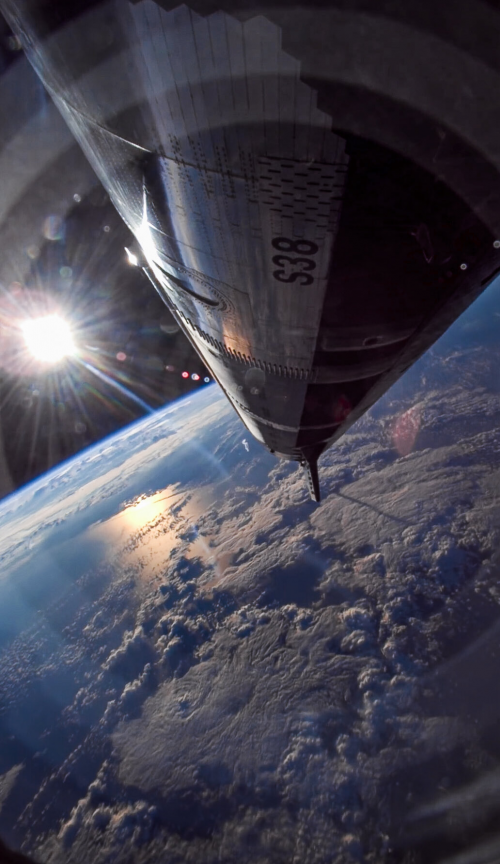
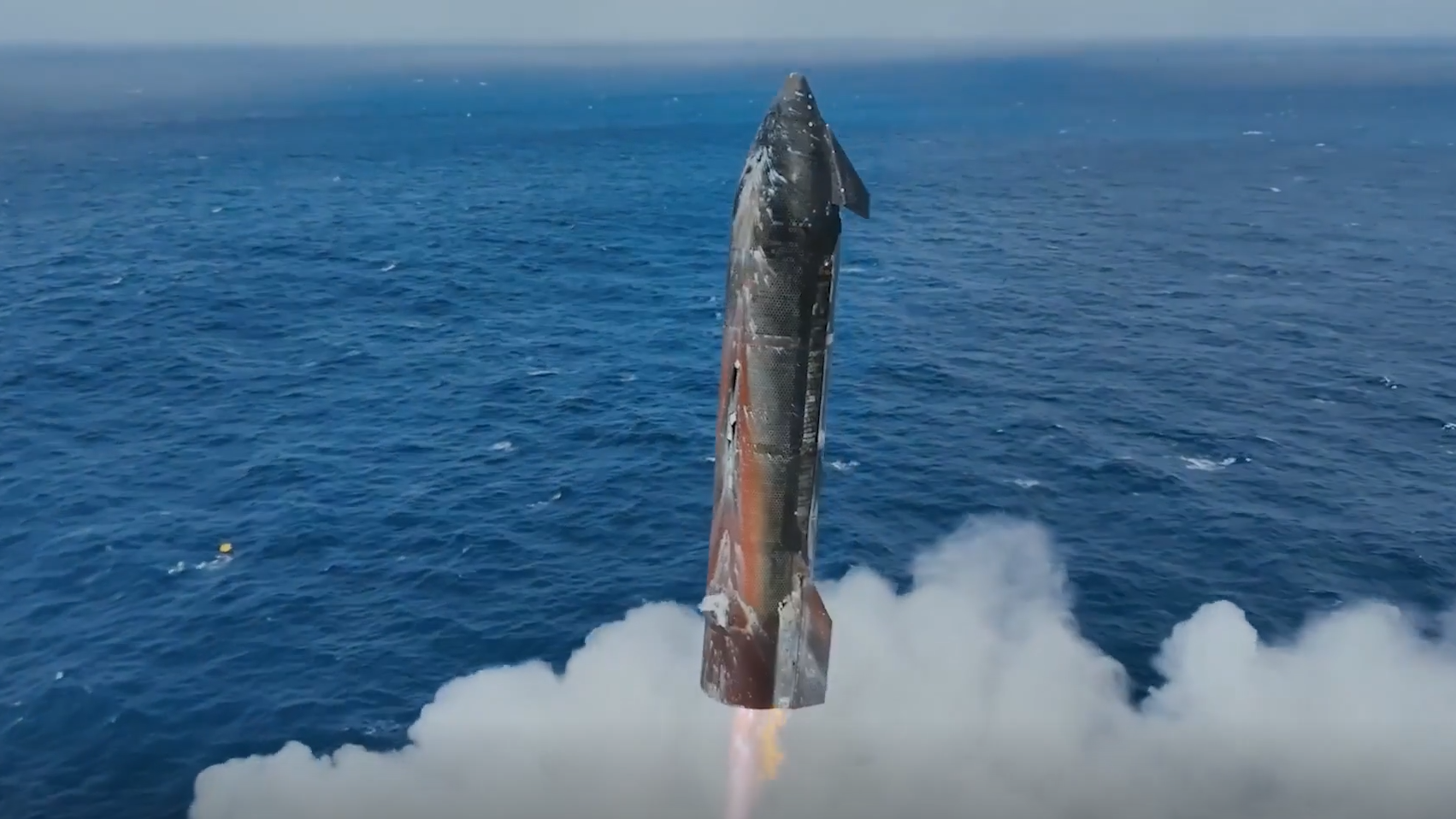
SpaceX just released two new angles of the recent Flight 11 upper stage splashdown from multiple different drones. With these, it provides an extremely clear view of the state of the ship and how it held up during reentry, along with better angles of the final flip maneuver.
One angle in particular starts well before engine ignition as the upper stage belly flops toward the water. Here I will go more in-depth into the new footage, how the heat shield held up, the preparation for future catch attempts, and more.https://www.youtube.com/redirect?ev...w&q=https://thespacebucket.com/&v=xOSkCVy3taE
Credit: SpaceX -


View: https://x.com/satofishi/status/1976327912921104602
A Starship could generate 100+ kilograms of water per day solely from the boiled-off methane and oxygen. Rotating a 9-meter-diameter section at 9 rpm would create 0.38 g Mars-like of artificial gravity.
Imagine swimming in a vertically circular, standard 25-meter pool, where the place you just swam through is now directly above your head. That pool is not just for leisure or exercise; it offers critical protection against solar storms at Venus distance.
I don’t feel excited during a mission; I feel excited when planning one.
Now he posted a new tweet detailing a 2034 Venus-Mars orbital mission which will also visits Phobos and Deimos: View: https://x.com/satofishi/status/1977081065798787154
2034 Earth–Venus–Mars opportunity looks promising. 10–15 on-orbit refueling operations may be needed to make a crewed ship full. Most can be done at an altitude of 180–200 km, made possible by Starship’s size. The final refueling may be performed at a higher altitude of ~2000 km, just below the Van Allen belt.
Earth departure on 2034-08-21 from 2000 km orbit. A Trans-Venus Injection burn of ~3.7 km/s will place the ship on an Earth–Venus–Earth free-return trajectory. Venus flyby is expected on 2034-12-19, 120 days after departure. Two weeks before the encounter, if the mission proceeds as planned, a 25-m/s maneuver will shift the trajectory from Earth-return to Mars-bound. If not, the ship will free return to Earth in September 2035.
The Venus gravity assist will send the ship into another Earth free-return trajectory, with Mars flyby around 2035-06-02. One week before reaching Mars, a system health check will determine whether to commit to Mars Orbit Insertion. If it’s GO, a small 10-m/s manuever will put the ship to less than 100 km altitude periapsis. Otherwise, a Mars flyby will lead to an Earth return in May 2036.
The ship will enter the Martian atmosphere at about 9.4 km/s, performing an aerobrake to slow to 4.88 km/s and capture into a 100x140000 km, 7-day period high elliptical orbit. At apoapsis, a 50-m/s plane change will align the inclination with Mars’ equator, followed by additional aerobraking to remove about 650 m/s of velocity, placing the spacecraft in a 120x6128 km orbit. A 550-m/s burn at 6128 km altitude will then adjust the trajectory into Phobos orbit.
The ship will stay at Phobos for about 7 days. The Mars–Phobos L1 point is only about two miles above Phobos’ surface, and Mars would dominate nearly half the sky, appearing about 80 times larger than the Moon from Earth.
The ship will depart for Deimos afterward. Two burns totaling roughly 750 m/s will transfer the ship from Phobos to Deimos. And the ship will stay at Deimos for 7 days more.
From Deimos, the ship will raise its apoapsis to form a 20000x140000 km altitude, 7-day orbit, requiring about 420 m/s of delta-v. At apogee, a 50-m/s burn will adjust inclination and lower periapsis to ~500 km for final Trans-Earth Injection. If time and propellant allow, the orbit can be aligned to a polar inclination for Mars ice-cap observations before departure.
A Trans-Earth Injection burn at 500 km altitude, requiring 1.5–1.6 km/s of delta-v in early July 2035. If departure on the first days in July, Earth arrival is expected in December 2035. If missed that window, a March 2036 arrival may look more feasible.
Nominal mission duration: 490 days, with 30 days in Mars orbit and 14 days at Phobos and Deimos.
Two planets, two moons for 3.7+0.025+0.010+0.05+0.42+0.55+0.75+1.55=7.06 km/s Δv
This is something I never understand: When people say they dream to go to space, what they really mean is that they want to travel to Earth orbit.
But no one says they dream to go to Mars orbit. And when I say I want to go to Mars orbit, they respond, “What? No landing? Why not go down and land?”


Did you see the first Starship launch? (I'm talking about exhaust impingement on the landing surface.)Lifting off from the Moon and Mars should be reletively straight forward I would think Sferrin as both worlds have less gravity than Earth so it should not be a problem.
Nothing to hit.Did you see the first Starship launch? (I'm talking about exhaust impingement on the landing surface.)
The ground comes to mind.Nothing to hit.
View: https://x.com/Erdayastronaut/status/1979542069946552550I've yet to hear a peep on how they plan to takeoff from the moon or Mars.
Huh? The only problem with the first launch was debris from the exhaust eroding the pad. On Mars, there is nothing for the debris to hit when accelerated by the exhaust.The ground comes to mind.
The ship. I'm sure you saw what the first Starship launch did to the pad and it was suspended something like 60 feet above slabs made of concrete used to build bomb resistant bunkers. Now put the nozzles, what, 5 - 10 feet above a rocky surface?Huh? The only problem with the first launch was debris from the exhaust eroding the pad. On Mars, there is nothing for the debris to hit when accelerated by the exhaust.
meh, still not going to hit the vehicle. And much less thrust.The ship. I'm sure you saw what the first Starship launch did to the pad and it was suspended something like 60 feet above slabs made of concrete used to build bomb resistant bunkers. Now put the nozzles, what, 5 - 10 feet above a rocky surface?
 www.nasa.gov
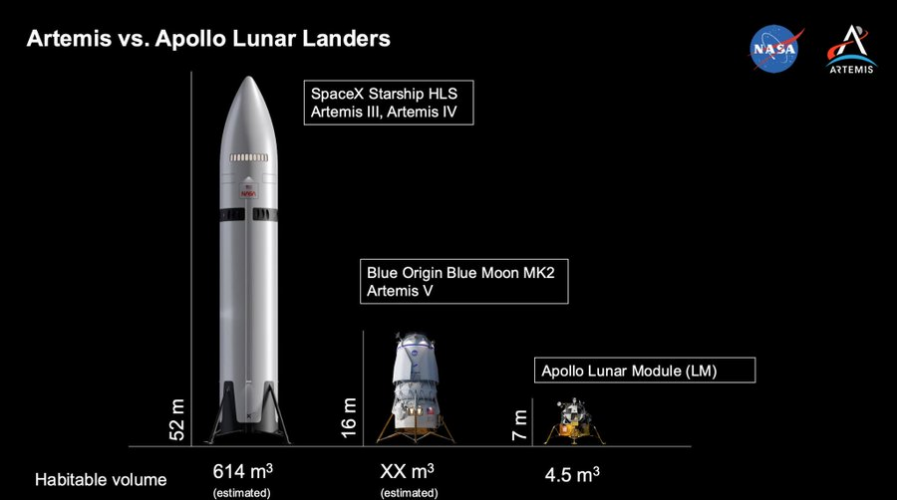
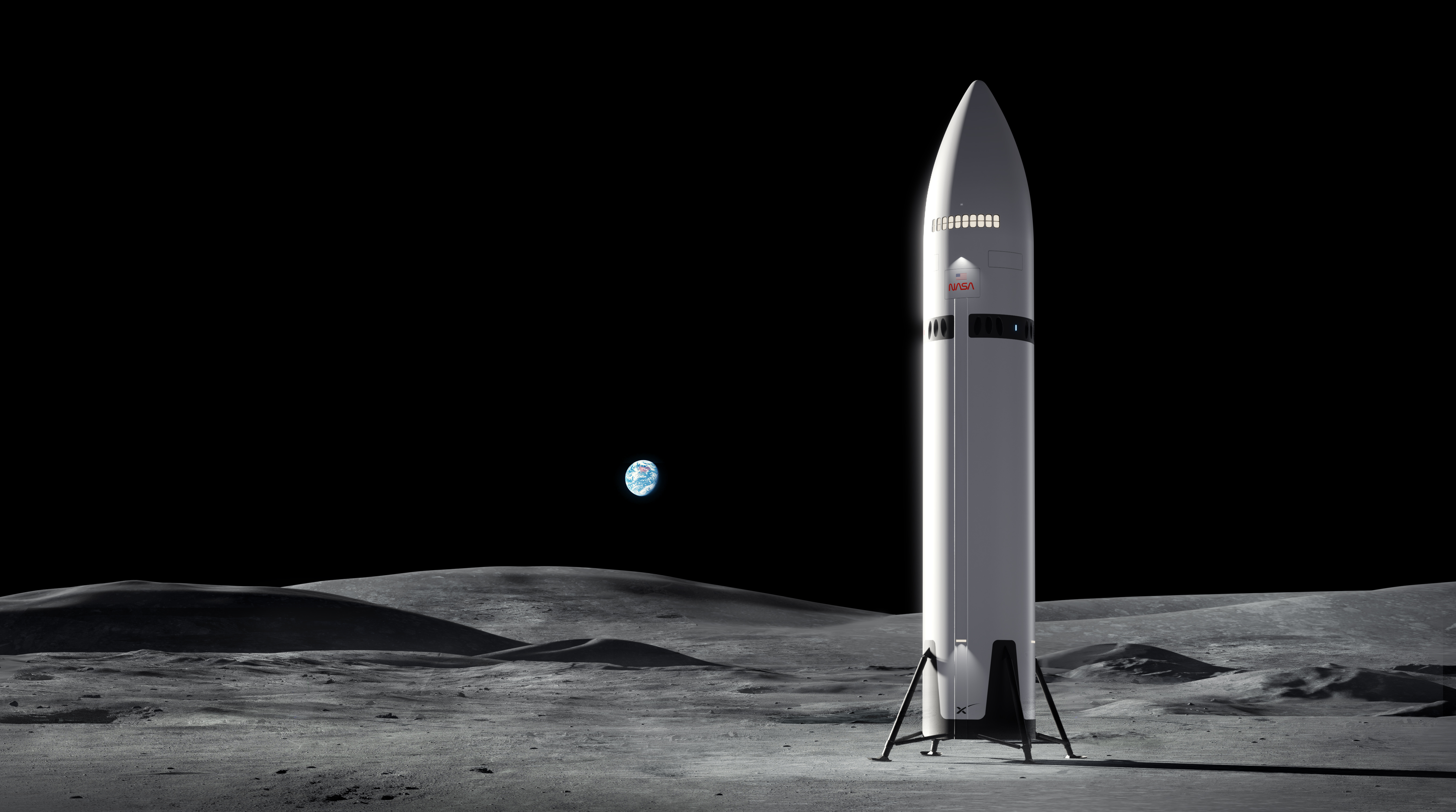
Yeah, I saw that when it came out but thought it had since been implied that wasn't the actual configuration.I have seen HLS art with mid-body thrusters for terminal landing and initial ascent, which allows them to shut the main engines down before reaching the ground. I don't know if that is still or ever was the real plan.
This NASA page doesn't mention it in the text, but the art clearly shows the ring of thrusters around the upper dome of the LOX tank.
NASA, SpaceX Illustrate Key Moments of Artemis Lunar Lander Mission - NASA
NASA is working with U.S. industry to develop the human landing systems that will safely carry astronauts from lunar orbit to the surface of the Moon and back
I have seen HLS art with mid-body thrusters for terminal landing and initial ascent, which allows them to shut the main engines down before reaching the ground. I don't know if that is still or ever was the real plan.
This NASA page doesn't mention it in the text, but the art clearly shows the ring of thrusters around the upper dome of the LOX tank.
NASA, SpaceX Illustrate Key Moments of Artemis Lunar Lander Mission - NASA
NASA is working with U.S. industry to develop the human landing systems that will safely carry astronauts from lunar orbit to the surface of the Moon and back


 / spacex