Forest Green
ACCESS: USAP
- Joined
- 11 June 2019
- Messages
- 14,600
- Reaction score
- 31,716



South Korea is undertaking a deliberate and ambitious transformation of its navy into a blue water force capable of regional power projection. This evolution is not simply about prestige or symbolism. It is a calculated move rooted in geostrategic necessity. As tensions rise in the Taiwan Strait and Chinese naval power expands across the first and second island chains, Washington should see Seoul’s naval modernization not as redundant or overlapping, but as a critical force multiplier.
This is especially relevant in the Yellow Sea, where a better-integrated U.S.-ROK naval posture could significantly enhance sea denial capabilities South Korea’s geographic proximity to China’s northern coastline presents a strategic opportunity to constrain the PLA Navy’s North Sea Fleet, which is headquartered in Qingdao and tasked with defending China’s most vulnerable maritime approaches. By jointly developing anti-access/area-denial (A2/AD) strategies focused on the Yellow Sea, the alliance could effectively impose strategic costs on China’s northern naval operations and blunt its access to the first island chain.
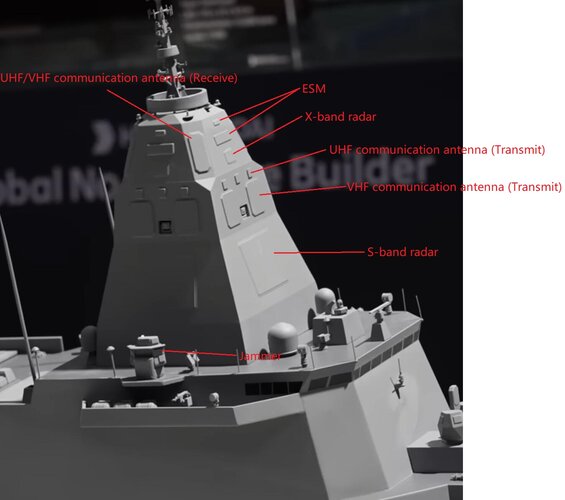
View attachment 777341
(Hanwha OCEAN 8000 destroyer)
View attachment 777342
(Hanwha Future Destroyer)
South Korea Completes KVLS-II Development
https://www.navalnews.com/naval-news/2025/09/south-korea-completes-kvls-ii-development/
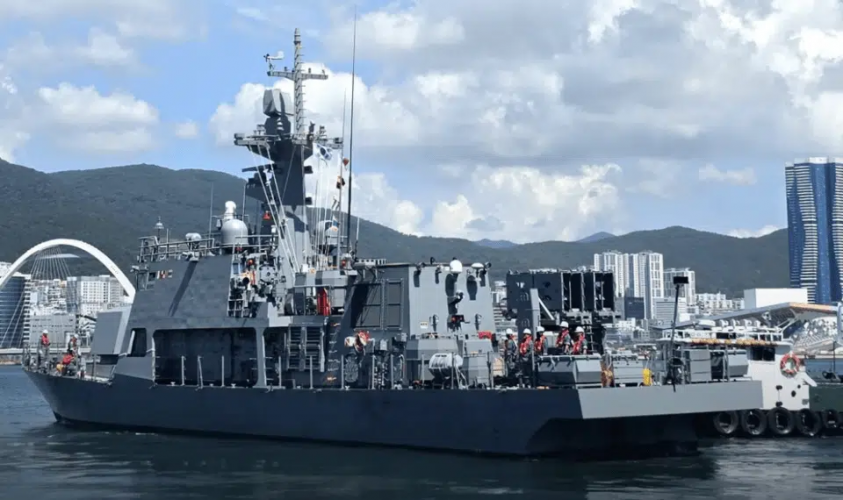
SK Oceanplant announced on June 19 that it has delivered the ROK Navy’s latest frigate, ROKS Gyeongbuk, ahead of the original end-June schedule.
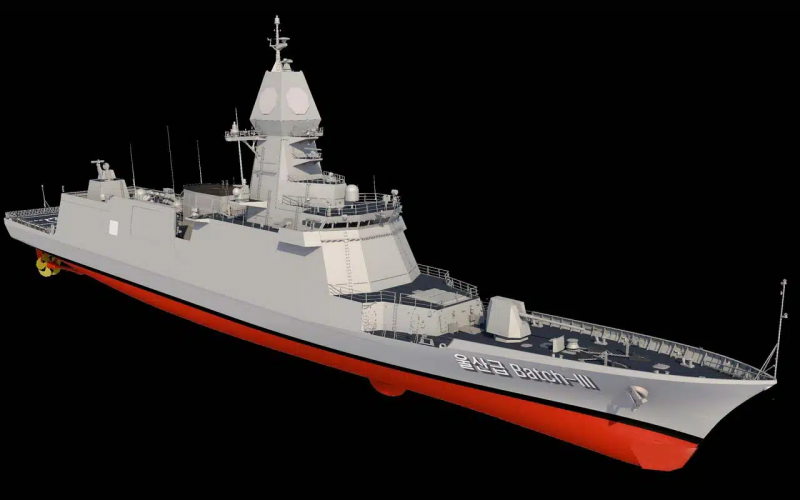
South Korea’s DAPA has officially signed the main contract with Hanwha Ocean for the detailed design and construction of the first-in-class KDDX destroyer, targeting delivery to the ROK Navy by 2032.
The formal signing moves the KRW 7.8 trillion (US$5.7 billion) program out of the selection phase and directly into active realization. The first-in-class KDDX is scheduled for delivery to the Republic of Korea (ROK) Navy in 2032.
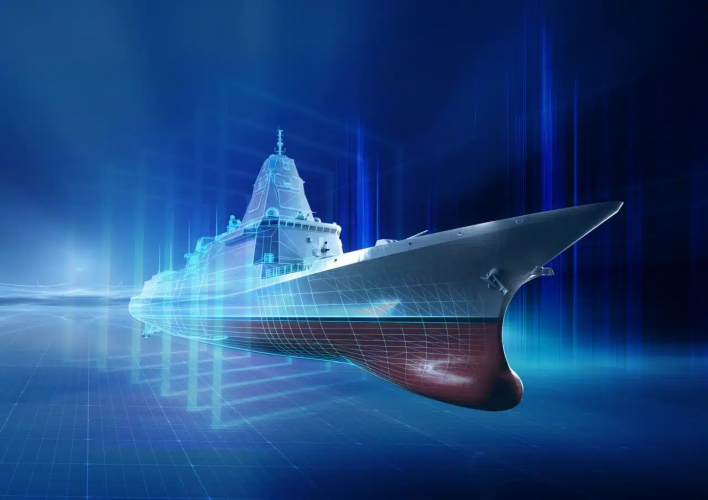
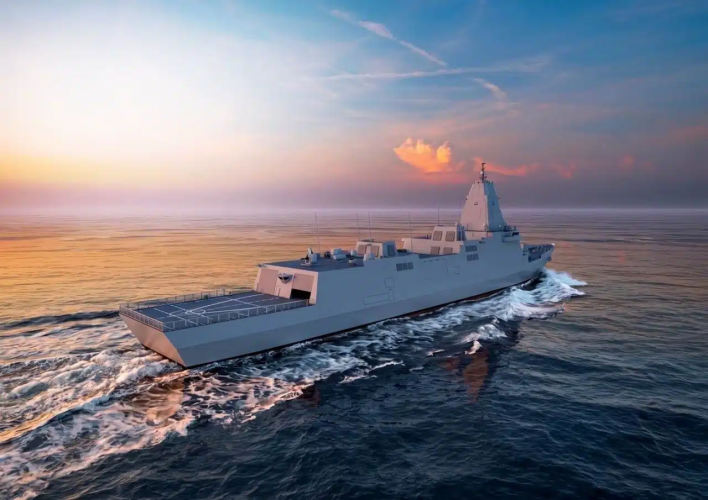
KDDX: The Core of ROK Navy’s Future Task Flotilla
The KDDX program aims to build six 6,000–7,000 ton-class stealth destroyers designed to replace the aging Gwanggaeto the Great-class (KDX-I) destroyers. The class will form the backbone of the ROK Navy’s Task Fleet Command.
Unlike the existing Sejong the Great-class (KDX-III) Aegis destroyers, which rely heavily on American systems, KDDX is envisioned as South Korea’s first fully indigenous Aegis-equivalent combatant. Major domestically developed systems aboard the ship include:
- An integrated dual-band S/X phased-array Multi-Function Radar (MFAR) housed in an Integrated Mast (I-MAST).
- Indigenous Combat Management System (CMS) and advanced sonar suites.
- Domestically produced surface-to-air and strike weaponry launched via KVLS-I and KVLS-II cells.
- An Integrated Electric Propulsion System (IEPS) designed to reduce acoustic signature and support future high-energy weapons.
The new ships that are actually replacing the role of KDX-1 are FFX-IIIIs that are being built. They will assume the command ship duties on 1st and 2nd fleet, where that role is currently being filled by KDX-1, as well as in 3rd fleet where FFX-I and -II are fulfillingthe flagship duties. KDDX as mentioned in the article will be assigned to the Task Fleet and will fulfill a different mission set.The KDDX program aims to build six 6,000–7,000 ton-class stealth destroyers designed to replace the aging Gwanggaeto the Great-class (KDX-I) destroyers. The class will form the backbone of the ROK Navy’s Task Fleet Command.
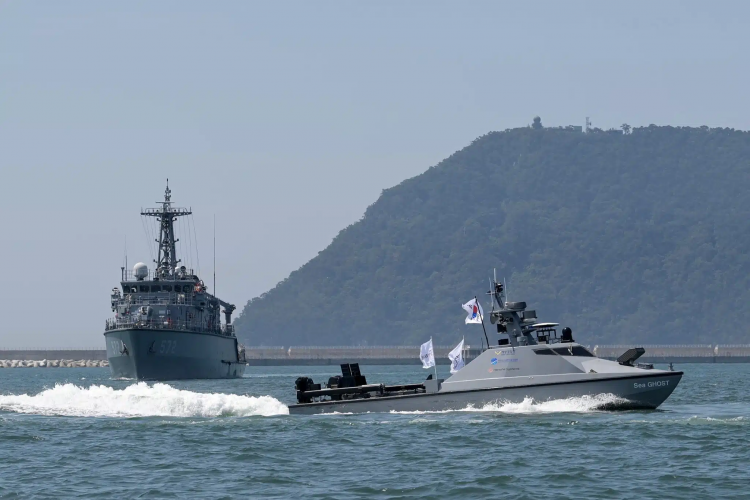
During the trial, the joint force sequentially tested and verified several critical operational phases:
- AI-assisted, automated mission planning and execution;
- Multi-domain uncrewed system tactical integration;
- Real-time underwater mine detection, image processing, and target analysis; and
- End-to-end mine countermeasure and neutralization procedures.
The ROK Navy has received its first PKX-B Batch-II fast patrol craft, featuring enhanced combat-system integration, anti-jamming capability and improved operability.