- Joined
- 17 October 2006
- Messages
- 2,400
- Reaction score
- 1,295

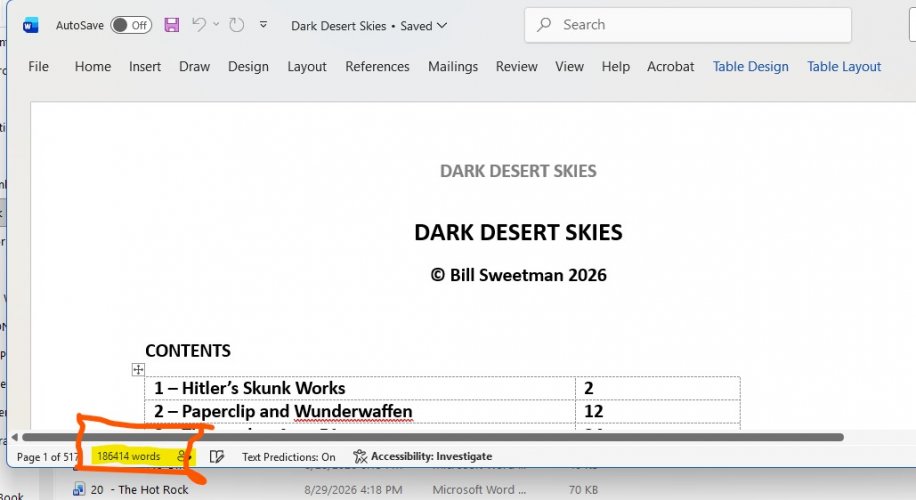
updates to be released as and when appropriate but seriously did you think AI had the jump on me?"There is no record of a book titled Dark Desert Skies by military aviation journalist Bill Sweetman." When is it planned to be out?

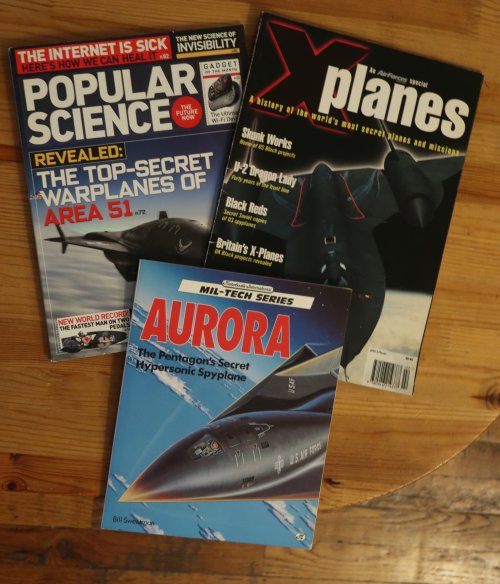
Where can I get a copy?i'll just leave this here
I'll update when I have a publication date from the house of pescatarian flightless birdsWhere can I get a copy?


"There is no record of a book titled Dark Desert Skies by military aviation journalist Bill Sweetman." When is it planned to be out?
updates to be released as and when appropriate but seriously did you think AI had the jump on me?
I'll update when I have a publication date from the house of pescatarian flightless birds

Considering that Yefim Gordon has practically retired at this point due to health issues, it's nice too see other authors writing about Russian military aviation. Aside from Andreas Rupprecht and Tom Cooper, no one else seems to be writing about this topic.
I was wondering what had happened to Yefim Gordon alberchico it was a while since his last book, sad to hear that it was due to health issues, the Abraham Abrams book will certainly be different since I bought his J-20 book two years ago.

I hadn't heard of Abraham Abrams until just now.
"
Allegedly he has a masters in War Studies from Kings College, is fluent in Russian , Chinese and Korean, spent time in North Korea and has churned out prodigious books and online articles.
But there's not a single photo of him online and he doesn't seem to have a personal website or social media presence. And his name is remarkably convenient for alphabetic sorting.
My Spidey senses are tingling.
I'm more than willing to be corrected but I find it hard to understand how such a phenomenal polymath stays so... stealthy.
He also has a MiG-25 book coming out by Shiffer publishing so I will be looking forward to that one when it is released.

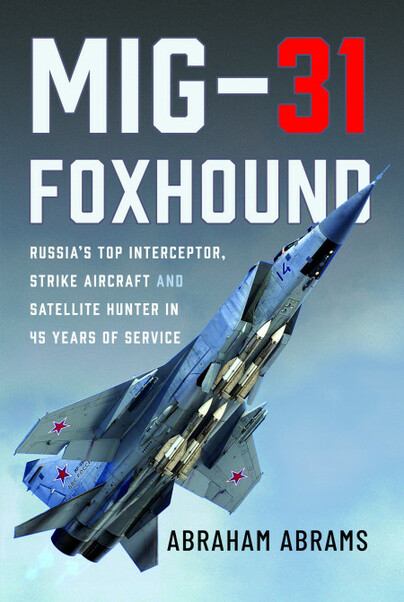
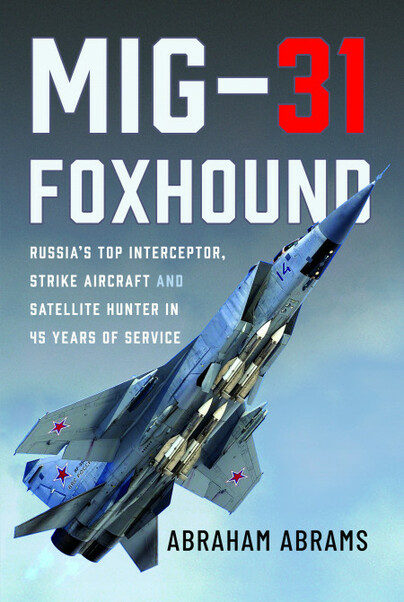
A new MiG-31 book written by Abraham Abrams will be published by Pen & Sword in December 2026:
Allegedly [Abraham Abrams] has a masters in War Studies from Kings College, is fluent in Russian , Chinese and Korean, spent time in North Korea and has churned out prodigious books and online articles. But there's not a single photo of him online and he doesn't seem to have a personal website or social media presence. And his name is remarkably convenient for alphabetic sorting. My Spidey senses are tingling. I'm more than willing to be corrected but I find it hard to understand how such a phenomenal polymath stays so... stealthy.
[Abraham Abrams] has written for reputable publishers like Helion and Pen & Sword, so I assume his background and previous published works were verified so as to make sure he's not just some quack off the street. Having said that I have his J-20 book and he has a tendency to accept whatever claims are presented at face value without looking into them. For example in the first chapter he argues that the SU-27 is a better fighter aircraft than the F-15 in every respect. And when I glanced at the citation to see where he gets that claim from, he references Yefim Gordon's books on the subject. So make of that what you will. Throughout the book he also describes the J-20 as an amazing fighter without any real shortcomings.
Unless this mysterious Abrams entity has had access to the Russian archives then I wouldn't expect much beyond what Gordon and Komissarov have already produced.
None of his books have shown any inclination to original research, so don't expect too much.
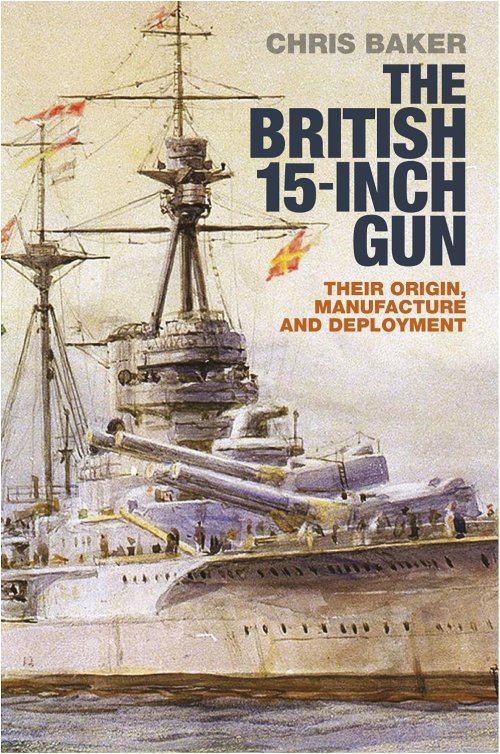
The British 15-inch 42 calibre Mk1 gun was the most widely used heavy gun of the twentieth century. It armed twenty-two battleships, battlecruisers, large cruisers and monitors of the Royal Navy. It took part in over eighty naval engagements spanning both World Wars, including famous battles such as Jutland, Cape Matapan and the Denmark Strait.
In this new history, Chris Baker looks beyond the wars, campaigns and ships, to analyse in depth, for the first time, the part played by the gun itself in shaping these events. He uses the records of the Ordnance Board to explore the origins and design of the gun, and the difficulties which were encountered in manufacturing it.
In addition to analysis of operational use of the gun in the naval battles and bombardments, this book examines the infrastructure which sustained the guns in war and peace. This ranged from shore bases, ammunition supply, and refurbishment and repair arrangements to target and battle practice at sea. Making extensive use of the original gun log records, he examines the deployment and distribution of all 188 guns, and the policies which governed their use.
The narrative also explores the extensive use of these guns for trials and experimentation from 1913 to the 1960s, including the prolonged search for improved shell performance. There are chapters covering the decisions to use the guns ashore for coastal artillery, both as the main armament of the Singapore fortress, and to control the Dover Strait in World War Two. The improvements made to the gun performance in the 1930s are described.
The book concludes with a description of the fate of the guns during and after World War Two, and the story of how the final two guns in existence came to be saved by the Imperial War Museum in the 1960s.
This first comprehensive look at the origins, manufacture, management, use and demise of the 15-inch gun is extensively illustrated, and has detailed statistical analysis of all the guns, and the operations they took part in.

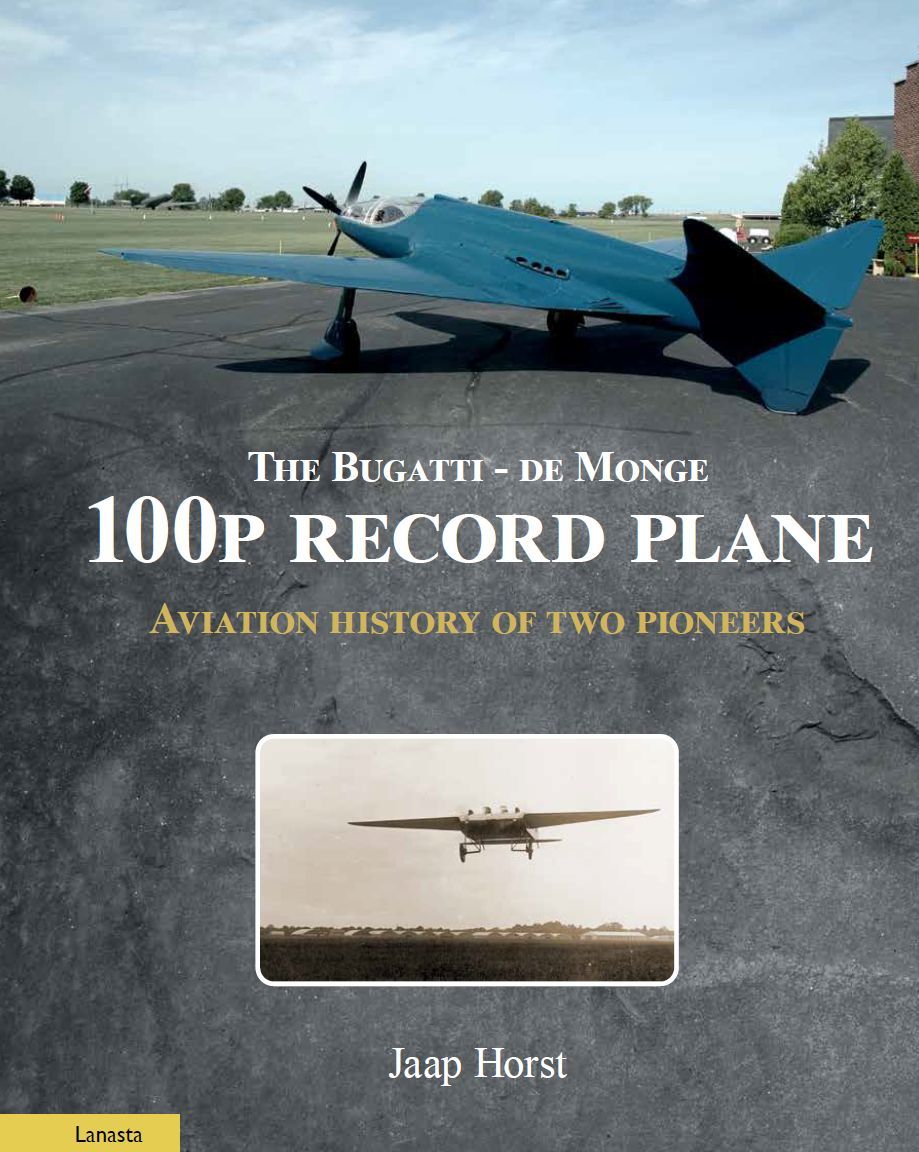
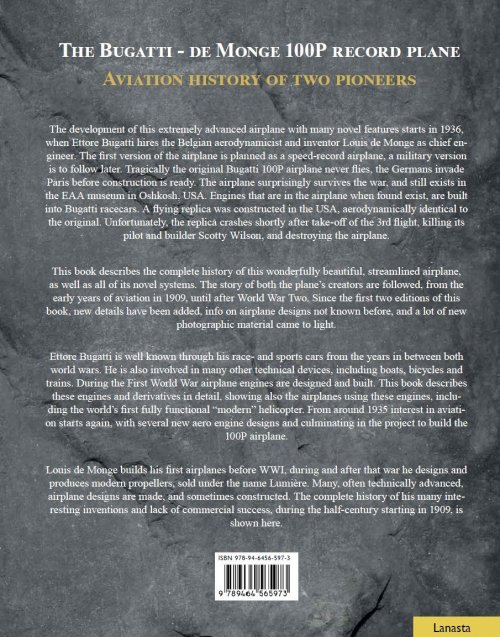
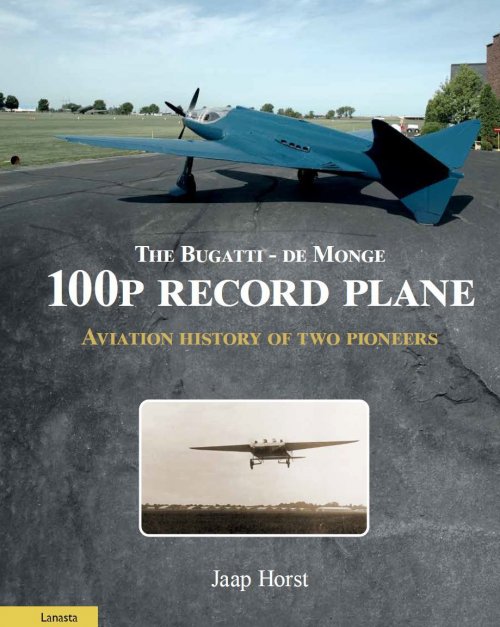
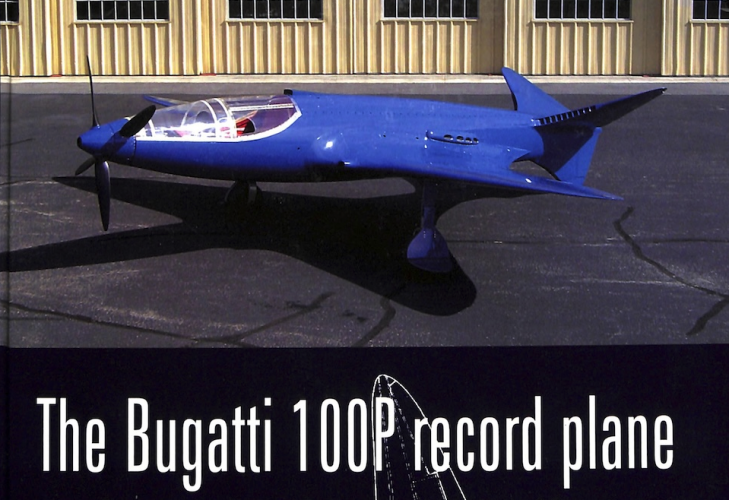
| Aviation History of Two Pioneers by Jaap Horst With foreword by Paul-Benoît de Monge de Franeau, Louis de Monge was his granduncle, the youngest brother of his grandfather Paul de Monge. The development of this extremely advanced airplane with many novel features was started in 1936. Ettore Bugatti hired the Belgian Louis de Monge as chief engineer to design the aerodynamics and airframe. The first version of the airplane was planned as a speed-record airplane, a military version was to follow later. Tragically the Bugatti 100P airplane never flew, the Germans invaded Paris where it was being built when there were only a few more months of construction work to go. The airplane surprisingly survived the war, and still exists in the EAA museum in Oshkosh, USA. A flying replica was constructed in the USA, aerodynamically identical to the original. This beauty tragically crashed less than a minute after take-off of the 3rd flight, killing the pilot and builder of the airplane, Scotty Wilson. This book has a different focus compared to my first book on the subject published in 2013 and 2015 (2nd edition). The emphasis is more on the Bugatti-de Monge 100P record plane and the replica airplane built by Scotty Wilson, a bit less on Ettore Bugatti's aero-engines and Louis de Monge's airplanes. On all subjects, new, additional information was found over the last decade, most of which is included in this book. This includes more info on the replica project and the reason(s) behind it's crash, some more information on the original airplane and a lot of new photographic material especially on the Bugatti US-model 16 cylinder aero-engine. The history of Bugatti in aviation continues all the way to the current day, details of which are now included. On Louis de Monge we found more information as well, especially on his post-war activities in the USA. Included are drawings and details on his last airplane design of 1958. In all, the book is a must for any Bugatti enthusiast who has a broader interest than the automobiles alone. However, it will also attract aero-enthusiasts especially those with a passion for record aircraft, as well as those who are interested in the strange prototypes which were designed, built and sometimes successfully flew. Finally, there are a lot of technical details alongside the history often told through the key personalities themselves.
|