No, everything can (and probably will be) done with sealings gliding into the shaft housing. You just have to unlock the flange on the very top and than you can pull the pumps out. I guess, water cooled reactors have a similar arrangement. Take a look at the water pumps from Volkswagen vehicles, you can also replace them without loosening a hose. I think, even the heat exchanger can be lifted out in the same way (pool type natrium cooled reactor)
Is that really the pump shape they use for molten-salt?
 
No idea what they look like for molten salt, but why not? Molten salt is not very viscous from what I've seen in Youtube videos.
 
Hotter coolant means lower power and vice versa, so reactor power automatically follows steam demand. You can go from 100% to 10% output or vice versa in a matter of seconds with no reactor control action (just opening/closing throttles).
That's a very valuable feature for a naval reactor, where going from 100% to 10% or vice versa in a short space of time is a key design feature. For a public utility, messing around with power settings like that isn't nearly so essential (though not entirely undesirable).

Aluminium smelters actually have the same charming characteristic as liquid metal cooled reactors whereby they freeze solid if they're ever shut down without careful planning. It's not quite true of either that they can never be shut down, but it does mean ensuring that nothing solidifies in the wrong place.
 
That's a very valuable feature for a naval reactor, where going from 100% to 10% or vice versa in a short space of time is a key design feature. For a public utility, messing around with power settings like that isn't nearly so essential (though not entirely undesirable).
Having a simple reaction to power level changes is very useful for a civilian reactor, as it means you don't need as much training before you can operate the plant.

Fairly obviously, any nuclear plant running a PWR will spend a lot of money for USN nukes, simply because of how often we drilled various emergencies that an electrical generation plant just never has time to do.
 
According to my knowledge, conventional light water reactors can operate between 50 and 100% power, when you reduce the power output even further it takes a lot of time to bring it up again.

I still didn't get an answer to that question, what makes you think, it would be very different with molten salt or netal cooled reactors?
 
I still didn't get an answer to that question, what makes you think, it would be very different with molten salt or netal cooled reactors?
It depends entirely on specific traits of the reactor designs. If your molten-salt or liquid-metal reactor behaves like a PWR and only needs the rods shimmed after a large-scale power level change it's safer for the techs to operate.

But if not, well, you need extra training before a Navy tech could start up. In fact, you might not even want to hire Navy nukes for those reactors, as their reflexes will be backwards compared to what the reactor is actually doing.
 
You have any indications for that beeing a problem? The BN600 is operating for 40 years and I never heard of specific problems in respect to stability and power regulatiin.

Having a simple reaction to power level changes is very useful for a civilian reactor, as it means you don't need as much training before you can operate the plant.

Fairly obviously, any nuclear plant running a PWR will spend a lot of money for USN nukes, simply because of how often we drilled various emergencies that an electrical generation plant just never has time to do.

According to my knowledge, conventional light water reactors can operate between 50 and 100% power, when you reduce the power output even further it takes a lot of time to bring it up again.

I still didn't get an answer to that question, what makes you think, it would be very different with molten salt or netal cooled reactors?


A commercial plant isn't going to change power as much as marine plant granted, but that doesn't mean stability isn't important. Note also that current commercial plants are used a base load units that see little variation. However, it doesn't necessarily follow that future plants will have the same use. A SMR used for a standalone station will likely see loading much closer to that of a naval plant with significant load swings. Likewise, if you assume the future power grid is largely renewables (which are unpredictable and highly variable) and nuclear plants, it is likely the nuclear plants will not be able to operate solely as constant power base load units, but will be required to response much more to load and renewable output fluctuations.

The bigger point is that nuclear power is an area where the consequences of accidents are so severe that a very very stringent doctrines of accident prevention and control is necessary. One aspect of this is the desirability of technically simple, predictable and highly reliable systems. These are complex systems, and higher order interactions and nuances can have severe effects. See for instance TMI where operators responding to indications as trained based on preventing one type of casualty (going solid) actually resulted in an unanticipated different and more severe failure (LOCA). Or EBR-1 suffering a partial core melting incident eventually traced to transient thermal gradients causing temporary fuel rod bowing and a reactivity excursion. BWR/PWR reactors certainly have complexities and failure modes, but we also have a solid understanding of their behavior and how to design to mitigate these risks. It is highly likely that a new reactor design (new in the context of widespread use) will have various quirks and issues which will be learned the hard way over time. Prudence demands a hard look at the degree to which there's actually real benefit to the change, and if that benefit outweighs the risk. As an example, the potential benefit of burning actinides in waste is utterly meaningless in the real world when you consider that we have technically solid solutions for long term waste storage, the process of separation is complex with attendant risk, and the long lived radioactivity in question is also fairly low in intensity.

As to BN600 stability, we may not have any documentation citing stability as an issue, but conversely how much insight do any of us actually have on the day to day difficulties in operation and maintenance of that plant, or any of the non BWR/PWR plants? For that matter, I'd suggest most folks commenting don't have practical light water reactor experience either.

 
The LWR in france are operated acvording to the electricity requirement. Their power goes up and down every day, wich is necessary when a country produces about 70 to 80 percent of its electricity nuclear.

The Natrium/molten salt cooled reactor from Terrapoer is designed to be super flexible by the use of heat storage with molten salt. There are other MSR reactor designs which use a secondary molten salt cicuit. So even in the (not very likley case) that MSR would be less flexibel than LWR, an optional molten salt heat storage system would make them highly flexibel.
 
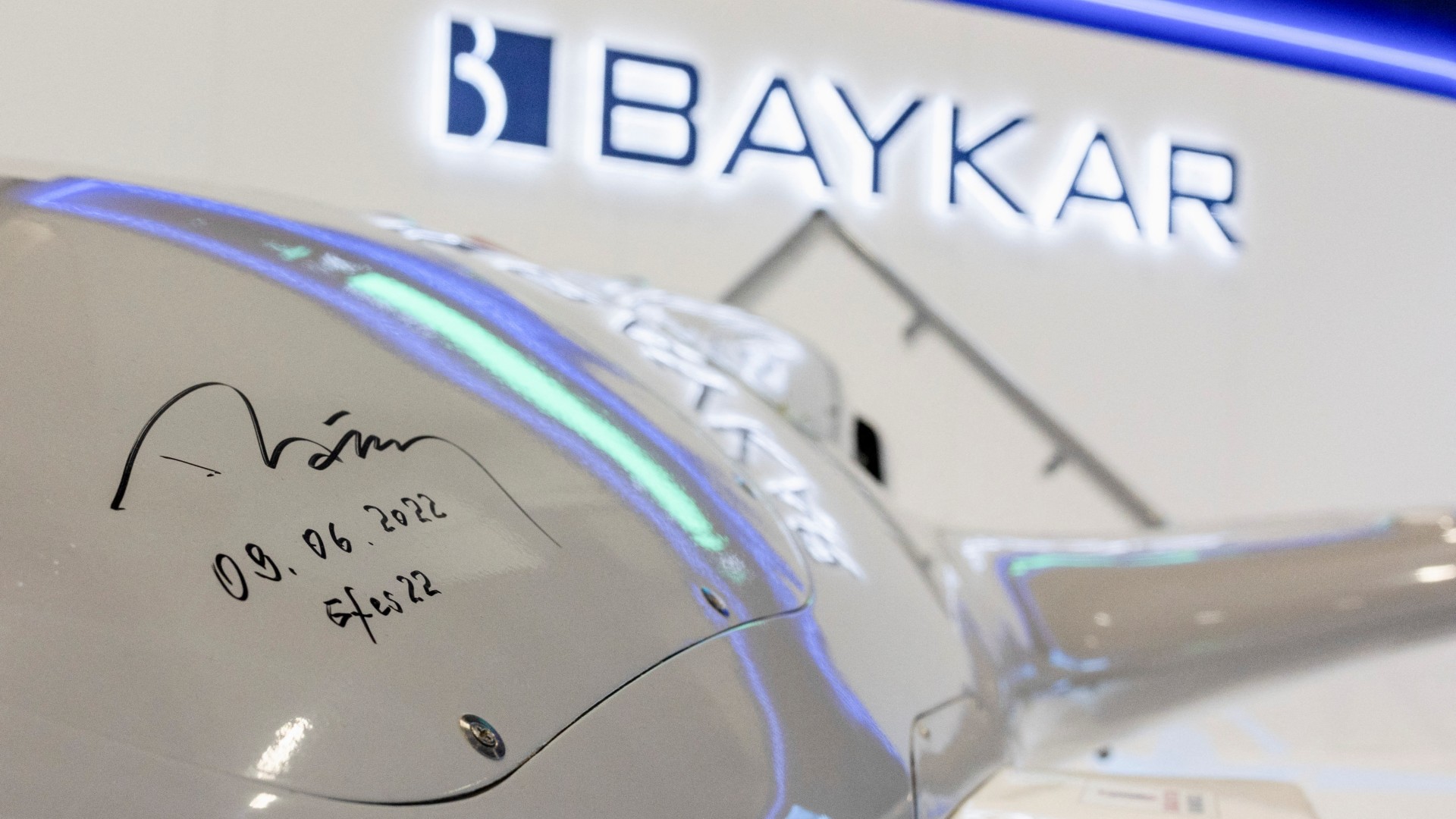
Space, UAV and now Small Modular Reactors, Baykar Tech is moving into the energy business.
-------
The Turkish government plans to generate 10 to 15 percent of its electricity from nuclear energy by 2050, with a total of 12 conventional reactors.

In addition, the government aims to achieve 5,000 megawatts of capacity from small modular reactors, a new type of nuclear technology.

“Baykar is working on SMR technology,” Bayraktar said. “They are trying to build a 40-megawatt unit.”

....

The energy minister said on Wednesday that his ministry is exploring alternative SMR technologies and recently sent a delegation to Denmark to visit Copenhagen Atomics, a company developing autonomous nuclear reactors powered by thorium.

He emphasised that Turkey holds significant thorium reserves, which could play a role in future energy development.

 
Last edited:
IIRC that type of nuclear-reactor can also be used to "Burn up" high-level nuclear-waste, transuranic come to mind as they are serious problem in spent-fuel storage.
Yes, a fast-neutron reactor is ideal for that.

"Fast" neutrons versus "thermal" neutrons (as used in water-cooled reactors).
 
View: https://x.com/Dr_Singularity/status/1999951550618464366?s=20


Compromise bill directs 10-year pilot program for Navy's small modular nuclear reactors​

 
Are micro-reactors set to power US military bases?:


The U.S. Department of the Air Force has designated Buckley Space Force Base and Malmstrom Air Force Base as the leading candidates for hosting nuclear microreactors, signaling a significant move toward integrating compact atomic energy systems into critical military infrastructure by the end of the decade.The decision was taken as part of the Advanced Nuclear Power for Installations initiative, developed in partnership with the Defense Innovation Unit.Microreactors are compact nuclear systems designed for flexibility and ease of use.​
Prior to the selection, specialists from the Air Force and Pacific Northwest National Laboratory carried out detailed technical evaluations and site inspections. These reviews focused on factors such as environmental impact, nuclear safety requirements, and compatibility with each base’s existing power infrastructure.Project implementation will proceed following the completion of environmental assessments and the necessary nuclear regulatory approvals.​
In this video, Defense Updates analyzes how micro-reactors are set to power US military bases?
#defenseupdates #micronuclearreactor #usarmy


Chapters:
0:00 TITLE
00:11 INTRODUCTION
01:18 SPONSORSHIP - NordVPN
01:52 BACKGROUND
03:04 PROJECT PELE
05:03 COMBAT CAPABILITIES
06:17 ANALYSIS
 

Similar threads

Back
Top Bottom