The following content is translated into English with the help of AI 
The following are some thoughts I had recently while looking at these photos. Due to my essentially zero background in aerodynamics, I’m not trying to make any serious technical claims here. Instead, I’m only starting from what can be clearly seen in the images themselves — the very obvious and very different design features.
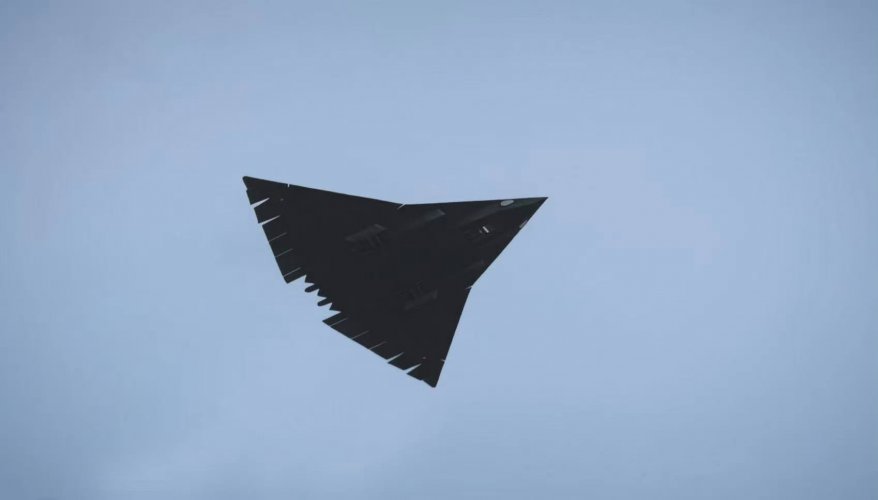
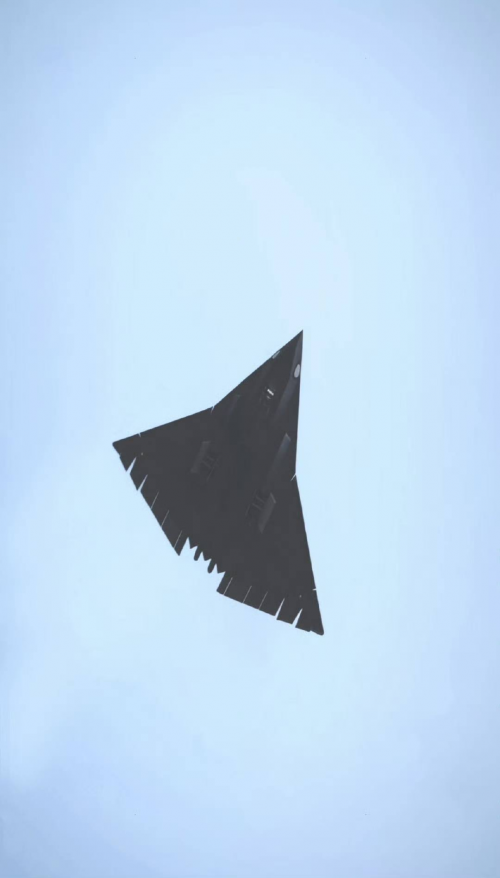
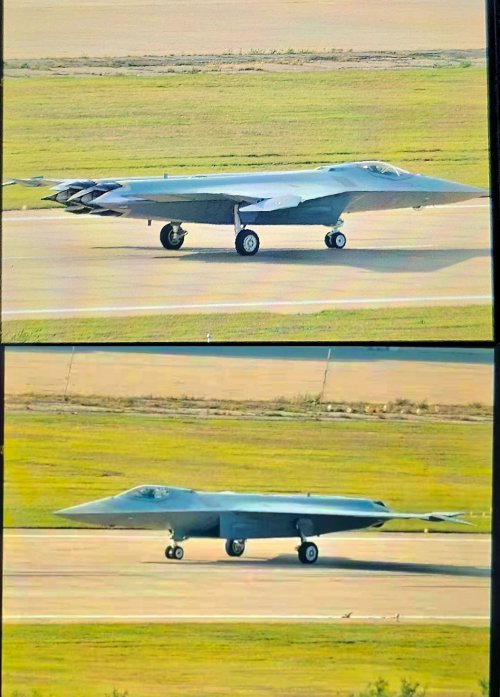
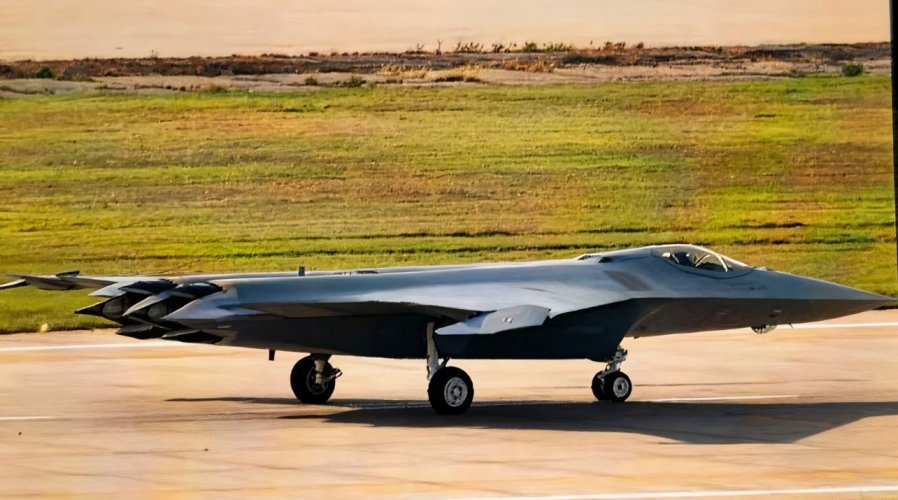
First, there is a clear common trait between the two designs: the extensive use of what I would loosely describe as “tail feathers” structures. This in itself isn’t hard to understand. If the vertical tail is abandoned, then in order to preserve controllability, additional control surfaces inevitably have to be introduced. And under stealth constraints, placing more of these control surfaces toward the rear of the aircraft seems like one of the more reasonable choices. Since F-47 has not yet released any official rendering that clearly shows its rear end, even though the canards may compensate for a significant portion of control authority, it is still difficult to say whether there are actual control surfaces on its tail section. This makes me wonder whether this kind of “tail-feather”–style distributed control could become a shared design language for sixth-generation aircraft — assuming, of course, that tailless configurations themselves become a general consensus.
(On a personal note, I really like this kind of design. It makes the aircraft genuinely look like a bird, which is why I like to describe these structures as “tail feathers.”)
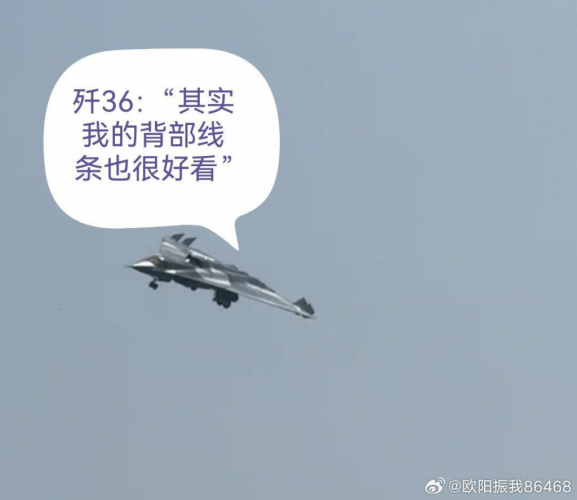
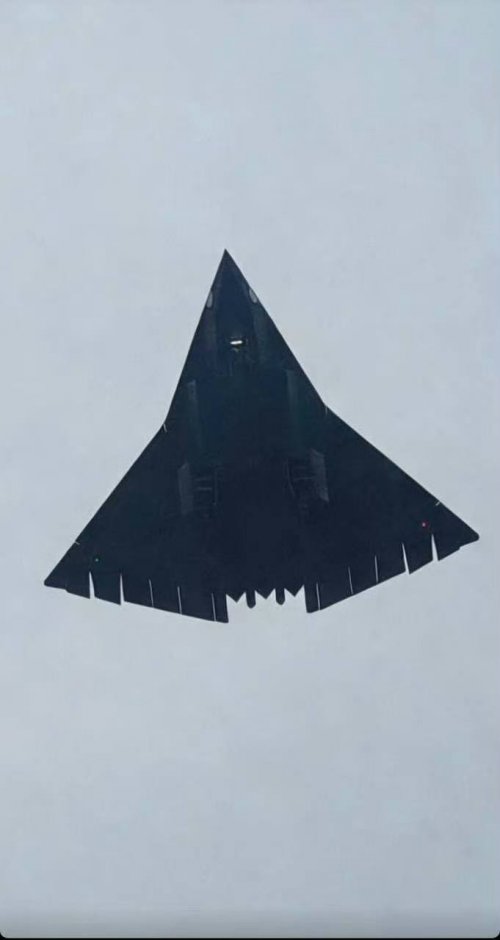
From this point onward, what caught my attention most in the upper photo is how J-36 handles these structures. On the inner tail feathers, closer to the engines, it clearly uses traditional mechanical actuators with visible bulges. Yet on the outer side, it appears to adopt a more forward-leaning solution: split control surfaces, possibly even involving flexible skins. A more recent photo seems to confirm that these are indeed split flaps, since they are not permanently deployed.
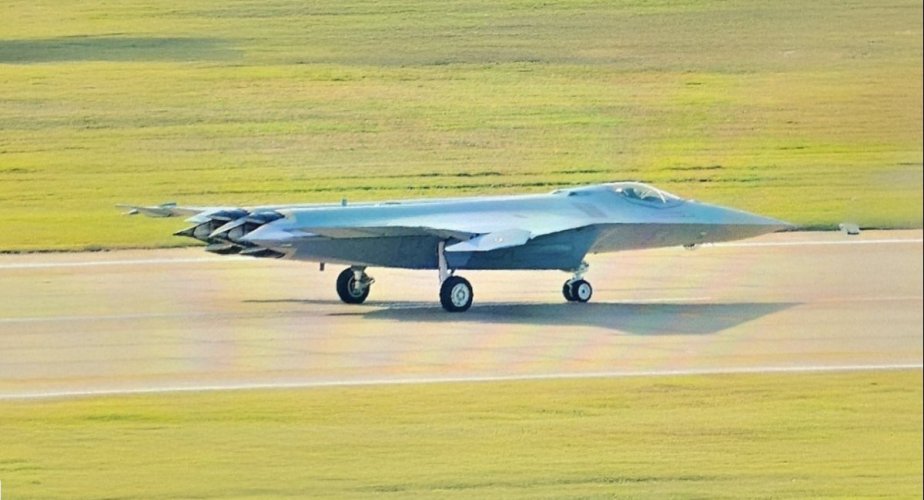
By contrast, J-50 adopts a configuration combining all-moving wingtips with thrust-vectoring nozzles. On the tail-feather elements closer to the wingtips, there are clearly visible actuator bulges. However, the two inner tail-feather elements closer to the engines do not appear to show any obvious actuators at all, which makes me wonder whether they are actually movable. Overall, I have not seen any photo in which J-50’s set of tail feathers clearly shows signs of deflection or movement.
While making this comparison, I started to think that perhaps this is not so much about J-36 adopting an especially aggressive design. Instead, because it lacks an all-moving wingtip like J-50, yet still needs to ensure sufficient control authority, it may be forced to rely on split control surfaces near the wingtips in order to increase control moment and compensate for that difference.
Building on this small line of thought, and especially when considering the historical division of roles between the 601 and 611 institutes, I find it difficult not to imagine a scenario where J-50 reaches operational service earlier as a more readily realizable design, while J-36 moves in a more strategic direction, serving as a more specialized platform.
These are just some personal little thoughts based on limited imagery and visible design differences. In a way, it even feels like we may be approaching an era once imagined before humanity ever truly flew — where aircraft spread their wings and fly like birds.