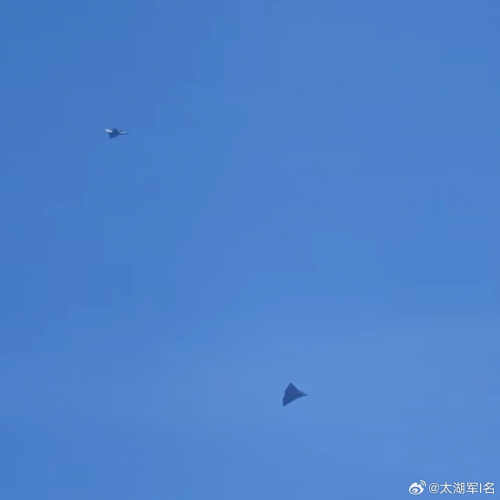
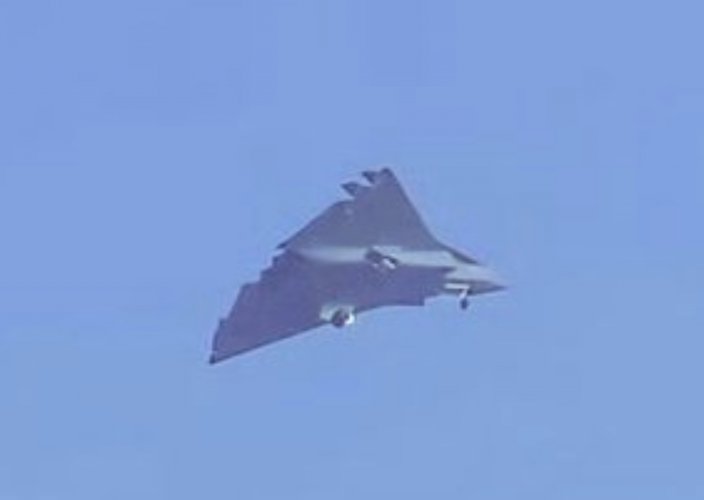
Shenyang / Chengdu "6th Gen" Aircraft - General Discussion and Speculation

(Sticking head over parapet) I agree, loiter seems something it could do very well. Holding grid squares and acting as a sweeper if necessary to manage CCAs and seek out B-21s.
This was my thought process. J50 seems like more of a 6th gen "fighter" while the j36 seems like an agile control node/ b21 killer. Its size and width (and the 3rd engine) also makes it look like it wants to house a DEW on its belly- although I feel like that role would be better suited for a HALE flying wing.
 
while the j36 seems like an agile control node
That is something every country, that is involved in next generation programs, agrees upon as a fundamental criteria for the next generation of fighters. It's usually just called "systems of systems", a central manned fighter that is able to function as command and control component on the battlefield for manned and unmanned assets (the two man crew being an obvious choice for the J-36 because of that, following the example of CACs previous example in that domain, the J-20S).

Something universally agreed upon as being fundamental to NGAD, GCAP, FCAS (RIP) as well as being referenced by Chinese sources, as if their UAV efforts across the entire spectrum of weight classes, roles and configurations isn't making that extremely clear already.

This is what a fighter is in the modern sense, or in the near future. And quite frankly, that is already what a fighter has been since the introduction of aircraft like the F-35, J-20 or Su-57. Arguably even earlier though. The evolution of sensory equipment on fighters as well as data link paved the way, what were seeing is the natural conclusion of that.

A fighter, for many years now, isn't just a fighter like it's some WW2 era prop plane. A modern fighter is a vastly more complex machine that can slip into many roles, providing many solutions to many problems. And even the J-50 will lean heavily into that, even though considered orthodox by many here for whatever reasons, it will delve heavily into that aspect by sheer nature. Otherwise it would be obsolete and outdated upon introduction. If the prototypes are anything to go by, it will simply feature a less powerful sensor suite than it's Chengdu peer. But because of that it can do with just two engines, rather than needing a third one to power various highly capable subsystems and being able to move the weight within the framework for flight performance the PLAAF formulated.

To keep with naval analogies, which have been a favorite for these two, the J-50 is a DDG, the J-36 is a CG.

 
Last edited:
I’m curious what you think is the reason why they swapped the trough like asymmetric nozzle for what appears to be 2D TVC for the stage 2 prototype.
I didn't mention anything regarding the nozzles, read my post again.
 
I didn't mention anything regarding the nozzles, read my post again.
I know you didn’t. I’m curious on what you think about the change.

At least traditionally like on the F-22, TVC is meant to give the aircraft more maneuverability and nose authority, while the ones similar to the YF-23 are for better masking IR emissions. Why would a tactical theater bomber prioritize TVC? As far as I know, there is no precedent for this, not even the FB-22 would feature TVC despite the F-22 possessing it.
 
Last edited:
You can sigh all you want.
I do. Because what's the point in discussing, when what little bits and pieces of info we get from mainland China is simply ignored and the same points are repeated over and over again and the discussion just moves in circles and goes nowhere.

Ignoring mainland grapevine, information and the overarching context of the upcoming era of combat aviation is just not productive. And the J-36 topic is suffering greatly from this issue.
 
Brainfart, musings in the midst of procrastination, revelation in the shower, whatever...

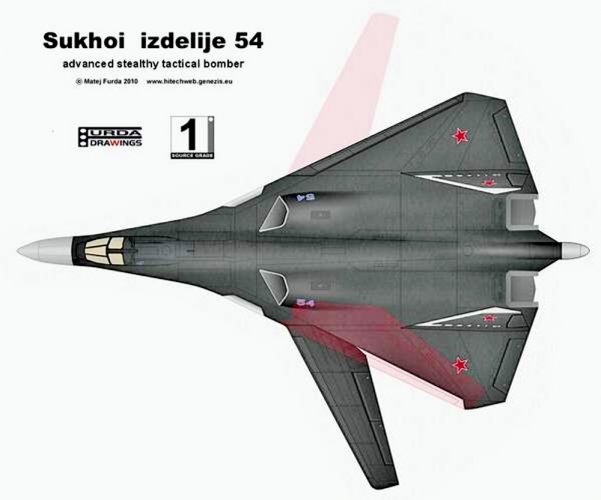
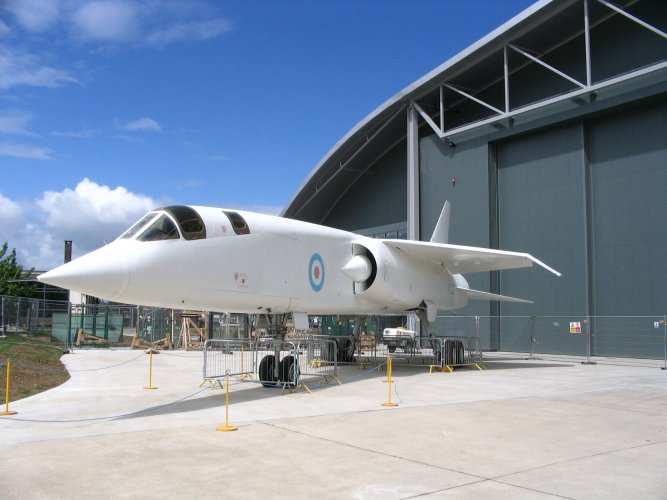
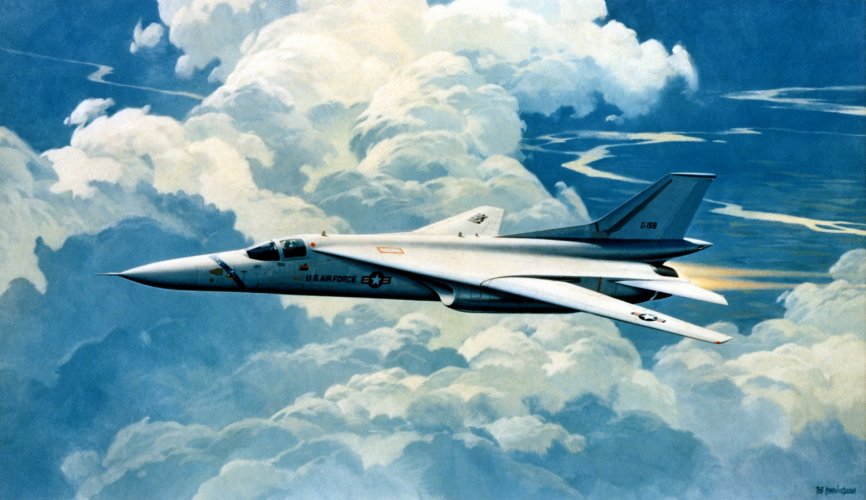
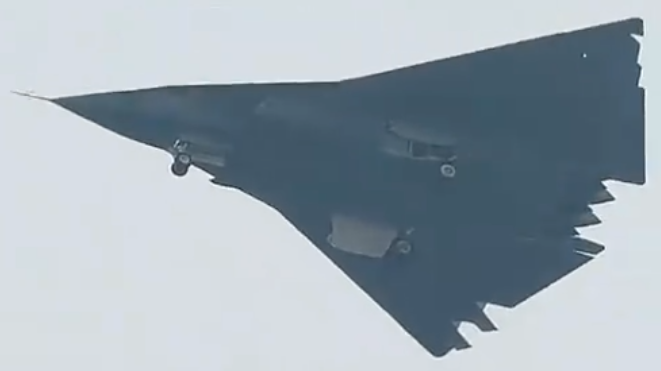
The 'J-36' appears to have no direct western analogue flying (strategic bombers are bigger, tactical strike aircraft are smaller). On the other hand, there are a couple of cancelled projects from earlier generations. I'm thinking of the TSR-2 (apparently meant to fly high altitude over the Pacific rather than low over Europe, but...), various incarnations of the Sukhoi T-54/60, FB-111H. Maybe the Tu-22M?

Of course the development of electronic bells and whistles has fundamentally altered the role, or given a new lease of life to the concept of a whatever you'd call these collectively.
 

Attachments

  • 54102.jpg
    54102.jpg
    90.4 KB · Views: 167
  • BAC_TSR-2_at_Duxford.jpg
    BAC_TSR-2_at_Duxford.jpg
    340.7 KB · Views: 127
  • q88.JPEG
    q88.JPEG
    404.1 KB · Views: 132
Brainfart, musings in the midst of procrastination, revelation in the shower, whatever...

The 'J-36' appears to have no direct western analogue flying (strategic bombers are bigger, tactical strike aircraft are smaller). On the other hand, there are a couple of cancelled projects from earlier generations. I'm thinking of the TSR-2 (apparently meant to fly high altitude over the Pacific rather than low over Europe, but...), various incarnations of the Sukhoi T-54/60, FB-111H. Maybe the Tu-22M?

Of course the development of electronic bells and whistles has fundamentally altered the role, or given a new lease of life to the concept of a whatever you'd call these collectively.
Those are all medium bombers.

IMO the closest analog to the J-36 is the F-111B. Supersonic missileer, not as maneuverable as the F-14.
 
So dogfighting is irrelevant to the J-20, J-35, J-16, J-50? Uhm, okay.

Dogfighting hasn't been relevant since the late 1980's in theory, and the early 2000's in practice, though. Putting the nose on the target simply stopped being important when JHMCS and AIM-9X popped up in USN/USAF and Python-IV in the IAF. Most planes in service today were simply designed in the 1970's when that stuff still mattered though.

Simple case of aircraft design being outstripped by weapons technology.

Those are all medium bombers.

IMO the closest analog to the J-36 is the F-111B. Supersonic missileer, not as maneuverable as the F-14.

The closest analogy is an airborne battle manager like E-3 tbh.
 
Last edited:
The closest analogy is an airborne battle manager like E-3 tbh.
Yes and no. Can we agree on "Well-armed Battle Manager"?

Though the Iranians were reportedly using their Tomcats as mini-AWACs in the 1980s, so the same could have been done with F-111Bs using the AWG-9.
 
Yes and no. Can we agree on "Well-armed Battle Manager"?

Being able to control other aircraft and organize strike packages from a single- or twin-seat aircraft is kind of the whole 6th gen deal now.

Though the Iranians were reportedly using their Tomcats as mini-AWACs in the 1980s, so the same could have been done with F-111Bs using the AWG-9.

No, because a Tomcat just datalinks. Anyone can do that now.

6th gen means mission planning and strike routing. It's similar to how ABMs work from E-3 or E-8. If a Tomcat is a flashlight that shows shadow puppets, then 6th gen's capabilities are more like a theater play with stage lighting and coordination between actors. We're simply at the point where the job of air battle management can be partially offloaded to individual pilots or two man teams. F-35's sort of kind of did this in Iran but they're only 5th gen.

What that means in hardware terms is 6th gen has bigger engines, for more electrical power, for running AI and creating mission packages.

This would be hard to do on the F-35 or F-22 which still have significant numbers of airframes running on 1990's processors AIUI.
 
Last edited:
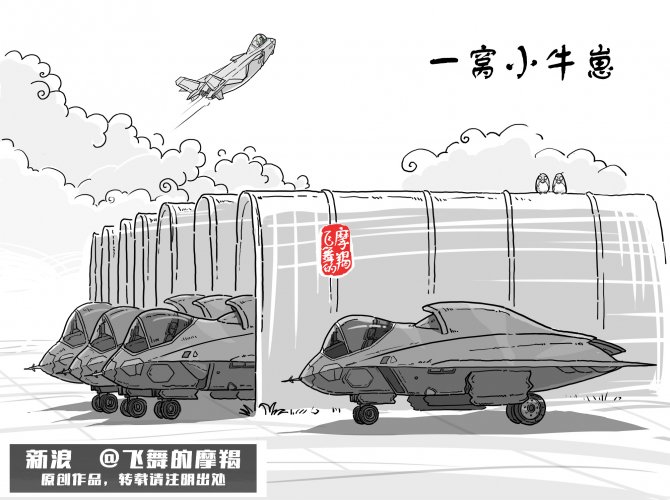
What are context of this? Is the artist who make this art someone in the know, with reputation for dropping hint?
 
Last edited by a moderator:
What kind of high altitude would you expect the J-36 to fly at Sferrin? 90,000 feet? That would probably be at the high end of the flight envelope I would think for the J-36 with the third engine, at that altitude it would be able to loft their long range missiles further and gain an advantage of being able to see the enemy first and to shoot first.
 
What kind of high altitude would you expect the J-36 to fly at Sferrin? 90,000 feet? That would probably be at the high end of the flight envelope I would think for the J-36 with the third engine, at that altitude it would be able to loft their long range missiles further and gain an advantage of being able to see the enemy first and to shoot first.

Very high wing area and large size could give it relatively good high altitude aerodynamic performance? Inlet design may not be optimal though? I'm sure someone in the U.S. (and elsewhere) is running a bunch of calculations on these designs, but they're classified. As usual, we'll be the last to know. I do wish someone with access to CFD could run us up some crude L/D numbers at different Reynolds', AoAs etc.
 
Same thoughts here Avimimus, it would be interesting to see these calculations but they are like you say burried deep in the black world which is a pity.
 
What kind of high altitude would you expect the J-36 to fly at Sferrin? 90,000 feet? That would probably be at the high end of the flight envelope I would think for the J-36 with the third engine, at that altitude it would be able to loft their long range missiles further and gain an advantage of being able to see the enemy first and to shoot first.
I don't think it'll be that high. 75k, maybe. Flying at 90k would require space suits.
 
The closest analogue currently in service is the Mig-31, and like the MIg-31 is primarily air-to-air but capable of slinging ALBMs, so will this aircraft be mainly A2A but have the ability to hit ground/sea targets.
 
The closest analogue currently in service is the Mig-31, and like the MIg-31 is primarily air-to-air but capable of slinging ALBMs, so will this aircraft be mainly A2A but have the ability to hit ground/sea targets.
Arguably yes, although I'm still sceptical about the ALBM part.

But in concept the MiG is definitely one of the closer matches (air to air focused, strong on board sensor suite, large airframe, two operators, integration with other forces), obviously with the two aircraft boasting features reminiscent of their respective era. While the MiG pioneered data link and networking with other MiGs and IADS back then, the J-36 will enter into a whole new dimension of networked warfare and sensor centric combat. The time where exceptional flight performance and a powerful radar were enough is not quite over yet but certainly nearing it's end.

Also immediately a more accurate comparison because it's not being compared to a freaking bomber.
 
Something just occured to me about a potential issue with the J-36's top intake - what happens when the pilots eject?
Something tells me if you eject right in front of an engine that is sucking in air with 10 tons of force, you're not going to be able to accept your Martin-Baker tie in person.
 
Last edited:
Something just occured to me about a potential issue with the J-36's top intake - what happens when the pilots eject?
Something tells me if you eject right in front of an engine that is sucking in air with 10 tons of force, you're not going able to accept your Martin-Baker tie in person.

The seats should be able to clear the intake. Still feels a bit sketchy.

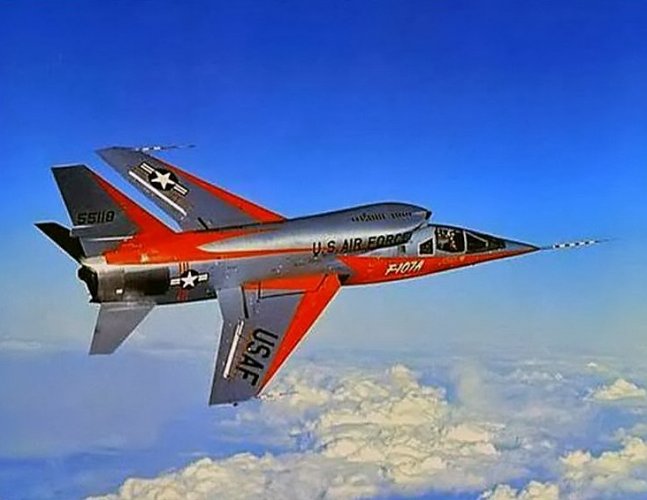
[Sneering in F-107 voice. :p ]
 

Attachments

  • USAF-F-107A-Featured-Image_filtered.jpg
    USAF-F-107A-Featured-Image_filtered.jpg
    66.5 KB · Views: 71
Something just occured to me about a potential issue with the J-36's top intake - what happens when the pilots eject?
Something tells me if you eject right in front of an engine that is sucking in air with 10 tons of force, you're not going to be able to accept your Martin-Baker tie in person.
It won't be a problem. Modern ejection seats use rocket engines that can thrust vector and control the direction of the ejection. Also, as noted above, it wasn't a problem with the F-107 either. Once you're moving at speed, air is being rammed into the inlet, not sucked in like when it's sitting statically on the ground. So, the air moving around the vehicle is the air moving around the vehicle. There's probably some slight increase in speed of the air going to the inlet depending on speed and thrust setting, but it isn't that different to the normal airflow around the vehicle. In most planes you have to clear a vertical tail, in this one you have to clear an inlet.
 
Any idea to why?

We won't know for years. We also won't know for certainty that the troughs won't come back later. They seem to be developing the aircraft rapidly (aiming for the earliest IOC), so features could be chosen because they are technically or tactically more desirable or because they involve less development risk, more established technologies or more commonality with other programs (e.g. sharing systems which are being matured for the J-50/J-XDS). There are many possible explanations.
 

Similar threads

Back
Top Bottom