Sineva
ACCESS: Secret
- Joined
- 29 April 2010
- Messages
- 470
- Reaction score
- 1,323


Okay... An origami space ship...Kevin Davies made this model of the Hooded Swan.

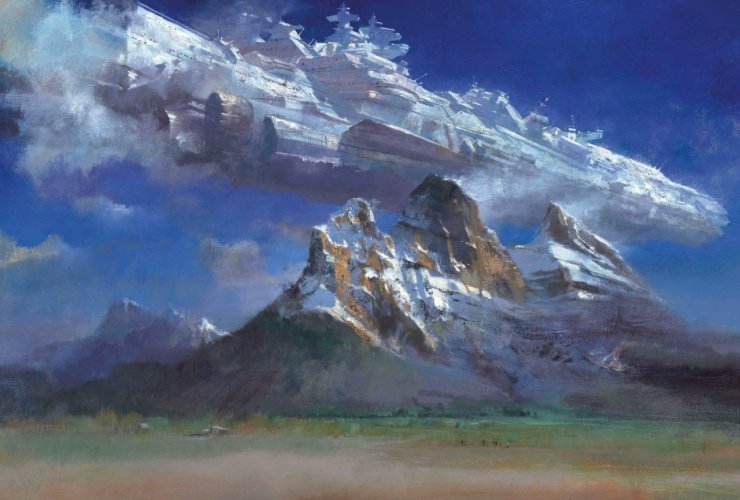
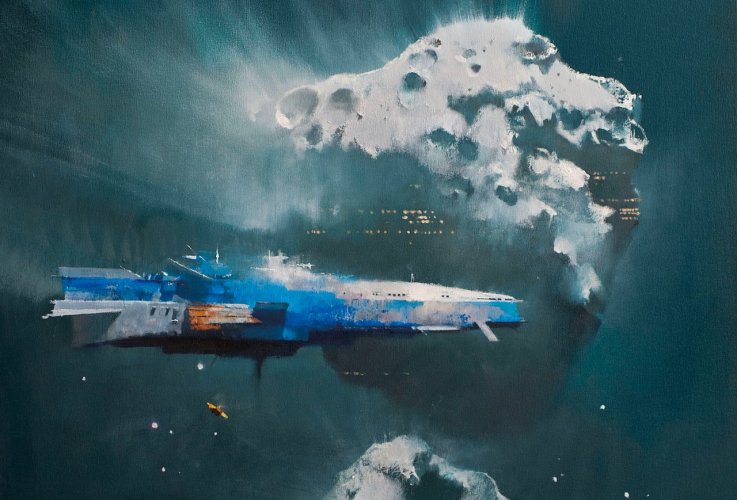
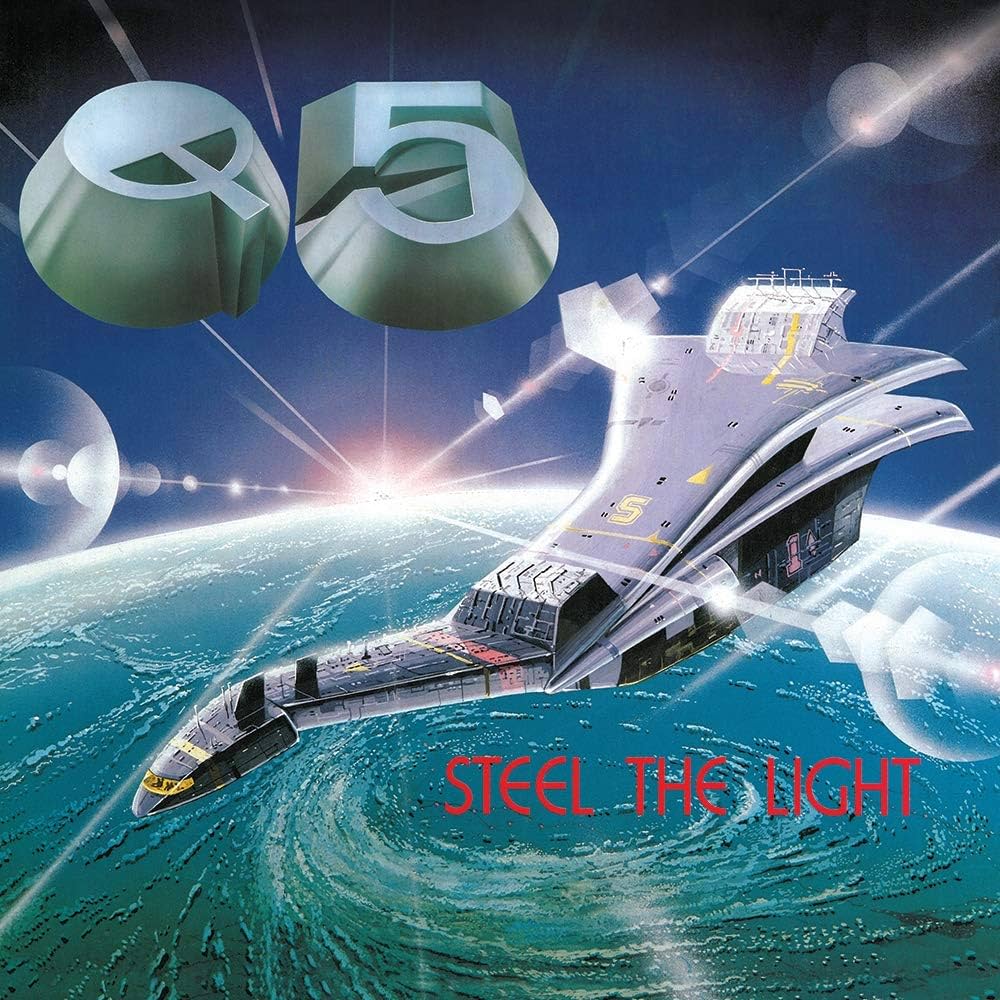
One of the paintings was also used as the cover art to the 1984 Q5 album Steel the LightAngus McKie created the cover art for the paperback editions of Brian Stableford's Hooded Swan series, depicting the eponymous starship. The images were later picked up by Stewart Crowley for his Terran Trade Authority books, though presented as illustrations for a different story. Stableford had a pretty sarcastic sense of humour, like his narrator, Grainger, the ship's pilot. 'Hooded Swan' was an alternate name for the dodo and Stableford used it as an ironic commentary on the obsolescence of the idealism of its creators against the emergence of a galactic empire from the mergers of multistellar corporations. McKie was more literal, modelling the silhouette of the ship on a swimming swan. In any case, the design proved to be a favourite with readers of both franchises. To start with, here are a few of McKie's most beautiful and evocative covers.


Uno de los nuestrossadly Painter Renato Casaro has passed away
he made mostly cover for Movies but also sci-fi stuff
like this Perry Rhodan


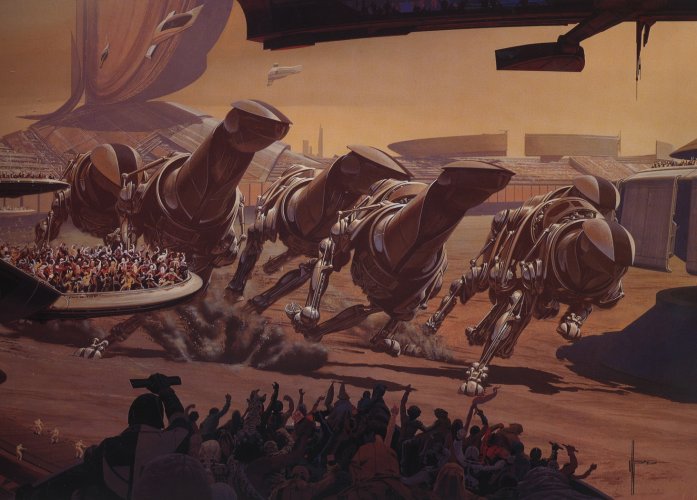
What is this future "sports" thing that you speak of?Another Syd Mead vision of future sports....
Racing robots instead of Animals.What is this future "sports" thing that you speak of?
Racing robots instead of Animals.
I sense this is starting to trend towards the spirit of Robot Wars, see https://en.wikipedia.org/wiki/Robot_Wars_(TV_series), except sans human remote control, but with AI in charge instead. Please, do go on, but broaden the scope from linear racing (lame!) to octagon death matches...Racing robots instead of Animals.
it gonna end like this...I sense this is starting to trend towards the spirit of Robot Wars, see https://en.wikipedia.org/wiki/Robot_Wars_(TV_series), except sans human remote control, but with AI in charge instead. Please, do go on, but broaden the scope from linear racing (lame!) to octagon death matches...

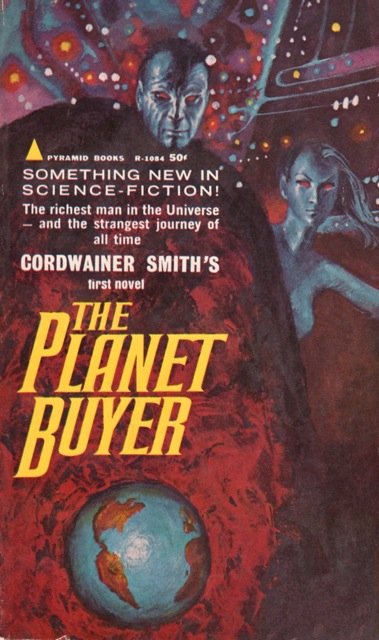
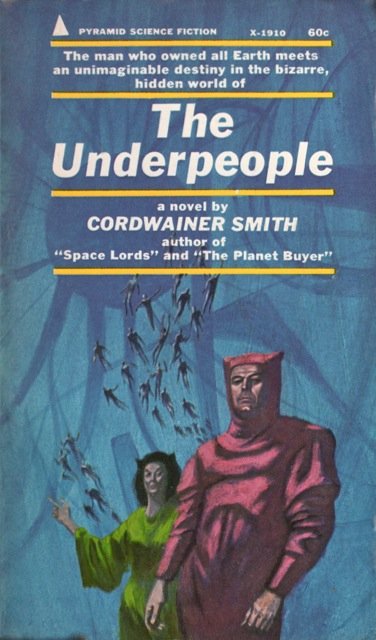
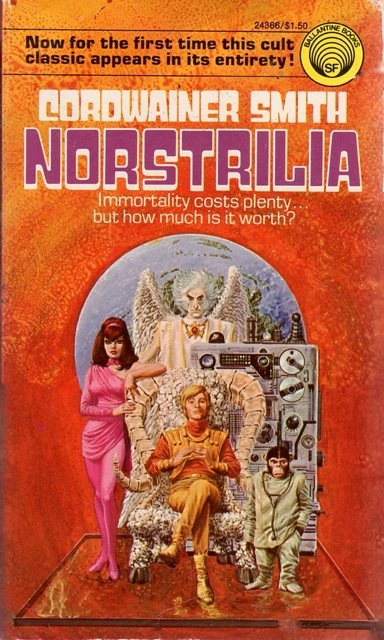
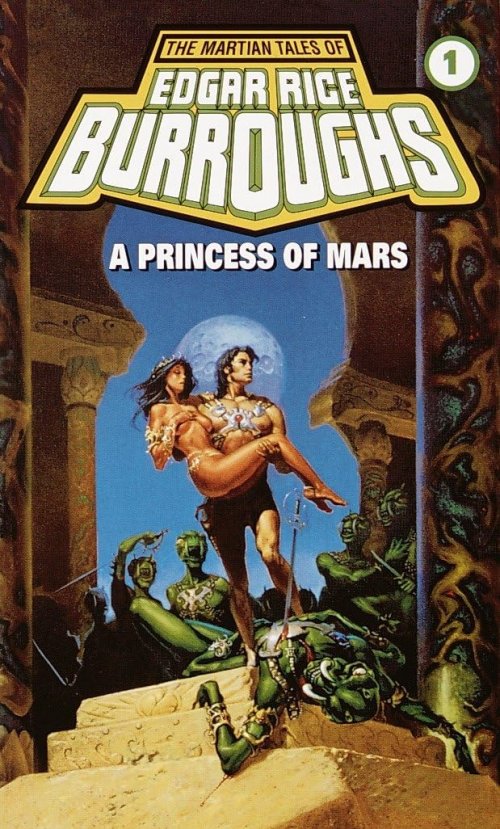
Same artist, three books by Philip Jose Farmer. I haven't read them, so I don't know if the cover for one of them is relevant, but it obviously refers to Gustave Moreau's 'Oedipus and the Sphinx' of 1864.
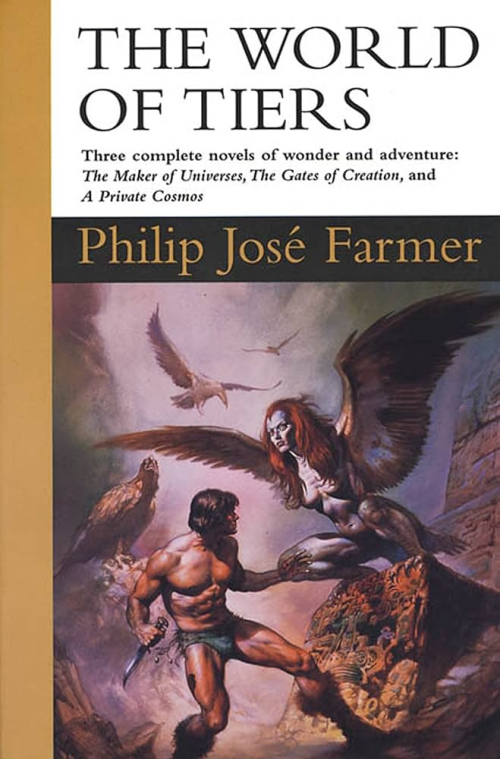
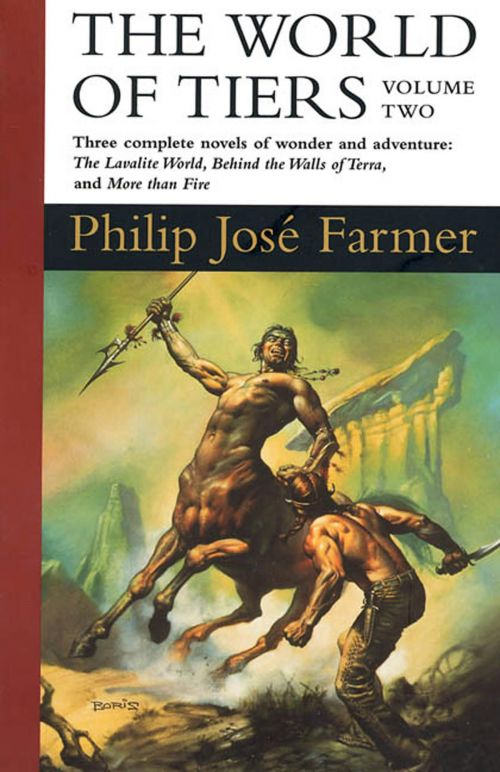
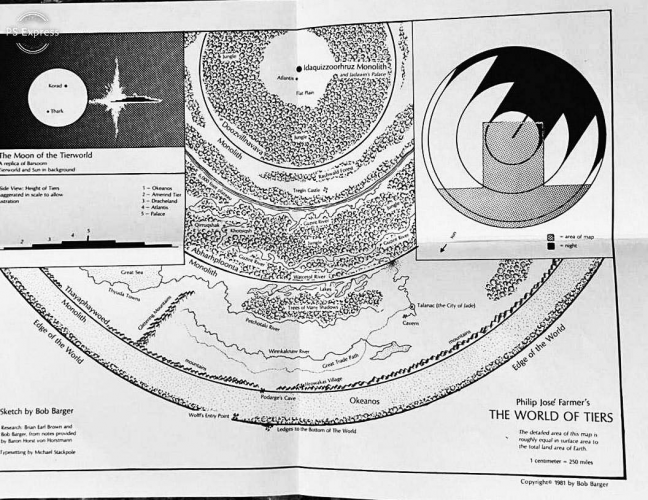
the cover artist is Boris VallejoGreat book series. Artificial universes and multiverse hopping, great fun.



Interesting I remember seeing a single reference to that project in an early book on computer graphics (The title escapes me.). From what I remember the author had stated that the results had not been worth the expense, but didn't include any pictures. I'm going to say that given the time period that's not a bad result.A digital x-wing test from way back in oct 1978,tho physical models were still the cheaper option,however 6 years later they would use digital effects for the spacecraft in the last star fighter.
A digital x-wing test from way back in oct 1978,tho physical models were still the cheaper option,however 6 years later they would use digital effects for the spacecraft in the last star fighter.
It reminds me of when good old cell animation or even physical models were used to simulate graphical displays.View: https://www.youtube.com/watch?v=m8aYL2l5quU
yes Lucas worked with CGI already in Star Wars: New Hope
The Dead Star animation that show main Target is made with Computer
but it was simple and easy to save time and Money
because it needed high end Computer to produce and rent time were expansive.
No you couldn't just buy a Computer for that in 1970s,
you needed to rent time on Large Mainframe computer, who cost millions of Dollars in that time...
1978 it was still to expensive to make X-wing so in detail for Star Wars: Empire Strike back.
1982 the prise on rent computer time were low to make TRON or Last Star Fighter.
But Art Durinski who work on TRON, had to make model "simpler" for rendering.
The CGI division at Lucas Film form later own company called PIXAR...

It reminds me of when good old cell animation or even physical models were used to simulate graphical displays.
The computer graphics map of manhattan in 1981s escape from new york was actually a simple physical model with the edges of the buildings taped to produce a faux vector type graphic effect.