- Joined
- 16 December 2010
- Messages
- 5,891
- Reaction score
- 8,650


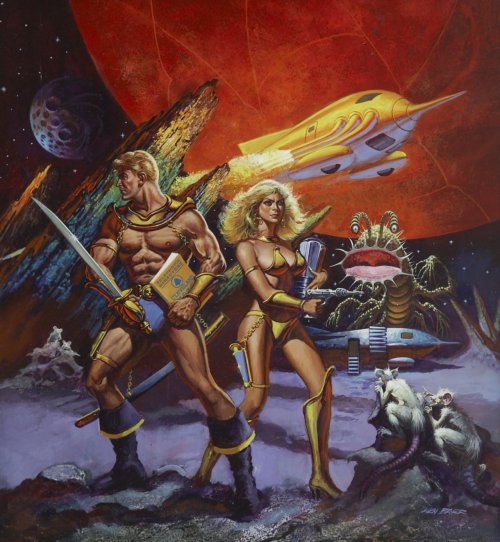
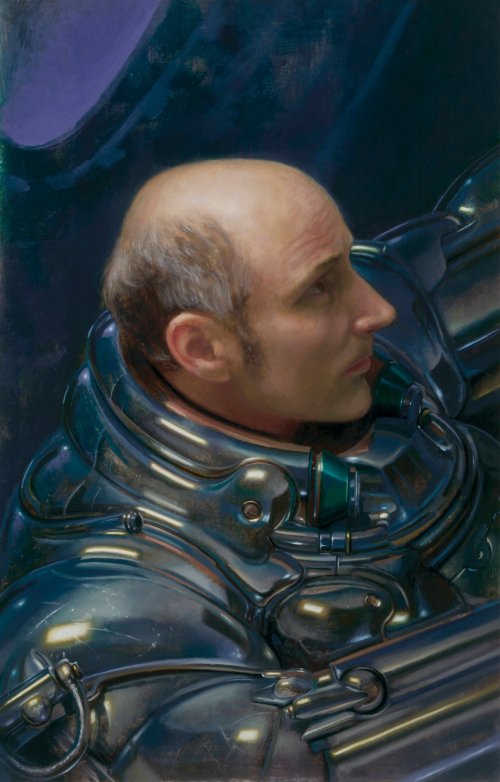
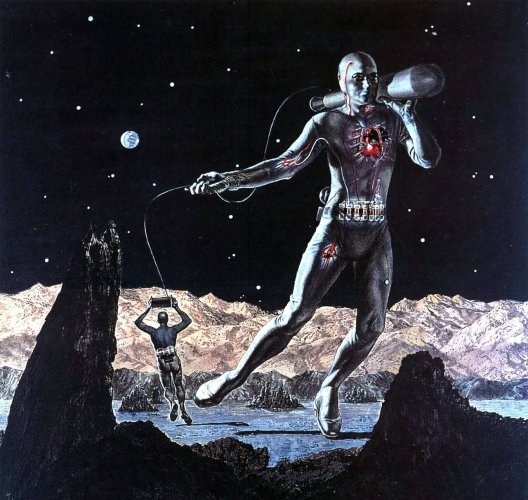
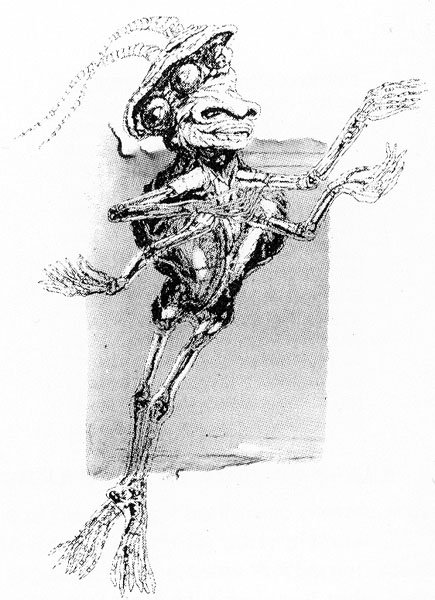
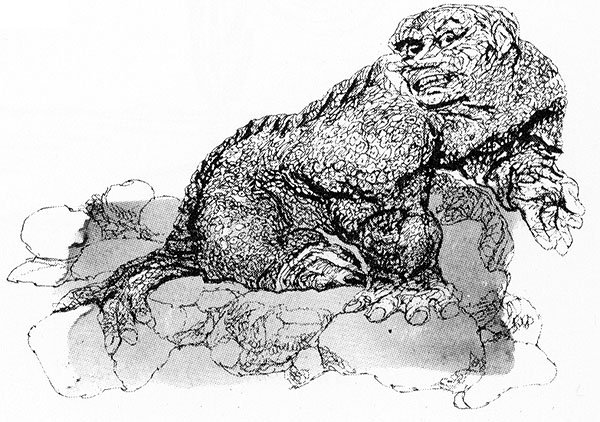
Santerminator?Art by Richard Corben for ‘Warchild’ by Richard Bowes


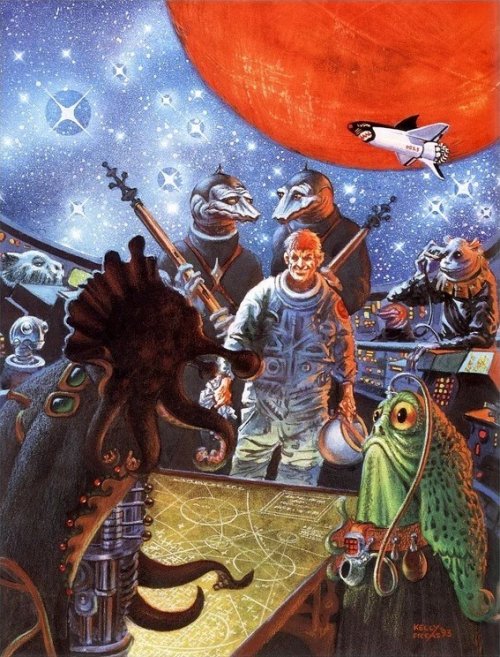
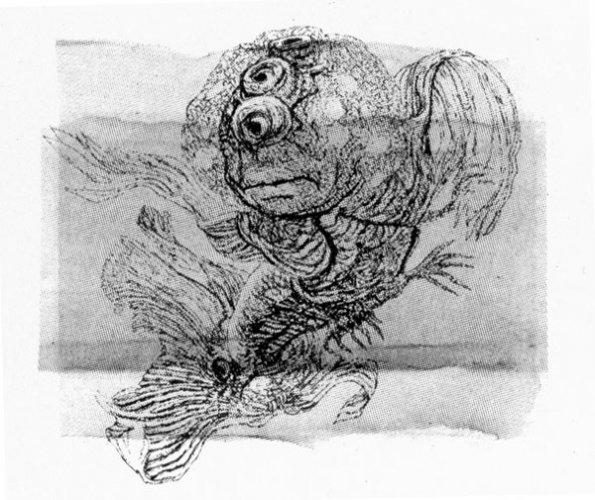
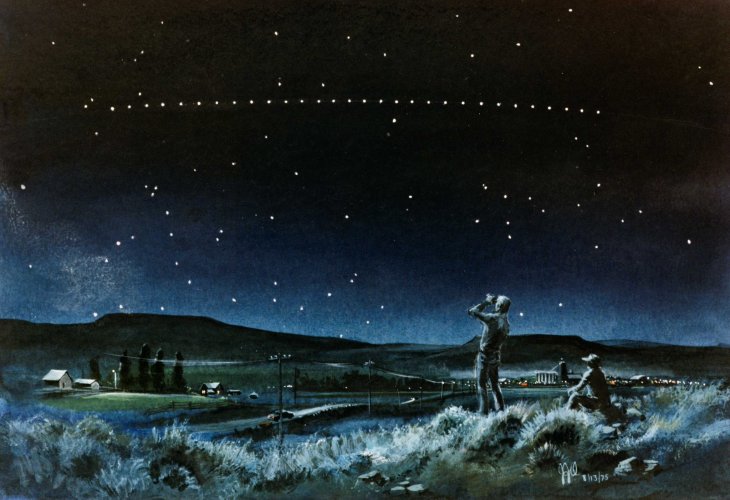
Star Wars "cantina" style?Frank Kelly Freas for an unknown publication

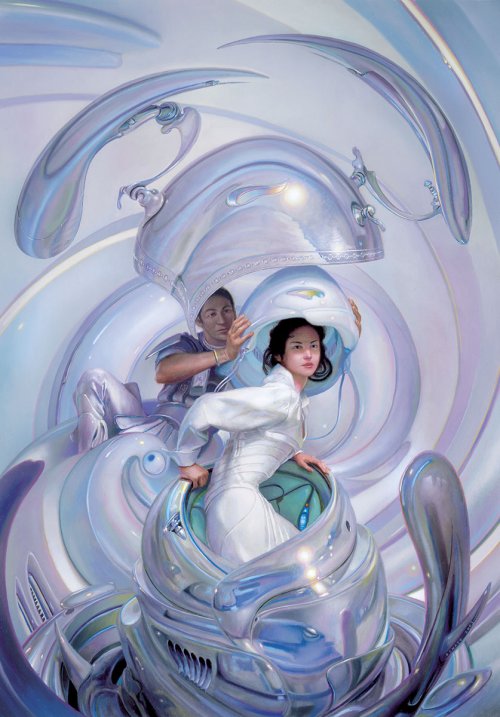
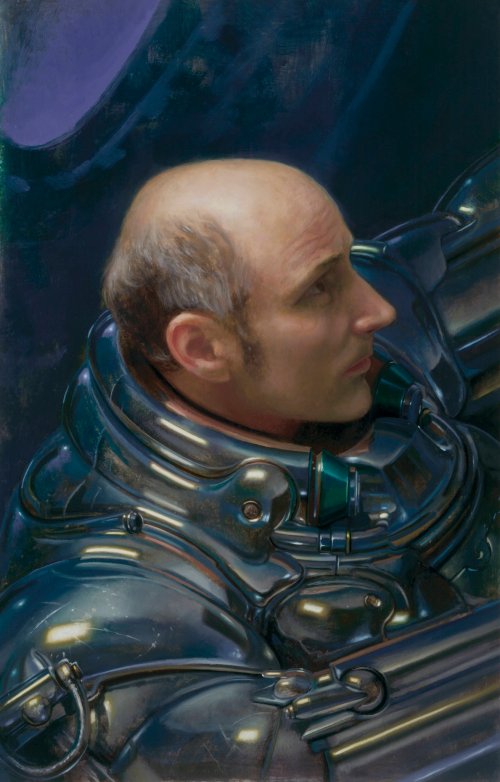
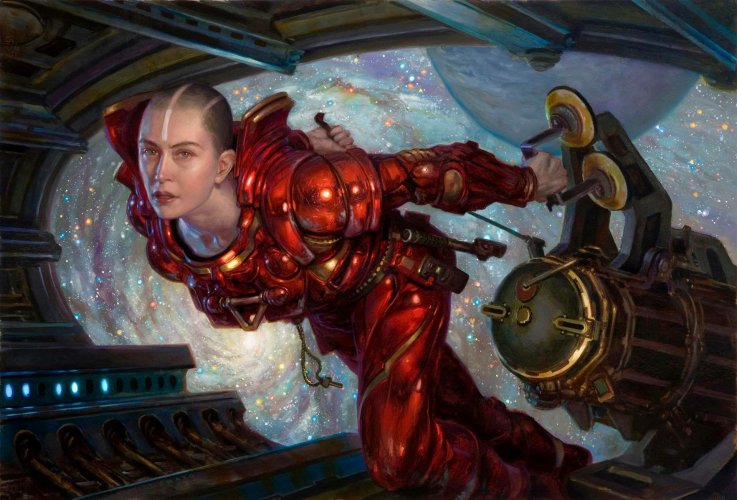
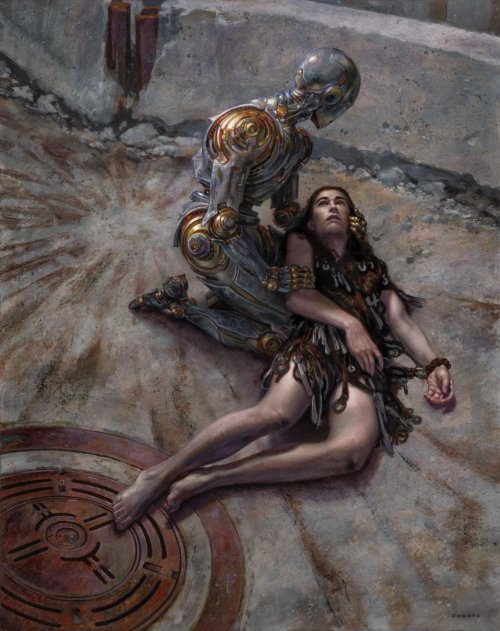
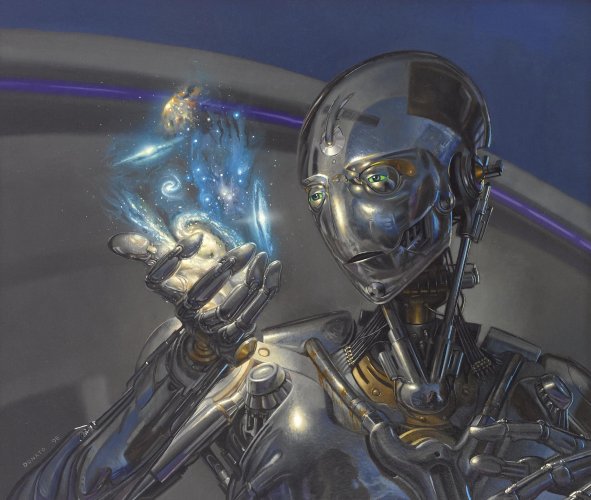

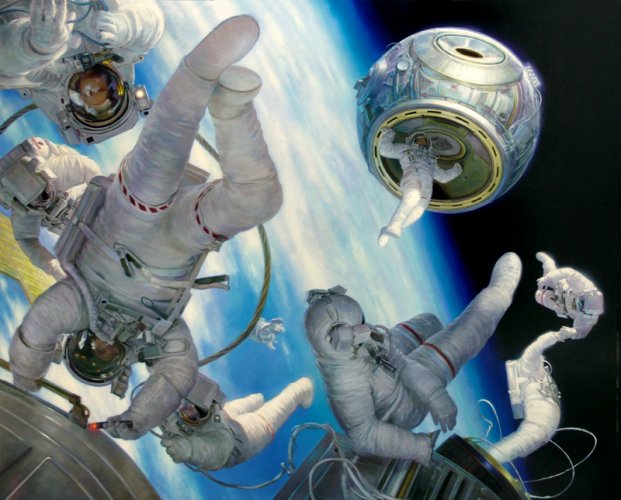


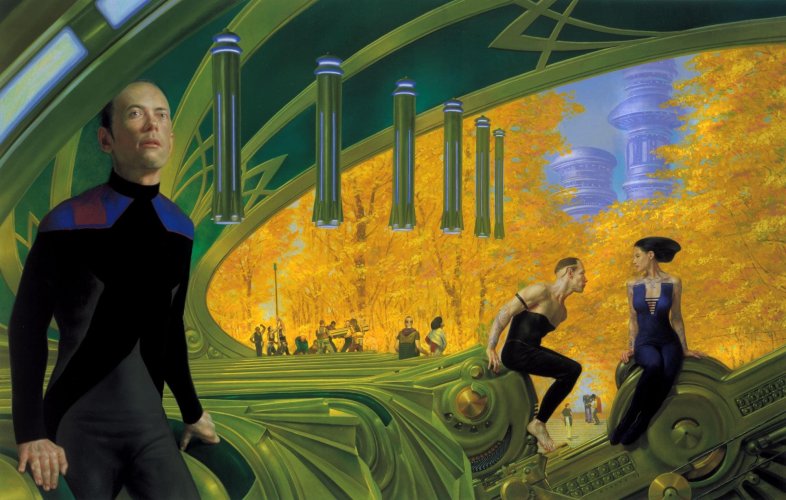
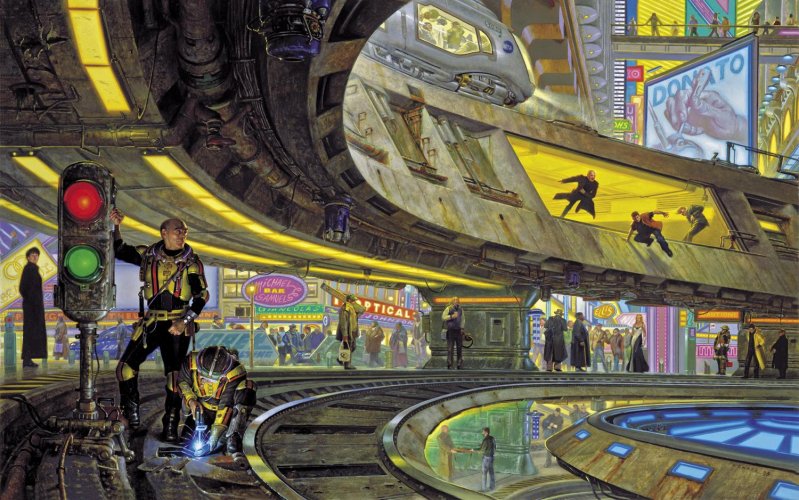
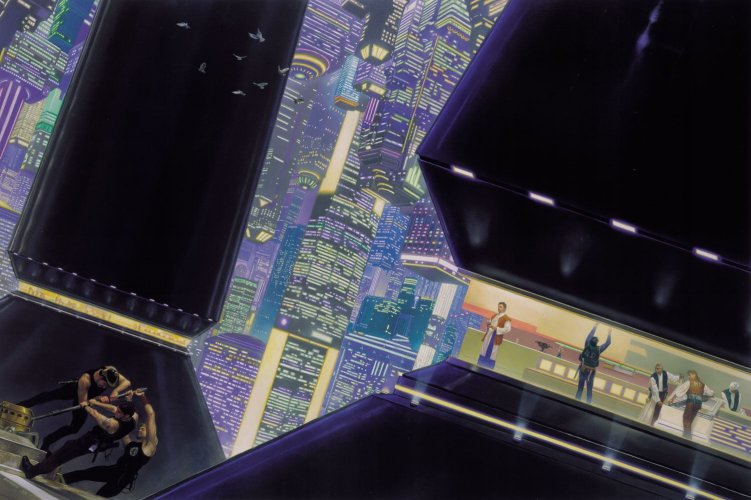
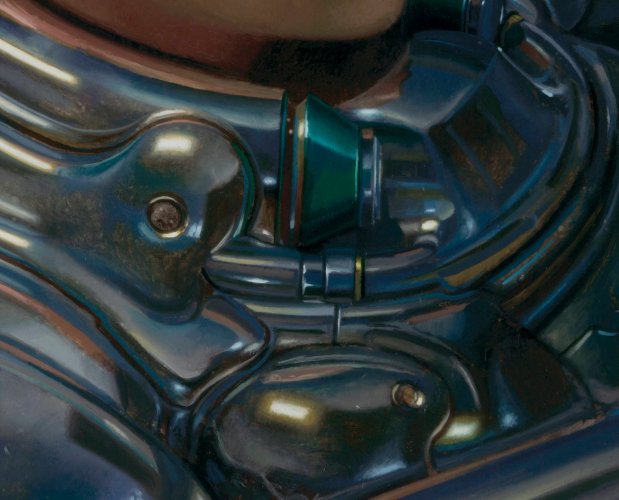
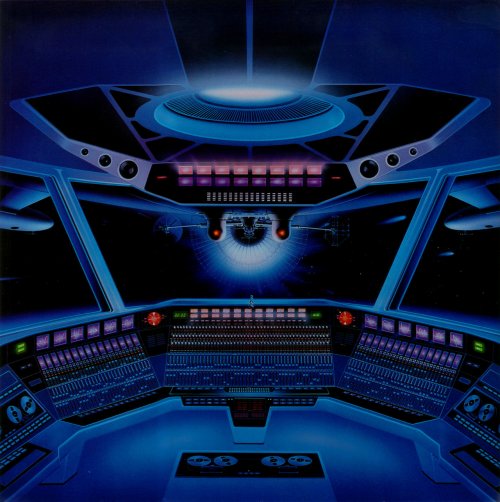
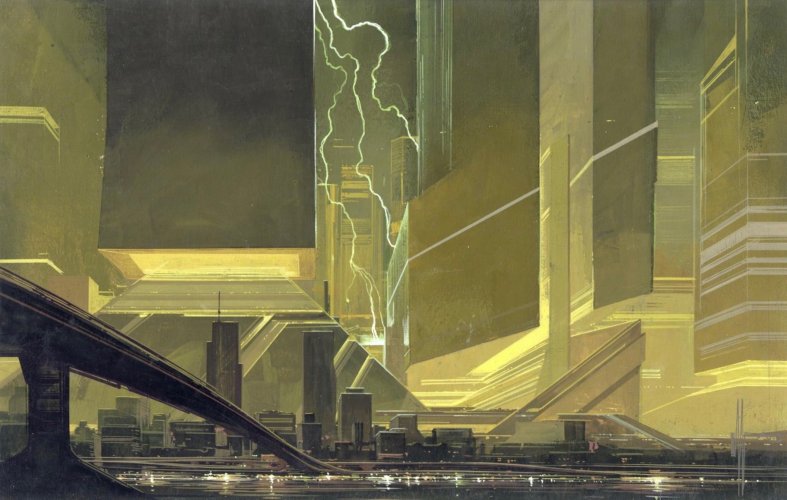
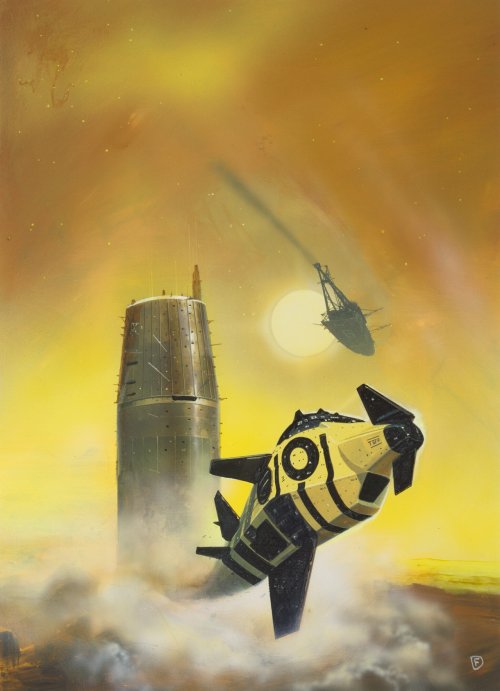
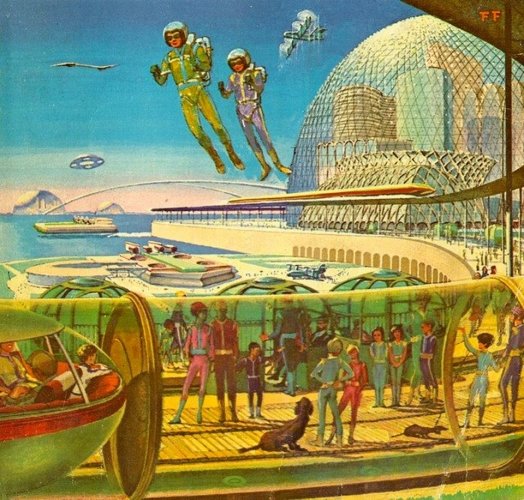
That first one, with green intermediate structure and yellow background, has a Jim Burns flavor about it to me.The art has a kind of Syd Mead-ish feel.
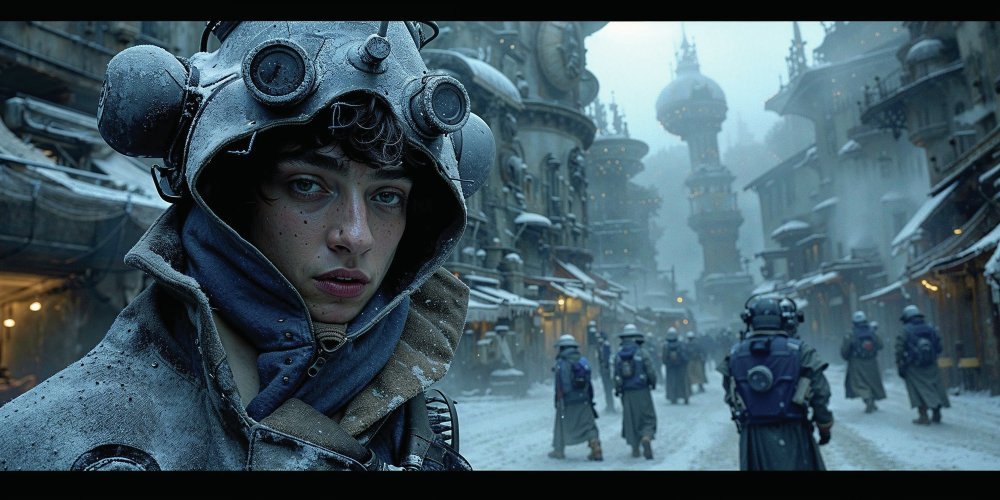
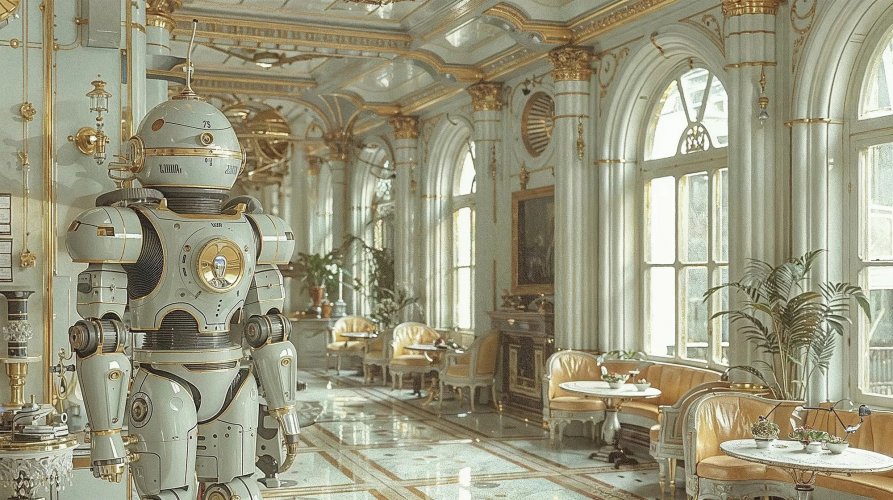
Most AI-produced work is, well, slop. Jonsson's work charms me though and AI is just an initial tool for him.
https://www.architectmagazine.com/t...ng-worlds-of-fredrik-jonsson-and-liam-young_o
A building that hovers over the ground is somewhere between a spaceship and a brutalist or Metabolist structure that might have been built in the 1970s but is here surrounded by 1950s-vintage cars.
The Metabolist movement emerged at the Tokyo meeting of the 1960 World Design Conference (an epilogue to the Congrès Internationaux d'Architecture Moderne [CIAM, 1927-]), with the proposal that architecture should not only embrace new technologies and the enormous scales of the post-war period but also develop living, self-generating systems that could adapt over time. Founded by a group of ambitious young architects intent on challenging the status quo and thus establishing their own presence among the international congress of leading architects, the movement's core group included the architects Kiyonori Kikutake, Fumihiko Maki, and Kisho Kurokawa, all of whom later enjoyed enduring international reputations. In addition, another architect, Masato Otaka, the critic Noboru Kawazoe, the graphic designer Kiyoshi Awazu, and the industrial designer Kenji Ekuan were also involved in the production of the bilingual manifesto published by the group.
Although the Metabolists were a small group, Metabolism as a movement included others, especially Kenzo Tange and his assistant Takashi Asada, who nurtured the founders through a sort of late-night salon. Tange's "City for 10 Million People" (1960), to be built along a series of looped roadways stretching across Tokyo Bay, was a direct response to his proteges' work. Arata Isozaki, working for Tange during the same period, was also identified with the movement, but he took a darker view, reflected in his sketches of brutal concrete towers rising from ruins.
The original Metabolists' relative lack of professional experience was reflected in their audaciously futuristic proposals. In the group's only publication, Metabolism 1960: The Proposals for New Urbanism, Kikutake's sketches were ...

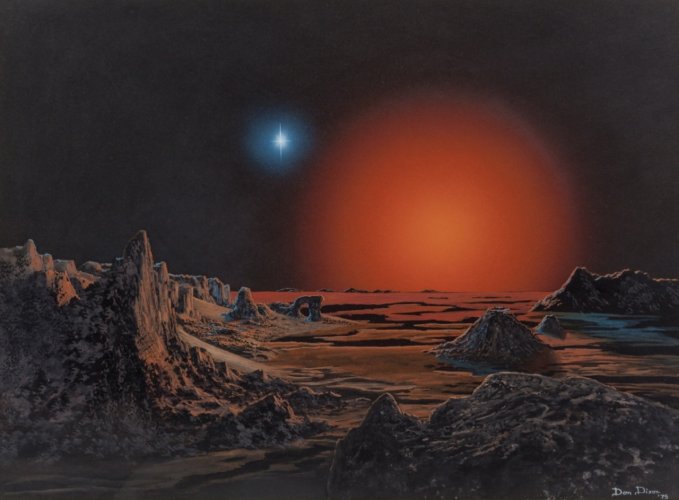
I think it might be a red giant with a white dwarf companion over an imaginary planet.A depiction of the Martian surface by artist Don Dixon for an unknown publication.
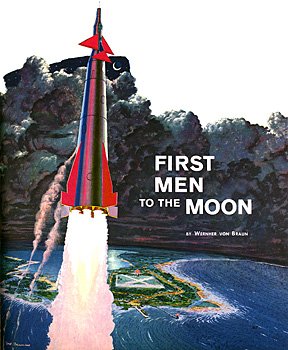
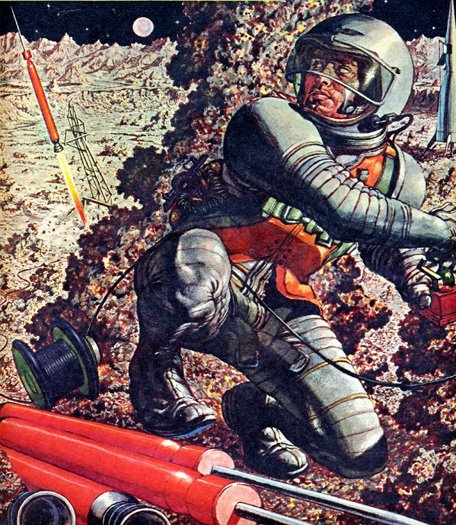
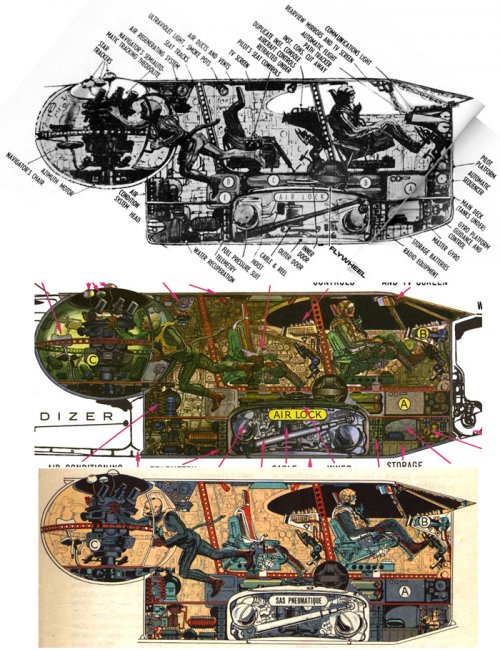
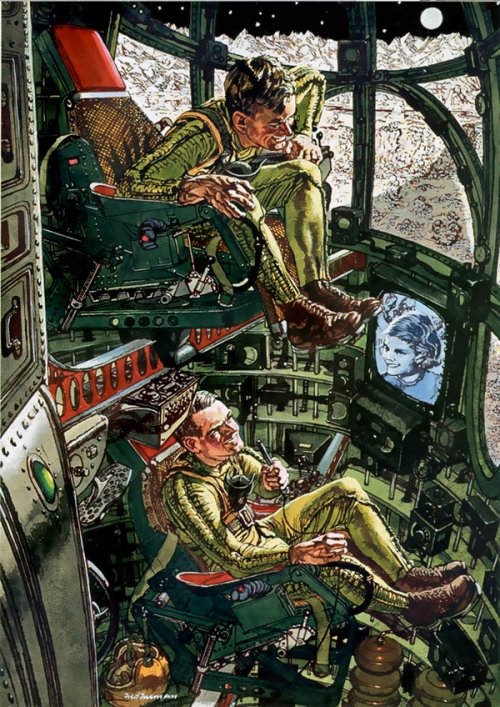
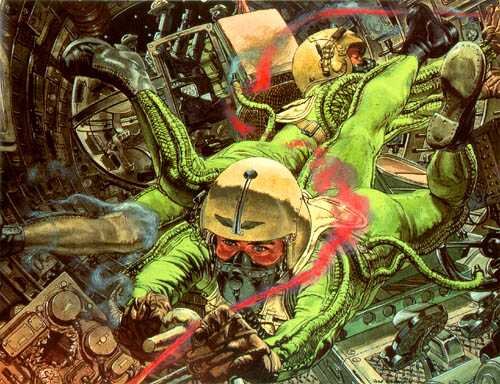
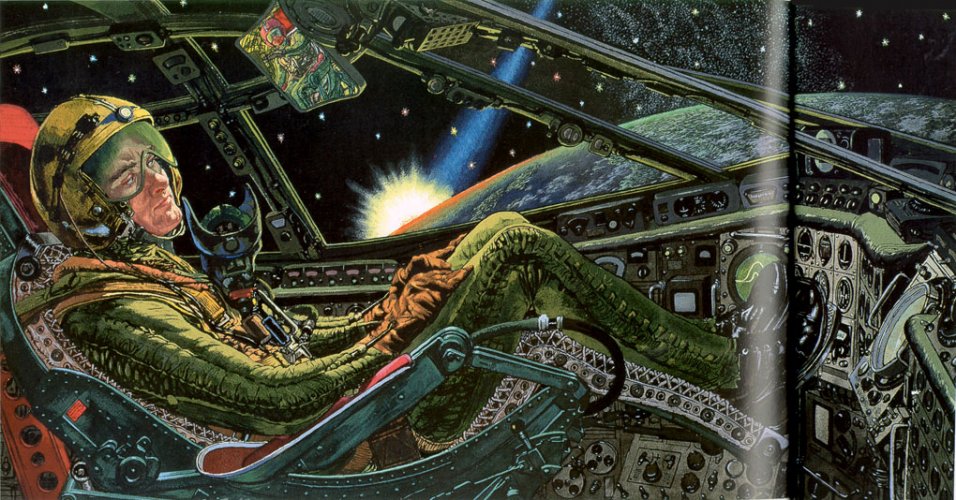
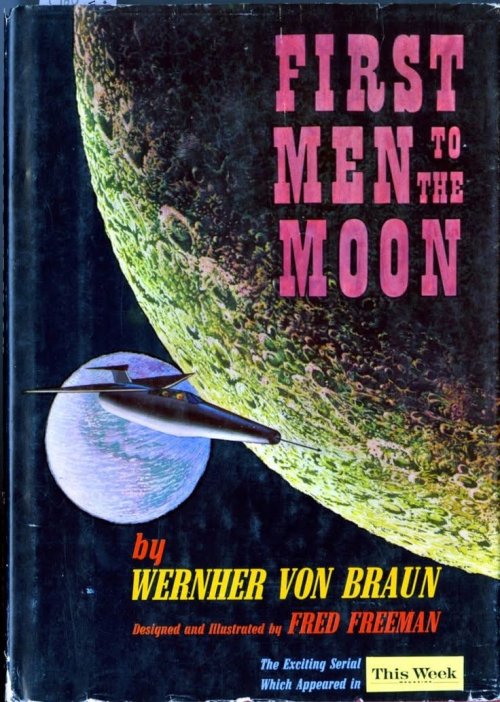
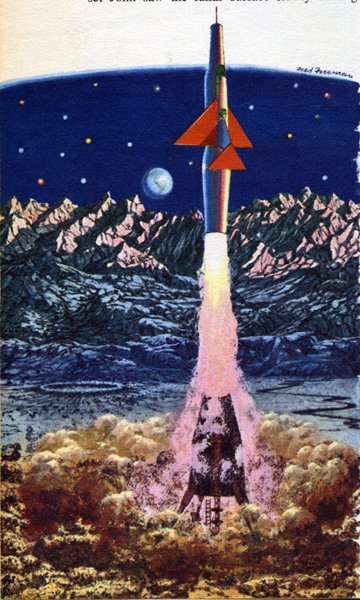
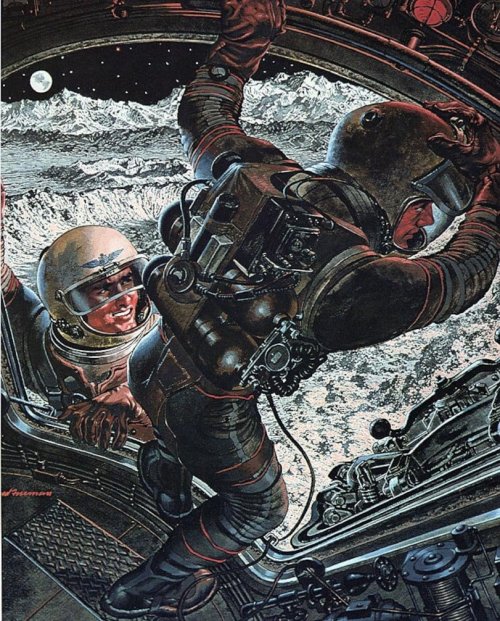
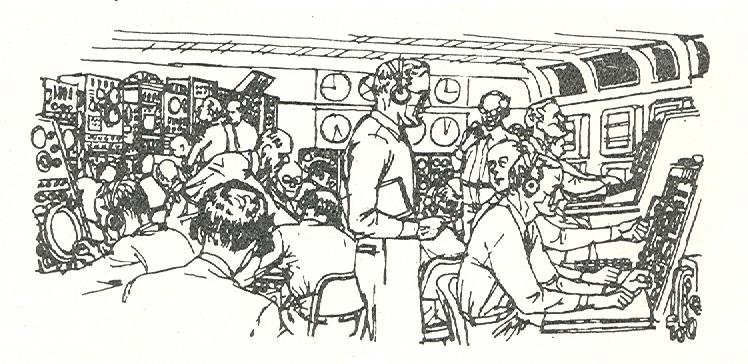
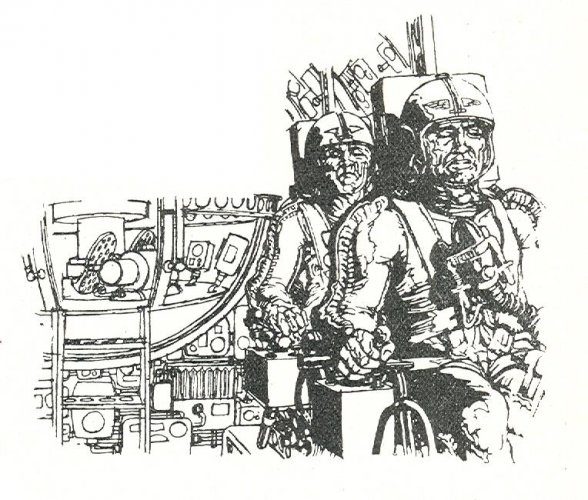
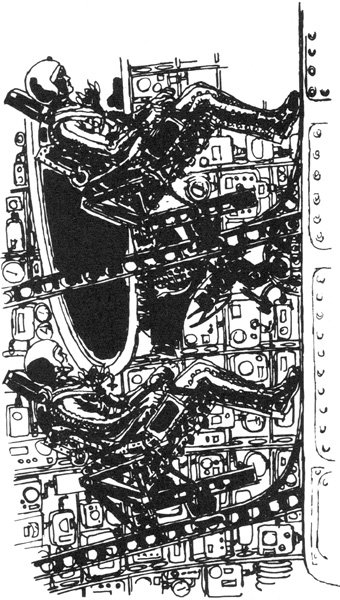
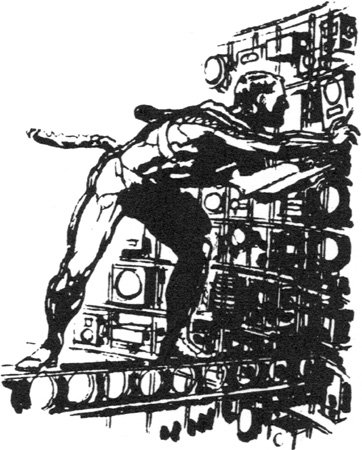
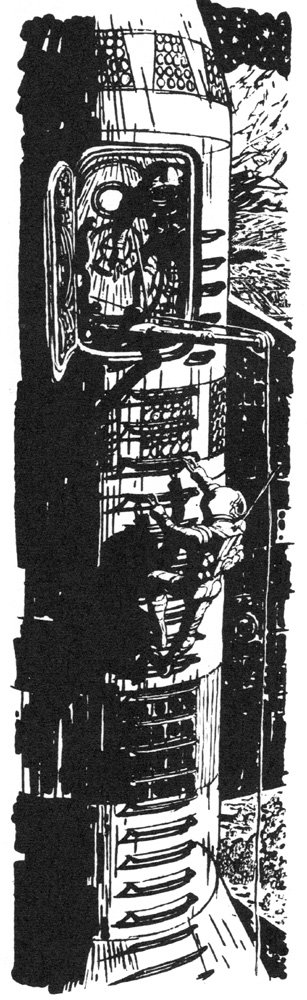
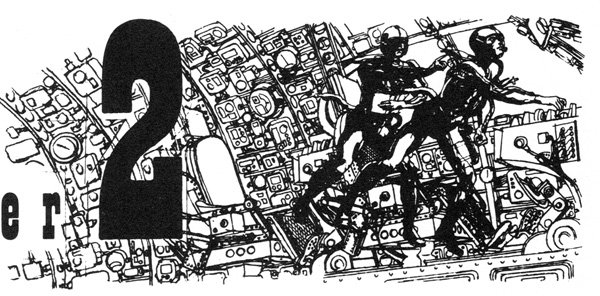
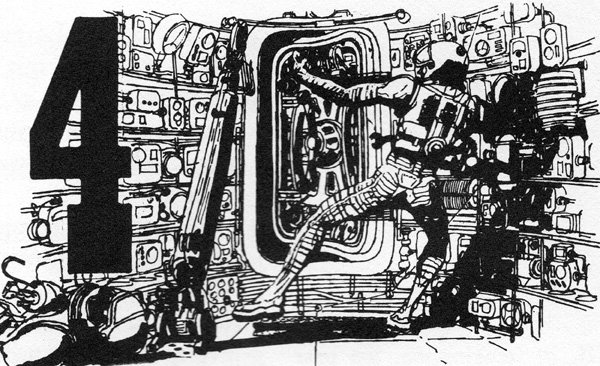
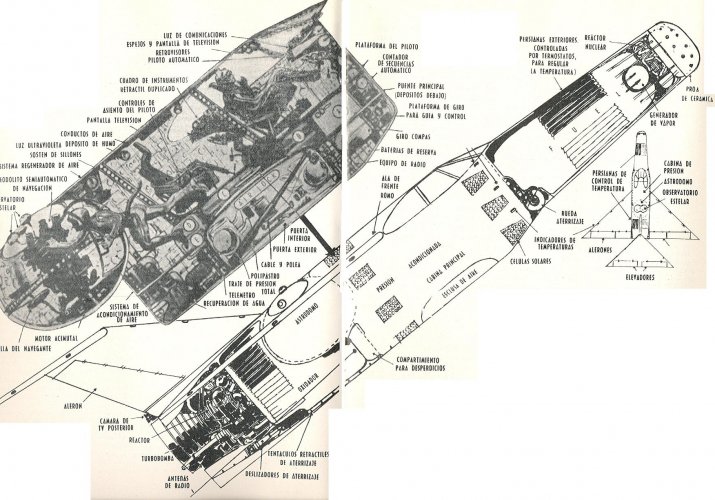
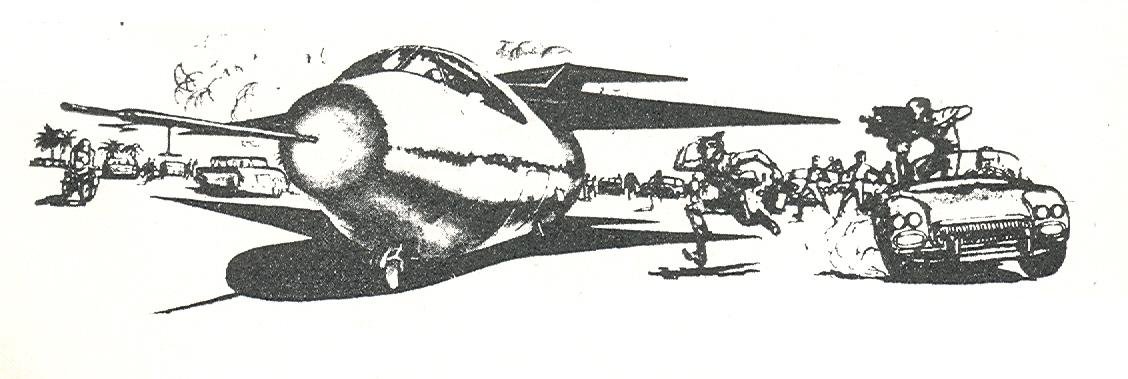
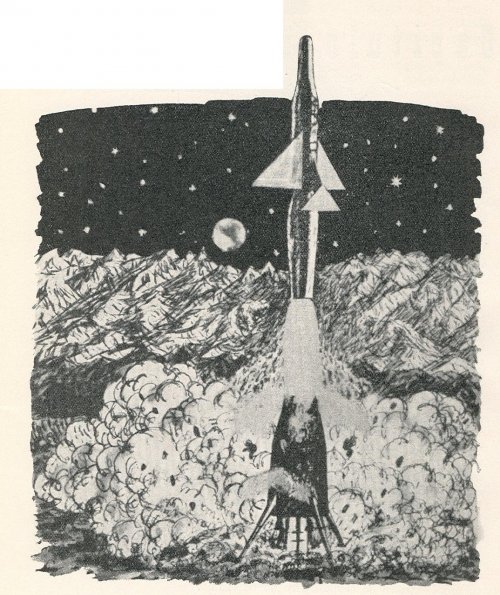
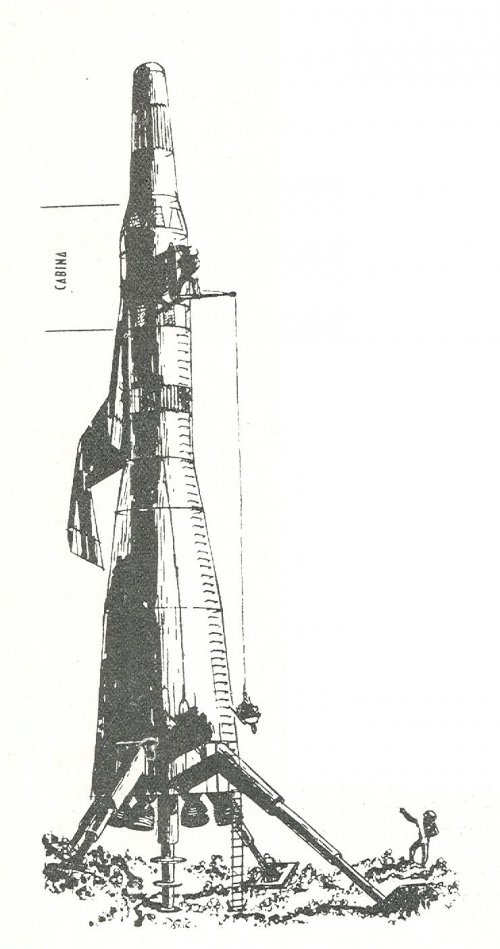
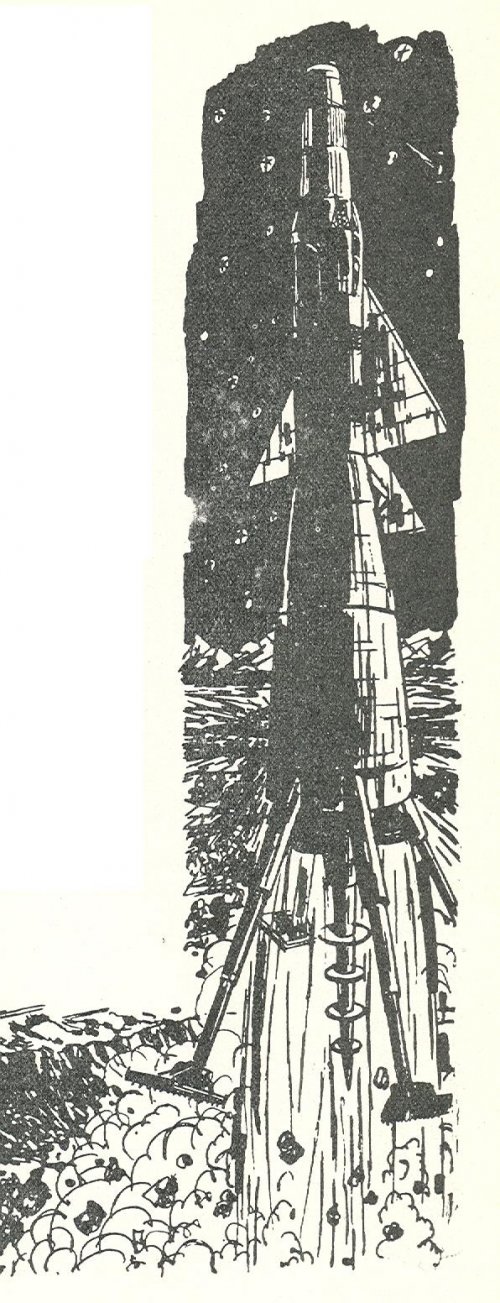
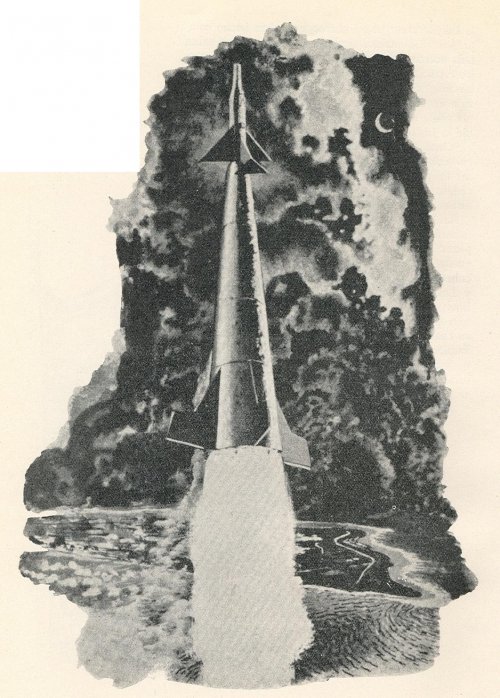
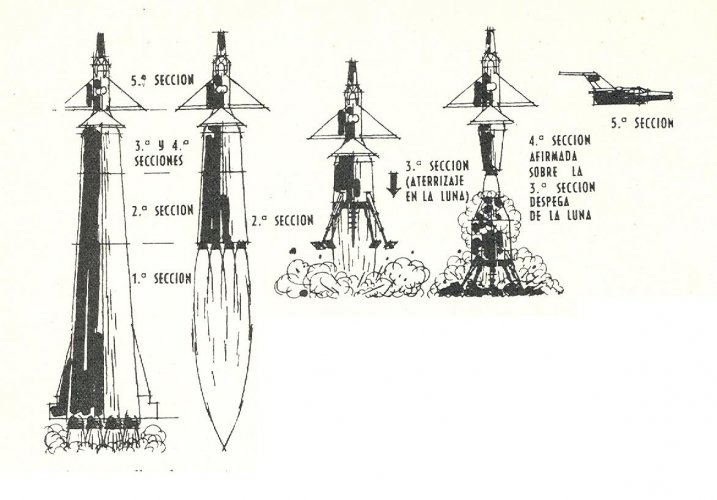
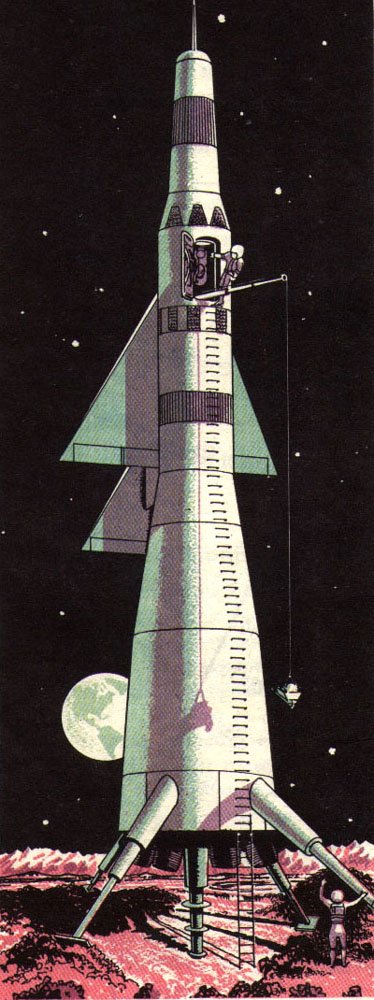
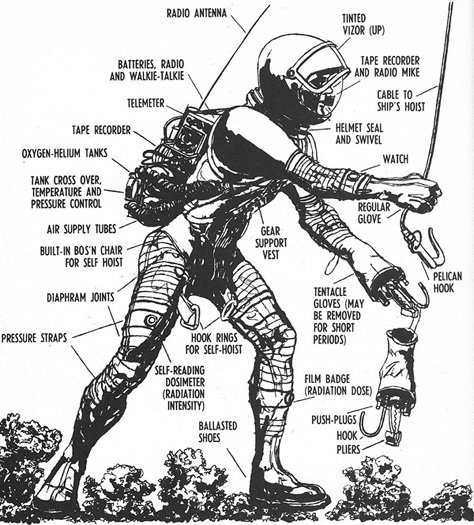
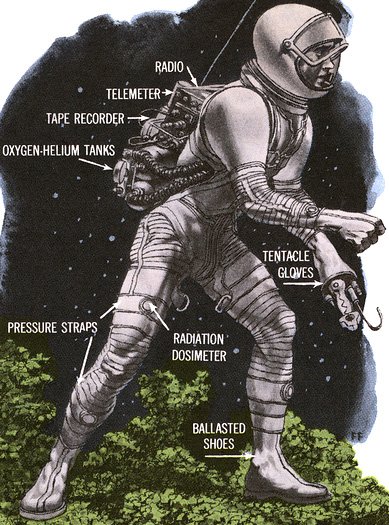
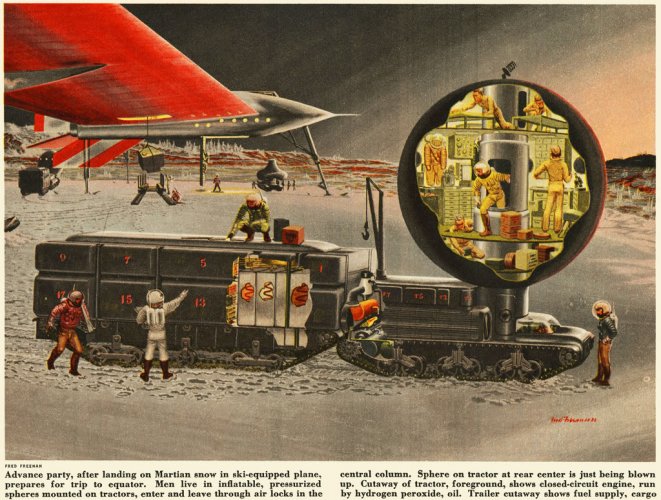
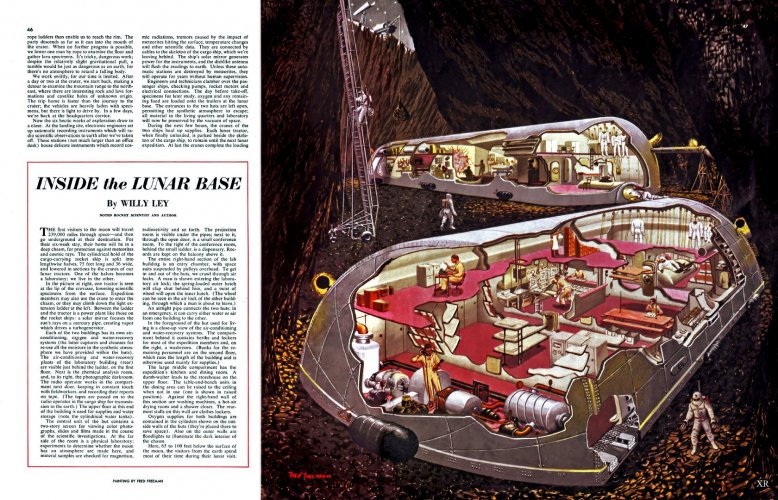
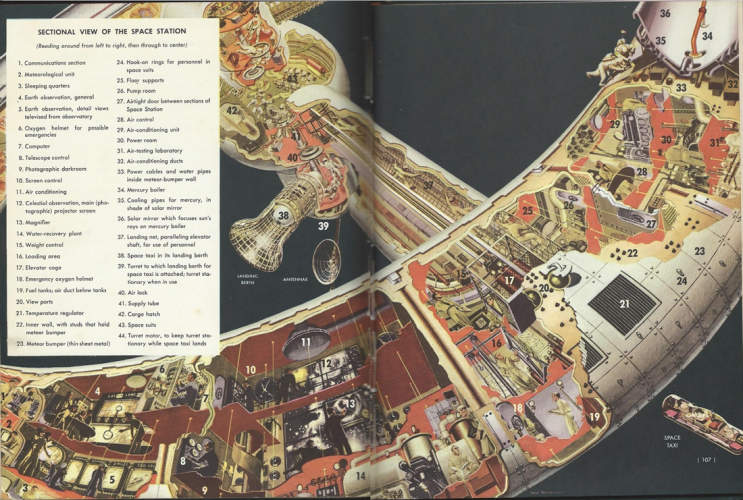
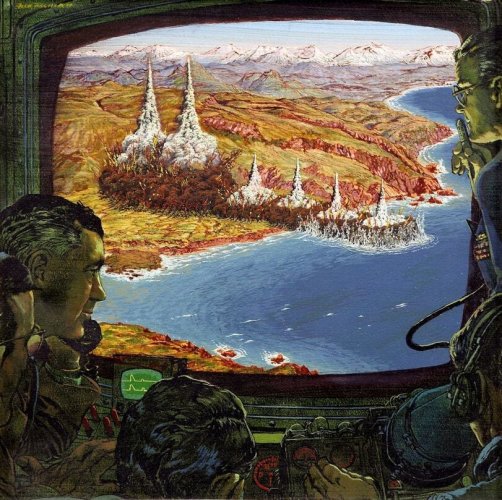
Art by Fred Freeman for Werner von Braun's First Men to the Moon, 1960. Von Braun had already collaborated with Chesley Bonestel for Collier's in 1954 and this dates from when Mercury was already well under way, but is obviously divergent from the eventual Apollo!
https://en.wikipedia.org/wiki/First_Men_to_the_Moon
Reviewing the book in Amazing Stories, S. E. Cotts wrote that while it appears to target young adults, the technical details of the voyage will appeal to older readers. He felt that where von Braun adds science to the story, the characters tend to become "experimental robots", but when he discusses the science separately in the book's copious margins, the author brings the tale "alive with authority and interest".[8] Science fiction writer and critic, P. Schuyler Miller described the book as a "thin hybrid" of science and fiction. In a review in Analog Science Fact & Fiction, Miller said the book is "[t]echnically impeccable", but felt it is school library material and "offers very little to adult readers who have any knowledge of science fiction". Miller did, however, compliment the technical discussions and diagrams in the wide margins, adding that it made the book "unusual and interesting."[15]
Oh where are the plastic model kits with transparent parts to show the interior details and crew figures?a habitat in a crevasse (the sort of thing we'd propose for a lava tube today), a Mars rover with a spherical inflated habitat, and a centrifugal space station.
Not to mention the plastic model kits of the people with the transparent parts to show the interior organs. Remember those?Oh where are the plastic model kits with transparent parts to show the interior details and crew figures?
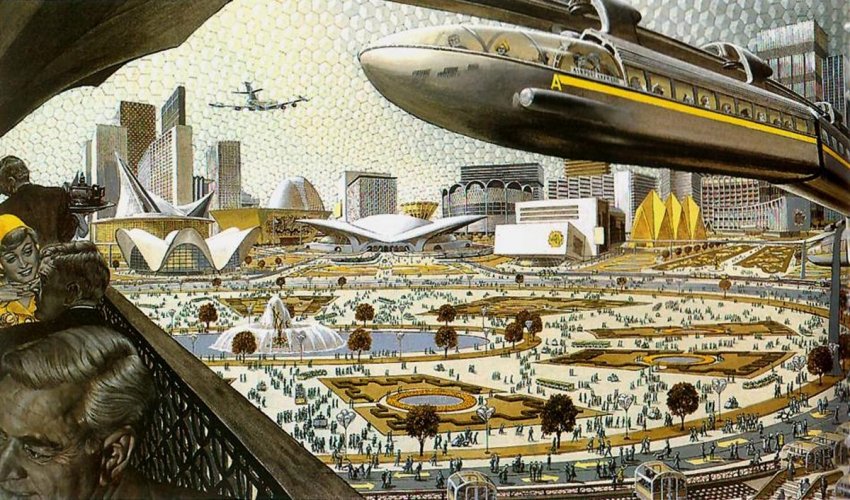
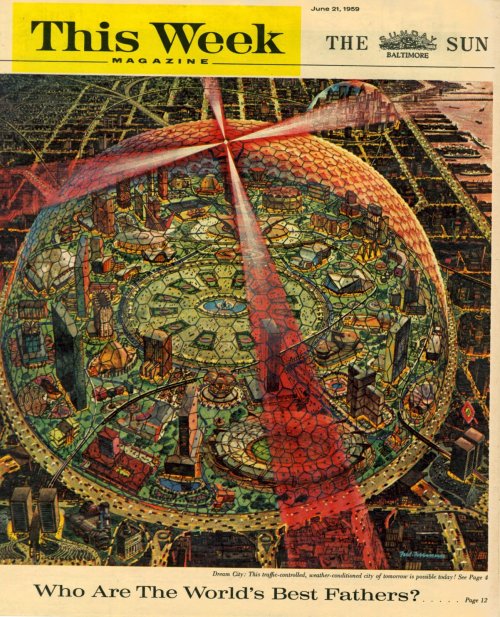
Better domed than doomed.That perennial of futurism, the domed city (still Freeman).
Spanish word for scanner, since that Images are coming from Justo MirandaEscaneer (sorry, is that a handle or a file name?)
Thank you for posting these earlier, Justo!Spanish word for scanner, since that Images are coming from Justo Miranda
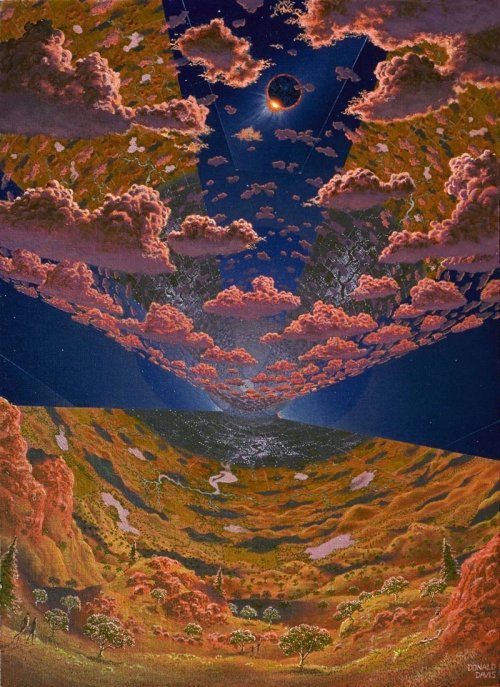
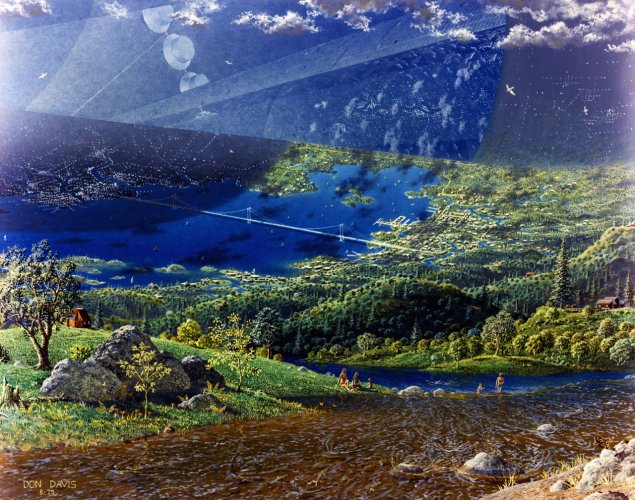
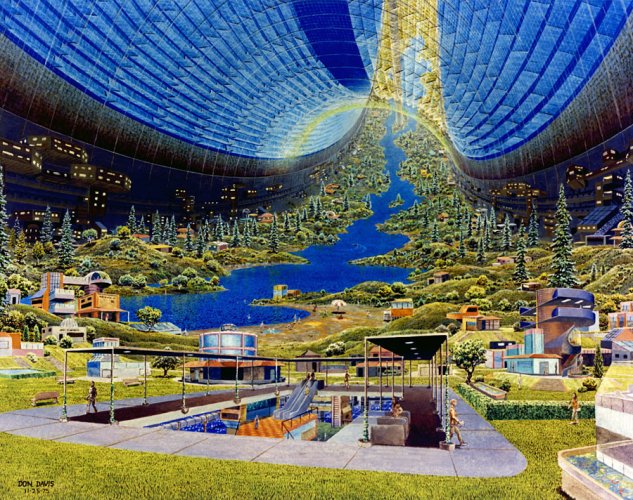
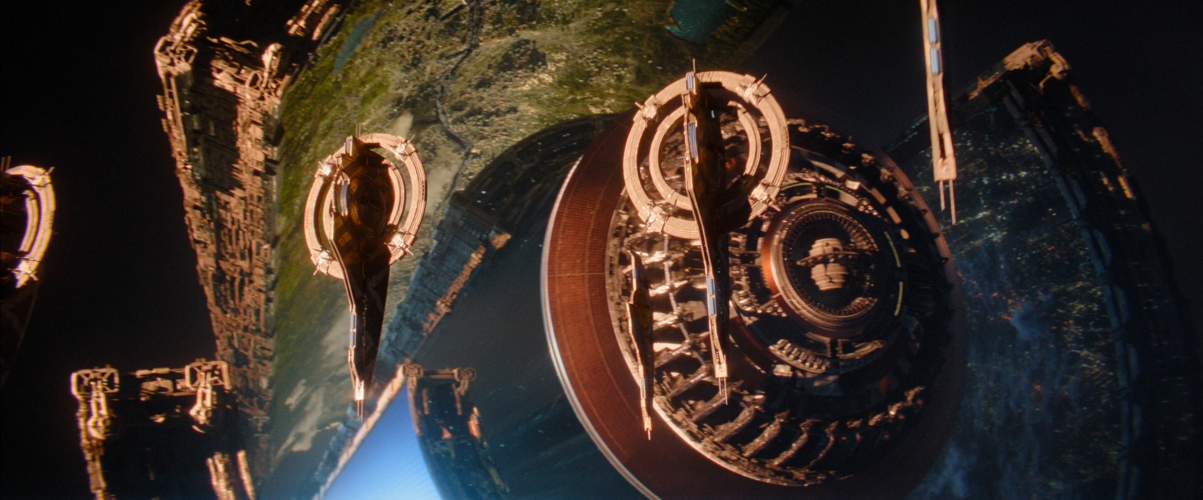
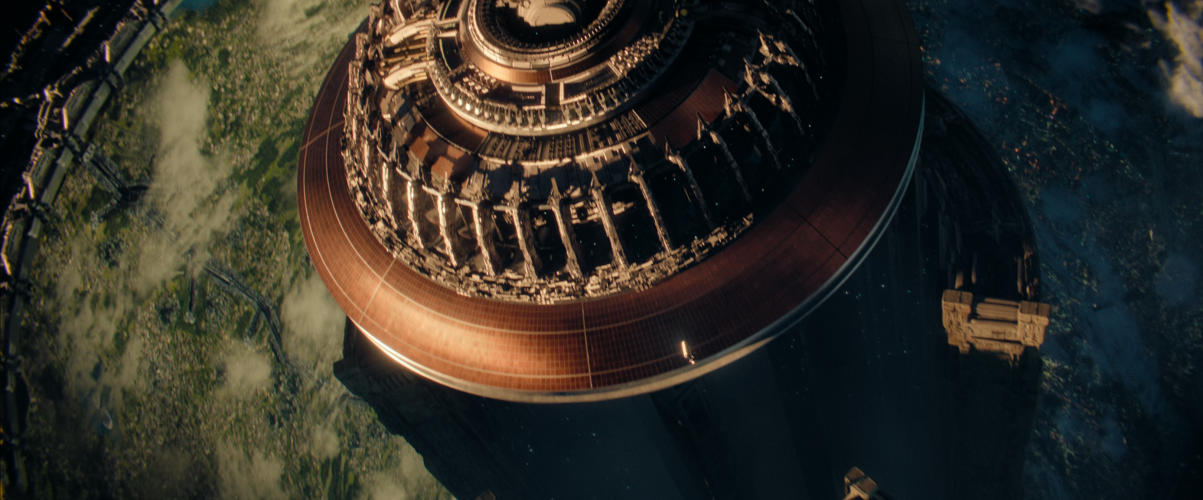
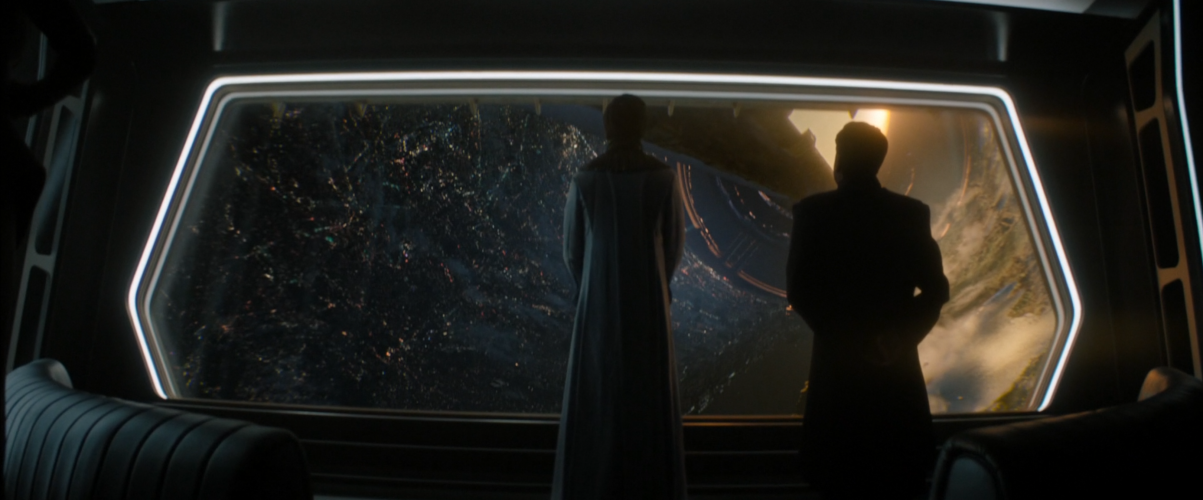
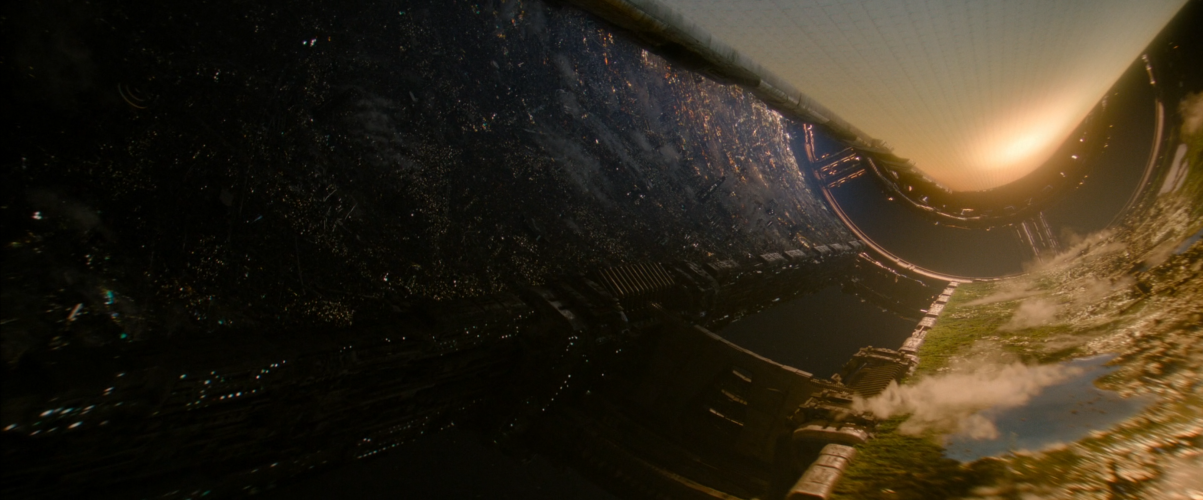
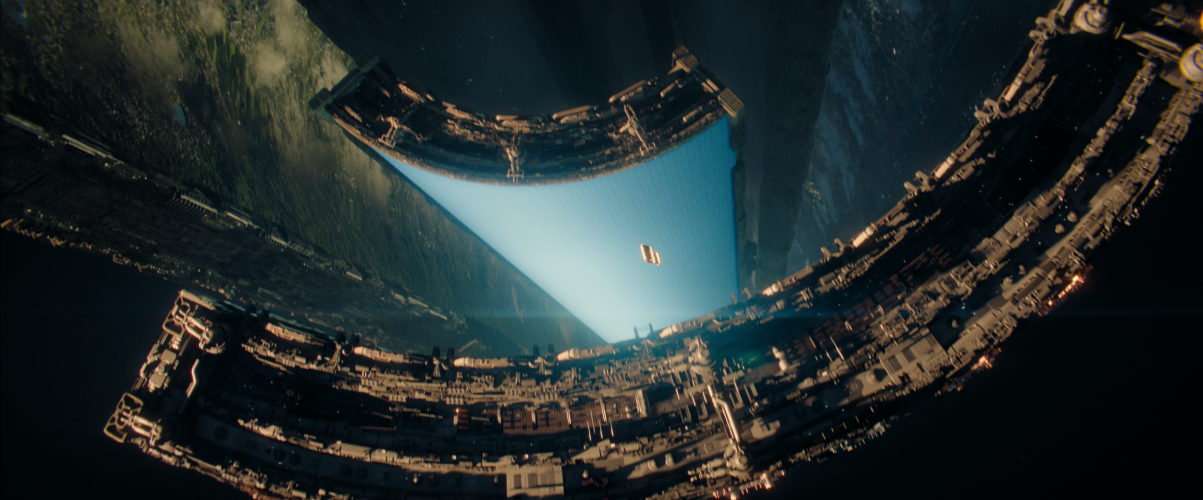
Foundation, for all its faults, looks gorgeous. An O'Neill-type colony appears in this season.Two hypothetical orbital colony interiors by Don Davis, both dating from around 1975.