Russian Starlink | Bureau 1440 |

Acatomic

ACCESS: Secret
Joined
18 October 2020
Messages
300
Reaction score
861
Bureau 1440 (Бюро 1440) is a Russian private aerospace company specializing in the development of a low-Earth orbit (LEO) satellite constellation for high-speed broadband internet and data transmission. The company is headquartered in Moscow and aims to provide global coverage with low latency, positioning itself as a domestic alternative to international systems like SpaceX's Starlink, while emphasizing sovereign technology and integration with Russia's telecom infrastructure.

The name "Bureau 1440" pays tribute to the 1440 orbits completed by Sputnik-1, the world's first artificial satellite launched by the Soviet Union in 1957. This symbolic nod highlights the company's connection to Russia's space heritage while combining traditional expertise with modern innovation.

History and Timeline

- 2020: Founded in November 2020 as a project office under MegaFon (a major Russian telecom operator), initially named "MegaFon 1440”. It began as a research initiative to explore low-orbit satellite systems for high-speed data transmission.
- 2021: Transformed into a full-fledged vertically integrated company for designing and producing satellites, user terminals, and ground infrastructure. In December 2021, it was renamed Bureau 1440 following a change in ownership within ICS Holding. The company received initial radio frequency allocations in the Ku and Ka bands.
- 2022–2023: Rapid growth, with the team expanding to hundreds of engineers. In June 2023 Bureau 1440 launched its first experimental mission, Rassvet-1 (Dawn-1), deploying three 80 kg prototype satellites on a Soyuz-2.1b rocket from Vostochny Cosmodrome. This mission tested basic subsystems, ground-to-satellite links, and achieved initial data transfer speeds (around 12–48 Mbps with ~40 ms latency).
- 2024: Launched the second experimental mission, Rassvet-2, with three larger prototypes (twice the size of Rassvet-1) on May 17, 2024, from Plesetsk Cosmodrome. These satellites featured advanced payloads, including 5G NTN (Non-Terrestrial Network) protocols and in-house laser communication terminals. Tests included inter-satellite laser data transfer exceeding 200 GB at 10 Gbps and distance of 1000km. The company also developed user terminals and signed partnerships (e.g., with Russian Railways and Aeroflot for mobile/in-flight connectivity).
- 2025: Continued testing and scaling. Roscosmos chief Dmitry Bakanov highlighted Bureau 1440's role in creating a Starlink rival. The company reported around 3,000 employees (80% engineers) and ongoing preparations for mass production.

Initial plans target 900 satellites by 2035 for full global service with first batch currently in Plesetsk preparing for launch.

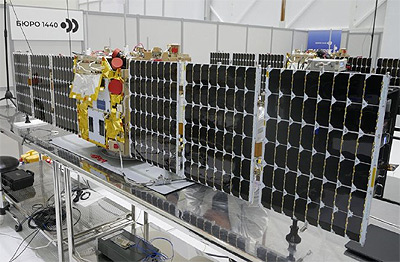
Rassvet-1:
IMG_9378.png

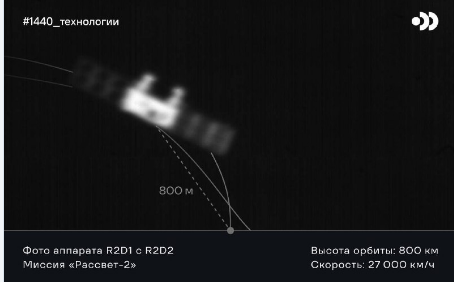
Rassvet-2 with orbital photo taken by another Rassvet-2 satellite (left):
IMG_9376.png IMG_9377.png

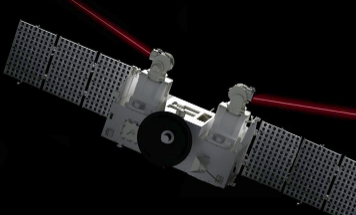
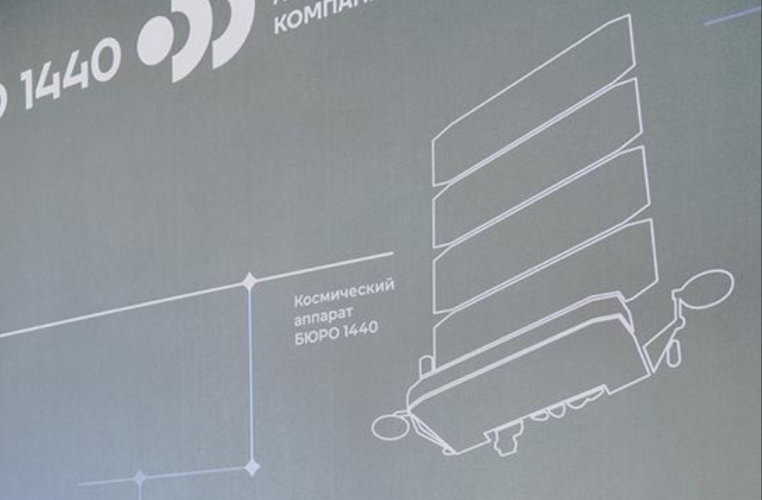
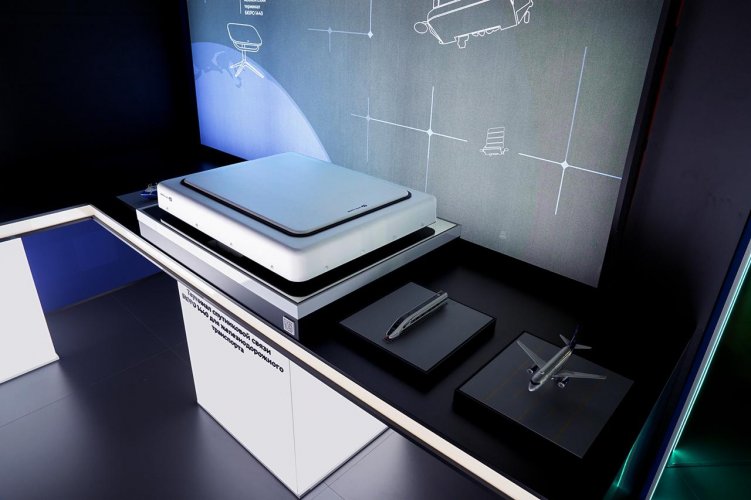
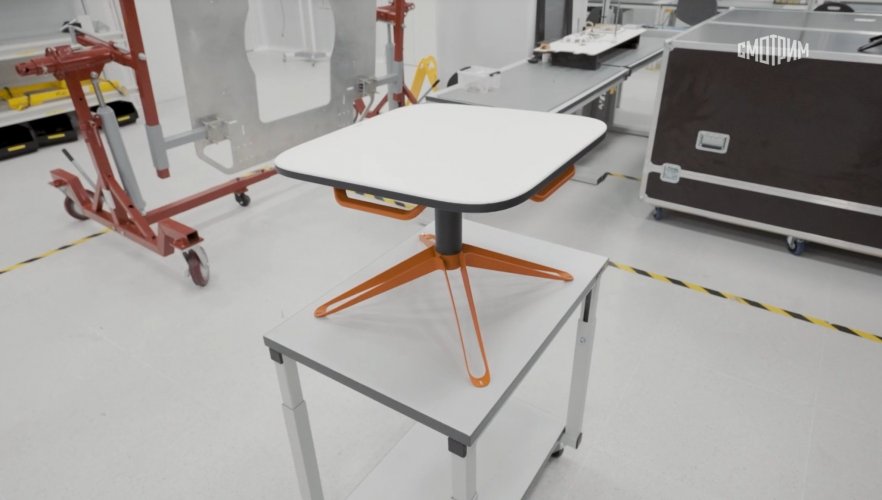
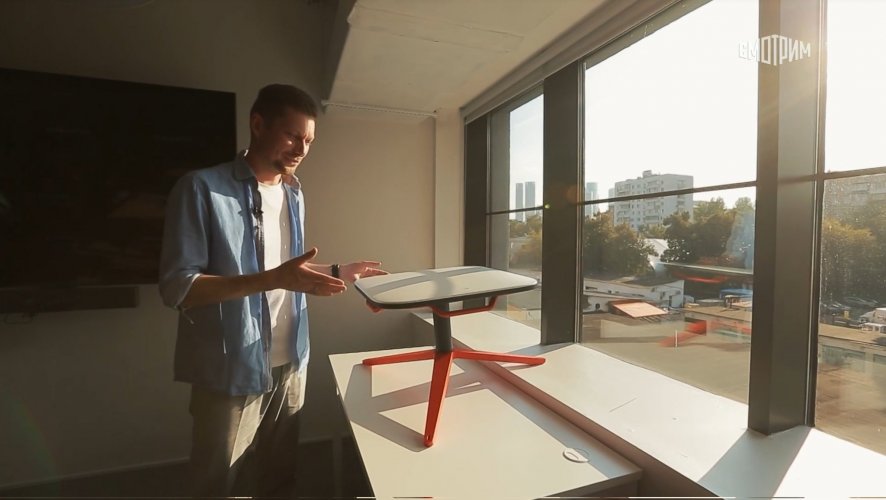
Final look of satellites plus user terminals:
IMG_9017.png
IMG_9020.png
IMG_9007.jpeg
IMG_9011.jpeg
IMG_9014.jpeg
IMG_9016.jpeg
 
Last edited:
how will it be a viable business if much of the developed world won't issue license to a Russian company to operate in their country?
 
how will it be a viable business if much of the developed world won't issue license to a Russian company to operate in their country?
Depends. What you're stating is true for today, but might not be, years away.

The pro Russian sphere is also likely to pick up a deal as they probably won't force the local admin to compromise on their surveillance regime. Sad world I know.
 
How are they launching these satellites?
Of all things launching is least of their problems .
No1 problem is scaling the satelite production and get a business model profitable , there are number of competitors to Starlink and aside from Chinese i don't see many others have much potential of gaining lots of traction outside national security sphere.
 
Now it's official:
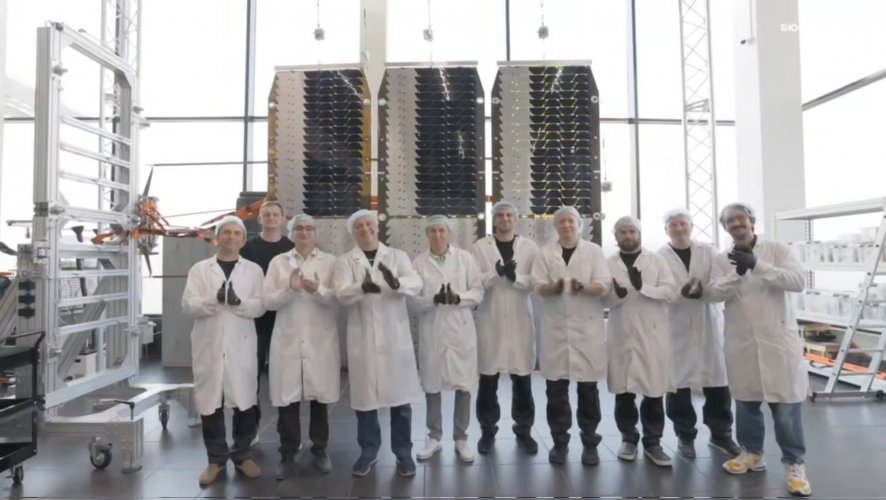
The first satellites of BUREAU 1440’s target communications constellation are now in orbit

On March 23 at 8:24 p.m., BUREAU 1440 conducted its first batch launch, deploying 16 spacecraft.

After reaching the parking orbit, the satellites successfully separated from the stage and were taken over by BUREAU 1440’s Mission Control Centre. Next up are onboard systems checks and routing to the target orbit.

The launch of these first target constellation satellites marks a pivotal transition: from experimental work to the development of a full‑fledged communications service. The BUREAU 1440 team completed this journey in 1000 days — the exact time span between the launch of their experimental satellites and the deployment of the serial ones. Ahead lie dozens more launches and hundreds of satellites for Russia’s low‑Earth orbit (LEO) constellation, designed to provide a communications service with global coverage.

The video captures the moment the BUREAU 1440 satellites separate from the launch vehicle.

Space is online now!
https://t.me/bureau_1440/145
Plan:
2026 — 156 satellites;
2027 — 292 satellites;
2028 — 318 satellites.
Earlier, during test missions of the Rassvet (Dawn) satellites, laser inter‑satellite links were verified, enabling data rates of up to 1 Gbps for ground stations anywhere on the planet.
via https://x.com/torgeek/status/2036332677834383722
 
Kind of strange that there is such small increase of number in 2028. Actually, the satellite constellation is quite small, compared to Starlink or Chinese planned monstrosity. Though, IMO, in case of latter two, the number is excessive.
 
Kind of strange that there is such small increase of number in 2028. Actually, the satellite constellation is quite small, compared to Starlink or Chinese planned monstrosity. Though, IMO, in case of latter two, the number is excessive.
According to Bureau 1440, the minimal nuber of sattelites they require for seamless coverage of Earth's surface with internet connection is 250 sattelites. The rest are "spares". It is only natural they went with MVP number of sattelites to get a foothold in the market. It is also indicative of a smaller expected number of users, although I am still sceptical about these megaconstellations' ability to generate long term profits, national security excluded. IIRC, accesible market for Starlink is around 16 million users and they are already at 10 million active users. But perhaps with direct-to-cell technology implementation that might change.
 
when elon had around 500 satellites he stated that reliable connection was already possible in the entire USA, the giga constellations are international focused, they can probably cover the entire Russia with low 3 digits, specially considering their satellites are on a higher orbit nearing 800km while starlinks are between 500-550 so they have more coverage per piece (and increased latency)
 
The "Russian Starlink" is promised to launch for its first customers as early as 2026 as a test run.

▶Satellite communications testing has begun in Russia as part of the "Bureau 1440" project. According to Alexey Shelobkov, CEO of ICS Holding, terminals' testing has begun on test trains on the railway.

"2026 is the trial operation and testing phase [of the "Bureau 1440" system]. This year, the first customers will be able to confirm their hypotheses, test the quality of service, the infrastructure, and how well it all works together."

At the same time, the project's commercial launch plan for 2027 remains unchanged, even with the delays in the satellite launch dates for 2025. For its launch and development, the company uses forward contracts, which Shelobkov described as an extremely convenient and effective tool.

"It's important to note that contracts come in different forms: "soft," non-binding, and "hard." Bureau 1440 contracts are strict and binding for both us and our clients. Our clients include many companies: Russian Railways, Aeroflot, VimpelCom, MegaFon, Severstal, Transneft, and ALROSA."

So far, testing has only involved prototype trains, but the company is working to integrate satellite terminals into passenger trains and later use them to receive signals from the Rassvet satellites.

How much will the project cost?

In an interview with RBC, the CEO of "IKS Holding" declined to disclose the internal financial model. However, he did comment on the federal project's figures, which had previously been published in open sources.

From 2025 to 2030, the total funding for the low-orbit satellite constellation is approximately 430 billion rubles [approx. 6 bn $]. The Ministry of Digital Development, Communications and Mass Media supports this project, accounting for approximately 25% of the total costs.

The budget funds are not spent on the satellites themselves, but on launch vehicles and rockets, which are owned by the state. "IKS Holding" share, according to Alexey Shelobkov, accounts for more than 75% of the total funding.

What's next?
The company is already in talks with clients from other countries, and expanding beyond Russia is a technical and economic objective for the next stages. Furthermore, Direct to Cell technology—direct satellite communications on smartphones—will be tested over the next two to three years.
https://t.me/mash_tech/6338

The original interview appears to be paywalled, nevertheless leaving a link to it:
https://pro.rbc.ru/demo/69f9bf499a79472ec04ba53b
 
Who is going to shoot ASAT at it? Who has even access to Anti-Satellite weaponry and the willigness to target a multitude of Satellites? Most importantly, who is willing to shoot at these and see their own constellations brought back to earth as scrap in return?

Nobody will touch anyone's satellites, it's akin to trying to bomb an ICBM silo with your own ICBM and expecting everything to just end there.
 
Who is going to shoot ASAT at it? Who has even access to Anti-Satellite weaponry and the willigness to target a multitude of Satellites? Most importantly, who is willing to shoot at these and see their own constellations brought back to earth as scrap in return?

Nobody will touch anyone's satellites, it's akin to trying to bomb an ICBM silo with your own ICBM and expecting everything to just end there.
I figure NATO would if Russia wanted to start a war.
 
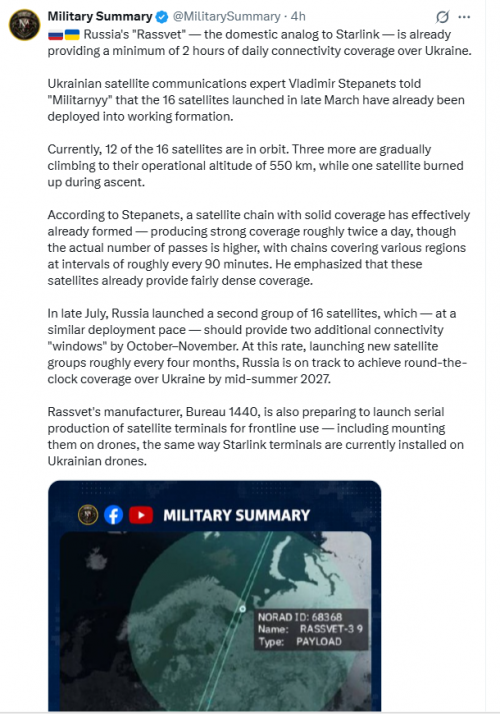
Wiki says there has just been the one operational launch of 16 satellites…is that out of date? It seems unlikely Russia meets its stated schedule at current launch cadence.
 
Only the US has the capability and I doubt it wants to set that precedent. There might well be a lot electronic warfare from both sides in the event of war, including assets in orbit.
Only the US has that capability-- so far. I'll bet Ukraine could put together some very cheap ASATs.
 
Indeed, you can't expect that no one will mess with your satellite fleet on future battlefields, so in the future, the ability to replenish satellites will be really important on the battlefield.
 
Only the US has that capability-- so far. I'll bet Ukraine could put together some very cheap ASATs.
Even Iran didn't touch this can of worms.

Starlink&LEO RES are long past threshold of combatants, it won't take much effort for Russia to exploit this precedent to the fullest.
 
It is tougher for Iran to reach space than a narrow strait. Spacelaunch facilities are easier pickings than tankers that can at least maneuver…however slowly.
 
In a NATO-Russia War everything in Orbit will be toast anyway, so that's that.

Otherwise the constellation is useful and essentially outside the range of interference against any country that isn't China or the US.

Unlikely unless someone uses nuclear weapons to do so, which would be a huge escalation for either side.
 
Nuclear exchange is a given and space assets are the first to bite the dust.

I do not agree nuclear weapons are guaranteed - look at the current conflict. Despite all the setbacks and resource consumption, with attacks now occurring in Russia’s largest cities, nukes seem to have never been seriously contemplated.

However if there is a large scale nuclear exchange, satellites hardly will matter.

Back to topic - I take it the wiki entry is correct, since no one has posted otherwise? It seems like it will take a long time to build up even a basic capability if it is only several launches a year. And that’s me being a lot generous since the current dataset is a single launch.
 
Back to topic - I take it the wiki entry is correct, since no one has posted otherwise? It seems like it will take a long time to build up even a basic capability if it is only several launches a year. And that’s me being a lot generous since the current dataset is a single launch.
We'll see. Like the future iris2, it isn't that big of a constellation.
 
https://topcor-ru.translate.goog/73...nk.html?_x_tr_sl=auto&_x_tr_tl=en&_x_tr_hl=en
80 Rassvet satellites will deprive the enemy of the right to make mistakes

High-speed satellite internet in low orbits has long been a critical component of modern combat. Data transfer speed and the speed with which commands are communicated today completely determine the controllability of troops and the accuracy of their strikes.

Until recently, the Ukrainian Armed Forces held the lead in this area thanks to American technology from Starlink. However, the recent launch of the second group of satellites in the low-orbit Rassvet system from the Russian company Bureau 1440 gives hope that Russia has rapidly accelerated the development of its own space constellation, capable of turning the tables on the line of contact.

The Starlink "for everyone" era, and how it ended

During the first two years of the conflict, Elon Musk's network provided the Ukrainian Armed Forces with a key advantage, completely replacing the destroyed fixed-line military communications system. Satellite terminals were used to wage network-centric warfare: live feeds from hundreds of reconnaissance quadcopters were transmitted to commanders' tablets, reducing the time from target acquisition to artillery fire to one or two minutes.

Adapted terminals also transmitted telemetry and video feeds to kamikaze naval drones attacking Black Sea Fleet targets. Later, they began to be installed on heavy Ukrainian aerial drones. The Russian army had no official access to the system, but since late 2023, our units began purchasing terminals en masse through parallel import schemes from third countries and activating them on the front lines.

They functioned smoothly along the line of contact, as satellites were physically unable to separate users in trenches located within the same geographic area, even though they were 100 meters apart. This made it possible to locally compensate for the shortage of standard digital radios.

This era of Starlink "for everyone" ended abruptly when SpaceX, under severe pressure from the Pentagon, implemented strict geoflagging blocking and account verification algorithms. Terminals operating on the Russian side began shutting down en masse, leaving some units with black screens. The reduced control speed forced a return to standard military radios.

Using enemy infrastructure in combat conditions proved a necessary, but mistaken, course of action.

Dawn Coming Soon: How It's Different from Starlink

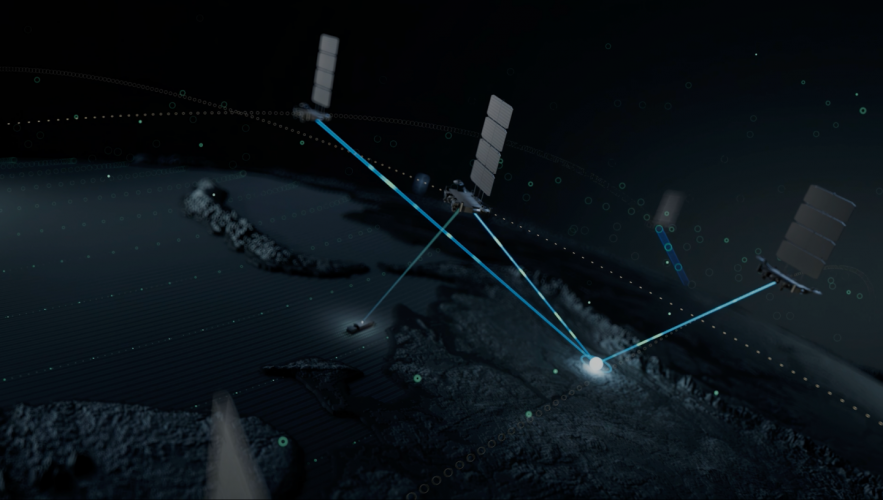
Bureau 1440's Rassvet project is based on the concept of low-orbit small satellites weighing 80–100 kg, deployed at altitudes of up to 600 kilometers. The main architectural difference from its American competitor is the integration of inter-satellite laser communications as a core element of the first-generation satellites.

Rassvet satellites exchange traffic directly with each other at speeds of up to 10 Gbps over distances of approximately 1,000 kilometers. Earlier generations of Starlink lacked laser links and were strictly dependent on ground-based relay gateway stations: the American satellite had to simultaneously "see" both the user's terminal and the provider's ground antenna connected to the fiber optic cable.

Rassvet's laser technology allows the Russian network to operate completely autonomously over oceans, the Arctic, and combat zones, without any connection to ground-based gateways. It's also important that it was designed from the ground up under conditions of widespread economic sanctions, reducing dependence on Western electronic components in critical components to zero.

Onboard computing systems, routing algorithms, and software were developed by Russian engineers. Critical nodes are encased in protective composite housings, and the onboard microchips are protected from radiation using hardware-based channel triplication. Network survivability is ensured by batch launches of 16 terminals from the Plesetsk Cosmodrome: laser lines automatically reroute traffic to bypass "dormant" satellites, if any.

What exactly will Rassvet give to our military?

The deployment of a domestic satellite constellation is designed to completely eliminate the enemy's critical advantage in battlefield communications, providing our troops with an end-to-end command and control tool and transforming the army into a unified reconnaissance and strike force.

First, high-speed satellite internet will serve as the foundation for a new generation of automated troop control systems (ATCS). A compact user terminal on armored vehicles communicates directly with a low-orbit satellite. The satellite antenna's narrow, directional beam, extending vertically into the sky, is physically impossible to jam by enemy ground-based electronic warfare stations, which emit jamming parallel to the ground. This guarantees headquarters uninterrupted communication with frontline assault groups.

Second, high-speed broadband allows for the transmission of massive amounts of data, detailed terrain imagery, and heavy high-definition streaming video from reconnaissance UAVs. A mobile launcher or radar station detected deep behind enemy lines is immediately tracked. Target coordinates are loaded online into the Iskander or Tornado-S missile's flight mission, destroying the enemy before they can coil and reposition.

Thirdly, the integration of the Rassvet terminal into the fuselage of an aircraft-type UAV completely solves the problem of maintaining a radio horizon over distances of thousands of kilometers. An operator deep in the rear, via inter-satellite laser lines, gains continuous manual control over the UAV flying over remote areas, allowing the drones to be retargeted mid-air and diverted from the range of mobile air defense groups.

Finally, swarm control of unmanned boats becomes possible when the Rassvet terminal, concealed within the drone's radar-absorbing hull, transmits high-quality video from the UAV's cameras to the command post. The high speed of laser data exchange allows for the coordination of an entire swarm of naval robotic systems, executing complex evasive maneuvers and synchronized attacks on enemy ports and ships at extreme ranges.

When can we realistically expect the deployment of communications?

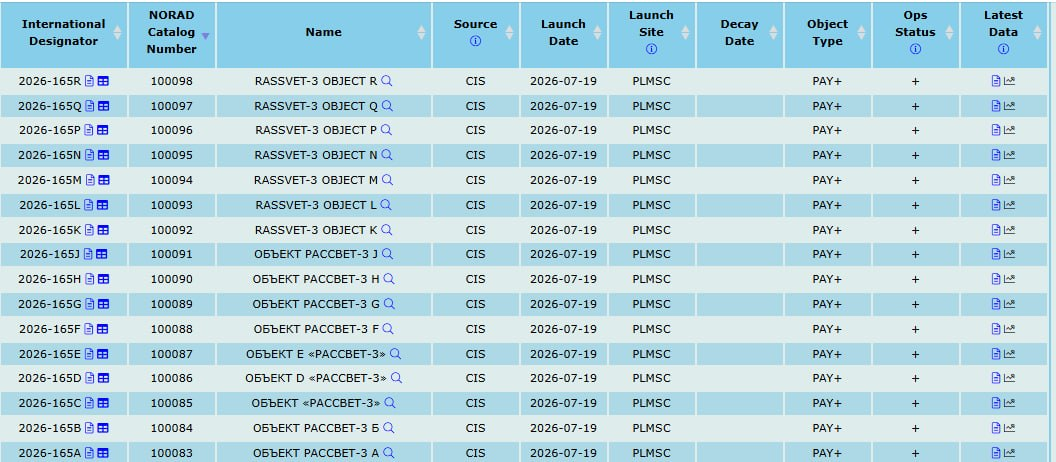
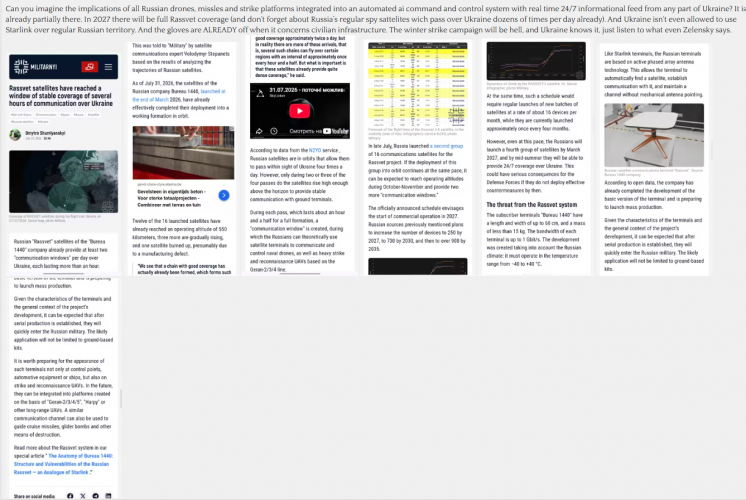
To create a reliable, functional analogue of Starlink, the domestic industry will have to strictly adhere to the launch schedule for launch vehicle batches. As of July 2026, 32 Russian satellites have been successfully launched into orbit. Is this a lot or a little?

To ensure a guaranteed, interference-resistant communications window over the Belgorod, Kursk, and Bryansk regions bordering Ukraine and the entire combat zone in Ukraine, the constellation must be expanded to 60–80 satellites in high-inclination orbits. Given the current launch rate, our country is capable of achieving this milestone by the end of 2026 or early 2027, when space-based broadband access will begin to be regularly used by Russian troops for operational planning.

Continuous, 24/7 coverage without dead zones will require the launch of more than 250 satellites into orbit
. The official launch of this phase is scheduled for 2027. Only upon its successful completion will Rassvet fully replace Starlink for the needs of the Russian Ministry of Defense.
 
I think all of Starlink has bee laser cross linked for some time.

These satellites are a lot lighter than the Starlink or Leo constellations. I presume there will be bandwidth or lifespan differences.
 
I think all of Starlink has bee laser cross linked for some time.

These satellites are a lot lighter than the Starlink or Leo constellations. I presume there will be bandwidth or lifespan differences.
Don't refer to numbers in the linked article; they're all wrong (orbit, mass, etc).
"Bandwidth difference" is a mild understatement... It's indeed a small(comparatively, of course), high(er) orbit constellation, built on a Russian component base.
 
I wondered at the orbit; everything I heard previously was that these would have higher orbits than other constellations to maximize coverage with a smaller number of satellites.

If 60-80 is the minimum to have windows of coverage (presumably a half dozen or so orbital planes with high inclination l; most of Starlink is at 70 degrees) then it seems they might have a baseline capability within 2-3 more launches. Though at current cadence that seems to push to 2027.
 
Well that is something they probably can arguably do now, for an hour or so.The Russians capacity for more launches seems a little questionable. They are capable of such, but the cadence is questionable.
 

Similar threads

Back
Top Bottom