Rocket Lab Launcher

I’d be curious to know where Archive Market Research got its data from, and how it was put together. I read the preview, but I don’t want to pay for the PDF. It must be for multijunction cells, not silicon, as SpaceX operates by far the most spacecraft on orbit, and they use silicon. Still good for Rocket Lab, especially for deep space missions where spacecraft need to eke out every watt of power they can at low mass, but less relevant for LEO constellations and future data centers.
 
Looks like a setback with Neutron. Hopefully whatever the issue, it is quickly and effectively resolved.

Aviation Week - Rocket Lab Suffers Neutron Setback
by Robert Wall - January 22, 2026

Rocket Lab suffered a structural failure of the Neutron rocket’s Stage 1 tank during testing, setting back efforts to get to the inaugural flight for the fully reusable launcher.

The mishap occurred during a hydrostatic pressure trial, the company said Jan. 21. “There was no significant damage to the test structure or facilities,” Rocket Lab added.

Rocket Lab last year pushed the first mission from 2025 to 2026, citing the volume of testing ahead. The U.S.-listed company said it is now analyzing what transpired to determine the impact on Neutron launch plans. Rocket Lab said it would provide an update during its next quarterly financials, due in a few weeks.

“The next Stage 1 tank is already in production, and Neutron’s development campaign continues,” the company said.
. . .

**COMPLETE STORY IS LINKED AT TITLE**
neutron_launcher.jpeg

The Neutron rocket’s Stage 1 tank.
Photo Credit - Rocket Lab
 

Attachments

  • Rocket Lab Neutron Rocket Stage 1 Tank - Published AvWeek 22-Jan-2026 - Credit for Photo is R...jpeg
    Rocket Lab Neutron Rocket Stage 1 Tank - Published AvWeek 22-Jan-2026 - Credit for Photo is R...jpeg
    86.6 KB · Views: 13
Rocket Lab Neutron Test Update

Long Beach, Calif. January 21, 2026: Rocket Lab Corporation (Nasdaq: RKLB) (“Rocket Lab” or “the Company”), a global leader in launch services and space systems, today announced an update relating to the development of its Neutron rocket.

As the Company pushes Neutron to the limits and beyond to qualify its systems and structures for launch, qualification testing of the Stage 1 tank overnight resulted in a rupture during a hydrostatic pressure trial. Testing failures are not uncommon during qualification testing. We intentionally test structures to their limits to validate structural integrity and safety margins to ensure the robust requirements for a successful launch can be comfortably met.

There was no significant damage to the test structure or facilities, the next Stage 1 tank is already in production, and Neutron’s development campaign continues while the team assesses today’s test outcome.

The team is reviewing the Stage 1 test data, which will determine the extent of the impact to Neutron’s launch schedule. The Company intends to provide an update on the Neutron schedule during its 2025 Q4 earnings call in February.
 
View: https://twitter.com/RocketLab/status/2013688036979286408


Rocket Lab
@RocketLab
·
Status set to: Interplanetary Cruise

Our twin spacecraft for @NASA and @ucbssl's ESCAPADE mission have completed their engine burns and are now cruising near Earth–Sun L2 Lagrange point. Blue and Gold will hang tight here until November, when they’ll begin their cruise to Mars orbit to begin their science mission studying the Martian magnetosphere.

Watch what’s ahead
 
Rocket Lab Press Release

(Video, Article and Images)

Rocket Lab’s Hungry Hippo Fairing Arrives at Virginia Launch Site Ahead of First Neutron Flight

View: https://twitter.com/RocketLab/status/2015902729496092763


Rocket Lab
@RocketLab
Neutron's Hungry Hippo captive fairing has arrived at Launch Complex 3 in Virginia, ready to go through checkouts and pre-launch testing.


Neutron “Hungry Hippo” key facts:

Neutron will be the world’s largest reusable carbon composite rocket, capable of launching up to 13,000 kg ( 33,000 pounds) of payload and cargo to space for missions involving national security, space science and human exploration, and constellation deployment for satellite internet, Earth observation, global connectivity, and more.

With a focus on rapid reuse and reducing launch costs, Neutron’s “Hungry Hippo” fairing halves remain attached to the rocket throughout the entire mission, including launch, payload deployment, and return to Earth – a world-first for a reusable commercial rocket.

Whereas typical rockets’ fairing halves fall away during launch and are disposable or require collection at sea for reuse, Neutron’s fairing halves open and close for second stage deployment within a matter of seconds - streamlining operations for a high-cadence launch service for commercial, civil, and national security missions.
 
Learn more about our work on the Proliferated Warfighter Space Architecture:
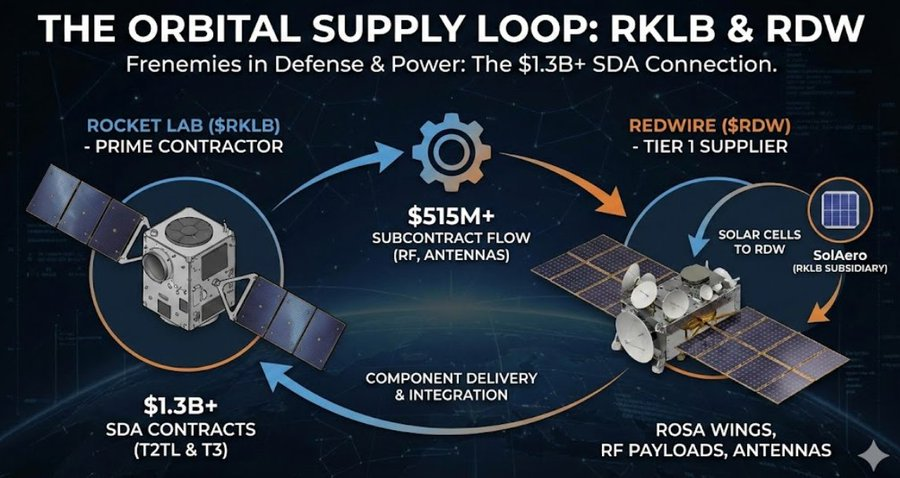
Rocket Lab Awarded $816M Prime Contract to Build Missile- Defense Satellite Constellation for U.S. Space Force

Rocket Lab
@RocketLab
Big milestone for our Space Systems team ✅

Rocket Lab and
@SemperCitiusSDA
have officially kicked off work on Tracking Layer Tranche 3.

It was fantastic to get the teams together, align on the mission, and get ready to build the next generation of missile warning, tracking, and defense space vehicles. This program really matters and we’re proud to be part of it.

View: https://twitter.com/RocketLab/status/2021311859551613155
 

Attachments

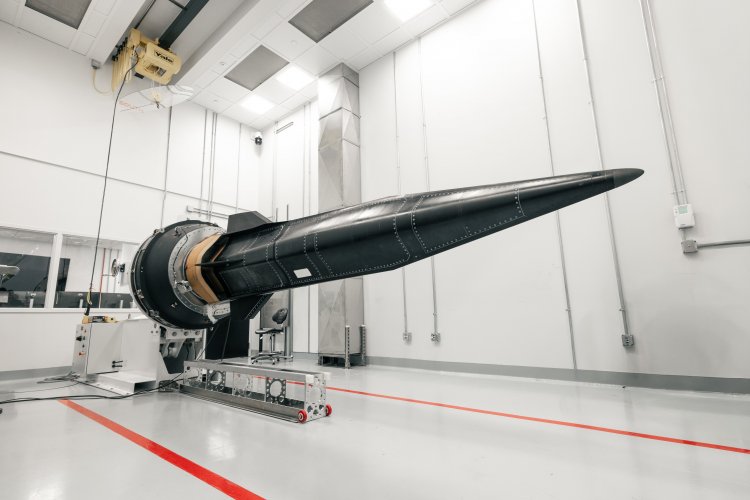
  • RocketLab Electron HASTE Flight Vehicle - ThatsNotAKnife - Copy.jpg
    RocketLab Electron HASTE Flight Vehicle - ThatsNotAKnife - Copy.jpg
    977 KB · Views: 9
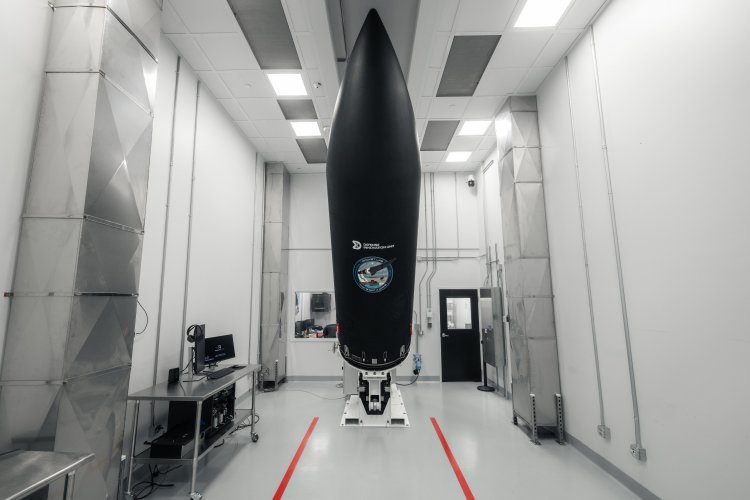
  • RocketLab Electron HASTE Fairing - ThatsNotAKnife - Copy.jpg
    RocketLab Electron HASTE Fairing - ThatsNotAKnife - Copy.jpg
    1.2 MB · Views: 10
Last edited:
They seem mighty desperate for this contract.

View: https://twitter.com/RocketLab/status/2023119034125111785


6 Reasons A Mars Telecommunications Orbiter Matters To Us All [Feb 15]

NASA’s Mars objectives are clear: Search for signs of ancient life, understand the Red Planet's climate and geology, and prepare for future human exploration.

The rockets, rovers, and spacecraft that make this exploration possible all rely on an invisible backbone. Communications. Every image, every discovery, every scientific breakthrough from another world needs to travel across hundreds of millions of kilometers back to Earth.

Rocket Lab's Mars Telecommunications Orbiter (MTO) will enable this. It’s the invisible infrastructure that makes NASA’s entire Mars strategy possible.

But why does Mars matter and why do we need to talk to it?

1. Without communications, Mars missions simply don’t work

NASA’s Mars missions have transformed humanity's understanding of the Red Planet. Orbiters have mapped its surface in extraordinary detail. Rovers have found evidence of ancient lakes and rivers. The next generation of missions will go even further, including returning samples to Earth and paving the way for humans to live and work on Mars.

But spacecraft and humans at Mars can’t send meaningful data directly back to Earth on their own. Rocket Lab's Mars Telecommunications Orbiter will be a vital relay, ensuring discoveries, images, and scientific breakthroughs actually make it home.

2. It protects billions of dollars already invested in Mars

Taxpayers have funded decades of NASA Mars missions that have delivered globally significant Mars findings. The current Mars Relay Network that these missions rely on is fragile, aging, and limited. The recent loss of contact with the MAVEN is testament that time is running out to establish new and reliable communications at Mars. Without reliable communications, the flow of data from existing spacecraft at Mars could simply dry up. MTO ensures their continuity.

3. It multiplies the value of every Mars mission

Rocket Lab's Mars Telecommunications Orbiter would support dozens of spacecraft, today and into the future, dramatically increasing how much science and value each mission delivers. Just one orbiter makes every Mars mission more powerful.

4. It enables future human missions to Mars

NASA’s long-term Mars exploration strategy goes far beyond landing robots. It’s about enabling sustained exploration and ultimately, human missions. Humans on Mars will need constant communication with Earth for navigation, science operations, safety, coordination, and simple human connection. Reliable communications aren’t optional, they’re essential. Rocket Lab’s Mars Telecommunications Orbiter will be the reliable and enduring infrastructure that enables NASA’s human exploration goals at Mars.

5. It keeps America at the forefront of space leadership

Space leadership isn’t just about getting there, it’s about building the enduring infrastructure that makes sustained exploration possible. Throughout history, exploration has depended on infrastructure. Ships enabled ocean crossings. Railroads opened continents. Satellites connected the globe. Communications infrastructure will define the next era of Mars exploration and America needs to be at the forefront. We recognize that the Mars Telecommunications Orbiter is a necessity, not an afterthought. It’s why Rocket Lab proposed an independently launched MTO as part of our Mars Sample Return Architecture.

6. It Commercializes Space Communications

Rocket Lab’s Mars Telecommunications Orbiter directly supports NASA’s SCaN Program’s commitment to transitioning from government-owned communications assets to commercial alternatives. This shift is about creating smarter, more cost-effective systems that ensure mission continuity for national space priorities, while reducing taxpayer costs.

The right mission needs the right builder
A Mars Telecommunications Orbiter isn’t a technology demonstrator. It’s critical infrastructure. It requires deep expertise in spacecraft design, deep space operations, communications systems, and mission integration.

Rocket Lab delivers a rare combination of proven spacecraft, deep space mission experience, reliable launch vehicles, and end-to-end space systems capability as a vertically integrated mission provider.

We delivered NASA’s CAPSTONE mission to the Moon, then followed it up with the ESCAPADE twin spacecraft mission to Mars. These aren’t concepts. They’re real spacecraft, operating in deep space. We designed and built one of the world’s most reliable and frequently launched rockets with 80+ missions completed and counting. Our hardware and software has enabled some of the most ambitious and successful Mars missions in history, including the Mars Insight Lander, Perseverance Rover, and Ingenuity Helicopter. Mars is in our DNA. A Rocket Lab Mars Telecommunications Orbiter also brings a non-Artemis performer into the mix to contribute to a national space objective. Free from lunar commitments, Rocket Lab is laser-focused on rapidly and affordably delivering the most reliable Mars Telecommunications Orbiter to strengthen America’s capability at Mars.

Rocket Lab is Mars tested and MTO ready.

View: https://twitter.com/RocketLab/status/2024243064047636905


Who cares about talking to Mars? We all should.

Read: 6 reasons the Mars Telecommunications Orbiter matters to us all.

 
Thread for the launch of Hypersonix' DART-AE through the DIU's HyCAT program on HASTE from LC-2 NET 23 February 2026 at 20:00 UTC. Mission is named "That's Not a Knife".


Rocket Lab will launch a HASTE hypersonic test mission for the US Department of Defense's Defense Innovation Unit (DIU) in 2026 for its HyCat program, an initiative to provide the DIU with valuable hypersonic test data for future hypersonic programs. The mission will deploy a scram-jet powered vehicle by Australian company Hypersonix called DART AE on a mission from Launch Complex 2 on Wallops Island, Virginia, in 2026.
Launch alert:eek:ur next mission will be a hypersonic test mission on HASTE from LC-2 in Virginia for @DIU_x to deploy a scramjet-powered aircraft by @Hypersonix_AU.

Launching NET late February.

View: https://twitter.com/RocketLab/status/2022061165917155629


EasternShoreSpaceflight
@EShoreSpaceflt
·
11m
Rocket Lab HASTE “That’s Not a Knife” — Launch Update

It appears the Local Notice to Mariners (LMNs) have shifted by one day, making a Monday launch unlikely due to the incoming weather system expected Sunday into Monday.

The updated launch window now shows:

Primary Launch Window:
• Tuesday, February 24 — 3:00 PM to 7:45 PM EST
Backup Windows:
• February 25–28, same daily time frame

If winds settle down after the storm, Tuesday afternoon could be our next realistic opportunity for liftoff. We’ll continue monitoring for any additional advisories or airspace updates.

@NASASpaceflight


@NeedPizza42

View: https://twitter.com/EShoreSpaceflt/status/2024540546383937866
 
GhostOfLaszloJamf
@GhostOfLaszloJ
·
Feb 21
$RKLB From Rocket Lab’s latest Neutron STA application filed on February 19th, it seems they are now aiming for a second half of 2026 launch. The latest application is for the period of July 1, 2026 to December 31st, 2026, for testing, operation, and mission assurance of the debut Neutron launch, and then marine recovery operations for Neutron Stage 1.

During Q4 earnings we can expect to receive commentary on this from Sir Peter Beck and Adam Spice. Hopefully we hear guidance that we shall see a rocket integrated at the launchpad end of Q2 for early Q3 static fire testing and wet dress rehearsal and then a mid-late Q3 launch.

As Peter Beck said in an Ars Technica interview with Eric Berger on November 18th, 2025, that not launching in 2026 “would be a definite fail”, the first time he’s used that sort of language about a launch deadline, so it seems likely we see Neutron’s debut in the 2nd half of this year.

Fingers crossed.

View: https://twitter.com/GhostOfLaszloJ/status/2025391232000934346
 
Air and Space Forces: DIU Eyes First Launch for Its Commercial Hypersonic Testbed [Feb 21]

Lt. Col. Nicholas Estep, director of DIU’s emerging technology portfolio, told Air & Space Forces Magazine the second HyCAT mission is unique in that it features a nontraditional commercial aerospace firm, Hypersonix, demonstrating air-breathing hypersonic propulsion—a complex engineering challenge that doesn’t currently have a commercial market.

Estep declined to discuss the flight’s performance objectives due to sensitivities, and wouldn’t say whether DART is expected to reach hypersonic speeds, though he noted that the intent is for the data collected to “show relevance” to DOD’s hypersonic community.

“This is just a very novel situation,” he said. “We’re pairing commercial companies, we’re leveraging as much commercial infrastructure as possible, and using a commercial liquid booster for this type of payload is unique. There’s lots of new things we’re intending to be able to demonstrate with this.”

[...]

Meanwhile, the upcoming HyCAT mission will be the first flight for Hypersonix and its DART AE. DART is powered by the company’s SPARTAN scramjet engine and is envisioned to eventually serve as a reusable hypersonic vehicle.
Hypersonix Launch Systems
@HypersonixAU
·
5h
Real hypersonic flight is the ultimate test environment. And for Hypersonix, the time to test is now.

The DART AE is set to be the first hydrogen-fuelled hypersonic flight in 20+ years globally, bridging the gap between concept and reality.

➡️ What we learn will help shape the future of reusable hypersonic systems. Discover more about the mission: https://hypersonix.com/launch/dart

#Hypersonics #FlightTest #AerospaceTechnology #AerospaceEngineering #AerospaceInnovation

View: https://twitter.com/HypersonixAU/status/2025724745636102193
 
View: https://twitter.com/rocketlab/status/2026445505161752658


We are GO to launch our hypersonic test mission on HASTE for the @DIU_x and @HypersonixAU.

"That's Not A Knife" is scheduled for liftoff at LC-2 in Virginia tomorrow, February 25 from 4pm/1pm Eastern/Pacific.

And yes, there will be a webcast

View: https://www.youtube.com/watch?v=-MXAzzSgRFE


EasternShoreSpaceflight
@EShoreSpaceflt
You can definitely see the size difference in the fairings. The first picture is from Dec 18th's launch of "Don't Be Such a Square," and the second is from the WDR of "That's Not a Knife" just a few days ago. You can really see the height difference with its custom 4.3-meter-high fairing.

View: https://twitter.com/EShoreSpaceflt/status/2026448116669456520


EasternShoreSpaceflight
@EShoreSpaceflt
·
36m
Wow, I just noticed that your cover photo for X and your Facebook account is your DART AE on top of an Electron rocket going suborbital. That’s freaking cool.

View: https://twitter.com/EShoreSpaceflt/status/2026500826609414364
 
Ryan Caton
@dpoddolphinpro
·
1h
New information on January's Neutron Stage 1 Tank Failure:

- Neutron maiden launch NET Q4 2026 ☹️
-
@RocketLab
expected this article to survive hydrostatic testing (i.e. loading the tanks with water)
- A manufacturing defect resulted in a reduction in strength at a critical join on the tank
- This area has been modified on future tanks to add margin
- This first tank was manufactured by a third party contractor using a manual hand-lay process. This decision was supposed to speed up the schedule, while the automated fiber placement machine was being commissioned
- Next tank is currently in production using the new AFP machine


@spacepat_o
/
@NASASpaceflight

View: https://twitter.com/dpoddolphinpro/status/2027132431136862238
 
I read where the AFRL got Beal's old filament winding machine:

AFRL's problem was that they didn't have any facilities large enough to set the winder up, so it stayed in storage. I actually talked with the AFRL once about setting up a facility for them in return for getting the filament winder - I got sucked into another project shortly after and nothing ever came of it. I don't think I've heard anything else about it, but if they didn't surplus it or cut it up it might have been sent out to Wright Patterson when Albuquerque AFRL stopped doing composites.

Is that being used for Neutron?
 
Scramjets - The Fastest Jet Engines

Mar 7, 2026
There are limits on conventional jet engines as the supersonic air entering the engine slows down and heats up to the point it can damage the engine, even ramjets have problems above about mach 5 as more of the pressure is lost to heat during the compression stage of the engine. Scramjets are jet engines which don't slow the air to subsonic speeds, so they lose less to heat and can continue to operate up to speeds of at least Mach 9, and probably more.

View: https://youtube.com/watch?v=TFIBGVYL8Yw
 
ESA Navigation Bluesky [Mar 18]

The two Celeste satellites have been integrated on the dispenser of the @rocketlabcorp.com’s Electron rocket. From this point onward, they will travel as single unit through the final steps of launch preparation.

The team performed a fit check, verifying that the satellites correctly mated with the launcher adapter that will secure them during ascent.
 
Sounds like this was, if not a deliberate test to failure, at least a test well beyond the design limits.
Some news on the carbon-fiber front

New research from engineers at Monash University and RMIT has revealed that moisture absorption is the most important factor in how carbon fiber used in aircraft degrades over time. The discovery could help the aerospace industry predict material aging more accurately, improve aircraft maintenance planning, and design longer-lasting composite structures.

"What we found is that it's not the exact aging temperature or humidity that matters most, it's how much moisture the material ultimately absorbs," Dr. Grigoriou said. "This means that if we understand how moisture builds up inside a composite structure, we can much more reliably predict how it will perform over many years in service."

The finding, now published in Composites Part A: Applied Science and Manufacturing, is particularly important because aerospace engineers often use accelerated aging tests to simulate decades of environmental exposure in a much shorter time.


Metal can be strong even with defects--perhaps a better choice for Beck:
Scientists at Caltech have figured out how to precisely engineer tiny three-dimensional (3D) metallic pieces with nanoscale dimensions. The process can work with any metal or metal alloy and yields components of surprising strength despite having a porous and defect-ridden microstructure, making it potentially useful in a wide range of applications, including medical devices, computer chips, and equipment needed for space missions.
 

Similar threads

Back
Top Bottom