Return of the Catalina?

TomS

ACCESS: USAP
Senior Member
Joined
16 April 2008
Messages
10,602
Reaction score
18,179
So, apparently the Catalina Aircraft Trust have announced a desire (I won't call it a plan) to build new production Catalinas for the civil and military markets under the name Catalina II or Next Generation Amphibious Aircraft. The new aircraft would be turboprop aircraft but would operate under the original post-war Catalina 28-5ACF commercial airworthiness certificate.

https://catalinaaircrafttrust.com/
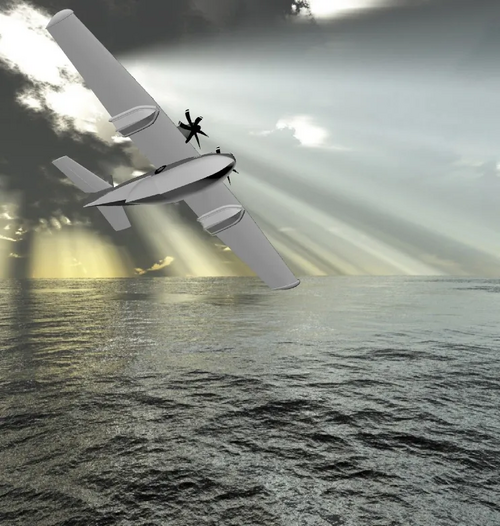
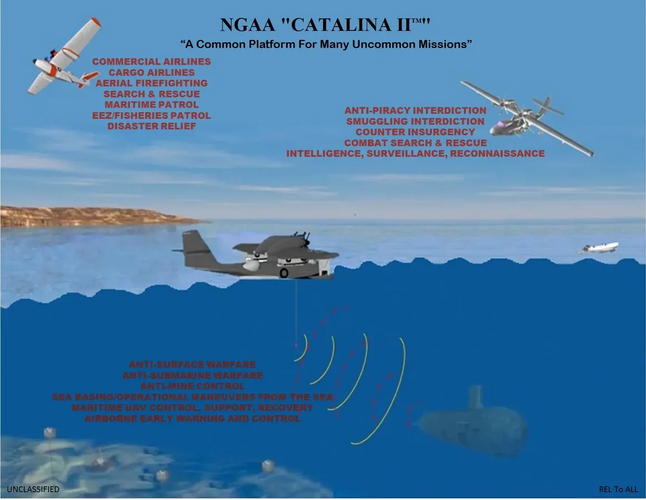
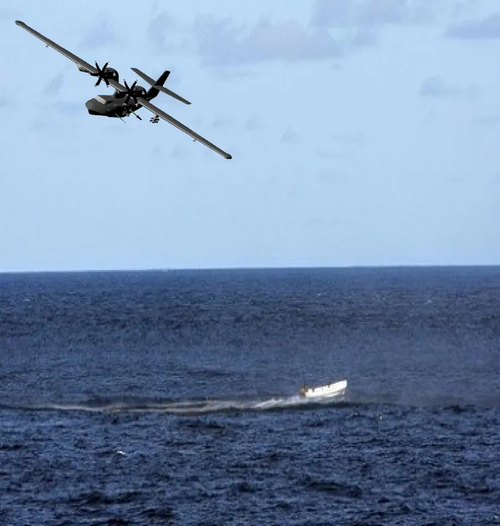
The available images are not terribly clear, but it looks like they are eliminating the wing bracing struts along the way. The whole premise seems iffy to me, but that bit scares me. Those struts are there for a reason, and taking them off implies a lot more reengineering than should be covered under a 1940s airworthiness document. But perhaps someone with more experience in this realm can correct me.

1690308429236.png 1690308329775.png 1690308380375.png
 
Last edited:
Hi Tom,

So, apparently the Catalina Aircraft Trust have announced a desire (I won't call it a plan) to build new production Catalinas for the civil and military markets under the name Catalina II or Next Generation Amphibious Aircraft. The new aircraft would be turboprop aircraft but would operate under the original post-war Catalina 28-5ACF commercial airworthiness certificate.

Just looking at the quality of the presentation images, I'm not sure that project can be taken seriously.

With regard to the market for twin-turboprop amphibians, I'm afraid the sad saga of the Seastar tells us, there isn't any:

https://dornierseawings.com/products/seastar/
Regards,

Henning (HoHun)
 
With regard to the market for twin-turboprop amphibians, I'm afraid the sad saga of the Seastar tells us, there isn't any:

Much different, lighter aircraft. They aren't looking at remotely the same market segment.

515 as mentioned above, however, is awfully comparable, in production, and well-liked. I'm not sure I see the market viability of a "new" design.

I'm all for more Cats flying anyway they can, so good luck to them, but I shan't hold my breath.
 
Hi Del,

Much different, lighter aircraft. They aren't looking at remotely the same market segment.

Admittedly, the Seastar doesn't match the payload capacity of the Catalina, but not for all of the suggested applications the full payload of the Catalina is actually required. In those cases you're probably better off with a smaller, lighter aircraft - for example, when you're operating a sensor platform.

Regards,

Henning (HoHun)
 
but it looks like they are eliminating the wing bracing struts along the way. The whole premise seems iffy to me, but that bit scares me. Those struts are there for a reason, and taking them off implies a lot more reengineering than should be covered under a 1940s airworthiness document. But perhaps someone with more experience in this realm can correct me.
Even from the point of view of being a lover of seaplanes I too wonder about that.
 
The lack of bracing is one hell of a red flag. Not that my first instinct on seeing this news was optimistic, and not that an unbraced parasol wing is out of the question, but yeah it doesn't make a great impression.

Even if they build it and it's capable, they won't be building what SOCOM wants. SOCOM wants a ramp and that's why the wacky C-130 float concept persists. They'd have a better chance selling the Sea Duck to them than a Catalina.
 
The lack of bracing is one hell of a red flag. Not that my first instinct on seeing this news was optimistic, and not that an unbraced parasol wing is out of the question, but yeah it doesn't make a great impression.

Even if they build it and it's capable, they won't be building what SOCOM wants. SOCOM wants a ramp and that's why the wacky C-130 float concept persists. They'd have a better chance selling the Sea Duck to them than a Catalina.
Oh, hell yes. Is the Sea Duck in production now?

(said jokingly, but also kinda hopeful)
 
So, apparently the Catalina Aircraft Trust have announced a desire (I won't call it a plan) to build new production Catalinas for the civil and military markets under the name Catalina II or Next Generation Amphibious Aircraft. The new aircraft would be turboprop aircraft but would operate under the original post-war Catalina 28-5ACF commercial airworthiness certificate.

https://catalinaaircrafttrust.com/
The available images are not terribly clear, but it looks like they are eliminating the wing bracing struts along the way. The whole premise seems iffy to me, but that bit scares me. Those struts are there for a reason, and taking them off implies a lot more reengineering than should be covered under a 1940s airworthiness document. But perhaps someone with more experience in this realm can correct me.
The engine swap would be relatively simple, assuming that they're using an established PT6 swap like with the Turbo Beaver/Turbo Otters. That's technically a Supplemental Type Certificate, but is relatively simple to do. I mean, technically I could do that modification to an existing Catalina, as I'm an A&P and can do the weight and balance math, I'd just need some deep pockets to buy two PT6s (or even Twinpacs!) plus props, engine mounts, cowlings, etc. I think most of that is already in most of the STC kits, which is why they're a half-mil each side.

But removing the wing braces? Yeah, that's not happening without a completely redesigned wing, and probably a redesigned center tower, too. That's a lot of work on a 1930s Type Certificate. So much so that Cessna called their unbraced version a whole different model number (177 Cardinal versus a 172)
 
Catalina are bigger. You are not going to host 30 troops in an even enlarged Albatross.

But I do not believe that a startup could match the manufacturing efficiency of North American. This plane owned its performances to an efficient light weight construction.
See how the CFRP An-2 led to nothing.
 
Last edited:
Why not just build more CL-415s ? another one has just bite the dust in Greece... with global warming, we will need many, many more CL-415 ASAP.
 
"Why not just build more CL-415s ?"

Yes, given the cruel attrition, there will be a growing market for tough fire-fighting aircraft.

And per OP's Cat_II comment, if you're going to be throwing aircraft about, be-it 'just' turbulence from aggravated thermals or the stresses of fire-fighting, removing those wing-braces risks 'Dire Lord Murphy' converting aircraft to 'folding wing'...
 
Why not just build more CL-415s ? another one has just bite the dust in Greece... with global warming, we will need many, many more CL-415 ASAP.
"Why not just build more CL-415s ?"

Yes, given the cruel attrition, there will be a growing market for tough fire-fighting aircraft.

And per OP's Cat_II comment, if you're going to be throwing aircraft about, be-it 'just' turbulence from aggravated thermals or the stresses of fire-fighting, removing those wing-braces risks 'Dire Lord Murphy' converting aircraft to 'folding wing'...
Like I've wrote above, they're already doing it. And it's called DHC-515.
 
Why not just build more CL-415s ? another one has just bite the dust in Greece... with global warming, we will need many, many more CL-415 ASAP.

That EAP scooper just lost was a piston-engined Canadair CL-215 ... which brings up another option to Mayo.Kyo's Viking DHC-515 - the CL-415EAF rebuild programme.

-- https://www.vikingair.com/cl-415eaf
 
FlightGlobal :

"Catalina Aircraft pushes ahead with updated Catalina II after securing 46-aircraft commitment"

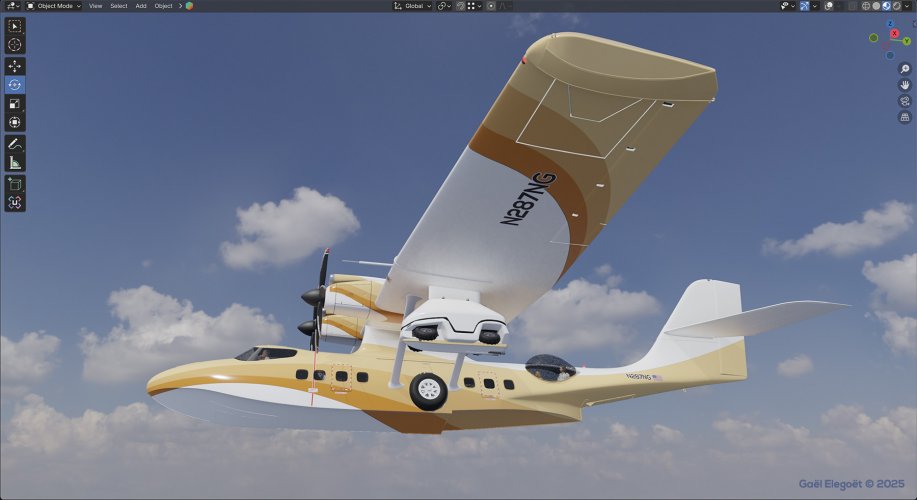
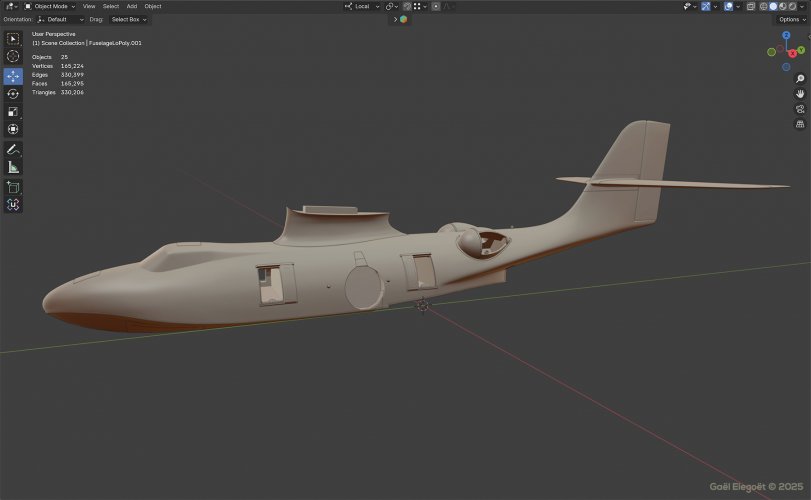
I was hired to do the 3d model and renders of their Catalina II, as can be seen on their website and on the FlightGlobal article above (and grabbed by the YouTuber for the vid posted above...).
Was super interesting/cool job to do. Moreover the challenge was that the model was to be 3d printable, with at least 5 versions, cause they wanted to have it printed as big display models on shows. Only saw some few pieces printed so far.

Will post more images later if I can.
 
Last edited:
Seems it would make sense to convert C-27J into an Albatross than to do either program. You could help maintain them with C-130J ground crews in a pinch.
 
Seems it would make sense to convert C-27J into an Albatross than to do either program. You could help maintain them with C-130J ground crews in a pinch.

An entirely new fuselage? No, that's a nightmare. And the C-27 is weirdly, too new.

The Catalina II is only getting away with this (assuming they do) by pretending this is the same plane that was certificated in 1935. That lets it skip a lot of newer requirements.
 
The Catalina II is only getting away with this (assuming they do) by pretending this is the same plane that was certificated in 1935. That lets it skip a lot of newer requirements.
This part of the plan I am very doubtful about. Surely somebody will take a more detailed look and realize "yeah, this is pretty much a whole new aircraft under the skin." I mean, they won't be using 1930s construction techniques for this right?

That's not to say there isn't utility or potential in this aircraft, I wish them success in that, but I don't think they'll be able to convince the FAA to certify it because it's close enough to the last Catalina. Hopefully when the inevitable happens there it doesn't cause investors or customers with commitments to panic.
 
New materials and structures, new engines, new avionics, new seats, etc., our very progressive Federal Aviation Administration will no doubt see fit to rush this through testing and qualification. :rolleyes:
 
This part of the plan I am very doubtful about. Surely somebody will take a more detailed look and realize "yeah, this is pretty much a whole new aircraft under the skin." I mean, they won't be using 1930s construction techniques for this right?
Riveted sheetmetal? Yes, Boeings and Airbuses are still built that way.

IIRC fiberglass was a thing then was well, so making some parts composite instead of metal is an available option. I'm thinking the wingtip floats would be a lot easier to make as composites than metal, for example. At least in low production numbers. If you were making thousands of the things it'd be better to stamp them out of aluminum.


That's not to say there isn't utility or potential in this aircraft, I wish them success in that, but I don't think they'll be able to convince the FAA to certify it because it's close enough to the last Catalina.
There's at least 5 different STCs to replace R1830s with various turboprop engines. Choose your powerplant!
2 pilots, no flight engineer, and glass cockpit is manufacturer-level design changes that can be done, and have been done in the past with 737s and 747s.

So I do see the regulatory ways they can make the changes.
 
Why would they need an outsider to make a 3D model?!? Aren't they using any modern 3D CAD software? Is the goal here is to rebuild the Catalina using only original paper sheets and pens?!
 
Why would they need an outsider to make a 3D model?!? Aren't they using any modern 3D CAD software? Is the goal here is to rebuild the Catalina using only original paper sheets and pens?!
I'm guessing that they don't have a spare person to babysit the current CAD model outputting into an illustration software for marketing to use. And a design brief of "Draw a Catalina with the same engines as a CL415 and passenger windows down the hull" is easy to farm out to someone known for their digital illustrations.

Remember, tracing all the original blueprints into CAD takes just as much effort as designing from scratch.
 
I'm guessing that they don't have a spare person to babysit the current CAD model outputting into an illustration software for marketing to use. And a design brief of "Draw a Catalina with the same engines as a CL415 and passenger windows down the hull" is easy to farm out to someone known for their digital illustrations.

Remember, tracing all the original blueprints into CAD takes just as much effort as designing from scratch.
This.
They do use CAD tools, but they don't have the complete stuff in CAD to use as a model for realistic scenes 3d renders, even less for 3d printing.
What they needed was nice renders of all the versions they plan, each with own livery that would be used for their display models for shows.

I was provided with a very rough CAD model as a starting point, the one on the illustrations at the start of this thread, done in-house for their very early PR images, but it was very incomplete, things had changed... ect... was unusable.
So started from a usual Catalina 3d model (that was so bad, had to redo almost everything, I ended up keeping only the LG and wing tip floats) , following their instructions, ie "add xx feets between here and here, windows must be placed here, here and here...". Lots of back and forth in the process.

Note, while the final thing will look like this, there will certainly be some changes. The engine is not selected yet. They were very specific of certain things though, like the prop was to be a certain type, the elongation of the hull was to be a certain amount between such-and-such points...ect.

Here is a short vid of the firefighter version with a whale paintjob, I did for myself. They liked it, so they selected the livery for their planned "air yacht" version.
View: https://youtu.be/5z1-_dppbGs


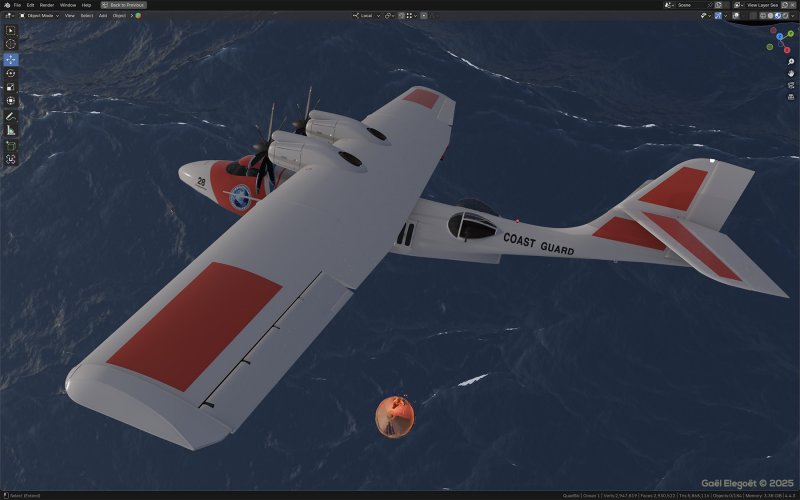
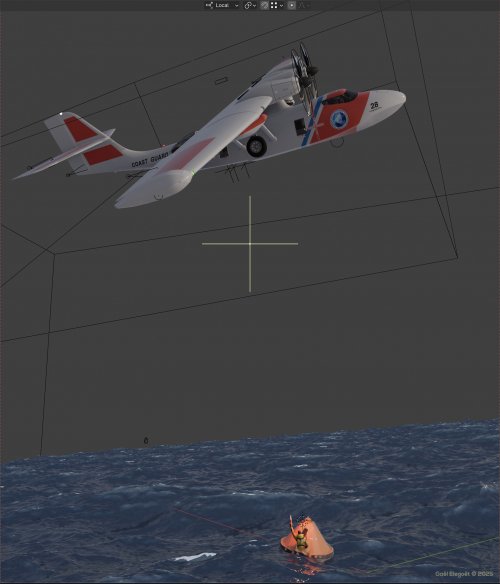
Here some screenshots.
"Air yacht" version with a livery that wasn't selected :
Screenshot03.jpg

Coast guard version :
Screenshot01.jpg

Screenshot02.jpg

And this is the printable hull model for the "Special Op" version :
Screenshot04.jpg

I do hope that project will go through, it's very cool. Plus, I was promised a ride when the thing is ready :)
 
Last edited:
Why would they need an outsider to make a 3D model?!? Aren't they using any modern 3D CAD software? Is the goal here is to rebuild the Catalina using only original paper sheets and pens?!
It's very common for even quite large engineering firms to outsource the 3D graphics. The requirements of an engineering CAD model aren't the same as those for a publicity render.
The Catalina II is only getting away with this (assuming they do) by pretending this is the same plane that was certificated in 1935. That lets it skip a lot of newer requirements.
They do at least seem to have put the wing struts back in, so there's that.
 
I do not outsource graphics. Render is only a Drag and drop away from hardcore Engineering stuff when you know what you do/what software suite you buy.

Great work @galgot! Artistic and detailed.
Don't share too much on public network. ;)
 
Last edited:
I do not outsource graphics. Render is only a slide and drop away from hardcore Engineering stuff when you know what you do/what software suite you buy.

Great work @galgot! Artistic and detailed.
Don't share too much on public network. ;)
Indeed. I'm only allowed to show these now. And post only screenshots.
 
@galgot Amazing work. Maybe you can pitch an idea to Pan American Airways of making a sizzle video for them to showcase how they want to operate this aircraft. It's quite a unique travel concept...

... e.g. showing the highlights of flying across Africa by air from Alexandria to Cape Town would be quite something. Though perhaps it would need some virtual reality or AI to make hyper-realistic scenes?

Pan American Airways System plans initially to operate Catalina IIs on “trunk routes” within Africa, such as between Alexandria in Egypt and Cape Town, with stops at luxury resorts; cities like Zanzibar and natural landmarks like Kenya’s Masai Mara reserve, Victoria Falls and lakes Albert, Malawi and Victoria. The company envisions later flying in the Mediterranean, the Caribbean and elsewhere.

The aircraft will have art deco-style cabins with 10 “ultra-recline” seats, a galley, lavatory and observation area with views through the Catalina II’s aft “blister” windows, Pan American Airways System says.

“It gives you a view of the world you have never experienced,” Reece says.
 
@galgot Amazing work. Maybe you can pitch an idea to Pan American Airways of making a sizzle video for them to showcase how they want to operate this aircraft. It's quite a unique travel concept...

... e.g. showing the highlights of flying across Africa by air from Alexandria to Cape Town would be quite something. Though perhaps it would need some virtual reality or AI to make hyper-realistic scenes?
Thks. Will see what they want next.
Indeed, you can cut time short with IA for doing backgrounds, and certains complicated animated stuffs, like animated water drops, or fires on a landscape. These would have taken lot of time in 3d only to setup and render time ( particles, animated water, fire, take lot of render time, thus €€ paid to the render farm ).
Still, takes dozens of tries to get something like what you want using IA, and it still needs work on the resulting footage. Then make a proper 3d render animation of the plane and composition the two in After Effect.
I did tried only animating the plane in IA just from a still image, results were hilarious.
 
Last edited:

Similar threads

Back
Top Bottom