exclaimedleech8
ACCESS: Top Secret
- Joined
- 30 September 2024
- Messages
- 826
- Reaction score
- 1,001
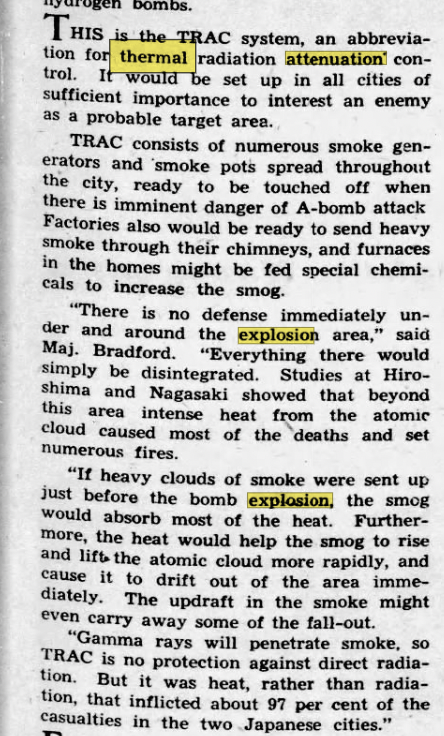
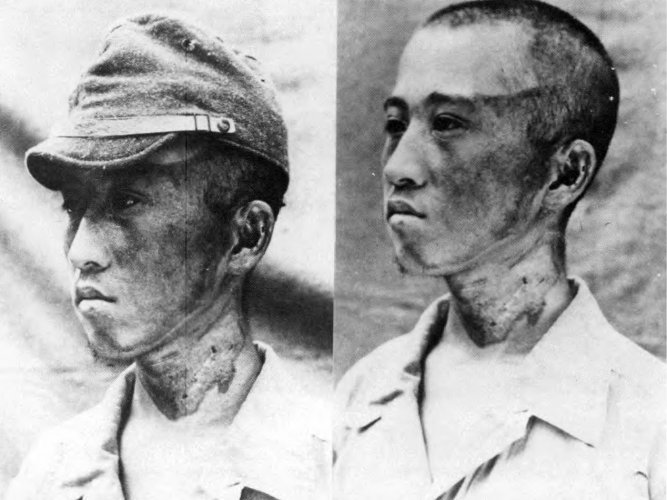
The thinking was simple: by shrouding cities in smoke before a nuclear attack, the incredible heat given off by the explosion would be prevented from spreading far and thereby greatly reducing casualties from burns and damage from fire. There still would've been blast and radiation to contend with, but getting rid of the heat would've definitely helped.
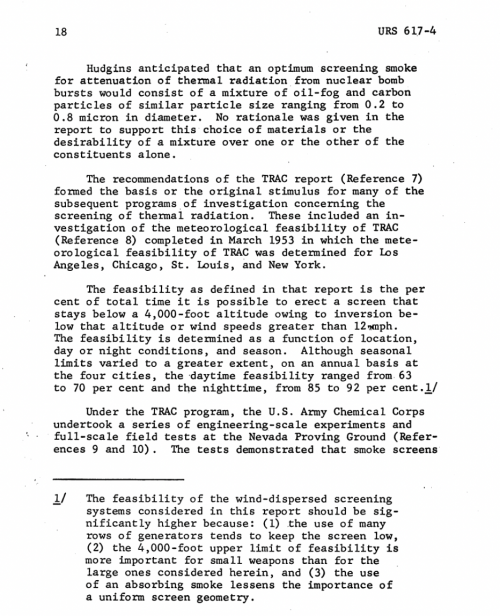
Here's a link to the study from 1963. And here are screenshots of important pages:


With just under 3500 pounds of smoke per square mile, the thermal radiation would be reduced by 90%. Going up to 6600 pounds would've reduced it by 99%.

They calculated how much attenuation would be needed to prevent the outbreak of fires in areas that would otherwise be only lightly impacted by blast.

They came up with many ideas on how to implement this. Delivery by aircraft or mobile smoke generator was ruled out as too costly. "pin-wheel" ones would work with no wind but add cost.

 '
'


Using the calculations from earlier, they figured out, for a given warning time and wind speed, how many generators would be needed per square mile and how much smoke each one would need to emit to achieve the desired attenuation


And with that, they worked out the cost. The system that would work with 5 minutes warning and in 5 mph winds would've cost $5,100 per square mile. In today's money, that's about $40,000.


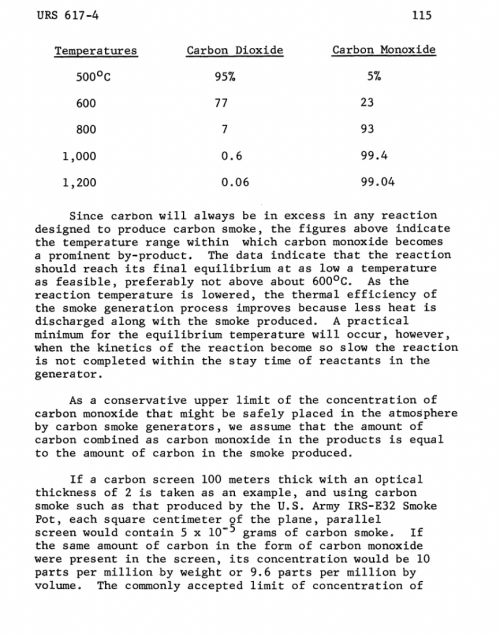
Next they discussed the drawbacks. The most obvious one was the the toxicity of the fumes they created

Next was the reduction in visibility and the possibility that the heat absorbed could "ignite the atmosphere". The latter was readily dismissed.


And finally was the nuisance effect
I was wondering if anyone here could point out possible pitfalls of this. Sounds like it would've been a cheap and effective way to reduce the damage from a nuclear war.
Edit: I have thought of one possible problem: all these smoke pots loaded with solid fuel could, ironically, pose a fire hazard from lightning strikes during peacetime.
Here's a link to the study from 1963. And here are screenshots of important pages:
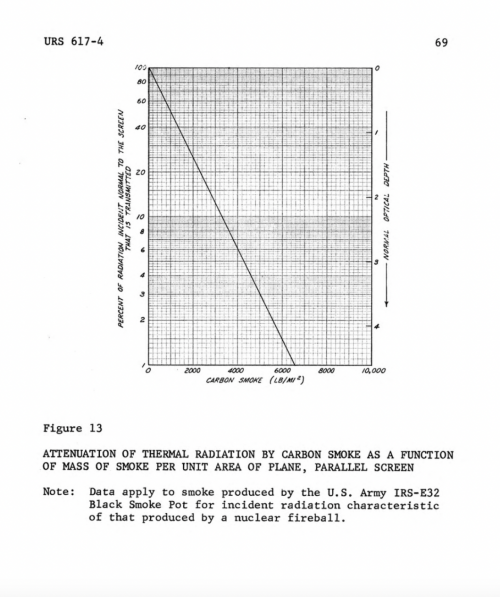
With just under 3500 pounds of smoke per square mile, the thermal radiation would be reduced by 90%. Going up to 6600 pounds would've reduced it by 99%.
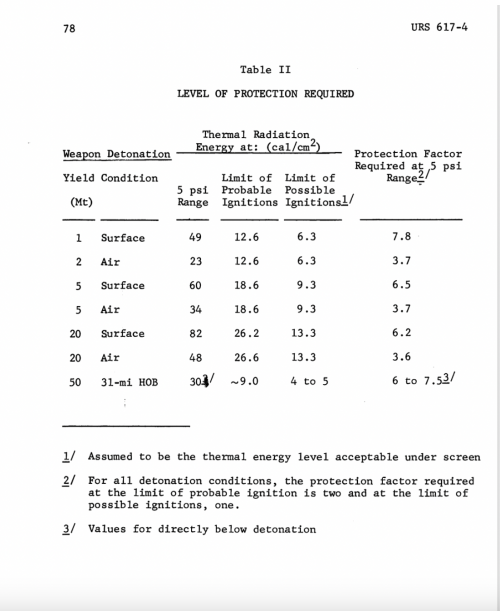
They calculated how much attenuation would be needed to prevent the outbreak of fires in areas that would otherwise be only lightly impacted by blast.
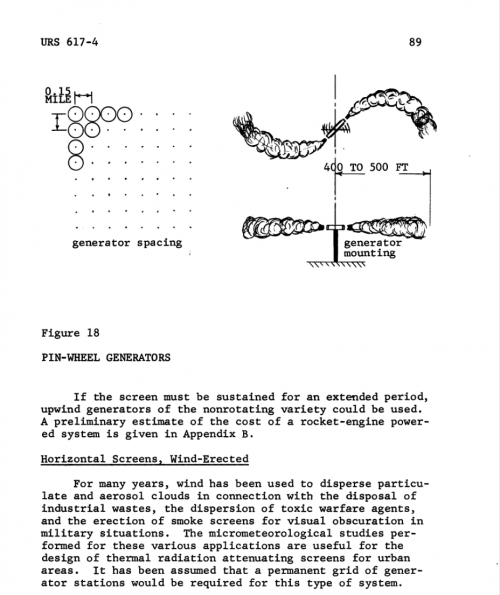
They came up with many ideas on how to implement this. Delivery by aircraft or mobile smoke generator was ruled out as too costly. "pin-wheel" ones would work with no wind but add cost.
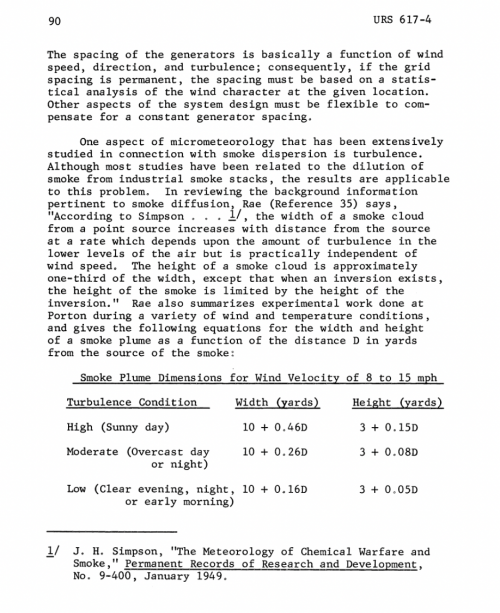
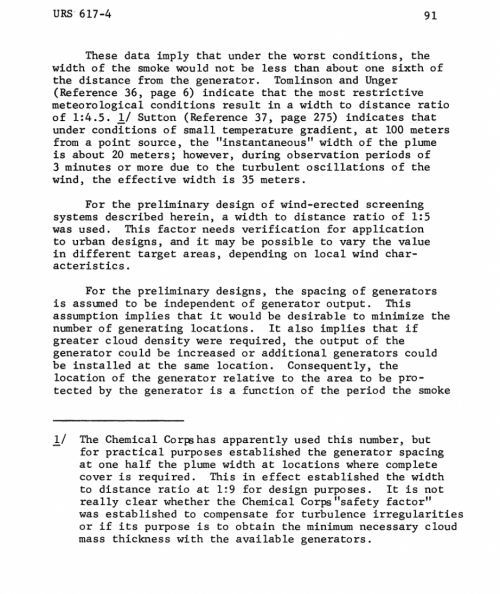 '
'
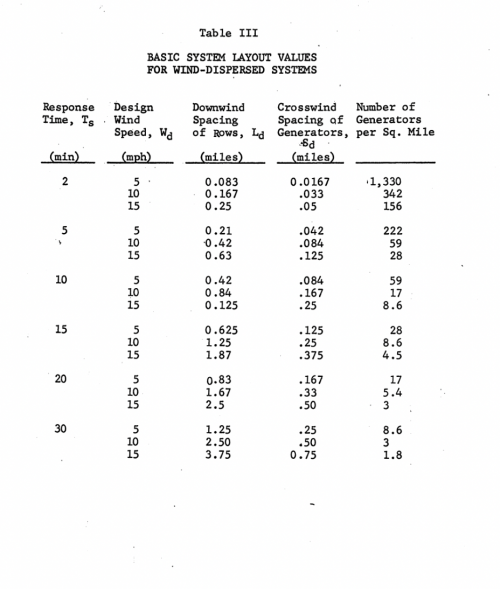
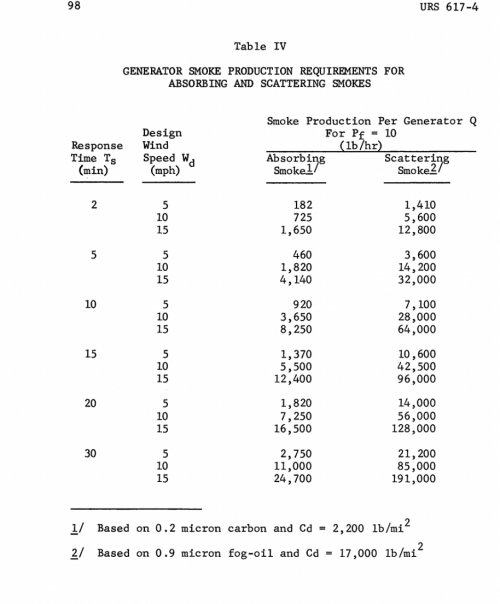
Using the calculations from earlier, they figured out, for a given warning time and wind speed, how many generators would be needed per square mile and how much smoke each one would need to emit to achieve the desired attenuation
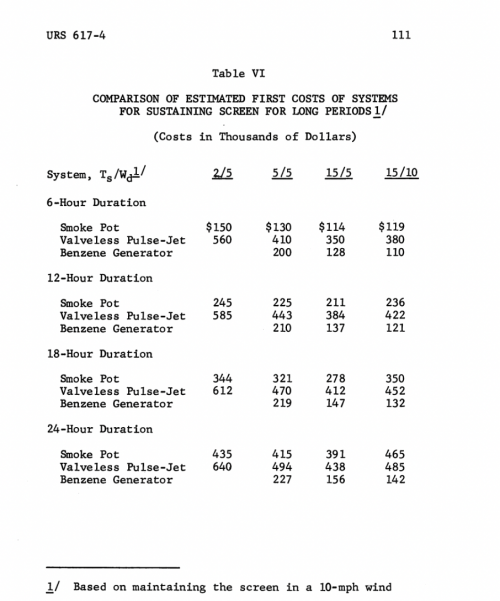
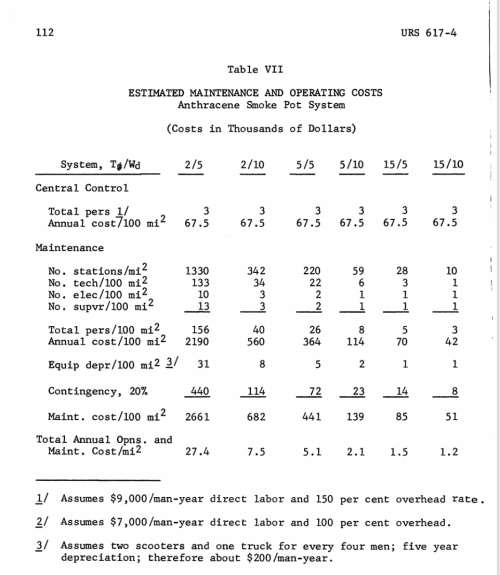
And with that, they worked out the cost. The system that would work with 5 minutes warning and in 5 mph winds would've cost $5,100 per square mile. In today's money, that's about $40,000.
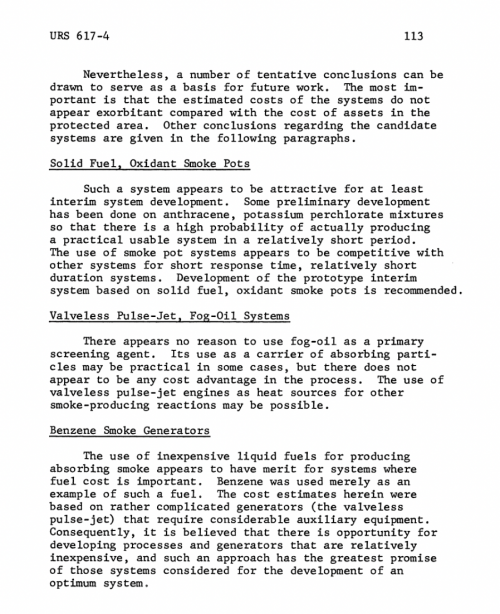
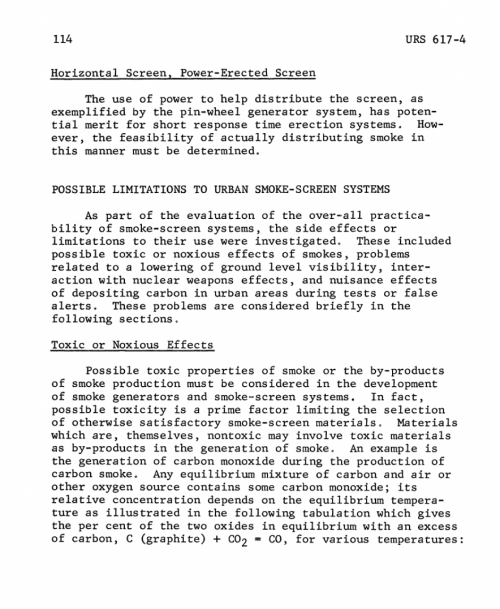
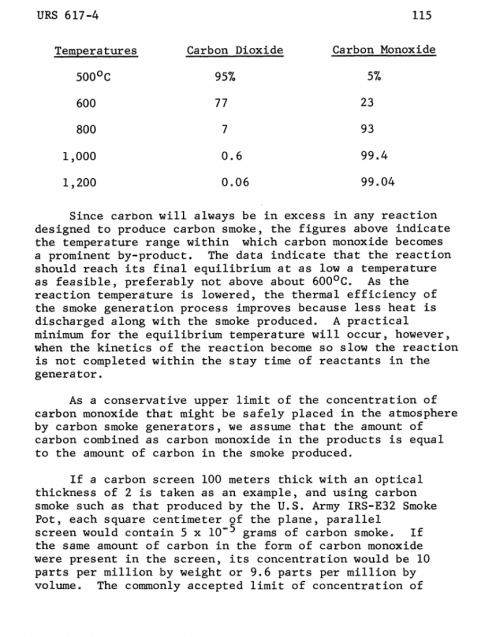
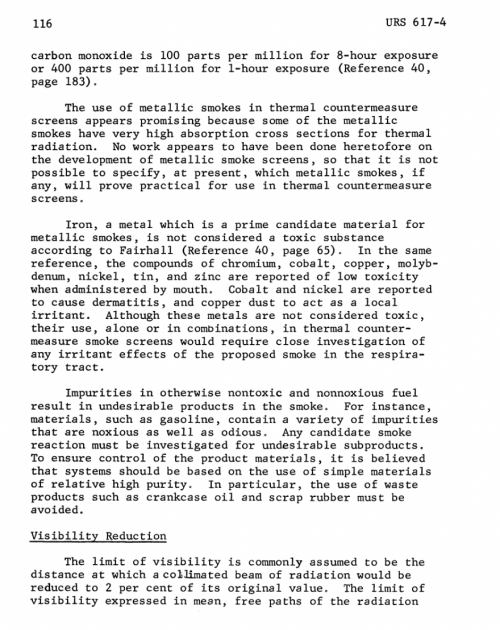
Next they discussed the drawbacks. The most obvious one was the the toxicity of the fumes they created
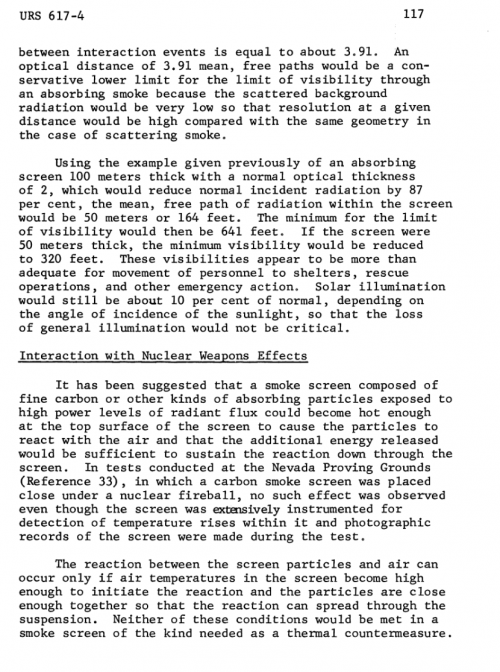
Next was the reduction in visibility and the possibility that the heat absorbed could "ignite the atmosphere". The latter was readily dismissed.
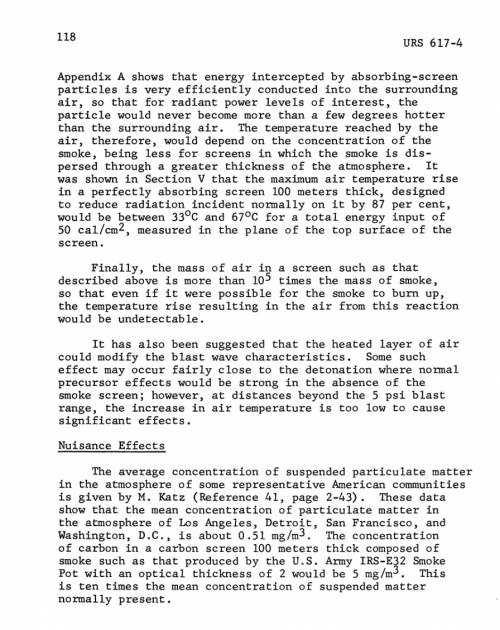
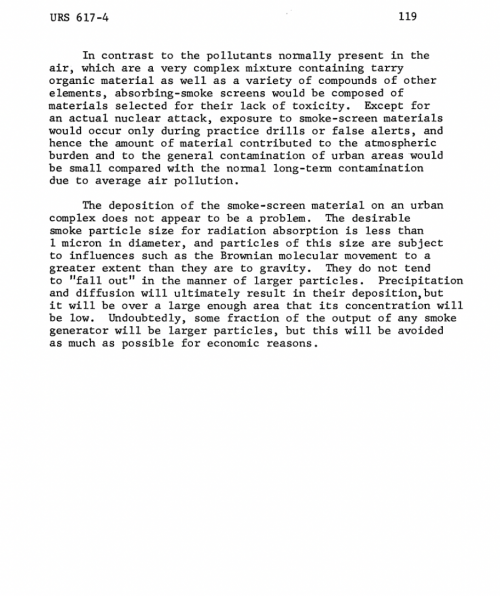
And finally was the nuisance effect
I was wondering if anyone here could point out possible pitfalls of this. Sounds like it would've been a cheap and effective way to reduce the damage from a nuclear war.
Edit: I have thought of one possible problem: all these smoke pots loaded with solid fuel could, ironically, pose a fire hazard from lightning strikes during peacetime.
Attachments
Last edited: