Proposals to use smoke screens to protect cities from nuclear explosions

exclaimedleech8

ACCESS: Top Secret
Joined
30 September 2024
Messages
826
Reaction score
1,001
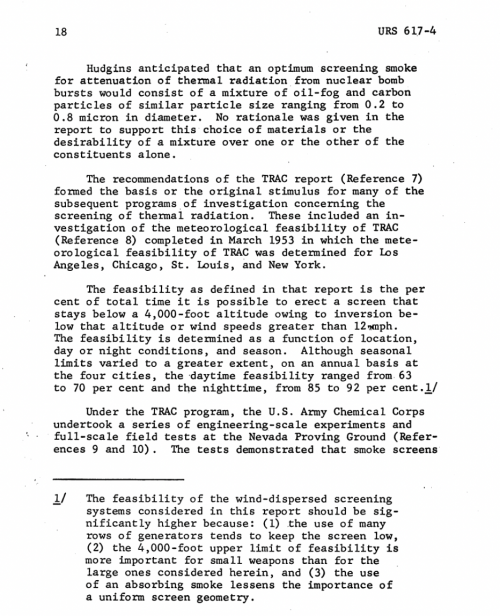
The thinking was simple: by shrouding cities in smoke before a nuclear attack, the incredible heat given off by the explosion would be prevented from spreading far and thereby greatly reducing casualties from burns and damage from fire. There still would've been blast and radiation to contend with, but getting rid of the heat would've definitely helped.

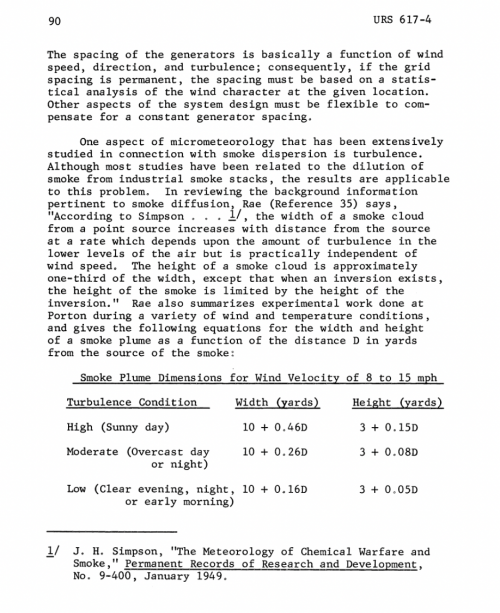
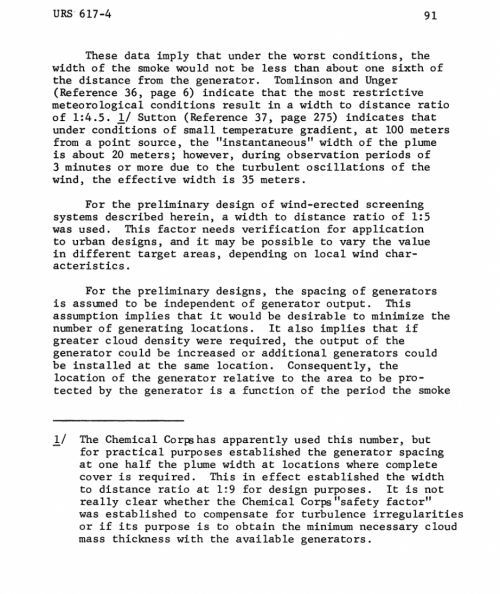
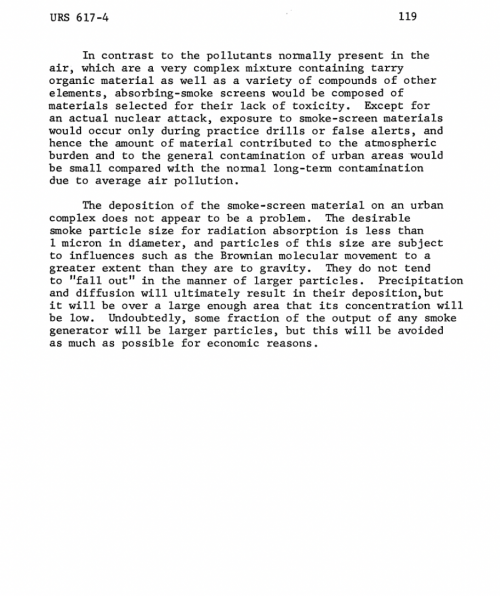
Here's a link to the study from 1963. And here are screenshots of important pages:
Screenshot 2025-06-01 at 8.38.23 PM.png Screenshot 2025-06-01 at 8.39.56 PM.png
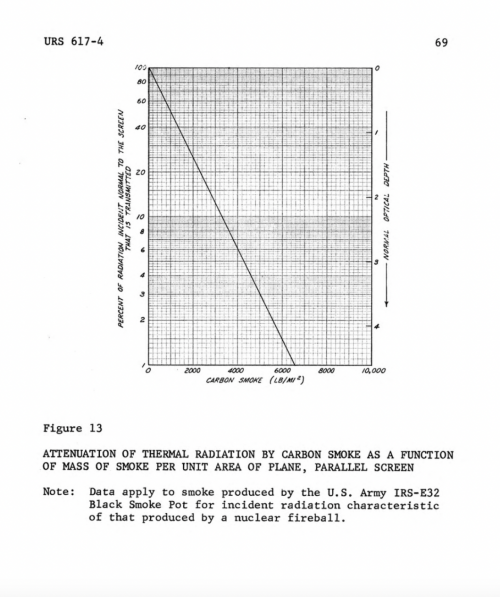
With just under 3500 pounds of smoke per square mile, the thermal radiation would be reduced by 90%. Going up to 6600 pounds would've reduced it by 99%.

Screenshot 2025-06-01 at 8.40.32 PM.png
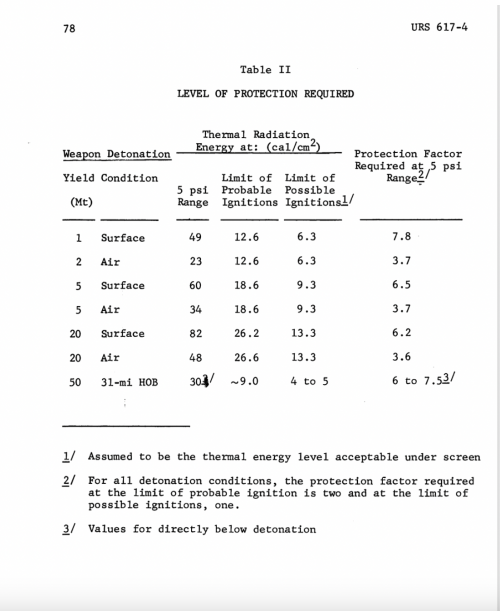
They calculated how much attenuation would be needed to prevent the outbreak of fires in areas that would otherwise be only lightly impacted by blast.

Screenshot 2025-06-01 at 8.41.06 PM.png
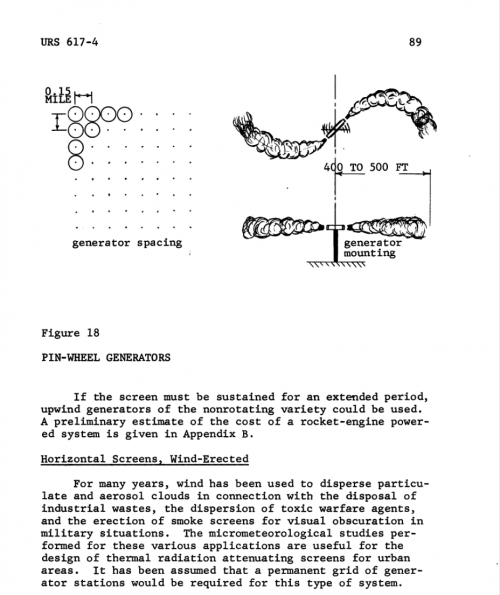
They came up with many ideas on how to implement this. Delivery by aircraft or mobile smoke generator was ruled out as too costly. "pin-wheel" ones would work with no wind but add cost.
Screenshot 2025-06-01 at 8.41.11 PM.png Screenshot 2025-06-01 at 8.41.18 PM.png ' Screenshot 2025-06-01 at 8.41.27 PM.png Screenshot 2025-06-01 at 8.41.51 PM.png
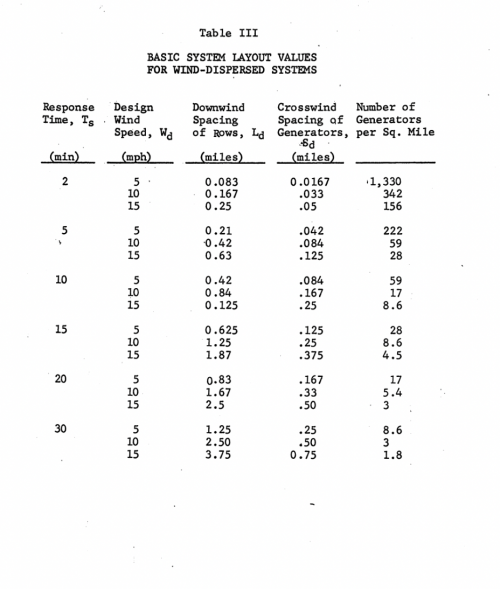
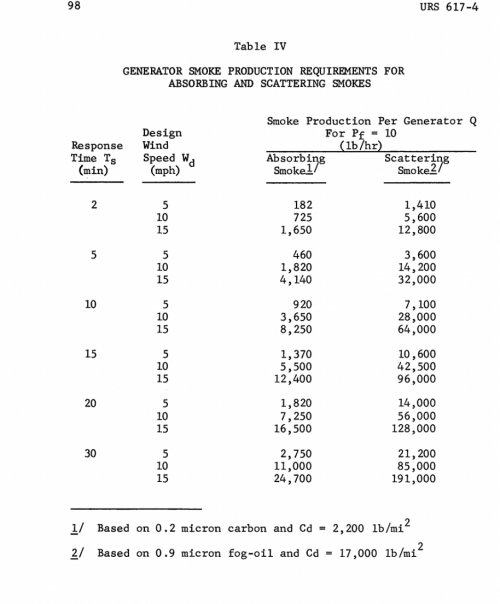
Using the calculations from earlier, they figured out, for a given warning time and wind speed, how many generators would be needed per square mile and how much smoke each one would need to emit to achieve the desired attenuation

Screenshot 2025-06-01 at 8.43.33 PM.png
Screenshot 2025-06-01 at 8.43.38 PM.png
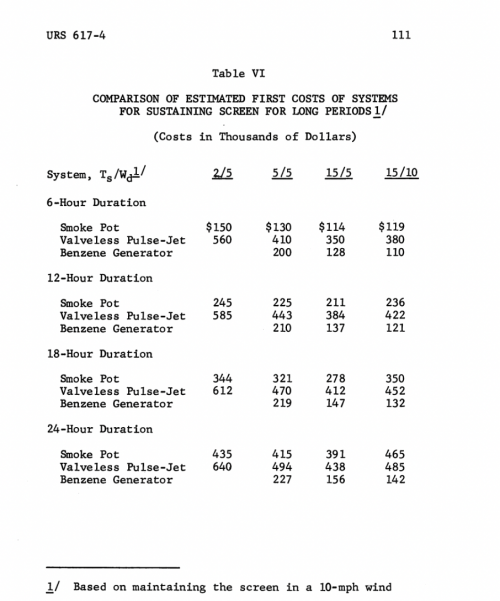
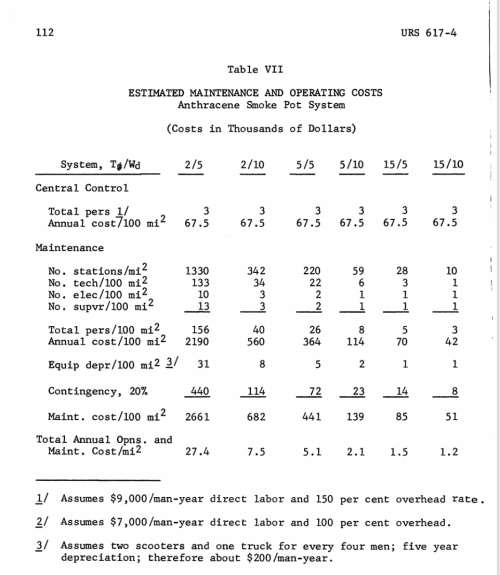
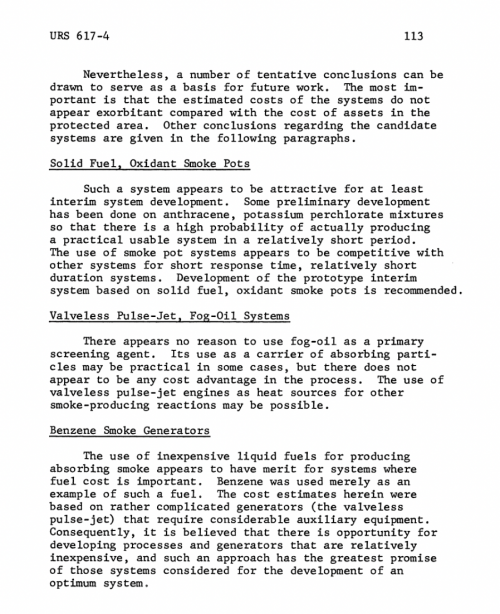
And with that, they worked out the cost. The system that would work with 5 minutes warning and in 5 mph winds would've cost $5,100 per square mile. In today's money, that's about $40,000.
Screenshot 2025-06-01 at 8.43.43 PM.png
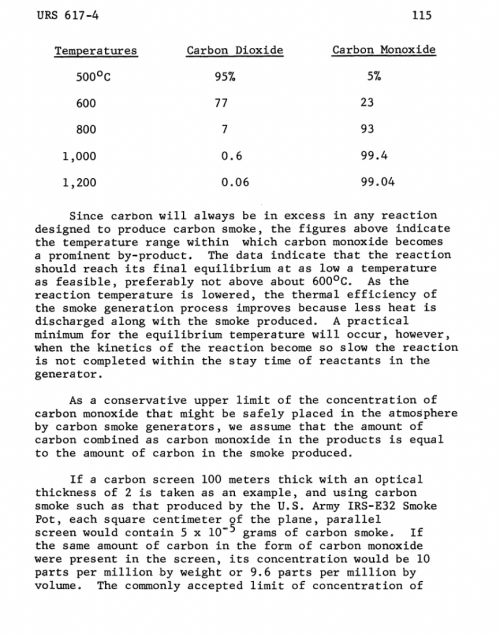
Screenshot 2025-06-01 at 8.43.49 PM.png Screenshot 2025-06-01 at 8.43.54 PM.png Screenshot 2025-06-01 at 8.44.00 PM.png
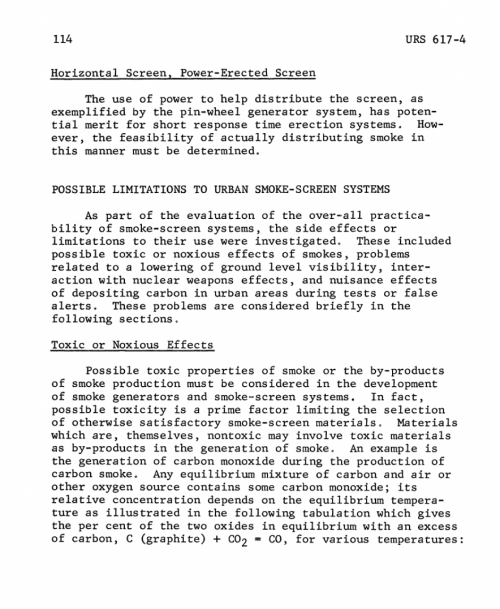
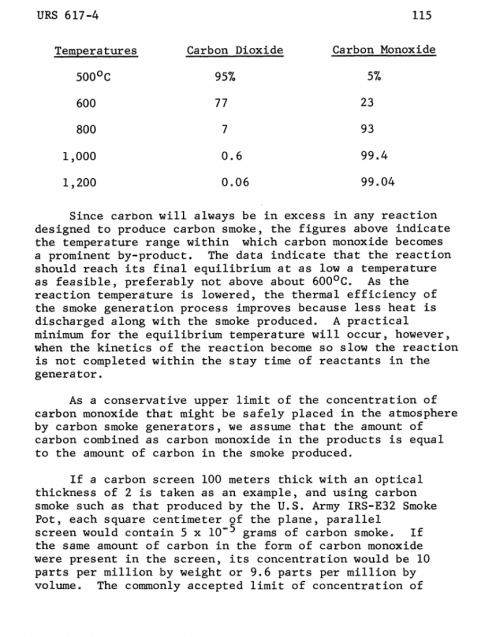
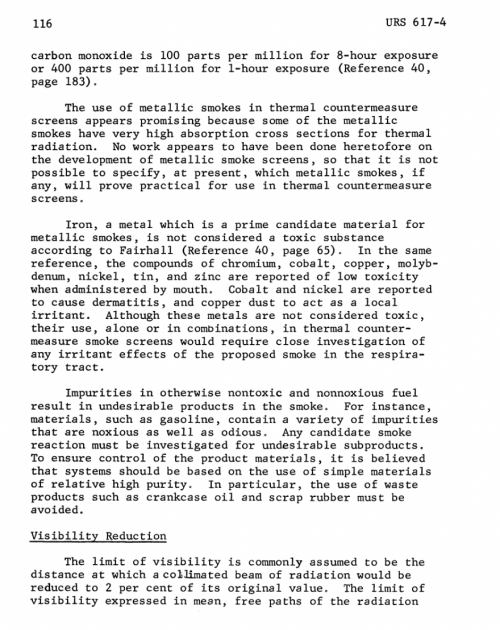
Next they discussed the drawbacks. The most obvious one was the the toxicity of the fumes they created
Screenshot 2025-06-01 at 8.44.06 PM.png
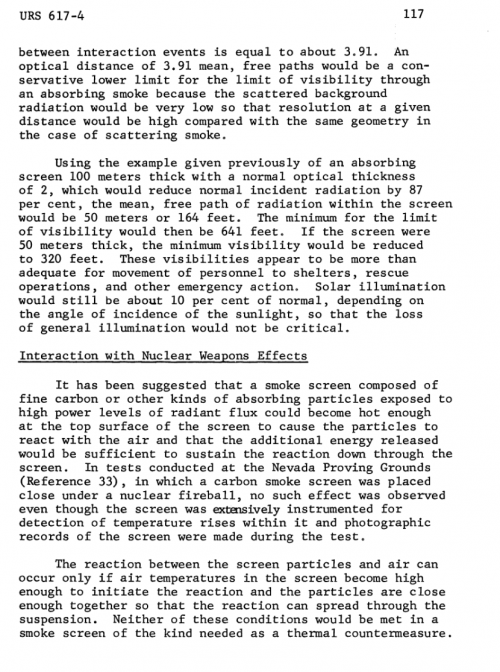
Next was the reduction in visibility and the possibility that the heat absorbed could "ignite the atmosphere". The latter was readily dismissed.
Screenshot 2025-06-01 at 8.44.11 PM.png
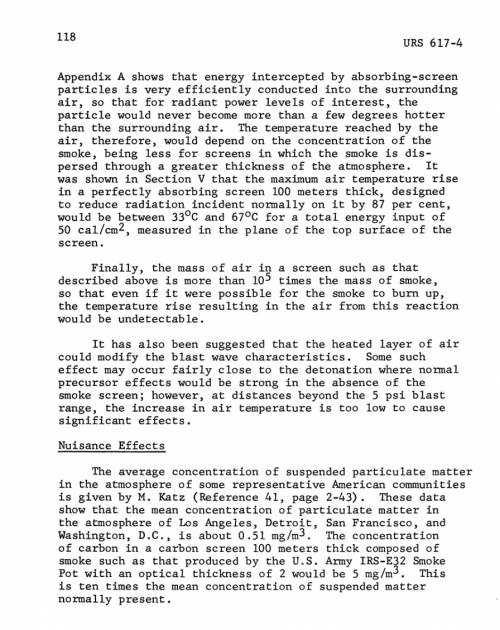
Screenshot 2025-06-01 at 8.44.15 PM.png
And finally was the nuisance effect


I was wondering if anyone here could point out possible pitfalls of this. Sounds like it would've been a cheap and effective way to reduce the damage from a nuclear war.

Edit: I have thought of one possible problem: all these smoke pots loaded with solid fuel could, ironically, pose a fire hazard from lightning strikes during peacetime.
 

Attachments
  • Screenshot 2025-06-01 at 8.43.54 PM.png
    Screenshot 2025-06-01 at 8.43.54 PM.png
    693.9 KB · Views: 11
Last edited:
I haven't heard or read about this method, too, so please, just tell us the exact source ;)
 
I haven't heard or read about this method, too, so please, just tell us the exact source ;)

Queried good ole' Google on "URS 617-4" and got this:

Author: Goodale, T. C. | Hawkins, M. B. | Willoughby, A. B.
Title: Feasibility of Active Countermeasures for Thermal Radiation Effects of Nuclear Weapons. Final Report.
Coporate: United Research Services, Burlingame, CA
Sponsor: Office of Civil Defense, Washington, DC
Report: URS 617-4
July 1963
188 p.
Contract: OCD-OS-62-242

https://firedoc.nist.gov/article/RHcyXYQBWEcjUZEYY34Q
 
I was wondering if anyone here could point out possible pitfalls of this.
I suspect they're being extremely optimistic in assuming they could develop a non-toxic screen, particularly one that needs to be maintained for a considerable period, there's been considerable research on the problems of suspended particulates since this study was written. There's also likely to be considerable casualty figures just from suddenly smothering all the normal activities of a city in thick smoke.

Two weapons in close succession could easily defeat it - first burns off or disperses the smoke via blast effect, second strikes with full effect.

And ultimately it only deals with one damage mechanism, while nuclear weapons have several.
 
Actually that trade off sounds good. Forcing the enemy to use 100% more warheads is a huge deal. And heat is the biggest killer of all nuke effects.
Radiation and 20 psi pressure covers like 5 times less area than 5 psi pressure. The latter is still far from guaranteed to kill you and mostly depends on the type of building you are in, would it collapse on top of you. (if you're standing out in the open, 5 psi would likely not kill you unless you hit your head as you are thrown to the ground )
But 3rd degree burns will happen over almost 20 times larger area. Endangering many more people than the blast wave or radiation.

Secondary effects such as fires and fire storms will also be lessened, thus leading the fewer people killed.
 
Londoners in 1940 were very reassured to believe that their city was defended by balloon barriers.

In 2001, New Yorkers believed their city was defended by the world's most advanced interceptor force.

People need to believe that it is better to survive a nuclear war blindly and with radioactive burns, waiting for help that will never come, than to die quickly in the first few seconds.
 
Londoners in 1940 were very reassured to believe that their city was defended by balloon barriers.

In 2001, New Yorkers believed their city was defended by the world's most advanced interceptor force.

People need to believe that it is better to survive a nuclear war blindly and with radioactive burns, waiting for help that will never come, than to die quickly in the first few seconds.
Umm... those balloon barriers were somewhat effective

It's funny you should mention the blitz because, in the 1930s, people were sure that heavy bombers were an unstoppable weapon of war that could not be defended against (see Things to Come (1936)).

But perhaps your last point is why this was never developed, people refused to believe there was any point in improving the survivability of a nuclear war.
 
Umm... those balloon barriers were somewhat effective

It's funny you should mention the blitz because, in the 1930s, people were sure that heavy bombers were an unstoppable weapon of war that could not be defended against (see Things to Come (1936)).

But perhaps your last point is why this was never developed, people refused to believe there was any point in improving the survivability of a nuclear war.
The only thing that could have stopped the German bombers would have been the occupation by the French army of the factories where they were built. Everything else was cosmetic measures to reassure the population that they would die without causing too much disturbance to the authorities. Such as the DEW Line, the Nuclear Falcon or the Century Series.
 
The only thing that could have stopped the German bombers would have been the occupation by the French army of the factories where they were built. Everything else was cosmetic measures to reassure the population that they would die without causing too much disturbance to the authorities. Such as the DEW Line, the Nuclear Falcon or the Century Series.
Britain was able to keep deaths from the Luftwaffe's bombers down to reasonable levels with a mix of AA cannons, fighter aircraft, and air raid shelters.
 
Not foegett, a nuclear bomb emmitsa very high peak of radilactive rays which would be considarable amount
 
Not foegett, a nuclear bomb emmitsa very high peak of radilactive rays which would be considarable amount
Nukes, especially thermonukes, emit *little* in the way of radiation from the blast itself. The actual radiation danger comes from fallout. If you're close enough to worry about neutron or gamma radiation, you're getting evaporated by the light and heat.
 
dont think so, most of the heat ray will habe a very short wave length due to the high temperarure and will propably melt your DNA in the outer few centimeters....


See Tokai accident, were a radioative flash totally destroyed the DNA of a poor victum. People just standing 2 or so meters behind survived.
 
Last edited:
dont think so, most of the heat ray will habe a very short wave length due to the high temperarure and will propably melt your DNA in the outer few centimeters....


See Tokai accident, were a radioative flash totally destroyed the DNA of a poor victum. People just standing 2 or so meters behind survived.
There is no arguing about this, we know about it from Hiroshima, Nagasaki, and a whole bunch of nuclear tests: any ionizing radiation from the blast itself only occurs at a short radius, and anyone exposed to it would be dead from heat and blast anyway.
 
Between 1963 and 1984, Tucson, Arizona was the home of 54 Titan II missile silos which would've each been hit by 2 or possibly 3 warheads in a Nuclear war. Perhaps that is the reason why white roofs are so popular in that city, to reflect the heat. Also, Los Angelenos can take some comfort in the fact that their city's smog would've reflected away some of the heat from the dozen warheads that would've been aimed at SoCal's various defense plants.
 
Actually that trade off sounds good. Forcing the enemy to use 100% more warheads is a huge deal. And heat is the biggest killer of all nuke effects.
Radiation and 20 psi pressure covers like 5 times less area than 5 psi pressure. The latter is still far from guaranteed to kill you and mostly depends on the type of building you are in, would it collapse on top of you. (if you're standing out in the open, 5 psi would likely not kill you unless you hit your head as you are thrown to the ground )
But 3rd degree burns will happen over almost 20 times larger area. Endangering many more people than the blast wave or radiation.

Secondary effects such as fires and fire storms will also be lessened, thus leading the fewer people killed.
Not read this book (just saw it referenced in Daniel Elsburg's book about his time at RAND) but apparently casualties from thermal effects were not widely modelled for a long time.

https://www.cornellpress.cornell.edu/book/9780801472893/whole-world-on-fire/#bookTabs=1
 
From the description in that link you sent:
"U.S. bombing in World War II caused massive fire damage to Hiroshima and Nagasaki, but later war plans took account only of damage from blast;"

Most of the fires in Hiroshima were not caused by the heat from the explosion but from ruptured gas lines, electrical shorts, and overturned wood stoves.
Additionally:
Homes in Hiroshima were built right up next to each other and made of wood
People had drawn blackout curtains that did an excellent job absorbing the heat of blast and igniting
Nobody had done anything to prepare

Obviously, that is not a realistic scenario to compare to what would happen in a nuclear attack today.
 
There is no arguing about this, we know about it from Hiroshima, Nagasaki, and a whole bunch of nuclear tests: any ionizing radiation from the blast itself only occurs at a short radius, and anyone exposed to it would be dead from heat and blast anyway.
Thr intensity and danger of the heat itself might decay in a small radious, but the danger of radioaktive rays is still critical even when the thermal damage is low. Fallout can be very deadly, but it depende on weather (wind direction, rain). Hiroshima was rebuilt after the war and radioaktivity levels are totally normal today.
 
Even if it did work, how could it be implemented in practice? Shroud the cities in fog forever? That's nonsense. Oh boy...
 
So basically smog. At first I thought they meant water mist - clearly not, but just wondering if we could have a nice green version, a curtain of water would give some protection from a groundburst. Firefighting drones could take hoses up. Probably better for the buildings than humans, so maybe the nice kind insurance companies could pay for it?
 
Between 1963 and 1984, Tucson, Arizona was the home of 54 Titan II missile silos which would've each been hit by 2 or possibly 3 warheads in a Nuclear war. Perhaps that is the reason why white roofs are so popular in that city, to reflect the heat.
nonsense,
 
Even if it did work, how could it be implemented in practice? Shroud the cities in fog forever? That's nonsense. Oh boy...
As the paper explains, they would be activated given warning of an impending nuclear attack.
 
Thr intensity and danger of the heat itself might decay in a small radious, but the danger of radioaktive rays is still critical even when the thermal damage is low. Fallout can be very deadly, but it depende on weather (wind direction, rain). Hiroshima was rebuilt after the war and radioaktivity levels are totally normal today.
Fallout only occurs with groundbursts. It makes more sense to airburst if you're targeting "soft" targets like cities as it maximizes the damage from blast.
 
Can you think of another reason why Tucson has so many white roofs while Las Vegas and Phoenix, which are even hotter, don't?
It has nothing to with missile basing. The silos weren't close enough to Tucson to be a factor.
A local building company, higher elevation, more clear days, etc, there are dozens of reasons.

And are you basing that claim from current overhead images or images from the 1970's/80's?
 
It has nothing to with missile basing. The silos weren't close enough to Tucson to be a factor.
A local building company, higher elevation, more clear days, etc, there are dozens of reasons.

And are you basing that claim from current overhead images or images from the 1970's/80's?
I was being somewhat facetious.
 
Thats not even true for sunlight...

One problem would be the smoke itself would become radioaktive and would potentially increase the radioaktive fallout.
 
Last edited:
Thats not even true for sunlight...
Sufficient smoke cover does reduce temperatures. But I'm talking LA smog or LA fires levels of smoke, where you can look straight at the sun without protection!


One problem would be the smoke itself would become radioaktive and would potentially increase the radioaktive fallout.
Not significantly. You'd be talking about neutron activation, and there's not much record of that happening to smoke that was not caused by the radioactive source. (I mean, that the smoke was not caused by a radioactive source, like the fire at Chernobyl)
 
Last edited:
Screenshot 2025-06-07 at 11.22.17 AM.png
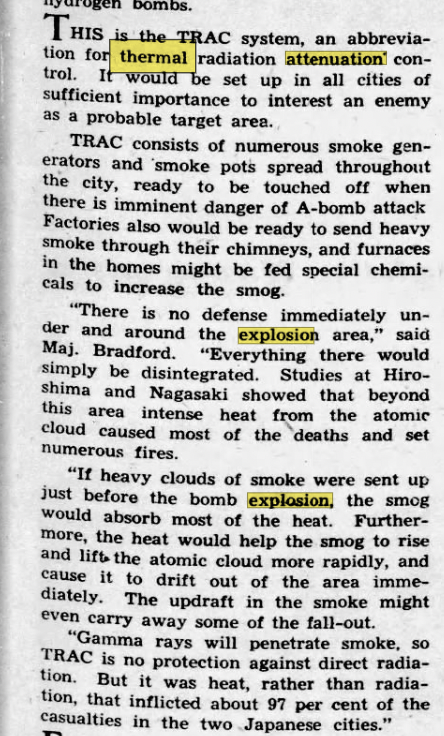
This essay from the Atlanta Journal in 1957 says that the system could include the burning of special smoke rich fuels at factories and home furnaces.

View: https://youtu.be/pGJcwaUWNZg?si=HY2OhGVwYnooq4CT


Famously, nuclear testing found that fire could be prevented with paint and a little housekeeping

img12.70.jpg
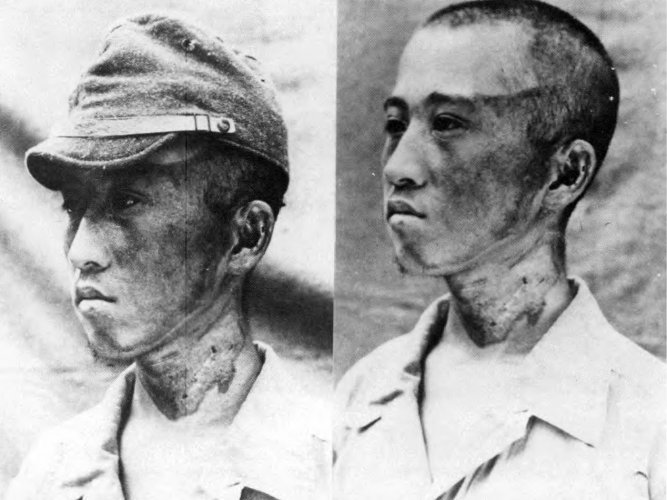
And even just wearing clothing helps. This man who lived through the Hiroshima blast had his face burned except the part that was covered by his hat. Of course, very few people would be caught outdoors. They would've had a few minutes to find shelter.
 
Isn't it the case too that for example foliage and white opaque curtains can do a pretty effective job of attenuating the heat flash from 3rd degree burns down to more managable levels?
 
Isn't it the case too that for example foliage and white opaque curtains can do a pretty effective job of attenuating the heat flash from 3rd degree burns down to more managable levels?
Yep. Bombers were painted white to prevent them from catching fire in a nuclear explosion and the same principle applies to everything. The flash is very powerful but also lasts too short a time to ignite most combustibles. The real danger comes from kindling like newspapers and books starting fires that spread.
 
One thing i just thought of: the smoke and dust left by a nuclear explosion and the fires it ignites could have the same thermal blocking effect on subsequent explosions that occur nearby.
 
last night's events in Washington DC prove it's easy to blanket a city in smoke in a short period of time.
 

Similar threads

Back
Top Bottom