The Story of the Greek Battleships Kilkis and Lemnos,
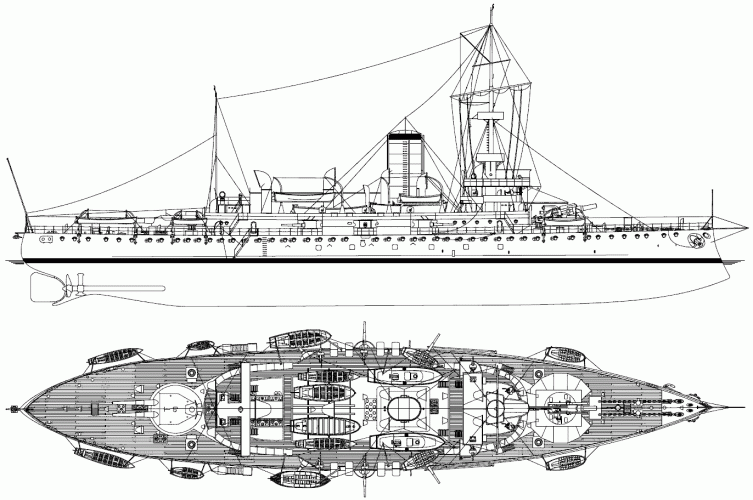
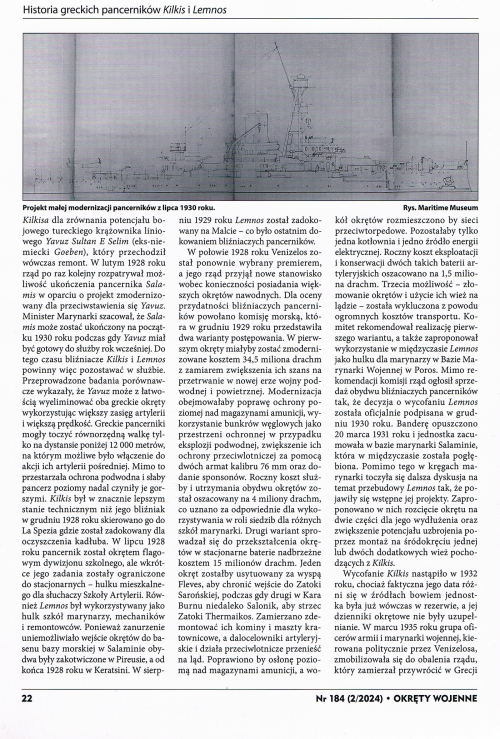
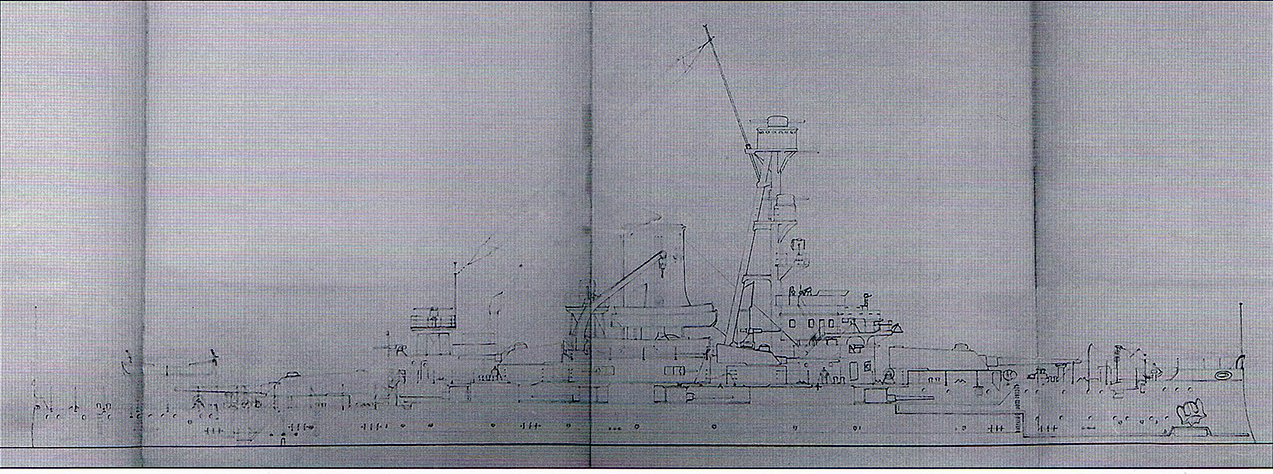
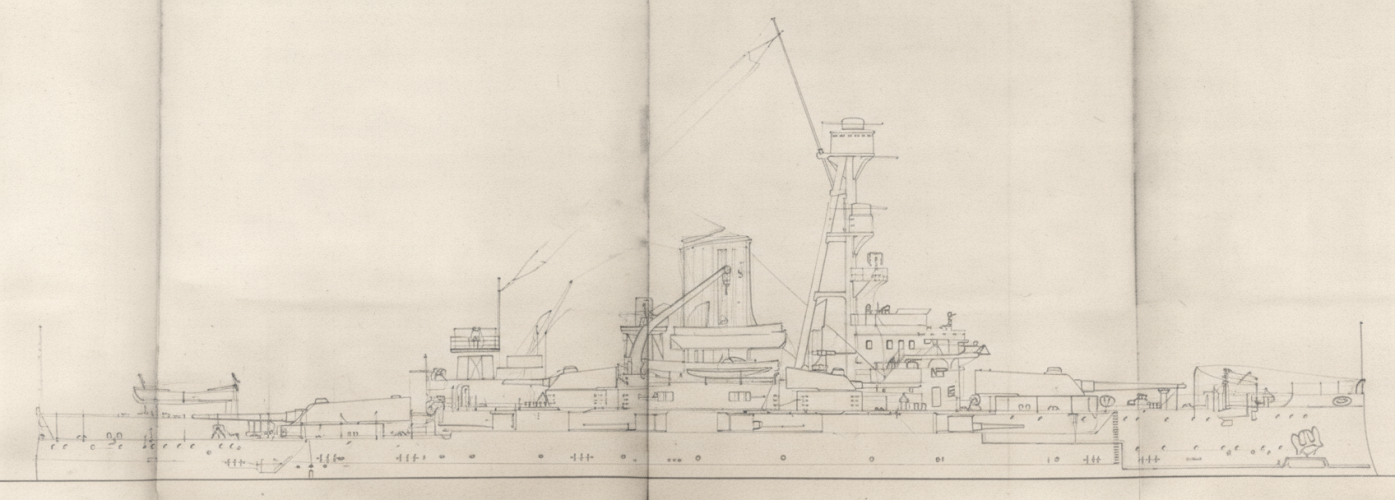
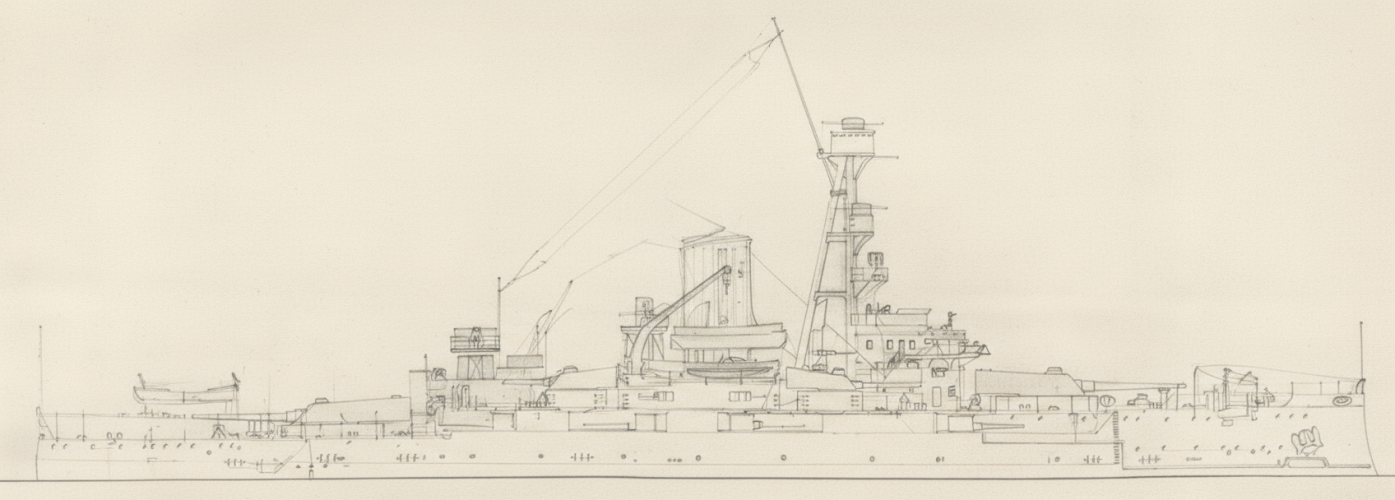
Project of a minor modernization of battleships from July 1930. Drawing: Maritime Museum
Kilkis to equal the combat potential of the Turkish battlecruiser Yavuz Sultan E Selim (formerly German Goeben), which was undergoing refit at the time. In February 1928, the government once again considered the possibility of completing the battleship Salamis based on a design modernized to counter Yavuz. The Minister of the Navy estimated that Salamis could be completed by early 1930, while Yavuz was to be ready for service a year earlier. Until then, the twin ships Kilkis and Lemnos should remain in service. Comparative studies showed that Yavuz could easily eliminate both Greek ships, utilizing its longer artillery range and higher speed. The Greek battleships could only engage on equal terms at ranges below 12,000 meters, where their intermediate artillery could be brought into action. Nevertheless, outdated underwater protection and weak horizontal armor still made them inferior. Kilkis was in much better technical condition than her twin and in December 1928 was ordered to La Spezia for hull cleaning. In July 1928, the battleship became the flagship of the training division, but her duties were soon reduced to stationary duties – as a residential hull for students of the Artillery School. Lemnos was also used as a training hulk for sailors, mechanics, and repairmen. Because the submerged waters prevented the ships from entering the naval base at Salamis, both were anchored in Piraeus, and from the end of 1928 in Keratsini. In August nn 1929, Lemnos was docked in Malta - the last docking of the twin battleships.
In mid-1928, Venizelos was re-elected prime minister, and his government adopted a new stance on the need for larger surface ships. A naval commission was established to evaluate the suitability of the twin battleships, which in December 1929 presented two options. The ships were to be modernized at a cost of 34.5 million drachmas, with the intention of increasing their chances of survival in the new era of submarine and air warfare. The modernization would include improving horizontal defenses over the ammunition magazines, utilizing coal bunkers as a protective space in the event of an underwater explosion, increasing their anti-aircraft defenses with two 76 mm guns, and adding sponsons. The annual cost of operating and maintaining both ships was estimated at 4 million drachmas, which was deemed appropriate for use as headquarters for various naval schools. The second option was to convert the ships into stationary coastal batteries at a cost of 15 million drachmas. One ship would be stationed behind the island of Fleves to protect the entrance to the Saronic Gulf, while the other would be stationed at Kara Burnu near Thessaloniki to guard the Gulf of Thermaikos. Their funnels and lattice masts were to be dismantled, and their artillery range finders and anti-aircraft guns would be relocated. ashore. Horizontal shielding would be improved over the ammunition depots, and the wo- Anti-torpedo nets would be placed around the ships' wheels. Only one boiler room and one source of electrical power would remain. The annual cost of operating and maintaining two such artillery batteries was estimated at 1.5 million drachmas. A third option—scrapping the ships and using their turrets on land—was ruled out due to the enormous transportation costs. The committee recommended the first option and also proposed using Lemnos as a hulk for sailors at the Naval Base in Poros in the meantime. Despite the committee's recommendation, the government announced the sale of both twin battleships, so the decision to decommission Lemnos was officially signed in December 1930. The flag was lowered on March 20, 1931, and the vessel moored at the Salamis Naval Base, which had been dredged in the meantime. Despite this, discussion continued within naval circles about rebuilding Lemnos, and preliminary designs emerged. These proposed cutting the ship in two to lengthen it and increasing its armament potential by mounting one or two additional turrets from Kilkis amidships.
The withdrawal of the Kilkis took place in 1932, although the actual date varies in sources, as the unit was already in reserve at that time and its logbooks had not been updated. In March 1935, a group of army and navy officers, politically led by Venizelos, mobilized to overthrow the government he intended to restore in Greece.