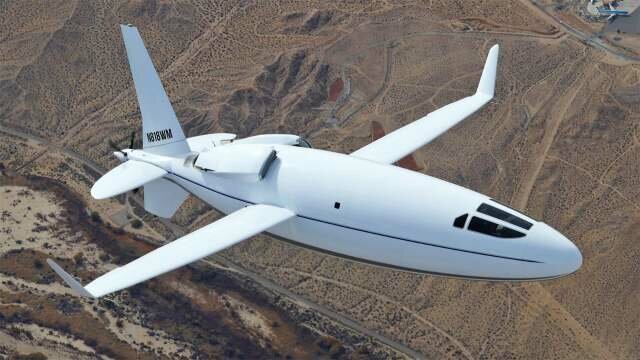
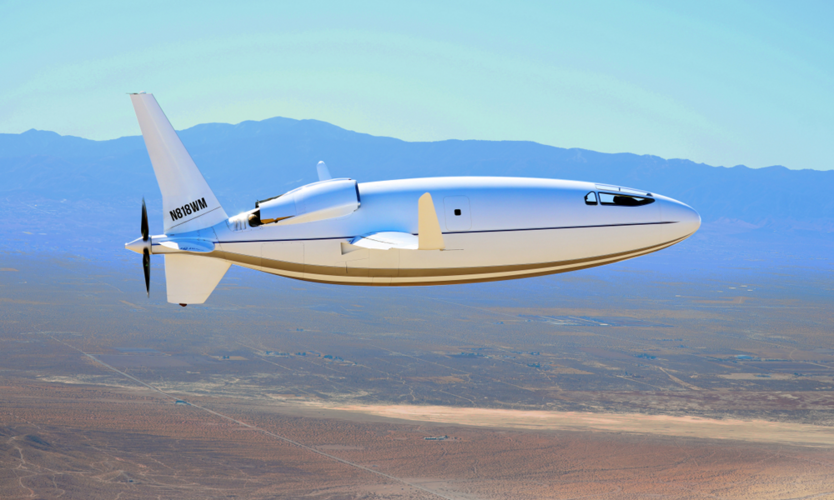
Otto Aviation Group LLC Celera 500L

Hi Martin,

Actually, the thought that anyone might want to compete with that design (for what?) hadn't even crossed my mind.

My apologies then, I might have read too much into this comment:

Why, welcome to the non exclusive Business Jet club then, Johnny come lately!

I thought that implied that in its original niche, it was exclusive, i. e. without competition.

Regards,

Henning (HoHun)
 
Hi Martin,

I thought that implied that in its original niche, it was exclusive, i. e. without competition.

Regards,

Henning (HoHun)
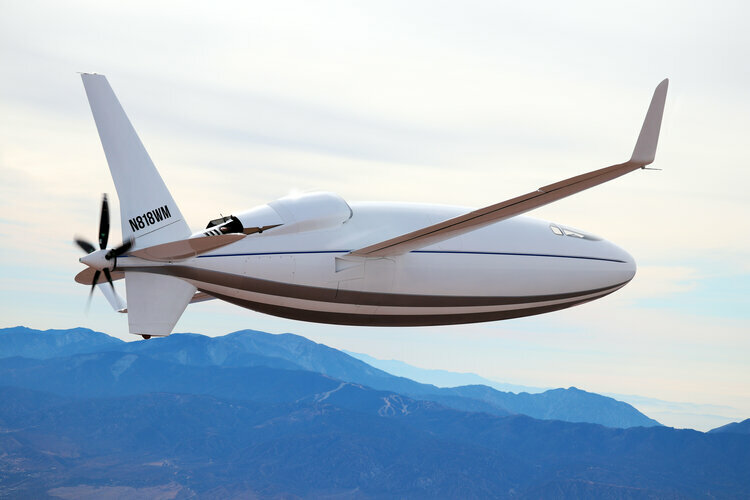
And in my view there were extremely valid reasons why nobody else tried to compete in that niche...
 
Hi Martin,

And in my view there were extremely valid reasons why nobody else tried to compete in that niche...

I guess would not disagree with that, though I think this niche was close enough in capability to existing aircraft that the Celera 500 would have met competition nevertheless.

Regards,

Henning (HoHun)
 
Hi Martin,


I guess would not disagree with that, though I think this niche was close enough in capability to existing aircraft that the Celera 500 would have met competition nevertheless.

Regards,

Henning (HoHun)
I completely agree with your assessment, HoHun.
 
Do you really think, there wouldn't be a market for a plane which is almost 300 km/h faster than a TBM 700 and nearly as fast as a jet, but with much longer range (making it faster than the jets on long distances) and much lower operational cost combined with a larger interior? It would much more efficient not ony on long routes, but even so on short distances, were turbines burn much of their fuel on the runways and are aging fast with short cycles.
 
Do you really think, there wouldn't be a market for a plane which is almost 300 km/h faster than a TBM 700 and nearly as fast as a jet, but with much longer range (making it faster than the jets on long distances) and much lower operational cost combined with a larger interior? It would much more efficient not ony on long routes, but even so on short distances, were turbines burn much of their fuel on the runways and are aging fast with short cycles.
For sure, I absolutely think there would most definitely be a market for that type of aircraft, I just think the Otto design ain't it - Celeri, Celera...
 
Last edited:
Its the same engine plus turbonormalizing. Take a look on my former post here, where I did the math and showed, that this easily doable with common turbo charger technology and efficiency. Engine development has come so far, that turbomatching can be done in advance (e.g. by GT Power, AVL Boost or simly by looking on the maps as I did it here before).

If you doubt that, please point out, what is exactly the issue you do see here!
 
For sure, I absolutely think there would most definitely be a market for that type of aircraft, I just think the Otto design ain't it - Celeri, Celera...

We wil see, they did the numbers right and I know that RED has a new investor with big plans....

I don't know anything specific and I'm not involved, so I'm free to speculate. It could be, that we will see a new crop duster with a RED engine, or it could be, that we will see something like the Otto Celera, it could also be, that all the plans will lead to nothing, as it is often the case in aviation history.
 
We wil see, they did the numbers right and I know that RED has a new investor with big plans....

I don't know anything specific and I'm not involved, so I'm free to speculate. It could be, that we will see a new crop duster with a RED engine, or it could be, that we will see something like the Otto Celera, it could also be, that all the plans will lead to nothing, as it is often the case in aviation history.
Innovation still is a process full of surprises.
 
As said, I did a simple turbomatching which prooves that it would work with existing tutrbochargers. Feel free to prove it or do your own matching, but if you lack the engineering skills for that, it does little sense to discuss it further....
 
Hi Nicknick,

As said, I did a simple turbomatching which prooves that it would work with existing tutrbochargers.

If you think "proven by a random guy on the internet" is the same as "off-the shelf engine proven in flight at 50000 ft", I'd be a fool to argue with you.

No way around it that the 50000-ft engine is "enabling technology" in the sense of Dan Raymer's rules for inventors: "If your design MUST incorporate some other enabling technology, this is a disadvantage not an advantage."

https://aircraftdesign.com/raymers-rules-for-inventors/
Regards,

Henning (HoHun)
 
You don't understand how engineers think and work. It is not about trying out if an engine could work at 50.000 ft (has already successfully been proven up to 70.000 ft) but by doing the (relatively simple) calculations in advance. Just because you are unwilling or unable to do the thermodynamic, it doesn't mean that it can't be done (I've almost 30 years experience in developing combustion engines...).

To check if a charging concept is feasible, is not like proving a new nuclear reactor concept, you just need basic knowledge of thermodynamic.
 
Last edited:
We are discussing the feasibility and whether it can be verified by calculations or only by testing.

Adding a turbo normalisation (the low pressure stage would fell in this category, if the pressure behind the compressor will stay around sea-level) to an allready certified engine is usually not a great deal, but you never know what the authorities might say…
 
We wil see, they did the numbers right and I know that RED has a new investor with big plans....

I don't know anything specific and I'm not involved, so I'm free to speculate. It could be, that we will see a new crop duster with a RED engine, or it could be, that we will see something like the Otto Celera, it could also be, that all the plans will lead to nothing, as it is often the case in aviation history.
Although we are really off-topic now - do you know if RED uses some sort of vibration balancing since the 80 degree cylinder bank angle is not ideal for a V12 (should be 60 degree for firing order) ...
 
A six cylinder inline engine is already fully mass balanced there are no mass force or moments of firth and second order left. Any V12 consists of two fully balanced six cylinder engines, so no mass balancing system is required, however with 80 ° bank angle the engine has uneven firing. It’s not really desirable and can result in more critical torsional vibration, and rougher acoustic, on the other hand, it is not so uncommon and surly manageable.

Even firing on V12 can be archieved with 60, 120, and 180 ° bank angle (or split pin at any angle).
 
@TomcatViP I was expecting this answer, but still it is commonly called a V-engine as long as there are two rods on each pin. A 180° boxer is a theoretical solution, I don’t know if any exists, because with 12 cylinders you don’t need additional crank pins for batter mass balancing.

View: https://www.youtube.com/watch?v=ViRCFHZ1x6s
Ferrari built a lot of different 180 degree V engines.
What is a 180 degree boxer? Every boxer has a 180 degree bank angle ...
 
Last edited:
In a boxer engine, all pistons have their own crankpin, with opposing pistons going outward and inward at the same time. In a 180 degree V engine, opposing pistons share a crankpin - of a pair of opposing pistons, one goes outward when the other goes inward.
 
Ferrari built a lot of different 180 degree V engines.
What is a 180 degree boxer? Every boxer has a 180 degree bank angle ...
I remember, there was the Fallert Boxer (by Ludwig Apfelbeck) for BMW Motorcycles. It had a slightly different angle (guess around 170 deg) to give more clearance to the road and allowing the use of one Bevel gear shaft for the valve train of both cylinders.
 
I remember, there was the Fallert Boxer (by Ludwig Apfelbeck) for BMW Motorcycles. It had a slightly different angle (guess around 170 deg) to give more clearance to the road and allowing the use of one Bevel gear shaft for the valve train of both cylinders.
The Puch 800 had an aircooled 170 degree fourcylinder engine for clearance, but I think it was a V configuration, not a boxer.
 
With the jets instead of the rear propeller, flow attachmend will be more difficult to arcieve. The shift to a low wing configuration with a conventional bulky langing gear arrangement will also lower the potential. I don't believe, they can keep their promisis with the new design.
 
This whole thing sounds incredibly suspect to me - it started out as a short-haul civilian liner - with the innovative piston engine and aerodynamic design promising laminar flow through its body meant that it promised to be comparable cost and emissions-wise to ground based methods of transport.

The laminar flow claim was always suspect, and now that they dropped the piston engine, and are marketing it to private jet owners - a crowd that doesn't particularly care about costs or emissions - this doesn't sound like a winner to me.
 
This whole thing sounds incredibly suspect to me - it started out as a short-haul civilian liner - with the innovative piston engine and aerodynamic design promising laminar flow through its body meant that it promised to be comparable cost and emissions-wise to ground based methods of transport.

The laminar flow claim was always suspect, and now that they dropped the piston engine, and are marketing it to private jet owners - a crowd that doesn't particularly care about costs or emissions - this doesn't sound like a winner to me.

Is it an acceptance that the previous design just wasn't going to work in practice/commercially?
 
It wasn't a short haul plane in the beginning, the opposite is true. I believe with a lack of money and an uncertain future of the Red engine (the factory looks closed right now...) they switched to a much more conventional design. Perhabs, only the fuselage is still new, and wings, tailpane, landing gear etc. is all carried over from an existing design.
 
I believe the Phantom 3500 is different enough a project not to be squeezed into the Celera 500 topic. Just sayin'...
 

Similar threads

Back
Top Bottom