On Italian 'Panzerschiff' U.P.102 for Romania

GianmarcoBianchi

ACCESS: Restricted
Joined
1 December 2025
Messages
38
Reaction score
43
Ansaldo once designed an interesting ship U.P.102. There are info shows that the ship was armed with 2 triple 280mm turrets, seemingly like Deutscheland class Panzerschiffe. The ship was said to be designed for Romania Kingdom.
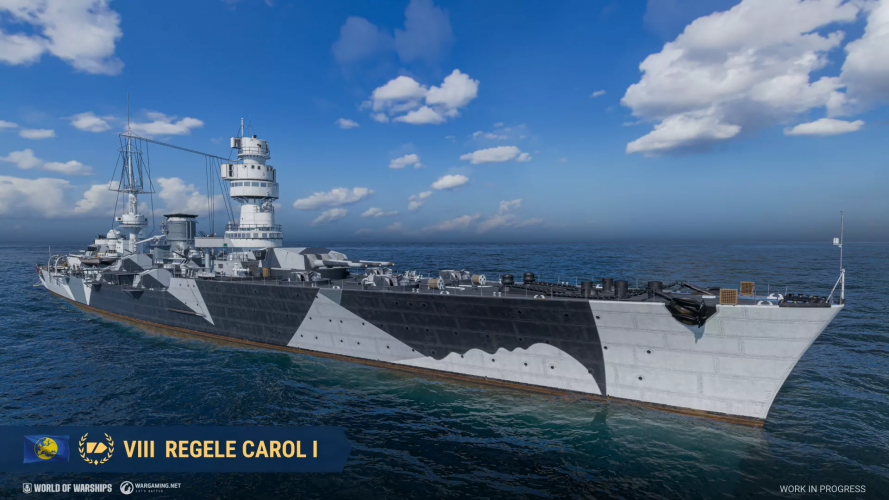
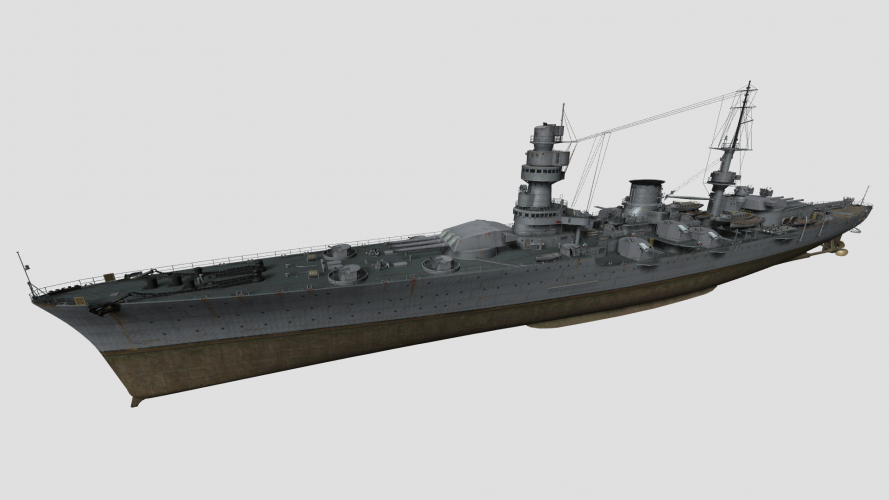
Recently WoWs WG has decided to launch a new Euro cruiser Regele Karol I, based on U.P.102.
What useful info could u share about such a design? Thanks.
1768134697979.png
 
Offered to Romania by Ansaldo for Romanian 1937 naval expansion programme, which called for a modern cruiser. Yes, it was inspired by "pocket battleships", although it has a proper DP secondary battery and steam turbine propulsion instead of diesels.
Never ordered probably due to lack of money.

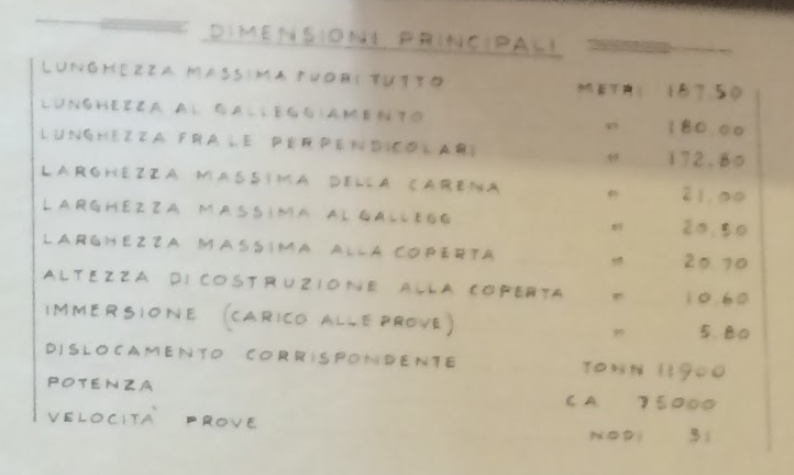
Specifications (taken from Tzoli):

Dimensions: 187,5 (oa) x 21 x 5,8m
Displacement: 10.770tons (standard), 13.500tons (full load)
Engines: 75.000shp Steam Turbines, 4 shafts
Speed: 57km/h (31knots)
Armour: 102mm Belt, 64mm Deck
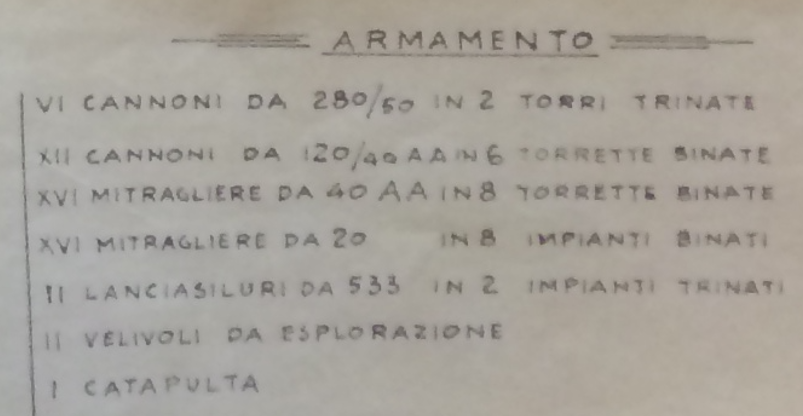
Armaments:
2x3 280mm Guns (Italy had no guns in such caliber, so likely German 283mm)
6x2 120mm DP-AA Guns (Italian 120/45s in notional dual-purpose mounts)
8x2 40mm AA Guns (Bofors 40mm/56)
8x2 20mm AA Guns (Breda mod.1935)
2x3 533mm Torpedo Tubes
2x Floatplanes

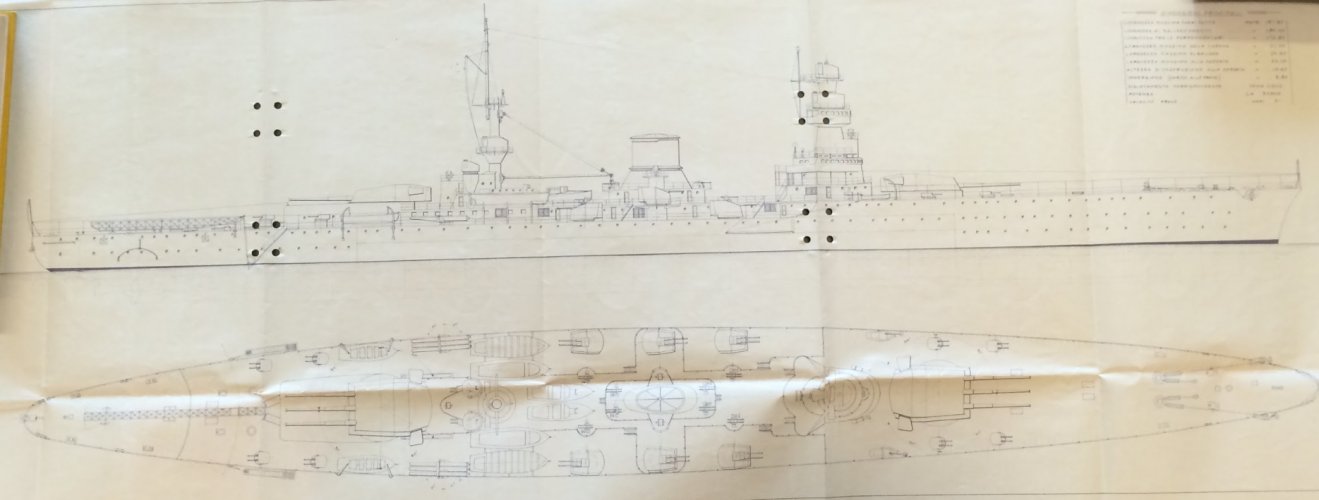
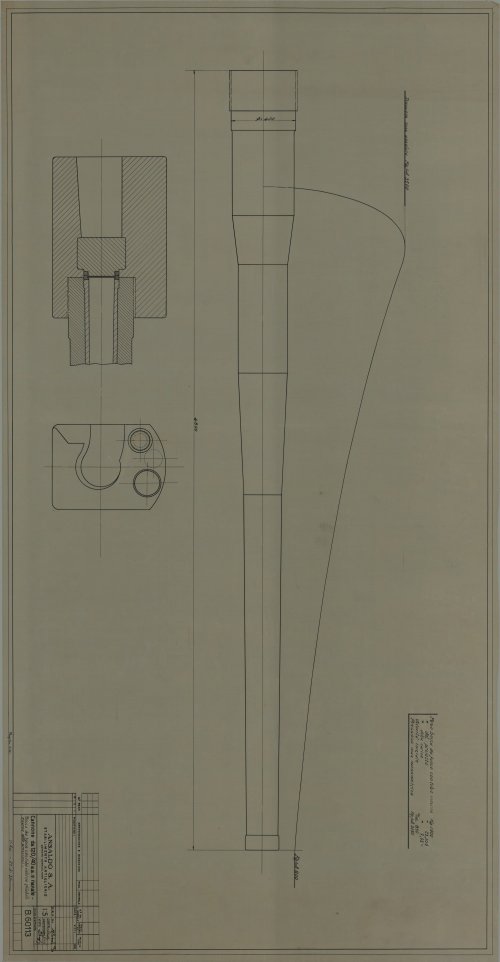
Original blueprint:
fV4UhSQ.jpeg

P.S. Also, WG, seriously? First Admiral Scheer without any modifications on Tier 7, and now a Deutschland equivalent on Tier 8, alongside 25000-ton  Alaska and  Dunkerque preliminary designs? What's with all that overtiering?
 
P.S. Also, WG, seriously? First Admiral Scheer without any modifications on Tier 7, and now a Deutschland equivalent on Tier 8, alongside 25000-ton  Alaska and  Dunkerque preliminary designs? What's with all that overtiering?
with enough magical gimmicks and spells, anything is possible


It's also worth noting that the UP. 102 design was offered to other nations as well, for example to Sweden.

Here are the specifications from the original document:
1769027982618.png
1769028003328.png

notably, the 40mm guns are in these enclosed mounts, disposed 2 pairs fore and 2 pairs aft
1769028226012.png
 
I know those are 283mm and not 203mm, but it feels like that ship is undergunned.

But I suspect 6x283mm is all you can pack onto 13ktons.

Also, the secondaries are poorly arranged. You're only getting 3 per side, while the US cruisers were getting 4 per side.
 
It is better then tge Deutchlands Single Purpose guns:
https://www.deviantart.com/tzoli/art/Design-UP-102-Big-Gun-Cruiser-713771763
dbsyltf-a37ae4cc-b638-4335-8023-2290db2a1c6a.png
 
It is better then tge Deutchlands Single Purpose guns
Oh, absolutely. But still a non-optimal setup when the US was fielding the better layout from the 1930s. And a layout that should have been obvious since the 1920s.

Also, those torpedo tubes are a bare minimum capability, but might be useful as a surprise for anyone coming around an island. IIRC the usual engagement plan for non-homing torpedoes is to put one forward of the target and one aft of the target, so 3 tubes is only 1 tube on target.
 
Oh, absolutely. But still a non-optimal setup when the US was fielding the better layout from the 1930s. And a layout that should have been obvious since the 1920s.

Also, those torpedo tubes are a bare minimum capability, but might be useful as a surprise for anyone coming around an island. IIRC the usual engagement plan for non-homing torpedoes is to put one forward of the target and one aft of the target, so 3 tubes is only 1 tube on target.
Remind you the USN started using the hexagonal layout for DP guns since the Wichita class which was commissioned only in early 1939
 
Remind you the USN started using the hexagonal layout for DP guns since the Wichita class which was commissioned only in early 1939
Also hexagonal layout forced secondaries to be fitted as superfiring to main guns. Which led to at least three negative factors:

* Upper weight increase - due to higher position;
* The need to fit the magazines of secondary guns near the main magazines - i.e. increase of citadel length;
* The larger distance between main turrets and directors - which amplified the parallax problem & required more compensation;
 
I apologize if I'm coming off as somewhat confused here, but exactly which cruiser classes are we referencing for the USN as contemporary to UP.102? Bearing in mind the earliest versions of the design date back to 1928-1932, with Ansaldo's export configurations dating roughly to 1937?

We're looking at three twin 120/40 AA turrets per side (6 guns per side).

That I recall, all American heavy cruisers and light cruisers up until Wichita (laid down in 1935) and the final pair of Brooklyn-class light cruisers (laid down in 1936) had a total of eight 8"/25, with four guns on either side of the ship. Wichita adopted a hexagonal layout of single 5"/38 mounts, with two on the centerline and three to either beam, for a total potential broadside of five guns. St. Louis and Helena switched to two 5"/38 twin mounts to either beam, for a total of four guns per side.

In all cases but Wichita, UP.102 has 50% more heavy AA guns per broadside (6x 4.7" to 4x 5"), or just overall (12x 4.7" to 8x 5").

It is not until the Cleveland-class, the first of which is laid down in 1940, that the USN adopts the 6x2 5"/38 hexagonal layout that allows for up to eight guns of the total twelve to bear to a broadside.

For the 1930s, I don't think we can really clearly argue that the specific layout of the USN cruiser heavy AA batteries was superior in terms of number of guns that could be brought to bear?
 
Also, those torpedo tubes are a bare minimum capability, but might be useful as a surprise for anyone coming around an island. IIRC the usual engagement plan for non-homing torpedoes is to put one forward of the target and one aft of the target, so 3 tubes is only 1 tube on target.
Torpedoes have other uses besides close-range self defense. For example, finishing off disabled enemy ships, or scuttling your own ships. Or, like the torpedo banks on Scharnhorst and Gneisenau, they can be used to sink merchant ships and conserve ammunition.
And you can even argue that training the crew in torpedo launching could be an asset.

I apologize if I'm coming off as somewhat confused here, but exactly which cruiser classes are we referencing for the USN as contemporary to UP.102? Bearing in mind the earliest versions of the design date back to 1928-1932, with Ansaldo's export configurations dating roughly to 1937?

We're looking at three twin 120/40 AA turrets per side (6 guns per side).

For the 1930s, I don't think we can really clearly argue that the specific layout of the USN cruiser heavy AA batteries was superior in terms of number of guns that could be brought to bear?
As for the secondary gun issue, Phoenix makes a good point.

UP.102's detailed sketch is dated December 1937, and perhaps a ship could have been laid down in 1938 if a buyer had been found. On just below 11,000 tons, 3x2 120/40 guns are carried per side as heavy AA.

Compare that to contemporary cruisers:
  • Wichita (laid Oct 1935): 5x1 127/38 in a broadside, on virtually the same tonnage. And note that 2 of these guns are in non-enclosed pedestal mounts
  • Edinburgh (laid Dec 1936): 3x2 102/45 in a broadside on 10k tons
  • Mogami (rebuilt in 1935): 2x2 127/40 per side, on 11k tons
  • Hipper (laid 1935): 3x2 105/60.5 per side on 14k tons
  • C5 A3 (designed 1939): 3x2 100/45 on a broadside on similar tonnage
  • Chapayev (laid 1939): 2x2 100mm B-54 in a broadside, on around 10,000 tons
Of course this leaves out very important considerations (fire control, stabilization, reliability, ammunition supply arrangements, arcs of fire, etc), which also helps explain why the Hippers compare so badly.

Also, there's the fact that the weapons in the Ansaldo project had not been built yet (I'm not sure if the 280mm gun was even planned actually), and that there was still the possibility of delays and weight growth too. So a comparison with the Clevelands is not unwarranted

But the Ansaldo design still looks very good in terms of DP-AA weaponry. Only the Clevelands/Baltimores and the much heavier Hippers are comparable/superior to it, and those were revolutionary in terms of heavy secondary battery (with the British and French basically copying the Cleveland layout, and the Soviets copying the Hipper layout).
Same for the main armament, armoring, and especially the light AA, which is (at least in barrel count) superlative for the design date

 
Here are the specifications from the original document:
View attachment 799246
View attachment 799247

notably, the 40mm guns are in these enclosed mounts, disposed 2 pairs fore and 2 pairs aft
View attachment 799248
Glad to see some parts of the plans in higher res, especially of these two bits.

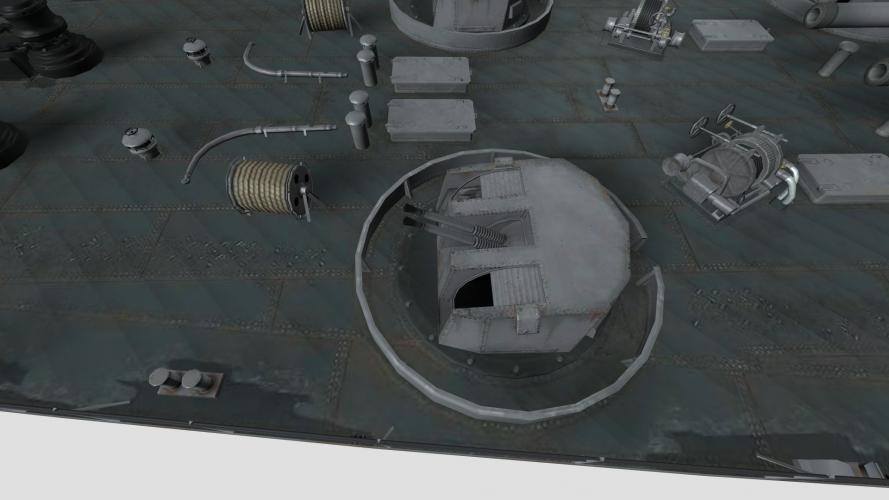
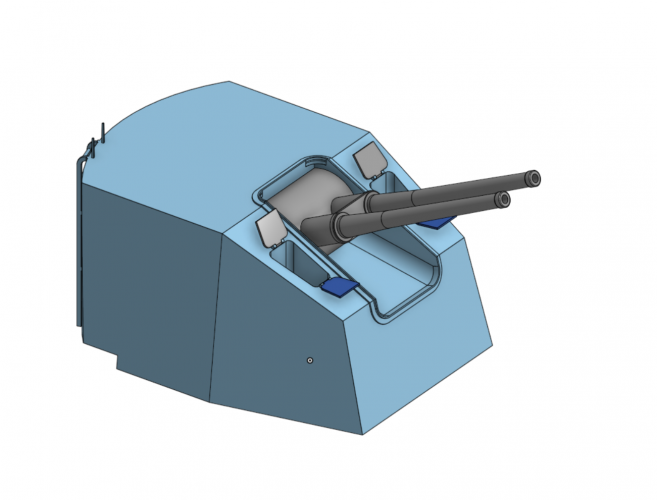
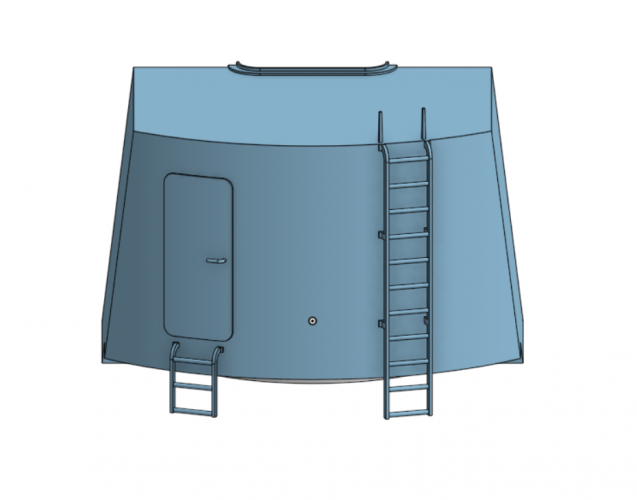
The novel (for Italian ships) armaments have been a bit of a diversion for me recently and as part of a little project of mine I've been modelling my own speculation on what the secondaries might have looked like if built. Wanting to tackle the 40mms next so this crisper image will be helpful for that

image-60.png image-47.png Feel free to make any suggestions for improvements :)

As a tangent, the Ansaldo archives have some of the drawings for the 120/40 digitised, including this one from 1938 (same year as the U.P.102 design) specifically labelled as antiaereo e navale.
f7dade45259ecbc6ac667353e56661a8ab778f8f.jpg

One thing I find interesting is the note "Progetto Cile" in the margin: I've heard that U.P.102 was also offered to Chile (as well as the U.P.90 before) so I'm not certain if that relates to this or the 8,000t/scouting vessels that were apparently offered during this time (unfortunately I wasn't able to find any info out on these).
 
The Chilean angle on the 120/40 is actually quite interesting, because to my knowledge Italian offerings to Chile in this period were actually armed with an American 5" gun.

UP.90 was indeed offered to Chile, though notably with twelve 5" guns rather than 120mm. UP.102 was not, to my knowledge, offered to Chile, but rather in 1938 a 17,500-ton design derived from one of the 'pocket battleship' concepts created for the RM around 1933-34 and that were included in the more expansive ('B' programme) of the two flotta d'evasione concepts of 1935/36. According to Cernuschi & O'Hara in their article on the flotta d'evasione in Warship 2006, this was actually offered to Chile with the American 5"/51 in 1938, as a joint effort to break the British hold over Chile's naval procurement. The Italians had some familiarity with this gun, as they had procured it in limited numbers (10) in 1917 for armed pontoons that fought in the lagoons of Veneto. That aside, I suspect the guns on Chile's UP.90 offering were also 5"/51's. That does raise the question of what the 120/40's role would be - possibly as a dedicated AA gun for the 17,500-ton offering, backing the 5"/51, or possibly just as Ansaldo's own internal competitor for a single secondary battery?

The 120/40 itself was developed as a DP gun, and one of several 120mm DP gun projects of the Regia Marina in the 1930s. It is part of a later series of this effort, offering better anti-ship performance due to its heavier shell and charge. It featured fixed ammunition, with a 37 kg cartridge of 1,188mm that held a 23.10 kg shell and a 7.05 kg charge, which produced a muzzle velocity of 830-840 m/s. This was sufficient for a maximum ballistic range of 18,000 meters, and a ceiling of 9,980 meters at +85°.

It's competing contemporary was a 120/34 that featured a 34.5 kg cartridge measuring 1,030mm, consisting of 0f a 21.00 kg shell at a 4.74 kg charge. This provided a MV of 750 m/s, a maximum range of 15,000 meters, and a ceiling of 8.800 meters.

The general idea was that further developments should seek to make the 120/40 (which was too heavy) lighter, and the 120/34 have better ballistic performance (which was insufficient), but it seems neither was successful, or progressed much further due to the proximity to the war

That said, the Ansaldo archives also feature a 120/38 from January 1940. I don't have information on the cartridge dimensions or mass, but the shell was 23.15 kg, and the charge 5.3 kg - which provided a MV of 750 m/s. Unfortunately, I have no data on the range of the gun, though presumably it is more than the 120/34 and less than the 120/40. I have never seen anything else mentioned about the gun, so presumably it was not built and superseded during the war by the later 120/50 DP system.
 
The 120/40 itself was developed as a DP gun, and one of several 120mm DP gun projects of the Regia Marina in the 1930s. It is part of a later series of this effort, offering better anti-ship performance due to its heavier shell and charge. It featured fixed ammunition, with a 37 kg cartridge of 1,188mm that held a 23.10 kg shell and a 7.05 kg charge, which produced a muzzle velocity of 830-840 m/s. This was sufficient for a maximum ballistic range of 18,000 meters, and a ceiling of 9,980 meters at +85°.

It's competing contemporary was a 120/34 that featured a 34.5 kg cartridge measuring 1,030mm, consisting of 0f a 21.00 kg shell at a 4.74 kg charge. This provided a MV of 750 m/s, a maximum range of 15,000 meters, and a ceiling of 8.800 meters.

The general idea was that further developments should seek to make the 120/40 (which was too heavy) lighter, and the 120/34 have better ballistic performance (which was insufficient), but it seems neither was successful, or progressed much further due to the proximity to the war

That said, the Ansaldo archives also feature a 120/38 from January 1940. I don't have information on the cartridge dimensions or mass, but the shell was 23.15 kg, and the charge 5.3 kg - which provided a MV of 750 m/s. Unfortunately, I have no data on the range of the gun, though presumably it is more than the 120/34 and less than the 120/40. I have never seen anything else mentioned about the gun, so presumably it was not built and superseded during the war by the later 120/50 DP system.

Wonderful, thank you for the extra details! I've been curious about the various 120mm DP projects but info is seemingly very scarce (in fact I think most of what I've been able to find searching online, on this matter as well as some others on obscure Italian designs, have been following citations I've been able to track down from your various forum posts!)

UP.102 was not, to my knowledge, offered to Chile, but rather in 1938 a 17,500-ton design derived from one of the 'pocket battleship' concepts created for the RM around 1933-34 and that were included in the more expansive ('B' programme) of the two flotta d'evasione concepts of 1935/36. According to Cernuschi & O'Hara in their article on the flotta d'evasione in Warship 2006

Ah, good to know, I'd seen it mentioned once or twice but never by any reliable source.

Would you happen to know if there's any information on the later offerings of the 17,500t type? From my understanding of Cernuschi & O'Hara's article it seems to be derived from the 1933 design featured in the article (which, confusingly, seems to share drawings with the 1932 Design 770 featured in Axis and Neutral Battleships in World War II despite having different considereably different armament?), but there seem to have been quite a few naval developments over the time of the Venetos' development that could have been worked into such a design by 1938.

this was actually offered to Chile with the American 5"/51 in 1938

I was aware of the American secondaries, but I believe I'd seen them misattributed to a U.P. 102 offering on one of the dubious webpages mentioned before, which is why I speculated the mystery (to me, anyway) 8,000t vessels. I think you're right in saying that any similar offers to Chile would likely also be given 5"/51s, so it's certainly a real mystery what it could mean...
 
Interesting read and great line drawings.
While a private enterprise, I wonder how this may align or be similar to thinking on the pocket battleships identified in the ‘breakout fleet’ programme for operation from East Africa
 
That does raise the question of what the 120/40's role would be - possibly as a dedicated AA gun for the 17,500-ton offering, backing the 5"/51, or possibly just as Ansaldo's own internal competitor for a single secondary battery?
I'd suspect an internal competitor that was made "at home". The 120/40 was openly a dual-purpose weapon, after all.
 
UP.102's detailed sketch is dated December 1937, and perhaps a ship could have been laid down in 1938 if a buyer had been found. On just below 11,000 tons, 3x2 120/40 guns are carried per side as heavy AA.
Hello!
Sorry to interrupt, but there's a nuance:
As far as I know, Romania didn't have a dock! All R- and M-class destroyers were docked in Istanbul. Under the 1937 program, a floating dock for ships up to 4,500 tons was ordered from Germany. The Project UP.102 cruiser was considerably heavier.
 
They have 2 shipyards, the smaller Constanta and the larger Galati (though that one is not shore based) and if in the mid 1930's they did not have the capacity for docking operations which I seriously doubt, it could had included in the naval programme!

Remimd you, the Romanians wanted Coastal Battleships pre-ww1 and they also had the old protected cruiser Elisabeta.
 
They have 2 shipyards, the smaller Constanta and the larger Galati (though that one is not shore based) and if in the mid 1930's they did not have the capacity for docking operations which I seriously doubt, it could had included in the naval programme!
I believe the time allotted for building a large ship is comparable to the time it takes to build a floating or regular dry dock.
But the fact remains: having two large M-class destroyers and having built two more R-class destroyers in 1930, the dock for them was ordered much later...
 
Under the 1937 program, a floating dock for ships up to 4,500 tons was ordered from Germany.
Hello!
I apologize for bringing up floating docks, but I think they're also worth knowing about and taking into account their availability and characteristics.
There's little information about floating docks in Romania, but I've managed to find out a few things.
When I wrote my first message, I didn't know that this floating dock (145 m, 4,500 t) only appeared in Galati in 1940!
But it turns out there wasn't just one! In August 1938, another floating dock was delivered to Constanta.
Built in January 1938 by Lübecker Werke Aktiengessellshaft, Lübeck, Germany.
On July 9, 1938, the dock departed for Romania, towed by three German tugs. After brief stops in Gibraltar, Algiers, and Malta, it arrived in the country on August 21, 1938.
It was commissioned on October 1, 1938, at the Constanta shipyard.
Gross tonnage: 8,539 tons, length: 150.00 m, width: 31.10 m, height: 13.46 m, draft: 3.65 m, crew: 20.
 

Similar threads

Back
Top Bottom