Oeffag Aircraft Designations

Apophenia

ACCESS: Top Secret
Senior Member
Joined
25 July 2007
Messages
4,916
Reaction score
5,537
Oeffag - Oesterreichische Flugzeugfabrik AG

In 1912, the Austro-Hungarian Oesterreichische Daimler Motoren AG (Austro-Daimler) became independent from its German parent, DMG. Prior to that, technical director Ferdinand Porsche had begun designing aero-engines. In late 1913, with investment via Skodawerke AG, the decision was made to begin aircraft production. Construction of a factory began in early 1915 after receiving approval from the Wiener-Neustadt council. However, before aircraft construction could begin, with the backing of the k.u.k. government, the major investors [1] took control of the aircraft plant. The new name was to be Oesterreichische Flugzeugfabrik AG (Oeffag, now often seen as the umlauted Öffag).

The Managing Director of the new Oeffag was ingenieur Leo Portsch, brought in from Skodawerke AG. Aircraft design would be under Technical Director ing Karl Ockermüller from LFG Roland. Design work at Oeffag during WW1 was by: director Karl Ockermüller; Oblt Eduard Zaparka; Dipl-Ing Joseph Mickl (Josip Mikl); Ingenieurleutnant Karl Saliger; and others. Oeffag received outside contributions from Prof. Richard Knoller. The firm was also detailed to potentially build designs by outsiders, including Hauptman Rudolf Holeka and Major Stephan Petróczy von Petrócz.

Oeffag Aircraft Designations

Much of Oeffag's production was of licensed German designs. In Austro-Hungarian service, these licensed types were often referred to by their German designations with '(Oef)' appended - eg: Albatros D.III(Oef). However, both the k.u.k. Luftfahrtruppen (LFT) and the k.u.k. Seefliegerkorps assigned type numbers to both licensed aircraft and original Oeffag designs.

Here, a note should be made on nomenclature. Even modern Austrian sources use the English 'Type' or 'Series' (rather than the German typ or serie) when listing these numbers. However, properly, the term should be Bauart (design or construction type) so that is what I have used for these Oeffag lists. That Bauart was sometimes truncated into forms like 'Ba.53' (which I have chosen to avoid). [2]

Oeffag's k.u.k. Luftfahrtruppen Bauart Numbers

The k.u.k. Luftfahrtruppen (LFT) - the Austro-Hungarian army aviation troop - allocated each aircraft manufacture with its own number. The Oesterreichische Flugzeugfabrik AG code number was '5'. From that came a block of Bauart numbers beginning with 5. Standard LFT designation practice was for prototypes to be given type number '0'. So, Oeffag prototypes and experimental variants were allocated Bauart numbers in the 50 series - thus, individual aircraft serial (or Flugzeugnummer) 50.02 was Oeffag's second experimental design. After some refinement, the 50.02 acted as a prototype for a service type - the Oeffag C.I. The latter was a generic LFT role designation. The specific type designation was Oeffag Bauart 51.

That string of Bauart numbers ran from 50 to 54 ... but that is where things get a bit complicated. For example, when the Bauart 52 line was improved, it was dubbed Bauart 52.5 for some reason. [3] It got more complicated with the much more numerous Bauart 53 family of licensed-built Albatros D.II(Oef) fighters. The Bauart 53s were Albatros D.II biplanes. When sequiplane Albatros D.III(Oef)s were introduced, those became 53.2s. Then the Bauart pattern changes again.

Bauart 53 serials had run from 53.01 to 53.16, then Bauart 53.2 serials jumped to 53.20 and ran to 53.64. But the, more powerful variant became Bauart 153 (153.01 to 153.281). Improvements in armament arrangement then led to Bauart 253 (253.01 to 253.330). Clear as mud, right?

Oeffag's k.u.k. Seefliegerkorps Naval Role Letters

In place of Bauart numbers, the k.u.k. Seefliegerkorps assigned type letters to its aircraft. Akin to k.u.k. Luftfahrtruppen role designators, those type letters were often short for a role. Aircraft destined for the K.u.K. Seefliegerkorps were assigned type letters. Those letters would then form part of the individual aircraft identifier (usually painted into the hull or fuselage).

I don't actually know exactly what those role designators stood for. But some *plausible speculation* can be based on those roles. For Oeffag, the most common designator is 'K' around which is seen the term Kampfflugboot (combat flying boat). The 'G' almost certainly stood for Groß (or Großflugzeug (for large aircraft). The 'R' was probably for Rekognoszierung (reconnaissance, although the more common term in German is Aufklärung). The Oeffag R types were later recategorised as 'F'. Here, I will go well and truly out on a speculative limb and suggest Fernspäher (pathfinder).

Please approach all of the above 'explanations' with extreme scepticism! I will be most relieved to receive confirmation or corrections on these naval role designators.

Oeffag designation lists will follow but, in the next post, I will cover the designs of Josef Mickl. This seems warranted since there is so much overlap in designs (as well as, hopefully, dispelling some confusion over Mickl types built by Oeffag).

________________________________________

[1] These main investors were Dr Karl Freiherr von Skoda, Ferdinand Porsche, and a bank - the Oesterreichisch-Ungarische Escompte und Creditbank. These main investors took control on o3 March 1915. The company was known as the Oesterreichische Flugzeugfabrik AG (Oeffag).

[2] Also seen are 'Va.' forms. I do not know whether that is simply a corruption of 'Ba.' or if it stood for something else (like 'Variante', perhaps). Either way, I have chosen to ignore those 'Va.' prefixes.

[3] This may have been to clarify individual aircraft numbering. The original Bauart 52 production run (including production prototypes) ran from 52.01 to 52.32. When Bauart 52.5 production began, the 32 x aircraft built were serialed 52.50 to 52.81 - so, still in the '52' range but not in sequence from 52.32.

[4] At least this numerical jumping bean approach wasn't distinct to Oeffag - it seems to have occurred with all major Austro-Hungarian aircraft makers.
 
Last edited:
As previously mentioned, Josef Mickl produced a number of aircraft designs for the Oesterreichische Flugzeugfabrik AG.
However, I have seen a number of online attributions of Mickl designs to Oeffag which were actually design for (or built by) other firms. Accordingly, it seemed worth listing Mickl's built designs to separate those with a genuine Oeffag connections from the others.

For a bit of background, in 1910, Dipl Ing Josef Mickl (aka Josip Mikl) had established Mickl-Flugzeuge at Pola. Since Josef Mickl was stationed at the k.u.k. Marinearsenal at the time, it is not clear to me whether Mickl-Flugzeuge was a private firm on not. [1] During the war, Josef Mickl was considered head of seaplane design within Oeffag. Between 1912 and the end of WW1, Mickl produced at least nine distinct aircraft designs. These were:

Mickl Nr. 1 - 1912 experimental land/floatplane 2-seat biplane; x 1
- Mickl Nr. 1 : Unequal-span, 2-bay biplane; very shallow fuselage
- Mickl Nr. 1 : 1 x 40 hp Austro-Daimler 4-cylinder;* span (??) m
-- * Driving a raised, 3-bladed propeller (using belt or chain drive?)
- Mickl Nr. 1 : Built at Mickl's assignment, k.u.k. Marinearsenal Pola
- Mickl Nr. 1 : Desig. from k.u.k. Seeflugzeug Nr. 1 serial number

Mickl Bauart A - 1913-14 2-seat biplane flying boat training a/c; x 3
- Bauart A : Donnet-Lévêque/FBA-style pusher-propeller flying boat
- Bauart A : 1 x 80 hp Gnome rotary (poss. Le Rhône?); span 8.15 m
- Bauart A : k.u.k. Kriegsmarine serials A22, A23, and A24
- Bauart A 132: Type A w/ modified wing & radiator above upper wing

Lohner E - 1913 2-seat recce-fighter 2-bay biplane flying boat; x ~40
- Lohner E : A joint project by Igo Etrich, Josef Mickl, and Karl Paulal
- Lohner E : prototype; k.u.k. E16; 1 x 100 hp Gnome; span (??) m
- Lohner E : Production; 1 x 85 hp Hiero 85 HP pusher; span: 16.20 m

Mickl Bauart S - (Schule) 1914-15 2-seater flying boat trainer; x 7
- Bauart S : Designed at k.u.k. Marinearsenal Pola; built by Ö-u Albatros
- Bauart S : 1 x 80 hp Gnome rotary engine; span (??) m
- Bauart S : Possible k.u.k. Kriegsmarine serials are sS-1-sS-7 range*
-- * Conflicting information; sS2, sS3, sS4, sS6 may be confirmed
-- https://www.secretprojects.co.uk/th...-i-projects-and-prototypes.21084/#post-294800

Mickl Bauart G - (Großflugzeug) 1916 reconaissance flying boat; x 10
- Bauart G : aka Oeffag G; aka Oeffag Type G; aka Oeffag-Mickl G
- Bauart G : 3 x 200-225-or-240 hp Hiero 6-cylinders; span 24.36 m
- Bauart G : k.u.k. Kriegsmarine serials G3, G4, G5, G6, G7, G8, G9
-- G3 fit with nose-mounted 66 mm Skoda 7 cm L/18 C95 gun
-- 10 x Type Gs were completed; 2 x Type Gs were left uncompleted

Mikl Bauart A100 - 1918 biplane pusher fighter flying boat; x 17
- Bauart A100 : Phoenix Flugzeug-Werke built; aka Phoenix Type II
- Bauart A100 : Single-seat, single-bay biplane; 1 x mg in nose
- Bauart A100 : 1 x Hiero 200/230 HP 6-cylinder; span (??) m
- Bauart A2.100: 1918 A100 devel. with Hiero 240 HP 6-cyl.; x 1

Mikl Bauart R - 1918 3-seater long-range recce flying boat; x 2
- Bauart R : Unequal-spanned, 2-bay biplane; pusher propeller
- Bauart R : 1 x Austro Daimler 345 HP engine; span (??) m
- Bauart R : k.u.k. Seeflugzeuge R1 & R2 (later R301 & R302)
- Bauart R : Planned Lohner prod'n (R3 to R14) not realised
- Bauart F : Recategorised Type R; became serials F1 and F2

________________________________________________________

[1] At this early stage of aviation development, the Austro-Hungarian military maintained very ad hoc relations between constructors and aircraft designers (in uniform and out). This would also be true with Oeffag, where a number of their designers and engineers were military personnel (albeit, in some cases, reservists). An example was Oberleutnant Eduard Zaparka who, after designing several aircraft types for Oeffag, returned to serve with his operational unit near Trient (Trento).

________________________________________________________

With the next post will commence the actual aircraft designations of the Oesterreichische Flugzeugfabrik AG ...
 
Last edited:
This first of actual Oesterreichische Flugzeugfabrik AG designation list posts will cover Oeffag type letters. The first and most numerous of these were role-based letters for Oeffag naval aircraft of the k.u.k. Seefliegerkorps (the naval aviators corps) - effectively the Fleet Air Arm of the k.u.k. Kriegsmarine. All but one of those naval designators were single letters.

These naval types will be followed by a small series of two-letter codes applied to experimental Oeffag airframes intended for the k.u.k. Luftfahrtruppen.

__________________________________________________________


Oeffag Aircraft - k.u.k. Kriegsmarine Type Letter Designations

Oeffag Bauart F - 1918 flying boat; recategorised Type R (qv)

Oeffag Bauart G - (Großflugzeug) 1916 recce flying boat; x 10
- Oeffag G - 3-bay biplane long-range recce-bomber flying boat
- Oeffag G : aka Mickl Type G : aka Oeffag G; aka Oeffag-Mickl G
- Oeffag G : Biplane wings; varing tail layouts; 3 x pusher props
- Oeffag G : 3 x 6-cylinder inline engine pushers; span 24.36 m
-- 1 x 8 mm Schwarzlose mg dorsal gun; 600-800 kg bombload
-- G1 - G3: 3 x 200 hp Hiero 6; biplane tail w/ triple rudders
-- Some sources attribute G3 to Albatros (license production?)
-- G3 fit with nose-mounted 66 mm Skoda 7 cm L/18 C95 gun
-- G4 - G7: 3 x 250 hp Austro-Daimler 6-cyl.; biplane tails
-- G8 - G9: 3 x 310 hp Hiero 6; monoplane tail; single rudder
-- G10-G11: k.u.k. Kriegsmarine serials, unfinished airframes
-- G12: As per G8 & G9 except w/ 3 x 250 hp Austro-Daimlers

Oeffag Bauart H - 1917 single-seat biplane fighter flying boat; x 1
- Oeffag H : Unequal-span biplane; semi-Warren truss bracing
-- Created specifically for naval ace, Lt Gottfried von Banfield
- Oeffag H : A11; 1 x 200 hp Hiero 6 inline pusher; span (??) m

Oeffag Bauart K (1) - 1916; Theodor Weichmann flying boat; x 13
- Oeffag K (1): Weichmann (Oeffag) K;* k.u.k. Kriegsmarine
-- * Sometimes mistaken as 'Hansa-Brandenburg W.13(Oef)'
- Oeffag K (1): prototype + 12 x production examples built
- Oeffag K (1): prototype; serial K 150; delivered 09 July 1916
-- prototype: 1 x Austro-Daimler 160 HP 6-cyl.; span 16.00 m
- Oeffag K (1): K 158 (k.u.k. serial); production prototype; x 1
- Oeffag K (1): K 158; 1 x Austro-Daimler 185 HP 6-cylinder
- Oeffag K (1): K 186-K 193; series; Austro-Daimler 160 HP
- Oeffag K (1): K 194-K 196; series; Austro-Daimler 185 HP
- Oeffag K (1): Served Poland postwar as the Weichmann K

Oeffag Bauart K (2) - 1917; Hansa-Brandenburg W.13 flying boat
- Oeffag K : 2-seat pusher recce bomber; Ernst Heinkel design
-- Known in general use as the Hansa-Brandenburg W.13(Oef)
-- W.13 design licensed by both Oeffag and UFAG in Budapest
- Oeffag K : Single-step hull; Warren truss-style wing bracing
- Oeffag K : 1 x Austro-Daimler 360 HP AD 12; span 20.40 m
- Oeffag K : For the k.u.k. Kriegsmarine; rejected by Germans

Oeffag Bauart KG - 1916; Theo. Weichmann KG flying boat; x 2
- Oeffag KG : Enlarged & more powerful Weichmann design
-- Weichmann KG boats were also built by UFAG & Albatros
- Oeffag KG : Weichmann (Oeffag) KG; k.u.k. Kriegsmarine
- Oeffag KG : 1 x 350 hp Austro-Daimler V12;* span (??) m
-- * Mounted between struts as pusher; alt. AD 300 HP**
-- ** But not Oeffag; only on Ufag & Albatros-built K boats
- Oeffag KG : k.u.k. Kriegsmarine serials were K 423-K 424
- Oeffag KG : Highest powered of the AH-built Weichmanns

Oeffag Bauart R - 1918 3-seat long-range recce flying boat; x 2
- Oeffag R : Mickl-designed 2-bay biplane; pusher propeller
- Oeffag R : 1 x Austro-Daimler 345 HP engine; span (??) m
- Oeffag R : k.u.k. Seeflugzeuge R1 & R2 (later R301 & R302)
- Oeffag F : Recategorised Bauart R; became serials F1 and F2

__________________________________________________________


A number of two-letter type codes appear relating to experimental aircraft intended for the k.u.k. Luftfahrtruppen. It is not entirely clear whether these letter combos represent an internal Oeffag designation system or were yet another level of k.u.k. Luftfahrtruppen designations.

The significance of these two-letter codes - AF, BF, CF - are lost on me. Obviously, the A', B', and C' are sequential. But what did that common 'F' ending stand for? (I shall be most grateful if anyone knows.)

These three two-letter type codes are listed below along with their k.u.k. Luftfahrtruppen manufacturer-based code numbers.

__________________________________________________________


Oeffag k.u.k. LFT Aircraft Type Letter Designations

Oeffag AF - 1917-18 Oeffag-Salinger high-speed recce; x 6
- Oeffag AF: Prototype biplane series; various engine types
- Oeffag AF: Bauart 50.08; 185 hp Austro-Daimler AD 6/18
- Oeffag AF: Bauart 50.09; armaments trials prototype
- Oeffag AF: Bauart 50.10; 185 hp AD 6/18; span 9.50 m
- Oeffag AF: Bauart 50.11; revised and refined airframe
- Oeffag AF: Bauart 50.12; 1 x 230 hp Hiero 6-cylinder
- Oeffag AF: Bauart 50.15; Hiero 6; prob. uncompleted
-- Proposed LFT (Flars) order for 48 x Oeffag AF cancelled

Oeffag BF - 1918 large recce biplane; Prof. Knoller design; x 1
- Oeffag BF: PV long-range prototype; 2-3 seat; 2-bay biplane
- Oeffag BF: Designed to make use of a new 360 hp engine
- Oeffag BF: Bauart 50:13; 1 x AD 360 HP 6-cyl.; span 12.30 m
- Oeffag BF: Poor performer; w/o 10 Sept 1918; engine failure

Oeffag CF - 1918 large, 1-seat, triplane fighter prototype; x 1
- Oeffag CF: Slab-sided fuselage; mid-placed middle wings
- Oeffag CF: Bauart 50.14; 1 x AD 200 HP 6-cyl.; span 8.40 m
- Oeffag CF: Mod. several times; still slow & unmanoeuvrable

___________________________________
 
Last edited:
Oeffag Aircraft listed by k.u.k. Luftfahrtruppen Series Numbers

As previously noted, the k.u.k. Luftfahrtruppen (LFT) assigned manufacturer number '5' to the Oesterreichische Flugzeugfabrik AG. As was LFT practice, this meant that all experimental aircraft and prototypes fell under the '50' series - beginning with 50.01 and running up to 50.15.

Note that, in the case of prototypes, these airframes retained their '50' series numbers. Thus the revised second 50.03 acted as a prototype for what became the Oeffag C.II reconnaissance biplane. However, the series Oeffag C.IIs had their own 'production prototypes'. They received Bauart 52 serials (52.01 to 52.03) but the surviving 50.03 retained its original serial (even after entering LFT service).

___________________________________________________________


Oeffag Experimental Aircraft - the LFT's 50 Series

Oeffag 50.01 - 1915 tandem 2-seater recce biplane; x 1
-- 50.01: 3-bay biplane with I struts; single bracing wires
-- 50.01: Design by Eduard Zaparka with Karl Ockermüller
-- 50.01: 1 x 160 hp Austro-Daimler '160 HP'; span 14.58 m
-- 50.01: Wing const'n proved weak, prone to deformation
-- 50.01: (Mod) Sept 1915; likely fitted with conv. struts
-- 50.01: Dimensionally identical to 50.02 prototype (qv)

Oeffag 50.02 - 1915 series 51 recce biplane prototype; x 1
-- 50.02: Differed from 50:01 in conv. bracing + tail shape
-- 50.02: 1 x 160 hp Austro-Daimler '160 HP'; span 14.58 m
-- 50.02: After extensive mods; entered LFT service as C.I
-- By 1917, 50.02 being used as trainer; later for air mail
-- 50.02: 22 May 1918; crashed & burned; Rzeszow, Galicia

Oeffag 50.03 - 1916 C.II prototypes; 2-seat recce biplanes; x 2
-- 50.03: 1916 C.II prototypes; as evolution from series 51/C.I
-- 50.03: (1st prototype) Early 1916; swept & staggered wings*
-- * Effectively series 51 wings but w/ simplified 2-bay cellule
-- 50.03: (1st prototype) Written-off during static load testing
-- 50.03: (2nd prototype) April 1916; completely revised wings
-- 50.03: (2nd prototype) Un-sweptback, constant-chord wings
-- 50.03: 1 x 160 hp Austro-Daimler AD 6/17; span 12.71 m
-- 50.03: Accepted for service as trainer; flew until Nov 1917

Oeffag 50.04 - (Project) 1916 biplane bomber to an LFT order
-- 50.04: FT order for 1st of 2 x bombers; linked to Lloyd LK I
-- LFT request in response to IT Caproni 3-engined bombers
-- 50.04: Lloyd LK I layout; buried engines drive remote props
-- 50.04: 2 x Austro-Daimler 150 HP 6-cyl.; common gearbox*
-- * Which, in turn, drove 2 x remote wing-mounted propellers
-- 50.04: Work halted when serious design faults uncovered**
-- ** Hope of revival in May 1917; final cancellation, Jan 1918

Oeffag 50.05 - (Project) 1916 biplane bomber to an LFT order
-- 50.05: 2nd prototype ordered by LFT; construction begun
-- 50.05: To be essentially identical to the 1st prototype 50.04
-- 50.05: Canc. with 50.04; both airframes into storage at Eger

Oeffag 50.06 - 1916-17 prototype; refined variant of C.II; x 1
-- 50.06: Improved 52 series for proposed Lohner production
-- 50.06: Emph. on drag reduction; incl. airfoil-type radiators
-- 50.06: 1 x 185 hp Austro-Daimler AD 6/18; span 10.18 m
-- 50.06: Trials demonstrated good speed and rate of climb
-- 50.06: Jan-Feb 1917 trials indicated the need for tail fin*
-- * Resulting triangular tailplane quite different to 52.5**
-- ** Uncurved horiz. tailplane also compl. different to 52.5
-- 50.06: Abandoned; reasons unknown (wings too small?)

Oeffag 50.07 - 1917 prototype; lightened C.II airframe; x 1
-- 50.07: Re-engined & lightened series 52.5; 52.82 conv.
-- 50.07: Evaluated by Flars Feb-to-June 1917; abandoned
-- 50.07: 1 x 185 hp Hiero (Hiero D?) 6-cyl.; span 12.71 m
-- 50.07: Modest improv. as LFT queries usefulness of 52.5
-- 50.07: Conv. taken into service as trainer until July 1918

Oeffag 50.08 - 1917 prototype; high-perf. recce biplane; x 1
-- 50.08: Small, more aerodynamically-refined 2-seat recce
-- 50.08: aka Oeffag Typ AF; aka Oeffag-Salinger 50.08
-- 50.08: 1 x 185 hp Austro-Daimler AD 6/18; span 9.50 m
-- 50.08: (Orig) Min. bracing/struts; small tail fin; airfoil rad.
-- 50.08: (Mod) July 1917; new wing cellule; larger tail fin
-- 50.08: (Mod) Sept 1917; taller cabanes; new fin/rudder
-- Testing showed high speed but poor flight characteristics
-- 50.08: Became instructional airframe at Wiener-Neustadt

Oeffag 50.09- 1917 prototype; high-perf. recce biplane; x 1
-- 50.09: Typ AF; 2nd prototype Oeffag-Salinger recce
-- 50.09: 2nd prototype Oeffag-Salinger high-speed recce
-- 50.09: 1 x 185 hp Austro-Daimler AD 6/18; span 9.50 m
-- 50.09: June 1917; to Fischamend for armaments trials
-- 50.09: Instruct'l airframe; Wiener-Neustadt; March 1918
-- https://flyingmachines.ru/Images7/Austria2/244-3.jpg

Oeffag 50.10- 1917 prototype; high-perf. recce biplane; x 1
-- 50.10: Typ AF; 3rd prototype Oeffag-Salinger recce
-- 50.10: 1 x 185 hp Austro-Daimler AD 6/18; span 9.50 m
-- 50.10: Crashed on flight demon.;* Aspern; 16 July 1917
-- * Killing pilot Hans Matti & Karl Saliger; sabotage susp.
-- Proposed Flars order for 48 x Oeffag Typ AF cancelled

Oeffag 50.11 - 1917 prototype; high-perf. recce biplane; x 1
-- 50.11: Typ AF; 4th prototype Oeffag-Salinger recce
-- 50.11: 1 x 185 hp Austro-Daimler AD 6/18; span 9.50 m
-- 50.11: Instruct'l airframe; Wiener-Neustadt; March 1918
-- 50.11: Flying status; crashed Weikersdorf; 04 April 1918

Oeffag 50.12 - 1917 prototype; high-perf. recce biplane; x 1
-- 50.12: Typ AF; 5th prototype Oeffag-Salinger recce
-- 50.12: 1 x 230 hp Hiero 6-cylinder inline; span 9.50 m
-- 50.12: Higher-powered engine did not spur Typ AF order

Oeffag 50.13 - 1918 2-3 seat long-range recce biplane; x 1
-- 50.13: Typ BF; private venture; large recce-bomber
-- 50:13: Richard Knoller design to exploit a new AD engine
-- 50.13: 1 x Austro-Daimler 360 HP 6-cylinder; span 12.30 m
-- 50.13: Airframe compl. Feb 1918; engine arrived May 1918
-- 50:13: Comp. w/ Lohner 10.21, 10.23, & Brandenburg L 15
-- 50:13: Poor performance due to engine develop't problems
-- 50:13: 10 Sept 1918; engine failed, a/c w/o near Felixdorf

Oeffag 50.14 - 1918 single-seat triplane fighter aircraft; x 1
-- 50.14: Typ CF; originally with a 225 hp Austro-Daimler
-- 50.14: Large, slab-sided fuselage; single-strut bracing
-- 50.14: 1 x 197 hp Austro-Daimler '200 HP'; span 8.40 m
-- 50.14: (Orig) April 1918; 2-piece upper wing; full cowling
-- 50.14: (Mod) 1-piece upper wing; bigger elevator; tip skids
-- 50.14: (Mod) Austro-Daimler 200 HP; more cooling louvres
-- 50.14: Aspern trials revealed slow, unmanoeuvrable a/c

Oeffag 50.15 - (Project) Recce prototype sim. to the 50.12
-- 50.15: Typ AF; 6th prototype Oeffag-Salinger recce
-- 50.15: 1 x 230 hp Hiero 6-cylinder inline; span (??) m
-- 50.15: Under constr. Oct 1918; likely never completed
-- 50.15: Photo shows a very Albatross-like fin & rudder
-- https://flyingmachines.ru/Images7/Austria2/250-3.jpg

Holeka Doppeldecker - (Project) 1917 Oeffag windtunnel model
- Holeka Doppeldecker: Intended for Oeffag series production
- Holeka Doppeldecker: Recce biplane with belly gun position*
-- * Raised rear fuselage to facilitate the ventral armament
- Holeka Doppeldecker: Designed by Hauptman Rudolf Holeka
-- Wind tunnel tests unpromising; abandoned in March 1918
-- https://flyingmachines.ru/Images7/Austria2/550-2.jpg

Petrócz SFF - (Project) 1916 tethered observation rotor a/c
- SSF: Conceived by Major Stephan Petróczy von Petrócz
- SSF: Stood for Schraubenfesselfieger (tethered rotor flyer)
- SSF: 1 x 300 hp electric motor; rotor diam. 4 m (disputed)
- SSF: Observer platform above rotors; tethered by 3 cables
-- NB: Oeffag to build but SSF was primarily a DM project
- SSF: Evolved into built PZK-1 and MAG PZK-2 test rigs [1]

___________________________________________________

[1] Peter Grosz had described the SFF progress from concept to ing Karel Balabán's electrically-driven PKZ-1 testbed and on to the rotary engine-powered PKZ-2 with contra-props built at MAG.

-- https://www.armedconflicts.com/13494-The-first-successful-rotorcraft-1-PKZ-1
-- https://www.armedconflicts.com/13499-The-first-successful-rotorcraft-2-PKZ-2
 
Oeffag Production Aircraft k.u.k. Luftfahrtruppen Series Numbers

As noted in the above post, the k.u.k. Luftfahrtruppen made a distinction between experimental aircraft and prototypes - the '50' series - and Oeffag production types - beginning with Bauart 51. We have also discussed how this 'sequence' ran in a disjointed fashion. The Bauart 51 and 52 were distinct types but a development of the latter became the Bauart 52.5. Likewise, the Bauart 53 evolved into the Bauart 53.2 with completely different wings.

Designations of Bauart 53.2 evolutions become rather more confused. After two production batches of Bauart 53.2 (53.20-53.64), an improved and higher-powered derivative emerged. This was designated as Oeffag Bauart 153 - in four batches (153.01-153.281). When armament improvements were made standard, the revised fighters were designated Bauart 253 - in two batches (253.01-253.330). Why these Bauart number changes were made is unknown (but such changes were not at all unique to Oeffag). However, as later production batches grew in size, it certainly kept LFT serials to a managable length.

___________________________________________________________


Oeffag Operational Aircraft - the LFT's 5x Series

Oeffag Bauart 51 - 1915 C.I; 2-seater armed recce biplane; x 20
- Bauart 51: Inspired by Albatros & Hansa-Brandenburg designs
- Bauart 51: (prototypes) Sweptback wing panels with I struts
- Bauart 51: (Production) Staggered wing with parallel struts
- Bauart 51: 1 x 150 hp Austro-Daimler 6-cylinder; span 14.58 m
- Bauart 51: Mainly training/liaison use; postwar Polish use, x 4

Oeffag Bauart 52 - 1916 C.II; 2-seater armed recce biplane; x 32
-- 50.03 - 1916 C.II prototypes (qv); 2-seat recce biplanes; x 2
- Bauart 52 : Improved replacements for unsuccessful series 51
- Bauart 52 : 1 x 160 hp Austro-Daimler AD 6/17; span 12.71 m
- Bauart 52 : (prototypes) 52.01 to 52.03 completed March 1916
-- 52.02 had faired-in flexible mg position above its upper wing
- Bauart 52 : (Prod'n) 52.04-52.32; refined controls & cooling
-- 52.05 unique in having been fitted with unbalanced elevators
- Bauart 52 : Replaced Aviatik B.IIs & B.IIIs on the Russian front
- Bauart 52: Improv. on 51 but poor climb rate & manoeuvrability

Oeffag Bauart 52.5 - 1917 C.II; 2-seat armed recce biplane; x 32
- Bauart 52.5: 52.50-52.81; operational improv.; 50.07 features
- Bauart 52.5: 52.50-52.81; incorp. all operational improvements
- Bauart 52.5: Operational improv'ts incorporated into series 52
- Bauart 52.5: 185 hp Austro-Daimler AD 6/18;** span 12.71 m
-- ** For first few only; most 52.5 delivered with 160 hp AD 6/17
- Bauart 52.5: Withdrawn mid-1917 for dual-control trainer conv.
- Bauart 52.5: Postwar military use by Czechoslovakia & Poland

Oeffag Bauart 53 - 1917; licensed Albatros D.II fighter; x 16
- Bauart 53 : aka Albatros D.II(Oef); adapted to AH prod'n
-- 53.01 : Jan 1917 Albatros D.II(Oef) production prototype
- Bauart 53 : 04 Dec 1916 contract called for 20 x series 53
- Bauart 53 : 53.01-53.16; all accepted for active LFT service
- Bauart 53 : 1 x 185 hp Austro-Daimler AD 6/18; span 8.50 m
- Bauart 53 : 1 or 2 x Schwarzlose; Bernatzik synchronisation

Oeffag Bauart 53.2 - 1917; licensed Albatros D.III series; x 45
- Bauart 53.2: Essentially a sequiplane deriv. of the series 53
-- NB: Oeffag prod. of all Albatros D.III(Oef)s totalled x 656
- Bauart 53.2: aka Albatros D.III(Oef); adapted to AH prod'n
- Bauart 53.2: Prod. prototype D.III(Oef) 53.20 flew Feb 1917
- Bauart 53.2: Prod. batch 53.20-53.53; ordered 04 Dec 1916
- Bauart 53.2: Prod. batch 53.54-53.64; ordered 04 Dec 1916
- Bauart 53.2: 185 hp Austro-Daimler AD 6/18; span 9.00 m

Oeffag Bauart 54 - (Project) Licensed Friedrichshafen FF.45*
-- * German Friedrichshafen heavy bomber; Idflieg G.IIIa
- Bauart 54: G.IIIa(Oef) 3-seat biplane bomber for the LFT
- Bauart 54: 2 x (? possibly 295 hp Hiero K ?); span 23.85 m
- Bauart 54: G.IIIa(Oef) unrealised due the end of WW1

Oeffag Bauart 153 - 1917; later prod'n batch series 53; x 281
- Bauart 153 : Higher-powered series 53.2; 4 x batches deliv.
- Bauart 153 : 3rd series 53 prod. batch; 153.01-153.61; x 61
-- Prod'n prototype 153.01 fitted with remote-camera install.
- Bauart 153 : 4th series 53 prod. batch; 153.62-'.111; x 50
- Bauart 153 : 5th series 53 prod. batch; 153.112-'.211; x 50
-- 3 x 5th batch (153.161, '.162, '.181) featured raised mgs
- Bauart 153 : 6th series 53 prod. batch; 153.212-'.281; x 61
- Bauart 153 : 197 hp Austro-Daimler '200 HP'; span 9.00 m
- Bauart 153 : aka Albatros D.III(Oef); no LFT desig. change
-- NB: A rounded nose distinguished series 153; no spinner

Oeffag Bauart 253 - 1918; late prod'n batch series 53; x 330
- Bauart 253 : Impr. armament deriv. series 153; 2 x batches
-- Bauart 253 standardised on a raised mg inst. at eye-level
- Bauart 253 : 7th series 53 prod. batch; 253.01-'.230; x 230
- Bauart 253 : 8th series 53 prod. batch; 253.231'.330; x 100
- Bauart 253 : 224 hp Austro-Daimler '225 HP'; span 9.00 m
- Bauart 253 : aka Albatros D.III(Oef); no LFT desig. change

________________________________________
 
Last edited:
Amazing work as usual my dear Apophenia,

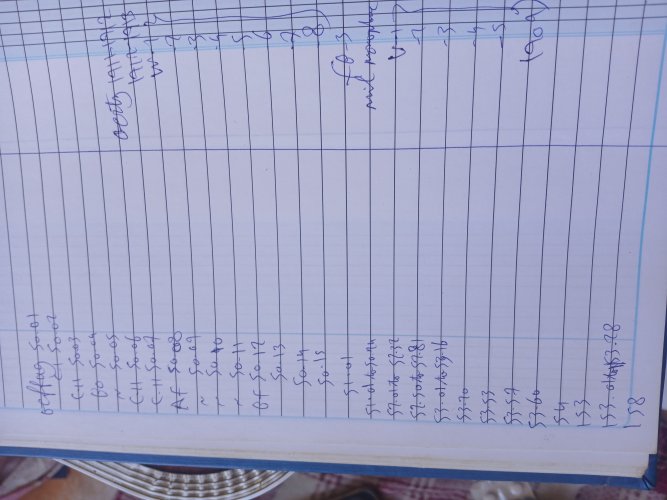
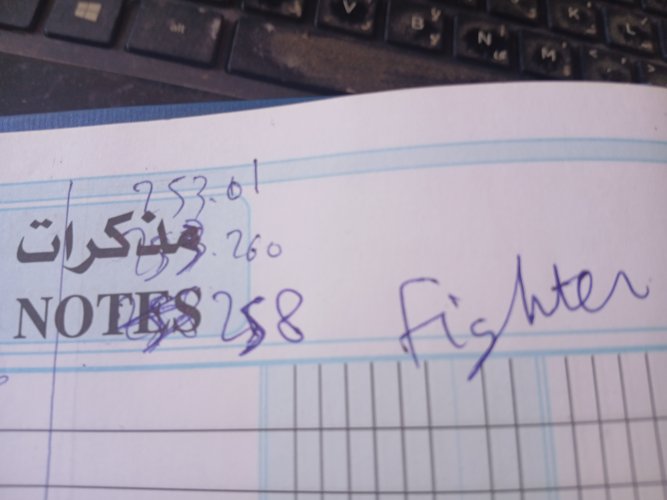
and here's my list,with descriptions.
 

Attachments

  • ٢٠٢٥٠٩٢١_١٦٢٤٠٣.jpg
    ٢٠٢٥٠٩٢١_١٦٢٤٠٣.jpg
    2.9 MB · Views: 27
  • ٢٠٢٥٠٩٢١_١٦٢٤٥٨.jpg
    ٢٠٢٥٠٩٢١_١٦٢٤٥٨.jpg
    2.5 MB · Views: 28
What are we supposed to do with this mess? These are her notes, nothing more. I honestly don't think it makes much sense to publish this scribble here. We're at a much higher level here. Take Apophenia or Stargazer as an example.
 
I've re-proofed the lists above and made a few tweaks and typo corrections.

@hesham: I noticed two oddities on your hand-written note.

- 1: Your side note of an "FB-3" (perhaps relating to 51.01 entry, opposite?) below which is written "mil monoplane"; and

- 2: A Bauart "158" listed at the very bottom.

Can you shed any light on these?

For your "FB-3", I am aware of the 1915 Brandenburg FB (FlugBoot) which served with the k.u.k. Kriegsmarine ... but those aircraft carried 'S' codes not 'FB'.

There was also a roughly contemporary German Oertz F.B.3 - one of a series of 12 x 'buried-engine' flying boats of varying designs by Hamburg-based yacht builder Max Oertz. But I have found no connection between Max Oertz and Austro-Hungary. In Oct 1918, the Oertz yard at Reiherstieg was absorbed into Hansa Brandenburg. Perhaps the licensed Oeffag K - aka Hansa-Brandenburg W.13(Oef) - has caused confusion?

Or is your "FB-3" a totally different design?

Your "158" defies my understanding of the k.u.k. Luftfahrtruppen designation system. IIUC, for an 'Oeffag 158' to have existed, there would first need to be an Oeffag 'Bauart 58'. But I can find no 'base' number higher than Oeffag 54.

Any clarifications on the above would be gratefully received.
 
What are we supposed to do with this mess? These are her notes, nothing more. I honestly don't think it makes much sense to publish this scribble here. We're at a much higher level here. Take Apophenia or Stargazer as an example.

Your way of speaking is not good at all,what mess ????,it's not scribble !!!,that's what I recorded it from a very
reliable site exactly,and they arranged preciously as I did here,all I forget to mention is the descriptions of those
aircraft.
 
My dear Apophenia,

that's what I found on Net from many many years,this site doesn't exist now,and
unfortunately in my files which I lost 80 % of it in the journey,a copy or save as a page
to this link,when I will go back to my original home,I will send it here,frankly I
don't have the answer.
 
Hi,

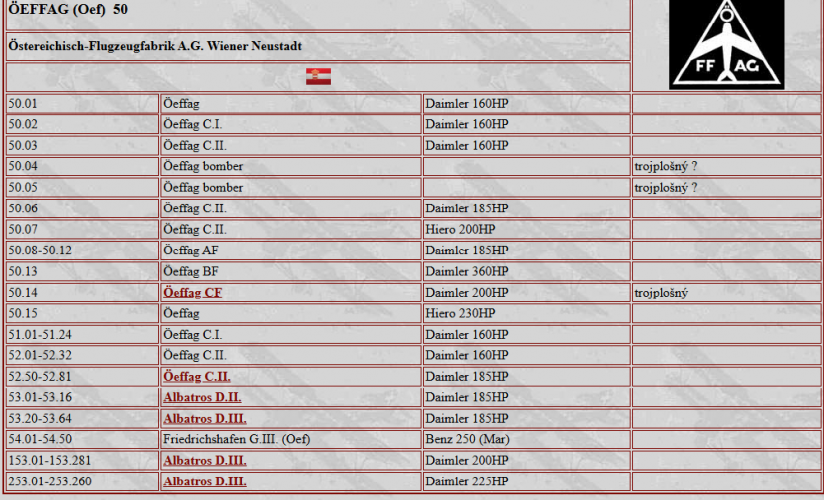
51.01-51.24 was as you mentioned C.I,but with 160 hp Daimler engine
53.20-53.64 was Albatros D.III
54.01-54.50 was with 250 hp Benz

And I will search about 158 & 258,to check.
 
51.01-51.24 was as you mentioned C.I,but with 160 hp Daimler engine

Try to avoid absolutist statements. My "150 hp" listing was trying to reflect the fact that AD 6-cylinder output improved over time ... but only reached their claimed output later in production. Indeed, output would have varied from engine to engine.

In this case, don't confuse the 'Austro-Daimler 160 HP' marketing name with those engine's actual output. Early AD 6-cylinders could not delivered their advertised horsepower. (There is also the issue of horsepower versus pferdestärke ...)

For the C.Is, that output would have originally erred on the lower side (you will notice that your "160 hp" figure is most associated with C.Is rebuilt as trainers). On C.IIs with AD 6/17s, the err was on the higher side.

53.20-53.64 was Albatros D.III

Yes, I said as much - although it is far more accurate to say D.III(Oef) as a number of improvements and differences were introduced by Oeffag engineers to better-suit AH production methods and materials.

As noted in the Bauart 53.2 entry, the D.III(Oef) was delivered in two batches - 53.20-53.53 (which included the production prototype) and 53.54-53.64.

54.01-54.50 was with 250 hp Benz

I have seen Jack Herris' claim of AH-built 250 hp Benz Bz.IV(Mar). However, that is a garbled reference to the German-built pattern airframes fitted with German-made engines. Austrian sources give planned outputs of around 300 PS.

Grosz, et al also reference the 250 hp Benz Bz.IV(Mar) ... but, again, for the DMG-built pattern airframes. (Not fully re-assembled until after the end of WW1, neither pattern airframe received a k.u.k. Luftfahrtruppen serial.)

And I will search about 158 & 258,to check.

Good luck with that! As already noted, to find your "158", you must first find an Oeffag '58'. As the Bauart 54 seems to have been the last k.u.k. Luftfahrtruppen type number assigned to Oeffag, you will also need to establish the prior existence of the Oeffag '55', '56', and '57' types. But ... fill your boots.
 
Unfortunately, I didn't record the name of the site.
 

Attachments

  • 1.png
    1.png
    198.5 KB · Views: 27
That was not amateur doing,but it was a very good site,and it
was French as I remember,so they couldn't write well the German
language.
 
I doubt it's a French site - Google translate is telling me that "trojplosny" is Slovak for "trihedral".
 
I doubt it's a French site - Google translate is telling me that "trojplosny" is Slovak for "trihedral".

The site was from Poland,sorry,my memory is not good;
 

Attachments

  • 1.png
    1.png
    20.9 KB · Views: 18
Was the only Oeffag K to carry fixed forward firing armament K184? Or was a fixed armament also trailed (or field modified) on other aircraft?
 

Similar threads

Back
Top Bottom