I know they made changes to the F118 for the U-2. During B-2 flight test, I think we hit 55K but operationally it was 50K. Now since I have been off the program for some time and through upgrades, maybe the B-2 can go above 50K.

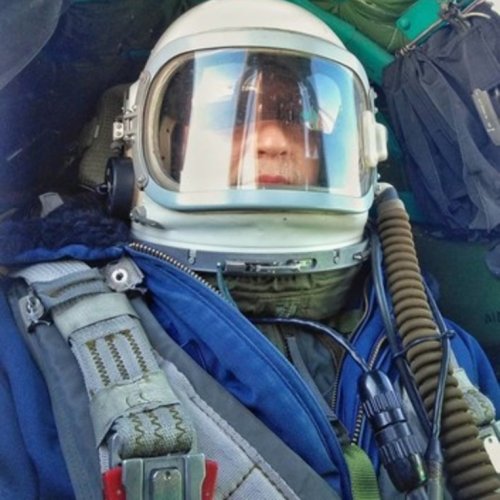
At those altitudes wouldn't the flight-crew have to wear full pressure-suits in the event they have to make an ejection above 45,000ft?
 
It would certainly make sense for the B-21 to have greater range, given that it most likely runs much more efficient engines and carries less payload compared to the B-2, while also being a bit smaller but not significantly smaller too.
You’re probably right about some of that.
 
Always wondered if the fact both the B-2 and U-2 use the F118 if that might hint at an altitude capability of higher than the 50k normally associated with the B-2. ISTR the early concepts looked at as high as 80,000 feet.
It might simply not have enough lift to climb further, while unable to accelerate to create more lift due to transonic drag rise, long before the engines themselves flame-out.
 
At those altitudes wouldn't the flight-crew have to wear full pressure-suits in the event they have to make an ejection above 45,000ft?
For 50K to 55K, the crew wore standard flight suits.
 
At those altitudes wouldn't the flight-crew have to wear full pressure-suits in the event they have to make an ejection above 45,000ft?
For 50K to 55K, the crew wore standard flight suits
 
Isn’t the Armstrong limit around 60,000 feet? Besides, exposure should be brief enough to not cause much more than discomfort. The human body is able to operate at a remarkably wide range of pressures so long as the transition is not sudden.
 
eger the AU column
Thanks! It seems that one of the core assumptions is the use of a pair of non-afterburning F135s. An engine choice with a higher BPR (like 5.5 for PW800, does not have to go all the way up to GTF-style) would result in a dramatically lower SFC and a much longer range.
 
Wouldn't that be hazardous for the flight-crew if they had to eject at 50-55,000ft? Also you double-posted;).
Oops, sorry about double post. The B-2 flight station is pressurized, they would also have oxygen if they had to eject. I left the program at the end of 1996, I'm sure things have changed since then.
 
Thanks! It seems that one of the core assumptions is the use of a pair of non-afterburning F135s. An engine choice with a higher BPR (like 5.5 for PW800, does not have to go all the way up to GTF-style) would result in a dramatically lower SFC and a much longer range.

This is an interesting question but my deeply flawed understanding suggests that spamming higher BPR doesn’t work at 55k as it does at 35k feet, because physics.
 
The B-2 flight station is pressurized, they would also have oxygen if they had to eject.

I know that but my understanding is that such high-altitude ejections are dangerous to perform without wearing a full pressure-suit or at the very least a partial-pressure suit.
 
I know that but my understanding is that such high-altitude ejections are dangerous to perform without wearing a full pressure-suit or at the very least a partial-pressure suit.
If my understanding of dive physics is correct, the sudden depressurization isn't good but the repressurization is happening literally as fast as humanly possible.
 
I assume the B-2 cabin is at a much lower pressure than sea level? And during combat operations would they not typically have oxygen masks? I thought that was how even B-52 crews operated.
 
This is an interesting question but my deeply flawed understanding suggests that spamming higher BPR doesn’t work at 55k as it does at 35k feet, because physics.
Can you explain your rationale here…?
My understanding is that all forms of jet engine has thrust directly proportional to air density, so a high-BPR engine (to a degree) in and of itself does not hurt high altitude performance. The problem is with the air density dropping, the plane needs to fly faster to generate the same lift to stay in the air, which is what hurts high-BPR engines.
Because indicated air speed the pilot sees is based on dynamic pressure instead of the true air speed, and the same IAS corresponds to higher TAS at higher altitudes. It gives the presumption that higher BPR engines work less efficiently in higher altitude.
However, for a high subsonic platform like the B-21, the max speed at high altitude is capped not by dynamic pressure, but Mach number. So a high-BPR engine (again, to a degree) does not hurt performance as long as you are limited to subsonic flight. It’s a different story for fighter jets because they accelerate to supersonic speeds to generate enough lift at high altitude.

A good example would be the RQ-4 Global Hawk. Its AE 3007 (F137) engine has a bypass ratio of 5:1, still grants high altitude performance at 60kft.
Another example would be the U-2. Its maximum operating altitude actually increased when changed from a turbojet to the same F118 turbofan the B-2 is using.
 
Last edited:
And although different mission sets, if the P-ISR has had success with high alt, long duration ops, there's no reason why that tech wouldn't be incorporated into the B-21.
 
I assume the B-2 cabin is at a much lower pressure than sea level? And during combat operations would they not typically have oxygen masks? I thought that was how even B-52 crews operated.

Yes they were oxygen-masks but the altitudes I was querying concerning emergency ejection (Or loss of cabin-pressure) the air-pressure is so low that not wearing a pressure-suit could quickly cause very serious problems such as decompression sickness.
 
The post I was responding to suggested moving away from fighter derived engines (like the F118) BPRs to something much higher like 5, which would probably mean a mission profile more similar to a B-52J in terms of max ceiling (which was recently just touched on elsewhere in this forum), or you could look at the max ceiling of a G650, which is the other aircraft I instantly think of when I hear a BPR of 5.

I am not certain, but I suspect Spirit and probably Raider will fly profiles featuring cruise or penetration at higher altitudes than 50k - not Blackbird or Dragon Lady high per se - but perhaps high enough to put a 5 BPR engine out of its sweet spot.

As I said, it’s an interesting question.
 
And how does an F-22 pilot fly without a sealed helmet at altitudes of 20 km? Either it does not rise above 15 km or in case of ejection it is doomed
 

Attachments

  • 159664035454247745_128870338252006_400532132309500435_n.jpg
    159664035454247745_128870338252006_400532132309500435_n.jpg
    156.2 KB · Views: 45
I assume the B-2 cabin is at a much lower pressure than sea level? And during combat operations would they not typically have oxygen masks? I thought that was how even B-52 crews operated.
The typical pressurization level is 8000ft, call it 11psi. If you get higher than that, you need to push the oxygen partial pressure higher.
 
The post I was responding to suggested moving away from fighter derived engines (like the F118) BPRs to something much higher like 5, which would probably mean a mission profile more similar to a B-52J in terms of max ceiling (which was recently just touched on elsewhere in this forum), or you could look at the max ceiling of a G650, which is the other aircraft I instantly think of when I hear a BPR of 5.

I am not certain, but I suspect Spirit and probably Raider will fly profiles featuring cruise or penetration at higher altitudes than 50k - not Blackbird or Dragon Lady high per se - but perhaps high enough to put a 5 BPR engine out of its sweet spot.

As I said, it’s an interesting question.
Well… Global Hawk uses a 5:1 bypass ratio engine, and is flying at 60+kft (this USAF link below says 65kft, the USAF fact sheet says 60kft)
https://www.goodfellow.af.mil/Units/17th-Training-Group/ITU/Static-Display-Globalhawk/
 
If my understanding of dive physics is correct, the sudden depressurization isn't good but the repressurization is happening literally as fast as humanly possible.
Yup. If you jump from 80k feet, you'll get below 60 in less than a minute. When Jim LeBlanc breathed vacuum, he lost consciousness in ~12 seconds (and later noted that he could feel the saliva in his mouth boiling). 25 seconds in, oxygen was administered to his suit at low pressure, 87 seconds in the chamber was repressurized. He fully recovered.

The human body is a sufficiently good pressure suit on it's own that a minute of breathing vacuum isn't going to kill you. It will be very unpleasant, mind, and the pilots might not be able to walk soon after landing, but for an ejection system "just tough it out" might be acceptable.
 
In regards to the Armstrong limit and the F-22 (Operational ceiling is 65,000ft IIRC) is that I read that F-22 pilots where a special flight suit that functions as partial-pressure suit if they lose cockpit pressure or have to eject above 45,000ft.
 
The Armstrong limit isn't as big of a problem for an optionally crewed platform like the B-21.
Planned optionally crewed though, not currently capable. Per the recent interview on TWZ,

Q: Will the B-21 still be optionally manned?

A: That’s a future capability for the aircraft. Right now, we’re planning for the manned implementation of that aircraft and getting the crews ready to be at Ellsworth when the plane arrives.
 
Will that mean optionally manned for when nuclear weapons are on board and unmanned for conventional weapons?
 
When the UVAV/S matures as the B-21, I’m interested to see how often the crew are left behind… to the point they become irrelevant.
 
My thoughts too Scott Kenny about having an unmanned B-21 armed with nuclear weapons, especially since they are talking about having the B-21 with AI now that just scares me. Though I would think that they would have a similar system in place like the one they have already where the pilots would have to go through decoding codes before launching the nuclear missiles.
 
They already exist as Tomahawks and Minuteman missiles
Nuclear tomahawks haven't existed since the late 1990s, but in either case they only have about a half-hour to 3 hour flight at max.

As opposed to "can fly to the far side of the planet and back" in the case of the B-21, with day-long missions.
 
Seems unlikely any additional speed can be achieved; terminal velocity probably occurs within a few km. But glide bomb range is likely extended. I would think SDB and JDAM-ER rather ideal weapons for B-21. Low cost, low launch signature, and fairly long standoff range from 40-50,000 feet/15,000m.
 

Similar threads

Back
Top Bottom