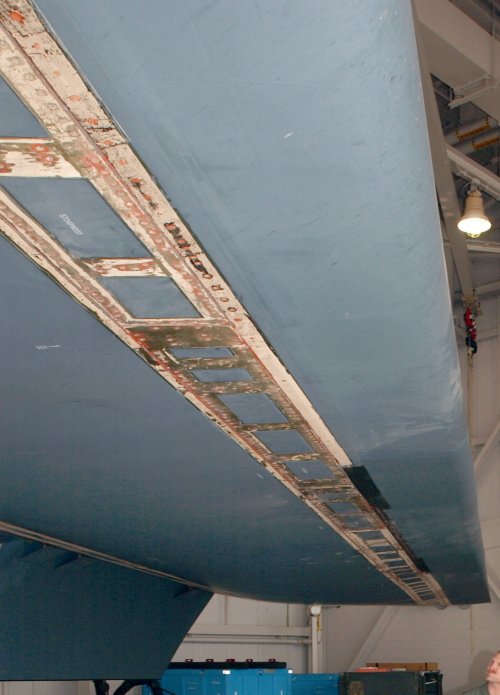
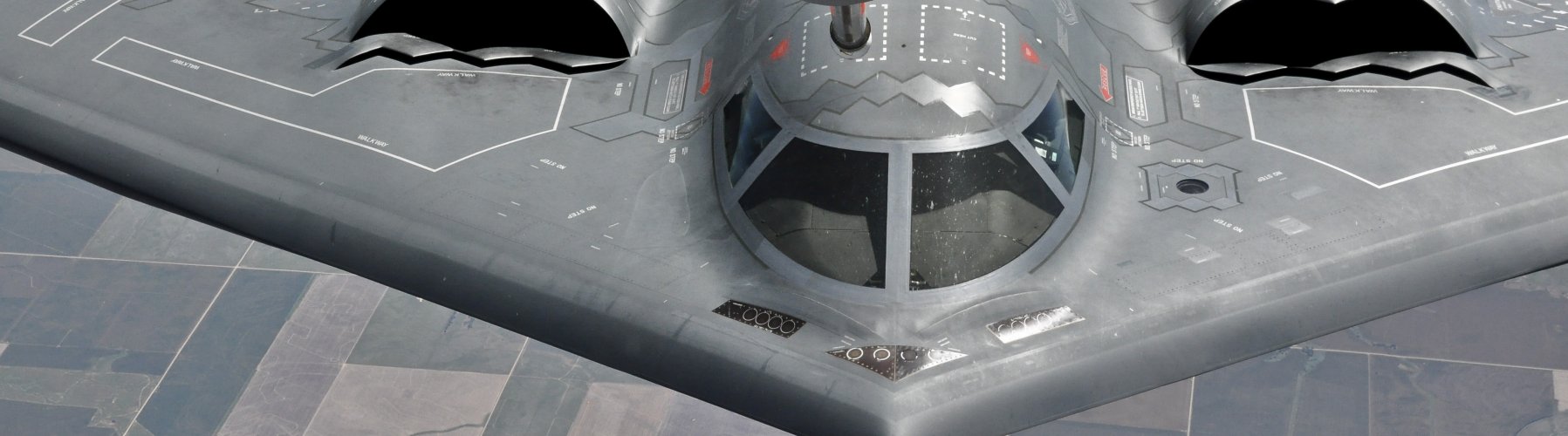
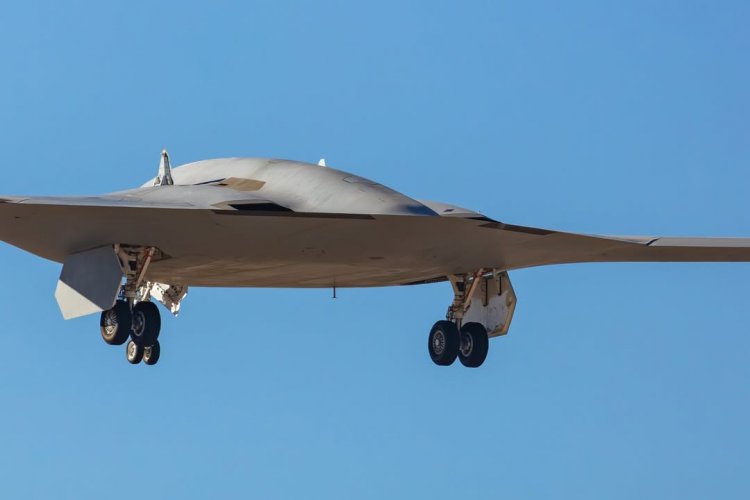
It’s really weird… At first flight of the exact same aircraft, the exhaust region was either black or a very dark color.Note the exhaust.

You are using an out of date browser. It may not display this or other websites correctly.
You should upgrade or use an alternative browser.
You should upgrade or use an alternative browser.
Northrop Grumman B-21 Raider (LRS-B)
- Thread starter TomS
- Start date

BLACK_MAMBA
ACCESS: Secret
- Joined
- 17 July 2019
- Messages
- 414
- Reaction score
- 1,064
Perhaps edited? Recent photos of Raptors on official accounts have had markings removed so not inconceiveable.It’s really weird… At first flight of the exact same aircraft, the exhaust region was either black or a very dark color.
Scott Kenny
ACCESS: USAP
- Joined
- 15 May 2023
- Messages
- 19,517
- Reaction score
- 27,966
Looks like standard USAF flying boom, with the refueling point back behind the peak of the curve.Does anyone know what kind of AAR that is? Assuming it is unique to the aircraft.

- Joined
- 3 June 2011
- Messages
- 20,899
- Reaction score
- 19,090
And something is still required on the bottom.It’s really weird… At first flight of the exact same aircraft, the exhaust region was either black or a very dark color.

FighterJock
ACCESS: Above Top Secret
- Joined
- 29 October 2007
- Messages
- 7,229
- Reaction score
- 8,540
Looks rather weird Sferrin.

Forest Green
ACCESS: USAP
- Joined
- 11 June 2019
- Messages
- 14,512
- Reaction score
- 31,543
B-21 Raider Seen From Above For The First Time
https://www.twz.com/air/b-21-raider-like-you-have-never-seen-it-before
- Joined
- 3 June 2011
- Messages
- 20,899
- Reaction score
- 19,090
I'd think a heat sink would be like hanging a transmitter back there that said, "hey, here I am!"Heat sink perhaps?

I'd think a heat sink would be like hanging a transmitter back there that said, "hey, here I am!"
"Aim here!"
.Scott Kenny
ACCESS: USAP
- Joined
- 15 May 2023
- Messages
- 19,517
- Reaction score
- 27,966
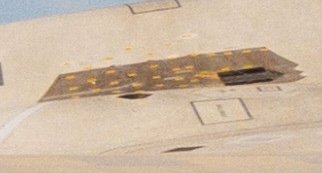
Above the wing? I think it's cooling system air grates.Anyone have any idea what those brown spotson the right side, visible in that side refueling shot, in that dark area could be?

- Joined
- 1 April 2006
- Messages
- 12,276
- Reaction score
- 15,084
Temperature sensitive paint (TSP) markings (my 5 cents)Anyone have any idea what those brown spotson the right side, visible in that side refueling shot, in that dark area could be?
Scott Kenny
ACCESS: USAP
- Joined
- 15 May 2023
- Messages
- 19,517
- Reaction score
- 27,966
I agree with flateric, I think those are temperature-sensitive paint patches.View attachment 809212
I mean these

- Joined
- 30 May 2023
- Messages
- 664
- Reaction score
- 1,436
those darker trailing edge features sure are good for a fun time.
Is it a far-out secret government tech that greatly reduces contrail formation?
Is it a far-out secret alien tech that greatly enhances contrail formation?
Is it just be a good place to put two linear, wideband, multifunction aesa arrays arranged to well-cover the rear quadrants?
Is it a far-out secret government tech that greatly reduces contrail formation?
Is it a far-out secret alien tech that greatly enhances contrail formation?
Is it just be a good place to put two linear, wideband, multifunction aesa arrays arranged to well-cover the rear quadrants?

GreenBullet
International rules-based hors d'oeuvre
- Joined
- 2 September 2015
- Messages
- 69
- Reaction score
- 121
Maybe there's a combination of heat-tolerant RAM, very efficient bypass mixing to get the plume as cool as possible, and airflow control over the surface to keep the exhaust gases separated and stood-off (even by a pretty minor distance) sufficient to keep surface temps reasonable. Definitely easiest to do on a platform that doesn't operate at high AoAs. Could bleed a little bit of bypass into a French drain type outlet combined with careful surface shaping.It’s really weird… At first flight of the exact same aircraft, the exhaust region was either black or a very dark color.
Similar principle to the porous boundary cooling in turbine blades.
- Joined
- 28 January 2008
- Messages
- 1,645
- Reaction score
- 4,210
They just have to cool the aft deck. The B-2 used the aft deck tiles, I'm sure the B-21 may be using a ceramic coating. As an example, the production F-23 was not going to use the Lamaloy actively cooled tiles for the exhausts, it was going to use passively cooled, advanced ceramic tiles instead, just an evolutionary step. Northrop/NG has been working and evolving this tech for a long time. Looks like the 21's exhaust openings are farther forward as well as compared to the B-2, that large aft deck area is probably very good at thermal dissipation. Northrop/NG VLO platforms share a lot of design commonalities, use, improve and evolve what works.
- Joined
- 1 April 2006
- Messages
- 12,276
- Reaction score
- 15,084
"Three passively-cooled alternate trough materials have proved promising in ground tests. “We’ve had some breakthroughs,” Rooney said. “We'll pick the lightest and cheapest for full-scale development.” One material is flexible blankets. They have been tested at full afterburner and are expected to last 1,000 hrs. Another alternate is ceramic tiles, and a third is ceramic matrix materials. Rooney believes ceramic matrix has the best prospects for light weight."It was going to use passively cooled, advanced ceramic tiles instead, just an evolutionary step.

Forest Green
ACCESS: USAP
- Joined
- 11 June 2019
- Messages
- 14,512
- Reaction score
- 31,543
It may be to hide something.

FlyGuy369
Flying is fantastic
- Joined
- 15 June 2023
- Messages
- 576
- Reaction score
- 1,693
Im certain it wouldnt look too far off from the X-47B minus the divided exhaust ramp from the actual fuselage.Sure it's psed
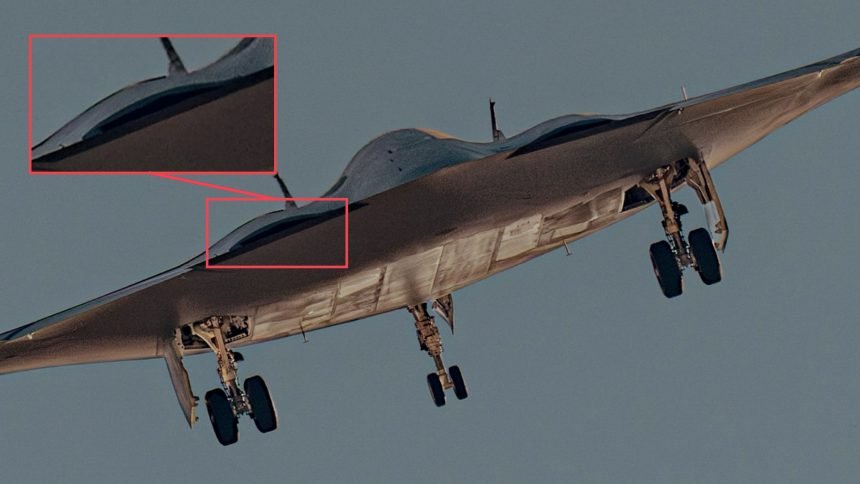
Also... What might be the purpose of the row of panels in front of the forward spar...? Since it probably does not have any leading edge control devices, what could be occupying that space...?
- Joined
- 3 June 2011
- Messages
- 20,899
- Reaction score
- 19,090
I would guess access so if they ever need to modify/remove/repair the leading edge, or components inside it.Also... What might be the purpose of the row of panels in front of the forward spar...? Since it probably does not have any leading edge control devices, what could be occupying that space...?
FighterJock
ACCESS: Above Top Secret
- Joined
- 29 October 2007
- Messages
- 7,229
- Reaction score
- 8,540
Access panels, that would be my guess as well.
Scott Kenny
ACCESS: USAP
- Joined
- 15 May 2023
- Messages
- 19,517
- Reaction score
- 27,966
Access panels for the big fecking antennas hiding in the leading edges. Whether for EW systems or LPI radars. or both.Also... What might be the purpose of the row of panels in front of the forward spar...? Since it probably does not have any leading edge control devices, what could be occupying that space...?
FighterJock
ACCESS: Above Top Secret
- Joined
- 29 October 2007
- Messages
- 7,229
- Reaction score
- 8,540
Never thought about the LPI radars Scott Kenny.
- Joined
- 3 June 2011
- Messages
- 20,899
- Reaction score
- 19,090
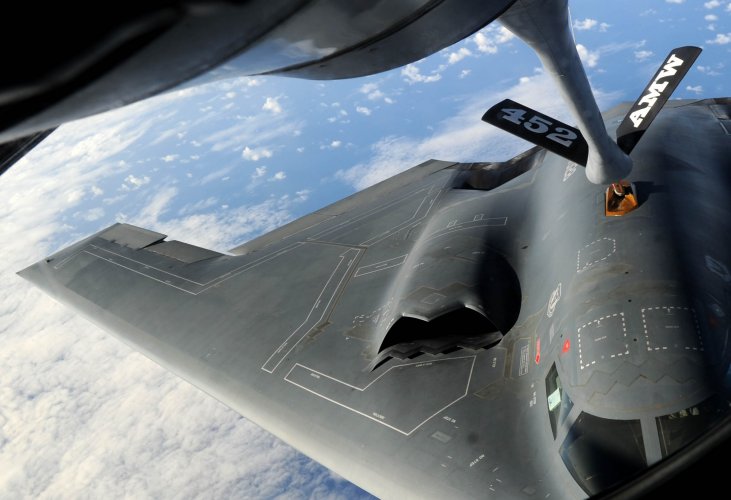
Radars would be on the bottom side. Maybe they're access from the top though. Wonder if the B-2 has similar panels.Never thought about the LPI radars Scott Kenny.
Nope. Nice and clean.
Attachments

- Joined
- 2 August 2006
- Messages
- 3,335
- Reaction score
- 1,847
They may be using the bypass air from the fan as a sheet of cooler air between the main nozzle and the upper surface and the hot core flow to help keep the upper surface somewhat cool, as opposed to completely "wrapping" the bypass air around the core flow. Also, it looks like the rear nozzles may actually be slightly higher than the rear deck of the wing, as far forward as they are, raising them up a bit from the rear surface. I also noticed the upper surface of the nozzle on the B-21 is a pointed facet, as opposed to the V-cut on the B-2 to maybe also help mixing the core and bypass flows to cool it faster? Those are just some guesses as to what they may be doing at the exhaust.
- Joined
- 1 April 2006
- Messages
- 12,276
- Reaction score
- 15,084
they just will remove LE for thatI would guess access so if they ever need to modify/remove/repair the leading edge, or components inside it.
- Joined
- 3 June 2011
- Messages
- 20,899
- Reaction score
- 19,090
And how do you do that without access?they just will remove LE for that
Yeah that is one of the reasons I am curious about these panels: the B-2 does not have them… The bank of apertures are on the underside, a bit far away from these places…Radars would be on the bottom side. Maybe they're access from the top though. Wonder if the B-2 has similar panels.
Nope. Nice and clean.
Probably just find the screw holes buried under the RAM… If the leading edge (primary bulk absorber, RAS) is going to be removed, the surface wave absorber (the RAM paint on the surface) is probably going to be repainted anyway…And how do you do that without access?
- Joined
- 1 April 2006
- Messages
- 12,276
- Reaction score
- 15,084
It has, yes, along forward sparRadars would be on the bottom side. Maybe they're access from the top though. Wonder if the B-2 has similar panels.