Good news for DPRK air force:
https://aviationweek.com/defense/aircraft-propulsion/russia-north-korea-agree-su-27-mig-29-transfer
https://aviationweek.com/defense/aircraft-propulsion/russia-north-korea-agree-su-27-mig-29-transfer

How many of either does the RusAF have left to send over?!?Good news for DPRK air force:
https://aviationweek.com/defense/aircraft-propulsion/russia-north-korea-agree-su-27-mig-29-transfer
Dozens or even hundreds in storage.How many of either does the RusAF have left to send over?!?
You really think that there will be anything left of the ones in storage but the bare airframe, with no electronics, engines, or even wiring?Dozens or even hundreds in storage.

Therefore it seems that this Admiral, by waking up those two models of fighter planes, could have made the same reasoning that I had expressed in my answer above, and that would be in theory the easiest and least risky way in terms of UN accusations for Moscow to help the DPRKGood news for DPRK air force:
https://aviationweek.com/defense/aircraft-propulsion/russia-north-korea-agree-su-27-mig-29-transfer
Russia has not only SU-27s in stock, but also operational and modernized SU-27s.You really think that there will be anything left of the ones in storage but the bare airframe, with no electronics, engines, or even wiring?
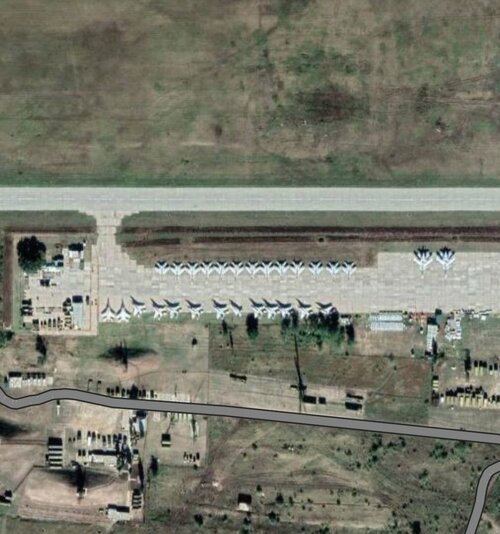
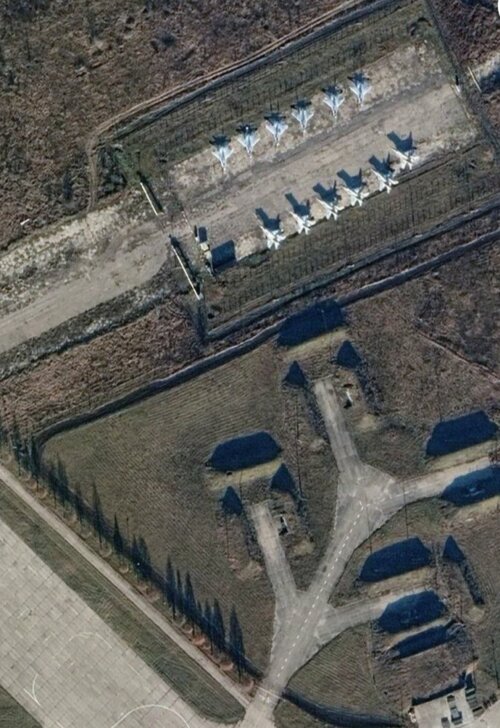
You really think that they haven't been cannibalized? Whether to keep the existing MiG-29s flying or had all the valuable parts stolen and sold on the black market?Russia has not only SU-27s in stock, but also operational and modernized SU-27s.
And
Mig-29SMT in storage at Millerovo airport Rostov region and Kursk airport before October 2022, then all were moved, it was thought to be reactivated for Russia itself, but the Russians currently do not use this type of in combat aircraft.
Therefore they could be made available for transfer or sale to friendly countries, certainly after major repair work
View attachment 751746
View attachment 751747
Russia doesn't operate mig-29s(other than Ks in navy service) in combat capacity anymore, and if push comes to that - there's active supply chain, supporting them around the world. Migs were still being produced for export as late as 2022.You really think that they haven't been cannibalized? Whether to keep the existing MiG-29s flying or had all the valuable parts stolen and sold on the black market?
Based on the conditions of the tanks Russia was keeping "in reserve" mothballs, you are being very optimistic in your assumption of the conditions of those airframes... Especially those in the second satellite image.
This could happen as they have an active Su-27(J-11) production line, as well as retirement of early Su-27KsCould there be a possibility that China is giving help to DPRK in military aviation issues, or that there is some interest in the J-10 or Chinese flanker versions?
and the SU-27 was sold or inherited after the collapse of the USSR by numerous nations and produced in China, thus an ideal model to make it difficult for others to indicate with certainty who delivered what.This could happen as they have an active Su-27(J-11) production line, as well as retirement of early Su-27Ks
Good news for DPRK air force:
https://aviationweek.com/defense/aircraft-propulsion/russia-north-korea-agree-su-27-mig-29-transfer


On what basis?Based on their track record in developing air force equipment, I think they still need Russian help on it
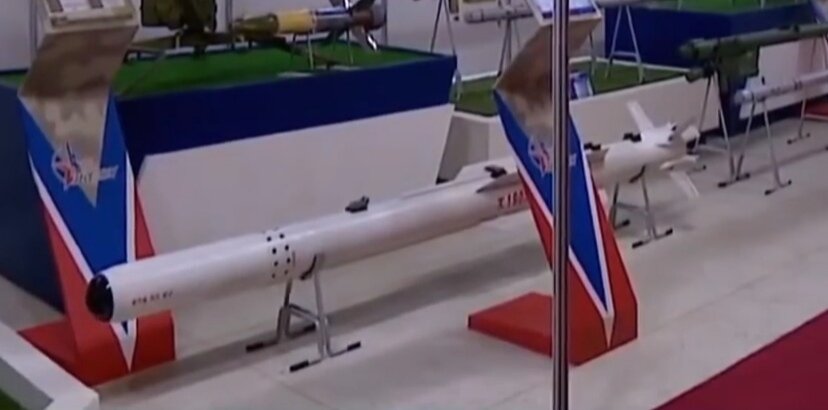
Only if they are real as in real missile rather than modelsLet's try to talk about what the integration of these things will bring to the North Korean Fulcrums and possibly Flankers.

https://militarywatchmagazine.com/a...ll-former-top-fighter-squadron-nkorea-su27sm2(...)The sheer numbers of Soviet-built MiG-29s Russia retains, the diminishing value of these reserves, and North Korea’s capacity to absorb 200 or more new fighters into its large fleet, raises the possibility that Russia could make very large scale transfers of MiG-29s to re-equip multiple North Korean units. The fact that the MiG-29’s operational costs are higher than the MiG-17, MiG-19 and MiG-21 fighters they are expected to replace means that one-for-one replacements of the 400 or so legacy aircraft in service is unlikely, although the Korean fleet could realistically accommodate 100-200 MiG-29s alongside two dozen Su-27s. The very large quantities of aircraft Russia retains, and the low cost of modernization, makes this highly feasible, although North Korea may itself seek not to invest too heavily in the aircraft, and to leave a capacity in its air force to procure more advanced fighters such as Su-57s later on in more limited numbers.
Interesting.(...)Despite the Su-27 having been effectively absent from global fighter markets for close to two decades, there are multiple possible rationales for North Korea’s procurement of the aircraft. These are as follows:
- For Russia, delivering only older aircraft to its neighbour avoids significantly disrupting relations with Japan, South Korea and the United States, with Su-27s having insufficient capabilities to remain survivable outside North Korean airspace, and being able to potentially challenge modern fighters such as F-35s or F-15EXs only if operating alongside North Korea’s ground based air defences. For political reasons, they may thus be the only heavyweight fighters that Russia has made available.
- Su-27s can also be delivered more quickly than waiting for new Su-30, Su-35 or Su-57 fighters to be built, which is beneficial for Pyongyang due to the risk that Russia’s position on fighter exports may change should a ceasefire in Ukraine be reached.
- The Su-27SM2/SM3 could be considered a stopgap acquisition to familiarise the North Korean fleet with the operations of ‘4+ generation’ fighters, paving the way to acquisitions of more advanced aircraft in future such as the Su-57. The fact that Russia’s Su-27s have already seen many years of service means that they could be procured at a very low cost, and may be phased out of elite frontline units relatively quickly once newer aircraft are procured.
Replacing MiG-21/J-7 for MiG-29 could be up to 75 aircraft in terms of maintenance and jet fuel consumption.
For MiG-23 it would be 1 to 1 ratio thus 55 aircraft and MiG-19 would be 4 to 1 thus 25 at most 25 aircrafts.
North Korea could easily accommodate 200 examples of MiG-29 in service without increasing workload.
This sentence does not make any sense as there is no factual logic behind it.There are no radar or only a simple range finder on Mig-19, that will be a big increase in workload
Tell your logic to those avionics mechanics and see if they would agree your statement.This sentence does not make any sense as there is no factual logic behind it.
It would take more time to do maintenance on two MiG-19 than single MiG-29.
Regardless of former having no radar and few electronics compared to latter.

You appear to have no experience with real world aircraft maintenance.This sentence does not make any sense as there is no factual logic behind it.
It would take more time to do maintenance on two MiG-19 than single MiG-29.
Regardless of former having no radar and few electronics compared to latter.
Tell your logic to those avionics mechanics and see if they would agree your statement.
Clearly neither of you can do basic math as two MiG-19 have more parts than single MiG-29 and former requires considerably more frequent maintenance than latter thus greater complexity on paper is outweighed by actual needs of aircraft in long term.You appear to have no experience with real world aircraft maintenance.
I am not too sure about basic mathematics here, as two planes doesn't necessarily got more parts than one different plane.Clearly neither of you can do basic math as two MiG-19 have more parts than single MiG-29 and former requires considerably more frequent maintenance than latter thus greater complexity on paper is outweighed by actual needs of aircraft in long term.
Also RD-9 turbojet in MiG-19 has far shorter service life than RD-33 turbofan in 29.
Whatever workload MiG-29 has that 19 does not is offset by quantity of latter.
After all at least two of MiG-19 will be retired for each 29 that gets added.
Ok, but what about fuel consumption?Clearly neither of you can do basic math as two MiG-19 have more parts than single MiG-29 and former requires considerably more frequent maintenance than latter thus greater complexity on paper is outweighed by actual needs of aircraft in long term.
Also RD-9 turbojet in MiG-19 has far shorter service life than RD-33 turbofan in 29.
Whatever workload MiG-29 has that 19 does not is offset by quantity of latter.
After all at least two of MiG-19 will be retired for each 29 that gets added.
It should be considerably lower than two MiG-19's.Ok, but what about fuel consumption?
And it is clear that you have no experience with real world aircraft maintenance, especially combat platforms. It is not simply about the number of parts.Clearly neither of you can do basic math as two MiG-19 have more parts than single MiG-29 and former requires considerably more frequent maintenance than latter thus greater complexity on paper is outweighed by actual needs of aircraft in long term.
And to ge the longer life also comes with greater maintenance demand...Also RD-9 turbojet in MiG-19 has far shorter service life than RD-33 turbofan in 29.
Whatever workload MiG-29 has that 19 does not is offset by quantity of latter.
And your source for this is?After all at least two of MiG-19 will be retired for each 29 that gets added.
Looking at SFCs:It should be considerably lower than two MiG-19's.
| Platform (Engines) | AFC (Dry) | SFC (Afterburning) |
| MiG-19/J-6 (RD-9/WP-6 x 2) | 0.96 lb/(lbf⋅h) ea thus 1.92 lb/(lbf⋅h) | 1.6 lb/(lbf⋅h) ea thus 3.2lb/(lbf⋅h) |
| MiG-29 (RD-33 x 2) | 0.77 lb/(lbf·h) ea thus 1.54 lb/(lbf·h) | 1.85 lb/(lbf·h) ea thus 3.7 lb/(lbf·h) |
| Su-27 (AL-31 x 2) | 0.78 lb/(lbf·h) ea thus 1.56 lb/(lbf·h) | 1.96 lb/(lbf·h) ea thus 3.92 lb/(lbf·h) |
You have not considered thrust increase for each engine as to how much afterburner provides compared to dry.Looking at SFCs:
Platform (Engines) AFC (Dry) SFC (Afterburning) MiG-19/J-6 (RD-9/WP-6 x 2) 0.96 lb/(lbf⋅h) ea thus 1.92 lb/(lbf⋅h) 1.6 lb/(lbf⋅h) ea thus 3.2lb/(lbf⋅h) MiG-29 (RD-33 x 2) 0.77 lb/(lbf·h) ea thus 1.54 lb/(lbf·h) 1.85 lb/(lbf·h) ea thus 3.7 lb/(lbf·h) Su-27 (AL-31 x 2) 0.78 lb/(lbf·h) ea thus 1.56 lb/(lbf·h) 1.96 lb/(lbf·h) ea thus 3.92 lb/(lbf·h)
So better in dry/military thrust but worse in afterburner.
It is clear you have no argument as evident by your replies.And it is clear that you have no experience with real world aircraft maintenance, especially combat platforms. It is not simply about the number of parts.
This is why I say that you have no argument because it is not greater maintenance if you could do basic math as turbojet engines require more frequent maintenance due to having much shorter service life. Unlike turbofans that despite more complexity due to design goal being efficiency along greater service life is part reason there is a fan for better heat dissipation by cooling down engine components.And to ge the longer life also comes with greater maintenance demand...
None. it is logic.And your source for this is?