North American RF-86 and RF-100A "Slick Chick"

Iranian F-14A

ACCESS: Restricted
Joined
11 May 2006
Messages
34
Reaction score
8
I had a few questions regarding these two aircraft since there doesn't seem to be alot out there on them,esp the RF-100A.

1.Could either one of them carry any type of weapons,self defense or other wise? I know the RF-86F lacked the standard 6x.50 cals of the fighter,but could it carry Sidewinders or air to ground weapons? I assume the RF-100A also lacked the 4x 20mm of the fighter bomber models as well.

2.I believe that only 6 F-100As were converted to RF-100A standard,and at least some of those were later transfered to Taiwan.Does anyone have any pics of the Taiwanese RF-100s?

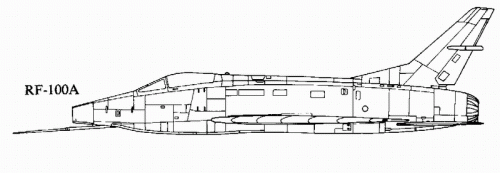
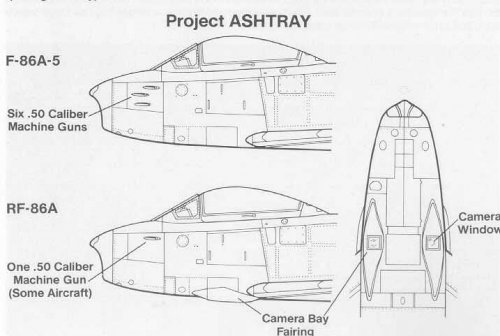
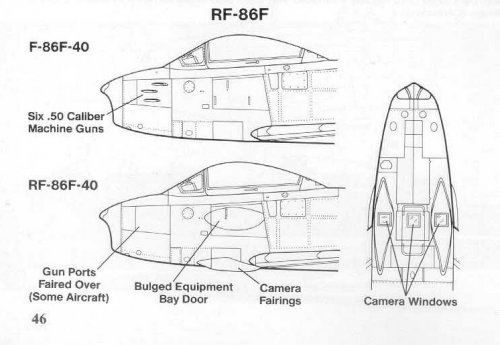
3.Does anyone have any type of side view drawing or profile of the RF-100A or RF-86F?
 
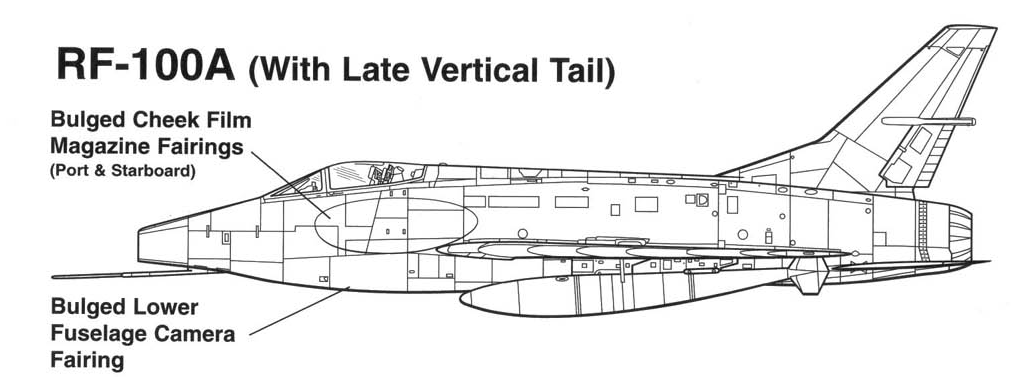
From Angelucci/Bowers a side view of the RF-100A and from Squadron Signal N°126
drawings of the RF-86A and RF-86F. The RF-86A are said to be more or less a stop-gap,
replaced later by modified F-86F, not all of them retained 2 0.5in guns.
 

Attachments

  • NAA_RF-100A.GIF
    NAA_RF-100A.GIF
    41.9 KB · Views: 561
  • NAA_RF-86A.JPG
    NAA_RF-86A.JPG
    103 KB · Views: 513
  • NAA_RF-86F.JPG
    NAA_RF-86F.JPG
    137.3 KB · Views: 496
Iranian F-14A said:
I had a few questions regarding these two aircraft since there doesn't seem to be alot out there on them,esp the RF-100A.

1.Could either one of them carry any type of weapons,self defense or other wise? I know the RF-86F lacked the standard 6x.50 cals of the fighter,but could it carry Sidewinders or air to ground weapons? I assume the RF-100A also lacked the 4x 20mm of the fighter bomber models as well.

2.I believe that only 6 F-100As were converted to RF-100A standard,and at least some of those were later transfered to Taiwan.Does anyone have any pics of the Taiwanese RF-100s?

3.Does anyone have any type of side view drawing or profile of the RF-100A or RF-86F?

Any updates on the RF-100 since the original post?
 
There were only six of these aircraft. They were intended for high-speed, high-altitude dashes into denied airspace prior to the availability of the U-2. They had no armament, were plumbed for four drop tanks for extra range, and had cabin/systems modifications to support the use of full pressure suits.

A couple of photos and a drawing of a Taiwanese RF-100A can be found on p.83 and on the back cover of Clarence Fu's book F-100: Service History of the RoCAF F-100 (ISBN 957-8628-14-5). He might still have a copy available:

[email protected]
Clarence Fu
P.O.Box 112 –129
Taipei, TAIWAN

For more general RF-100A info, try googling. See:

http://www.spyflight.co.uk/f100.htm
http://www.skytamer.com/North_American_RF-100A.html
https://supersabresociety.com/slick-chick-f-100-proceeded-u-2/
https://en.wikipedia.org/wiki/6021st_Reconnaissance_Squadron#RF-100A_Slick_Chick
https://en.wikipedia.org/wiki/RF-100A#Project_Slick_Chick
http://www.joebaugher.com/usaf_fighters/f100_3
http://www.456fis.org/F-100.htm

http://sweetrose.yocumusa.com/duncan/rfsabres.htm

https://fighterwriter101.blogspot.com/2016/02/taiwan-and-rf-101a-voodoo.html
 
Any RF-100 info you guys have stashed away?
As you can tell from the volume of responses to your query, the existence and results of the RF-100A program have been kept pretty quite for the last 70 years, as befits a very sensitive reconnaissance program.

This program, which was known as "Slick Chick", was to be an interim capability to penetrate the Soviet bloc until the program that became the U-2 came on line. The United States Air Force asked North American Aviation if they could produce six airplanes that could achieve their requirements. NAA responded in three weeks with a proposal to modify their latest operational fighter the F-100A. They were awarded the contract which required delivery in 6 months. A seventh airframe was later added. Modifications were deletion of the 20-mm cannon, reshaping the forward fuselage to accommodate the large cameras (which required an area addition to the vertical tail), and the addition of 12inches span to each wingtip to meet a 50 Kft altitude requirement.

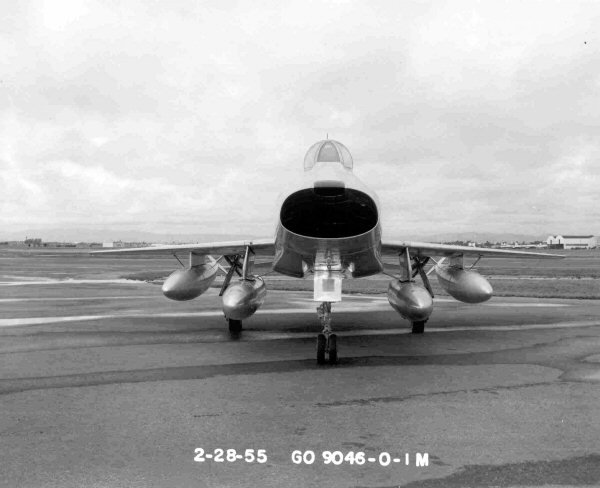
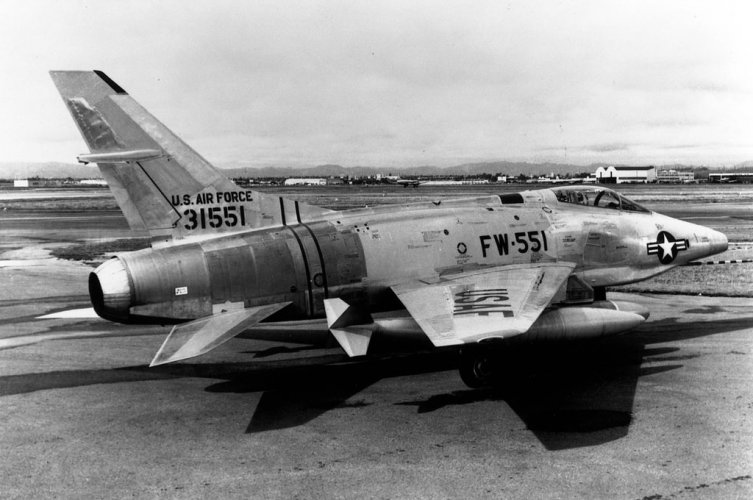
The following website, https://spyflight.co.uk/aircraft/#North_American, provides details of the required performance and the changes of the basic F-100A airframe to carry the cameras to the required altitude and range. As shown in the picture you provided, the RF-100A carried four external tanks for maximum range. Key Publishing's latest bookazine, Spy Flights - Missions of the Cold War, has a couple of paragraphs on Project Slick Chick concerning the three airframes, 53-1551, 53-1554, and 53-1545, that were delivered to Air Force bases in West Germany in May 1955. Missions and targets in Warsaw-Pact nations are mentioned. The cited website describes a mission penetrating the Soviet Union departing and returning from a base in Turkey.

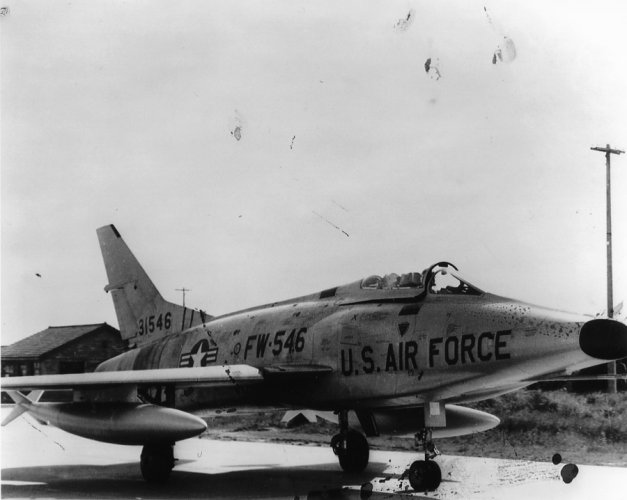
The other three original airframes were sent to Air Force bases in Japan. When the USAF was finished with them, four of the aircraft were transferred to Taiwan in December 1958. I have found no descriptions of their Far-East operations in either USAF or Taiwanese AF service.

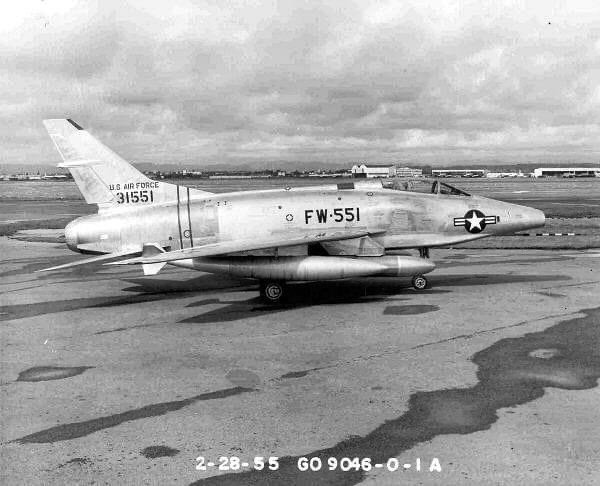
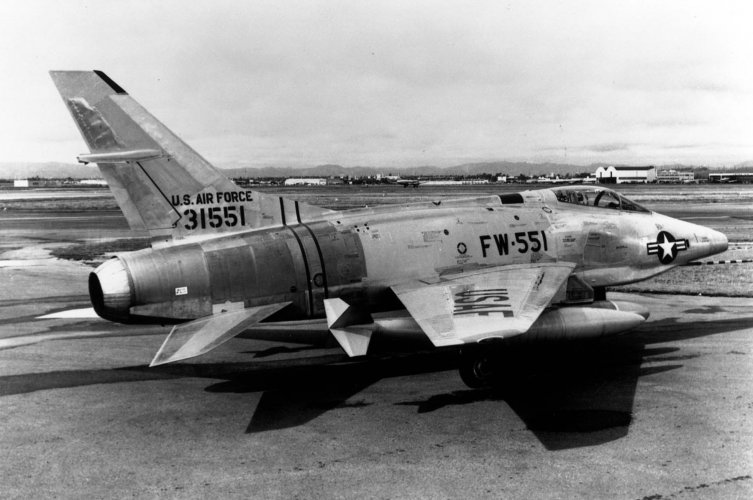
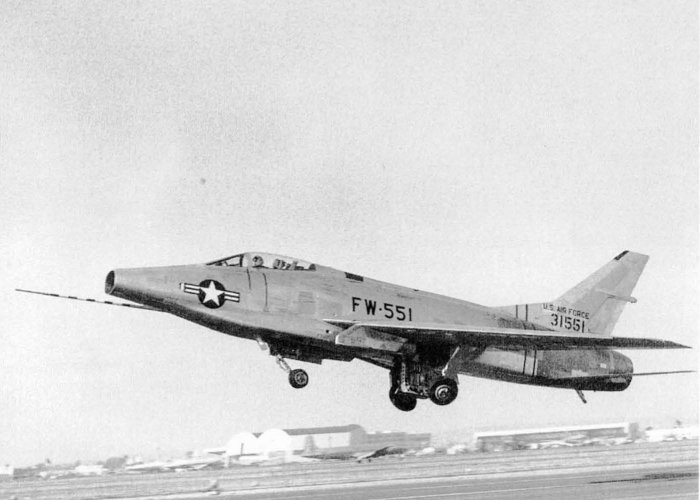
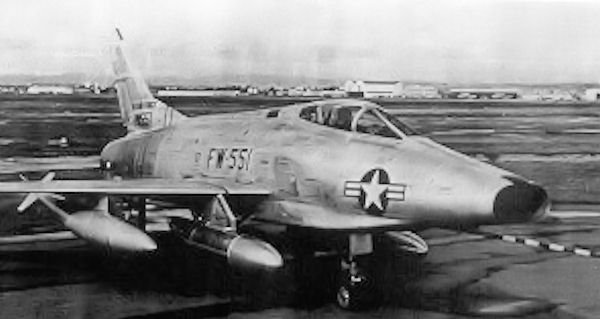
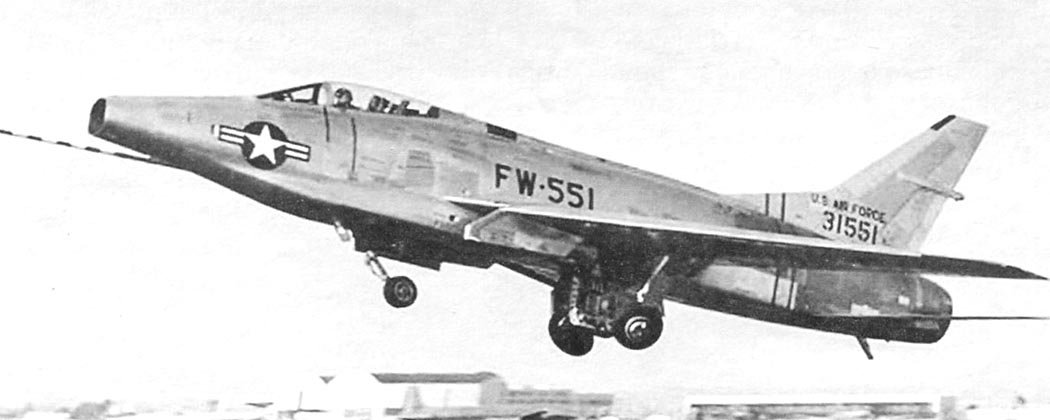
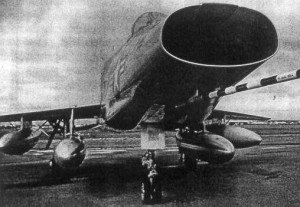
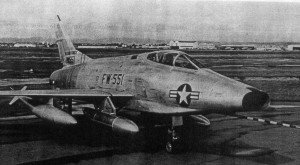
Photographs of the RF-100A are not hard to find on the internet. I have attached a couple (apparently taken outside the NAA plant at Los Angeles International Airport). Descriptions of their operations are rare and becoming more so as their pilots and operators pass.
 

Attachments

  • NAA RF-100A  (1).jpg
    NAA RF-100A (1).jpg
    40.6 KB · Views: 69
  • NAA RF-100A  (4).jpg
    NAA RF-100A (4).jpg
    195.9 KB · Views: 66
Further to the above, the three "FEAF" RF-100As all went to the 6007th Reconnaissance Group at Yokota, 53-1546 on 2 June 1955, 53-1547 on 3 June and 53-1548 on 2 June.

Of the three USAFE and three FEAF aircraft one each was lost: 53-1548 on 23 June 1955, 6 miles northeast of Atsugi AB following loss of control on take-off (aft CG with full tanks/pilot-induced oscillation); Capt Lowell A Moomaw ejected but was injured. The USAFE loss was 53-1551, on 2 October 56 one mile north of Niederbach, Germany (Capt Edgar H Hill); Hill's engine flamed-out at 32,000ft, the fuel pump failure light illuminated and he turned back to base meanwhile attempting numerous air-starts without success; he ejected safely at 8,800ft.

The four survivors were all returned to NAA at Inglewood, reworked and forwarded to Taiwan under Project MAP-9F-101 during December 1958.
 
Reconnaissance RF-100As: ‘Slick Chick’

The early 1950s were the years of the Cold War on
many fronts, and the Korean war on a Far Eastern
front. The Communist countries were re-arming
with some haste and in great secrecy, and intelligence
information was needed, the kind of intelligence that
concerned itself with the makeup of Russian and East
German armoured divisions or Czechoslovakian
motorized infantry units. And the best way to get that
kind of data, it seemed, was to make some high-speed
dashes along or across the borders of Soviet-bloc
countries while taking some pictures.

So NAA modified a half-dozen F-100As to a tactical
reconnaissance configuration during March
and April 1955. For the record, they were NAA F-
100A Nos 40-43 (AF53-1545/-1548), 46 (-1551) and
49 (-1554). The 20-mm nose cannon, ammunition
boxes, chutes and feed mechanisms, were removed
from the nose and the resulting volume was filled
with five reconnaissance camera systems that looked
ahead and to each side of the airplane.
Soon dubbed ‘Slick Chick’, the RF-100A didn’t
particularly deserve that name. The camera systems
wouldn’t fit inside the fuselage contour, and were
covered in part by external fairings on the outboard
edges of the fuselage belly, extending from below the
windshield to nearly the trailing edge of the wing. It
was an obvious recognition feature. The RF-100As
carried four droppable fuel tanks, because the flight
profile called for a lot of afterburner use, and there
was no provision for aerial refuelling.

The first RF-100A, after some delays, was ready to
fly its final check flight on a Saturday. Project pilot
Jim Brooks had just married Martha Tilton, former
vocalist with the Benny Goodman band, and so Bob
Baker offered to make the flight, scheduled to ferry
the plane from Palmdale to Sacramento for final
installation of Government-furnished equipment.
Baker wrote, ‘I took off from Palmdale and went
through 35,000 ft (10,670m) in a hurry; the
afterburner was turned up and tuned for over 50,000
ft (15,244 m). I felt the nose dropping as Mach
number increased through .92 to .93, and the stick
would not come back any further. The Mach started
to increase rapidly to .95, and George Smith’s recent
bailout at supersonic speed crossed my mind.

‘I also was familiar with a pitch control reversal just
below Mach one, and I didn’t want that. So I
chopped the power, opened the speed brake and, as
the Mach number decreased, the nose came back up.
As I descended, I was able to reduce the minimum
indicated airspeed from 250 down to 200 knots and,
with the stick all the way back, I touched down at 190
knots on what is now the orbiter (NASA space
shuttle) runway.

‘Nobody went home that night; the whole
engineering team came up from Los Angeles. By
noon Sunday, the problem was still unsolved. Then I
reminded “‘Stormy”’ (Harrison Storms) that I’d been
pressurized when the problem occurred. So we set up
for an engine run, and I pressurized the cockpit, and
the stick would not go all the way back.

“There was a bell crank on the right side of the
cockpit in the control linkage that goes from the stick
to the stabilizer actuator. A special piece of
equipment, unique to ‘Slick Chick” bulged into the
cockpit and its cover plate jammed the bell crank
when the airplane was pressurized. The fix was the
classic aircraft industry fix, made with a hammer.
One of our guys crawled into the cockpit with a
hammer, dented the cover plate in the tight spot, and
the bell crank was free to move again. We delivered
the aircraft that way.’

One of the pilots who flew ‘Slick Chick’ missions
remembers a typical one: ‘We’d take off from Hahn
or one of the other German bases near the border, get
to altitude, go full burner, accelerate until we were
going as fast as we could, and then zip over the border
on a straight supersonic dash. The cameras were
turned on, and started shooting. You stayed straight
to stay supersonic, because turns really ate up your
speed.

“We'd go out to some predetermined point, start a
climbing turn, gain altitude, and start to dive, still in
the turn. We’d be supersonic when we headed into
the return run. The flight paths looked a little like a
keyhole pattern, so we called them “‘keyhole’’ flights.
“Sometimes we’d see them scrambling MiGs, but
they never got near us. I think I got shot at a few times
by flak, but the gunners weren’t that good then. They
sharpened up later.’

Four of the ‘Slick Chicks’ were later rehabilitated
and updated according to letter contract AF-04(606)
7099, issued 8 October 1958. These may have been
the aircraft sent to Taiwan. Among the ‘Slick Chicks’
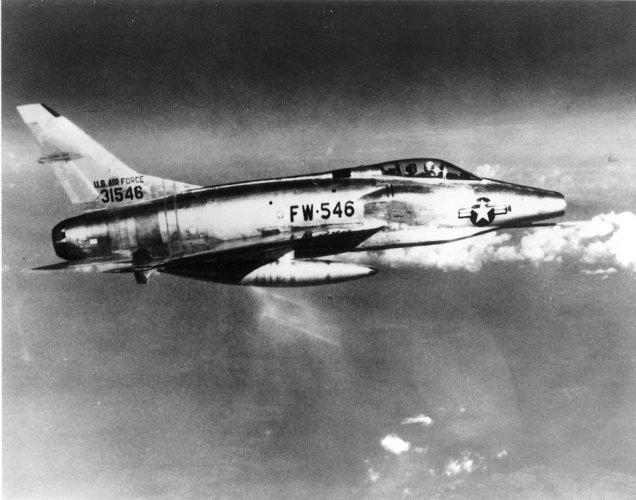
that operated in the Far East was one photographed
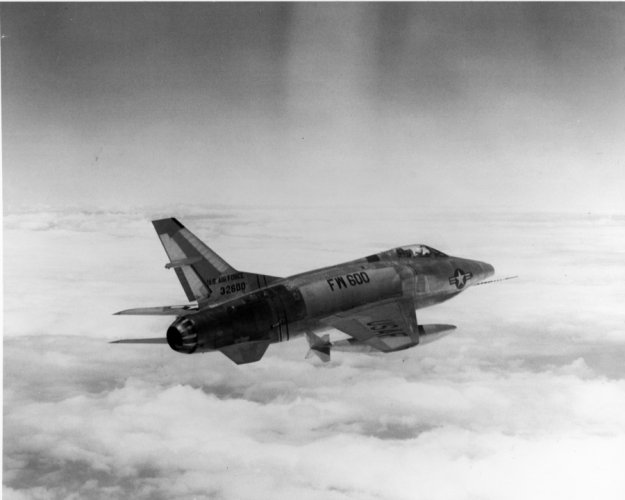
over Japan, with the spurious tail number 32600 that
had been assigned to a Northrop F-89D (AF53-
2600).

Source: David A Anderton, North American F-100 Super Sabre, Osprey Air Combat Series (Osprey 1987) P177-181

Only photo is a worse copy of the image posted above by @fightingirish
 
Last edited:
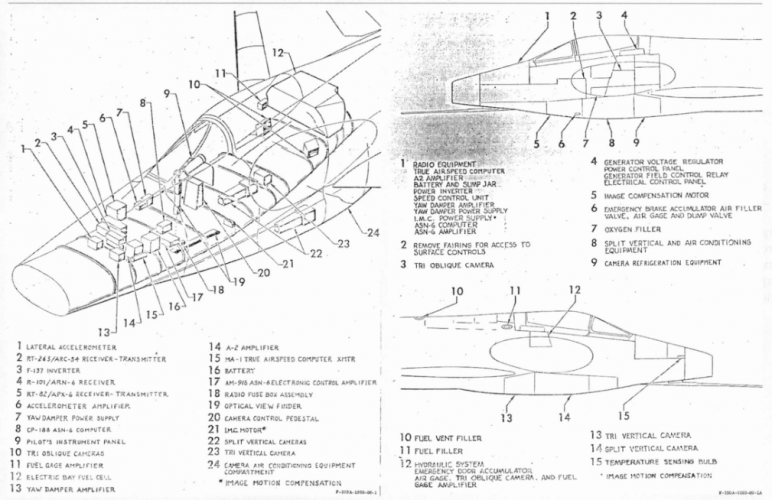
RF-100 Equipment.png
RF-100A.jpg
Although the 36th FDW initiated the F-100 air superior-
ity/attack variants into United States Air Forces in
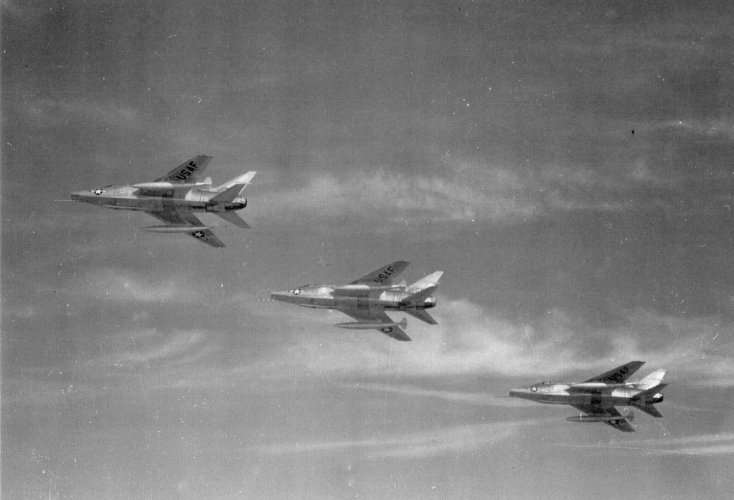
Europe (USAFE) service, the first Super Sabres in USAFE
were in fact a trio of highly secret spy planes; the RF-
100A reconnaissance Huns. In the early 1950s. the USA
needed aircraft that could make deep, high-speed pen-
etration flights over Soviet territory to investigate its
burgeoning defence build-up, particularly its interconti-
nental ballistic missiles (ICBMsl.
While Clarence 'Kelly' Johnson at Lockheed went to
work on his U-2 design to meet the need in the long
term, NAA responded to a USAF request to equip six F-
100As with five Chicago Aerial Survey cameras each -
two split-vertical 36in (91cm) K-38s, a pair of tri-camera
K-17s and a prime-vertical, tri-camera K-17C. While not
as advanced as the Hycon 'B' cameras under develop-
ment for the U-2, these instruments could resolve
images of golf balls on a grass course from 53,000ft
(16,200m) altitude. The aircraft needed an optical
viewfinder (above the instrument panel in place of the
A-4 gun sight) to sight its cameras, a speed of 530mph
1853km/h) at 53,000ft to evade the defences and an
endurance of 5 1/2 hours.
The F-100A had only just entered production at the
time, but the USAF's late-1953 request was urgent and
a seven-man NAA team directed by Don Rader was
given a mere three weeks to modify the new fighter as
a camera-ship. The M-39E guns were removed to pro-
vide the obvious locations for two cameras. with two
more in the ammunition bays and one in the right-hand
expended ammunition compartment. Their associated
electrical heating and control equipment went in the
left-hand expended ammunition bay. The aft electronics
bay (behind the ammunition boxes) was used for an
extra 830gal fuel tank. To provide further range, inboard
pylons (similar to those on the F-100C but with extra
sway-braces attaching them to the fuselage) were fit-
ted and plumbed for 200gal fuel tanks to complement
the standard 275gal 'supersonic' tanks. In order to
squeeze the last few miles, an extra 30gal of fuel were
pumped into the fuel venting system through a new
filler cap on the upper dorsal fairing, providing just
enough JP-4 to start the engine and taxi to take-off
without cutting into the main fuel supply. F-100As could
not be refuelled in flight and in any case tankers could
not have accompanied them on their dangerous over-
flights.
The gun sight radar was removed and the AN/ARN-
6 radio compass, fuel control amplifier, main power
inverter and battery equipment displaced from the elec-
ronics bay were installed there instead. The voltage
regulator and some other electrical control panels
moved to the left-hand ammunition bay. In the cockpit
there were changes to the side consoles to remove the
armament control panel and add controls for an airborne
navigation system that continuously computed the air-
craft's position using data from the F-100's own sensors.
An MM-2 attitude gyro replaced the equivalent Type J-
8 model and a pedestal mount, installed on the cockpit
floor between the pilot's legs, held the camera controls
and an emergency drop-tank release lever. Another han-
dle on the right-hand forward cockpit rail operated an
emergency system to open the external doors on the
camera bays.
Although two of the cameras were mounted horizon-
tally, using angled mirrors to acquire their imagery, the
forward fuselage would not accommodate the five cam-
eras without modification. It was therefore deepened
Iprimarily between Stations 80 and 267) with a pair of
boxy 'jowl' fairings incorporating motor-driven, protec-
tive doors for the optics. There were new doors, and pan-
els extending the ammunition and electrical bays out-
board of the original fuselage mould line by about 5in
(13cml each side. (For their earlier RF-86F recce variant
NAA used similar but smaller bulges in the side-panels
of the F-86F to squeeze in avery cramped camera array.)
The RF-100A's camera viewfinder used ametal tube pro-
jecting through the engine air inlet to a small window
beneath the nose. Flying at such an altitude required the
pilot to wear a pressure suit as a back-up to the cockpit
pressurization. with consequent cockpit modifications
and the 5 1/2 hour endurance parameter meant a big
increase in the gaseous oxygen supply.
A final structural modification was a pair of bolt-on
12in (30.5cm) wing-tip extensions Itaking the span up to
38.8ft (11.8m) to help with the altitude requirement, an
addition that would appear on production F-100As
together with the extended vertical stabilizer also used
on the RF-100A. The wing was also strengthened inter-
nally to take a pair of drop tanks on the inboard pylons.
All RF-100As had the J57-P-39 engine.
The half-dozen selected F-100A-10-NAs were re-
built with a great deal of skill and improvisation. The
project, code-named Slick Chick on 7 December 1954
and conducted with great secrecy, involved aircraft 53-
1545/48, -1551 and ·1554. The serials are important
since the aircraft frequently bore false serials (such as
53-2600) during service to confuse the opposition.
Known unofficially as RF-100s, they were always sim-
ply F-100As on USAF records to thicken the security
blanket.
With flight testing completed by mid-1954, pilot
training was initiated and the 'Slick Chicks' were hand-
ed over to the USAF in spring, 1955. Three were des-
tined for use in the Pacific area with the 6021st Recce
Squadron at Yokota where they arrived on 2 June 1955.
The others were shipped to the UK aboard USS Tripoli
and then flown from 8urtonwood to Bitburg, West Ger-
many on 16 May 1955. Their parent unit was the 7407th
Support Squadron (SS), already flying RB-57A spy-
planes out of Rhein Main A8.
Detachment 1 of the 7407th SS, commanded by Maj
Bert E. Dowdy, began test flights with its 'Chicks', part-
ly to ascertain that the use of continuous afterburner
for more than the recommended fifteen minutes was
possible. The J57-P39 engines were also 'tweaked' to
give 16,000lb (7,250kg) thrust. Later, they were
replaced with the up-rated J57-P21 engines of produc-
tion F-100Ds, but the Detachment reverted to the 'Dash
39' model (since it gave better performance above
40.000ft/12,000m) until the 'Dash 21A' was refitted
once again in 1957. Detachments were made to
Furstenfeldbruck, Rhein Main and Hahn in West Ger-
many. and (aliegedly)lncirlik in Turkey.
In all, Detachment 1 flew over 800 missions, many
of them high-speed dashes over the border to photo-
graph Soviet missile installations. Speed was the 'Slick
Chicks' only defence and pilots frequently encountered
anti-aircraft fire and attempted interceptions by Soviet
fighters. Like their SR-71A successors they were there
and gone before the defences could respond effective-
ly. There were no losses over hostiIe territory but 53-
1551 crashed 15 miles 124km) north of Bitburg in Octo-
ber 1956, probably due to a mechanical fault. with only
213 flight hours on its record. The pilot ejected suc-
cessfully It was replaced by an F-100C (55-2711) for
training purposes. During one mission the pilot
remained in afterburner for almost thirty minutes to
avoid Soviet interceptors. causing such severe heat
damage to the aft section of his aircraft that a new rear
fuselage section had to be bolted on.
When Detachment 1was shut down at Bitburg on 1
July 1958, the RF-100A had already been superseded by
the higher-flying Martin RB-57F and Lockheed U-2A/C.
Improvements in Soviet air defences made the relative-
ly heavy, unmanoeuvrable RF-100A too vulnerable.
However, the loss of Gary Powers' U-2 in May 1960
showed that even the stratospheric Lockheed design
was not immune to a new generation of Soviet surface-
to-air missiles (SAMs) and better fighter tactics. The
two surviving RF-100As plus the two remaining from
those based at Yokota (53-1548 was lost on 23 June
1955) were returned to NAA's Inglewood plant in June
1958 and all four were transferred under MAP to the
Republic of China Air Force's (RoCAF'sl 4th Reconnais-
sance Squadron where they remained until late 1960.
All were subsequently scrapped.

Source: Peter E Davies & David Menard, North American F-100 Super Sabre (The Crowood Press, 2003)
 
Last edited:
A detailed article on the RF-100 is featured in The Intake - Journal of the Super Sabre Society

https://supersabresociety.org/wp-content/uploads/2017/03/Issue-20-Fall-2012.pdf

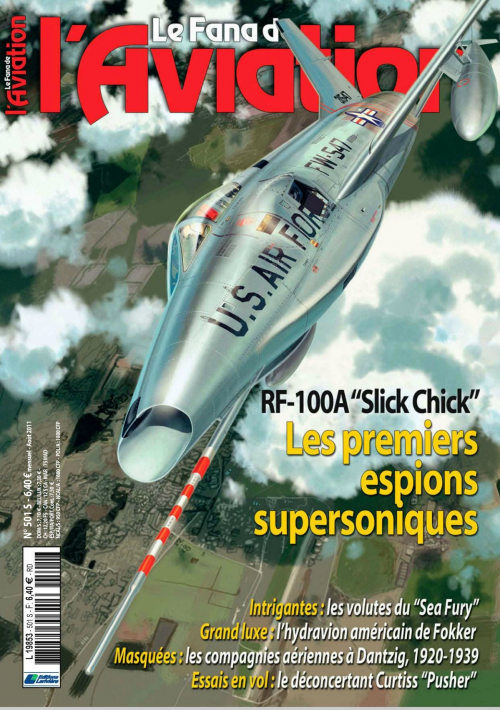
This is a version of the 14 page article published in La Fana de L'Aviation August 2011 with all text but limited photos.

rF-100 Fana.png
The original article has some nice photos reproduced well at large size including a colour photo of an RF-100 and photos of the camera installations.
 
Last edited:
North American RF-100A "Slick Chick" in flight. The serial number on this aircraft is incorrect. 53-2600 was not an F-100A, but rather a F-89D serial number. (U.S. Air Force photo)
Source / Link:
View: https://flic.kr/p/2cq9Div
See also:
https://axis-and-allies-paintworks.com/e107_plugins/forum/forum_viewtopic.php?id=18922
https://rexkuang326.pixnet.net/blog/posts/10349308451
This book, on which the article from Le Fana is based, might also be interesting.
Tactical Reconnaissance in the Cold War: 1945 to Korea, Cuba, Vietnam and The Iron Curtain, by Doug Gordon, Pen & Sword Aviation 2006, ISBN: 1844153320, 9781844153329
 

Attachments

  • 45561899275_e38fdcde94_o.jpg
    45561899275_e38fdcde94_o.jpg
    95.5 KB · Views: 38
Last edited:
You guys really deliver the goods!!

I’ll be sharing this with my Uncle Jim. He was Crew Chief for Chuck Yeager for a spell when he was flying the Hun with the 405th at Clark AFB in the Philippines. Jim’s wife of 60 years passed last week and the old boy could use a nice big shot o’ nostalgia.

He had mentioned the RF-100 some time ago and I frankly hadn’t a clue what he was referring to.
 
A few more photos:
 

Attachments

  • North_American_F-100A-10-NA_Super_Sabre_53-1551.jpg
    North_American_F-100A-10-NA_Super_Sabre_53-1551.jpg
    37.7 KB · Views: 14
  • f100a-8.jpg
    f100a-8.jpg
    54.1 KB · Views: 17
  • 053 RF-100s.jpg
    053 RF-100s.jpg
    154.3 KB · Views: 14
  • slick%20chick%20from%20the%20front.jpg
    slick%20chick%20from%20the%20front.jpg
    20.8 KB · Views: 12
  • slick%20chick%20on%20the%20ground.jpg
    slick%20chick%20on%20the%20ground.jpg
    15.9 KB · Views: 13
  • 1805143426_5ad2a2424b_b.jpg
    1805143426_5ad2a2424b_b.jpg
    182.6 KB · Views: 17

Similar threads

Back
Top Bottom