Pulling the propulsion aspect out of the various NGAD threads

I think their opinion is incorrect. There can be concurrency between engine and airframe development. The XA102 and XA103 could be considered scaled down versions of the XA100 and XA101. Most of the technology is mature. The engine manufacturers are ahead of schedule in my opinion.


I think someone on here knows P&W won already.So will the new engines be in a fly off between Pratt and Whitney and General Electric like what they did during the ATF contest?

Well this is news:View: https://x.com/AirPowerNEW1/status/2055233989921648770?s=20
U.S. Air Force Pushes To Widen Roles For Adaptive Engines
https://aviationweek.com/defense/ai...air-force-pushes-widen-roles-adaptive-engines
Is this from the AviationWeek report, which is behind the pay wall?Well this is news:
“Although the engine program was originally aimed at the U.S. Air Force’s Next-Generation Air Dominance (NGAD) fighter when the NGAP program launched in 2022, the initiative is now focused on later production versions of the aircraft. The initial Increment 1 production Boeing F-47 model is to be powered by an existing unidentified military engine, as neither NGAP option will be sufficiently developed in time to meet the Air Force’s end-of-decade service entry target.”
Yes.Is this from the AviationWeek report, which is behind the pay wall?
https://aviationweek.com/defense/ai...air-force-pushes-widen-roles-adaptive-engines

So presumably it's going to be a modified F-135 on increment 1 F-47?Well this is news:
“Although the engine program was originally aimed at the U.S. Air Force’s Next-Generation Air Dominance (NGAD) fighter when the NGAP program launched in 2022, the initiative is now focused on later production versions of the aircraft. The initial Increment 1 production Boeing F-47 model is to be powered by an existing unidentified military engine, as neither NGAP option will be sufficiently developed in time to meet the Air Force’s end-of-decade service entry target.”

That's not what that says.This is not new. We know since Trump 2 that NGAP will not be ready for earlier airframe.
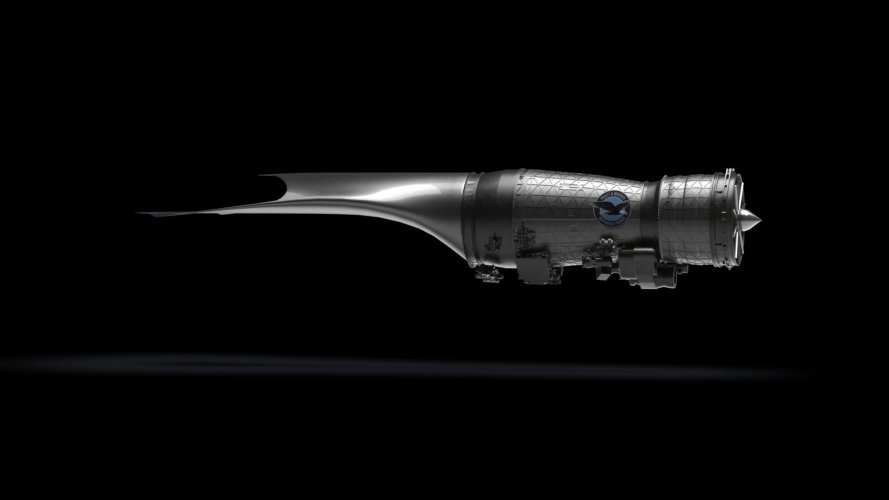
What is interesting here is the mention that the NGAP presented as being the engine for the F-47 doe snot have an integrated afterburner. We can k ly conclude today that it was intended to have an ejector/outside post combustion setup.

Marketing fluff is rarely representative of actual hardwareBut the picture we are used to does not display any afterburner.

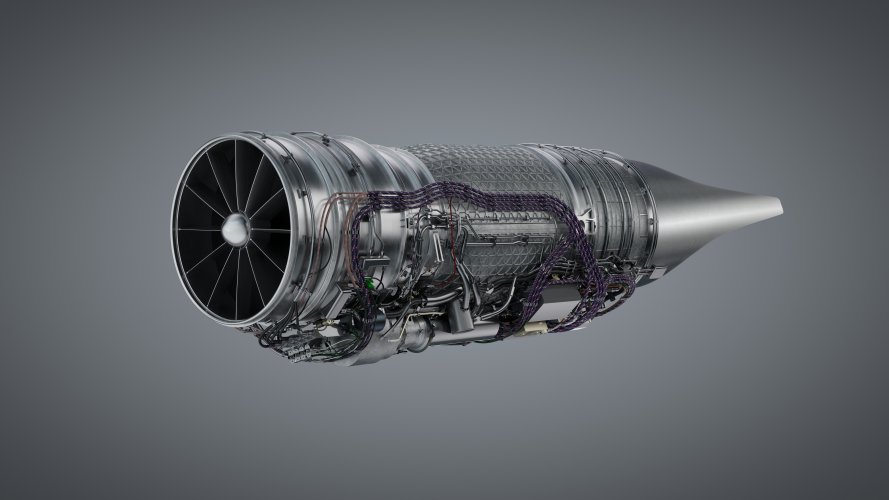
Cincinnati, OH – GE Aerospace today announced the successful completion of the Assembly Readiness Review (ARR) for its XA102 adaptive cycle engine, a critical milestone in support of the U.S. Air Force’s Next Generation Adaptive Propulsion (NGAP) program. This achievement marks a significant step forward in delivering revolutionary propulsion technology for the Air Force’s future fleet.
The ARR validates that the XA102 engine design, manufacturing processes, and supply chain are progressing and on schedule to be awarded the next phase later this year. Central to this milestone is GE Aerospace’s comprehensive digital engine model, which leverages a model-based definition approach in place of traditional two-dimensional drawings. This digital framework integrates model-based manufacturing and model-based inspection, which enables improved accuracy and accelerated production timelines.
All demonstrations for the model-based engine associated with the first phase of the program have also been successfully completed, highlighting GE Aerospace’s continued progress in advancing digital engineering capabilities.
“With the completion of the Assembly Readiness Review, we are demonstrating the maturity of our XA102 engine design and the strength of our digital-first approach to developing next-generation propulsion systems,” said Dr. Steve “Doogie” Russell, vice president and general manager of Edison Works at GE Aerospace. “Our use of a fully integrated digital engine model, which spans design, manufacturing, and inspection, positions us to deliver advanced capability faster and with greater precision for the warfighter.”
The NGAP Program is advancing technologies and manufacturing capabilities crucial for air superiority in the highly contested combat environments of the future. These technologies will enable next generation fighter aircraft with improved range, survivability and thermal management capabilities for advanced weapons and sensors. GE Aerospace’s leadership in adaptive cycle technology builds on more than 100 years of innovation and partnership with the U.S. military. The XA100 engines completed multiple successful rounds of testing, maturing adaptive engine technologies. The XA102 engine represents the next evolution of propulsion, delivering enhanced capability while maintaining a focus on affordability and sustainability.
The Next Generation Adaptive Propulsion program is now projected to complete prototyping work in 2031, a cumulative delay of three years compared to earlier projections.
The journalist has used incorrect wording and terminology and completely misrepresented to get clicks.
The more plausible option is an undisclosed variable-cycle engine variant derived from the F110, which was selected as F/A-XX baseline propulsion system many years ago. And based on the information from the article "F110-GE-129 EFE — Enhanced Power Through Low Risk Derivative Technology", it should be F110-GE-129EFE++. In addition, GE and Allison were working on an F110 development as one of alternative of JAST. It was claimed that the new F110 engine of about 25000 lb dry thrust and 40000 lb with AB.https://books.google.com/books?id=t...mEFkFHQCwAA8Q6AF6BAgEEAM#f110 ge allison jastSo presumably it's going to be a modified F-135 on increment 1 F-47?
FIGHTER AIRCRAFT ENGINE DEVELOPMENT
The Committee notes an Air Force-requested technical adjustment to the fiscal year 2025 President’s budget request realigning $562,337,000 from the Advanced Engine Development (AED) pro- gram to the Next Generation Adaptive Propulsion (NGAP) pro- gram. The steady progress toward meeting future Next Generation Air Dominance engine requirements is underscored by industrial base competition, which the Committee expects to last through fu- ture NGAP development phases. The Committee is supportive of NGAP and therefore recommends a realignment of $532,337,000 to the program.
The Committee also remains supportive of a consistent pipeline of engine development for fighter aircraft and a healthy engine industrial base. The Committee directs that the $30,000,000 remaining in the AED program shall be used to develop advanced engine technologies for integration into future engine development pro- grams. This can include investments in adaptive cycle engine technologies, improved manufacturing techniques for engine components, development of novel materials, integration of enhanced digital design capabilities into the engine development process, supply chain maturation, and risk reduction. These funds are not intended to incentivize the Air Force, or any other Service, to create an alternative engine program for the F-35, and a general provision is included in this Act that prohibits the use of funds to integrate an alternative engine on any F–35 aircraft.
Because that picture is of the Conceptual Non-Afterburning version...But the picture we are used to does not display any afterburner.
After years of delays, the Air Force now expects a next-generation engine will be ready to be put on an aircraft by the end of the decade — though a top service official would not commit to which plane the powerplant might fly with.
Over the next few years, and coinciding with a cresting budget for the Next Generation Adaptive Propulsion program, the Air Force expects to build and test dueling prototypes from competitors GE Aerospace and Pratt & Whitney. That work, according to John Sneden, the chief of the Air Force’s propulsion directorate, will culminate in “get[ting] ready for potential integration activities in the 2030 timeframe.”
Speaking with reporters here at the Life Cycle Industry Days conference, Sneden subsequently declined to directly comment on what platform might receive an NGAP engine.
The Air Force is preparing to move toward prototyping and testing a next-generation advanced engine and wants to be ready to integrate it onto an aircraft around 2030.
But while the Next-Generation Adaptive Propulsion engine has been closely associated with the Next-Generation Air Dominance fighter, now called the F-47, service officials have yet to determine which aircraft the NGAP powerplant will first go on.

I'd assume the opposite. The 20-25% are likely long lead time components.A cynic might say the 25% of parts they’ve already ordered might be the low hanging fruit and the balance is going to take a non trivial amount of time longer to order vs the time for the first 20-25% of the parts list.