B-52s still fulfill the role and already exist with appropriate infrastructure. But they predate a lot of fairly basic technologies. I recommend reading “confessions of a B-52 maintainer” (or something like) that which details a lot of the unique quirks and needs of the 1950s aircraft.

You are using an out of date browser. It may not display this or other websites correctly.
You should upgrade or use an alternative browser.
You should upgrade or use an alternative browser.
New Heavy Bomber Alternatives study FY'27 - speculation
- Thread starter GeorgeA
- Start date
jsport
what do you know about surfing Major? you're from-
- Joined
- 27 July 2011
- Messages
- 8,599
- Reaction score
- 6,904
The slowness of the 52's upgrades as posted on this forum not this thread, is proof the infrastructure is barely to-not appropriate.B-52s still fulfill the role and already exist with appropriate infrastructure. But they predate a lot of fairly basic technologies. I recommend reading “confessions of a B-52 maintainer” (or something like) that which details a lot of the unique quirks and needs of the 1950s aircraft.

Kiltonge
Greetings Earthling
- Joined
- 24 January 2013
- Messages
- 886
- Reaction score
- 2,052
The B-52 is still in service not because it's better than anything else, but because it is adequate enough to avoid having to spend money replacing it just yet.
An ALCM-carrying BC-46 would smother it in capability, but there's no pressing need for that when other projects have priority.
An ALCM-carrying BC-46 would smother it in capability, but there's no pressing need for that when other projects have priority.

- Joined
- 30 May 2023
- Messages
- 664
- Reaction score
- 1,436
The slowness of the 52's upgrades as posted on this forum not this thread, is proof the infrastructure is barely to-not appropriate.
Great observation. Integrating new engines and nacelles, to say nothing of the APG-79 fiasco, are likely to be more complicated, slow and costly than the initial estimates.
USAF would seem to have the following options wrt to a manned heavy bomber:
1) grit teeth and pucker, follow through with B-52J and perhaps expand the number of a/c upgraded if they can fix things
2) even more B-21s
3) clean sheet bigger B-21 or upgraded B-2
4) something hybrid (tanker, cargo, both)
5) something more exotic - speed as one example
Scott Kenny
ACCESS: USAP
- Joined
- 15 May 2023
- Messages
- 19,548
- Reaction score
- 28,004
IMO the HWB is designed more specifically around transport requirements than tanker/bomber.The BWB layout certainly fits a bomber role better so than the HWB. The HWB layout appears to be trying too hard to be a conventional aircraft and looks high drag relative to the BWB form. Probably would have been easier to copy the space shuttle that had engines to the test glide concept than go with HWB's convulated internal layout. Simplicity is the ultimate sophistication.
Because the B-52 carries 2.5x what the B-21 does in terms of cruise missiles or 2000lb weapons.I'm trying to understand.....why do they need a big bomb truck when you could put the budget into fielding more B-21s? USAF not happy with the lack of double MOAB capability as on the B-2 or is there a potential range issue with the Raider? Distributed lethality seems more the game these days, and a few big bombers doesn't give you that unless range and loiter is the problem they're seeking to remedy. If stealth is not of concern, then adapting an airliner seems like the only financially workable option unless you roll multiple capabilities together into a common aircraft like many are talking about here (cargo and IFR BWB).
So replacing 76x B-52Js would require buying an additional 190x B-21s to match the capacity.
djfawcett
With Enough Power, Anything Will Fly
- Joined
- 16 December 2012
- Messages
- 322
- Reaction score
- 567
Well, if we are going to be silly and even discuss the opening of an early 1950's (B-52) vintage production line, we might as well talk about opening the B-2 line, then dumb it down with no coating etc.. At least we know the drawing are digitized. Or, why not charge Northrop-Grumman with finishing the Boom Beast since they are involved at some level. There are several engines that could be used as long as there is no noise restrictions. Heck, they would all cost about the same to execute!The cost is easily justified since it´s more than 3/4th of a century it does in every year DoD budget line...
Remanufacturing entire B-52 is neither impossible nor unjustifiable: It´s a choice not made.
Bottom line, this is about as silly as giving Blue Origin a contract to study nuclear reactors in orbit. Oh crap, that was done! Have to rethink my argument.
Another fun fact the bomber lobby avoids mentioning is that the eventual 5000 CCA the USAF eventually procures will have more bomb capacity than the whole manned fleet. And this with just carrying 2x Mk84.Because the B-52 carries 2.5x what the B-21 does in terms of cruise missiles or 2000lb weapons.
So replacing 76x B-52Js would require buying an additional 190x B-21s to match the capacity.
Some math I did back then when TWZ talked about it:
drones:
CCA: 5000*4000=20,000,000 lbs
manned:
B52: 76*70000=5,320,000 lbs
B1: 62*75000=4,650,000 lbs
B2: 20*60000=1,200,000 lbs
B21: 100*40000=4,000,000 lbs
=> 15,170,000 lbs
Ofc total CCA fleet cost is not small: for 30 million a pop that's 150 billions.
On a side note currently the military operates over 10600 drones of all sizes. These are controlled & reuse ones not loitering ammunition and the expandable like.
What about range, though? One of the traditional traits of the strategic bomber is the ability to take off from protected airbases and truck its payload to a remote theater. From the rough numbers available on CCAs, they generally seem modeled off strike fighters, with strike fighter ranges.Another fun fact the bomber lobby avoids mentioning is that the eventual 5000 CCA the USAF eventually procures will have more bomb capacity than the whole manned fleet. And this with just carrying 2x Mk84.
Depends on whether they are subsonic or supersonic. Subsonic like MQ25 has a range of 5000 nmi; but for most the requirement seem to be locked at 3000 nmi. Supersonic is llikely no better than manned fighters.What about range, though? One of the traditional traits of the strategic bomber is the ability to take off from protected airbases and truck its payload to a remote theater. From the rough numbers available on CCAs, they generally seem modeled off strike fighters, with strike fighter ranges.
I assume the majority will be subsonic and only a few hundreds will be supersonic. So as far a simple bomb runs are concerned the drone could do cover it all. It might take longer, though, depending how things are organized.
It's just the nukes, and anything more than 2000 lb and above stores that we do need bombers for.
Scott Kenny
ACCESS: USAP
- Joined
- 15 May 2023
- Messages
- 19,548
- Reaction score
- 28,004
Maybe?Said another way, I’m in the camp that perhaps the B-21 can give rise to a modernized B-2 (maybe bigger for larger bays) with Raider subsystems, design, materials, assembly, four of its engines and its rough planform.
I agree that I'd want the Raider-length bays versus B-2 length.
Agreed. Though that suggests the big stores adapter beam will have at least 4 sets of weapons mounts if not 5. 3 sets for the Mk84 sized things and 1-2 sets for the really big stuff like Cruise missiles and ARRW.I do agree on the "wing" pylons but it should be upgraded to nine Mk84 length weapons and related weight increases.
Whether 4 or 5 sets of mounts depends on where exactly the big stuff balances compared to the Mk84 roughly-centered lugs.
You can work around that to some extent. Double-folding bay doors, for example, but you're still looking at at least 4ft between tarmac and belly.Also since the BWB is most likely the chosen type it will have to have a lot of ground clearance for access to the bays (which is bad for a transport ramp angle or rather requires a long one). So there could be the possibility of a large center pylon.
How far is the C-17's belly from the tarmac? (not finding a source) C-5's landing gear is said to have a kneeling feature to lower tthe cargo floor to truck-bed height, ~3ft.
So it's looking like C-5 style kneeling landing gear would be required for a BWB bomber/transport.
Traditional bomber and tanker designs are largely compatible design goal-wise, but tankers double as pallet haulers. You do not need ramps for pallets even though its preferable to the people moving them. With a push towards stealth these day you may not see conversions of bombers to tankers any more.
Last edited:
There were proposals in the 70s and 80s for the conversion of airliners into cruise missile haulers.
https://www.secretprojects.co.uk/threads/cruise-missile-carrier-airliner-conversions.376/

Airliners have the wings in a very inconvenient location, right where you might want to put a bomb bay. Take the 777-8F, for example:

You could convert this to a bomber with perhaps two static bomb bays, fore and aft of the wing. You would lose a lot of space, but perhaps some of that lost space could be dedicated to auxiliary fuel tanks. Alternatively, you could go with the (rather complicated) cruise missile racetrack design of the CMCA. The useable bomb/missle payload would be drastically decreased from the 260k pound payload capacity of the 777-8F.
Either way, the conversion of a 777-8F to a bomber would cost money. The P-8A conversion from a 737 very roughly doubles the cost, from around $100M to around $200M. The P-8A involves radars and electronics that perhaps the 777-8 bomber would not require, but this would be offset by other requirements.
I really don't think you'd want to fly a converted airliner over an active war zone given the proliferation of GBAD/MANPADS, which means JDAMS are out and cruise missiles are in for a converted airliner. The fact that cruise missiles are becoming very affordable (see: USAF purchasing 28,000 cruise missiles over the next few years) strengthens this argument.
So the question is: does a converted airliner bomber at $800M a copy, which will only be slinging cruise missiles, and can only operate from well-prepared long runways, really a worthwhile investment? The cruise missile mission could be done by other aircraft which would have value in other missions as well.
https://www.secretprojects.co.uk/threads/cruise-missile-carrier-airliner-conversions.376/

Airliners have the wings in a very inconvenient location, right where you might want to put a bomb bay. Take the 777-8F, for example:
- Payload: 260k pounds
- Range: 4,410 nmi
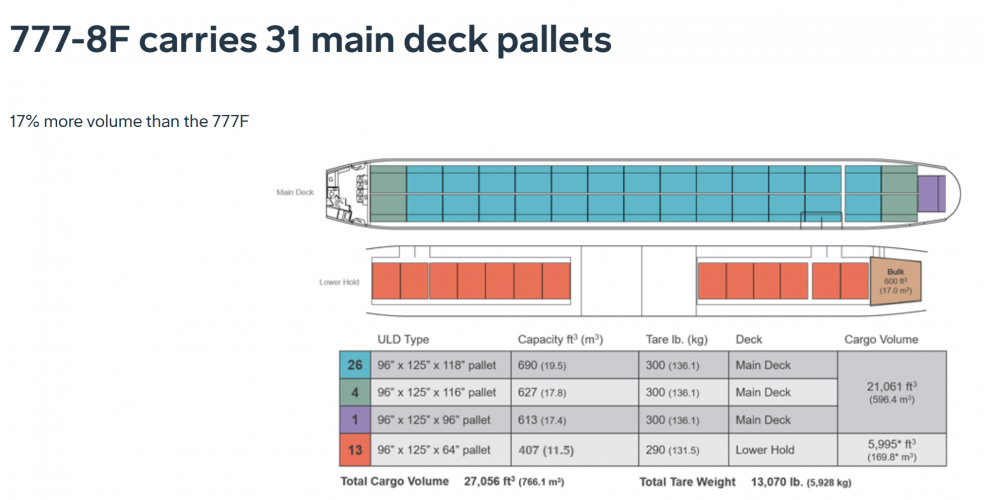
You could convert this to a bomber with perhaps two static bomb bays, fore and aft of the wing. You would lose a lot of space, but perhaps some of that lost space could be dedicated to auxiliary fuel tanks. Alternatively, you could go with the (rather complicated) cruise missile racetrack design of the CMCA. The useable bomb/missle payload would be drastically decreased from the 260k pound payload capacity of the 777-8F.
Either way, the conversion of a 777-8F to a bomber would cost money. The P-8A conversion from a 737 very roughly doubles the cost, from around $100M to around $200M. The P-8A involves radars and electronics that perhaps the 777-8 bomber would not require, but this would be offset by other requirements.
- Refueling recepticle and plumbing
- Comms
- Self-protection systems (see: current tanker and transport survivability upgrade projects)
- Structures and mechanisms for the bomb bays/cruise missile racetracks
I really don't think you'd want to fly a converted airliner over an active war zone given the proliferation of GBAD/MANPADS, which means JDAMS are out and cruise missiles are in for a converted airliner. The fact that cruise missiles are becoming very affordable (see: USAF purchasing 28,000 cruise missiles over the next few years) strengthens this argument.
So the question is: does a converted airliner bomber at $800M a copy, which will only be slinging cruise missiles, and can only operate from well-prepared long runways, really a worthwhile investment? The cruise missile mission could be done by other aircraft which would have value in other missions as well.
- F-15EX
- Transports, including C-17 and perhaps NGAL, with rapid dragon.
- B-21
- CCA
- Ground-launched cruise missiles of all types
Scott Kenny
ACCESS: USAP
- Joined
- 15 May 2023
- Messages
- 19,548
- Reaction score
- 28,004
I still think we will see a relatively-stealthy tanker.Traditional bomber and tanker designs are largely compatible design goal-wise, but tankers double as pallet haulers. You do not need ramps for pallets even though its preferable to the people moving them. With a push towards stealth these day you may not see conversions of bombers to tankers any more.
stealthy OML, edge alignment, panel alignment, minimal RAM use.
So that it's safe enough to fly close to or even beyond the front line to pick up damaged aircraft.
That's the big problem. You're looking at a ~30,000lb load aft of the MLG, and at least another ~30,000lbs forward of them. And the wing box really spreads the bomb bays apart even more. Plus you're cutting the keels in the bilge of the baggage compartments to make them into bomb bays. The bay you're talking about is 6ft wide, 6ft deep, and ~24ft long.You could convert [777-8F] to a bomber with perhaps two static bomb bays, fore and aft of the wing. You would lose a lot of space, but perhaps some of that lost space could be dedicated to auxiliary fuel tanks. Alternatively, you could go with the (rather complicated) cruise missile racetrack design of the CMCA. The useable bomb/missle payload would be drastically decreased from the 260k pound payload capacity of the 777-8F.
Now, a 777 is big enough that I think you can put 2 bays forward of the wings and 1 bay aft, B-1 style but with longer bays.
The other space around the bomb bays in the former baggage bays becomes additional fuel tanks.
And, this still leaves the entire passenger deck of the 777 usable for hauling people, some cargo, etc.
I don't think that the 777-Bomber would generally require the same avionics as a P-8, but I do think it would require a similar cost-value of avionics.The P-8A involves radars and electronics that perhaps the 777-8 bomber would not require,
The only piece I could really see a 777-bomber using is the big JSTARS radar, but a new place to put it would be needed to clear the bomb bays.
With the extra fuel in the area around the bomb bay, an airliner conversion would make a pretty good tanker.I don't see the value in a bomber-only airliner conversion. An airliner conversion would, I believe, need utility in other mission sets as well, such as airlift.
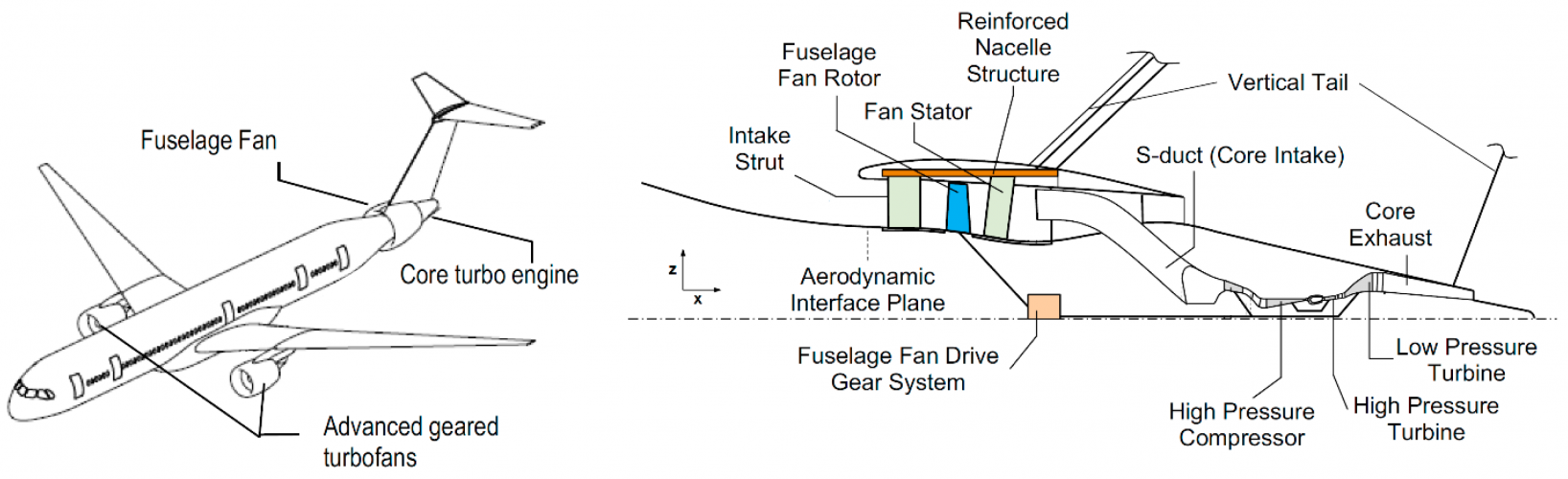
Personally I kind of think there's a rather boring and expected reason for this plane's existence - the B-52's JT3D engines are ancient, and develop about 75 kN. The CFM Leap, which is a modern airliner engine used on things like the 737 MAX does about 140kN, while being much more modern and efficient, so you could have an aircraft that goes further and has half as many engines by just replacing the engines. The problem is these fancy new high-bypass turbofans are literally too big to fit, so you have to redesign your entire airframe around them, which is what I guess we will be seeing. A conventonal design with somewhat more ground clearance.
P-8 is proof that a reasonable weapon bay can be carved out of an airliner belly. Which Boeing airliner would be the best replacement for the B-52 ? some 787 and 777 variants have ranges of 18 000 km to 20 000 km, comparable to the old B-52 records set in the 1950s.
It's not a problem given the design of the old pylon that is litered with attachment holes on the bottom and sides. I dunno about the new stealthy pylon. It's likely just using covers like the other designs.Agreed. Though that suggests the big stores adapter beam will have at least 4 sets of weapons mounts if not 5. 3 sets for the Mk84 sized things and 1-2 sets for the really big stuff like Cruise missiles and ARRW.
Whether 4 or 5 sets of mounts depends on where exactly the big stuff balances compared to the Mk84 roughly-centered lugs.
That said word is the new external stores will be 20 ft long. If there is a desire to mount two in a row the pylon needs to cover about 24ft.
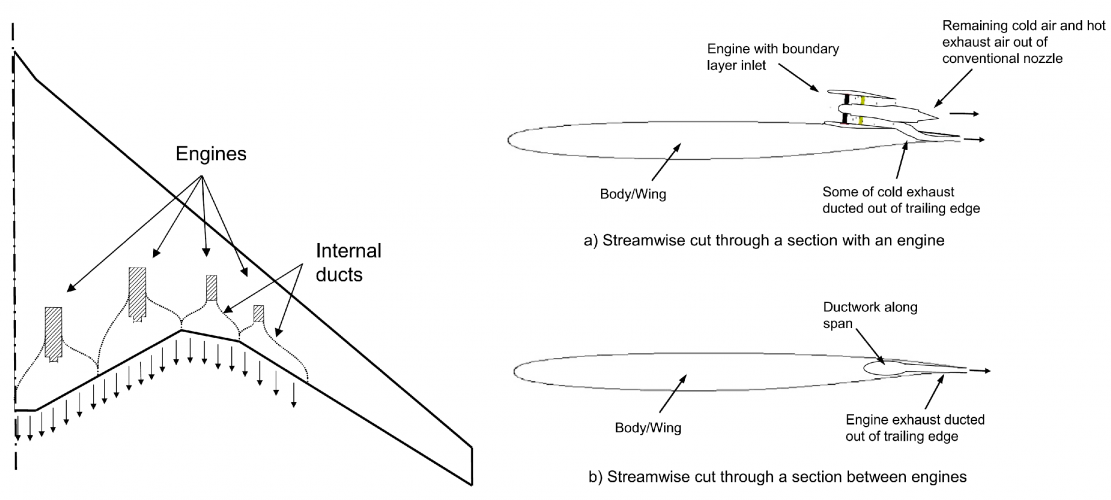
Not necessarily, but certainly with any older design.The problem is these fancy new high-bypass turbofans are literally too big to fit, so you have to redesign your entire airframe around them, which is what I guess we will be seeing. A conventonal design with somewhat more ground clearance.
For newer a design the new rage is boundary layer ingestion engine propulsion which basically means engine that are on top or sunk into the body/wing/tail for increased efficiency.
Then there's a question of how many redundancy is required. For a heavy bomber it used to be at least 4 engines but nowaday anwhere between 2-4 seem desireable.
Attachments

- Joined
- 13 August 2007
- Messages
- 10,407
- Reaction score
- 18,057
Seems they notice during Iran bombing campaign
That they need a heavy bomber
While B-21 only carry 20,000 lb (9,100 kg) what is not sufficient
the B-1 reach end of hardware life and even the robust B-52 don't fly forever
the question is build new one conventional or stealth ?
That they need a heavy bomber
While B-21 only carry 20,000 lb (9,100 kg) what is not sufficient
the B-1 reach end of hardware life and even the robust B-52 don't fly forever
the question is build new one conventional or stealth ?

- Joined
- 19 July 2016
- Messages
- 4,814
- Reaction score
- 4,274
Conventional, they have the stealth side covered and apparently new sensor tech means that stealthy is not so stealthy as I thought.Seems they notice during Iran bombing campaign
That they need a heavy bomber
While B-21 only carry 20,000 lb (9,100 kg) what is not sufficient
the B-1 reach end of hardware life and even the robust B-52 don't fly forever
the question is build new one conventional or stealth ?
Why go for ANOTHER over priced bomb truck when they do not have to, if the area is contested at point of launch, you have other tools in the box.
Use the B-52/replacement when you control the airspace/threat zone.

EmoBirb
ACCESS: Top Secret
- Joined
- 18 January 2025
- Messages
- 2,694
- Reaction score
- 6,921
A heavy bombers primary focus is large payload capacity, this means a generally speaking very large aircraft. Cost tends to scale with size. So a heavy stealth bomber that matches the B-52 in terms of payload capacity would be prohibitively expensive. Furthermore one of the biggest selling points the B-52 has is external payload carriage, being able to carry payloads that would otherwise not fit in the internal bays. So a B-52 replacement would have to offer external carriage as well, or have massive internal bays and be the largest aircraft ever constructed and thus a huge logistical burden and terrifyingly expensive.Seems they notice during Iran bombing campaign
That they need a heavy bomber
While B-21 only carry 20,000 lb (9,100 kg) what is not sufficient
the B-1 reach end of hardware life and even the robust B-52 don't fly forever
the question is build new one conventional or stealth ?
So there's no point in making such an aircraft particularly low observable. As you will hang a dozen missiles from it's wings to fire at stand off range.
Everything else would be a downgrade over the B-52 and not replace it's capability.
yeetmahboi
ACCESS: Top Secret
- Joined
- 6 April 2022
- Messages
- 1,025
- Reaction score
- 1,434
One thing is that,if we're talking about dropping huge loads of free fall ordnance, then a converted airliner solution is not inappropriated. The airframe would not be designed to sustain dropping large, heavy loads in steep moment. The P-8 itself is limited to light torpedos and is not applicable to this discussion.
Personally I believe that
Personally I believe that
- A solution could be applicable to both a future airlifter project and a bomber project. It would cost more to design one airframe to two missions but I don't believe it would be something close to JSF level of "pipe dream". It could be a BWB/HWB or a tube wing design.
- Alternatively NGAS could provide some level of groundwork.
- F-15EX/CCA + MQ-25 is another road to take.
- Joined
- 13 August 2007
- Messages
- 10,407
- Reaction score
- 18,057
It make senseUse the B-52/replacement when you control the airspace/threat zone.
if you goes first with long-range Missile,
follow by Stealth to get rid of enemy Anti aircraft capacity
and bomb rest into stone age with conventional heavy Bomber
The traditional bomber fuselage has a boxy design for a reason, it has to be much more rugged than a plane designed around passengers or freight. This also is less draggy than the cylinder of an airliner. Your side profile would not be as excessively vertically challenged except for perhaps the tail. Another difference is the electrical demands of a bomber far exceed the needs of an airliner. And the most important is the inherent redundancy built into the design and ability to recover flight control after serious damage(s) received.
VishnuOsiris
ACCESS: Confidential
- Joined
- 1 December 2024
- Messages
- 164
- Reaction score
- 290
I would like to see something produced with the same minimalist approach we are seeing with the B-21. Something focused on the specific mission, with reasonable future-proofing, as opposed to being a revolutionary new addition to the stack. Additional capabilities added over time if/as needed. Payload capacity equivalent if not slightly less than the B-52. I want it to be a smooth operator with low-cost per flight hours as a priority. I want it crewed and in the air all the time. I want it to have performance akin to a traditional strategic bomber rather than a C-17.
I personally don't like the idea of the standoff bomber doubling as a tanker/cargo aircraft or doing anything other than put ordnance on target. I want it to control the targeting loop with command of its weapons from 1000nm away. Overtime, I want it to have a targeting pod and the ability to drop JDAMs in permissive environments. I want the capability to do the loitering CAS mission over head for hours, 1000-2000nm away from its basing. And I want hammocks.
I personally don't like the idea of the standoff bomber doubling as a tanker/cargo aircraft or doing anything other than put ordnance on target. I want it to control the targeting loop with command of its weapons from 1000nm away. Overtime, I want it to have a targeting pod and the ability to drop JDAMs in permissive environments. I want the capability to do the loitering CAS mission over head for hours, 1000-2000nm away from its basing. And I want hammocks.
Last edited:
Scott Kenny
ACCESS: USAP
- Joined
- 15 May 2023
- Messages
- 19,548
- Reaction score
- 28,004
Or you go clear to open rotor engines mounted on the wing like old prop-jobs.Personally I kind of think there's a rather boring and expected reason for this plane's existence - the B-52's JT3D engines are ancient, and develop about 75 kN. The CFM Leap, which is a modern airliner engine used on things like the 737 MAX does about 140kN, while being much more modern and efficient, so you could have an aircraft that goes further and has half as many engines by just replacing the engines. The problem is these fancy new high-bypass turbofans are literally too big to fit, so you have to redesign your entire airframe around them, which is what I guess we will be seeing. A conventonal design with somewhat more ground clearance.
Not really.P-8 is proof that a reasonable weapon bay can be carved out of an airliner belly. Which Boeing airliner would be the best replacement for the B-52 ? some 787 and 777 variants have ranges of 18 000 km to 20 000 km, comparable to the old B-52 records set in the 1950s.
The bomb bay only holds about 5000lbs. Maybe 10k, if the bay can handle 2000lb weapons per station.
B-21 has you covered. This should be a capability we lose with retirement of the B-52.I want it to control the targeting loop with command of it's weapons from 1000nm away. Overtime, I want it to have a targeting pod and the ability to drop JDAMs in permissive environments. I want the capability to do the loitering CAS mission over head for hours, 1000-2000nm away from its basing. And I want hammocks.
Scott Kenny
ACCESS: USAP
- Joined
- 15 May 2023
- Messages
- 19,548
- Reaction score
- 28,004
A little bit longer than that, I think.It's not a problem given the design of the old pylon that is litered with attachment holes on the bottom and sides. I dunno about the new stealthy pylon. It's likely just using covers like the other designs.
That said word is the new external stores will be 20 ft long. If there is a desire to mount two in a row the pylon needs to cover about 24ft.
With roughly-centered lugs on the Mk84s, the pylon needs to have ~25ft (2x Mk84 length plus clearance) from rear lug on rear mount to rear lug on front mount, plus 30" forward to the front lug on front mount, plus a little more on each end for aerodynamics and flutter control if needed. So likely ~30ft long, minimum steel length of 28ft.
Good news is that this means only needing 3 sets of lugs. You use front and rear lugs for big things like 6x LRSO or ARRW, middle lugs for 9x Mk84s.
You think? So B-52 would have been re-winged and had its 3rd set of engines by then.....Would only disagree on the M 109 being still around in 2092. That author may have been making a ironic point about the state of us army artillery since the unfortunate cancelation of Crusader I know I know off topic.
jsport
what do you know about surfing Major? you're from-
- Joined
- 27 July 2011
- Messages
- 8,599
- Reaction score
- 6,904
Sure, why not. Folks r so risk averse they won't commit to what would be needed, a tanker/cargo/passenger/bomber transatmospheric BWBYou think? So B-52 would have been re-winged and had its 3rd set of engines by then...
.

Kiltonge
Greetings Earthling
- Joined
- 24 January 2013
- Messages
- 886
- Reaction score
- 2,052
I really don't think you'd want to fly a converted airliner over an active war zone given the proliferation of GBAD/MANPADS, which means JDAMS are out and cruise missiles are in for a converted airliner.
The B-52s on EPIC FURY are launching JASSMs, not overflying. Plus, they seem to be below FL300 on the occasions when they ping on ADSB. None of that should be a problem for an airliner.
One alternative to cutting holes in an airliner is to design a new fuselage on an airliner wing. Anything A330 size or bigger already has as much wing as a B-52.
aviationenthusiast1
ACCESS: Restricted
- Joined
- 27 April 2026
- Messages
- 17
- Reaction score
- 13
the idea for the usaf study is what would a future heavy bomber look like and be procured ideally within the remaining lifespan of the upgraded B-52 to its retirement. the heavy bomber calculus needs to take 1. account of cost to deliver x amount of ordinance 2. the integration of the new forms of ordinance(hypersonic glide vehicles, low cost cruise missiles, other new exotic ordinance) as well as the proliferation of drones, cca etc and 3. secondary roles like launch platform for experimental aircraft and vehicles( think X -15) as well to understand whether there is any role in the future to orbital vehicles (something like a larger x-37 orbital bomber?)
that's not an easy study, the role of the heavy bomber as the name suggests rests fundamentally in its ability to deliver mass and lots of it, we can alleviate the need for stealth considerations by the hopefully lowering cost of affordable standoff munitions, so you are basically in the space of 1. a tube with wings(upgraded clear B52 like aircraft) ,
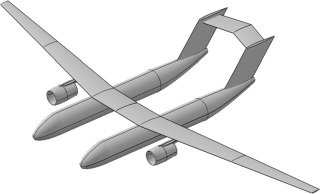
2. a double fuselage aircraft something like the virgin galactic white knight(far fetched but worth amusing over) or
3. a wide body design.
cost will be the defining factor here, would it be cheaper to send say 4 b21 and fire standoff weaponry or send in one new heavy bomber? what would sustainment costs be? what about readiness rate ? perhaps thing like space x starship in combination with an orbital platform will remove the need for a heavy bomber if the costs line up, the speed at which ordinance is evolving as well as tactics make this difficult .
my safe bet in time scales envisioned is a cleaner more efficient son of B 52 with the ability to act as a launch platform to support space force endeavours and deliver ordinance in mass in permissive environments. it would be better to create a clean sheet design with lessons from the B 52 than convert civilian airliners for the role( the engineering costs would be similar and we would not have to be reliant on ageing airframes if using older civilian aircraft or disrupting new manufacturing lines of airliners(make no mistake militarizing a civilian aircraft is no easy task!)
the tube with wings is easy enough, some efficient wing design, better internal structure support, new engines , open architecture all make a son of B 52 attractive and can be converted to other roles if the need for heavy bomber was migrated to orbit or fast starship like vehicles, it could as other commentariat here suggested, cargo, fuel, control plane for cca, mothership, communication node,etc....
that's not an easy study, the role of the heavy bomber as the name suggests rests fundamentally in its ability to deliver mass and lots of it, we can alleviate the need for stealth considerations by the hopefully lowering cost of affordable standoff munitions, so you are basically in the space of 1. a tube with wings(upgraded clear B52 like aircraft) ,
2. a double fuselage aircraft something like the virgin galactic white knight(far fetched but worth amusing over) or
3. a wide body design.
cost will be the defining factor here, would it be cheaper to send say 4 b21 and fire standoff weaponry or send in one new heavy bomber? what would sustainment costs be? what about readiness rate ? perhaps thing like space x starship in combination with an orbital platform will remove the need for a heavy bomber if the costs line up, the speed at which ordinance is evolving as well as tactics make this difficult .
my safe bet in time scales envisioned is a cleaner more efficient son of B 52 with the ability to act as a launch platform to support space force endeavours and deliver ordinance in mass in permissive environments. it would be better to create a clean sheet design with lessons from the B 52 than convert civilian airliners for the role( the engineering costs would be similar and we would not have to be reliant on ageing airframes if using older civilian aircraft or disrupting new manufacturing lines of airliners(make no mistake militarizing a civilian aircraft is no easy task!)
the tube with wings is easy enough, some efficient wing design, better internal structure support, new engines , open architecture all make a son of B 52 attractive and can be converted to other roles if the need for heavy bomber was migrated to orbit or fast starship like vehicles, it could as other commentariat here suggested, cargo, fuel, control plane for cca, mothership, communication node,etc....
Sandboxx has uploaded a short video concerning the proposed B-52 replacement:
No matter how we may feel about it, even the legendary B-52 has its limits, and that’s why the Air Force is exploring plans to field a replacement for this massive bomber that’s been carrying American payloads since 1955.
We first learned about this new development from Air and Space Forces Magazine here: https://www.airandspaceforces.com/aft...
I do not remember where I saw the suggestion, but it was reasonable. They suggested a flying wing with two tubes like a Virgin Galactic mothership. Instead of having two big pylons - as on the B-52 - it would be one central while outer pylons would also be possible. Might even have more capacity with one central pylon that way. That is a reasonably balanced approach.

I'd think a BWB would be pretty flexible in that regards and I'd imagine the surplus space would be used for extra fuel.I just don't think this makes a lot of sense. The structural design of a bomber with big bay doors in the underside and the payload weight hung from the ends of the bays is very different from a tanker or a cargo plane, where the weight of the cargo sits on the floor of the bay.
Also, cargo planes need far more volume for a given payload weight. Building a bomb bay with the dimensions of a C-17 cargo bay would be very inefficient.
CastleBravo
ACCESS: Confidential
- Joined
- 21 January 2026
- Messages
- 197
- Reaction score
- 184
Would it be able to handle heavy payloads that far off CG?

- Joined
- 19 February 2007
- Messages
- 1,644
- Reaction score
- 3,481
Things also to think about... spanwise lift distribution. And asymetric loading. And flutter at n1 loading x n2 weights at n3 speeds (up to nxx to the third here.) And wing box torsion. And...Could handle the biggliest of crowd-pleasers as long as they fit on the rotary launcher or the panniers, but these would be weight limited.
Chris

- Joined
- 26 May 2011
- Messages
- 2,630
- Reaction score
- 4,650
....in a boy-racer four-view...Things also to think about... spanwise lift distribution. And asymetric loading. And flutter at n1 loading x n2 weights at n3 speeds (up to nxx to the third here.) And wing box torsion. And...
Chris
Similar threads
-
New Heavy Bomber Alternatives study FY'27 - news only
- Started by GeorgeA
- Replies: 1
-

-
 American Aerospace Archive - Mother Ships, Parasites and More: Bomber, XC Heavy Transport & FICON Studies
- Started by jzichek
- Replies: 45
-

-
