Naval MIM-23 HAWK?

Dilandu

I'm dissatisfied, which means, I exist.
Joined
30 May 2013
Messages
7,369
Reaction score
10,586
Website
fonzeppelin.livejournal.com
Just a thought, but how hard it would be to "navalize" the MIM-23 HAWK surface-to-air missile system for shipboard use?

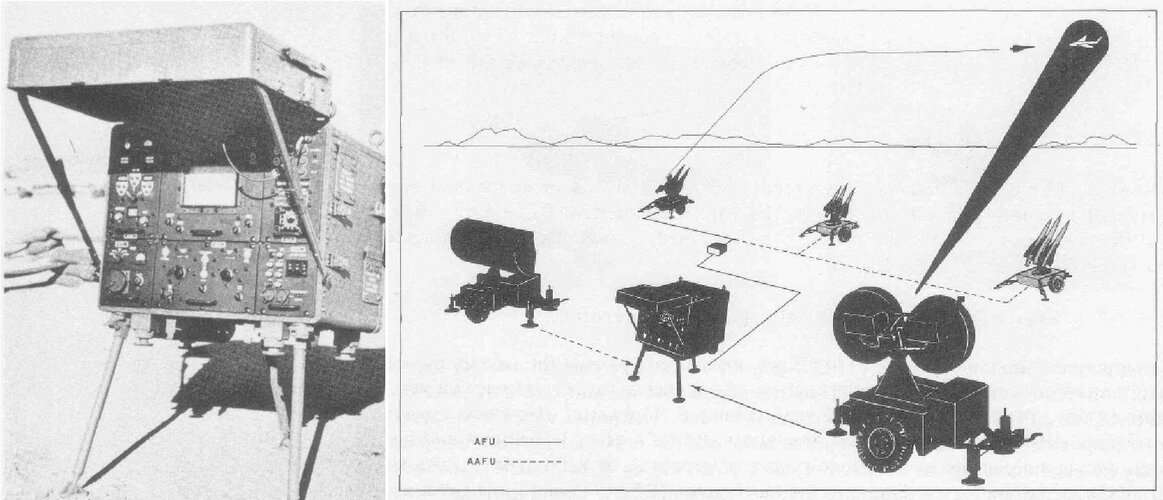
While "navalizing" the land-based SAM generally isn't a good idea, HAWK seems to be a rather fine candidate for this role. It's basic version (fielded in 1959) is roughly the same size, weight, and finspan as basic RIM-24 Tartar missile (deployed in 1962), but have almost twice more range and better aerodynamic control. Most importantly - it could function in forward-deployed mode, with "minimal" battery composed only of HPIR fire control radar (in this mode used as search radar also), one M192 launcher, generator unit and AFFC console (Assault Fire Command Console - a compact fire control station that allowed manual control).

1730384437841.jpeg

The forward-deployed mode - originally designed to provide SAM cover for amphibious landing beachheads - seems to be quite suitable for shipborne deployment. It is relatively compact and could be installed even on small warships, providing them with short-to-medium range air defense. Essentially what would need to be done:

* A stabilized mount for HPIR fire control radar (water-proofed)
* A new launcher - box-type or coffin-type - to store the missile sealed inside (to avoid the need to moist-proof the missile)
* An interface system to allow the direct link between ship search radar and AFFC console

So the idea is to use a naval-HAWK as sort of "bolt-on" system, that could be easily installed on smaller ships - that could not carry full-size Tartar system due to size and weight limitations, like FRAM destroyers - in relatively short time, to provide them both self-defense and (limited) area defense capability.
 
France might be interested: we had Tartar on our T47 frigates (and the Cassards that replaced them) - and Hawks for air defense of the Armée de Terre. The latter even shot down a Lybian Tu-22 Blinder in Chad in 1987.
 
France might be interested: we had Tartar on our T47 frigates (and the Cassards that replaced them) - and Hawks for air defense of the Armée de Terre. The latter even shot down a Lybian Tu-22 Blinder in Chad in 1987.
Yep. Also, quite a lot of smaller nations that might have troubles with ordering a naval SAM unit, possessed HAWK as land-based SAM. Taiwan, for example, Iran and Israel.
 
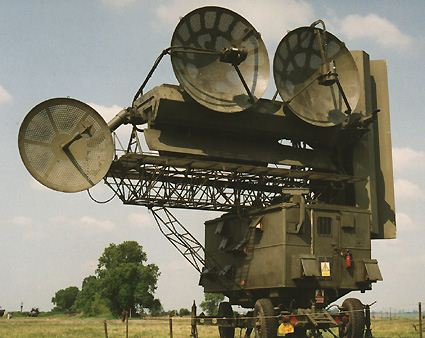
HPIR fire control radar (in this mode used as search radar also)

Here's a question (& my apologies if it's unrelated to the topic) - had it ever been used in such a capacity, how many targets could be tracked by an original AN/MPQ-46? Iran now produces (I think) a digital version, or whatever, but I haven't been able to find such information about said radar for either variant. Could The MIM-23 really only guide one missile at a time? I mean, Soviet air defense systems from the same period were also of the single target channel variety, but they could direct 2-3 interceptors per, well, target, which, by comparison, makes The Hawk seem limited, not to mention its absurd "setup".

DOD/Pentagon official(s) - "How many radars does this system use?"

Raytheon - "Yes."
 
Here's a question (& my apologies if it's unrelated to the topic) - had it ever been used in such a capacity, how many targets could be tracked by an original AN/MPQ-46? Iran now produces (I think) a digital version, or whatever, but I haven't been able to find such information about said radar for either variant. Could The MIM-23 really only guide one missile at a time? I mean, Soviet air defense systems from the same period were also of the single target channel variety, but they could direct 2-3 interceptors per, well, target, which, by comparison, makes The Hawk seem limited, not to mention its absurd "setup".
A standard HAWK battery used AN/MPQ-35 PAR long-range search/aquisition radar to control airspace and detect enemy aircraft. Data from PAR was supplemented by AN/MPQ-55 CWAR - which was used for low-altitude search/aquisition - and additional ROR (Range Only) radar, which was supposed to be used to aquire range data in case of target using decoying range jamming (ROR worked on different frequency than other radars, and only in short-burst mode, so it was viewed as more-or-less jam-proof). The chosen targets data were sent to a pair of AN/MPQ-46 HPIR radars, which tracked each one target & illuminated it for missile seekers. Each AN/MPQ-46 HPIR could track only one target; the characteristic dual antenna design was chosen to separate transmission & receiving on different antennas.

So one battery of HAWK could track two targets simultaneously.

* If required by tactical situation, a battery could be divided into two battalions. One battalion was composed around AN/MPQ-35 PAR radar, and first AN/MPQ-46 HPIR radar. The second battalion was composed around AN/MPQ-55 CWAR radar, and second AN/MPQ-46 HPIR radar. This allowed one battery to cover more space, albeit at cost of some efficiency drop;

* As I mentioned above, there were an ability to detach a "minimal" battery, with AN/MPQ-55 CWAR and AN/MPQ-46 HPIR radar. A special detachable AFFC console was used instead of usual fire control van. In this mode, AN/MPQ-55 CWAR was used to detect the target & give rough direction/range data to console, which then used AN/MPQ-46 HPIR to search, track & illuminate the target;

Could The MIM-23 really only guide one missile at a time?
No. It could guide any number of missiles, but the number of targets was limited by the number of AN/MPQ-46 HPIR radars (two per battery). As soon as target was tracked by AN/MPQ-46 HPIR, it could be attacked by any number of missiles.

The HAWK used semi-active radar guidance; missile locked on the "echo" of AN/MPQ-46 HPIR radar beam, tracking the target. Any number of missiles could be tracking the same target. Usually, though, three was considered enough for almost-guaranteed interception (that's why triple launcher was used).
 
No. It could guide any number of missiles, but the number of targets was limited by the number of AN/MPQ-46 HPIR radars (two per battery). As soon as target was tracked by AN/MPQ-46 HPIR, it could be attacked by any number of missiles.

The HAWK used semi-active radar guidance; missile locked on the "echo" of AN/MPQ-46 HPIR radar beam, tracking the target. Any number of missiles could be tracking the same target. Usually, though, three was considered enough for almost-guaranteed interception (that's why triple launcher was used).

While I am familiar with the overall concept of semi-active radar homing, I have yet to find any information that would confirm that the original AN/MPQ-46 could guide more than one missile at a time, so do you possibly have a link?
 
While I am familiar with the overall concept of semi-active radar homing, I have yet to find any information that would confirm that the original AN/MPQ-46 could guide more than one missile at a time, so do you possibly have a link?
It did not "guide" the missile. It merely illuminates the target, for missile seeker to home on. One missile or hundred - make no difference.
 
It did not "guide" the missile. It merely illuminates the target, for missile seeker to home on. One missile or hundred - make no difference.
How is it not providing guidance by illuminating the target? Semi-active laser guidance works in the same fashion.
 
How is it not providing guidance by illuminating the target? Semi-active laser guidance works in the same fashion.
It's basically a thin terminological difference. "Guiding the missile" mainly imply that guidance system controls missile individually, i.e. by tracking it or sending commands. I agree, that it's not any kind of official distinction.

My point is, that there weren't any fire control limitation that limited the AN/MPQ-46 to just one missile per target.
 
It's basically a thin terminological difference. "Guiding the missile" mainly imply that guidance system controls missile individually, i.e. by tracking it or sending commands. I agree, that it's not any kind of official distinction.

My point is, that there weren't any fire control limitation that limited the AN/MPQ-46 to just one missile per target.
Fair enough. I would have thought that The AN-MPQ-46 would have been able to track more than one target, though, as opposed to this apparently very specialized role, of sorts. By comparison, even early Soviet radars in The S-75 & S-125 could track six targets, iirc.

Weird.
 
Fair enough. I would have thought that The AN-MPQ-46 would have been able to track more than one target, though, as opposed to this apparently very specialized role, of sorts. By comparison, even early Soviet radars in The S-75 & S-125 could track six targets, iirc.
Erm, I'm under suspicion that you are mixing thins a bit. Both the S-75 and S-125 fire control radars were able to track only a single target (albeit they were able to engage with several missiles at once):

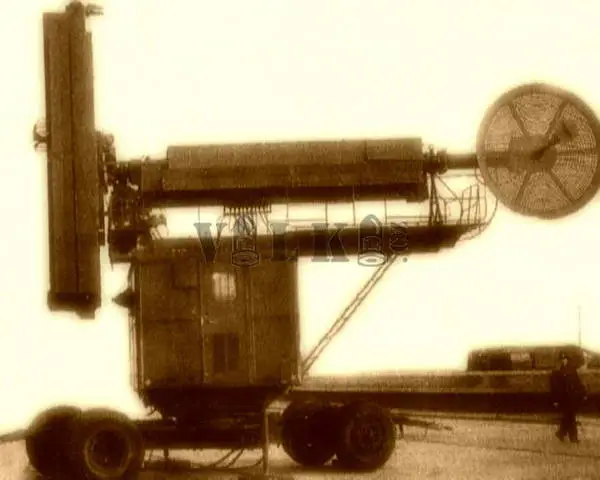
Let's look at basic SA-75 fire control radar:

1765636200951.png

It got three antennas:

* The left square antenna (vertical one) is Lewis scanner rotating scan array, using narrow fan-shaped beam to scan for elevation angle
* The central square antenna (horizontal one, directly on top of the cabin) is similar array, but placed horizontally for azimuth scan
* The right parabolic antenna is a command transmitter

Two square antennas were constantly scanning the area area for both target and missiles (by their transponders). Scan rate on both antennas was synchronized (albeit on different frequences), so the single scan cycle gave both azimuth and elevation data. The radar could visualize several targets on main scope, but computer could work with only one target - which was projected to secondary scopes. There were modes for both automatic tracking, manual tracking and semi-manual tracking (automatic in azimuth and elevation, but range was tracked manually) of the chosen target.

The missiles position were tracked by the same radar antennas during the same tracking cycles. The missile signals were identified by their transponders. Fire control computer could work with up to three missiles - but, again, per single target. The parabolic dish antenna was used to send course commands to all missiles simultaneously (they were supposed to fly relatively close to each other anyway).

The latter S-75M "Volkhov" fire control radars have additional parabolic antennas for more precise tracking of chosen target:

1765637113444.png

The target was obtained by using two square antennas with fan beams, and then two parabolic dishes were used for precise tracking. Two dishes (one for elevation, one for azimuth) were required because they were only the addition to existing antennas, and have no tracking capacity of their own.
 
Last edited:
I imagine something like this if, instead of focusing on the F-111B, McNamara started tinkering with missiles. Although it's interesting because the Soviets did manage to create the 9K33, for example.
 
Back
Top Bottom