M=2.35 with 4 Kh-58U - at minimum afterburner in cruising mode. M=2.38 - limitation due to heating of the missile equipment in long duration flight.''The MiG-25BM could carry up to four anti-radar missiles under its wings (only two missiles were planned during the design phase) or a combination of missiles and bombs (up to eight FAB-500M-62AT bombs). The "Foxbat-F" carried the Kh-58U variant of the "Kilter." It was built primarily of titanium and was designed to resist kinetic heating of 400 to 500°C. The maximum Mach number with missiles was restricted to 2.38.''
So ,with the four 650 kg heavy ( 150 kg warhead only ),MiG-25BM could reach about 2600km/h and it's amazing ,when we know that those ARM's were not attached under the fuselage but under the wings ( in terms of the huge aerodynamic drag).

You are using an out of date browser. It may not display this or other websites correctly.
You should upgrade or use an alternative browser.
You should upgrade or use an alternative browser.
Mikoyan MiG-25 "FOXBAT"
- Thread starter Pit
- Start date
SyAAF MiG-25PDE

One interesting comment about them :
''The Syrian MiG-25PDE's, like all the export versions for Iraq, Algeria or Libya, did feature certain simplifications compared to the aircraft in service with the Soviet Air Defense Forces.
These are often referred as "monkey" variants due to reduced electronic performance.
The main differences of MiG-25PD for export compared to the Soviets were as follows.
First, these were actually "P" variants originally left as they were in the USSR, because already were compromised in terms of onboard equipment and to reduce the costs within the Soviet Air Force, were offered for export to made new airframes with different and updated electronics.
The radar was the same Smerch-A2 from Belenko's "P" variant who defected in Japan and not capable for look-down shoot-down like the Soviet PDs having N005 Saphir-25.
IFF interrogation system, also, was the same like on "P" from Belenko's version.
The TP-26 IRST was simplified and less capable version compared to the Soviets, same available for R-40TD/RD and R-60 missiles.''
Some details from the earlier comment:
So what we have here? We have that exported PDE was in fact hybrid version of the original P and modified PD. It was exported since 1978 to Algerian than Syrian,Iraqi and Libyan AF. With the radar RP-25E Smerch-A2E and maybe the engines R-15B-300 (or R-15BD-300? ), Soviets simply translated that MiG-25P Flight and Combat Manual to the Arabian customers. Of course ,PDE had that IRST TP-26Sh like real Soviet PD/PDS.
In fact ,that was the reason why so many sources even Russian gave so many differ data and info about designations. So for the export from P, via PD and PDE to the PDS (PDSG).Sources just like this one :
https://forums.airforce.ru/matchast/7248-reestr-mig-25-a/
In the reality ,there was only PDE and Iraqi AF from 1983 had something really special.From 1979 , No 96 interception sqn had 12 PDE but from 1983 new No 97 interception sqn got 12 modified PDS/G.Judging by the photos,only Iraqi AF MiG-25 interceptors could carry those huge 5300l fuel tank under the fuselage.Also it seems ( I suppose) that PDSG had export version of the N005 Sapfir-25 or N005E Sapfir-25E with the real look down/shot down capability and maybe the SPS-161E/L101E Geran jammers.In the several occasions, they shot down some low flying IRIAF combat aircraft during Iran-Iraq war . Additional data,info and photos for this will be welcome.
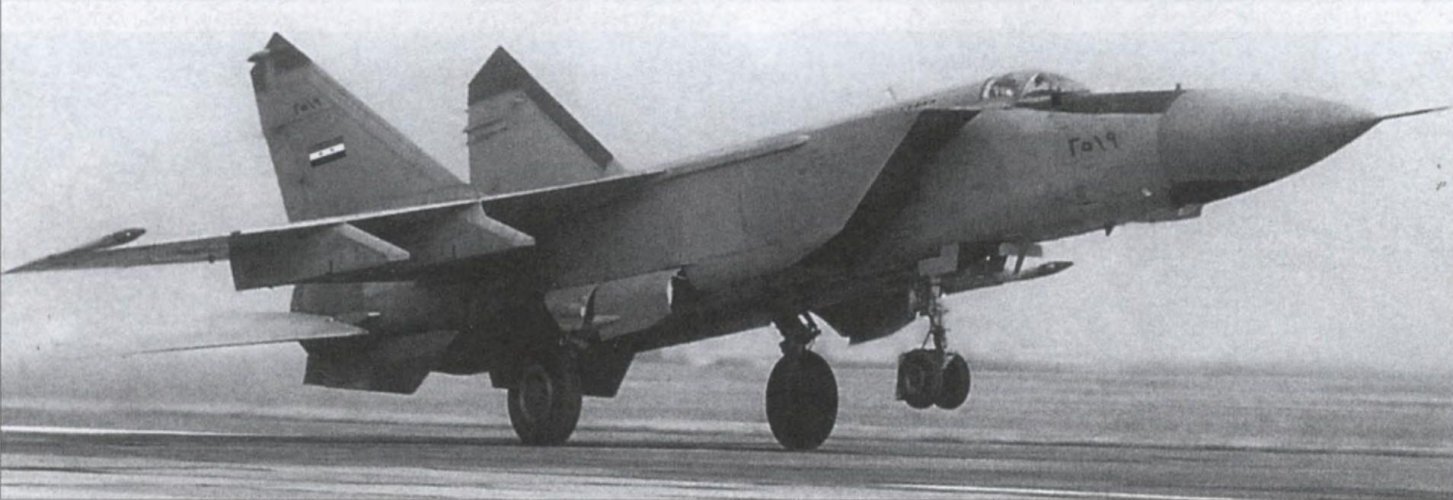
One interesting comment about them :
''The Syrian MiG-25PDE's, like all the export versions for Iraq, Algeria or Libya, did feature certain simplifications compared to the aircraft in service with the Soviet Air Defense Forces.
These are often referred as "monkey" variants due to reduced electronic performance.
The main differences of MiG-25PD for export compared to the Soviets were as follows.
First, these were actually "P" variants originally left as they were in the USSR, because already were compromised in terms of onboard equipment and to reduce the costs within the Soviet Air Force, were offered for export to made new airframes with different and updated electronics.
The radar was the same Smerch-A2 from Belenko's "P" variant who defected in Japan and not capable for look-down shoot-down like the Soviet PDs having N005 Saphir-25.
IFF interrogation system, also, was the same like on "P" from Belenko's version.
The TP-26 IRST was simplified and less capable version compared to the Soviets, same available for R-40TD/RD and R-60 missiles.''
Some details from the earlier comment:
Paraphrased from 'OKB Mikoyan', page 328 :-
'Hence an export version was developed...
It was a hybrid of the MiG-25P and MiG-25PD,
combining the long-nosed airframe of the former,
with the Smerch based weapons control system
of the the former.Appropriate changes were made
to the IFF system....'
also '...Experience with the MiG-25P and MiG-25PD
showed that theses aircraft would have to intercept low-level targets,
therefore ECM and IRCM systems would be needed to
reduce their vulnerability to enemy fire.
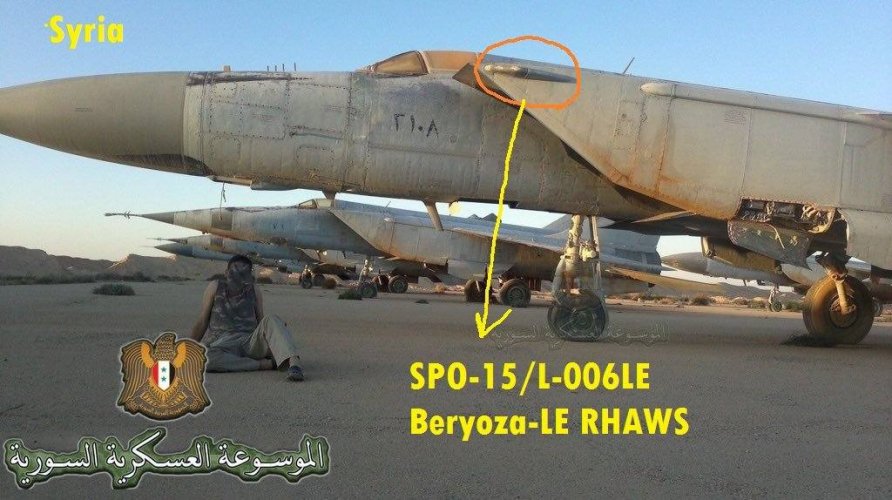
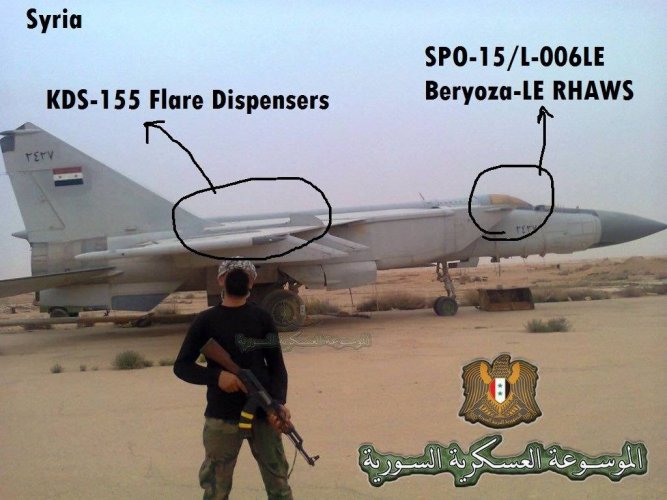
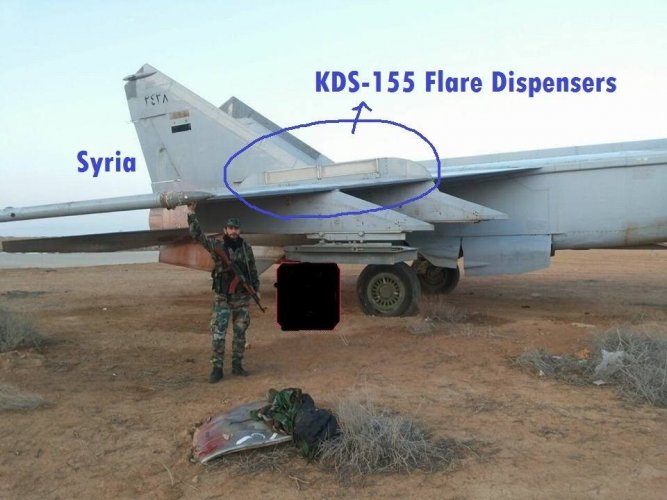
Thus, in 1982, a MiG-25PDS,"94 Red", was fitted with a
Beryoza-LE RHAWS system, a Gherahn' ECM pod,
and KDS-155 flare dispensers.
Thus designated MiG-25PDSG, this aircraft was sucsessfuly tested
in 1983, however, it was not produced in series as the ECM pod
was not available in sufficient quantities.....'
So what we have here? We have that exported PDE was in fact hybrid version of the original P and modified PD. It was exported since 1978 to Algerian than Syrian,Iraqi and Libyan AF. With the radar RP-25E Smerch-A2E and maybe the engines R-15B-300 (or R-15BD-300? ), Soviets simply translated that MiG-25P Flight and Combat Manual to the Arabian customers. Of course ,PDE had that IRST TP-26Sh like real Soviet PD/PDS.
In fact ,that was the reason why so many sources even Russian gave so many differ data and info about designations. So for the export from P, via PD and PDE to the PDS (PDSG).Sources just like this one :
https://forums.airforce.ru/matchast/7248-reestr-mig-25-a/
In the reality ,there was only PDE and Iraqi AF from 1983 had something really special.From 1979 , No 96 interception sqn had 12 PDE but from 1983 new No 97 interception sqn got 12 modified PDS/G.Judging by the photos,only Iraqi AF MiG-25 interceptors could carry those huge 5300l fuel tank under the fuselage.Also it seems ( I suppose) that PDSG had export version of the N005 Sapfir-25 or N005E Sapfir-25E with the real look down/shot down capability and maybe the SPS-161E/L101E Geran jammers.In the several occasions, they shot down some low flying IRIAF combat aircraft during Iran-Iraq war . Additional data,info and photos for this will be welcome.
Last edited:
Scott Kenny
ACCESS: USAP
- Joined
- 15 May 2023
- Messages
- 19,674
- Reaction score
- 28,153
So it's really more like a MiG-25PE than PDE?
So it's really more like a MiG-25PE than PDE?
I've never heard for the 'PE' before to be honest.Now some interesting details :
МиГ-25ПДС
''В 1979 году началась переделка самолетов МиГ-25П, находящихся на эксплуатации в ПВО, в вариант МиГ-25ПД. Для этого были переоборудованы некоторые ремонтные предприятия, принадлежащие МО СССР, кроме этого на них расширился штат и был переучен ИТС. Самолеты перегоняли прямо из полков на ремзаводы, где на них устанавливали новую авионику. РЛС «Смерч-А» меняли на «Сапфир-25», устанавливали теплопеленгатор, а в некоторых самолетах меняли двигатель на Р-15БД-300. Новое оборудование и элементы конструкции изготавливали в Горьком, а затем рассылали на ремзаводы.
Модернизированные таким образом самолеты получили обозначение МиГ-25ПДС («перехватчик, доработанный в строю»). Эти самолеты не отличались от серийных «ПД», исключением было лишь то, что они не могли нести под фюзеляжем ПТБ на 5300 л. Модернизация МиГ-25П в «ПДС» продолжалась до 1982 года.''
Source: https://testpilot.ru/rossiya/mikoyan/mig25pd/
''In 1979, the conversion of MiG-25P aircraft in service with the Air Defense Forces to the MiG-25PD variant began. Several repair facilities belonging to the USSR Ministry of Defense were re-equipped for this purpose, and their staff was expanded and their engineering technicians were retrained. The aircraft were flown directly from the regiments to repair plants, where they were equipped with new avionics. The Smerch-A radar was replaced with the Sapphire-25, a thermal direction finder was installed, and some aircraft were re-engined with R-15BD-300 engines. The new equipment and components were manufactured in Gorky and then shipped to the repair plants.
The aircraft modernized in this manner were designated MiG-25PDS ("interceptor modified in service"). These aircraft were no different from the production PDs, except that they could not carry the 5,300-liter drop tank under the fuselage. The modernization of the MiG-25P into PDSs continued until 1982.''
We have data from earlier that about 150 serial PDs were produced all other were PDS. From those 150 serially produced ,some were exported ( it seems as the PDE) to the mentioned countries.As we can see ,only PD/PDE could carry that 5300 l fuel tank but PDS could not.
Scott Kenny
ACCESS: USAP
- Joined
- 15 May 2023
- Messages
- 19,674
- Reaction score
- 28,153
What I mean is that the E-for-Export version of the MiG-25 was based on the P variant, not on the PD variant.
What I mean is that the E-for-Export version of the MiG-25 was based on the P variant, not on the PD variant.
From data/info which we have now, exported fighters were produced from 1978 together with the PD for the Soviet AF. As it was mentioned earlier,it was some kind of the hybrid version of both P and PD with the radar and maybe the engines from P but with the IRST and AAM's from the PD. Also that 5300l fuel tank was from the PD ( not PDS).In the basis ( avionics domain) ,with the Smerch-A2E radar, it was MiG-25P and that was the reason why they got translated Soviet MiG-25P Flight ,Technical and Combat Manual.

F-2
ACCESS: Top Secret
- Joined
- 22 May 2020
- Messages
- 1,189
- Reaction score
- 2,575
The Iraqi Foxbat did have SAPFIR
https://aviationarchives.blogspot.com/2024/01/mig-25pdpds-combat-employment-manual.html?m=1
Page 344 on
https://secretprojects.co.uk/MiG-25PD Flight and Combat Employment Training Manual-OCR.pdf
https://aviationarchives.blogspot.com/2024/01/mig-25pdpds-combat-employment-manual.html?m=1
Page 344 on
https://secretprojects.co.uk/MiG-25PD Flight and Combat Employment Training Manual-OCR.pdf
^
Thanks and that is part of the story of getting the real PDS version from the Soviets. So from 1983, Iraqi AF got 12 PDS ( as second hand ,not newly produced) with ,suppose export version of the S-25E or N005E Sapfir-25E.
There is one interesting detail, Lt. Zuhair Dawoud flew in fact in PDE during the first night of the first Gulf war.
''Immediately after takeoff, Dawoud turned south, climbing in full afterburner to 8,000m (26,247ft) and accelerating to Mach 1.4, with his Smerch-A2 radar in “standby” mode, still warming up.''
https://theaviationgeekclub.com/ira...et-the-first-night-of-operation-desert-storm/
Thanks and that is part of the story of getting the real PDS version from the Soviets. So from 1983, Iraqi AF got 12 PDS ( as second hand ,not newly produced) with ,suppose export version of the S-25E or N005E Sapfir-25E.
There is one interesting detail, Lt. Zuhair Dawoud flew in fact in PDE during the first night of the first Gulf war.
''Immediately after takeoff, Dawoud turned south, climbing in full afterburner to 8,000m (26,247ft) and accelerating to Mach 1.4, with his Smerch-A2 radar in “standby” mode, still warming up.''
https://theaviationgeekclub.com/ira...et-the-first-night-of-operation-desert-storm/
Last edited:

- Joined
- 27 December 2005
- Messages
- 19,230
- Reaction score
- 35,692
Thanks and that is part of the story of getting the real PDS version from the Soviets. So from 1983, Iraqi AF got 12 PDS ( as second hand ,not newly produced) with ,suppose export version of the S-25E or N005E Sapfir-25E.
There is one interesting detail, Lt. Zuhair Dawoud flew in fact in PDE during the first night of the first Gulf war.
''Immediately after takeoff, Dawoud turned south, climbing in full afterburner to 8,000m (26,247ft) and accelerating to Mach 1.4, with his Smerch-A2 radar in “standby” mode, still warming up.''
https://theaviationgeekclub.com/ira...et-the-first-night-of-operation-desert-storm/
Dawoud had a MiG-25PD/PDS with Sapfir-25. Nowhere in the Dildy & Cooper book the blog stole from is there any statement from Dawoud about radar type, that was added by the authors (the pilot probably just said "radar" and they filled in the type wrongly) and tells you everything you need to know about their competency - their sole source for MiG-25 information in the references appears to be a Yefim Gordon book. Cooper has previous claimed that Iraqi MiG-25PDs had Smerch radar with R-40RD/TD and TP-26 IRST, which is very much unlikely.
So the only hard facts here presented from the Iraqi pilot areDawoud later recounted, “At 0238hrs [“Baghdad time”/0338hrs “Riyadh time”] the Air Defense telephone rang and I answered. There was a guy screaming at the other end of the line ‘MiG-25 IMMEDIATE TAKEOFF!’ So I hurried to the aircraft. In fact, the technicians were ready for this moment, as was the jet, so the takeoff was exceptionally fast – I was airborne just three minutes after I had received the call. After takeoff I switched to safe [secure] frequency and established contact with GCI of the Air Defence Sector. The sky was clear, with very good visibility. The GCI started to give me directions to a group of aircraft that had penetrated Iraqi air space to the south of the base.”
“I reported what happened to the GCI and he told me to return to my original intercept course as I had ‘targets at 38km [20.5 miles].’ Meanwhile, my radar became ready. I locked a target 38km [20.5 miles] from me and at 29km [15.6 miles] I fired [the] R-40RD missile from under my right wing. I kept the target locked with my radar [un]till I witnessed a huge explosion in front of me. I kept looking for the aircraft going down spirally to the ground with fire engulfing it.”
He used an R-40RD missile, which only works with a Sapfir-25 radar.
Lockon occured at 38km.
Firing range against an F-18 was 29km.
There's no evidence that Iraqi MiG-25PD had Smerch radar. They got some MiG-25Ps with Smerch, then some MiG-25PDs with Sapfir-25, then their MiG-25Ps were upgraded to PDS standard with Sapfir-25. By 1991, all their MiG-25s had Sapfir-25.
Last edited:
- Joined
- 27 December 2005
- Messages
- 19,230
- Reaction score
- 35,692
Tom Cooper wrote an article for Medium.com/War Is Boring based on this book.
https://medium.com/war-is-boring/who-shot-down-u-s-navy-pilot-scott-speicher-6455bb966df5
Where Albert Harris left this comment:
https://medium.com/war-is-boring/who-shot-down-u-s-navy-pilot-scott-speicher-6455bb966df5
Where Albert Harris left this comment:
Albert Harris
Jan 28, 2017
This article has numerous inaccuracies. The formations were not correct, and the AWACS identified the MIG. CDR Anderson, who was CO of 81, not 83, claims not to have heard it, but others did. Anderson did not manuvere against the MIG. The missile fired at LCDR Speicher was a dud. It did not explode, it ripped off approximately 1/4 of his left wing and his drop tanks, one of which exploded. It put LCDR Speicher’s Hornet in a flat spin, and he ejected passing 14000 feet. It was very clear from inspecting the Hornet in 95 that no explosions took place, and the box confirmed all this. Dawoud has been known to tell many untruths about that night, and after taking his shot, he turn and ran right away with the SUCAP covering Speicher right behind. Also, changing LCDR Speicher’s status to MIA had nothing to do with politics. If these authors did a little more due diligence, they would know that. If the rest of their book has this much misinformation, I will pass. I was a part of the original investigation/recovery team.
Dawoud had a MiG-25PD/PDS with Sapfir-25. Cooper has previous claimed that Iraqi MiG-25PDs had Smerch radar with R-40RD/TD and TP-26 IRST, which is very much unlikely.
Thanks. What I've learned from earliest comments is that Iraqies first got that new,serially produced PDE ( from 1979) with RP-25E Smerch-A2E together with the MiG-25P Manuals. As it was described in the 'OKB Mikoyan book' ,that export version from 1978/79 was some kind of hybrid between P and the PD. So if that is right ,than those PDE with the Smerch-A2E were armed with R-40R/T ,not RD/TD ? Also they could carry that 5300l fuel tank.Then from 1983, Iraqies got those PDS as second hand after aircraft with version P were overhauled and modernised to that standard with the S-25E Sapfir-25E radar.They got them with the translated MiG-25PD Manuals. Of course armed with the R-40RD/TD but w/o possibility to carry that huge fuel tank.
- Joined
- 27 December 2005
- Messages
- 19,230
- Reaction score
- 35,692
According to MiG Flying Through Time by Mikoyan OKB archivist, who ought to know better than Yefim Gordon,
It seems logical that the 16 MiG-25P were later upgraded to PDS standard, resulting in the mixed fleet of MiG-25PD and MiG-25PDS Iraq had in 1991.Total in 1980-1984 in Iraq fighters were delivered 16 MiG-25P interceptors and 14 MiG-25PD, 8 reconnaissance aircraft MiG-25RB bombers,5 training MiG-25PU and 3 MiG-25RU.
It seems logical that the 16 MiG-25P were later upgraded to PDS standard, resulting in the mixed fleet of MiG-25PD and MiG-25PDS Iraq had in 1991.
OK tnx , so they had 30 interceptors in total in the No 96 & No 97 interceptor sqn. Again , we have that 'designation's game' where the real 'P' wasn't exported at all. What is new is that they had some kind of export variant of the original R-40R ( really don't know its designation), because exported Smerch-A2E
definitely worked on differ working frequencies ( in the search ,than lock-on and Illumination mode) than the original Smerch-A2 in the Soviet P's. So there must be some differences between R-40R and exported ones.
So they had 16 interceptors with the Smerch-A2E ,than got 14 with the Sapfir-25E .In the same time ,they modernise all those ''P'' (or PDE?) to the PDS standard with the S-25E radar. From the Russian sources ,they lost two interceptors during Iran-Iraq war but it was non-combat loses .
- Joined
- 27 December 2005
- Messages
- 19,230
- Reaction score
- 35,692
The Iraqi flight manual evidence suggests the first deliveries were designated MiG-25P (export, Smerch-A2) and the second deliveries MiG-25PD (export, Sapfir-25). All export MiG-25Ps seem to have been upgraded to MiG-25PDS standard in the mid 1980s anyway.
The alternate hypothesis is that the translators of the MiG-25P manual to English didn't know the aircraft was actually designated MiG-25PD for export purposes.
Now, a factor would be that MiG-25P production finished in 1978, replaced by MiG-25PD, but the first export MiG-25s weren't delivered until 1980. So they were either existing MiG-25P airframes or new built on MiG-25PD production line. This is where the complication comes.
There are several visual clues to MiG-25P/PD differences. One is the pitot tube on P has vanes on it while PD doesn't. By this metric, initial export MiG-25s were -P. There are also differences in brake chute housing, nose panels, the IRST. Its certainly possible that the initial export MiG-25s are at least partially PD airframes, but the nose is almost certainly a stock -P nose with no IRST, Smerch etc, old pitot tube design.
Making it more complicated again is that they were upgraded to PDS within a few years anyway, and there's not many good photos of early export MiG-25s.
Tom Cooper and other Western authors have got caught up on the export MiG-25 with Smerch and even suggested the later deliveries with IRST still used Smerch but R-40RD missiles. A quick sanity check suggests this is very unlikely. R-40RD would need the old R-40R seeker to work with Smerch. The IRST was an integral part of the weapons system, getting it to work with Smerch would be difficult. Finally, Sapfir-23D-III was exported in very early 80s with the Sapfir-23ML getting to Syria and Iraq in the mid 1980s, so it would be weird to withhold Sapfir-25 at that time.
The alternate hypothesis is that the translators of the MiG-25P manual to English didn't know the aircraft was actually designated MiG-25PD for export purposes.
Now, a factor would be that MiG-25P production finished in 1978, replaced by MiG-25PD, but the first export MiG-25s weren't delivered until 1980. So they were either existing MiG-25P airframes or new built on MiG-25PD production line. This is where the complication comes.
There are several visual clues to MiG-25P/PD differences. One is the pitot tube on P has vanes on it while PD doesn't. By this metric, initial export MiG-25s were -P. There are also differences in brake chute housing, nose panels, the IRST. Its certainly possible that the initial export MiG-25s are at least partially PD airframes, but the nose is almost certainly a stock -P nose with no IRST, Smerch etc, old pitot tube design.
Making it more complicated again is that they were upgraded to PDS within a few years anyway, and there's not many good photos of early export MiG-25s.
Tom Cooper and other Western authors have got caught up on the export MiG-25 with Smerch and even suggested the later deliveries with IRST still used Smerch but R-40RD missiles. A quick sanity check suggests this is very unlikely. R-40RD would need the old R-40R seeker to work with Smerch. The IRST was an integral part of the weapons system, getting it to work with Smerch would be difficult. Finally, Sapfir-23D-III was exported in very early 80s with the Sapfir-23ML getting to Syria and Iraq in the mid 1980s, so it would be weird to withhold Sapfir-25 at that time.
Last edited:
Now, a factor would be that MiG-25P production finished in 1978, replaced by MiG-25PD, but the first export MiG-25s weren't delivered until 1980. So they were either existing MiG-25P airframes or new built on MiG-25PD production line. This is where the complication comes.
Exactly and about deliveries, I think that Algerian AF got first such produced P's /PDE during 1978 ,as first in the world.
Some citations :
''The Algerian Air Force first received the MiG-25 in 1978, with 20 interceptor and nine reconnaissance variants being delivered alongside 150 R-40 air to air missiles which were the most capable the USSR offered at the time.''
''Algeria’s Air Force became one of the largest foreign operators of the MiG-25, initially acquiring 48 units in 1978 as part of its Soviet-aligned defense strategy.''
https://www.grosswald.org/legacy-of-the-mig-25-foxbat-in-algerian-air-force-and-aviation-history/
My opinion is that somehow last batch or bathes of serial P's ( planned for the Av-PVO regiments ) , were used to produce aircraft for export. So they were in fact MiG-25P with R-15B-300 engines , export version of the RP-25 'Smerch-A2' and IFF system as we know ,newly built IRST TP-26Sh etc ....
It is interesting that only Iraqi MiG-25P/PDE got that PTB-5300 ( judging by the photos), 'cause I've never seen that fuel tank carried by the Algerian,Syrian or Libyan MiG-25P/PDE.
Now this is also interesting. It seems that Libyan AF first got the real MiG-25P ,w/o the IRST.
''Soviet Era MiG 25 fighter jets are parked at a military air base in the southern Libyan town of Waddan in the oasis of Jaffra, 2011. ~ Photo By: Philippe Desmazes/AFP/Getty Image''
Than this one :
Other linked photos:
https://www.planespotters.net/photo/265902/903-libya-air-force-mikoyan-gurevich-mig-25-foxbat
https://www.planespotters.net/photo/174443/7811-libyan-air-force-mikoyan-gurevich-mig-25-foxbat
Attachments
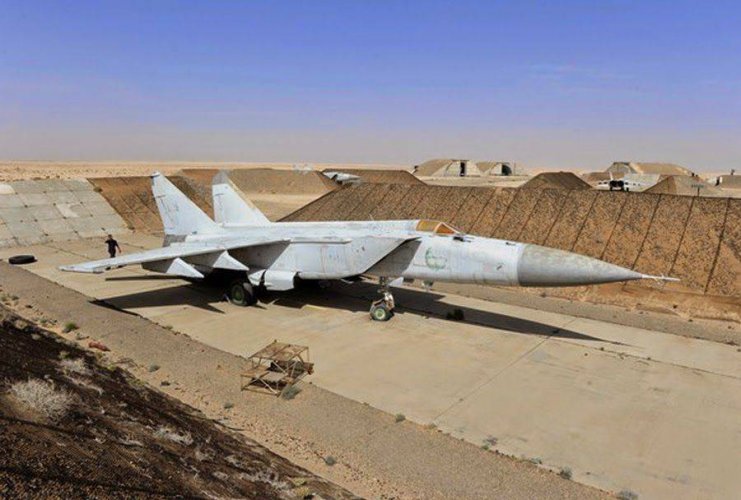
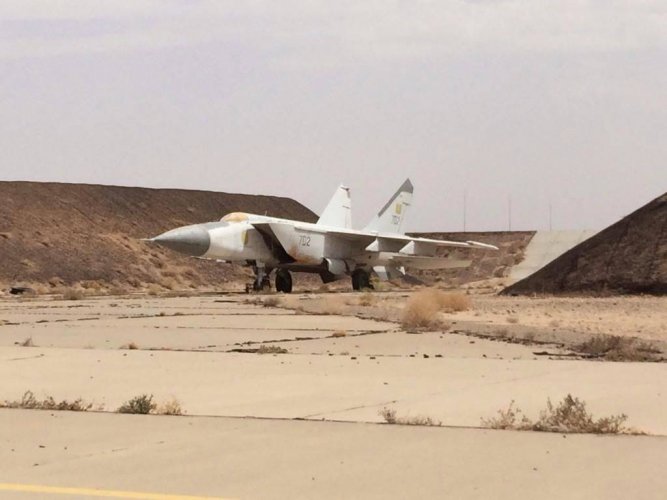
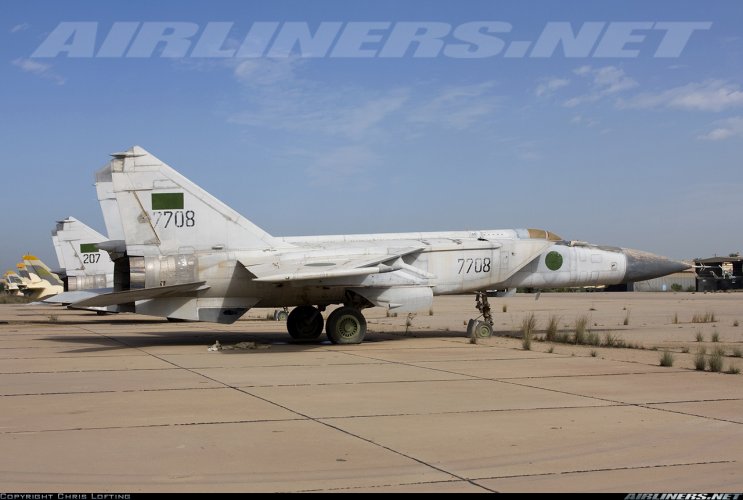
Last edited by a moderator:

Aeria Gloria
ACCESS: Secret
- Joined
- 8 February 2024
- Messages
- 416
- Reaction score
- 481
Squirrel, you said ok thx to Overscan…. Got me thinking……
It seems when Overscan argues the same thing I have (R-40RD isn’t compatible with Smerch, the TP-26 is so integrated with Sapfir you cant just put it in P model with mechanical radar display, Tom Cooper gets things wrong) you are much more positive to it
It seems when Overscan argues the same thing I have (R-40RD isn’t compatible with Smerch, the TP-26 is so integrated with Sapfir you cant just put it in P model with mechanical radar display, Tom Cooper gets things wrong) you are much more positive to it
Cockpits and switchology performance of avionics and limitations are different between the two. If P manuals were delivered for PD then they would’ve been useless. Perhaps that’s why we got themalternate hypothesis is that the translators of the MiG-25P manual to English didn't know the aircraft was actually designated MiG-25PD for export purposes.
- Joined
- 27 December 2005
- Messages
- 19,230
- Reaction score
- 35,692
That's an understatement. His inability to update his knowledge of Soviet systems in light of newly available information makes me doubt his knowledge in all other areas. He's far too reliant on personal anecdotes and not enough on documents.Tom Cooper gets things wrong
- Joined
- 27 December 2005
- Messages
- 19,230
- Reaction score
- 35,692
Squirrel's postion seemed to be that all export MiG-25 fighters were MiG-25PD, whether they had Smerch radar or Sapfir-25, no IRST or IRST.Cockpits and switchology performance of avionics and limitations are different between the two. If P manuals were delivered for PD then they would’ve been useless. Perhaps that’s why we got them
For this to be correct, the MiG-25P English manual would need to be the manual for MiG-25PD (Smerch) incorrectly labelled. there's no reason to make a MiG-25P manual in English if MiG-25P was never exported.
My alternative hypothesis, which seems to be supported by the evidence, is that Iraq at least got initially MiG-25P (possibly new build MiG-25PD airframes with old MiG-25P noses - as MiG-25P production had ended) but then got MiG-25PD in later batches and the MiG-25Ps they got were upgraded to MiG-25PD standard as MiG-25PDS quite soon.
MiG-25PDS is specifically an MiG-25P upgraded to MiG-25PD standard, so if you believe Iraq got some delivered later, you are saying they got second hand airframes upgraded to MiG-25PD standard.
Last edited:
Aeria Gloria
ACCESS: Secret
- Joined
- 8 February 2024
- Messages
- 416
- Reaction score
- 481
Yes this is what I see from most that I trust on the matter. And it seems most plausible to me.My alternative hypothesis, which seems to be supported by the evidence, is that Iraq at least got initially MiG-25P (possibly new build MiG-25PD airframes with old MiG-25P noses - as MiG-25P production had ended) but then got proper MiG-25PD in later batches and the MiG-25Ps they got were upgraded to MiG-25PD standard as MiG-25PDS quite soon.
MiG-25PDS is specifically an MiG-25P upgraded to MiG-25PD standard, so if you believe Iraq got some delivered later, you are saying they got second hand airframes upgraded to MiG-25PD standard.
Last edited by a moderator:
Squirrel's postion seemed to be that all export MiG-25 fighters were MiG-25PD, whether they had Smerch radar or Sapfir-25, no IRST or IRST.
I already mentioned thanks to some pics, that Libya first got P ( w/o IRST) than PDE ( with the IRST).
- Joined
- 27 December 2005
- Messages
- 19,230
- Reaction score
- 35,692
Okay, so we are finally in agreement. Hooray.
- Joined
- 27 December 2005
- Messages
- 19,230
- Reaction score
- 35,692
Sapfir-25 had some lookdown/shootdown capability. which was introduced on the MiG-25PD and refitted to all MiG-25Ps as MiG-25PDS. Full capability in this area was only introduced in the MiG-31's Zaslon radar.

- Joined
- 26 May 2006
- Messages
- 38,282
- Reaction score
- 20,422
Sapfir-25 had some lookdown/shootdown capability. which was introduced on the MiG-25PD and refitted to all MiG-25Ps as MiG-25PDS. Full capability in this area was only introduced in the MiG-31's Zaslon radar.
Thank you my dear Paul.
Aeria Gloria
ACCESS: Secret
- Joined
- 8 February 2024
- Messages
- 416
- Reaction score
- 481
It would just have reduced range. Against fighter MiG-23 with Sapfir 23 might be able to detect a fighter at 40-50 km but only 15-20 km in significant look down. It is using a technique called MTI or MTD using the “clutter” as reference to find the target “in front” of the clutter. It has a very large notch of +/-450 kmh (230 kmh is average for say MiG-29), all due to being what’s called externally coherent not internally.Thank you my dear Paul.
The IRST also looks down more than it looks up……
- Joined
- 27 December 2005
- Messages
- 19,230
- Reaction score
- 35,692
There are also geometric restrictions on height for clutter referenced MTI to work - you musy be seeing some clutter via the radar sidelobes. At large heights, it uses a different method where it limits the maximum detection range to a value where the beam won't hit the ground.
Similar threads
-

-
Mikoyan ATL designs Ye-152, MiG-23, MiG-25
- Started by lancer21
- Replies: 127
-

-
 Anti-F-15: The Soviet PFI Program
- Started by overscan (PaulMM)
- Replies: 56
-