MiG-29 "Supermanoeuvrability"

A simple hit rate variable does still not take into account whether the pilot has flown an energy-spending evasive manoeuvre in the right direction at the right time.
So the simulated dogfights were probably not giving justice to the MiG-29's manoeuvrability, especially in BVR.
 
A simple hit rate variable does still not take into account whether the pilot has flown an energy-spending evasive manoeuvre in the right direction at the right time.
So the simulated dogfights were probably not giving justice to the MiG-29's manoeuvrability, especially in BVR.
Assuming the hit rate was such a simple calculation that would cut both ways. For example, if the MiG-29 just finished a high AoA maneuver and bled off most of his speed the simulation wouldn't factor in how he is a "sitting duck" for an incoming missile. I am doubtful it is such a simple calculation though. If it was then pilots wouldn't even bother taking evasive maneuvers in these mock dogfights because it would have no effect on the chance of the simulated missile scoring a "kill".
 
Assuming the hit rate was such a simple calculation that would cut both ways. For example, if the MiG-29 just finished a high AoA maneuver and bled off most of his speed the simulation wouldn't factor in how he is a "sitting duck" for an incoming missile. I am doubtful it is such a simple calculation though. If it was then pilots wouldn't even bother taking evasive maneuvers in these mock dogfights because it would have no effect on the chance of the simulated missile scoring a "kill".

A "sitting duck" is safer from an AMRAAM or R-77 than a Mach 1 fighter.
The sitting duck can engulf itself in chaff and defeat both doppler filtering and the fuse this way.

For all I know the mock dogfights are about getting a lock-on and missile launch within acceptable perimeters first (or in guns only contest get it into the lead indicator and pull the trigger). No proper representation of countermeasures in such simulated fights appears to have been published.
 
“Fulcrumflyer” or Fred "Spanky" Clifton posted this on F-16.net in 2009.

I've got over 500 hours in the MiG-29 and 2000 hours in the F-16 (I also flew the F-15A/C and the F-5E). The following is an excerpt from a research papaer I wrote while working on a Master's Degree in aerospace engineering. Bottom line: F16 (and F-15) good, MiG-29 bad.

MiG-29 Fulcrum Versus F-16 Viper

The baseline MiG-29 for this comparison will be the MiG-29A (except for 200 kg more fuel and an internal jammer, the MiG-29C was not an improvement over the MiG-29A), as this was the most widely deployed version of the aircraft. The baseline F-16 will be the F-16C Block 40. Although there is a more advanced and powerful version of the F-16C, the Block 40 was produced and fielded during the height of Fulcrum production.

A combat loaded MiG-29A tips the scales at approximately 38, 500 pounds. This figure includes a full load of internal fuel, two AA-10A Alamo missiles, four AA-11 Archer missiles, 150 rounds of 30mm ammunition and a full centerline 1,500 liter external fuel tank. With 18,600 pounds of thrust per engine, this gives the Fulcrum a takeoff thrust-to-weight ratio of 0.97:1. A similarly loaded air-to-air configured F-16 Block 40 would carry four AIM-120 AMRAAM active radar-guided missiles, two AIM-9M IR-guided missiles, 510 rounds of 20mm ammunition and a 300 gallon external centerline fuel tank. In this configuration, the F-16 weighs 31,640 pounds. With 29,000 pounds of thrust, the F-16 has a takeoff thrust-to-weight ratio of 0.92:1. The reader should be cautioned that these thrust-to-weight ratios are based on uninstalled thrust. Once an engine is installed in the aircraft, it produces less thrust than it does on a test stand due to the air intake allowing in less air than the engine has available on the test stand.
The actual installed thrust-to-weight ratios vary based on the source. On average, they are in the 1:1 regime or better for both aircraft. The centerline fuel tanks can be jettisoned and probably would be if the situation dictated with an associated decrease in drag and weight and an increase in performance.

Speed

Both aircraft display good performance throughout their flight regimes in the comparison configuration. The MiG-29 enjoys a speed advantage at high altitude with a flight manual limit of Mach 2.3. The F-16’s high altitude limit is Mach 2.05 but this is more of a limit of inlet design. The MiG-29 has variable geometry inlets to control the shock wave that forms in the inlet and prevent supersonic flow from reaching the engine. The F-16 employs a simple fixed-geometry inlet with a sharp upper lip that extends out beyond the lower portion of the inlet. A shock wave forms on this lip and prevents the flow in the intake from going supersonic. The objective is to keep the air going into the engine subsonic unlike a certain ‘subject matter expert’ on this website who thinks that the air should be accelerated to even higher speeds than the aircraft is traveling. Supersonic air in the compressor section? That’s bad.

Both aircraft have the same indicated airspeed limit at lower altitudes of 810 knots. This would require the centerline tanks to be jettisoned. The placard limits for the tanks are 600 knots or Mach 1.6 (Mach 1.5 for the MiG-29) whichever less is. It was the researcher’s experience that the MiG-29 would probably not reach this limit unless a dive was initiated. The F-16 Block 40 will easily reach 800 knots on the deck. In fact, power must be reduced to avoid exceeding placard limits. The limit is not thrust, as the F-16 has been test flown on the plus side of 900 knots. The limit for the F-16 is the canopy. Heating due to air friction at such speeds will cause the polycarbonate canopy to get soft and ultimately fail.

Turning Capability

The MiG-29 and F-16 are both considered 9 G aircraft. Until the centerline tank is empty, the Fulcrum is limited to four Gs and the Viper to seven Gs. The
MiG-29 is also limited to seven Gs above Mach 0.85 while the F-16, once the centerline tank is empty (or jettisoned) can go to nine Gs regardless of airspeed or Mach number. The MiG-29’s seven G limit is due to loads on the vertical stabilizers. MAPO has advertised that the Fulcrum could be stressed to 12 Gs and still not hurt the airframe. This statement is probably wishful and boastful. The German Luftwaffe, which flew its MiG-29s probably more aggressively than any other operator, experienced cracks in the structure at the base of the vertical tails. The F-16 can actually exceed nine Gs without overstressing the airframe. Depending on configuration, momentary overshoots to as much as 10.3 Gs will not cause any concern with aircraft maintainers.

Handling

Of the four fighters I have flown, the MiG-29 has by far the worst handling qualities. The hydro-mechanical flight control system uses an artificial feel system of springs and pulleys to simulate control force changes with varying airspeeds and altitudes. There is a stability augmentation system that makes the aircraft easier to fly but also makes the aircraft more sluggish to flight control inputs. It is my opinion that the jet is more responsive with the augmentation system disengaged. Unfortunately, this was allowed for demonstration purposes only as this also disengages the angle-of-attack (AoA) limiter. Stick forces are relatively light but the stick requires a lot of movement to get the desired response. This only adds to sluggish feeling of the aircraft. The entire time you are flying, the stick will move randomly about one-half inch on its own with a corresponding movement of the flight control surface. Flying the Fulcrum requires constant attention. If the pilot takes his hand off the throttles, the throttles probably won't stay in the position in which they were left. They'll probably slide back into the 'idle' position.

The Fulcrum is relatively easy to fly during most phases of flight such as takeoff, climb, cruise and landing. However, due to flight control limitations, the pilot must work hard to get the jet to respond the way he wants. This is especially evident in aggressive maneuvering, flying formation or during attempts to employ the gun. Aerial gunnery requires very precise handling in order to be successful. The MiG-29’s handling qualities in no way limit the ability of the pilot to perform his mission, but they do dramatically increase his workload. The F-16’s quadruple-redundant digital flight control system, on the other hand, is extremely responsive, precise and smooth throughout the flight regime.

There is no auto-trim system in the MiG-29 as in the F-16. Trimming the aircraft is practically an unattainable state of grace in the Fulcrum. The trim of the aircraft is very sensitive to changes in airspeed and power and requires constant attention. Changes to aircraft configuration such as raising and lowering the landing gear and flaps cause significant changes in pitch trim that the pilot must be prepared for. As a result, the MiG-29 requires constant attention to fly. The F-16 auto-trims to one G or for whatever G the pilot has manually trimmed the aircraft for.

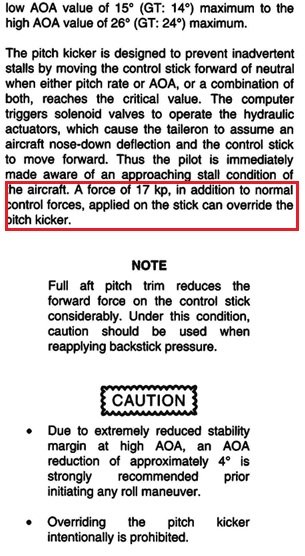
The MiG-29 flight control system also has an AoA limiter that limits the allowable AoA to 26°. As the aircraft reaches the limit, pistons at the base of the stick push the stick forward and reduce the AoA about 5°. The pilot has to fight the flight controls to hold the jet at 26°. The limiter can be overridden, however, with about 17 kg more back pressure on the stick. While not entirely unsafe and at times tactically useful, care must be taken not to attempt to roll the aircraft with ailerons when above 26° AoA. In this case it is best to control roll with the rudders due to adverse yaw caused by the ailerons at high AoA. The F-16 is electronically limited to 26° AoA. While the pilot cannot manually override this limit it is possible to overshoot under certain conditions and risk departure from controlled flight. This is a disadvantage to the F-16 but is a safety margin due its lack of longitudinal stability. Both aircraft have a lift limit of approximately
35° AoA.

Combat Scenario

The ultimate comparison of two fighter aircraft comes down to a combat duel between them. After the Berlin Wall came down the reunified Germany inherited 24 MiG-29s from the Nationale Volksarmee of East Germany. The lessons of capitalism were not lost on MAPO-MiG (the Fulcrum’s manufacturer) who saw this as an opportunity to compare the Fulcrum directly with western types during NATO training exercises. MAPO was quick to boast how the MiG-29 had bested F-15s and F-16s in mock aerial combat. They claimed a combination of the MiG’s superior sensors, weapons and low radar cross section allowed the Fulcrum to beat western aircraft. However, much of the early exploitation was done more to ascertain the MiG-29’s capabilities versus attempting to determine what the outcome of actual combat would be. The western press was also quick to pick up on the theme. In 1991, Benjamin Lambeth cited an article in Jane’s Defence Weekly which stated that the German MiG-29s had beaten F-16s with simulated BVR range shots of more than 60 km. How was this possible when the MiG-29 cannot launch an AA-10A Alamo from outside about 25 km? Was this a case of the fish getting bigger with every telling of the story? The actual BVR capability of the MiG-29 was my biggest disappointment. Was it further exposure to the German Fulcrums in realistic training that showed the jet for what it truly is? It seems that MAPO’s free advertising backfired in the end as further orders were limited to the 18 airplanes sold to Malaysia.

If F-16Cs and MiG-29s face off in aerial combat, both would detect each other on the radar at comparable range. Armed with the AIM-120 AMRAAM, the F-16s would have the first shot opportunity at more than twice the range as the Fulcrums. A single F-16 would be able to discriminately target individual and multiple Fulcrums. The MiG-29’s radar will not allow this. If there is more than one F-16 in a formation, a Fulcrum pilot would not know exactly which F-16 the radar had locked and he can engage only one F-16 at a time. A Viper pilot can launch AMRAAMS against multiple MiG-29s on the first pass and support his missiles via data link until the missiles go active. He can break the radar lock and leave or continue to the visual arena and employ short range infrared guided missiles or the gun. The Fulcrum pilot must wait until about 13 nautical miles (24 kilometers) before he can shoot his BVR missile. The Alamo is a semi-active missile that must be supported by the launching aircraft until impact. This brings the Fulcrum pilot closer to the AMRAAM. In fact, just as the the Fulcrum pilot gets in range to fire an Alamo, the AMRAAM is seconds away from impacting his aircraft. The advantage goes to the F-16.

What if both pilots are committed to engage visually? The F-16 should have the initial advantage as he knows the Fulcrum’s exact altitude and has the target designator box in the head-up display (HUD) to aid in visual acquisition. The Fulcrum’s engines smoke heavily and are a good aid to gaining sight of the adversary. Another advantage is the F-16’s large bubble canopy with 360° field-of-view. The Fulcrum pilot’s HUD doesn’t help much in gaining sight of the F-16. The F-16 is small and has a smokeless engine. The MiG-29 pilot sets low in his cockpit and visibility between the 4 o’clock and 7 o’clock positions is virtually nonexistent.

Charts that compare actual maneuvering performance of the two aircraft are classified. It was the researcher’s experience that the aircraft have comparable initial turning performance. However, the MiG-29 suffers from a higher energy bleed rate than the F-16. This is due to high induced drag on the airframe during high-G maneuvering. F-16 pilots that have flown against the Fulcrum have made similar observations that the F-16 can sustain a high-G turn longer. This results in a turn rate advantage that translates into a positional advantage for the F-16.

The F-16 is also much easier to fly and is more responsive at slow speed.
The Fulcrum’s maximum roll rate is 160° per second. At slow speed this decreases to around 20° per second. Coupled with the large amount of stick movement required, the Fulcrum is extremely sluggish at slow speed. Maneuvering to defeat a close-range gun shot is extremely difficult if the airplane won’t move. For comparison, the F-16’s slow speed roll rate is a little more than 80° per second.

A lot has been written and theorized about the so-called “Cobra Maneuver” that impresses people at airshows. MAPO claimed that no western fighter dare do this same maneuver in public. They also claimed that the Cobra could be used to break the radar lock of an enemy fighter (due to the slow airspeed, there is no Doppler signal for the radar to track) or point the nose of the aircraft to employ weapons. Western fighter pilots were content to let the Russians brag and hope for the opportunity to see a MiG-29 give up all its airspeed. The fact that this maneuver is prohibited in the flight manual only validates the fact that this maneuver was a stunt. Lambeth was the first American to get a flight in the Fulcrum. Even his pilot conceded that the Cobra required a specially prepared aircraft and was prohibited in operational MiG-29 units

Another maneuver performed by the Fulcrum during its introduction to the West is the so-called “Tail Slide”. The nose of the jet is brought to 90° pitch and the airspeed is allowed to decay. Eventually, the Fulcrum begins to “slide” back, tail-first, until the nose drops and the jet begins to fly normally again. The Soviets boasted this maneuver demonstrated how robust the engines were as this would cause western engines to flameout. The first maneuver demonstrated to me during my F-15 training was the Tail Slide. The engines did not flameout.

The MiG-29 is not without strong points. The pilot can override the angle of attack limiter. This is especially useful in vertical maneuvering or in last ditch attempts to bring weapons to bear or defeat enemy shots. The HMS and AA-11 Archer make the Fulcrum a deadly foe in the visual arena. The AA-11 is far superior to the American AIM-9M. By merely turning his head, the MiG pilot can bring an Archer to bear. The one limitation, however, is that the Fulcrum pilot has no cue as to where the Archer seeker head is actually looking. This makes it impossible to determine if the missile is tracking the target, a flare, or some other hot spot in the background. (Note: the AIM-9X which is already fielded on the F-15C, and to be fielded on the F-16 in 2007, is far superior to the AA-11)

Fulcrum pilots have enjoyed their most success with the HMS/Archer combination in one versus one training missions. In this sterile environment, where both aircraft start within visual range of each other, the MiG-29 has a great advantage. Not because it is more maneuverable than the F-16. That is most certainly not the case regardless of the claims of the Fulcrum’s manufacturer and numerous other misinformed propaganda sources. The weapon/sensor integration with the HMS and Archer makes close-in missile employment extremely easy for the Fulcrum’s pilot. My only one versus one fight against a MiG-29 (in something other than another MiG-29) was flown in an F-16 Block 52. This was done against a German MiG-29 at Nellis AFB, Nevada. The F-16 outturned and out-powered the Fulcrum in every situation.

The Fulcrum’s gun system is fairly accurate as long as the target does not attempt to defeat the shot. If the target maneuvers, the gunsight requires large corrections to get back to solution. Coupled with the jet’s imprecise handling, this makes close-in maneuvering difficult. This is very important when using the gun. Although the Fulcrum has a 30 mm cannon, the muzzle velocity is no more than the 20 mm rounds coming out of the F-16’s gun. The MiG’s effective gun range is actually less than that of the F-16 as the 20 mm rounds are more aerodynamic and maintain their velocity longer.

If the fight lasts very long, the MiG pilot is at a decided disadvantage and must either kill his foe or find a timely opportunity to leave the fight without placing himself on the defensive. The Fulcrum A holds only 300 pounds more internal fuel than the F-16 and its two engines go through it quickly. There are no fuel flow gauges in the cockpit. Using the clock and the fuel gauge, in full afterburner the MiG-29 uses fuel 3.5 to 4 times faster than the Viper. My shortest MiG-29 sortie was 16 minutes from brake release to touchdown.

It should not be forgotten that fights between fighters do not occur in a vacuum. One-versus-one comparisons are one thing, but start to include other fighters into the fray and situational awareness (SA) plays an even bigger role. The lack of SA-building tools for MiG-29 pilots will become an even bigger factor if they have more aircraft to keep track of. Poor radar and HUD displays, poor cockpit ergonomics and poor handling qualities added to the Fulcrum pilot’s workload and degraded his overall SA. It was my experience during one-versus-one scenarios emphasizing dogfighting skills, the results came down to pilot skill.

In multi-ship scenarios, such as a typical four versus four training mission, the advantage clearly went to the side with the highest SA. Against F-15s and F-16s in multi-ship fights, the MiG-29s were always outclassed. It was nearly impossible to use the great potential of the HMS/Archer combination when all the Eagles and Vipers couldn’t be accounted for and the Fulcrums were on the defensive. The MiG-29’s design was a result of the Soviet view on tactical aviation and the level of technology available to their aircraft industry. The pilot was not meant to have a lot of SA. The center of fighter execution was the ground controller. The pilot’s job was to do as instructed and not to make independent decisions. Even the data link system in the MiG-29 was not meant to enhance the pilot’s SA. He was merely linked steering, altitude and heading cues to follow from the controller. If the MiG-29 pilot is cut off from his controller, his autonomous capabilities are extremely limited. Western fighter pilots are given the tools they need to make independent tactical decisions. The mission commander is a pilot on the scene. All other assets are there to assist and not to direct. If the F-16 pilot loses contact with support assets such as the E-3 Airborne Warning and Control System (AWACS) aircraft, he has all the tools to complete the mission autonomously.

The combat record of the MiG-29 speaks for itself. American F-15s and F-
16s (a Dutch F-16 shot down a MiG-29 during Operation Allied Force) have downed MiG-29s every time there has been encounters between the types. The only known MiG-29 “victories” occurred during Operation Desert Storm when an Iraqi MiG-29 shot down his own wingman on the first night of the war and a Cuban MiG-29 brought down 2 “mighty” Cessnas. Are there more victories for the Fulcrum? Not against F-15s or F-16s.

Designed and built to counter the fourth generation American fighters, The MiG-29 Fulcrum was a concept that was technologically and doctrinally hindered from the beginning. Feared in the west prior to the demise of the Soviet Union, it was merely an incremental improvement to the earlier Soviet fighters it replaced. Its lack of a market when put in direct competition to western designs should attest to its shortcomings. The German pilots who flew the aircraft said that the MiG-29 looked good at an airshow but they wouldn’t have wanted to take one to combat. Advanced versions such as the SMT and MiG-33? Certainly better but has anyone bought one?

Lt. Col. Johann Köck, commander of the German MiG-29 squadron from September 1995 to September 1997, was outspoken in his evaluation of the Fulcrum. “It has no range, its navigation system is unreliable and the radar breaks often and does not lend it self to autonomous operations”, he said. He added that the best mission for NATO MiG-29s would be as a dedicated adversary aircraft for other NATO fighters and not as part of NATO’s frontline fighter force.
 
Last edited by a moderator:
Practice missiles UZR-73, R-73UT.
Every training exercise has been evaluated for a very long time, about 50 years? The equivalent in the West is CATM-9 and others.
 
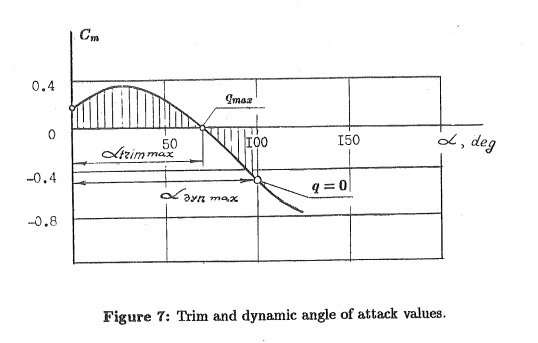
Okay. But AOA attained during a spin or a temporary overshoot is a bit different then a steady state. For example, Su-27 can achieve a steady state constant AOA of 75 degrees.
I have reviewed the materials I have, and it can be divided into two perspectives. The first is the engineers "perspective": the steady state alpha the Su 27 is approximately 33-40 degrees.
Above approximately 30 degrees AoA, unstable transverse moments (roll, yaw) begin to appear, manifesting as nose slice, wing rock, etc. The control surfaces gradually cease to be effective.
Overshoot AoA above 40 is possible – for example, the Cobra manoeuvre – but the aircraft is uncontrollable.


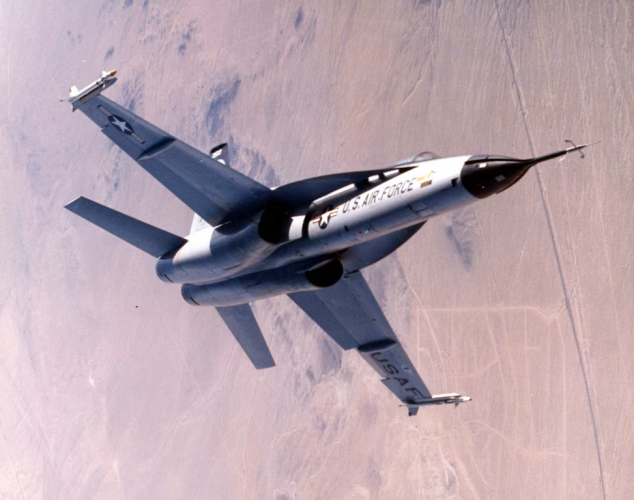
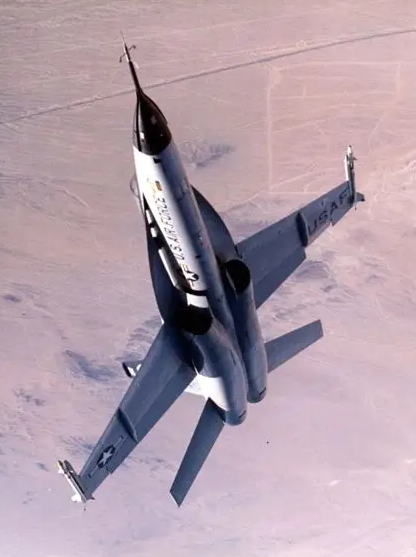
su27.jpg
The second is a practical view, from the aircraft manual: The maximum permissible alpha is 24 degrees, and it is recommended not to exceed the AoA limit. Above 28 AoA, the aircraft is uncontrollable because the following may occur:
Loss of control – the elevator and rudder cease to be effective; the pilot cannot control the aircraft in the longitudinal and lateral axes.
Stall – there is a loss of lift on the wing, and the aircraft goes into an unintentional dive unless the pilot reacts immediately.
Automatic control failure – in this area, the SDU and OPR systems are no longer able to stabilise flight because the control moments are weaker than the aerodynamic deviations.
Spin hazard – in the event of asymmetric flow (e.g. asimetric thrust or vortex separation), there is a risk of transition to rotation around the longitudinal axis, which is the most serious condition.
 
Last edited:
Even though the operational limit was lower than the F-15, the Mig-29 can still fly far beyond 28° in combat and the limiter is designed to be overridden by simply pulling harder on the stick (37lbs of stick force with a couple grams I forgot exact). The F-15's edge of envelope angle of attack is 40° before it departs regardless of higher operational limit. What is the operational limit for the F-15 anyway?
The added weight of 37 pounds in the MiG-29 is 17 kg, which is quite a lot.

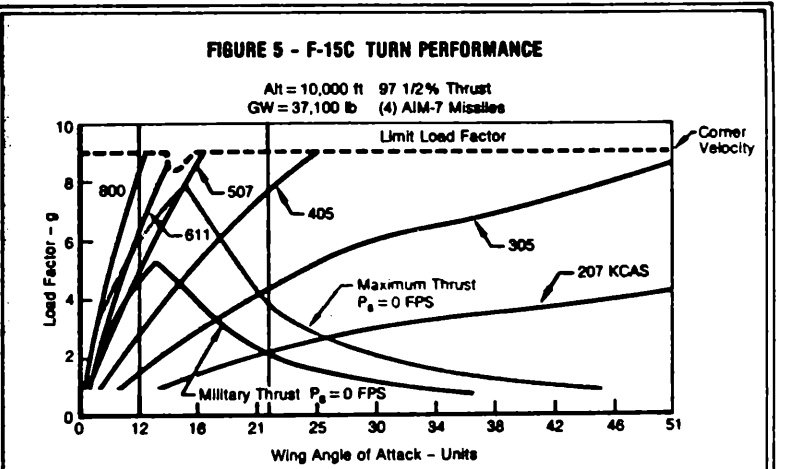
The operational AoA limit for the F-15 depended on the aircraft configuration, fuel quantity, speed, and pilot. In the ideal configuration and speed, it was possible to achieve an angle of attack of around 40° (at very low speeds, an angle of attack of 70° can be achieved for a short time). Otherwise, at an angle of attack of around 25°, the pilot will feel strong vibrations (strong buffet), but in reality this is wing rock (asymmetric vortices form on the wing, causing the wing to rock up and down). It is possible to exceed an angle of attack of 25°, but it is important to know when. It is also necessary to know when not to do so – there is a risk of a spin (the area of reduced stability is M 0.5–0.76, above 15,000 ft MSL, 30–34 AoA held for more than a few sec.
The F-15 was designed for excellent AoA characteristics.


f-15 graphabc.jpg
 
Last edited:
The added weight of 37 pounds in the MiG-29 is 17 kg, which is quite a lot.
37lbs or 17kg is quite a lot?? I must be a superhero because I can pull over 6x times that weight with two hands & throw 17kg all day long one hand over my head no problem. It's no heavier than any medicine ball or regular old barstool (not that I have thrown many barstools in my day).

Now considering classical mechanics: Leverage. a control stick in an aircraft is essentially a lever. When a pilot moves the stick, they're applying force at a distance from a pivot point, which creates a torque that is transmitted (via cables, rods, or in fly-by-wire systems, electronically) to the control surfaces. This lever mechanism allows a relatively small pilot input to produce a much larger movement of the control surfaces, effectively amplifying the force. This principle is rooted in classical mechanics, particularly in studies of statics and dynamics.

17kg is absolutely nothing to any pilot engaged in the extreme stress environment under the mass adrenaline dump of aerial combat. I can assure you.

All modern aircraft have similar mechanics or force feedback type similar to the MiG-29's SOS-3M. The F/A-18 has force feedback (forgot the weight) actively working the entire time pulling the stick away from in the downward pitch direction if you excel the operational limit. The limits at 22° when the FLCS begins applying force... that is lower than the MiG-29. That is not even post stall, but within the control envelope of fixed wing aircraft in general.
The F/A-18's stall warning alarm already goes off at a mere 32°. At 55° angle of attack the aircraft departs (F-16C is 60°). That is stated in manual & by the Chief designer behind the aircraft's leading-edge design, & no, that does not entail "sustaining" it in any prolonged periods whatsoever either. The manual states sustaining in short periods is achieved at 32° where the stall warning initiates. The F-18 lacks the forward acceleration and thrust to weight to "sustain" a notable angle of attack & lacks the ability to regain that loss of energy effectively when it does stall.
Of course, if the aircraft never had the thrust or the lift to back up the capability in the first place, then does a tactical application of supermaneuvrability with the use of helmet sights and high off bore missiles seem just like throwing up a "Hail Mary".
Even though the F-22 exist & all 5th generation fighters designed primary mission air superiority are required. F-22 now just getting the helmet sight.

The F/A-18 is not a good aircraft for alpha flight whatsoever, its weak engines, poor vortex flow, narrow cylindrical fuselage (a fundamental no, no in vortex dynamics), narrow LERX not sufficient to channel airflow out to the outstretched poorly swept wings and excessive flap size blocks airflow from the canted out vertical stabilizers at high AoA (why it is forbidden to fly at 20° alpha (iirc) while at 50% flaps deployed).

Boeing had to step in and fix w/Northrop the poor alpha, lift capabilities in the Super Hornet so much that it's not even considered the same aircraft as the legacy Hornet, but a new altogether.
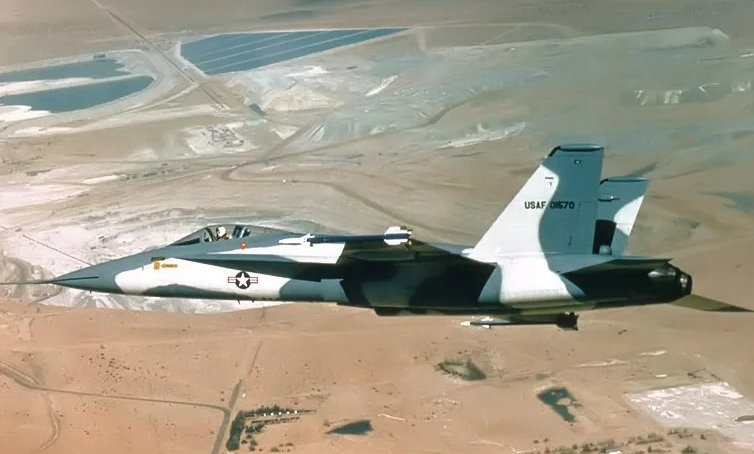
The F/A-18 Legacy Hornet is not even worthy of a full (F) fighter designation & is inferior to the fighters of the FX & the LFX. The F/A-18 is not the YF-17 either. The LERX of the Legacy Hornet is not the original cobra hood LERX of the YF-17, the chines and nose vortex generators that both Prototype 72‑1569 & Prototype 72‑1570 had equipped were deleted & stripped off in the serial production in effort to cut down production cost for the NAVY besides the fact it was made heavier for carrier airworthiness certification with no relevant increase of thrust to offset.


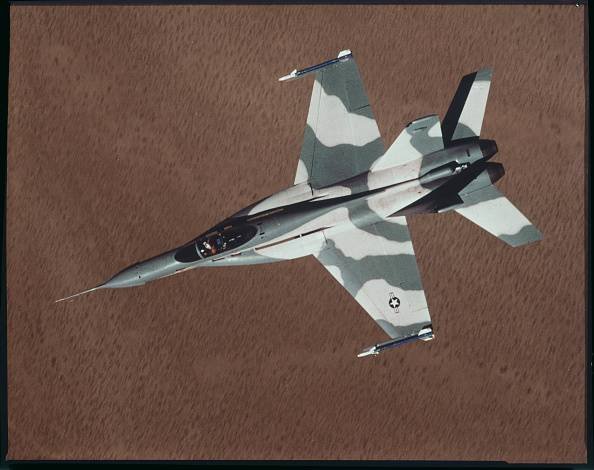
Prototype 72‑1569 & Prototype 72‑1570 "Cobra Hood" LERX & nose chines & pitot vortex generator.
1750638241112.png Screenshot 2025-06-22 171712.png

OSK.jpg Screenshot 2025-06-22 171641.png

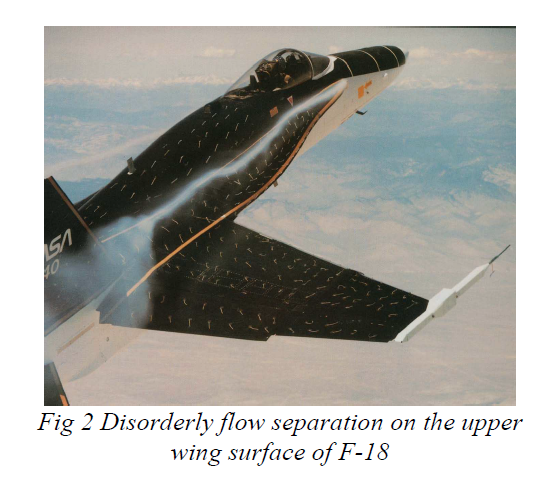
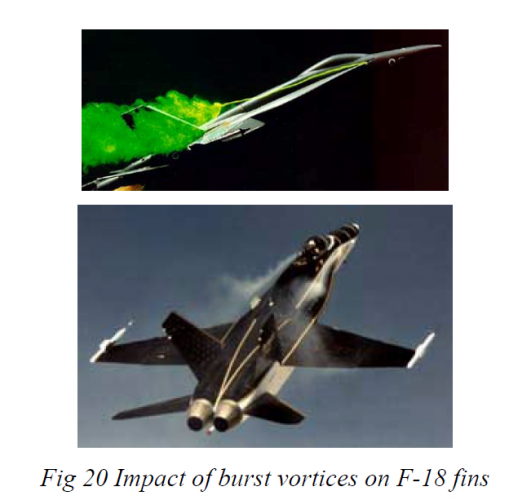
Here are a couple visual examples of the poor alpha capability of the legacy hornet. Poor lift at angles of attack, rapid degradation & vortex break down & burst before that airflow ever makes it to the aircraft's trailing edges. The "vortex rumbles" that is frequently referred to in operational manual of legacy hornet is caused by this poor optimization & asymmetrical vorticity that the forebody leading edges produce that instead only drastically shorten the life of the airframe in placed like the vertical stabilizers.

Screenshot 2025-06-12 195219.png 1750557465250.png


Let me put it this way, the vortex flow was so weak in the LERX they had to take a drill bit to it & bolt on a strake on top of the LERX in effort to enhance vorticity to get some airflow reach the vertical stabilizers.
Again, they resorted jury rigging a vortex generator on top of the F/A-18 's vortex generator to get some vorticity out leading edges... a strake mounted on another strake to offset design.
1750565540839.png

The F/A-18 legacy Hornet at the end of the day is the serial produced version of the reject fighters in the Air Force's LFX that the NAVY were forced to adopt due to lack of program funding to obtain a contractor to design a fighter for themselves. The YF-17 chosen being a dual engine fighter which was doctrinal requirement of the NAVY at the time, of course a lack of funding to maintain the F-14 Tomcat is a reason later down the line. The Tomcat being the premier air superiority (fleet defense) platform which was the NAVY's true love eventually had to retire. The Tomcat is another technologically legendary, combat proven aircraft optimized for peer-to-peer strategic threats, not counter insurgency in the War on Terror which the F/A-18 excelled at as a strike platform and projection of power in that now increasingly less effective domain that drones have already taken the place of for the most part. Today, the call for the 6th generation & the expanded mission capability of the new air dominance role with the F/A-XX program is a return to the principal concept of strategic peer-to-peer warfare with that theatre projected to take place with a new principal adversary over the vast indo-pacific. A battlefield where even the Super Hornet finds obsoletion.


The F-15 was designed for excellent AoA characteristics.
Never said it wasn't. They are very similar to control and integral lift in the fuselage, Tomcat as well. Amazing aircraft indeed.
 
Last edited:
That's 17 additional kg to whatever the normal control load is.
Thank you, precisely.

Because the SOS-3 is a soft limiter & type of force feedback system to the same end just like any other digital flight control law governed by alpha & airspeed. If there is no additional force applied "to whatever the normal control load is" as you explain, then there is no feedback to limit & keeping a pilot actively informed that he is exceeding the operational limit unless desired & or preventing accidental dynamic overshoot being distracted in the heat of combat, right??

It does not matter what unit of measurement it's converted to. The average man is easily capable of producing many times the force of 37lbs by pulling on a mechanical control lever situated between his legs.
I do speak for all average, able body men on this btw. I also guarantee it.

The SOS-3 is a soft limiter meant to remind the pilot he near operation limit set by the VVS that was designed to be altered by the customer. They SOS-3M was subjected to change several times throughout the pre-production history of the Mig-29.

Going from 26° to 22° (no tactical override). Then incrementally increased to 24° (tactical override enabled), back to manufacturer's default 26° & then increased to 28° (tactical override enabled). An operational limit does not reflect the aircrafts edge of envelope capability. The MiG-29 is already classified supermaneuverable by the US long ago & has been seen in demonstration at domestic airshows in the US & Canada performed by Soviet pilots before the dissolution.
 
Last edited:
@ZIGGY-2014 isn't going to be swayed from his beliefs by any counter evidence so it's pointless trying to argue. He will tell the pilots that flew both types that their opinions are wrong.
 
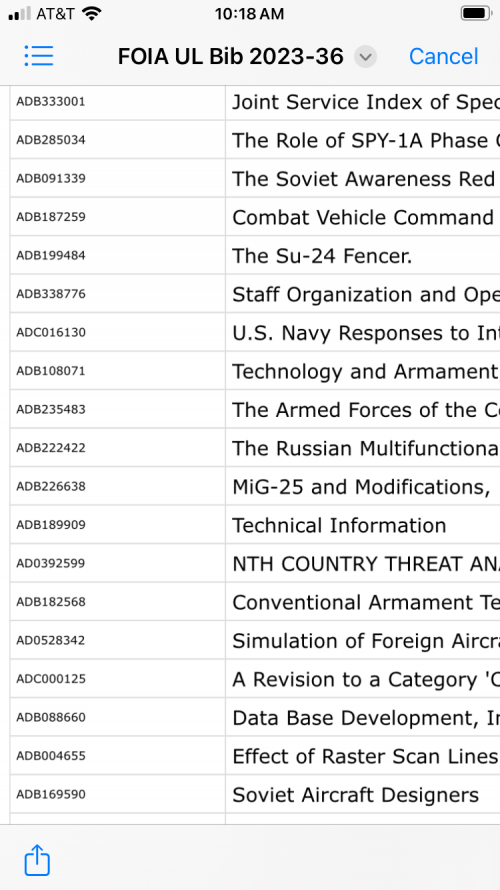
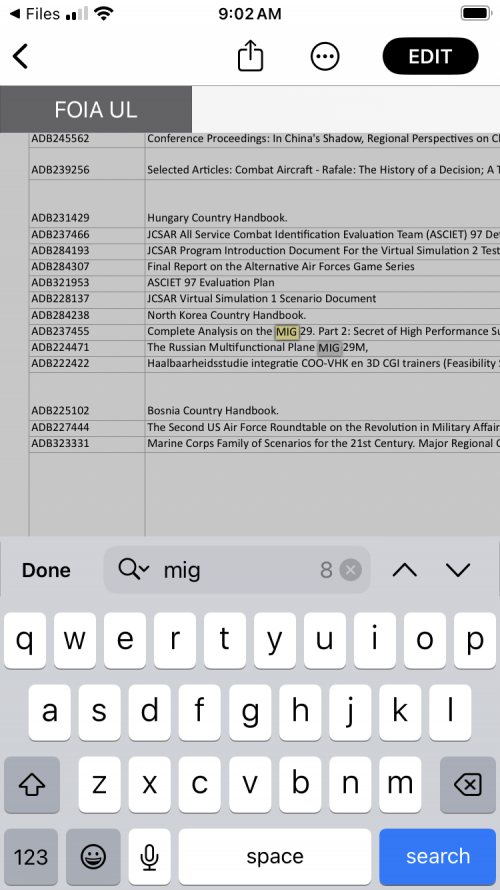
I attempted to get a document

“Complete Analysis on the MIG-29. Part 2: Secret of High Performance Superior to the F-16?”

A 428 page comparison between the two. Unfortunately I was given the wrong accession number and the original authority cannot find the document. In a few months I’ll try again with DTIC to get the correct document.
 
We don’t even have a few seconds! Engage now F-2! Now!
So the accession number was from the document listed above, the North Korea handbook. The document below came up on another sheet. It looks like the accession numbers are misaligned by one?
 

Attachments

  • IMG_1738.png
    IMG_1738.png
    279.2 KB · Views: 33
  • IMG_1736.png
    IMG_1736.png
    402.2 KB · Views: 39
So the accession number was from the document listed above, the North Korea handbook. The document below came up on another sheet. It looks like the accession numbers are misaligned by one?
Close enough. They should give it you.
 
MiG-29 supermaneuverability?

Some articles :

"But when all that is said and done, the MiG-29 is a superb fighter for close-in combat, even compared with aircraft like the F-15, F-16 and F/A-18. This is due to the aircraft’s superb aerodynamics and helmet mounted sight. Inside ten nautical miles I’m hard to defeat, and with the IRST, helmet sight and ‘Archer’ I can’t be beaten. Period. Even against the latest Block 50 F-16s the MiG-29 is virtually invulnerable in the close-in scenario. On one occasion I remember the F-16s did score some kills eventually, but only after taking 18 ‘Archers’. We didn’t operate kill removal (forcing ‘killed’ aircraft to leave the fight) since they’d have got no training value, we killed them too quickly. (Just as we might seldom have got close-in if they used their AMRAAMs BVR!) They couldn’t believe it at the debrief, they got up and left the room!

"They might not like it, but with a 28deg/sec instantaneous turn rate (compared to the Block 50 F-16's 26deg) we can out-turn them. Our stable, manually controlled airplane can out-turn their FBW aircraft. But the real edge we have is the ‘Archer’ which can reliably lock on to targets 45deg off-boresight.

https://www.16va.be/mig-29_experience.htm
A German Air Force (Luftwaffe) colonel who was able to fly the MiG-29 after the reunification said: “that’s a rocket – as simple as that.”

''Inside ten nautical miles I’m hard to defeat, and with the IRST, helmet sight and ‘Archer’ I can’t be beaten. Period. ''

https://migflug.com/jetflights/german-luftwaffe-mig-29-fulcrum/
I wrote before that exported MiG-29A/B had limitations with R-73E and that 45deg for the lock-on came from the SCAB-A/B IR/optical blocks besides the ILS-31M HUD. On the other side ,VVS pilots in the MiG-29 ( 9.12/9.13) from 1983, could lock-on target during possible dogfight with max limit of +/- 60deg. From 1992 on the MiG-29S/9.13S with R-73M/ML that limitation was 75deg.

From the former IAF MiG-29B pilot .....

The MiG-29 is a ‘Super Hunter’: Account from a MiG-29 fighter pilot​

https://hushkit.net/2019/09/07/the-mig-29-is-a-super-hunter-account-from-a-mig-29-fighter-pilot/

MiG-29 versus Mirage 2000: personal account from Air Marshal Harish Masand​

https://hushkit.net/2019/08/12/mig-...al-account-from-by-air-marshal-harish-masand/
MiG-29 even armed with all six AAM's and Cobra maneuver ( 90 degrees) ,Farnborough 1990 .

View: https://www.youtube.com/watch?v=n_4WBQDtQ70


Cobra maneuver was displayed by some Russian, German, Czech,Hungarian and Bulgarian regular fighter-pilots not only by the MiG test pilots. 'Cobra' is good for the air shows but not for the real air battle.

Story of the Bulgarian AF MiG-29 fighter-pilot Capt. Lubomir Slavov ...

Opinion pilot MiG-29

''Captain Lubomir Slavov, Flight Safety Officer in the 2 Fighter Squadron, is one of the four pilots of the Bulgarian Air Force who underwent their initial training for the maneuvering combat under the guidance of the 93 Squadron instructors in the "Mako Javelin" exercise at 2008 in Otvechay when asked about his impressions of the near-maneuverable battles “MiG-29 against F-15 and F-16”, he said: “It’s very difficult to find a real enemy for the MiG-29 in a close maneuver fight, since this fighter was from the very beginning designed by In order to have excellent performance in close combat, and he still remains one of the best fighters in this category thanks to the redundant and aerodynamic design, which gives him excellent maneuverability. I could see firsthand his superiority in maneuverability in the course of several international exercises, in which the power of the MiG-29 was used to its fullest, especially at low speeds. Given my experience in fighting against F-15 and F-16 with different types of aircraft, it was very difficult for me to survive in a close maneuverable battle against F-16 Block 30, although Block 40 and 50, as well as F-15C are not the most serious opponents among those I have come across. F-15 and F-16 Block 40 / 50 are great aircraft, but close combat with various types of aircraft against the MiG-29 is not their strength. In a battle out of sight, the MiG-29 is technologically inferior to them. According to my modest observations from the cockpit, both of these types of aircraft lose energy faster than my plane: Block 40 faster than F-15 and F-16 Block 50. ”

https://en.topwar.ru/38368-aleksand...ovki-letchikov-istrebiteley-vvs-bolgarii.html
Capt L. Slavov had a chance to fight with F-16C Block 50 in sim. dogfights w/o HMS-NSTs 'Schel-3UM' and R-73E but only with R-60MK ( UZR-60M exactly ) against USAF pilot with JHMCS and AIM-9X. He won 5 times in a row. So there is not all in HMS+R-73 combo but really in the MiG-29 maneuverability. Btw ,there is many videos on YT-channel where we can see Polish AF MiG-29A vs F-16C in sim dogfights. After only one or two circles,MiG-29A would go behind him or to 'six o' clock position'. Same happened with that MiG-29 when he fought with much bigger and heavier Su-27 in many sim. dogfights during 1989 in the Lipetsk-2 air base. Su-27 ( with analogue FBW) had more energy/power (SEP) during horizontal maneuvering-circling. It was described by the famous MiG test pilot Valery Menitsky in his book : «Моя небесная жизнь»

https://testpilot.ru/review/sky_life/
 
Last edited:
Interestingly, Soviet pilots in regular units did not actually perform any manoeuvres using ‘super-manoeuvrability’. Their aircraft, such as the Su 27 and MiG 29, were capable of doing so, but their pilots did not practise or use it. All those impressive manoeuvres were performed at air shows by specially trained pilots, often test pilots from the company in question. In practice, however, they stuck to ground guidance and fired missiles on command from the ground, then returned home.
If a Soviet pilot happened to encounter a Western pilot in aerial combat, the difference would be in the ‘schmel’ (helmet-mounted sight) and R-73, not the Cobra. That is, if the Soviet pilot was trained in the use of a helmet-mounted sight.

Yes, they did it from the beginning of the operational service of the MiG-29 in the VVS.First oper. unit was 234th Guards fighter aviation regiment in the Kubinka air base from july of 1983.
Sequences from the 0:40 ...

View: https://www.youtube.com/watch?v=TzNIxbTrTXo
 
If I may ,there is more I hope interesting 'material'...

MiG-29A vs F-16C ,sim. dogfights :

https://theaviationgeekclub.com/fir...hat-its-like-to-dogfight-against-the-fulcrum/
Polish AF MiG-29A in Israel for the sim. dogfights against F-15/-16 ( it happened in 1997).

https://www.twz.com/israels-secretive-mig-29-fulcrum-test-program
MiG-29A vs F/A-18C ....

Dogfight MiG-29 vs F-18 at "Red October" War Games​

View: https://www.youtube.com/watch?v=Mn1sBfIlUjY&t=1320s


Dogfights,dogfights,dogfights....but in the real air combat happened something else.

Eight years before mentioned Ethiopian- Eritrean war where three MiG-29B were shot down in the BVR combat happened as we know the First Gulf war(Oper Desert Storm) where IqAF lost three of its MiG-29B ( brothers Saed were KIA and also Capt. Jameel Sayhoud was shot down but ejected).All three were shot down by AIM-7M launched from USAF F-15C. Then only a month after that Feb. 1999, started NATO intervention in FRY. Former YuAF lost five of its MiG-29B by AIM-120B/C4 launched by the USAF F-15C/-16CJ. Of course, NATO planers knew that there will be no situation in which YuAF MiG-29's could engage enemy fighters in possible close-in combat. YuAF MiG-29 pilots were well trained in the use of HMS+R-73E. Only YuAF MiG-29B fighter-pilot who could do something in the BVR combat was Major B.Z. who locked-on NATO fighter at 35km in the Vstrechya combat mode but unfortunately both R-27R1 were inoperative and he even didn't get '27R' indication during lock-on process.UkrAF MiG-29's are no match for the RuA&SF fighters ,especially Su-35S.

Sorry for some combat records data.

MiG-29 was/is excellent in the sim. dogfights even today but there is no more real dogfights for decades now.Today we know that one fighter can be shot down from more than 200km away.

Soviet VVS 16th Air Army (in GDR) MiG-29 pilots practised BVR combat against Su-27's from the 4th Air Army stationed in Poland.

https://www.scribd.com/document/214...o-Fly-and-Fight-in-the-Mikoyan-Mig-29-Fulcrum
 
Last edited:
If I may ,there is more I hope interesting 'material'...

MiG-29A vs F-16C ,sim. dogfights :

https://theaviationgeekclub.com/fir...hat-its-like-to-dogfight-against-the-fulcrum/
Polish AF MiG-29A in Israel for the sim. dogfights against F-15/-16 ( it happened in 1997).

https://www.twz.com/israels-secretive-mig-29-fulcrum-test-program
MiG-29A vs F/A-18C ....

Dogfight MiG-29 vs F-18 at "Red October" War Games​

View: https://www.youtube.com/watch?v=Mn1sBfIlUjY&t=1320s


Dogfights,dogfights,dogfights....but in the reality happened something else.

Eight years before mentioned Ethiopian- Eritrean war where three MiG-29B were shot down in the BVR combat happened as we know the First Gulf war(Oper Desert Storm) where IqAF lost three of its MiG-29B ( brothers Saed were KIA and also Capt. Jameel Sayhoud ,ejected).All three were shot down by AIM-7M launched from USAF F-15C. Then only a month after that Feb 1999, started NATO intervention in FRY. Former YuAF lost five of its MiG-29B by AIM-120B/C4 launched by the USAF F-15C/-16CJ. Of course, NATO planers knew that there will be no situation in which YuAF MiG-29's could engage enemy fighters in possible close-in combat. YuAF MiG-29 pilots were well trained in the use of HMS+R-73E. Only YuAF MiG-29B fighter-pilot who could do something in the BVR combat was Major B.Z. who locked-on NATO fighter at 35km in the Vstrechya combat mode but unfortunately both R-27R1 were inoperative and he even didn't get '27R' indication during lock-on process.UkrAF MiG-29's are no match for the RuA&SF fighters ,especially Su-35S.

Sorry for some combat records data.

MiG-29 was/is excellent in the sim. dogfights even today but there is no more real dogfights for decades now.Today we know that one fighter can be shot down from more than 200km away.

Soviet VVS 16th Air Army (in GDR) MiG-29 pilots practised BVR combat against Su-27's from the 4th Air Army stationed in Poland.

https://www.scribd.com/document/214...o-Fly-and-Fight-in-the-Mikoyan-Mig-29-Fulcrum
Their was a dogfight between F-15C and Fulcrums in the first Gulf war, but it ended in a maneuver kill.

https://theaviationgeekclub.com/usa...-turning-fight-of-operation-desert-storm/amp/
 
Their was a dogfight between F-15C and Fulcrums in the first Gulf war, but it ended in a maneuver kill.

https://theaviationgeekclub.com/usa...-turning-fight-of-operation-desert-storm/amp/

Actually, it never happened ...

This is Capt Jameel Sayhood's story .

''Talking about the fact that things "it was in Iraq during the invasion" crept a lot of doubt about all publications and news releases. But recently came across a very interesting subject despite the chaos that engulfed Iraq and a few number of relatively independent assessments of the Gulf War in 1991, still dominates the U.S. version of the events. With respect to air dimension of the conflict, this version contains a number of myths, like the fact that the Iraqi air force was not shot down any aircraft of the coalition forces. However, it never corresponded Iraqi point of view and the evidence on the ground.

This subject looks at the events almost fifteen years ago (date of interview) the Iraqi side. It is an attempt to give a balanced, objective and reasonable (as possible) an analysis of the air battle in the Gulf, to correct the many man-made myths and see the real success of Iraqi air defense and air force during the conflict. The work is based on the personal experience of participation in the war one of the authors, as well as data on the following official Iraqi sources: Um Al Ma'arik (Methods and tactics of the enemy air force input War for the Motherland ", a joint publication of Iraq's Ministry of Defense, Air Force and Air Defense Command Iraq, Iraqi Air Force Directorate of Intelligence. Part 1, Fall 1991 (« List of enemy aircraft shot down during the war for their country, "a joint publication of Iraq's Ministry of Defense, Air Force and Air Defense Command Iraq, Iraqi Air Force Directorate of Intelligence. Part 1, June 2000).
Four Tornado GR.1 of 15 Squadron, Royal Air Force (No.15Sqdn. RAF) nearer to their goal, the Iraqi Air Force Base, (AI-Qadissya). To complicate action defense, they were in extended order. An external load carrying concrete-British bomb JP.233, as well as anti-radar missiles AGM-88 HARM - in case the Iraqi anti-aircraft gunners will try to turn their radar. Suddenly, as to the goal was no more than 50 seconds of flight, they are blinded by an explosion, almost swallowed up the leading plane - Tornado GR.1 board ZA396/GE. After a moment, this aircraft crashed into the ground. Flight-Lieutenant David Waddington (David Waddington) and Robert Stewart (Robert Stewart) were killed instantly. Shocked by the unexpected loss of a leader, Her Majesty's pilots dropped their cargo at random and were on the run, heading back to Saudi Arabia. After landing, reminiscences come over how miserable their comrades were killed, they came to the conclusion that the aircraft was struck by anti-aircraft missiles with infrared guidance head, possibly complex Roland-2. So they reported on their return to their home base in Bahrain. However, in reality it was not so...

In fact, the British plane was shot down by a lone MiG-29 of the 9th Iraqi Air Force Squadron, piloted by an experienced pilot to Mr. Jameel Sayhood. For him, this full day of events - January 19 - began with reports that a group of enemy aircraft approaching the air base of Al-Waleed better known in the West as a base NC. This important airfield served as the center of the 2nd Iraqi air defense sector operations (2nd Iraqi AD SOC), manages all of the air defense forces in the western part of the country. The approach of the enemy entered the main center of defense in Baghdad, as well as one-and-line sector, located in the town of Taji north of the Iraqi capital. In the management of the 1st sector were interceptor base with Al Qadisya. The commander of the sector, which itself was the pilot of the MiG-21 and MiG-23, decided that events may develop in three possible scenarios: either the enemy will attack the base (Al-Qa'im), or Tammuz, the West over known as AI-Taqadum, or Al Qadisya. He told his staff: "Do not worry; we'll calculate the enemy's intentions." captain Sayhood, as he told the author, having received a warning about a possible departure, the alarm went to his MiG-29, hidden in one of the concrete shelters. Along the way he thought of his little village in the south of Iraq, where his father owned a farm. How is it now? Having come to the shelter, he said that all ground personnel is in tension. After a quick greeting, he inspected the aircraft and its armament, consisting of two R-27R missiles with radar-guided missiles and two thermal R-60MK. Captain vigorously climbed into the cab and completed pre-flight inspection. All systems were normal fighter.
After half an hour had passed the main group attacking al-Walid, and turned to the east. It’s continuously accompanied several Iraqi radar, despite the damage that they have caused coalition aircraft in the first two days of the conflict. About 12 hours 20 minutes Seyhood team got ready to take off to intercept low-altitude targets. He knew that he spotted the enemy radar P-19 Soviet-made, specially designed to detect low-flying targets and located in the town of (Heat) near Al-Qadisya. Seyhood already had the experience of low-altitude interception during the exercise in the period from September 1990 to early January 1991, and it struck him just the radar. So he was pretty sure that if the enemy planes will try to attack airfield guidance will be accurate...

Finally, at 12 h 26 min order came. Seyhood quickly took off when he turned off the afterburner, received a message that the enemy is (on to right and below him). Iraqi captain Seyhood turned his head and immediately noticed the enemy. At a distance of approximately 500 m below his "MiG" was a British "Tornado". The sun was at its zenith, so the characteristic silhouette of the machine easily recognizable against the background of the desert. Jamil saw both the British pilots’ helmets. Not including airborne radar, undetected opponent Seyhood chose missile R-60, and prepared it for launch. He turned his plane and was attached to the tail of "Tornado", the crew of which, apparently, was unaware of the presence of Iraqis since did not perform any maneuvers. Soon Seyhood noted on the HUD flashing letters "ER," which meant the resolution start, and heard a sharp signal in the headphones of his helmet ZS-5. Seyhood pressed the button and saw combat as a P-60MK rushed to the goal. Looking at the "Tornado", he noted that both the British turned to him their head, their eyes met for the first and last time. A bright flash in the rear fuselage "Tornado" indicative of a direct hit, and a second later a fireball has already tumbled into the desert - the Brits were flying at an altitude of only about 70 meters This happened in 12 hours and 30 minutes January 19, 1991, and " Tornado "Waddington and Stewart became the second confirmed aerial victory of the Iraqi air force in the war. Events moved very quickly, Seyhood continued his mission defending Iraqi airspace and soon the Iraqi pilot received a warning from the ground of a nearby other enemy aircraft. It was tow F-15C Eagle from the 58th Tactical Fighter Squadron (58th TFS / ZZrd TFW), manned by-us Caesar Rodriguez and Craigh H. Underhill. A moment later, Jamil received signal warning system SPO-15, that his plane was captured by the radar of one of the "needle", which released him on an AIM-7M Sparrow. Seyhood glanced over his left shoulder and saw the traces of two missiles flying toward him! Then he abruptly, with an overload of about 9G, turned towards them. Capturing the first missile failed to hit him"evaded", but after a few seconds the second came almost head-on aircraft Seyhood. The captain gave his "MiG" in another sharp turn, but at this point there was an explosion, and the entire instrument panel in front of Jamil lit with red light alarm, fired by Rodriguez and struck the MiG-29. Seyhood aircraft was falling apart and only had to eject, and within seconds, he was swinging under the parachute canopy. Coming down, Jamil said that his burning "MiG" dropped less than 2 km from the "Tornado". Looking at the wreckage of his victim and his own plane, Jamil has not had time to regroup and hit the ground too hard. A sharp pain in his right leg forced him to stay there. Appeared in a few minutes peasants helped him get into a car and taken to a local hospital. It turned out that Jamil had broken his leg and was not able to fly anymore. He was promoted to the rank of Major General and was dismissed from the Air Force. Until 2002 confirm that the British "Tornado" was shot down by him. And was restored in the Army, was awarded two medals for bravery and a large sum of money.
In United State of American the battle is described somewhat differently (kind of mythology). It states that on January 19 had been shot down two MiG-29 (one - Rodriguez, the second - Underhill). However, the Iraqi Air Force documents provide irrefutable evidence that the day was lost only one of this type of aircraft, The reason is that Rodriguez and Underhill mistakenly thought if they were attacked by two different "MiG", in fact, they fired missiles at one and the same plane. At the same time, documents USAF found that the rocket Underhill released first. Rodriguez did it for a couple of seconds later, after ascertained in the absence of a counter-attack by the Iraqi pilot. Seyhood story shows clearly that Underhill missile evaded and missed, and the victory must be recorded on the score Rodriguez.''

This is the story of Capt. Qasim Khalaf Hamad.

The famous DS dog fight F-15s Vs MiG-29s Iraqi perspective

''On Jan 19 1991 the Iraqi AF mounted an intercept mission with 2 MiG-29s to shoot down E-3 AWACS aircraft and as a result engaged by US F-15Cs ... The story is documented by western media but No one heard the Iraqi story ... The US version claims 2 MiG-29 were downed while the Iraqis claims only one ...

This is the story according to Iraqi pilots..
Part I


Captain Qasim Khalaf Hamad - Squadron 39 - Alwaleed / H3 AB

The third day of the war started with Fog and scattered clouds with poor visibility in the early hours of the morning ... Black smoke mixed with fog ... Smell of explosives and bombs cover all the aircraft shelters with unprecedented silence !!
But inside the base shelters the squadron members were working with all their will to detect targets and to make the right decisions for intercept.
The air defense sector had notified us that there is a formation of 4 RAF Tornados approaching the base probably carrying anti-runway bombs .... And there is another formation of 4 F-15C with an AWACS aircrafts probably providing top air cover for them ..


Captain Jameel Sayhood and Captain Alaa Abdul Aljabbar were on standby alert in case the Tornados headed to our base ... I was on standby also as No.2 with my formation leader Major Qutaiba Saeed .... But the Air defense sector ordered us to try to attack the AWACS aircraft which is very important target and we might have a good apportunity because the F-15Cs might be busy protecting the British Tornados which may leave a small chance for us to sneak undetected toward the AWACS but in case the F-15Cs were vectored toward us we had to break the engagement and return to base because 4vs2 is bad sitiuation for us ...
We took off at 1145 Jan 19 1991 and soon we reached 10,000 feet , the GCI directed us toward the US formation and to my suprise no one engaged us ... I switched ON my radar and prepared R-27R missile and locked the target the Target was in my range and I fired but the Lock was broken !!!! Definitely it was powerful ECM .... The GCI by this time had notified Major Qutaiba Saeed that 2 F-15Cs are turning toward us ... So the he ordered me to break the engagement as there is no use to continue the attempt .... But I was determined for one last try ... I repeated my attempt again but the lock was broken also ... So I decided to head back to base with only 2 heat seeking missiles remained on board .. By this time I was alone as my formation leader Major Qutaiba Saeed had left and his aircraft was carring the French Remora ECM while my aircraft hadn't ....
But before I turned the 2 F-15Cs already reached me and we were in the merge .... One passed to the right and one to the left and I saw the sun reflection over the glass of their canopy .... I turned my head to the Right and noticed one of them is trying to put me in his direct sight while the other has seperated from the formation and headed high .... I pulled very hard turn 9.5 G for 3-4 seconds and become behind one of them ... I tried to prepare R-60M heat seeking missile but my SPO-15 notified me of I am being locked from 6 o'clock !! I pulled to up left then rolled down right ... Both of them moved left while I continued right toward H3 at 8,000 feet.
By this time Captain Jameel Sayhood joined the fight - who already shut downed a British Tornado ... His aircraft was carrying Remora ECM and we headed again toward the F-15C this time at 5,000 feet ... The F-15C turned again to face us and suddenly my SPO-15 warned me of incoming missile ... Probably an AIM-7 .. I pulled hard and evaded the missile then under less than 1Km I saw another missile probably AIM-9 so I pulled hard again and dropped flares and evaded the missile ... By this time I was head to head with one of the F-15C so I pulled right and he pulled the other way .. By this time the other F-15C had fired two missiles toward Captain Jameel Sayhood aircraft he managed to evade one of them but hit by the other and he ejected ...
I pulled again up and then down right 30 degrees and I break the sound barrier at very low altitude and reached the base with my fuel almost reached zero .... I landed at the base directly without turning around it ( I landed on the opposite site of the runway because not enough fuel for proper landing )..
I was not shut downed or hit the ground as the American claimed ... It probably the breaking of the sound barrier at low altitude and my disappearance from their radar due to ground clutter that made them think I was crashed to the ground ...
And It was Captain Jameel Sayhood who was hit by the missile but I don't know why they Thought the opposite and mixed between us ... It had been over two decades since the engagement and I still lament my self for not able to shut down one of these F-15C.''

DS dogfight MiG-29 vs F-15 Part II

''This is the account of Captain Jameel Sayhood :

After I shut downed the Tornado the GCI ordered me to help Captain Qasim Khalaf Hamad who couldn't disengage from 2 F-15Cs ... So I changed my direction according to GCI instructions and I was thinking in my mind should I try to Pull these F-15Cs to the heavily SAM defended areas or should I look for the merge ... The first Idea was not a good idea because I know the capabilities of American BVR since witnessed what happened in the first night .. So I moved closer to them , then suddenly my SPO-15 warned me of a lock so I used my Remora ECM pod to break the lock which was succesful for a while but Then the SPO-15 warned me about 2 incoming missiles , I pulled hard with 9 G and evaded the first one but the second one impacted my aircraft and the RED LIGHTS IN THE COCKPIT went crazy ... I know I had to eject as my plane was disintegrating and in few seconds I was in my Parachute ... The landing was rough ... I tried to stand but there was sharp pain in my Rt. leg ( later I discovered it fractured ) ... I was looking to the crash site of the British Tornado which was only 2 Km from my position ... Then a local people found me and took me in their truck ...''

Source: f-16.net forum

 
Last edited:
It was my understanding that the US was ahead of the Soviets in regard to vortex control with the LERX on the F-5 series, and continued to remain ahead with the designs of the F-16 and F-18 in the 70s, only seeing competition from the Soviets in the form of the MiG-29 in the 80s. The first Soviet modifications to use such vortex devices would have been the MiG-23MLD?

Anyhow, on the topic of supermaneuvrability (how is that spelt?) the F-14 showed high AoA capability early on, and so did the F-16 when the limiter was not a factor. The focus instead on high instant pitch rate and conservation of energy led to a restrictive FCS.

Unlike either of those-the F-18, which was also flying in the 70s already, outclassed the F-15 and MiG-29 in sustained angle of attack capability. The F-18 while not necessarily capable of a similar Cobra maneuver to the Su-27 offers performance that can be described as better than a MiG-29 and rivaling early non TVC Sukhois.

Yes,that's right. Thanks to its LERX's, F-5 was more agile and maneuverable in close-in combat then either MiG-21 or MiG-23.There was a Soviet story from Summer 1976 about simulated dogfights between them.

Что почитать? Из истории авиации: Northrop F5 vs МиГ-21 и МиГ-23​


https://n2367l.livejournal.com/10624.html
About MiG-23MLD ( Izd. 23-18) :

''The airframe was lightened even further over the ML "lightweight" variant, the wings were upgraded to the new strengthened "Type 4" wing with the "dogtooth" wing root for increased AoA at higher speeds, and were also given new slats and vortex generators to increase low speed performance.The lightened and strengthened airframe plus the increased engine power over its predecessor, the MiG-23M, will be instantly noticable as they provide a major advantage during manoeuvring, allowing the MLD to dogfight almost every 3rd generation fighter it faces, and some heavier 4th generation aircraft too.''

https://hushkit.net/2024/05/12/10-facts-about-the-mad-mach-2-6-mig-flogger-fighter-aircraft/
In the same period ( middle of the 70's) ,Soviets got two new prototypes as future front-line fighters ,lightweight one the LPFI or MiG-29 and heavy weight one known as TPFI/ T-10 ,later T-10S or Su-27S.Both of them got those LERX's ( MiG-29 some thicker and Su-27 narrower).It is interesting that Soviets applied famous USAF Col. John Boyd's ''Energy-maneuverability theory'' with these two new front-line fighters.

https://en.wikipedia.org/wiki/Energy–maneuverability_theory
With the so called post-stall maneuvers like 'Cobra' and the 'Bell',MiG-29 and Su-27 became well-known from 80's then through 90's and after 2000.Also they became well known for its high flight-maneuvering capabilities,SEP, T/W ratio and especially abilities in the vertical plane etc....

MiG-29 won majority of the simulated close-in combats vs NATO opponents ( F-15C,F-16C, F/A-18C and Mirage 2000C).What happened in the real combat situations,that's something else. It is not only HMS+R-73 combo but also agility and maneuverability of the MiG-29 ,that counts on.
 
It was middle of the 90's and this was one TV-reportage on the Batajnica air base near Belgrade.In that base was stationed YuAF's 204th fighter aviation regiment with its 127th fighter aviation sqn named 'Knights' as the sole unit armed with the 16 MiG-29B/UB ( local military designation L-18). Capt. Ivan Sitar was interviewed and he said that NATO fighters would have tactical advantage from distances of 60km and more.He mentioned that while compared his MiG-29 with F-15,F-16 and F/A-18. He was asked if he would dodged AAM's like AIM-7,AIM-9 and AIM-120 and his answer was positive,mentioning that his RWR SPO-15LM would alert him in any possible case( lock on by the fighters radar or by the AAM's own active radar seeker). Then he talked about close-in combat domain,turn performances of the MiG-29 in comparison with western rivals ,flight-maneuvering capabilities and of course about HMS+R-73 combo. After he sat in the cockpit ,we can see integrating of the HMS 'Schel-3UM' on its helmet ZSh-5. It was training mission for the simulating of dogfight.

View: https://www.youtube.com/watch?v=hBUTTePLiGo
 
Last edited:
I have reviewed the materials I have, and it can be divided into two perspectives. The first is the engineers "perspective": the steady state alpha the Su 27 is approximately 33-40 degrees.
Above approximately 30 degrees AoA, unstable transverse moments (roll, yaw) begin to appear, manifesting as nose slice, wing rock, etc. The control surfaces gradually cease to be effective.
Overshoot AoA above 40 is possible – for example, the Cobra manoeuvre – but the aircraft is uncontrollable.


View attachment 774603
The second is a practical view, from the aircraft manual: The maximum permissible alpha is 24 degrees, and it is recommended not to exceed the AoA limit. Above 28 AoA, the aircraft is uncontrollable because the following may occur:
Loss of control – the elevator and rudder cease to be effective; the pilot cannot control the aircraft in the longitudinal and lateral axes.
Stall – there is a loss of lift on the wing, and the aircraft goes into an unintentional dive unless the pilot reacts immediately.
Automatic control failure – in this area, the SDU and OPR systems are no longer able to stabilise flight because the control moments are weaker than the aerodynamic deviations.
Spin hazard – in the event of asymmetric flow (e.g. asimetric thrust or vortex separation), there is a risk of transition to rotation around the longitudinal axis, which is the most serious condition.
I am very confused by this post! You post. Picture, and the paper that this picture is in explains (along with what the picture shows) that steady state AOA is 75 degrees! Yes it is true that above 30 degrees AOA the lateral control is degraded to practically nothing, but both this picture and the paper it’s from are showing a steady state maximum AOA of 85 degrees. It is showing pitch force with stick all the way back, which is 0 at 75 degrees, with AOA above 75 degrees possible only from the momentum of the cobra maneuver. It is still likely tactically a noteworthy position as you do not need lateral control to aim the HMS within its +/-60 degree FOV!

For other information in this thread, once Menitski said when flying western pilots in the Fulcrum and pushing past the AOA limiter, that he believed to be routinely reaching AOA of 45 degrees. I’m sure more then that could be attained in the right condition and that these American pilots were rarely pushing it 100%.
 
I was just thinking of a "75% hit, 25% miss" or something, not actual modelling.
I was under the impression that contemporary trainings with ACMI pods (or similar tech) would allow the recording of aircraft flight data, which can be used to calculate missile hit probability based on modelling. Not in real time of course, but after the training during debrief or something maybe the data can be exported and analyzed.
 
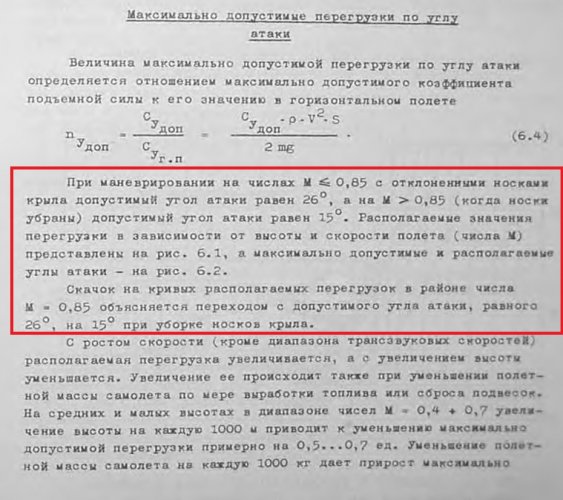
Recently reviewed some docs from my collection, I'll just leave it here. This is what engineers thought of 29's maximum safe AOA.
 

Attachments

  • AOA1.jpg
    AOA1.jpg
    202.3 KB · Views: 28
  • AOA2.jpg
    AOA2.jpg
    137.1 KB · Views: 29
Last edited:
You will find nearly identical charts and sentences about Su-27. “Safe” can be a pretty relative term
Yes, and you are totally right. These manuals were made for ordinary pilots trained by typical program. And of course these were written for a reason - they did a lot of flight testing before the aircraft went into regular units. And considered these were the safe limits. Of course there is some couple of spare degrees you can pull above maximum and still be in "safe" zone. And this was probably also considered when they wrote these manuals, just like with G limits, etc.

As already mentioned earlier in this topic, all those supercritical stuff is done only by very professional, test pilots, often on modified aircraft. And even they sometimes pay with their lives trying to exceed the limits - just remember, for example, Timur Apakidze crash.

But yeah, the topic itself is interesting.
 
It is written in practical aerodynamics that the only “unsafe” part of exceeding the MiG-29 AOA limit is lack of lateral control. Lots of work went into improving its lateral control at high AOA from rudder-aileron cross link through ARM-150 actuators to raising ailerons 5 degrees and even the pitot tube.

Thus, at high AOA above 26-30 degrees your engines will work fine, you can still control pitch with stick pressure, but rudder and aileron will be either sluggish or produce negligible roll and yaw rates. Practical aerodynamics shows that even at 30 degrees the roll rate can be 15 deg/s or more. Thus, even over the limit you still have some lateral control, it’s just below what was considered a “safe” limit, your engines will react fine, you still have pitch control, and the plane will fly fine.
 
It is written in practical aerodynamics that the only “unsafe” part of exceeding the MiG-29 AOA limit is lack of lateral control. Lots of work went into improving its lateral control at high AOA from rudder-aileron cross link through ARM-150 actuators to raising ailerons 5 degrees and even the pitot tube.

Thus, at high AOA above 26-30 degrees your engines will work fine, you can still control pitch with stick pressure, but rudder and aileron will be either sluggish or produce negligible roll and yaw rates. Practical aerodynamics shows that even at 30 degrees the roll rate can be 15 deg/s or more. Thus, even over the limit you still have some lateral control, it’s just below what was considered a “safe” limit, your engines will react fine, you still have pitch control, and the plane will fly fine.
Basically this is what I said in my previous comment about "some couple of spare degrees".

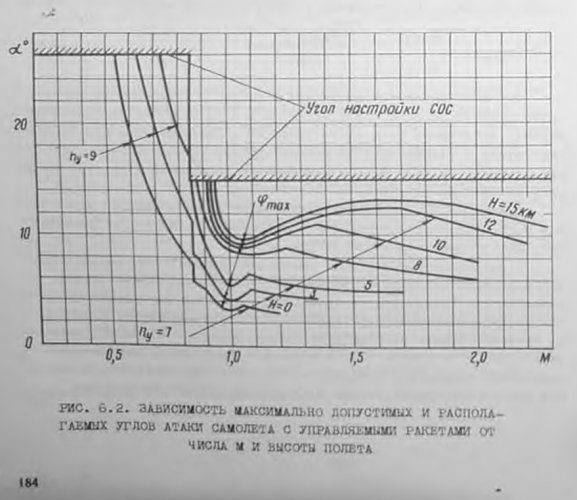
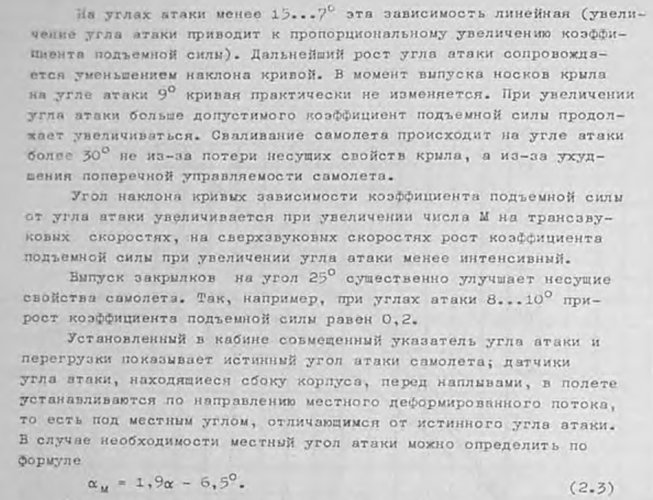
Speaking about Practical Aerodynamics, I want to note, that I did not found there anything about actual flight characteristics above 30 AOA. The only thing I've found is that after 30 AOA you will enter stall condition:

AOA3.jpg

I've searched through all files I have in my collection (Flight Manual, German Flight Manual, Practical Aerodynamics, Piloting Techniques etc.) and everywhere is only said about 26 AOA as maximum limit.

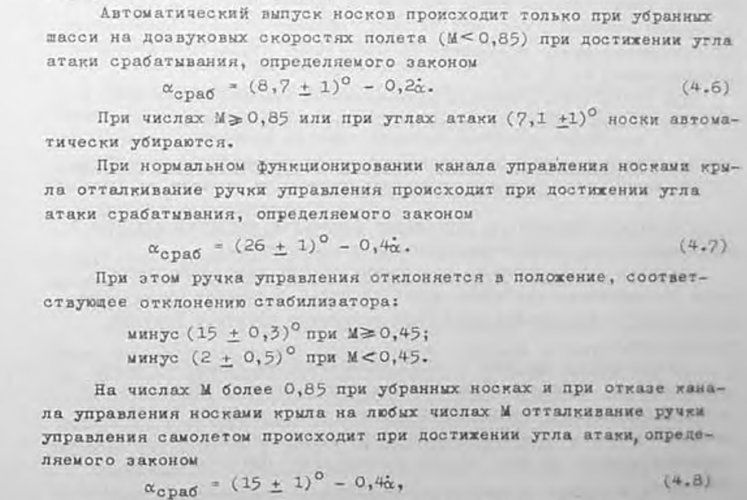
They even wrote down the laws used to control this state (formula 4.7 for maximum AOA):

AOA4.jpg


And, something interesting to add bout overriding the limiter. I saw there was some kind of discussion about that, and I want to share what I've found. As I remember, somebody in this topic said that you need like additional 17kgf on the stick to override the AOA limiter. So, I've found the exact source of this in German Flight Manual:

AOA5.jpg

Okay. And immediately after that, we will see this:
AOA6.jpg

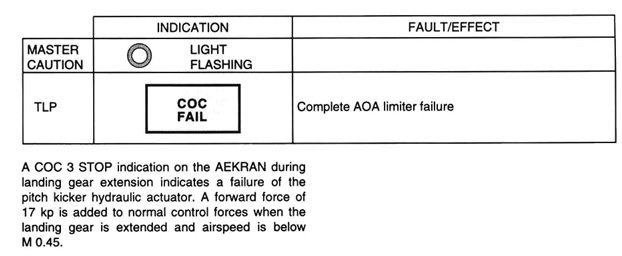
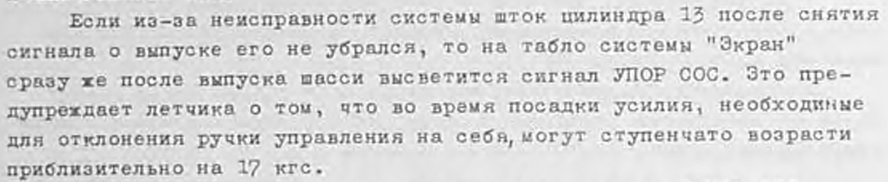
Furthermore, again, I did not found anything in docs I have about overriding AOA limiter. But, searching for this exact value of force (17 kgf), I found.... only the same as on the picture above about AOA limiter failure and forces on the stick during landing:

AOA7.jpg

And specifically about SOS-3 (source):

AOA8.jpg


And nothing about "overridable in combat" etc.
 
Basically this is what I said in my previous comment about "some couple of spare degrees".

Speaking about Practical Aerodynamics, I want to note, that I did not found there anything about actual flight characteristics above 30 AOA. The only thing I've found is that after 30 AOA you will enter stall condition:

View attachment 792076

I've searched through all files I have in my collection (Flight Manual, German Flight Manual, Practical Aerodynamics, Piloting Techniques etc.) and everywhere is only said about 26 AOA as maximum limit.

They even wrote down the laws used to control this state (formula 4.7 for maximum AOA):

View attachment 792077


And, something interesting to add bout overriding the limiter. I saw there was some kind of discussion about that, and I want to share what I've found. As I remember, somebody in this topic said that you need like additional 17kgf on the stick to override the AOA limiter. So, I've found the exact source of this in German Flight Manual:

View attachment 792078

Okay. And immediately after that, we will see this:
View attachment 792079

Furthermore, again, I did not found anything in docs I have about overriding AOA limiter. But, searching for this exact value of force (17 kgf), I found.... only the same as on the picture above about AOA limiter failure and forces on the stick during landing:

View attachment 792081

And specifically about SOS-3 (source):

View attachment 792083


And nothing about "overridable in combat" etc.
You can find the forces on the stick before the limiter also in practical aerodynamics
 

Similar threads

Back
Top Bottom