For all of you pinning for massive ICBMs... Russia and China depends on their land based triad, the US does not. Our main deterrent is the SLBMs Also HGVs are a very inefficient way to deliver payloads, there are other better ways to defeat missile defenses. China and Russia are going with HGVs because they feared Golden Dome happening before it did.

You are using an out of date browser. It may not display this or other websites correctly.
You should upgrade or use an alternative browser.
You should upgrade or use an alternative browser.
LGM-35A Sentinel - Ground-Based Strategic Deterrent (GBSD) program
exclaimedleech8
ACCESS: Top Secret
- Joined
- 30 September 2024
- Messages
- 823
- Reaction score
- 999
Thank you.For all of you pinning for massive ICBMs... Russia and China depends on their land based triad, the US does not. Our main deterrent is the SLBMs Also HGVs are a very inefficient way to deliver payloads, there are other better ways to defeat missile defenses. China and Russia are going with HGVs because they feared Golden Dome happening before it did.
It's also questionable whether HGVs are better than old fashioned ballistic delivery. Anything travelling through the atmosphere at Mach 5 or greater is going to create a massive amount of heat that is easily detected and penetration aids get a lot harder.

Colonial-Marine
UAVs are now friend, drones are the real enemy.
- Joined
- 5 October 2009
- Messages
- 1,714
- Reaction score
- 1,820
If they asked me (oddly enough they didn't) I'd say it ought to have been Peacekeeper refreshed. Plenty of room in that design for whatever capability the US needs out of our land-based ICBMs. Of course, there is always the possibility of some major technological development that changes the whole nuclear arms landscape, but I don't think HGVs are that.

- Joined
- 21 April 2009
- Messages
- 14,350
- Reaction score
- 9,432


In_A_Dream
ACCESS: Top Secret
- Joined
- 3 June 2019
- Messages
- 786
- Reaction score
- 926
When in doubt, MIRV it out.
exclaimedleech8
ACCESS: Top Secret
- Joined
- 30 September 2024
- Messages
- 823
- Reaction score
- 999
1 word: lasersOf course, there is always the possibility of some major technological development that changes the whole nuclear arms landscape, but I don't think HGVs are that.

EmoBirb
ACCESS: Top Secret
- Joined
- 18 January 2025
- Messages
- 2,693
- Reaction score
- 6,919
Russia doesn't depend on the land based arm of their strategic forces, their substantial and especially very modern SSBN force does a lot of the heavy lifting, as does long range aviation.For all of you pinning for massive ICBMs... Russia and China depends on their land based triad, the US does not. Our main deterrent is the SLBMs
The reality is that the US depends on their submarines first and foremost with everything else being a lesser priority. All eggs in a favored basket, with some egg shaped tokens for the AF.
Is it public information which ones are empty?
Probably was for New START compliance. I did not look into it.
exclaimedleech8
ACCESS: Top Secret
- Joined
- 30 September 2024
- Messages
- 823
- Reaction score
- 999
We can get away with that because the Russians and Chinese don't really have the capability to track and destroy our submarines while we are very good at tracking theirs.Russia doesn't depend on the land based arm of their strategic forces, their substantial and especially very modern SSBN force does a lot of the heavy lifting, as does long range aviation.
The reality is that the US depends on their submarines first and foremost with everything else being a lesser priority. All eggs in a favored basket, with some egg shaped tokens for the AF.
And Russia's bomber force is being whittled away by Ukraine's long range sanctions
If they asked me (oddly enough they didn't) I'd say it ought to have been Peacekeeper refreshed
IMO retiring the Peacekeeper was a very shortsighted decision.
Scott Kenny
ACCESS: USAP
- Joined
- 15 May 2023
- Messages
- 19,517
- Reaction score
- 27,964
It's not about being "better"It's also questionable whether HGVs are better than old fashioned ballistic delivery. Anything travelling through the atmosphere at Mach 5 or greater is going to create a massive amount of heat that is easily detected and penetration aids get a lot harder.
It's about HGVs being a very different interception challenge than RVs. Requiring different weapons, having much shorter detection ranges, requiring weapons that are more or less directly under the HGVs ground track.
It seems to me that the U.S. does not need to win a nuclear war, just deter one. 3 MIRV is probably sufficient; that would still be a 200% increase in warheads.
The reduction of missile tubes in Columbia class seems more alarming, though this seems due more to machinery volume and infrastructure considerations. The adoption of a warhead between W76 and W88 in yield and rate would likely go a long way to solving that problem, along with more boats than originally planned.
The reduction of missile tubes in Columbia class seems more alarming, though this seems due more to machinery volume and infrastructure considerations. The adoption of a warhead between W76 and W88 in yield and rate would likely go a long way to solving that problem, along with more boats than originally planned.
exclaimedleech8
ACCESS: Top Secret
- Joined
- 30 September 2024
- Messages
- 823
- Reaction score
- 999
I see no reason for us to increase our nuclear stockpile, our current one is more than enough to survive a first strike and inflict catastrophic damage on our adversaries. Hell, even our conventional weapons would be enough to wipe out the infrastructure and industry that China and Russia would need to wage war.It seems to me that the U.S. does not need to win a nuclear war, just deter one. 3 MIRV is probably sufficient; that would still be a 200% increase in warheads.
The reduction of missile tubes in Columbia class seems more alarming, though this seems due more to machinery volume and infrastructure considerations. The adoption of a warhead between W76 and W88 in yield and rate would likely go a long way to solving that problem, along with more boats than originally planned.
Russia absolutely depends on their road-mobiles. Their SSBNs are nowhere near the same level as ours and LRA has... taken some recent hits and has no stealth component.Russia doesn't depend on the land based arm of their strategic forces, their substantial and especially very modern SSBN force does a lot of the heavy lifting, as does long range aviation.
The reality is that the US depends on their submarines first and foremost with everything else being a lesser priority. All eggs in a favored basket, with some egg shaped tokens for the AF.

TwoTribes
ACCESS: Secret
- Joined
- 3 July 2025
- Messages
- 437
- Reaction score
- 1,635
No, you can't. There are over 6,000 black metal (iron, chromium, and manganese) smelting and processing enterprises in China, and if you use Tomahawks and JASSMs, you wouldn't even have enough missiles to allocate one round to each enterprise.Hell, even our conventional weapons would be enough to wipe out the infrastructure and industry that China and Russia would need to wage war.
exclaimedleech8
ACCESS: Top Secret
- Joined
- 30 September 2024
- Messages
- 823
- Reaction score
- 999
We don't need to bomb their iron smelting, China is almost entirely dependent on imports of iron ore.No, you can't. There are over 6,000 black metal (iron, chromium, and manganese) smelting and processing enterprises in China, and if you use Tomahawks and JASSMs, you wouldn't even have enough missiles to allocate one round to each enterprise.
TwoTribes
ACCESS: Secret
- Joined
- 3 July 2025
- Messages
- 437
- Reaction score
- 1,635
Using only domestic ore and scrap, China can still produce 1/3 of its capacity—about 4 times that of the U.S.We don't need to bomb their iron smelting, China is almost entirely dependent on imports of iron ore.
What I meant to say was nuclear weapons are mankind's most powerful weapon. In some cases, conventional arms simply cannot take their place.
Not James Stockdale
ACCESS: Secret
- Joined
- 29 August 2025
- Messages
- 239
- Reaction score
- 454
One of the big problems that purely ballistic strategic weapons will fave in the next several decades is the fact that modern KKVs are now cheaper than reentry vehicles, especially if you compare typical unit costs between the US and China. Adding an additional KKV to a MIKV anti-ballistic missile (something like https://en.wikipedia.org/wiki/Multiple_Kill_Vehicle) is going to be cheaper than adding a MIRV to an ICBM.

- Joined
- 3 June 2011
- Messages
- 20,895
- Reaction score
- 19,084
At which point you put a motor on your RV to increase the cross range beyond the divert capability of the KKV. Also another driver to bigger ICBMs rather than smaller.One of the big problems that purely ballistic strategic weapons will fave in the next several decades is the fact that modern KKVs are now cheaper than reentry vehicles, especially if you compare typical unit costs between the US and China. Adding an additional KKV to a MIKV anti-ballistic missile (something like https://en.wikipedia.org/wiki/Multiple_Kill_Vehicle) is going to be cheaper than adding a MIRV to an ICBM.
EmoBirb
ACCESS: Top Secret
- Joined
- 18 January 2025
- Messages
- 2,693
- Reaction score
- 6,919
Russia has 8 of the most modern SSBNs in service right now, equipped with a new generation of SLBM and able to hit the Continental United States even when docked. The Trident and Ohio's are another example of the US neglecting to meaningfully improve their strategic deterrent, relying decades on MMIII is another such example. Ancient Ohio missiles subs, conceptualized first during the mid cold war, meant to fire an improved variant of a missile that originated at the same time well into the 2040s. The US dragged their feet and continues to drag their feet, see the delays for the Columbias, strategic deterrent in the US is a highly politicized topic and very little has improved over the last 30-40 years. Meanwhile Russia prioritized their strategic deterrent for modernization after the worst of the dissolution of the USSR has passed, Yars, Sarmat, Bulava, Borei and the restart of Tu-160 production are the examples of that effort, with the second stage belonging to systems like Burevestnik, Khabarovsk, Poseidon, PAK DA and conceptualizing a successor for the Borei submarines. China is already dunking on the US submarine production right now, with every couple years seeing the introduction of newer and more advanced types, the most recent efforts being the Type 095 SSN and the JL-3 equipped Type 096 SSBN. At this pace I wouldn't be surprised if even L'Invincible and Dreadnought beat District of Columbia to service entry.Russia absolutely depends on their road-mobiles. Their SSBNs are nowhere near the same level as ours and LRA has... taken some recent hits and has no stealth component.
Either way, the land based portion of the Russian nuclear triad is the force that provides overwhelming volume, the long range aviation branch is the most flexible branch, but the most vital branch is the submarine based component because they are what facilitate devastating second strikes or if necessary first strikes with high survivability and the ability to hold any adversary at risk at any time anywhere around the world. Submarines have always been favored by Soviets/Russians and they continue to be seen as one of, if not the most crucial assets in the wider military structure, together with the missiles they're armed with the and the missiles on land and in the air they complement.
EmoBirb
ACCESS: Top Secret
- Joined
- 18 January 2025
- Messages
- 2,693
- Reaction score
- 6,919
The conventional inventory of the United States wasn't even able to win against Iran, what are the odds of beating China or Russia with that, lol.Hell, even our conventional weapons would be enough to wipe out the infrastructure and industry that China and Russia would need to wage war.
If you'd in turn say that China's conventional weaponry could wipe out the most vital components of the US industrial base, that's more believeable based on sheer volume and the fact that the US has seen the death of industrial diversification and now relies on less than a handful of suppliers for any given sector. Only issue being that China would have to cart their stockpile into range, something you forgot the US would have to do as well, which means right into the range of Chinese missiles and aviation though.
Lets just say there are alot of other factors outside of raw numbers that you are not aware off that make your analysis not quite accurate. Ohios and Trident might be old but they are far better and more important strategic deterrent than Borei and Bulava, just as the inverse is true for Yars vs Minuteman III. Yes Russia has prioritized their strategic deterrent to the complete detriment of the rest of their armed forces as seen in Ukraine. Tu-160M is nice but Russia has less 160s than the US has B-2s and PAK DA is nowhere to be seen. Sure Russia has some nice systems but they have some serious issues as well.Russia has 8 of the most modern SSBNs in service right now, equipped with a new generation of SLBM and able to hit the Continental United States even when docked. The Trident and Ohio's are another example of the US neglecting to meaningfully improve their strategic deterrent, relying decades on MMIII is another such example. Ancient Ohio missiles subs, conceptualized first during the mid cold war, meant to fire an improved variant of a missile that originated at the same time well into the 2040s. The US dragged their feet and continues to drag their feet, see the delays for the Columbias, strategic deterrent in the US is a highly politicized topic and very little has improved over the last 30-40 years. Meanwhile Russia prioritized their strategic deterrent for modernization after the worst of the dissolution of the USSR has passed, Yars, Sarmat, Bulava, Borei and the restart of Tu-160 production are the examples of that effort, with the second stage belonging to systems like Burevestnik, Khabarovsk, Poseidon, PAK DA and conceptualizing a successor for the Borei submarines. China is already dunking on the US submarine production right now, with every couple years seeing the introduction of newer and more advanced types, the most recent efforts being the Type 095 SSN and the JL-3 equipped Type 096 SSBN. At this pace I wouldn't be surprised if even L'Invincible and Dreadnought beat District of Columbia to service entry.
Either way, the land based portion of the Russian nuclear triad is the force that provides overwhelming volume, the long range aviation branch is the most flexible branch, but the most vital branch is the submarine based component because they are what facilitate devastating second strikes or if necessary first strikes with high survivability and the ability to hold any adversary at risk at any time anywhere around the world. Submarines have always been favored by Soviets/Russians and they continue to be seen as one of, if not the most crucial assets in the wider military structure, together with the missiles they're armed with the and the missiles on land and in the air they complement.
Russia is very much not the concern. It seems very unlikely they are capable of a nuclear buildup for the foreseeable future; their ability to even upload their missiles in a significant fashion above New START levels is very modest compared to the U.S. and they were already operating well below their allowance of 700 deployed platforms before the expiration.
China is obviously a very different matter.
China is obviously a very different matter.
exclaimedleech8
ACCESS: Top Secret
- Joined
- 30 September 2024
- Messages
- 823
- Reaction score
- 999
Russia has been acting much more belligerent.Russia is very much not the concern. It seems very unlikely they are capable of a nuclear buildup for the foreseeable future; their ability to even upload their missiles in a significant fashion above New START levels is very modest compared to the U.S. and they were already operating well below their allowance of 700 deployed platforms before the expiration.
China is obviously a very different matter.
- Joined
- 21 April 2009
- Messages
- 14,350
- Reaction score
- 9,432

Forest Green
ACCESS: USAP
- Joined
- 11 June 2019
- Messages
- 14,501
- Reaction score
- 31,532
- Joined
- 21 April 2009
- Messages
- 14,350
- Reaction score
- 9,432
Forest Green
ACCESS: USAP
- Joined
- 11 June 2019
- Messages
- 14,501
- Reaction score
- 31,532
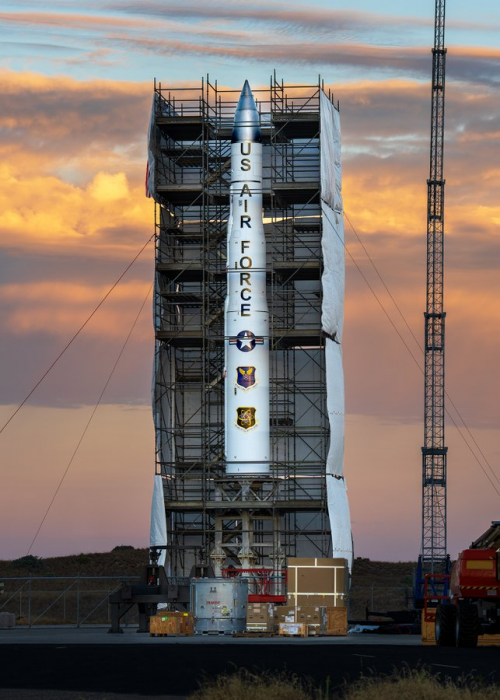
That missile looks thicker than the MMIII even at the top to me, especially considering it's taller, which should make it look thinner.
View: https://x.com/NGCNews/status/2099556911616020826?s=20
View: https://x.com/NGCNews/status/2099556911616020826?s=20
Attachments
Not James Stockdale
ACCESS: Secret
- Joined
- 29 August 2025
- Messages
- 239
- Reaction score
- 454
Based on the height of the Skyjack SJ8626RT scissor lift, I am estimating the height based on a ratio of 147 px = 2370 mm.
OAL: 1082 px = 17.4 m
1st stage length: 467 px = 7.5 m
1st stage diameter: 116 px = 1.87 m
2nd stage diameter: 99 px = 1.60 m
3rd stage diameter: 83 px = 1.34 m
In comparison, the Minuteman III has an OAL of 18.2 and an S1 diameter of 1.68 m.
Because the scissor lift is slightly forward of the missile, the actual dimensions are slightly larger, so I would estimate OAL around 18 m, similar to the MMIII, and S1 diameter slightly over 1.9 m.
The MMIII's booster stages have a volume of roughly 25 cubic meters and mass of 34 tons. Based on my measurements, the Sentinel's stages have a volume of roughly 33 cubic meters. If the stages have the same density as the MMIII, the mass of the Sentinel's booster stack would be 43 tons.
The actual Sentinel probably has a slightly higher volume than my estimates and potentially a higher density with more energetic propellants and lighter dry mass. The actual mass of the booster stack is probably between 45 and 50 tons.
OAL: 1082 px = 17.4 m
1st stage length: 467 px = 7.5 m
1st stage diameter: 116 px = 1.87 m
2nd stage diameter: 99 px = 1.60 m
3rd stage diameter: 83 px = 1.34 m
In comparison, the Minuteman III has an OAL of 18.2 and an S1 diameter of 1.68 m.
Because the scissor lift is slightly forward of the missile, the actual dimensions are slightly larger, so I would estimate OAL around 18 m, similar to the MMIII, and S1 diameter slightly over 1.9 m.
The MMIII's booster stages have a volume of roughly 25 cubic meters and mass of 34 tons. Based on my measurements, the Sentinel's stages have a volume of roughly 33 cubic meters. If the stages have the same density as the MMIII, the mass of the Sentinel's booster stack would be 43 tons.
The actual Sentinel probably has a slightly higher volume than my estimates and potentially a higher density with more energetic propellants and lighter dry mass. The actual mass of the booster stack is probably between 45 and 50 tons.
- Joined
- 21 April 2009
- Messages
- 14,350
- Reaction score
- 9,432
- Joined
- 21 April 2009
- Messages
- 14,350
- Reaction score
- 9,432
So if we are 1/2 the weight of Pk then are we at approximately half the payload about 4400lbs? If we use the high end 800lbs estimate of the W87-1 will that get us to 5 RVs in a fully uploaded system? Or am I in optimist fantasy land?
Not James Stockdale
ACCESS: Secret
- Joined
- 29 August 2025
- Messages
- 239
- Reaction score
- 454
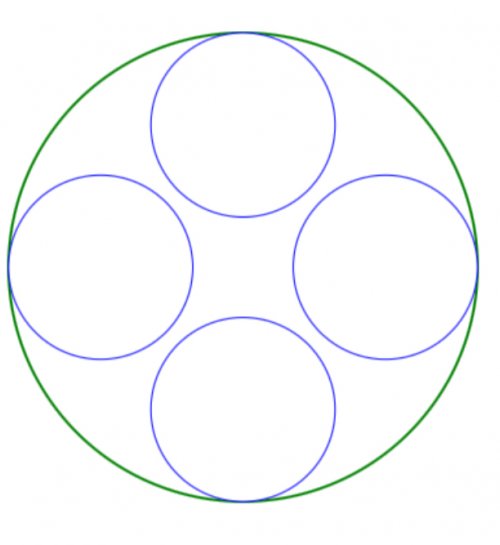
The shroud diameter and length are about the same as an MMIII because the third stage diameter may be the same or only a few cm larger (up to 140 cm vs 133 cm for the MMIII). If the Sentinel third stage is actually 140 cm in diameter, then there could be space for a 4th MIRV on the bus, but almost certainly not a fifth unless they got fancy with the configuration (like a double decker).So if we are 1/2 the weight of Pk then are we at approximately half the payload about 4400lbs? If we use the high end 800lbs estimate of the W87-1 will that get us to 5 RVs in a fully uploaded system? Or am I in optimist fantasy land?

Scott Kenny
ACCESS: USAP
- Joined
- 15 May 2023
- Messages
- 19,517
- Reaction score
- 27,964
I very much doubt that the USAF would accept the USN warheads.New ICBM warhead based on the Mk4 RV body just for fun.
Not least because the USN Mk4s are not Insensitive. IMs are less boomy than sensitive ones, so you need significantly more weight (and bulk) of insensitive explosive, which makes a much bigger RV.
Similar threads
-
-
 Raytheon AGM-181 Long Range Stand Off Weapon (LRSO)
- Started by bobbymike
- Replies: 273
-
 MX (Peacekeeper) deployment concepts.
- Started by Sferrin
- Replies: 427
-

-
