
You are using an out of date browser. It may not display this or other websites correctly.
You should upgrade or use an alternative browser.
You should upgrade or use an alternative browser.
LGM-35A Sentinel - Ground-Based Strategic Deterrent (GBSD) program

Forest Green
ACCESS: USAP
- Joined
- 11 June 2019
- Messages
- 12,780
- Reaction score
- 27,506
I think it's difficult to tell from that angle. A 10% neck in from each edge at each stage would mean something like 2.11m->1.69m->1.35m.

Forest Green
ACCESS: USAP
- Joined
- 11 June 2019
- Messages
- 12,780
- Reaction score
- 27,506
That's less than I guessed, I guessed 80% and then 62%. Mind you, your 2nd to 3rd stage taper is more than 10% from each edge I guessed.
Interesting bit of trivia that I've discovered:
The Intermat division of Fiber Materials Inc (FMI) appears to have a total monopoly on the nosetip technology used in effectively all modern Air Force and Navy reentry vehicles/bodies. Specifically, the nose tip designs used on the Mk21/W87-0, Mk21A/W87-1, Mk4B/W76-1, Mk5/W88, and Mk7/W93 reentry vehicles/bodies are all derivatives of the SSNT, and according to a number of government contracts that I reviewed, Intermat is the exclusive sole-source supplier for every one of these programs.
In multiple cases the contract awards even explicitly state that Intermat is the only supplier that is capable of providing the nose tip because, e.g.:
A far more extensive explanation can be found in a (unfortunately partially redacted) attachment to an older contract award:
https://sam.gov/workspace/contract/opp/41f31873b32befb7a8fa2ed9bf154db5/view (scroll down to the "Attachments/Links" section, then open up the document titled "JA.sgnd_Redacted.pdf" – I'll try to attach it to this post as well)
Looking into the history of Intermat and FMI reveals that they have a somewhat checkered past, with some major financial improprieties back in the 1990s, and an amusing appeal to a failed bid for nosetip production on either the Mk12A or initial Mk21 program which revealed that they were unable to offer pricing even vaguely close to Avco for production of that particular nosetip design (their bid was nearly 2.5x Avco's bid!).
And yet nowadays they are the only source for nose tips for five different RV/RB programs encompassing basically all of the modern US ICBM/SLBM arsenal.
(Sure, the Mk4A/W76-1 RBs technically haven't migrated to the SSNT yet, but that's only a matter of time – the Mk4B program is right around the corner. The only ballistic warhead that isn't going to migrate to the SSNT is the Mk12A/W78, and that's only the case because it's expected to be retired in the near future, with both of its planned replacements (the Mk21/W87-0 and the Mk21A/W87-1) using SSNTs. So functionally speaking, they have a total monopoly.)
The tale of Intermat for RV/RB nosetips is a microcosm of the issues with the nuclear weapons industry, both public and private. How many other components are sole source now? How much is that inflating costs?
I wonder how much of the $14 million price tag for each Mk21A RV gets funneled to Intermat? More importantly, how many other companies like Intermat are out there?
How much of the crazy costs of the modern nuclear weapons refresh are caused by our decades-long neglect of the nuclear industrial base?
Intermat can charge whatever the hell they want to for a nose tip, and the government has no choice but to accept it, because Intermat is the only viable vendor left standing, and the only one that has kept the equipment, process knowledge, and flight test certifications.
I'm sure there's many more components out there that now lack vendors, equipment, process knowledge, and/or flight test certifications. How much money is being spent on re-qualifying designs that were qualified decades ago, but were made by companies that have now exited the industry? How much money is spent on extra qualification flight testing that would never have been necessary if we had had the foresight to ensure the relevant vendors kept their production lines warm and retained their process knowledge and flight test certifications? Every extra flight test is tens of millions of dollars that could have been better spent elsewhere, as well as additional months of delay. It all adds up very fast.
The Navy was smart enough to ensure that the Trident II D5 solid rocket motor production lines remained active in low rate production. Imagine if we had taken that approach for more components?
The Intermat division of Fiber Materials Inc (FMI) appears to have a total monopoly on the nosetip technology used in effectively all modern Air Force and Navy reentry vehicles/bodies. Specifically, the nose tip designs used on the Mk21/W87-0, Mk21A/W87-1, Mk4B/W76-1, Mk5/W88, and Mk7/W93 reentry vehicles/bodies are all derivatives of the SSNT, and according to a number of government contracts that I reviewed, Intermat is the exclusive sole-source supplier for every one of these programs.
In multiple cases the contract awards even explicitly state that Intermat is the only supplier that is capable of providing the nose tip because, e.g.:
The billet weaving and densification procedures for these materials have a profound effect on their thermal and mechanical properties and their ablative and aerodynamic flight performance, use of the identical SSNT weaving and processing cycles is absolutely necessary. Intermat c/c weaving processing cycles are proprietary. Only Intermat can reproduce these billet weaving and processing cycles, and thus is the only supplier who can fabricate the additional materials.
A far more extensive explanation can be found in a (unfortunately partially redacted) attachment to an older contract award:
https://sam.gov/workspace/contract/opp/41f31873b32befb7a8fa2ed9bf154db5/view (scroll down to the "Attachments/Links" section, then open up the document titled "JA.sgnd_Redacted.pdf" – I'll try to attach it to this post as well)
Looking into the history of Intermat and FMI reveals that they have a somewhat checkered past, with some major financial improprieties back in the 1990s, and an amusing appeal to a failed bid for nosetip production on either the Mk12A or initial Mk21 program which revealed that they were unable to offer pricing even vaguely close to Avco for production of that particular nosetip design (their bid was nearly 2.5x Avco's bid!).
And yet nowadays they are the only source for nose tips for five different RV/RB programs encompassing basically all of the modern US ICBM/SLBM arsenal.
(Sure, the Mk4A/W76-1 RBs technically haven't migrated to the SSNT yet, but that's only a matter of time – the Mk4B program is right around the corner. The only ballistic warhead that isn't going to migrate to the SSNT is the Mk12A/W78, and that's only the case because it's expected to be retired in the near future, with both of its planned replacements (the Mk21/W87-0 and the Mk21A/W87-1) using SSNTs. So functionally speaking, they have a total monopoly.)
The tale of Intermat for RV/RB nosetips is a microcosm of the issues with the nuclear weapons industry, both public and private. How many other components are sole source now? How much is that inflating costs?
I wonder how much of the $14 million price tag for each Mk21A RV gets funneled to Intermat? More importantly, how many other companies like Intermat are out there?
How much of the crazy costs of the modern nuclear weapons refresh are caused by our decades-long neglect of the nuclear industrial base?
Intermat can charge whatever the hell they want to for a nose tip, and the government has no choice but to accept it, because Intermat is the only viable vendor left standing, and the only one that has kept the equipment, process knowledge, and flight test certifications.
I'm sure there's many more components out there that now lack vendors, equipment, process knowledge, and/or flight test certifications. How much money is being spent on re-qualifying designs that were qualified decades ago, but were made by companies that have now exited the industry? How much money is spent on extra qualification flight testing that would never have been necessary if we had had the foresight to ensure the relevant vendors kept their production lines warm and retained their process knowledge and flight test certifications? Every extra flight test is tens of millions of dollars that could have been better spent elsewhere, as well as additional months of delay. It all adds up very fast.
The Navy was smart enough to ensure that the Trident II D5 solid rocket motor production lines remained active in low rate production. Imagine if we had taken that approach for more components?
Attachments
I wonder how much of the $14 million price tag for each Mk21A RV gets funneled to Intermat? More importantly, how many other companies like Intermat are out there?
It would appear that this company is using its' sole-source monopoly as a money-making rort.
Looking into the history of Intermat and FMI reveals that they have a somewhat checkered past, with some major financial improprieties back in the 1990s, and an amusing appeal to a failed bid for nosetip production on either the Mk12A or initial Mk21 program which revealed that they were unable to offer pricing even vaguely close to Avco for production of that particular nosetip design (their bid was nearly 2.5x Avco's bid!).
Here's some math on that for inflation adjustment and determination of actual unit costs
CCNT procurement, 1979.
Total quantity procured: 536
Assume 1979 USD. Adjust for inflation to 2026 USD.
Avco bid: $5,998,995 (1979 USD) => $26,875,828 (2026 USD)
FMI bid: $14,674,067 (1979 USD) => $65,740,629 (2026 USD)
Divide total procurement cost by total units procured (536 in both cases).
Avco bid: $50,142/ea (USD 2026)
FMI bid: $122,650/ea (USD 2026)
I wonder how much we're spending for the SSNT in the Mk4B, Mk21A, or Mk7...
Intermat has raked in a quarter billion dollars of government contracts since 2000. $220.4 million of that was from the last 10 years. It looks like they'll be continuing to rake in substantially more money for the Mk21A and Mk7 programs at a minimum. I can't figure out where they are at for the Mk4B program.
Some useful links for poking at Intermat's contracts and revenue:
https://govtribe.com/vendors/intermat-058z7 (this one will give decent info on annual revenue and awards for free with no limit, but most other info is unavailable without signing up and paying)
https://www.highergov.com/awardee/intermat-10112386/ (this one will initially temporarily let you see summary level contract details for individual contract awards without signing up and paying, but after some unknown amount of free usage it'll eventually completely lock you out of using the site)
Scott Kenny
ACCESS: USAP
- Joined
- 15 May 2023
- Messages
- 16,977
- Reaction score
- 24,085
Times like this, the USgov needs to buy the technology.
FMI produces a fine weave carbon/carbon composite for the nose tips for modern RVs. There is nothing on the market that comes close from an ablation stability standpoint. There have been attempts over the years to supplant FMI from that role, but it has come down to the ability to replicate the process. The capital investment necessary to reproduce that capability has been prohibitive given the limited size of the market up until recently. If you dig a bit further, you’ll see that the US Gov’t invested a significant amount of money in recent years with FMI to increase their capacity to produce 3D carbon/carbon for other specialty applications (SRM ITEs and TPS materials). The US Gov’t has their fingers deeply buried in FMI for critical materials production.
Yes, and all of that is largely a consequence of the US government paying FMI to develop the SSNT in the first place. The developments that led to it largely came out of the ABRES program, which was US government funded R&D.FMI produces a fine weave carbon/carbon composite for the nose tips for modern RVs. There is nothing on the market that comes close from an ablation stability standpoint. There have been attempts over the years to supplant FMI from that role, but it has come down to the ability to replicate the process. The capital investment necessary to reproduce that capability has been prohibitive given the limited size of the market up until recently. If you dig a bit further, you’ll see that the US Gov’t invested a significant amount of money in recent years with FMI to increase their capacity to produce 3D carbon/carbon for other specialty applications (SRM ITEs and TPS materials). The US Gov’t has their fingers deeply buried in FMI for critical materials production.
I mean, I even linked the analysis that said exactly the same thing that you did but in more detail ("JA.sgnd_Redacted.pdf"). Conclusion was that it'd take 5+ years and a massive investment to stand up a competitor (and flight test certification work, process replication, etc would be major additional nightmares), therefore, better the devil you know. And I don't even really disagree with that conclusion either – it's probably the rational one to make given how tiny the demand for ICBM nose tips is now. I just think it's fascinating how a company that failed miserably at competing against Avco for the CCNT contract back in the late 70s ended up becoming the sole source for all ICBM nosetips, while former industry titan Avco faded into obscurity.
The reason there's nothing else on the market is because ABRES is long gone. The US government doesn't fund basic research into improving RV nosetip performance anymore. The papers on the topic are basically exclusively from the Cold War era. No funding, no innovation. There's zero commercial demand for this technology. Its only use is in military applications. And the US government didn't just turn off the funding for research, they also completely stopped procuring new systems for a 30+ year period.
Forest Green
ACCESS: USAP
- Joined
- 11 June 2019
- Messages
- 12,780
- Reaction score
- 27,506
Number Of Nuclear Warheads New Sentinel ICBMs Will Carry Now An Open Question

Number Of Nuclear Warheads New Sentinel ICBMs Will Carry Now An Open Question
We now know much more about the USAF's sprawling plans for new Sentinel ICBM silos with features not found on Minuteman III.
 www.twz.com

FighterJock
ACCESS: Above Top Secret
- Joined
- 29 October 2007
- Messages
- 6,692
- Reaction score
- 7,913
I want at least five warheads on the new Sentinel, more that the three warheads on the current Minuteman 3 missile.
FighterJock
ACCESS: Above Top Secret
- Joined
- 29 October 2007
- Messages
- 6,692
- Reaction score
- 7,913
The Minuteman missiles were the state of the art back when they were first designed but they are gradually getting old.

- Joined
- 3 June 2011
- Messages
- 20,030
- Reaction score
- 17,225
AND we were doing it, "concurrently". (Remember that boogie-man?) It's quite pathetic that we've allowed ourselves to fall so far.Reading about this program puts me in awe……of what we did during the Minuteman I, II and III timeline for a 1000 missile deployment and basically doing all of it for the first time.
Found a whole haul of photos to add:
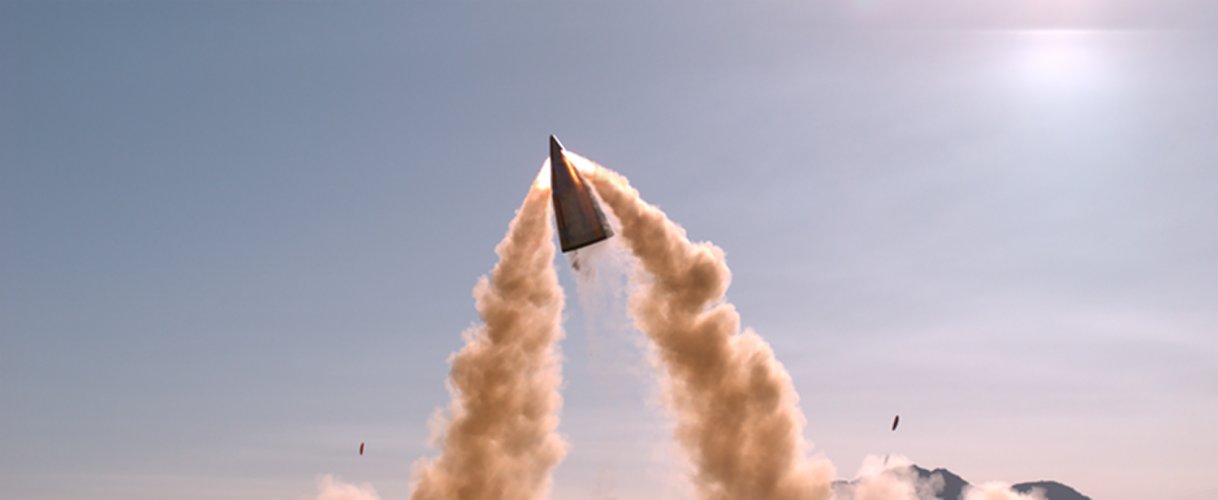
Shroud
Photo 1 - render of shroud view in silo

Photo 2 - actual flight test of shroud ejection system. note how the shroud geometry is eerily similar to the MM III shroud.

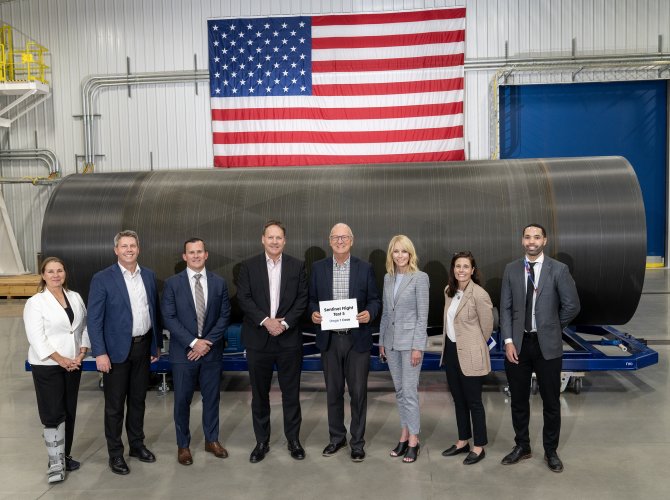
Stage 1
Photo 1 - motor case winding

Photo 2 - completed case

Stage 2
Photo 1 - motor test

Photo 2 - flight rendering showing upper stages and RV
Whole missile - ground
Photo 1 - same one that I posted before

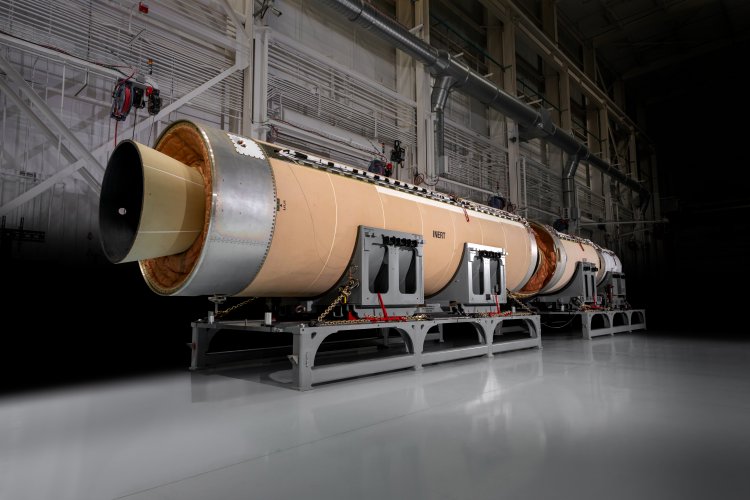
Photo 2 - new photo showing the same assembly from the other angle

Whole missile - flight
Photo 1
Photo 2
Whole missile - diagram
Photo 1
Photo 2 - this shows a lot more detail on the interstage, motor case shroud, and nozzle designs than photo 1 does
Whole missile - silo
Photo 1
Photo 2
Launch [control] center
Photo 1 - not quite sure how they're hardening the underground portions of the LCC, this seems like a much weaker design than the capsules used in the original MM III LCCs
Notes
Photo ordering
You may notice that two photos are out of order in the uploaded gallery view. This is due to needing to replace one photo with a higher resolution version, then adding another photo. Apparently the ordering of files attached to a post cannot be reordered without deleting and re-uploading all of them. I'm not doing that again for 15 photos (I already had to repeatedly re-upload many of these photos multiple times while writing this post due to issues with the editor and I am entirely fed up with it), so if you browse by thumbnails, it'll be slightly out of order.
The affected photos are "sentinel-icbm-dev[...]" (located at end, should actually be located after "11-Notational-rep[...]") and "260217-D-[...]" (located at second to end, should actually be located after "18-first-fully-[...]"). I recommend viewing the images using post view to avoid this issue. If you click on an image in the post, it should expand into gallery view to allow zooming in or downloading.
Analysis
Putting this post together was a lot of work, and I don't feel up to writing up any of my (many) observations in detail at the moment. They'll have to wait for later.
In the meantime, I recommend comparing the missile components between the different photos/diagrams. There's some interesting things you can notice once you do that. There's also a lot of interesting things you can figure out just by looking at the individual diagrams as well.
Shroud
Photo 1 - render of shroud view in silo
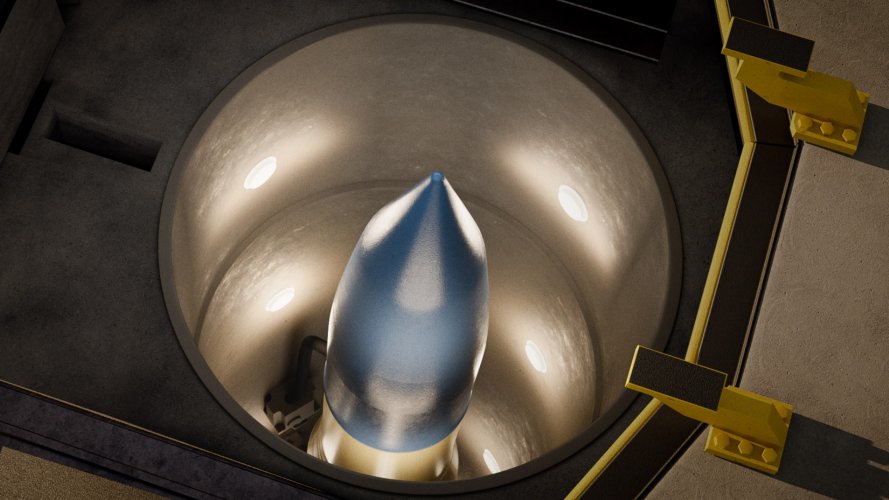
Photo 2 - actual flight test of shroud ejection system. note how the shroud geometry is eerily similar to the MM III shroud.
Stage 1
Photo 1 - motor case winding
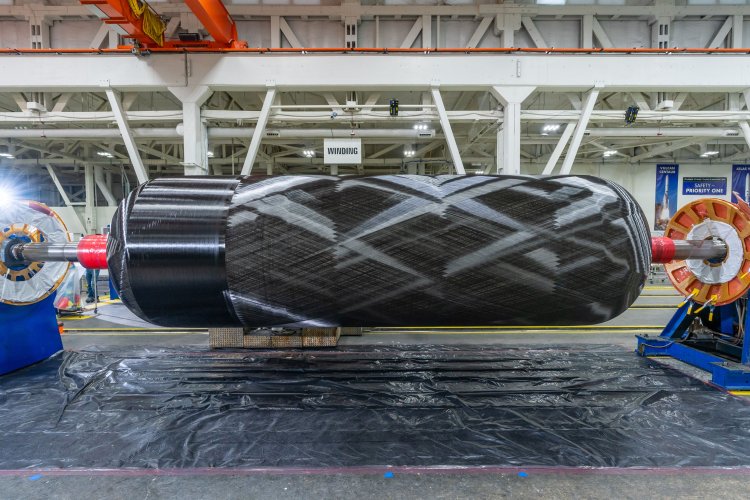
Photo 2 - completed case
Stage 2
Photo 1 - motor test
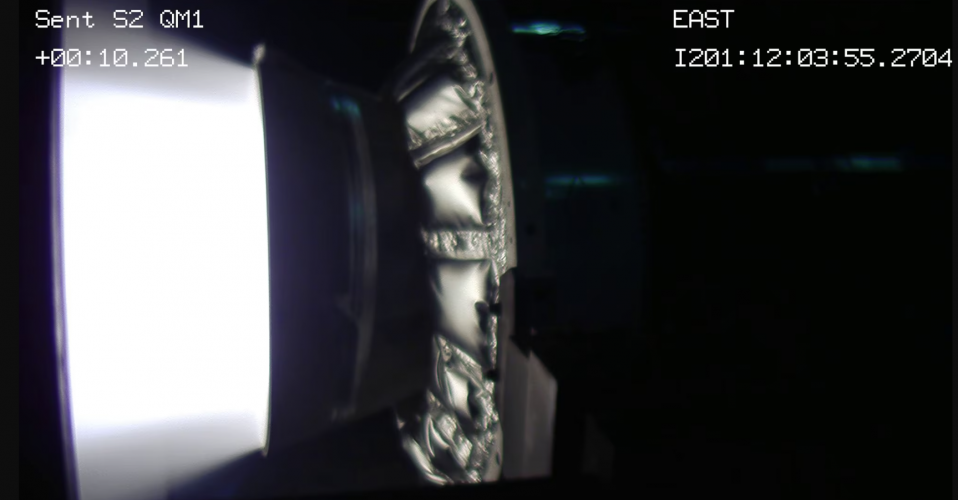
Photo 2 - flight rendering showing upper stages and RV
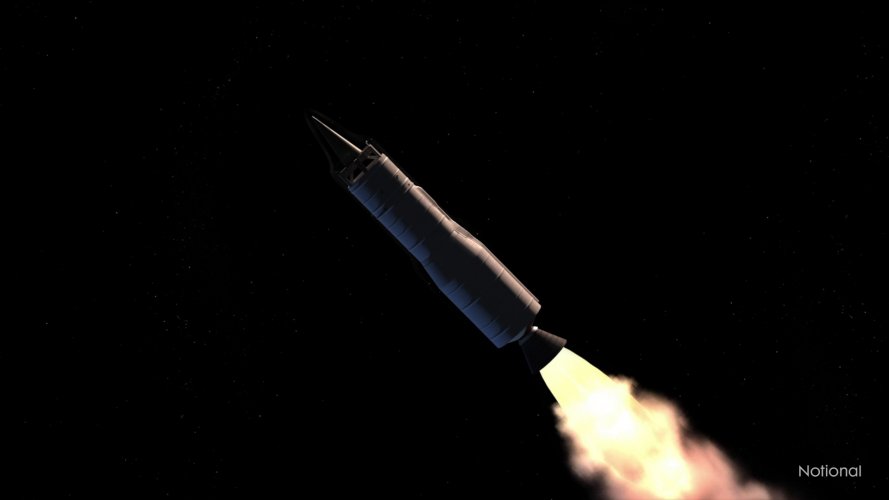
Whole missile - ground
Photo 1 - same one that I posted before
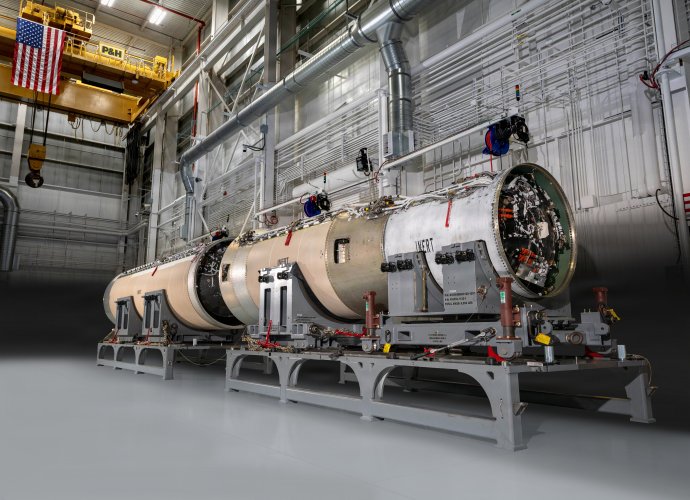
Photo 2 - new photo showing the same assembly from the other angle
Whole missile - flight
Photo 1

Photo 2
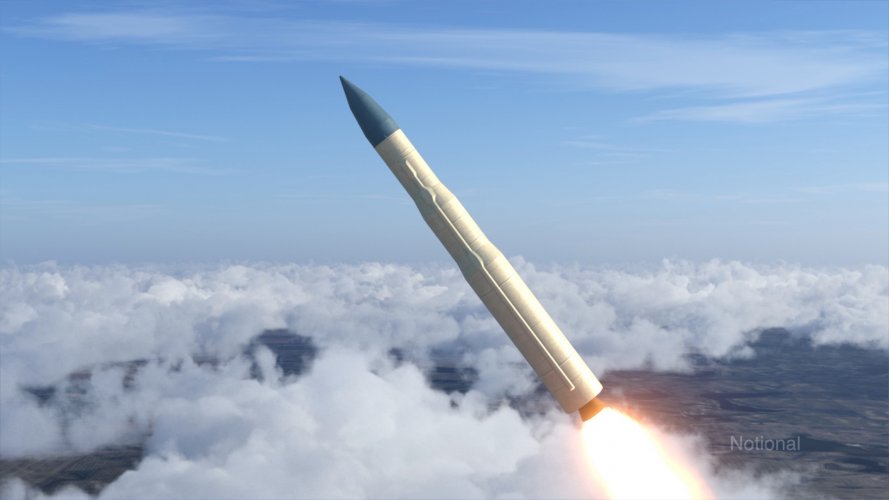
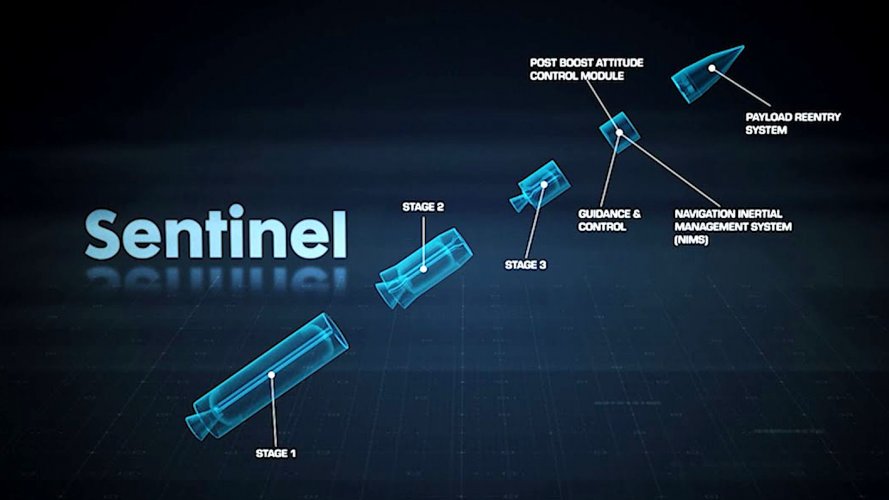
Whole missile - diagram
Photo 1
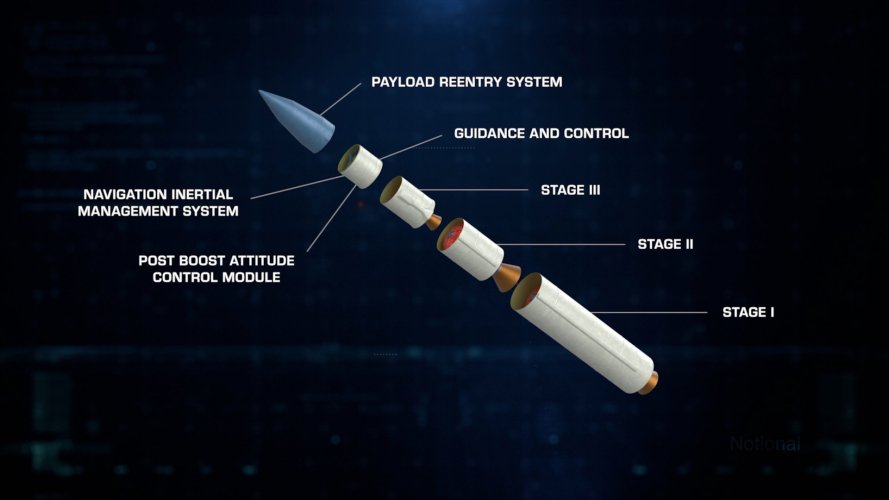
Photo 2 - this shows a lot more detail on the interstage, motor case shroud, and nozzle designs than photo 1 does
Whole missile - silo
Photo 1
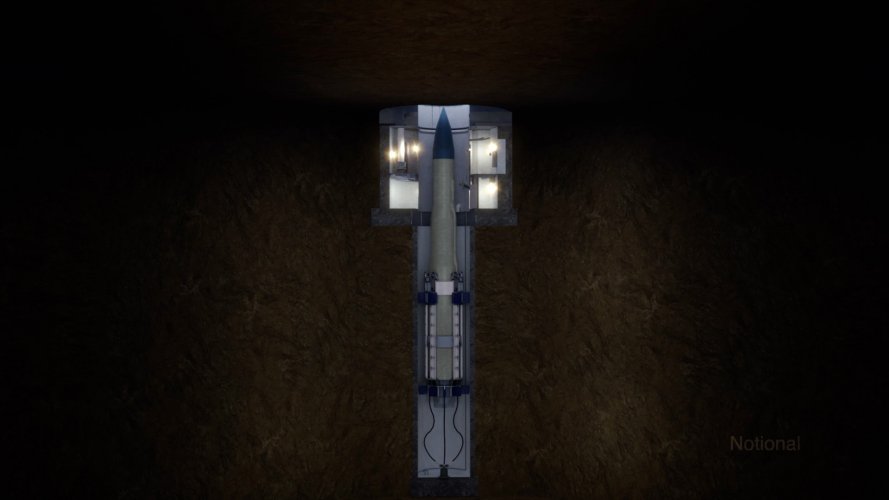
Photo 2
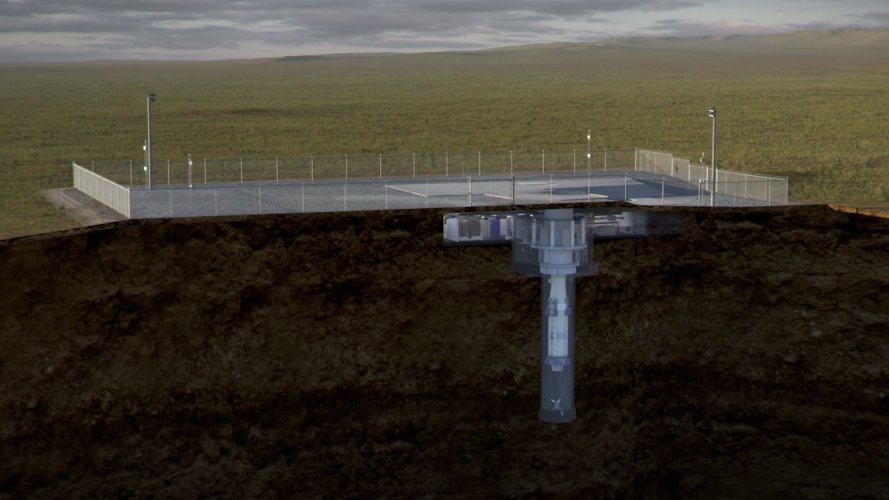
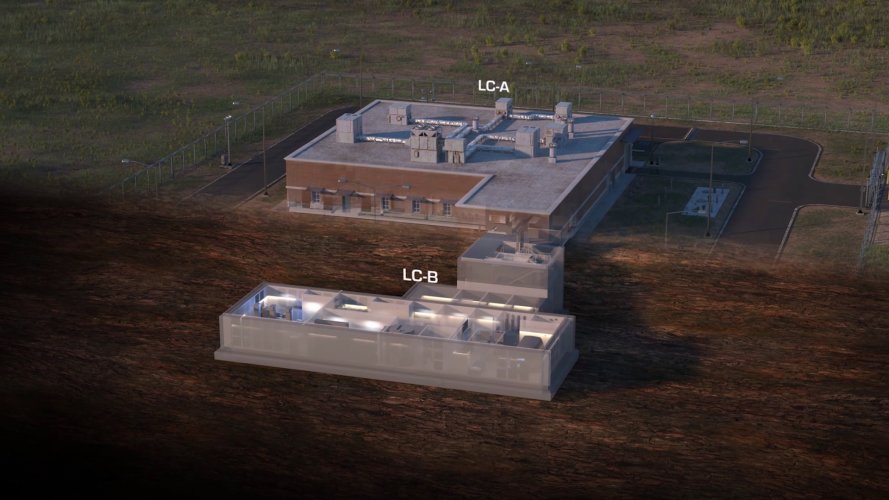
Launch [control] center
Photo 1 - not quite sure how they're hardening the underground portions of the LCC, this seems like a much weaker design than the capsules used in the original MM III LCCs
Notes
Photo ordering
You may notice that two photos are out of order in the uploaded gallery view. This is due to needing to replace one photo with a higher resolution version, then adding another photo. Apparently the ordering of files attached to a post cannot be reordered without deleting and re-uploading all of them. I'm not doing that again for 15 photos (I already had to repeatedly re-upload many of these photos multiple times while writing this post due to issues with the editor and I am entirely fed up with it), so if you browse by thumbnails, it'll be slightly out of order.
The affected photos are "sentinel-icbm-dev[...]" (located at end, should actually be located after "11-Notational-rep[...]") and "260217-D-[...]" (located at second to end, should actually be located after "18-first-fully-[...]"). I recommend viewing the images using post view to avoid this issue. If you click on an image in the post, it should expand into gallery view to allow zooming in or downloading.
Analysis
Putting this post together was a lot of work, and I don't feel up to writing up any of my (many) observations in detail at the moment. They'll have to wait for later.
In the meantime, I recommend comparing the missile components between the different photos/diagrams. There's some interesting things you can notice once you do that. There's also a lot of interesting things you can figure out just by looking at the individual diagrams as well.
Last edited:
The Minuteman missiles were the state of the art back when they were first designed but they are gradually getting old.
Getting old gradually? They are OLD. The MMIII was designed in the late 1960s and when it went into service in 1970 it had a ten year design life.
Scott Kenny
ACCESS: USAP
- Joined
- 15 May 2023
- Messages
- 16,977
- Reaction score
- 24,085
Didn't really expect it to carry more than 3x W87s, so a strong resemblance to a Minuteman is expected.Photo 2 - actual flight test of shroud ejection system. note how the shroud geometry is eerily similar to the MM III shroud.
View attachment 803631
Those were needed, but not included in the original contract.Looks like new silos and much nicer underground facilities.
However, new silos and more importantly new inter-silo wiring absolutely had to happen. The USAF was not maintaining the silos to a reasonable standard, and honestly not even the Russians reuse silos. They make new silos for each new missile.
Eh, the Russians do reuse silos.
They hardly seem like the poster child for successful long term projects strategic deterrence. If the U.S. only had to keep up with them, Sentinel likely would have been canceled by now.
Forest Green
ACCESS: USAP
- Joined
- 11 June 2019
- Messages
- 12,780
- Reaction score
- 27,506
Sentinel ICBM Restructure to Bring ‘More Capability Faster,’ Top Commanders Say

Sentinel ICBM Restructure to Bring ’More Capability Faster’
U.S. military officials restructuring the troubled Sentinel ICBM program now project confidence it will operational it will in the 2030s.
 www.airandspaceforces.com
A test launch of the missle is planned for 2027, and officials expect the overhaul of the Sentinel program to be completed by the end of this year.
All told, the 450 new silos will be needed as 400 Minuteman III missiles sit on alert, and there are spare silos. Northrop Grumman is now building a prototype silo in Utah.
The first Sentinel base will be F.E. Warren Air Force Base, Wyo, and the program entails far more than just the silos. In addition to F.E. Warren and Malmstrom, Minot Air Force Base, N.D., is the nation’s other ICBM base. The Air Force will build 24 launch centers and three missile wing command centers, spread over 32,000 square miles in five states and connected by roughly 5,000 miles of fiber-optic cables, officials said.
Sentinel is larger than the Minuteman III and is projected to have greater range and accuracy, the Air Force and Northrop Grumman said. The shroud on top of the missile features a propulsion system not present in Minuteman IIIs.
“This is what gives us the fine point that allows us to place the re-entry vehicle precisely on target, that greater accuracy that comes with the Sentinel system,” a Northrop Grumman official said.
The ability to upload MIRVs remains a requirement.
Officials declined to say how many warheads an individual Sentinel will be able to carry.
Last edited:
- Joined
- 3 June 2011
- Messages
- 20,030
- Reaction score
- 17,225
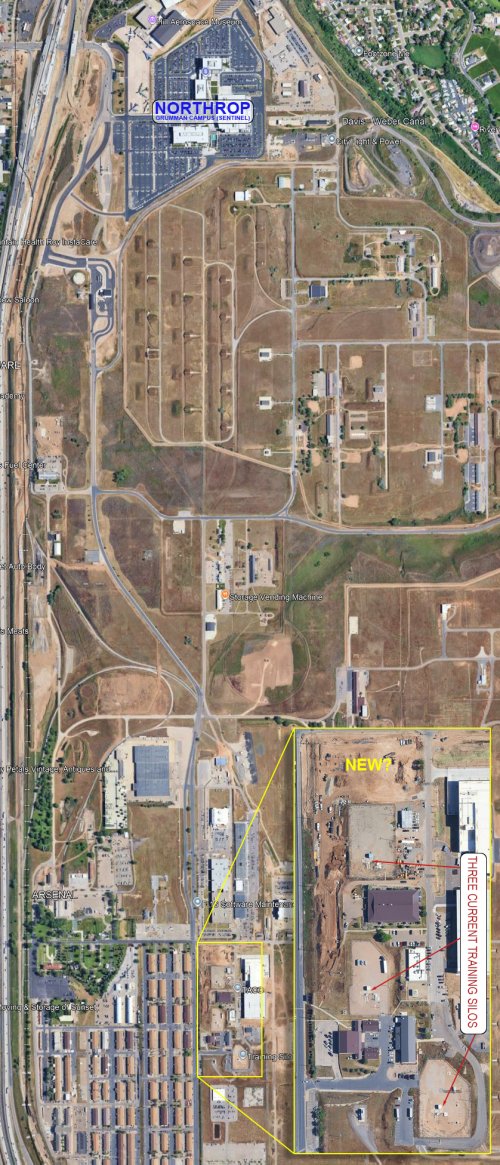
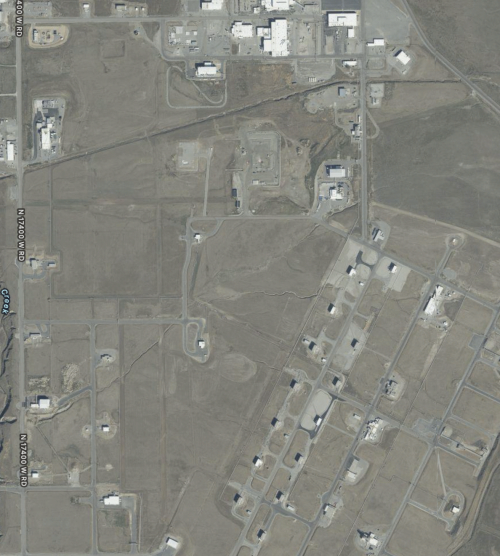
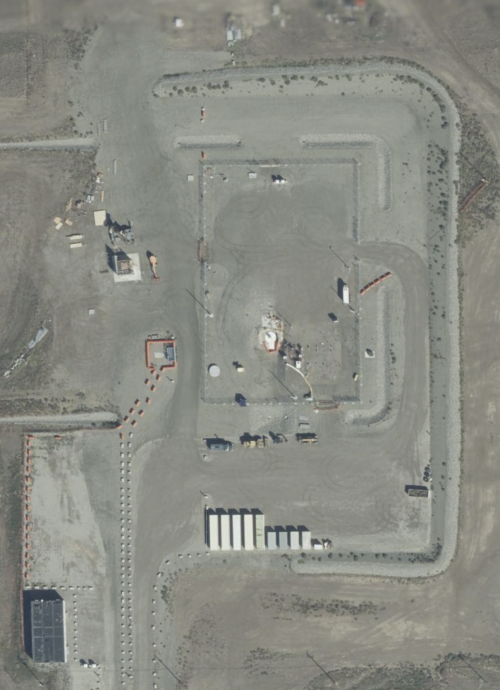
"All told, the 450 new silos will be needed as 400 Minuteman III missiles sit on alert, and there are spare silos. Northrop Grumman is now building a prototype silo in Utah."
Hill AFB currently has three training silos about half a mile off I-15 in Utah.
Hill AFB currently has three training silos about half a mile off I-15 in Utah.
Attachments
Last edited:
Scott Kenny
ACCESS: USAP
- Joined
- 15 May 2023
- Messages
- 16,977
- Reaction score
- 24,085
If the second and third stages were the same diameter as the first stage, it'd be the same capacity as a Peacekeeper, higher than Trident(!). But would be wide enough to carry more like 10-12 W87s. Compared to Trident, where the 3rd stage takes up the center of the bus, the center of the bus for Fat Sentinel would be available for carrying warheads.If second and third stages were the same diameter as the first-stage (Think of a mini-peacekeeper) I image the Bus would be wide enough to accomodate four or five MIRVs.
Might be able to pack 5x W78s or W62s, I doubt it's wide enough to carry 3x W87/Mk21 RVs.I want at least five warheads on the new Sentinel, more that the three warheads on the current Minuteman 3 missile.
the center of the bus for Fat Sentinel would be available for carrying warheads.
Once the LGM-35A goes into service I wonder if a "Fat" version* (With all stages having the same diameter as the first-stage) will be developed and deployed?
*Call it the LGM-35B.
The difference in width between the Mark 12/12A and the Mark 21 is exceptionally small. If there's enough physical space for three Mark 21 RVs, then there's enough physical space for three Mark 12/12A RVs with a little bit of extra wiggle room (but nowhere near enough to cram in another Mark 12/12A RV).Might be able to pack 5x W78s or W62s, I doubt it's wide enough to carry 3x W87/Mk21 RVs.
I see no reason why Sentinel would not be wide enough to carry 3x Mk21/W87 RVs. The necessary increase in width to accommodate Mk21 RVs is very small, and would be exceptionally trivial to implement on a clean sheet missile design like Sentinel.
I am extremely doubtful of any assertions that it is limited to only 2x Mk21/W87 RVs, as this simply does not make sense for a clean sheet missile design intended to carry the Mk21 from the start.
I do not believe that it is likely that Sentinel would be capable of carrying more than three RVs. The W62 is long retired, and the W78 is planned for total retirement once the MM III exits service. The Sentinel isn't even going to be capable of carrying W78 warheads – the only compatible warheads are going to be the W87-0/Mk21 and the W87-1/Mk21A. And as I point out above, given the tiny difference in size between the Mk12/Mk12A and the Mk21, it is not plausible that a missile designed to carry three Mk21 RVs would be capable of carrying any more than three Mk12/Mk12A RVs.
FighterJock
ACCESS: Above Top Secret
- Joined
- 29 October 2007
- Messages
- 6,692
- Reaction score
- 7,913
One question that I have is why does the Minuteman 3 only carry three warheads? Especially since Russia and China can carry as many as ten.
- Joined
- 3 June 2011
- Messages
- 20,030
- Reaction score
- 17,225
Because it's tiny.One question that I have is why does the Minuteman 3 only carry three warheads? Especially since Russia and China can carry as many as ten.
Scott Kenny
ACCESS: USAP
- Joined
- 15 May 2023
- Messages
- 16,977
- Reaction score
- 24,085
I doubt it. Unless the strategic situation changes to the point that the US needs massively more nukes.Once the LGM-35A goes into service I wonder if a "Fat" version* (With all stages having the same diameter as the first-stage) will be developed and deployed?
*Call it the LGM-35B.
Becuase Russia and China rely on their land-based missiles for the majority of their deterrent, while the US relies on Trident missiles at sea for the majority of deployed warheads.One question that I have is why does the Minuteman 3 only carry three warheads? Especially since Russia and China can carry as many as ten.
FighterJock
ACCESS: Above Top Secret
- Joined
- 29 October 2007
- Messages
- 6,692
- Reaction score
- 7,913
The last time I looked both the Russians and Chinese are both building new balistic missile submarines.
Scott Kenny
ACCESS: USAP
- Joined
- 15 May 2023
- Messages
- 16,977
- Reaction score
- 24,085
They are, but the majority of their deterrent is in silos on land.The last time I looked both the Russians and Chinese are both building new balistic missile submarines.
While the overwhelming majority of the US throw weight is in those Trident missiles.
Forest Green
ACCESS: USAP
- Joined
- 11 June 2019
- Messages
- 12,780
- Reaction score
- 27,506
Given that the ability to upload MIRVs is a requirement and the W87-1 is the new warhead, it's pretty much guaranteed that the LGM-35A will be able to carry at least 3xW87-1s in Mk21As.The difference in width between the Mark 12/12A and the Mark 21 is exceptionally small. If there's enough physical space for three Mark 21 RVs, then there's enough physical space for three Mark 12/12A RVs with a little bit of extra wiggle room (but nowhere near enough to cram in another Mark 12/12A RV).
I see no reason why Sentinel would not be wide enough to carry 3x Mk21/W87 RVs. The necessary increase in width to accommodate Mk21 RVs is very small, and would be exceptionally trivial to implement on a clean sheet missile design like Sentinel.
It's determined by the final stage diameter and warhead size. MMIII is only 1.27m (3 Mk12As) wide at the top end, Peacekeeper was 2.34m (10 or 11? Mk21s or 12 Mk12As), D5s are 2.11m (8 Mk5s or 12 Mk4s). I guess theoretically you could fit 4 Mk4s on an MMIII based solely on bus area, but it isn't equipped for that.One question that I have is why does the Minuteman 3 only carry three warheads? Especially since Russia and China can carry as many as ten.
Last edited:

- Joined
- 21 April 2009
- Messages
- 14,204
- Reaction score
- 9,059
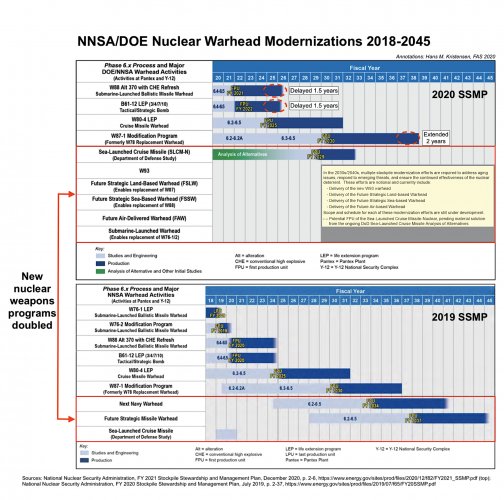
There is a early stage program called the Future Strategic Land Based Warhead, late 2030s, whether they would or could make a lighter warhead with smaller base diameter for more warheads per Sentinel would be the question. Possible I guess.
Attachments
- Joined
- 21 April 2009
- Messages
- 14,204
- Reaction score
- 9,059

The Air Force's new ICBM is nearly ready to fly, but there’s nowhere to put it
There were assumptions that were made in the strategy that obviously didn’t come to fruition."
 arstechnica.com
FighterJock
ACCESS: Above Top Secret
- Joined
- 29 October 2007
- Messages
- 6,692
- Reaction score
- 7,913
What a massive mistake that was they should have had the silos ready when the missile was ready, who was responsible to oversee the whole operation?
Scott Kenny
ACCESS: USAP
- Joined
- 15 May 2023
- Messages
- 16,977
- Reaction score
- 24,085
Side note: On Tridents, the 3rd stage rocket motor goes through the center of the bus (the rocket itself is about the diameter of the MM3's 3rd stage), and the warheads are carried around the outside of the 3rd stage. This was done to limit the overall length of the missile.It's determined by the final stage diameter and warhead size. MMIII is only 1.27m (3 Mk12As) wide at the top end, Peacekeeper was 2.34m (10 or 11? Mk21s or 12 Mk12As), D5s are 2.11m (8 Mk5s or 12 Mk4s). I guess theoretically you could fit 4 Mk4s on an MMIII based solely on bus area, but it isn't equipped for that.
It may also be to give Sentinel a little more range, if there are any targets at such long range. The Minuteman missiles used to have W62s for any of the targets deep in the old Soviet Stans.There is a early stage program called the Future Strategic Land Based Warhead, late 2030s, whether they would or could make a lighter warhead with smaller base diameter for more warheads per Sentinel would be the question. Possible I guess.
Scott Kenny
ACCESS: USAP
- Joined
- 15 May 2023
- Messages
- 16,977
- Reaction score
- 24,085
Oops, missed this.
Problem is, the original contract did not include new silos (or wiring). It's not even clear that there has been a contract competition to do those two separate pieces.What a massive mistake that was they should have had the silos ready when the missile was ready, who was responsible to oversee the whole operation?
Similar threads
-
-
 Raytheon AGM-181 Long Range Stand Off Weapon (LRSO)
- Started by bobbymike
- Replies: 272
-
 MX (Peacekeeper) deployment concepts.
- Started by Sferrin
- Replies: 427
-

-
