
You are using an out of date browser. It may not display this or other websites correctly.
You should upgrade or use an alternative browser.
You should upgrade or use an alternative browser.
Lavochkin Early Jet Fighter Projects and Prototypes
- Thread starter hesham
- Start date

- Joined
- 26 May 2006
- Messages
- 38,251
- Reaction score
- 20,387
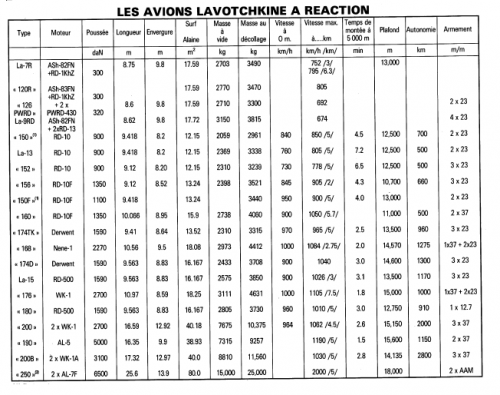
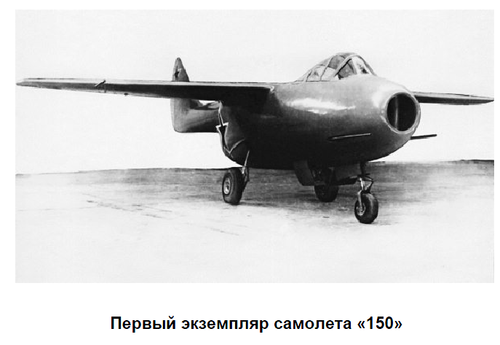
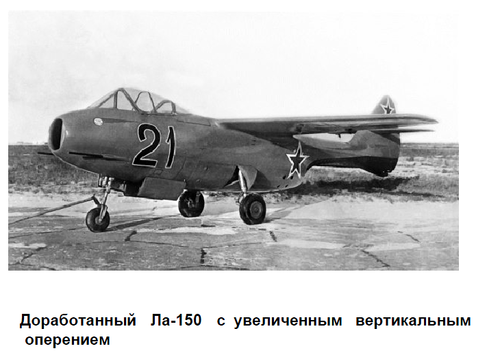
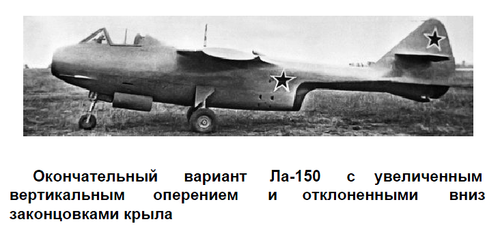
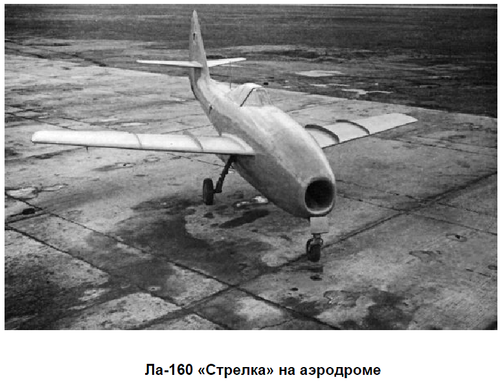
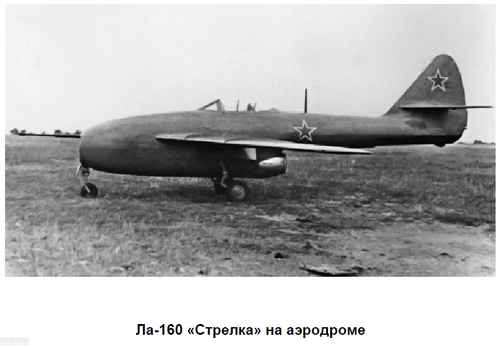
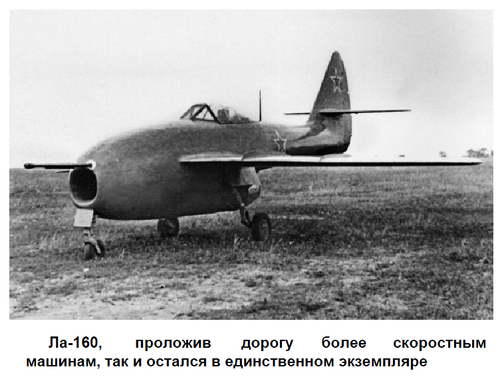
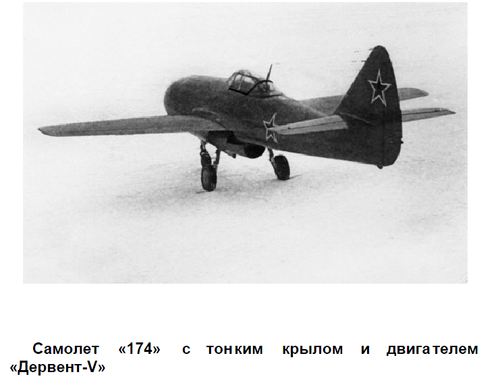
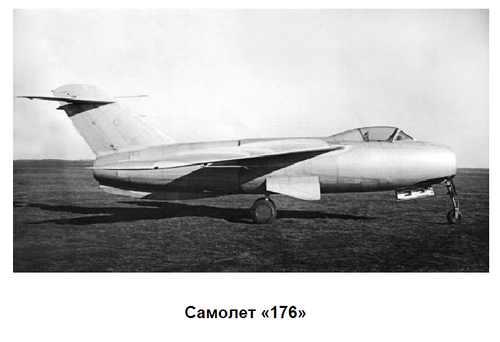
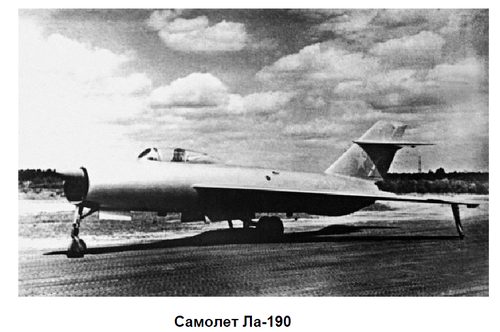
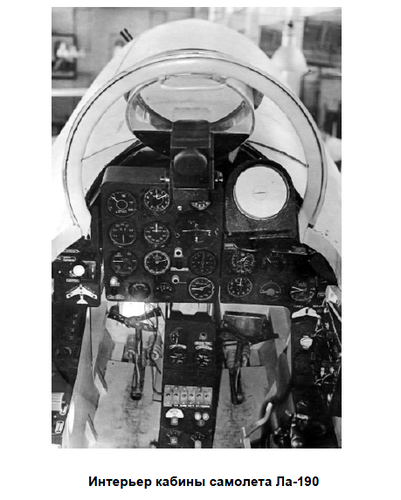
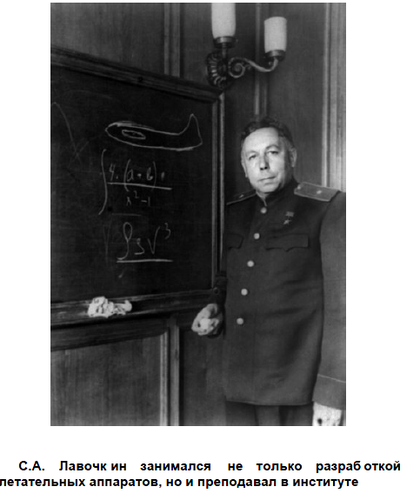
From a Russian book about Lavochkin,
a good views to early aircraft and prototypes.
a good views to early aircraft and prototypes.
Attachments
-
 1.png159.7 KB · Views: 180
 -
 2.png197.7 KB · Views: 137
 -
 3.png119.7 KB · Views: 132
 -
 4.png311.2 KB · Views: 132
 -
 5.png210.6 KB · Views: 135
 -
 6.png261.9 KB · Views: 127
 -
 7.png190.2 KB · Views: 138
 -
 8.png296.2 KB · Views: 147
 -
 9.png216.6 KB · Views: 150
 -
 10.png191.9 KB · Views: 146
 -
 11.png199 KB · Views: 139
 -
 12.png170.8 KB · Views: 152
 -
 13.png269.5 KB · Views: 153
 -
 14.png195.4 KB · Views: 151
 -
 15.png159.6 KB · Views: 160

blackkite
Don't laugh, don't cry, don't even curse, but.....
- Joined
- 31 May 2007
- Messages
- 9,515
- Reaction score
- 9,652
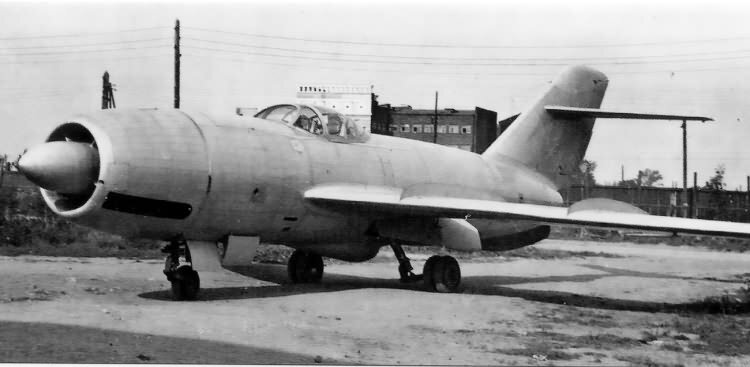
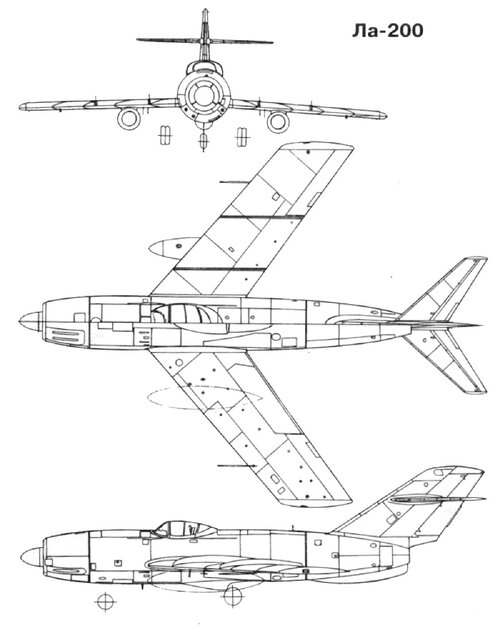
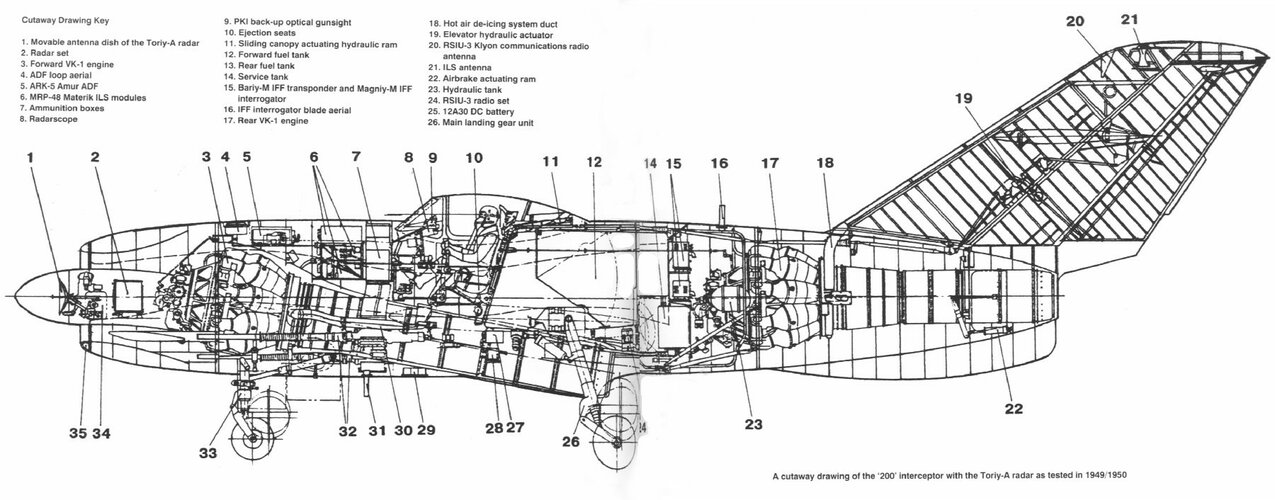
Hi! La-200 night/all weather interceptor prototype with Toriy radar. Competitor of MiG I-320 and Sukhoi Su-15.
https://forum.warthunder.com/index.php?/topic/323878-la-200/
http://w01.fitcall.net/akaihoshi/finished_work/fws_la200t_av72/fw_la200t_av72.html
"The La-200 was a jet fighter prototyped in the Soviet Union at the end of the 1940s and was developed with the aim of an all-weather aircraft equipped with high-performance radar. However, radar at that time was large and heavy, the engine was power-less even though the diameter was large, and the realization of all-weather performance was a muri situation in a small single-engine fighter. The idea put out there is to make the engine a twin engine arranged vertically in the fuselage, and to reduce the front area to the same as a single-engine aircraft, obtain a large output while reducing air resistance, and make it an aircraft that can load large radars. The prototype was made by Mikoyan Grevich, Sukhoi and Labo Chicken design bureaus, but the la bo chicken La-200 was tested to the very end. There are two prototypes of the La-200, one of which is a toriy radar placed in a relatively large redome and placed in the center of an annular air inlet (this exhibition). The other is a type equipped with a slightly smaller Korshun radar on the top of the nose. Both aircraft seemed to have problems with the radar, and later developed into the La-200B, which was equipped with a large diameter radar full of noses."
https://forum.warthunder.com/index.php?/topic/323878-la-200/
http://w01.fitcall.net/akaihoshi/finished_work/fws_la200t_av72/fw_la200t_av72.html
"The La-200 was a jet fighter prototyped in the Soviet Union at the end of the 1940s and was developed with the aim of an all-weather aircraft equipped with high-performance radar. However, radar at that time was large and heavy, the engine was power-less even though the diameter was large, and the realization of all-weather performance was a muri situation in a small single-engine fighter. The idea put out there is to make the engine a twin engine arranged vertically in the fuselage, and to reduce the front area to the same as a single-engine aircraft, obtain a large output while reducing air resistance, and make it an aircraft that can load large radars. The prototype was made by Mikoyan Grevich, Sukhoi and Labo Chicken design bureaus, but the la bo chicken La-200 was tested to the very end. There are two prototypes of the La-200, one of which is a toriy radar placed in a relatively large redome and placed in the center of an annular air inlet (this exhibition). The other is a type equipped with a slightly smaller Korshun radar on the top of the nose. Both aircraft seemed to have problems with the radar, and later developed into the La-200B, which was equipped with a large diameter radar full of noses."
Attachments
Last edited:
blackkite
Don't laugh, don't cry, don't even curse, but.....
- Joined
- 31 May 2007
- Messages
- 9,515
- Reaction score
- 9,652
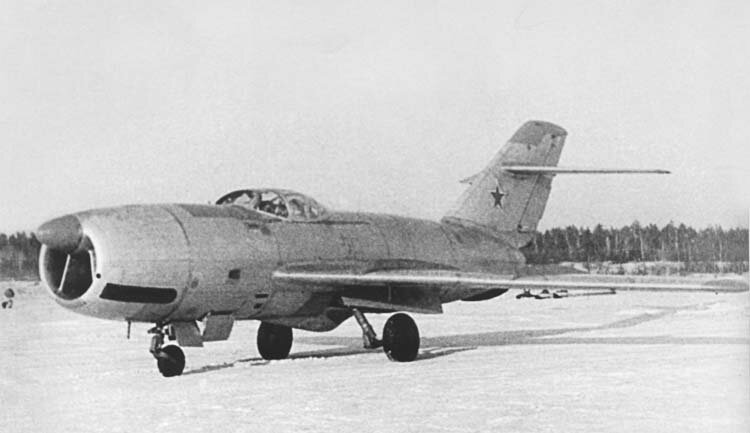
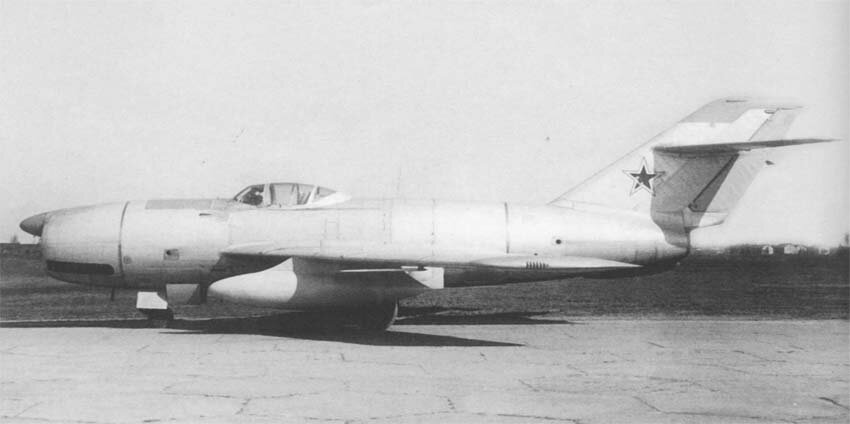
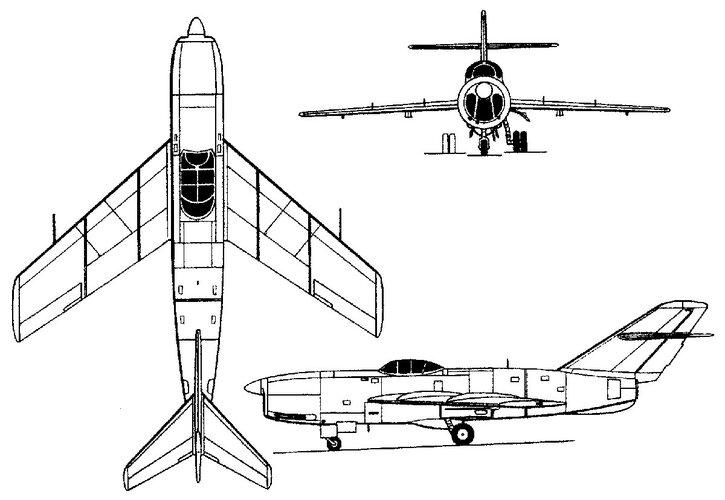
Hi! Lavochkin La-200 with Korshun radar.
http://www.airwar.ru/image/idop/fighter/la200/
http://www.airwar.ru/image/idop/fighter/la200/
Attachments
blackkite
Don't laugh, don't cry, don't even curse, but.....
- Joined
- 31 May 2007
- Messages
- 9,515
- Reaction score
- 9,652
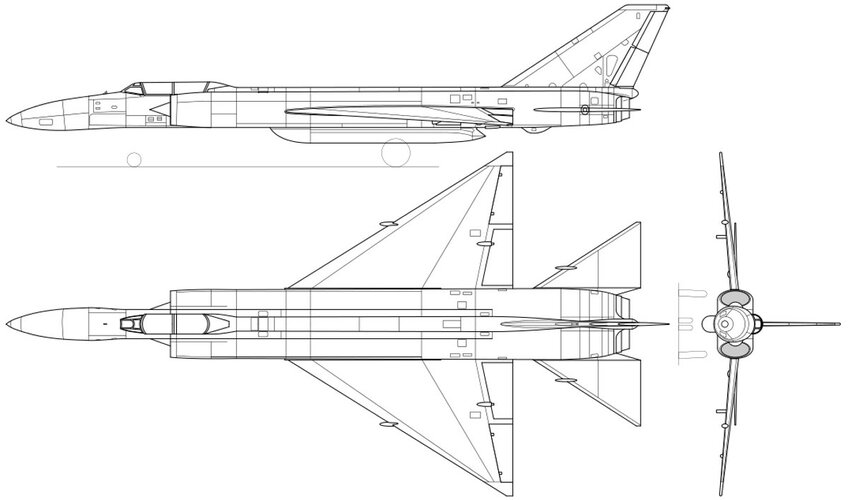
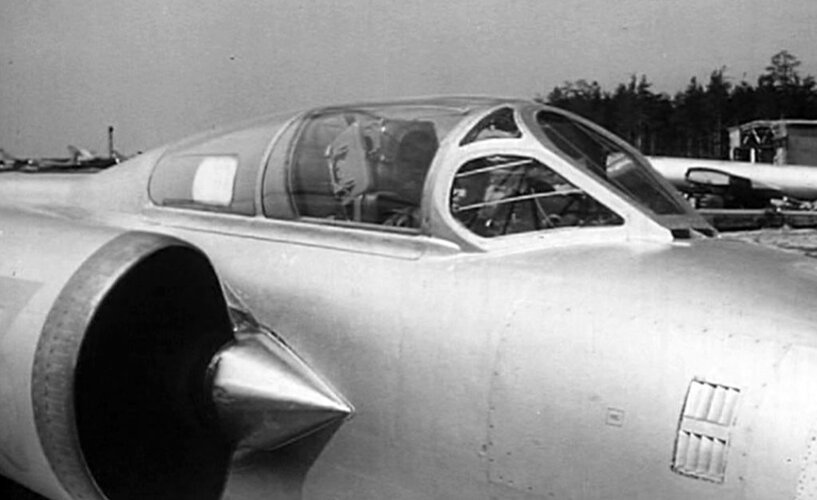
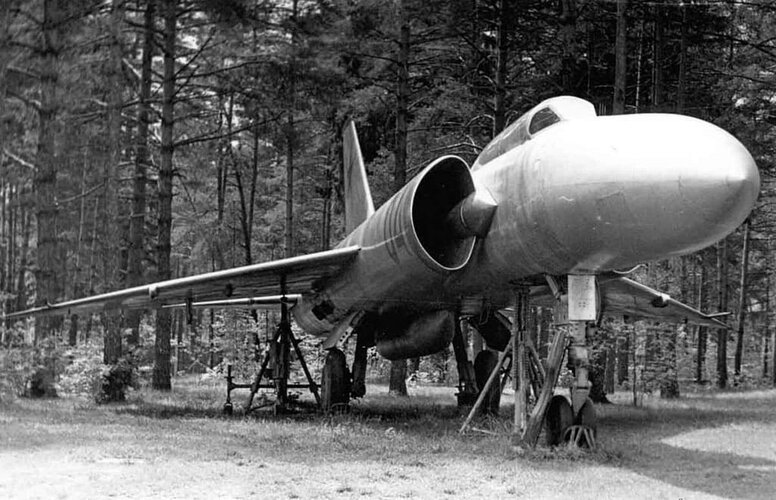
Hi! La-250 Anakonda.
View: https://www.flickr.com/photos/130655349@N05/16588176151/
https://drawingdatabase.com/lavochkin-la-250/
http://forum.militaryparitet.com/viewtopic.php?id=26420
Middle picture's cockpit shape is different from three side view drawing.
View: https://www.flickr.com/photos/130655349@N05/16588176151/
https://drawingdatabase.com/lavochkin-la-250/
http://forum.militaryparitet.com/viewtopic.php?id=26420
Middle picture's cockpit shape is different from three side view drawing.
Attachments
Last edited:
blackkite
Don't laugh, don't cry, don't even curse, but.....
- Joined
- 31 May 2007
- Messages
- 9,515
- Reaction score
- 9,652
Including surprising video.
https://www.secretprojects.co.uk/th...nakonda-interceptor-aircraft.933/#post-268069
https://www.secretprojects.co.uk/th...nakonda-interceptor-aircraft.933/#post-268069
blackkite
Don't laugh, don't cry, don't even curse, but.....
- Joined
- 31 May 2007
- Messages
- 9,515
- Reaction score
- 9,652
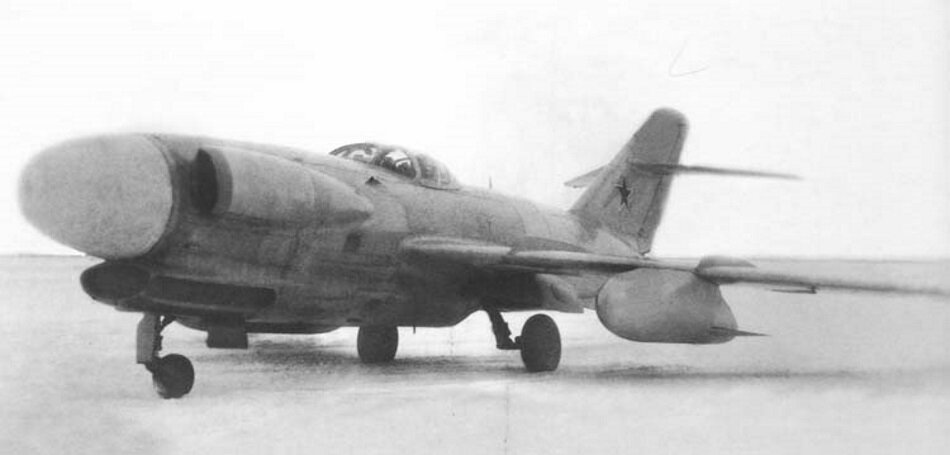
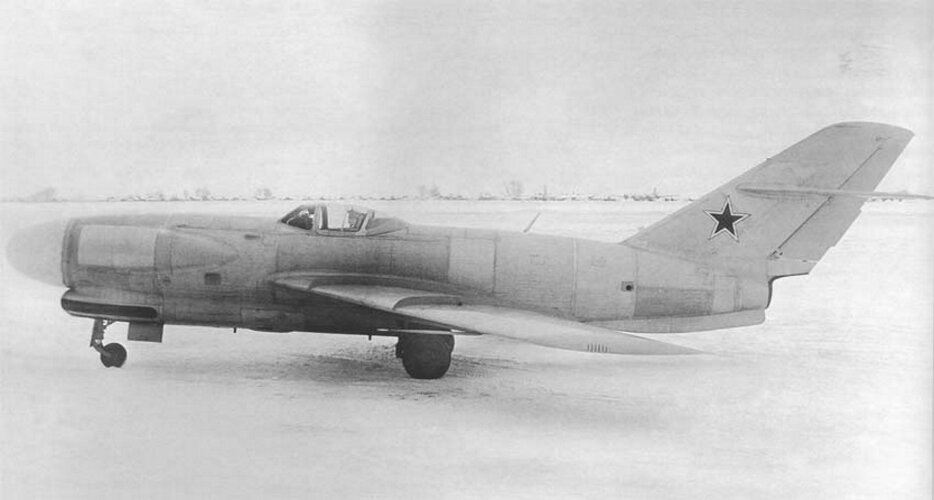
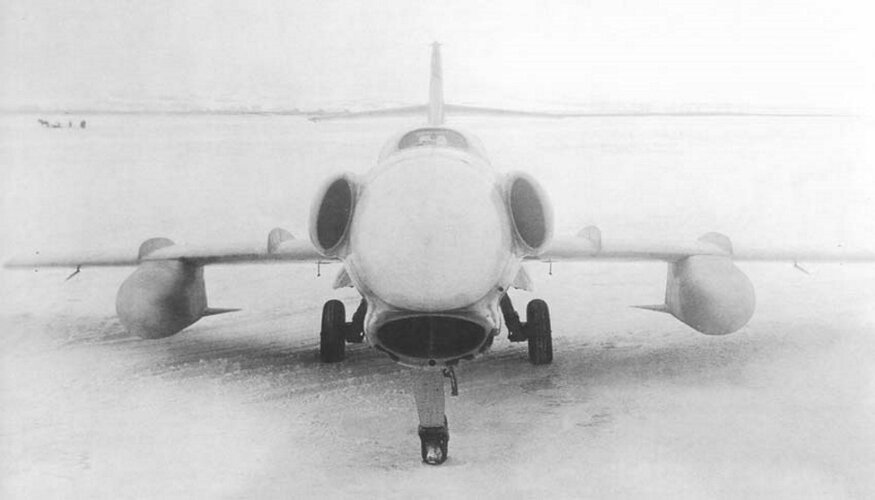
Hi! Lavochkin La-200B.
https://www.armedconflicts.com/Lavochkin-La-200B-t194172
https://www.armedconflicts.com/Lavochkin-La-200B-t194172
Attachments
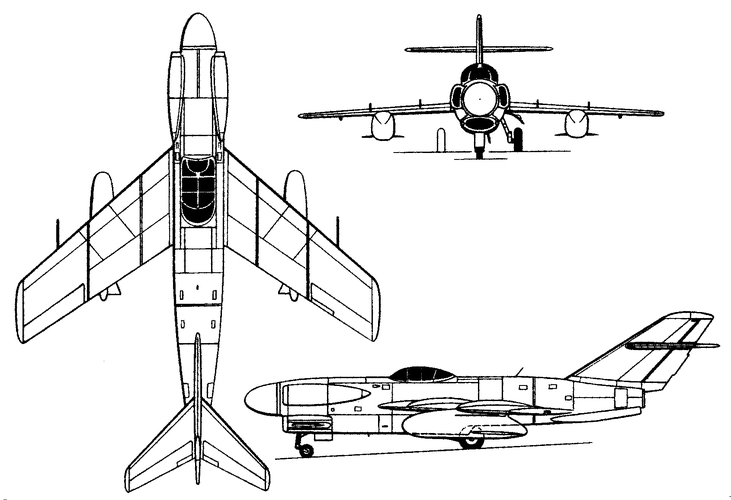
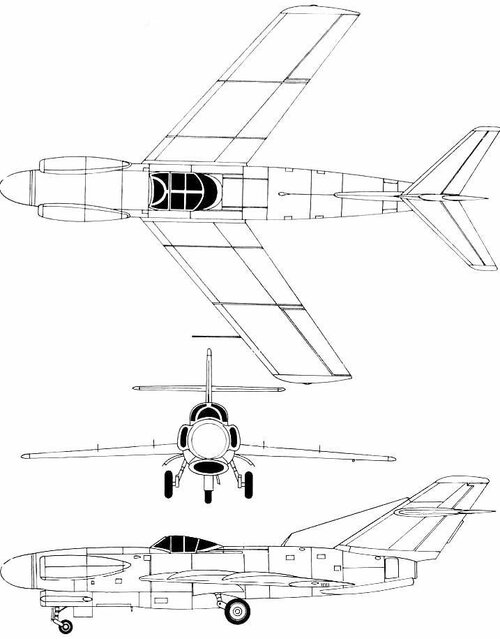

Motocar
I really should change my personal text
- Joined
- 16 May 2014
- Messages
- 1,330
- Reaction score
- 1,657
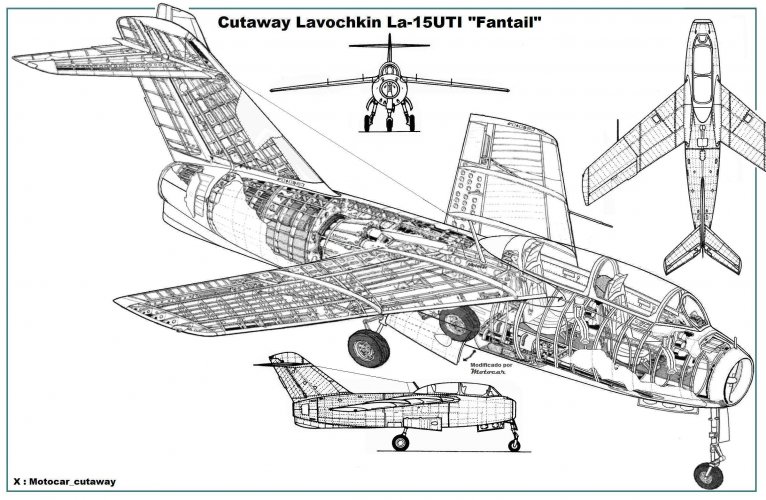
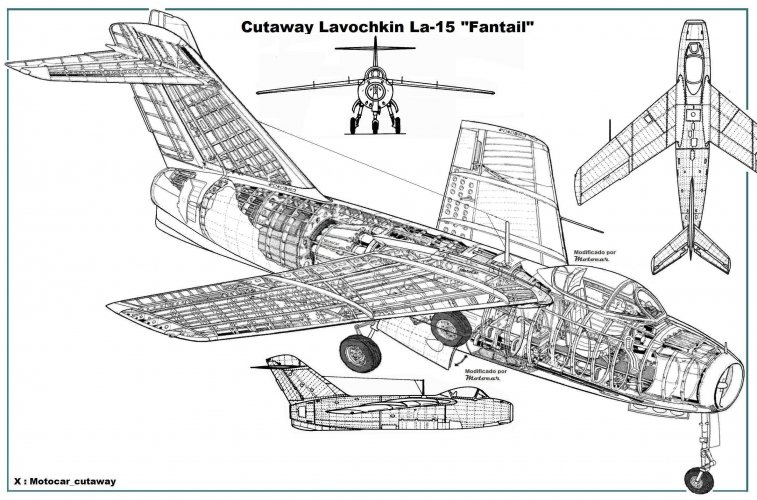
Motocar
I really should change my personal text
- Joined
- 16 May 2014
- Messages
- 1,330
- Reaction score
- 1,657
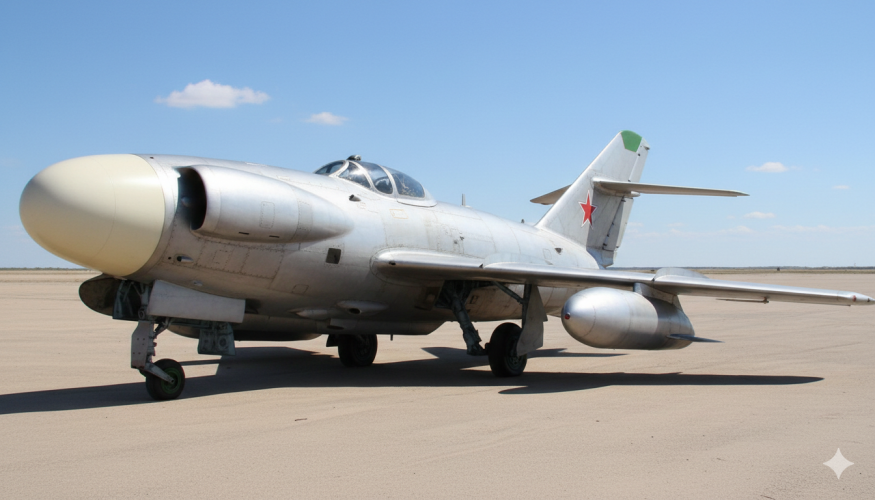
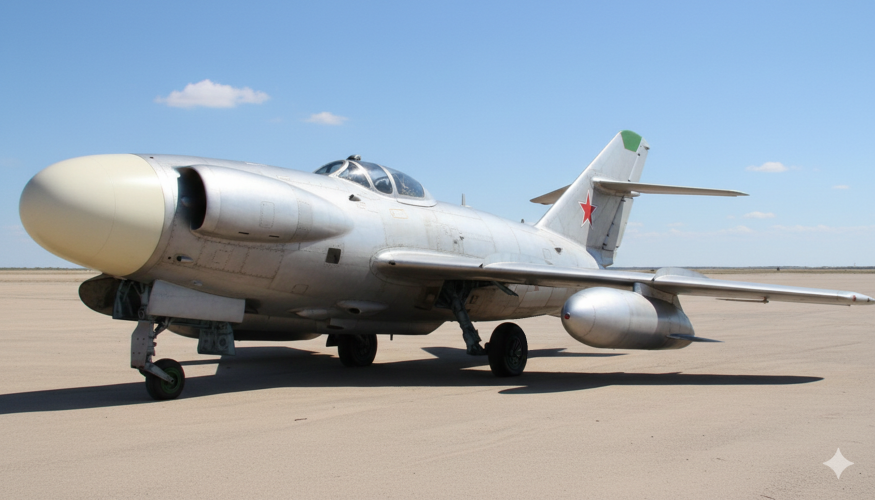
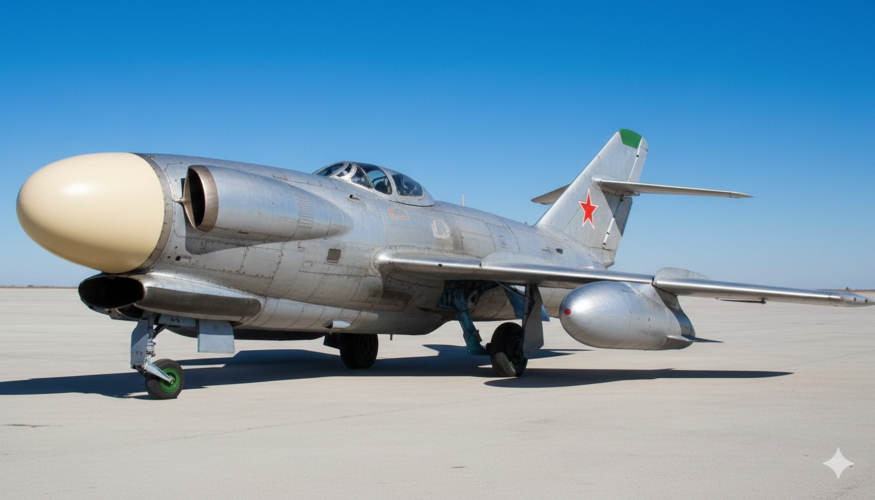
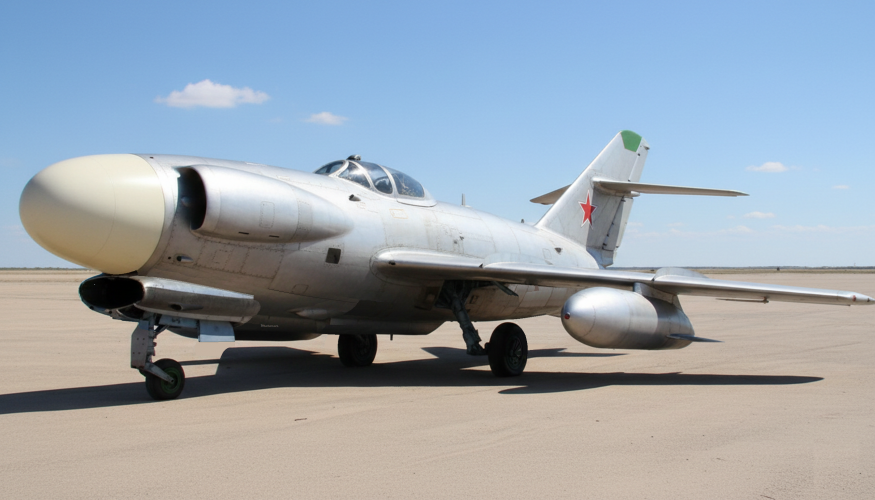
Nice, but there is something wrong with the air intake of the front engine.Retouched in colour
Motocar
I really should change my personal text
- Joined
- 16 May 2014
- Messages
- 1,330
- Reaction score
- 1,657
Nice, but there is something wrong with the air intake of the front engine.
Thank you for letting me know about the detail of the air intake, the AI takes some licenses, I'm going to correct it soon
As a result of the atomic attacks on Hiroshima and Nagasaki, the Soviet government experienced the urgent need for a reliable fast-climbing point-defense interceptor to counter the potential threat of nuclear armed B-29 bombers in a future war.Oh!!!!!
This one? Wind shield shape is different? ???
http://translate.google.fr/translat...www.airwar.ru/enc/xplane/la162.html&sandbox=1
"weapon : six ODP-82."

On February 26, 1946, Josef Stalin ordered the development of two rocket interceptors using technology captured from the Germans, but the Soviet industry proved to be unable to build reverse-engineering copies of the double-walled combustion chamber or turbine-driven fuel pump of the German rocket motor Walter HWK 109-509 A-1, and only managed to produce small amounts of T-Stoff and C-Stoff that was sufficient for ten partial rocket starts and five full powered takeoffs.
The designers were forced to continue using the RD-2-M-3V domestic rocket engine.
The MiG bureau was assigned to design a mass-production daylight interceptor and the Lavochkin bureau was tasked to design a limited-production all-weather/night-fighter fitted with AI radar.
The project developed by the MiG design team, called I-270, was based on information retrieved on the Junkers Ju 248 V2. The TsAGI recommended lengthening the fuselage to contain more propellants, but the German chemicals were abandoned. Instead, the plane used RFNA (96% nitric acid) and kerosene.
In the preliminary configuration of March 1946, the I-270 was designed with 20 degree (25% chord) swept wings based on those of the MiG-8, but the insufficiency of data about the Ju 248 28-degree swept wings and the bad experiences suffered during landings with the Me 163, forced the design team to use the straight wing of the Junkers EF 127 project, with 9 % thickness.
Following the TsAGI calculations, work was stopped on April and the project was revised with a 12 % wing.
On May 30, 1946, a 30-degree swept T-tail plane was adopted to compensate for the extremely small longitudinal stability margin of the tailless designs.
To prevent the turbulence generated by the wings at Mach 0.9 affecting the tailplane, the OKB calculated that it should be installed at a height above the wings equivalent to 1.2 times the average value of the chord (1,772 mm).
Final configuration was approved on August 8, 1946, with one RD-2 MZV two-chamber rocket engine that used a turbo pump unit driven by hydrogen peroxide.
On February 3, 1947, the prototype I-270 F2 was flown, in glider configuration, towed by one Tupolev Tu-2 bomber.
On July 16, the cruise combustion chamber exploded during ground tests, damaging the aft fuselage.
The I-270 F2 made its first powered flight on September 2, 1947, but it was damaged beyond repair during landing.
The prototype I-270 F1 was flown on October 4, reaching 382 mph (615 km/h) only, far from the expected 1,000 km/h.
The engine failures by acid corrosion and explosions continued and, by March 1948, the top speed of the I-270 was only 39 km/h faster than a Lockheed P-80C standard.
MiG was instructed not to fly and preserve the aircraft.
The all-weather specification calling for a rocket fighter with one Slepushkin NII-17 Toriy (AI) radar, 684 mph (1,100 km/h) top speed, 59,055 ft. (18,000 m) ceiling and six minutes powered flight endurance.
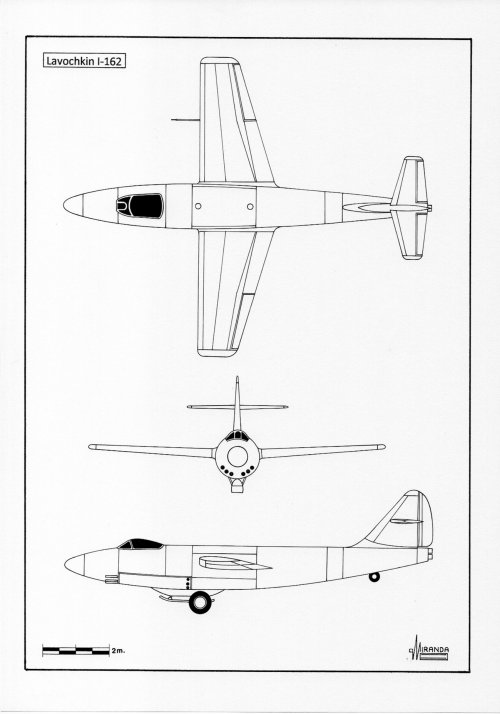
By the end of 1946 the Lavochkin I-162 preliminary design was proposed, inspired in the Junkers EF 127, with jettisonable two-wheel take-off trolley and retractable landing skid, but the project was rejected by the TsAGI who had had numerous problems with the Messerschmitt Me 163 landing system.
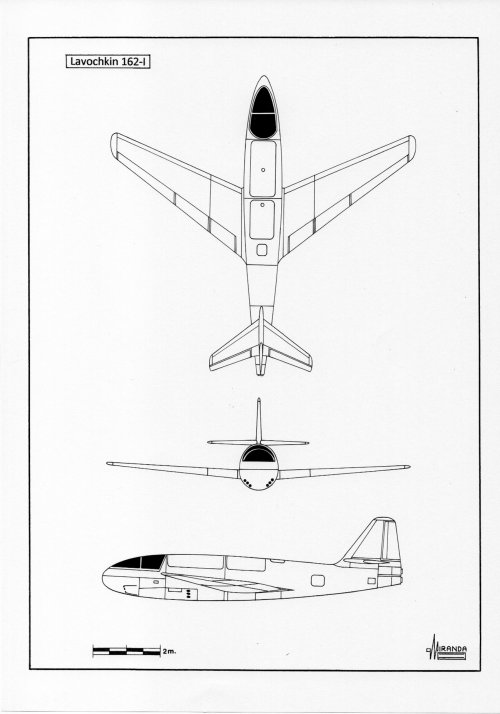
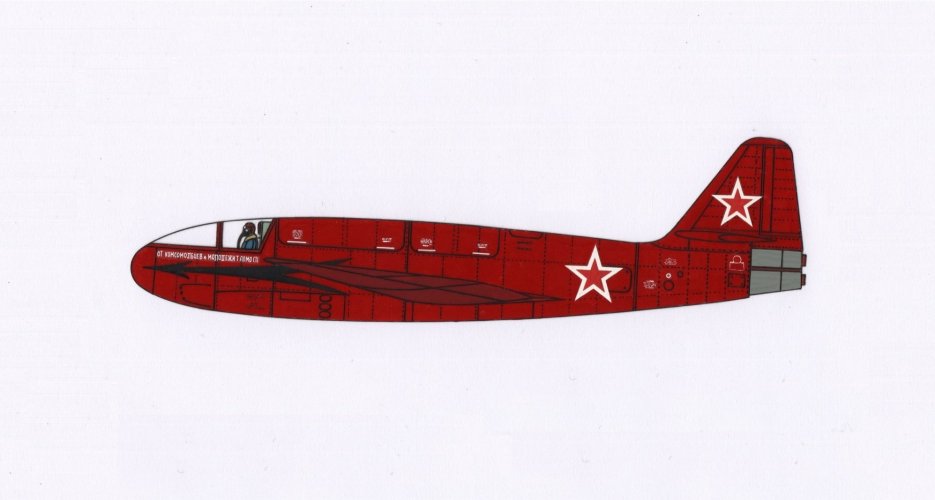
The project was reformed as I-162-I, with retractable tricycle landing gear and forward-swept wings, a new design based on the Heinkel He 162 B prototype, captured by the Allies at the Heinkel-Schwechat plant.
The I-162-I would be powered by an RD-2 MZV rocket engine, but it was soon found that the turbo pump drive electric generator was to be too weak to provide sufficient electrical power for the AI radar.
Early in 1947, the low reliability and heavy maintenance of the engine led Lavochkin OKB halted the work on the I-162-I in favor of the MiG I-320 all-weather jet fighter.
Lavochkin I-162 technical data
Wingspan: 29.3 ft. (8.96 m), length: 37.2 ft. (11.35 m), height: 11.9 ft. (3.62 m), wing surface: 314.4 sq. ft. (28.3 sq. m), take-off weight: 12,119 lb (5,490 kg).
Lavochkin I-162-I technical data
Wingspan: 30 ft. (9.14 m), length: 29.5 ft. (8.98 m), height: 11.7 ft. (3.56 m).
Attachments
Last edited:
Don't want to be picky but the muzzle and muzzle channel of the left 37mm cannon still isn't managed by the AI.Ready
Motocar
I really should change my personal text
- Joined
- 16 May 2014
- Messages
- 1,330
- Reaction score
- 1,657
I've retouched it by hand; the images I have don't show the cannon well. I'm still working on it because the AI isn't very helpful and doesn't follow my instructions; it struggles to interpret that old photograph.
I am exploring AI tools to help me with these and other tasks, on the other hand, it has provided me with very valuable support with the Motocar project and others I have worked on.
I am exploring AI tools to help me with these and other tasks, on the other hand, it has provided me with very valuable support with the Motocar project and others I have worked on.
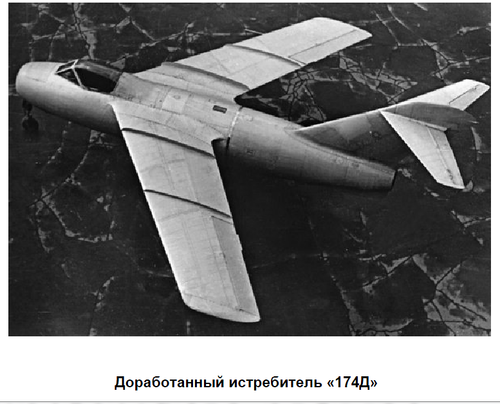
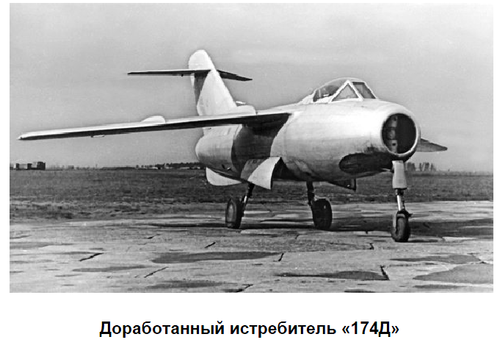
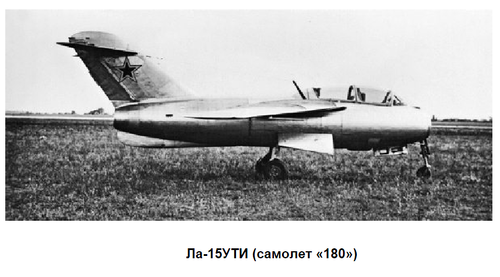
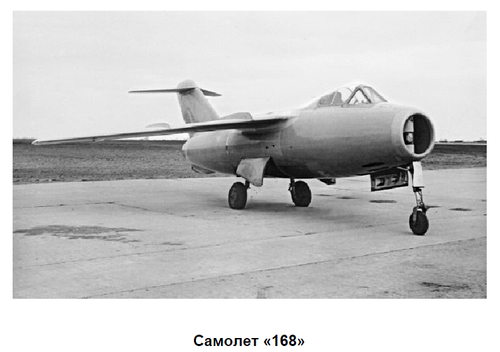
The 8th pictuire showing La-174? What did the caption say in picture? The next one designated as 174L? Looks much like 168...From a Russian book about Lavochkin,
a good views to early aircraft and prototypes.
Similar threads
-

-
MiG 17 Projects, Prototypes and Experimental Variants
- Started by Justo Miranda
- Replies: 3
-
 Early Sukhoi Su-9 / Su-11 / Su-13/Su-15 Variants and Projects
- Started by hesham
- Replies: 10
-
-
Supermarine Un-Numbered Strange Jet Fighter Project
- Started by hesham
- Replies: 16