- Joined
- 22 April 2012
- Messages
- 2,274
- Reaction score
- 2,848
I was trying to work out what sort of radar the USN had in mind for the F-14C (Link), Congress was told that:
I then started looking for evidence of contracted development work for multi-mode electronically scanned array radars undertaken for the USN in the 1968-71 timeframe. I came across the Hughes Electronically Scanned Airborne Intercept Radar Antenna (ESAIRA). The following text appears to be a generic blurb that was used in various forms by multiple publications:
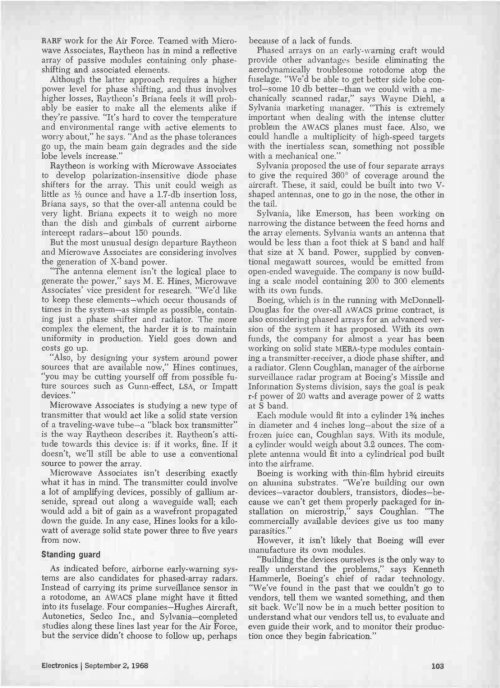
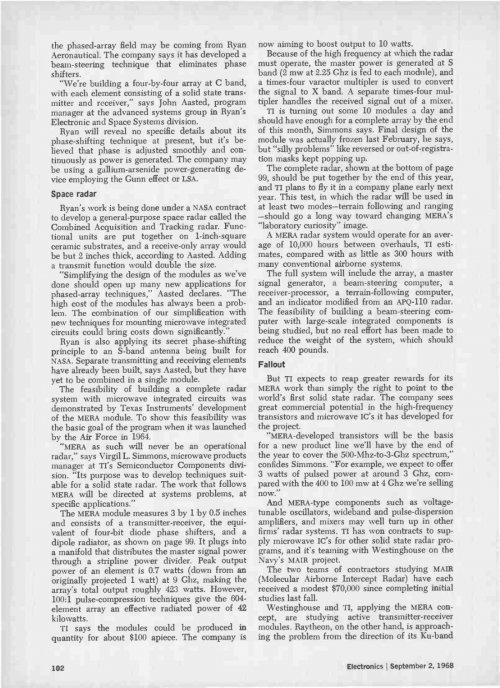
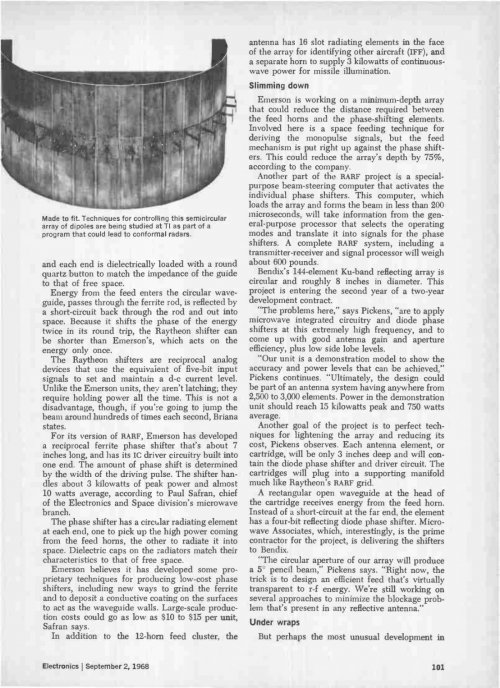
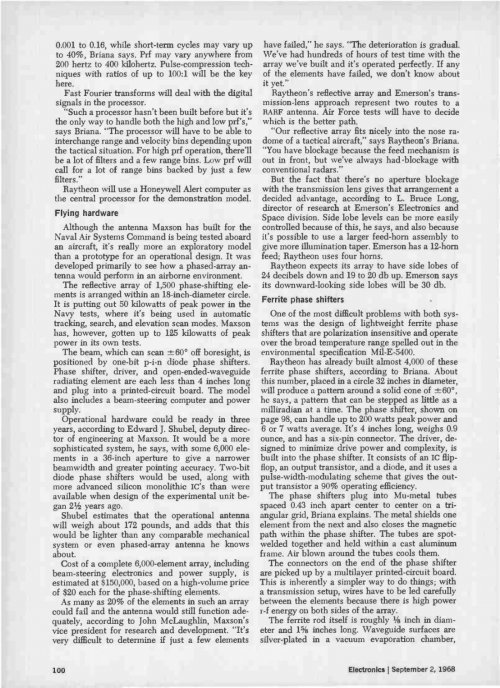
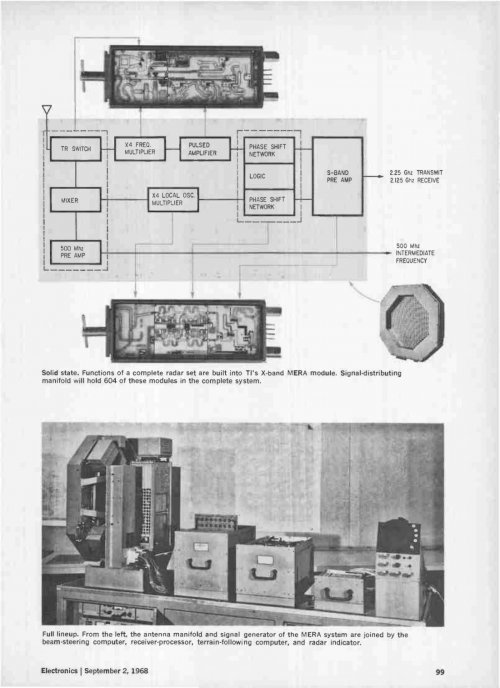
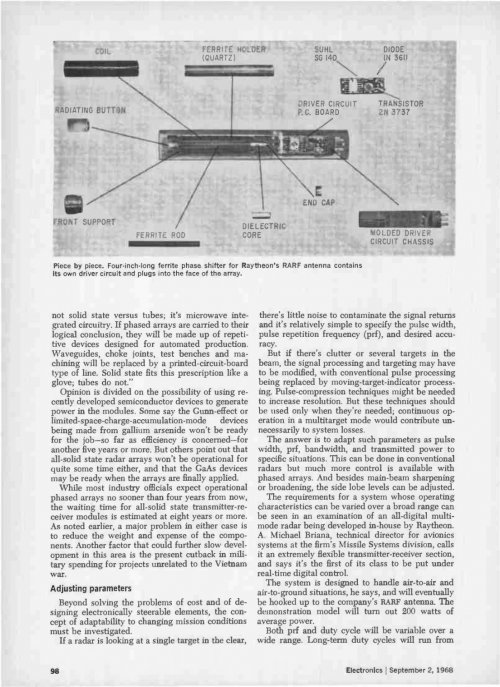
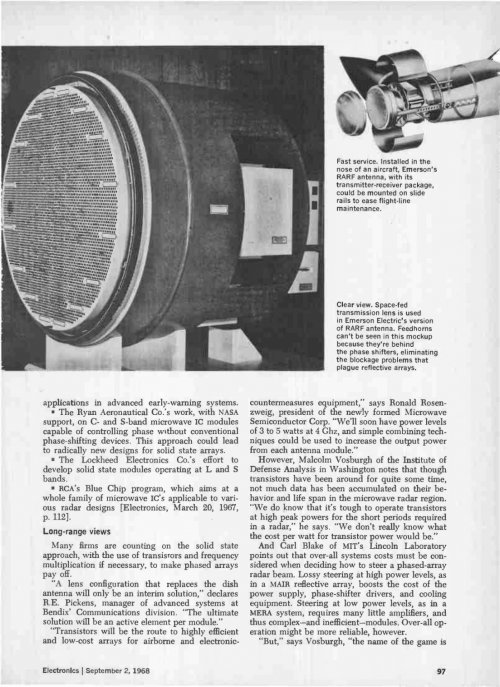
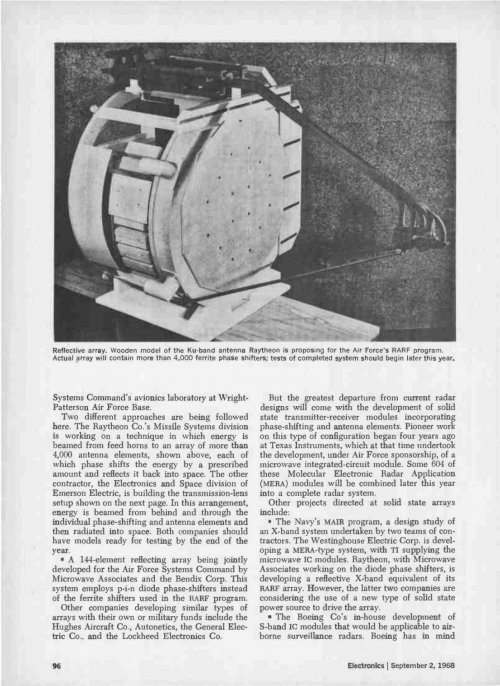
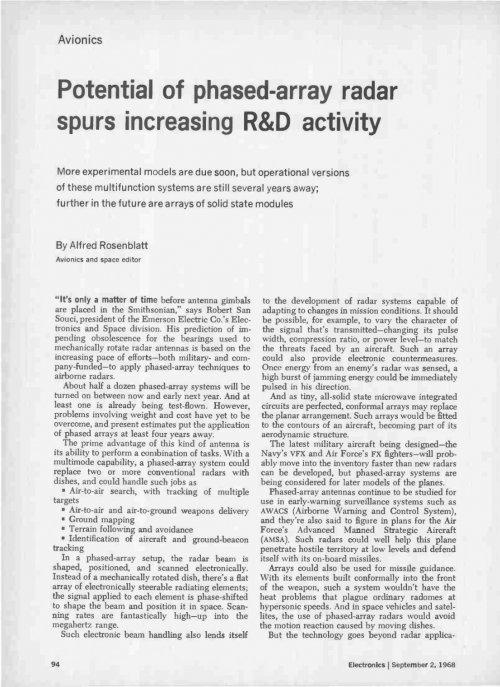
The navy also funded, though at just $70,000 for each team, the Molecular Airborne Intercept Radar (MAIR). The two teams consisted of Westinghouse and Texas instruments in one and Raytheon and Microwave Associates in the other. Good contemporary article available here (Link).
I am not saying this, or the MAIR work, would have been the radar for the F-14C, rather that this was te foundational R&D that would have eventually informed a set for the F-14C.
The multi mode radar will feature an [deleted] electronically scanned array radar with [deleted] nautical mile detection range and organized through a central multi processor. The track-while-scan mode is significantly improved by increased data rates, dual confirm detection logic and adaptive tracking. All target aspect detection [deleted].
Improved lighter defensive ECM sensors will also be provided including [deleted]. Improved air-to-ground accuracy including all weather delivery will be a fall out of the multi-mode radar technology.
I then started looking for evidence of contracted development work for multi-mode electronically scanned array radars undertaken for the USN in the 1968-71 timeframe. I came across the Hughes Electronically Scanned Airborne Intercept Radar Antenna (ESAIRA). The following text appears to be a generic blurb that was used in various forms by multiple publications:
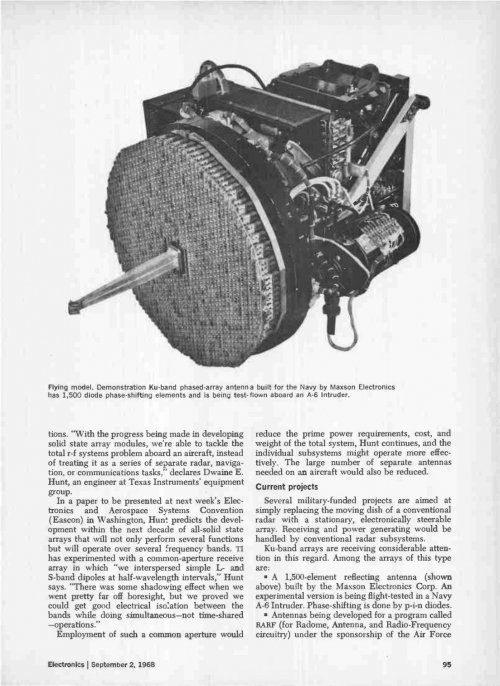
A new electronically scanned airborne radar antenna, the US Navy's first-high performance, X-band multimode, phased array system is now undergoing evaluation at Hughes. It has a 36-inch-diameter flat reflecting surface with 2400 radiating elements, and offers distinct advantages over mechanically-scanned gimballed antennas. It is designed for air-to-air search, multiple target tracking, terrain following and avoidance, and ground mapping
The navy also funded, though at just $70,000 for each team, the Molecular Airborne Intercept Radar (MAIR). The two teams consisted of Westinghouse and Texas instruments in one and Raytheon and Microwave Associates in the other. Good contemporary article available here (Link).
I am not saying this, or the MAIR work, would have been the radar for the F-14C, rather that this was te foundational R&D that would have eventually informed a set for the F-14C.