Kawasaki PX-L / GK 520 ASW Prototypes, Projects & Contenders

TinWing

ACCESS: Top Secret
Senior Member
Joined
3 January 2006
Messages
1,405
Reaction score
1,375
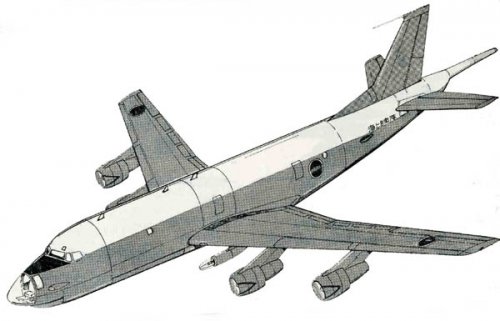
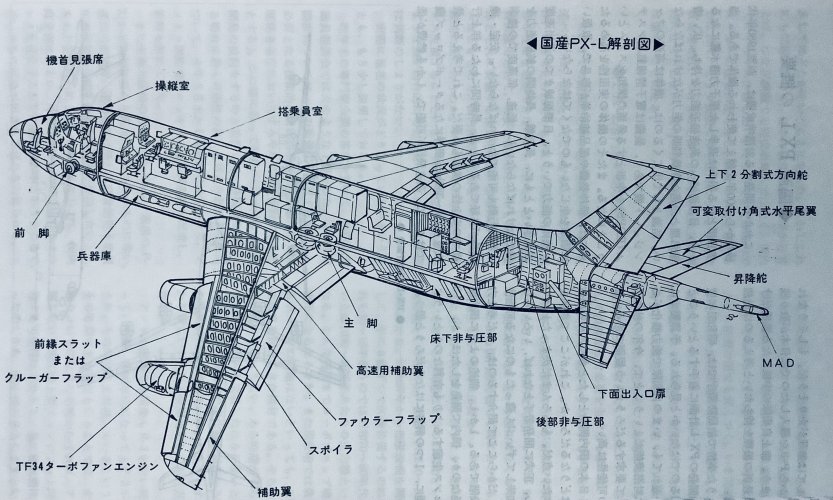
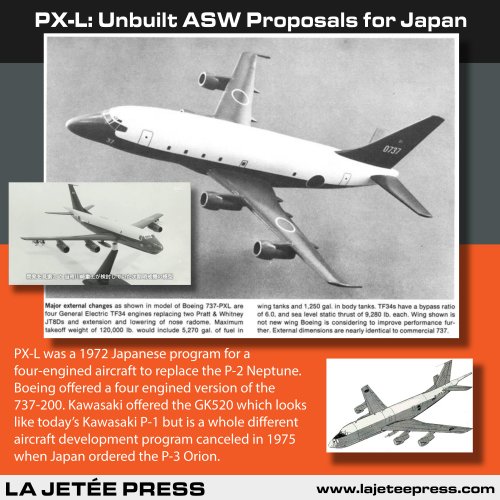
The Kawasaki PX-L was a late 1970s concept for a turbofan powered Maritime Patrol Aircraft to replace the P-2J Neptune. At the time, Japan opted instead for the licensed production of the Lockheed P-3C.

The original print version of the Flight International article featured a picture of a PX-L model.

It should noted that the current Kawasaki PX is not merely a continuation of the cancelled PX-L, despite obvious similarities in size and overall concept.


Source:
http://www.flightinternational.com/Articles/1997/06/11/3716/USA+and+Japan+study+MPA.html

Image Source: Unknown?
 

Attachments

  • PX-L_1.jpg
    PX-L_1.jpg
    41.7 KB · Views: 2,121
Air International, June 1976 has a small item on Kawasaki P-XL having a greatly enhanced chance of being built as the result of abandoning plans to procure the P-3 as an interim solution, with the P-2J production line being retained. Development cost of the P-XL was estimated as £110m, and unit price £7.6m unequipped, and £15.5m - £18m fully equipped with ASW equipment.
 
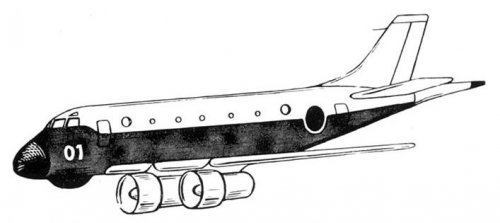
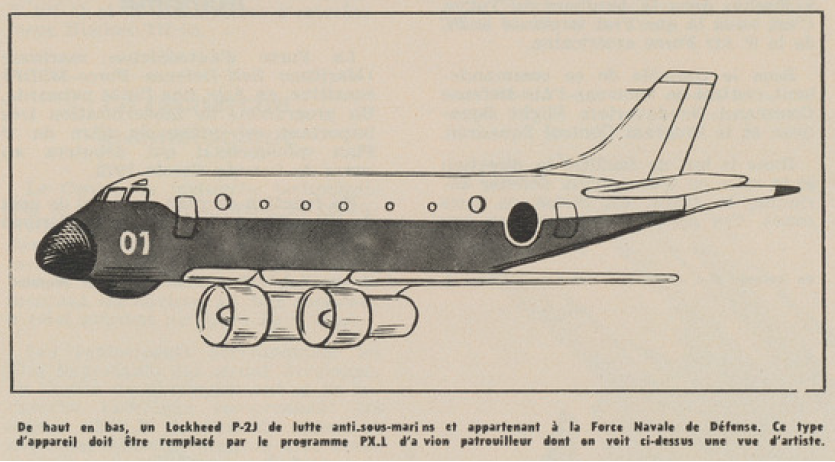
Is there anybody from Japan in the secret projects forum? "Der Flieger" 2/1972 forwarded a simple Sketch from the "Aviation Magazine" (issue?) and asked if this could be the new (Japanese) PX-L submarine hunter.

Were there different contenders for the PX-L requirement?
 

Attachments

  • PX-L.jpg
    PX-L.jpg
    27.2 KB · Views: 1,823
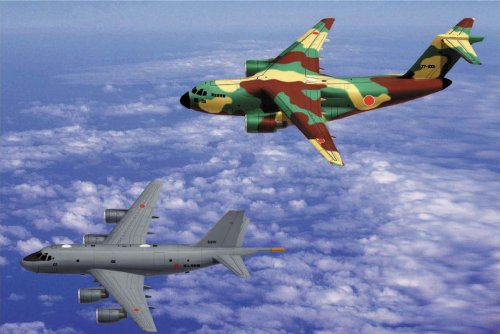
It's alive! Or, perhaps, what goes around, comes around. Japan's idea of a four-jet MPA was reborn as the Kawasaki P-X, but this time in a joint programme with the C-X, a replacement for Kawasaki's C-1 airlifter. Hard to see on the surface what these two have in common, but apparently they share common components.

The C-X airlifter is powered by a pair of General Electric CF6-80C2s, the P-X patroller by four XF7 turbofans developed by Japan's IHI. The P-X will replace Japan's Kawasaki-built Lockheed P-3s. There was supposed to be a joint roll-out in March, but there appears to be a problem. Check this link:

http://www.flightglobal.com/articles/2007/02/13/212042/production-fault-hits-kawasaki-transport-and-mpa-projects.html
 

Attachments

  • Kawasaki C-X and P-X.jpg
    Kawasaki C-X and P-X.jpg
    92 KB · Views: 1,881
H/t phounaojamtom over at MilitaryPhotos.net for this artist impression of the PX-L (from during the period it was a TRDI project?).

43685722.jpg


The future aircraft of interest, however, is next generation ASW plane,
a four engine turbofan 50-ton experimental land-based
patrol aircraft (PXL) being managed presently by the TRDI
at a reported cost of 1500 million yen (4.2 million dollars)
for basic design work in 1971 alone; expected costs
over the next ten years total 35 billion yen (97.2 million dollars).29
<hr>
29 Japan Press Exchange Aviation Report Weekly,
August 17, 1970.

EDIT: Should have clarified, the text did not accompany the image, it's from THE POSTWAR SEA FORCES OF MARITIME JAPAN, 1945-1971. Vol. II by James E. Auer.
 
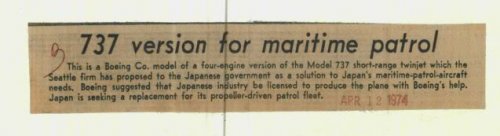
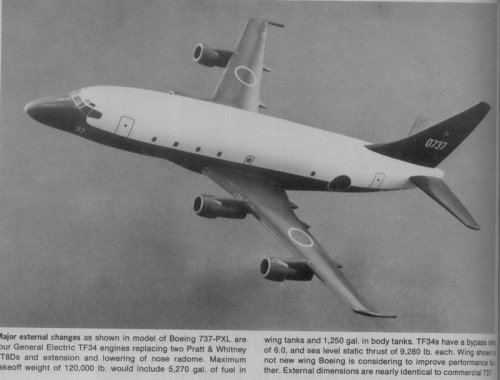
Do you have any further information on the four-engined 737? Such as dimensions (even better a three view), engines, etc.?
 
Afraid not... there is a copy of this picture for sale on ebay at the moment, not by me I should add... the reverse features a small description...


Zeb
 

Attachments

  • jmsdf737-reverse.jpg
    jmsdf737-reverse.jpg
    78.2 KB · Views: 1,048
I wonder how much in common the current P-X has in common with the old indigenous proposals. Obviously the overall configuration is the same, but technology has progressed forty years.
 
PaulMM (Overscan) said:
Air International, June 1976 has a small item on Kawasaki P-XL having a greatly enhanced chance of being built as the result of abandoning plans to procure the P-3 as an interim solution, with the P-2J production line being retained. Development cost of the P-XL was estimated as £110m, and unit price £7.6m unequipped, and £15.5m - £18m fully equipped with ASW equipment.


My dear Paul,


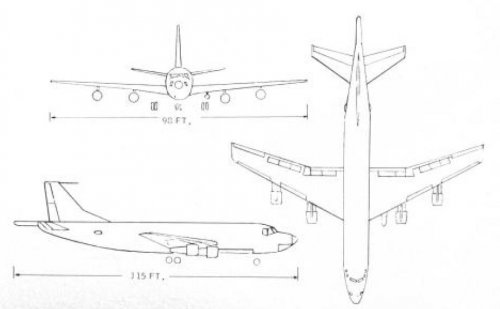
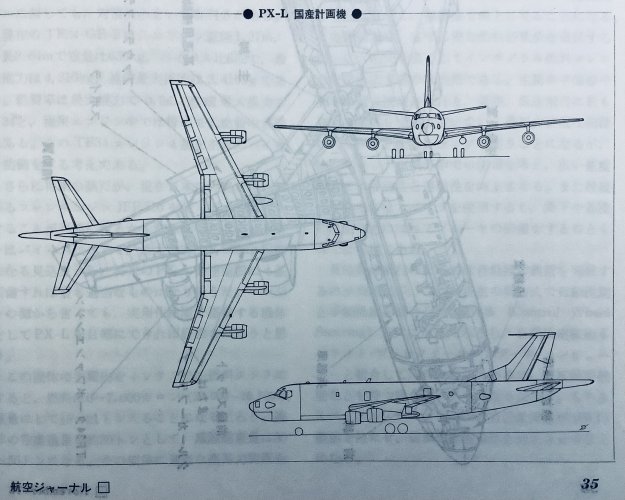
here is the Kawasaki P-XL 3-view drawing,from JP4 magazine.
 

Attachments

  • P-XL.JPG
    P-XL.JPG
    29.8 KB · Views: 405
Excellent work gents!!
Please keep at it :p

Regards
Pioneer
 
Kadija_Man said:
Do you have any further information on the four-engined 737? Such as dimensions (even better a three view), engines, etc.?

Sorry, a bit late, I somehow overlooked this question.
Here's the same picture from Aviation Week 1974, answering at least some questions, I think.
 

Attachments

  • Boeing-737PXL.jpg
    Boeing-737PXL.jpg
    119.7 KB · Views: 336
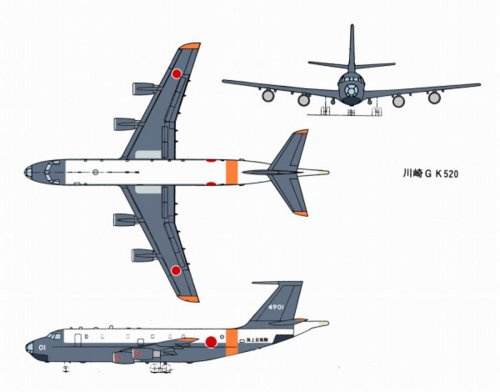
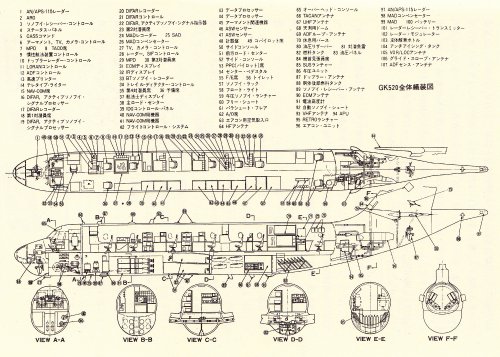
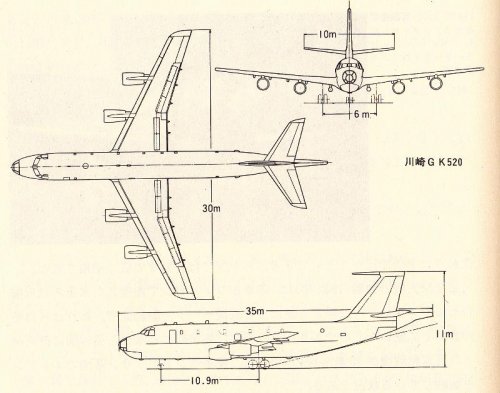
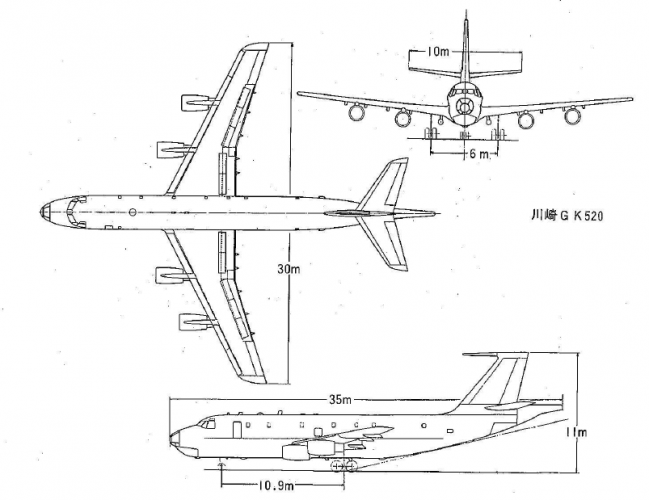
Hi! Kawasaki GK520 ASW.
Source : ISBN4-87357-014-X (as you already know.)
 

Attachments

  • GK520.jpg
    GK520.jpg
    289.9 KB · Views: 751
  • GK520 general arrangement.jpg
    GK520 general arrangement.jpg
    760.7 KB · Views: 796
  • Kawasaki GK520 ASW.jpg
    Kawasaki GK520 ASW.jpg
    65.8 KB · Views: 806
Oh sorry. GK520 was the PX-L. GK520 was a name in Kawasaki.
I think it's better to merge all topics for this project.(as Cancelled Kawasaki PX-L?)
Kawasaki started PX-L research in 1967. Finished basic design in 1970. Full scale mock up was completed in summer of 1971. Cancelled in 1972. Japanese government selected Lockheed P-3C as the ASW aircraft in the end of 1978. The first P-3C reached Japan in 1981.
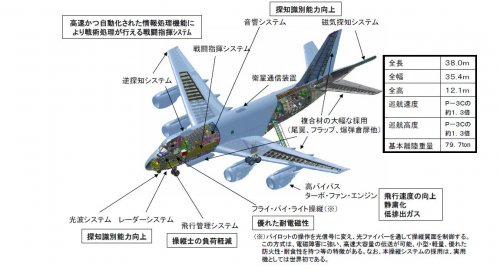
PX-L was a alomst same aircraft as recent Kawasaki P-1 ASW aircraft. PX-L was a very advanced project at the day.
 

Attachments

  • Kawasaki P-1.jpg
    Kawasaki P-1.jpg
    101.7 KB · Views: 623
Many thanks as usual my dear Jens. :)
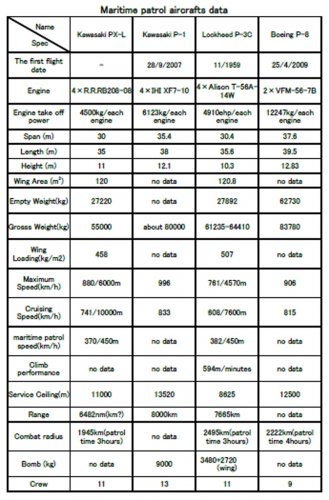
PX-L was a jet powered P-3C.
 

Attachments

  • data.jpg
    data.jpg
    355.1 KB · Views: 524
On Sunday, NHK G showed a documentary about the Japanese Government's decision to purchase the P-3C instead of the PXL, tying it into the scandal of PM Tanaka accepting bribes from the Lockheed Corporation over the Tristar. There seemed to be a good discussion about PXL, and links to the E-2C as well, but my Japanese was not good enough to get much of the discussion. Did any of our Japanese members see it? Was there any new information on the PXL?

A summary of the documentary is here: http://datazoo.jp/w/P3C%E5%93%A8%E6%88%92%E6%A9%9F/27915364
 
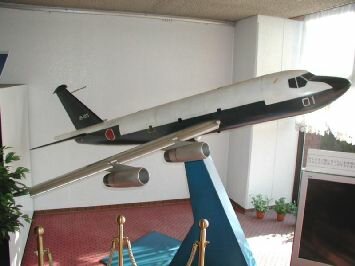
http://hikokikumo.net/a4413-31-KakamigaharaChuoPlazaHotel-000.htm
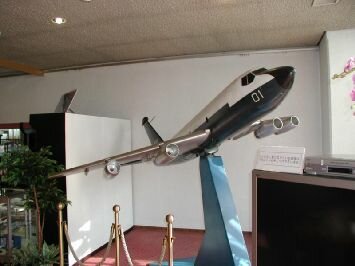
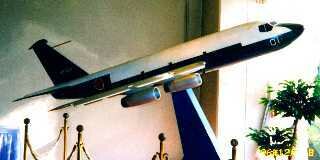
PX-L model in the lobby of the Central Plaza Hotel 2003/12
The domestic PX-L, which was not included in the Fourth Defense Build-up Plan (1972-1976) decided at the National Security Council in October 1972, while spending a billion yen on research expenses to the point of basic design. Model (PX was decided to be P-3C in 1975)
2004/06 Disposed due to hotel renovation
 

Attachments

  • a4413-31-KakamigaharaChuoPlazaHotel-PXL1.jpeg
    a4413-31-KakamigaharaChuoPlazaHotel-PXL1.jpeg
    17.1 KB · Views: 182
  • a4413-31-KakamigaharaChuoPlazaHotel-PXL2.jpeg
    a4413-31-KakamigaharaChuoPlazaHotel-PXL2.jpeg
    17 KB · Views: 182
  • fbb64a711936875715c49471a678a16e.jpg
    fbb64a711936875715c49471a678a16e.jpg
    8 KB · Views: 198
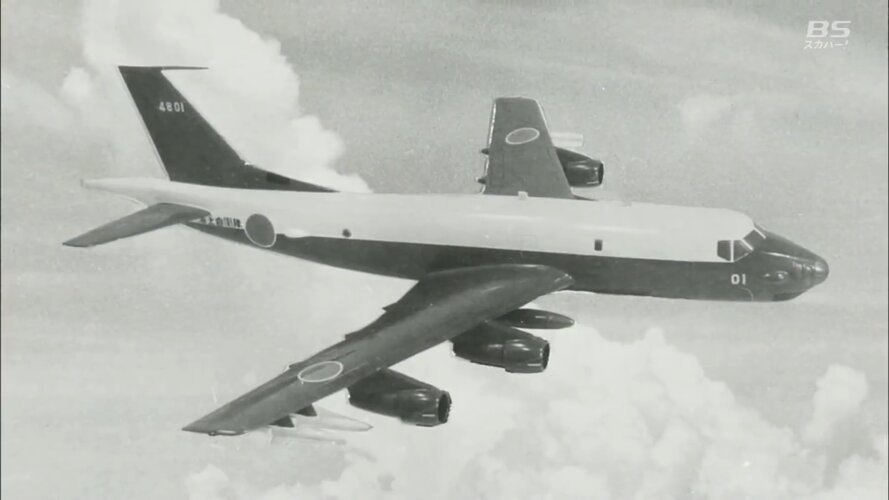
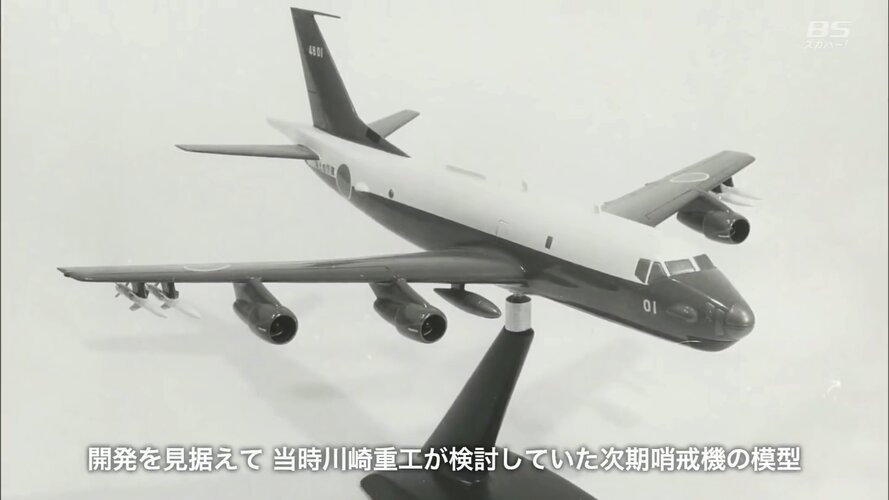
Kawasaki GK520 official model from P-1 documentary
 

Attachments

  • Kawasaki P-1 documentary (2018).mp4_snapshot_03.15.jpg
    Kawasaki P-1 documentary (2018).mp4_snapshot_03.15.jpg
    571.7 KB · Views: 211
  • Kawasaki P-1 documentary (2018).mp4_snapshot_03.06.jpg
    Kawasaki P-1 documentary (2018).mp4_snapshot_03.06.jpg
    420.6 KB · Views: 236
Is there anybody from Japan in the secret projects forum? "Der Flieger" 2/1972 forwarded a simple Sketch from the "Aviation Magazine" (issue?) and asked if this could be the new (Japanese) PX-L submarine hunter.

Were there different contenders for the PX-L requirement?

From Aviation Magazine 1971.
 

Attachments

  • a.png
    a.png
    634.4 KB · Views: 219
PX-L
Source: Wikipedia (2023/08/11 01:40 UTC)

The PX-L is a planned anti-submarine patrol aircraft for the Japan Maritime Self-Defense Force. This article describes the P-2J successor project. Kawasaki Heavy Industries initially developed the aircraft domestically as the GK520, but ultimately licensed production of the Lockheed P-3C Orion was selected.

History
Development History

In early 1967, just before the decision was made to mass-produce the P-2J, Kawasaki Heavy Industries, responsible for its development and production, began its own research and development of a P-2J successor, internally named the "GK520." The Maritime Staff Office also began basic studies around 1968, and the Third Defense Program called for the necessary research and development to begin in fiscal year 1970, with the aim of starting development of a next-generation anti-submarine aircraft (PX-L) in fiscal year 1972 or later. However, while the initial budget request was for a research plan for a small patrol aircraft to replace the coastal S2F-1, the plan shifted to a larger patrol aircraft to replace the P-2J within two years of its approval, resulting in distrust from the Ministry of Finance. The U.S. Navy had begun development of a groundbreaking anti-submarine warfare system for patrol aircraft (the A-NEW system) since 1962. The JMSDF, hoping to incorporate this system into its domestically developed anti-submarine aircraft, requested materials from the U.S. Military Advisory Group - Japan (MAAG-J) in 1968, but received a response in April 1969 stating that the request would be rejected at this time. Also in 1968, a survey team was dispatched to Europe and the United States to study anti-submarine patrol aircraft and their onboard equipment. Based on the results of these studies, the JMSDF recognized the need to conduct research into measures for independently developing the next-generation anti-submarine aircraft, including onboard equipment.

The Defense Agency resolved to begin domestic development of the next-generation anti-submarine aircraft in fiscal year 1971 and included a budget for basic design. However, the Ministry of Finance raised doubts about the high cost and necessity of the project, as well as pointed out an insufficient evaluation of the research results. As a result, only approximately 300 million yen was approved as a technical research contract, out of a total request of approximately 1.89 billion yen (of which approximately 760 million yen was allocated from fiscal year 1971 expenditures), and basic design work did not begin. However, since the technical research funding was approved, in September 1971, Kawasaki Heavy Industries was commissioned to carry out technical research on planning and design, research and testing, and to investigate the outlook for mass-produced aircraft pricing.

The Defense Agency had planned to complete the basic design in 1972, build a full-scale model in 1973, and two prototypes in 1974, with completion scheduled for the summer of 1978. However, Kawasaki had already nearly completed the basic design in 1970 and produced a full-scale model in 1971. The PX-L was expected to be in service from the late 1980s to 2000.

Scrapbook and Decision to Introduce the P-3C
The Defense Agency had aimed to begin basic design of the PX-L in fiscal year 1972, but due to the pending Fourth Defense Program and YX Program, the lack of justification for PX-L development, and the need for further review of the results of the technical research contract, funding was again allocated only for the technical research contract.

Due to these repeated postponements, the Maritime Staff Office hoped that full-scale development of the PX-L would begin with the Fourth Defense Program, which was scheduled for approval that same year.[2] However, at a National Defense Council meeting on October 9, 1972, the day before the Fourth Defense Program was approved by the Cabinet, the issue of domestically producing next-generation anti-submarine and early warning aircraft was scrapped.[Note 2] It was decided to establish an expert committee within the National Defense Council Secretariat to continue the study. The Fourth Defense Program's main plan included only research and development of electronic devices. Of the approximately 120 fixed-wing anti-submarine aircraft owned by the JMSDF at the time, the P2V-7s were scheduled to reach the end of their service lives in 1981, and the S2F-1s by 1983. The P-2J fleet was also estimated to gradually decline after peaking at 80 in 1975. To replace these losses and maintain a minimum fixed-wing anti-submarine force, the next generation of anti-submarine aircraft needed to be deployed to the fleet by 1980 or 1981 at the latest. Given this short time frame, the JMSDF hoped for an early conclusion from the expert panel, but the first meeting was held in August 1973.[3] However, after requesting documents from the United States in preparation for the meeting, the JMSDF received word in July 1973 that P-3Cs equipped with the A-NEW system were available for release to Japan.[3] In September of that year, a P-3C demonstration flight was conducted at Marine Corps Air Station Iwakuni. A delegation including the Air Wing Commander and field personnel had the opportunity to board and experience the system and were deeply impressed by its performance.

In December 1974, the Expert Committee submitted its report, which expressed doubts about the domestically produced plan due to its cost and feasibility. While it mentioned the possibility of introducing a foreign aircraft, it was ambiguous and encouraged further consideration.[3] Given the looming deadline, the Maritime Staff Office concluded that a domestically produced aircraft would no longer be viable. From May to June 1975, the Deputy Director of the Defense Department dispatched a P-3C to the United States to conduct a field survey. In parallel with this, in addition to the previously considered domestic development and modification of existing aircraft, a compromise plan to equip a domestically produced aircraft with American-made systems was also considered. Regarding the compromise proposal, Canada was developing the CP-140, which combined the P-3C airframe with the S-3A system, and there was hope that a similar approach might be possible in Japan. However, the United States stated that it would only release the P-3C system as a set with the airframe, and although it was possible to release the S-3A system separately, it was significantly inferior to the P-3C system.

After considering these options, at a meeting of the Defense Agency on August 24, 1977, it was decided that 45 P-3Cs would be acquired through license production by the end of fiscal year 1987, and that the cost of purchasing the P-3C would be included in the fiscal year 1978 budget request. These details were approved at the National Defense Council meeting in December, and the decision was made to introduce the P-3C.

Design (GK520)
The GK520 was a low-wing, four-engine aircraft powered by turbofan engines. As of October 1972, detailed design and structural strength testing were underway. At the time, Japan lacked turbofan engine technology, and reliability was prioritized, leading to plans for a Rolls-Royce[8] or General Electric engine. Development of detection equipment and an information processing system was also considered a priority.

In 1965, a U.S. Naval Weapons Laboratory staff member inspecting Kawasaki reported that P-3A tactical compartment crews, who had sideways seating, were prone to hemorrhoids. Therefore, the GK520's tactical compartment seating was forward-facing, similar to the P-3C.

A scale model was on display in the lobby of the Central Plaza Hotel in Kakamigahara City, Gifu Prefecture, but was removed during renovations.

Performance and Specifications (Planned Values)
Specifications
• Crew: 11
• Length: 35.0 m (114.8 ft)
• Height: 11.0 m (36.1 ft)
• Wingspan:
• Wing Area: 120.0 m
• Empty Weight: 27,220 kg (60,010 lb)
• Operating Weight: 55,000 kg (121,000 lb)
• Powerplant: Rolls-Royce RB208-08[Note 3] turbofan engines, 4,500 kgf (9,900 lbf) x 4
Performance
• Maximum Speed: 880 km/h (480 kn)
• Cruising Speed: 741 km/h (400 kn)
• Range: 6,482 km (3,500 nmi)
• Service ceiling: 11,000 m (36,000 ft)
Armament
• Anti-submarine torpedoes x 10
• Avionics
o AN/APS-115 radar
o Sonobuoys
o Magnetic detector
o Radio detector

 
this is not only kasawaki, All PX-L plans

A pdf file came by MSDF"kushin-no-ashiato"「海上自衛隊 苦心の足跡 固定翼 公益財団法人 水交会」

Summarized


Second Defense Buildup Plan (1962–1968)

Akagi Study (Acquisition of a CVH and introduction of the HSS-2)
Plan acquisition of one squadron (8 aircraft) of A-3 Fighter Attack Aircraft (B-66)

1962

Withdrawal of U.S. Forces Japan P5Ms began. P5M-related equipment was transferred to Japan at extremely low cost.
Development funding for the PS-1 (ASW amphibious aircraft) was restored.

Third Defense Buildup Plan (1967–1971)
Plan acquisition of one squadron (8 aircraft) of A-3 Fighter Attack Aircraft (B-66) (initial budget proposal only)
Decision to develop the next maritime patrol aircraft. Attrition of the S2F-1 fleet was projected for 1981.
Installation of the U.S. Navy A-NEW system on the next maritime patrol aircraft.
Internal study meetings on the future maritime patrol aircraft.

1966

The U.S. military requested Japan purchase the P-3A? There was friction between Japan and the United States over Japan's development of the P-2J.

FY1968 Mid-Term Operational Estimate (1968)
Small ASW aircraft capable of carrying Harpoon missiles (10 squadrons)
The Fleet Air Force proposed an MU-2-converted patrol aircraft.

1967

HSS-2 entered operational service.
Beartrap trials were conducted aboard the landing ship Shiretoko.
The following statement was added to the budget table of the Third Defense Buildup Plan:
"With regard to the final 11 aircraft, they may be changed if a suitable airframe becomes available."

Author's note:
"This may have referred to either a small aircraft or a P-2J equipped with the A-NEW system."

Maritime Staff Office Next-Generation ASW Aircraft Development Study Committee
The SF System (Self Defense Fleet Systems Development Office) was asked to develop a system similar to that of the U.S. Navy S-3, but concluded that it was not feasible.

Proposals at the time

Mitsubishi YX (YS-33) conversion
ShinMaywa PS-1 land-based conversion
P-3
Nimrod
Atlantic

The Next-Generation ASW Aircraft Development Study Committee added high speed as an Operations Research (OR) factor in order to eliminate these candidates.
1968

Technical Research and Development Institute proposal for the next-generation ASW aircraft
Mitsubishi Heavy Industries :Helicopter (HSS-2?)
Kawasaki Heavy Industries :Four-engine turbofan aircraft

Fuji Heavy Industries :Low-wing twin-engine medium aircraft

Nihon Aircraft :High-wing twin-engine aircraft like the S-3

ShinMeiwa :Land-based PS-1 conversion

1969

Development scheduled to begin, but delayed due to budget cuts.

1971

Development to begin.

"Technical Investigation and Research for Indigenous Development of the P-XL (Next-Generation Maritime Patrol Aircraft)" (1971–1973) Budget execution suspended in 1972.

1973

Expert Committee within the Maritime Staff Office (1973–1974)

1977

Overseas study of the S-3A
Overseas study of the CP-140

1978

National Defense Council within the Maritime Staff Office (1978–1979)
(Present-day National Security Council, the Cabinet's military development decision-making body)

1979

Approval for P-3C sales.
Decision to procure the P-3C and cancel development of the P-XL.


I don't know what the U.S. Navy A-NEW system was. Does the "A" stand for ASWOC?
 

Attachments

  • PX-L.pdf
    4.8 MB · Views: 29

Similar threads

Back
Top Bottom