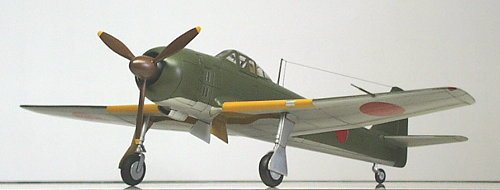
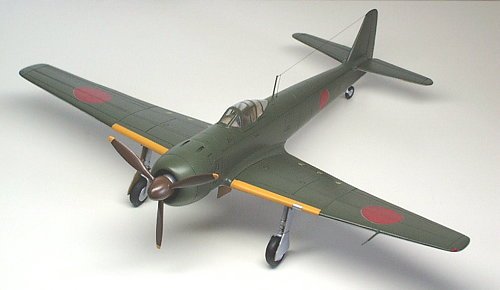
From old site on the Net,
in early 1945, the Japanese Army Air Force Command (Rikugun Koku Hombu) identified an urgent need for a new type of light, fast bomber aircraft, intended to attack American invasion forces in the event of their expected landing on the Japanese home islands. The aircraft was to be as simple as possible in design to facilitate production and operation, and to have good flight characteristics (especially during takeoff and landing), making it suitable for even less-trained pilots. The aircraft was required to have an operational radius of at least 600 km, with a payload of 800 kg of bombs and an armament of two 20 mm cannons.
Because the required operational radius was significantly smaller than for previously designed bombers (operations at great distances from home bases were not anticipated), the Koku Hombu opted for a single, high-powered engine and a single-man crew. The aircraft's good performance also meant it could be used as an escort fighter for other bombers or special attack aircraft (Kamikaze). An order for the development of such an aircraft—designated the Army Experimental Light Bomber —was placed with Kawasaki in March 1945.
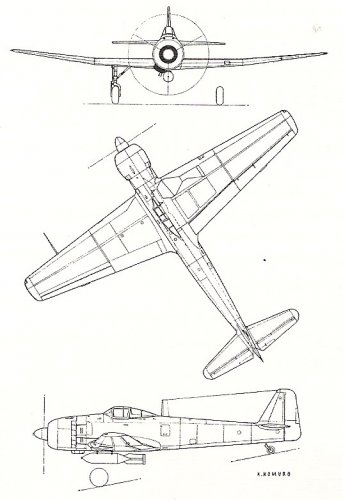
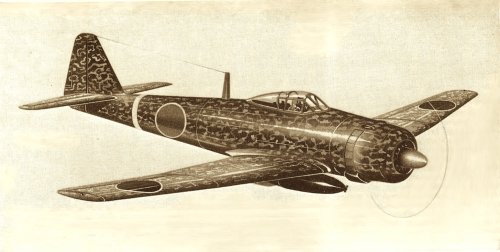
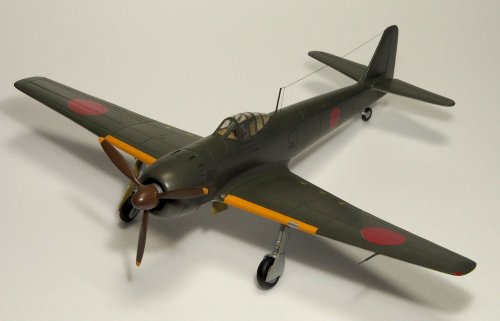
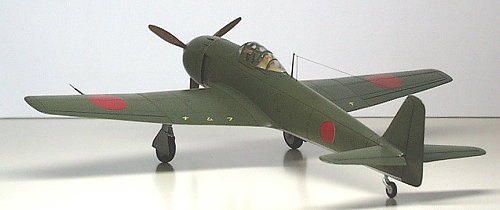
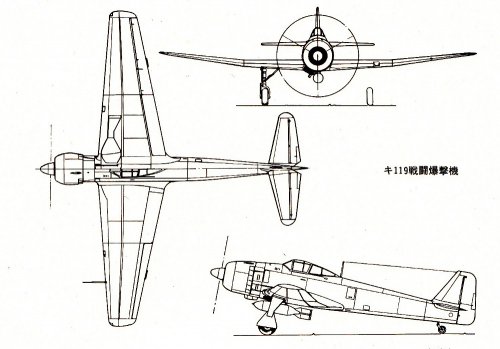
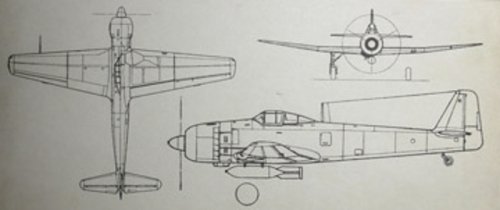
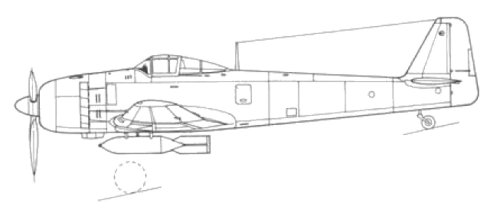
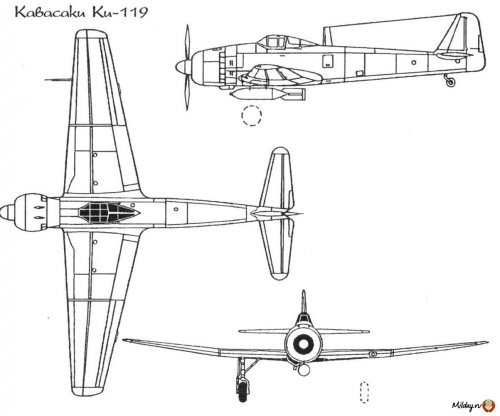
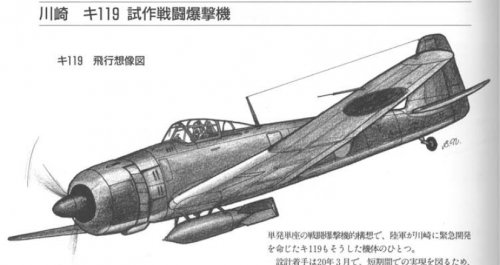
The new aircraft's design was developed in less than three months by a design team led by Takeo Doi and Jun Kitano. It was a cantilever, low-wing monoplane of metal construction with a trapezoidal wing of high aspect ratio and lifting area. The widely spaced main landing gear utilized long-stroke shock absorbers from the twin-engine Ki-102 heavy fighter. The fuselage design was somewhat reminiscent of that of the single-engine Ki-100 fighter. Much of the aircraft's equipment was also sourced from that aircraft. The cockpit was located above the wing, near the front of the fuselage. An 18-cylinder Mitsubishi Ha-104 (or Army Type 4) radial engine was selected for power, driving a three-blade propeller (the prototype was intended to use a four-blade propeller). The entire aircraft's design was adapted for production in small, dispersed workshops, with final assembly to be carried out in an ad hoc underground factory in Misunami.
In its light bomber version, the aircraft—designated Ki-119 for the time being —was intended to carry a single 800 kg bomb on an external mounting under the fuselage. For dive-bombing missions, two 250 kg bombs each could be attached under the wings. Two additional fuel tanks, each with a capacity of 600 liters, could also be attached to the same under-wing mountings, increasing the aircraft's combat radius to 1,200 km. Two 20 mm Ho-5 cannons were located in the forward fuselage above the engine. Two additional cannons of the same type were to be mounted in the wings of the proposed escort fighter version.
The prototype's first flight was initially planned for September 1945, but during a June 1945 raid by American bombers on the Kawasaki plant in Kagamigahara, almost all of the Ki-119's technical documentation was destroyed. The need to recreate this documentation postponed the planned prototype's first flight until November 1945. However, in mid-August 1945, Japan declared an armistice, and further work on the Ki-119 was halted. Only a 1:1 scale wooden mock-up of the aircraft was built.