Is military rank structure obsolete?

Just because you were sent to do the work doesn’t mean they weren’t able to.

They weren't. That was obvious when I got there.
One of the aforementioned issues with my guns was the video card went out. I could have replaced it no problem, but some rule/policy/law said that I couldn’t, that repair had to be done by a tech rep.
That's a problem. On that frigate I was told to replace MIMs cards in one system I had to do so in I needed the Captain's permission. I fixed it then asked the Captain for permission telling him it was now fully working. He thanked me and that was that.
 
In the US Navy, that was a result of WW 2, Korea, and Vietnam, with long and frequent deployments. There were tenders. Ships had shops with most or all of the gear to fix their equipment. The crew was on their own to get it done and keep things up.
That has changed since about the late 80's with a shift towards reducing manning, eliminating parts and tooling onboard ships, and a focus on watchstanding / operations rather than maintenance. Many maintenance heavy ratings in the Navy have been eliminated or reduced severely in number.
All of that was a result of trying to eliminate costs in budgets. The top leadership was looking, like some corporate board, at the bottom line and where money was being allocated. Maintenance was shifted towards hiring civilian contractors on an as needed basis to keep things working.
The problem with that was, and is, when at sea a ship had something break there was now no immediate means to fix it in many cases.

Oh, I was the kind of Chief that would have said, Let's make that cable! and then shown the shop how to do it and where to get the parts from.
Yep in both cases we were down a gun for about a week and half to two weeks.
 
Yeah, I mentioned that you can never tell who is going to be a rockstar and who is going to be a @##%bag, but motivation and intellectual honesty is the key. The ones who become great technicians are the ones who can realistically assess the things they know and don't know and work earnestly on the latter.

There are far more technicians/operators who believe they truly understand things they don't understand, and they're quite frankly dangerous. I'd honestly rather have you do nothing than have to fix something you've broken. (A lot of the time that bad gouge comes from Joe Schmuckatelli across the pier who tells them "oh yeah that's how you fix this" and then things are worse than they were before.)
The first words out my mouth usually on fixing something, particularly something I really haven't dealt with, is "Where's the tech manual on this?"
 
The military sets low expectations of enlisted.

I suspect that's the issue. It's not the rank structure, but the culture.

One of my colleagues was ex-RAF and sat on a NATO committee. In the bar after one of their sessions, everyone in civvies, the USAF representative, a colonel, says to him: "Hey, I didn't catch your rank in the meeting, I'm guessing Group Captain?" "No," says my colleague, "Flight Sergeant."
 
That has changed since about the late 80's with a shift towards reducing manning, eliminating parts and tooling onboard ships, and a focus on watchstanding / operations rather than maintenance. Many maintenance heavy ratings in the Navy have been eliminated or reduced severely in number.
Yeah. And to be fair to the Navy, it's a pretty complex calculus. Ultimately, they want to teach you the right buttons to push, when to push them, and then get you on station--because that's the job. The longer anyone spends in training, the less time they're doing the job... and thus they've chosen the direction they've chosen.

And frankly, with a lot of the modern systems I'm not even sure the additional training the Navy can provide is genuinely useful. You might learn a bit more about how to fix certain edge-case scenarios but unless those specific things happen then it's a lot of wasted time.

After getting out, I went to work on ARCI and I've been doing that for the past 20 years. I'm an EE but my primary role is integration where we get to touch everything--and I learned more in six months on the job than I learned in all my time in the Navy. I'd like to see a pilot program where sailors extend and then spend a year or so embedded with us in integration. Will they be working on the current systems? Maybe not, they will probably be working on "system next," but the fundamentals and principles they'll learn in our lab will be far more useful than anything Navy currently provides and will prepare them to return to the fleet and support any system.

(Providing technical backup to the Customer Support Center is also a significant part of the job, so they definitely will get more experience with the extant systems than they've ever seen before... it just probably won't be a primary role.)

And yeah, we have MILDET (a military detachment of enlisted sailors) onsite but frankly... those guys kinda suck, they're underutilized and I very rarely see them. Every now and then one will roll through who is really engaged and interested and "annoying" (I like annoying--it shows that motivation I was discussing before) but most of them are just cruising through an easy shore duty.
 
My high school has a JROTC program ( these have a colonel or lieutenant-colonel and a senior NCO; ours has a retired US Army Command Sergeant Major). The CSM had some very negative things to say anout some of the NCOs she had to deal with, stating some of them were sadists, drunks, or illiterates or some combination thereof.
 
Yes, and no. I think that enlisted and officer ranks are still needed, but with some serious changes.

On the enlisted side there should be a dual track. One track is for relatively low skill jobs, combat and non-combat. The other track is for skilled technicians and the like.
there is in some services: rated and non rated
 
A group of intelligent officers well trained in the latest logistical techniques is enough, in the 21st century no more is needed.

Map strategies and halls full of uniforms won't win future wars, that will be much better for strong AI.

The conscript to his home, the Iron Sergeant to his retirement and the robots to the battlefield.

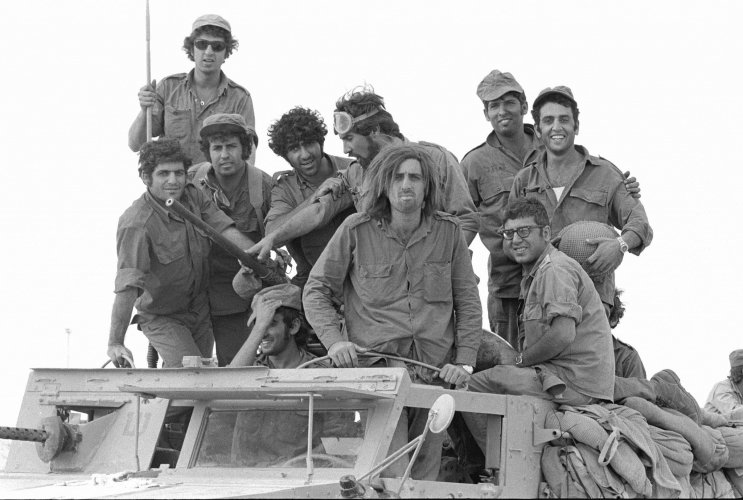
If all the old structures were anything to go by, they would have already been incorporated by the army that has won all the wars, but the Israelis do not consider them necessary, and reality shows that they are right.
 

Attachments

  • d2cc37f6-2c45-4ce9-b1c5-7d55428e9732_alta-libre-aspect-ratio_default_0.jpg
    d2cc37f6-2c45-4ce9-b1c5-7d55428e9732_alta-libre-aspect-ratio_default_0.jpg
    164.3 KB · Views: 7
  • 9.jpg
    9.jpg
    475.5 KB · Views: 7
  • 001-569.jpg
    001-569.jpg
    248.1 KB · Views: 6
  • 477490.jpg
    477490.jpg
    171.9 KB · Views: 7
A group of intelligent officers well trained in the latest logistical techniques is enough, in the 21st century no more is needed.

Map strategies and halls full of uniforms won't win future wars, that will be much better for strong AI.

The conscript to his home, the Iron Sergeant to his retirement and the robots to the battlefield.

If all the old structures were anything to go by, they would have already been incorporated by the army that has won all the wars, but the Israelis do not consider them necessary, and reality shows that they are right.
still wrong. Much like the people in the 1950's thought that the only future wars were nuclear.
Humans were fighting the Skynet drones and robots.
 
A group of intelligent officers well trained in the latest logistical techniques is enough, in the 21st century no more is needed.

Not true. The high-end NCO's need those skills more than officers do. They're the ones that really know what the troops need versus what the supply system tells them they do. For example, one of my particular exceptional skills as one of those NCO's was being able to go through a complex set of drawings for some 'thing' that more of was needed to be made where the drawings were under-explained, horribly outdated, etc., and find the parts, materials, or alternatives that worked instead.

I often called the "engineer(s)" who designed something that was under explained and asked, "Just what the f*** were you thinking?" Answers were usually, "Well, we had to put a spec on it..." or "We were on a deadline and figured the missing (whatever) would be filled in during production..."

AI can't do that, at least not yet, and likely not for decades to come. It requires making complex inferences, familiarity with what the thing is supposed to do and how, and creativity in coming up with alternatives. AI doesn't do those things well.
Map strategies and halls full of uniforms won't win future wars, that will be much better for strong AI.

I doubt it. AI isn't all that creative, just derivative.
The conscript to his home, the Iron Sergeant to his retirement and the robots to the battlefield.

That's fine. At the pointy end not a lot of thinking is required. Of course, industrial age warfare is quickly coming to an end as Russian and Ukraine are slowly realizing. The mass army of minimally trained troops is no longer necessary and what is replacing them is highly skilled technicians and decision makers who aren't expendable like ammunition.
If all the old structures were anything to go by, they would have already been incorporated by the army that has won all the wars, but the Israelis do not consider them necessary, and reality shows that they are right.

Navies and air forces are far more technical. That requires skilled technicians and skills require being paid adequately and treated as more than 'the help' who can maintain and operate increasingly complex systems. Reliance on a relative handful of civilian experts instead of in house (in the military) ones won't cut it in a war. Civilians will resist or refuse to work in areas of privation or danger without insane levels of compensation.

In the age of sail there was something of this system in place. You had three, maybe four, tiers of personnel on a ship.

Officers who ran the ship, were management, and maintained discipline and order.
Experts--call them "Masters" or warrant officers--who assisted the officers in making complex, technical decisions on specific areas of operation of the ship like navigation, sail choices, and the like.
Skilled craftsmen who oversaw hands on operation and repair of the ship. So, you'd have a sailmaker, carpenter, artificer, etc., each knowing a specific trade and overseeing the hands doing the work.
Crew. They were at various levels of skill in basic jobs on the ship.

The top three types got paid well to do what they did because they had skills that were hard to acquire. They were treated with respect. The crew was basically under their thumb on a short leash at all times.

Robots can replace the crew, but as for the others, not so much, at least not in the near future. It is those that the military needs to work out a new pay, respect, and benefit system for.
 
Last edited:
I often called the "engineer(s)" who designed something that was under explained and asked, "Just what the f*** were you thinking?" Answers were usually, "Well, we had to put a spec on it..." or "We were on a deadline and figured the missing (whatever) would be filled in during production..."
Yeah, I'll be honest--as someone who has been in sonar engineering for a couple of decades and has to regularly deal with the program office... it sucks sometimes.

Frankly, maybe 10% of the folks at NAVSEA/NUWC truly understand how things work, and they're calling all the shots. I can't fix anything they won't allow me to fix. (Although I do sometimes manage to piggyback improvements onto other fixes and surreptitiously sneak them in... because again, they don't know how anything works.)

The program office would rather all the focus be on new (largely unnecessary) capability instead of firming up the features we already have. (And in fairness, they have a lot of people in their ear.)

I can't stand going to a boat and hearing hey did you fix that thing that's been broken since APB11 and I have to say "sadly, no, but look at this new bullsh*t feature that no one asked for except some ACINT weenie who hasn't actually been to sea in 15 years."

This is why I'm glad that I mostly work in IRAD today. Although it's stuff that won't make it to sea for a while, at least I can work largely unmolested and no one can tell me how things should be done because we're doing things no on else has done yet.
 
Not true. The high-end NCO's need those skills more than officers do. They're the ones that really know what the troops need versus what the supply system tells them they do. For example, one of my particular exceptional skills as one of those NCO's was being able to go through a complex set of drawings for some 'thing' that more of was needed to be made where the drawings were under-explained, horribly outdated, etc., and find the parts, materials, or alternatives that worked instead.

I often called the "engineer(s)" who designed something that was under explained and asked, "Just what the f*** were you thinking?" Answers were usually, "Well, we had to put a spec on it..." or "We were on a deadline and figured the missing (whatever) would be filled in during production..."

AI can't do that, at least not yet, and likely not for decades to come. It requires making complex inferences, familiarity with what the thing is supposed to do and how, and creativity in coming up with alternatives. AI doesn't do those things well.


I doubt it. AI isn't all that creative, just derivative.


That's fine. At the pointy end not a lot of thinking is required. Of course, industrial age warfare is quickly coming to an end as Russian and Ukraine are slowly realizing. The mass army of minimally trained troops is no longer necessary and what is replacing them is highly skilled technicians and decision makers who aren't expendable like ammunition.


Navies and air forces are far more technical. That requires skilled technicians and skills require being paid adequately and treated as more than 'the help' who can maintain and operate increasingly complex systems. Reliance on a relative handful of civilian experts instead of in house (in the military) ones won't cut it in a war. Civilians will resist or refuse to work in areas of privation or danger without insane levels of compensation.

In the age of sail there was something of this system in place. You had three, maybe four, tiers of personnel on a ship.

Officers who ran the ship, were management, and maintained discipline and order.
Experts--call them "Masters" or warrant officers--who assisted the officers in making complex, technical decisions on specific areas of operation of the ship like navigation, sail choices, and the like.
Skilled craftsmen who oversaw hands on operation and repair of the ship. So, you'd have a sailmaker, carpenter, artificer, etc., each knowing a specific trade and overseeing the hands doing the work.
Crew. They were at various levels of skill in basic jobs on the ship.

The top three types got paid well to do what they did because they had skills that were hard to acquire. They were treated with respect. The crew was basically under their thumb on a short leash at all times.

Robots can replace the crew, but as for the others, not so much, at least not in the near future. It is those that the military needs to work out a new pay, respect, and benefit system for.
In any activity, there comes a time when advances in technology make humans unnecessary: agriculture, muscle transport, ships moved by oars... etc.

These changes are especially welcomed by society when they serve to free us from heavy and dangerous jobs and none is as dangerous as war, the time would have to come and it is coming, that or face the enemy's faster, stronger, smarter robots and who know all the combat and camouflage tactics that have existed.
 
The forum doesn't like the words I would like to use to express just how strongly I disagree with this thesis. So consider there to be at least 9.6TB of "pissed-off Sailor"-grade profanity redacted from this paragraph alone.

The key difference between enlisted and commissioned is that enlisted execute the plans, and commissioned make the plans. Yes, at the upper end of the enlisted tracks (E6 or E7 and above), there's a whole lot of the enlisted knowing/having learned how to make the plans because they're teaching the zero-experience O1s and O2s how to make the plans as part of the senior enlisted job description.

There's no shame in saying, "I don't like making plans, I just want to do the things and let someone else make the plans." But that also should not prevent you from getting pay increases for your own abilities and time served. You should not be stuck forever at E4 because you don't want to lead and/or you know that you don't have the correct skill set and personality to lead.

Let's use the basic infantryman as our example for training required to be considered "ready to deploy into combat" these days:
It takes roughly a year of training to get Joe Civilan turned into a Soldier that is ready to go fill a spot in a combat unit. That's from basic to specialty training (MGs, radio school, whatever). Then, once he shows up at his first unit, it takes another year of training to get the unit as a whole combat-ready. A one-year combat deployment, and then the unit is relaxing down and people going on leave. And now it's coming up on 4 years and Joe is deciding whether to reenlist or get out. That's not really a good return on the investment of how much training it takes to get a competent soldier in a competent unit. On the other hand, that gets us a soldier that would be better trained and prepared for combat than the WW2 special forces (Rangers or Commandos), and possibly better than the Vietnam era special forces.

On the matter of specialist versus (enlisted) leadership:
The US Army used to have a whole series of specialist, non-leading paygrades. For people like medics and other highly-trained jobs that needed to work by themselves without any leadership, but also whose jobs did not put them in a place to give orders (except as part of their specific skill set). This split started at the E4 paygrade, where you were either a Corporal or a Specialist. It then went all the way up to E9. This gave a pay bonus to people in training-intensive jobs, and gave them a choice between focusing on technical skills or leadership track. So you might have a Medical Specialist E9 and a Medical Sergeant-Major, where the Specialist-9 was like a Trauma Paramedic and the Sergeant-Major is in charge of the Hospital. For reasons I don't agree with, the Army got rid of that track except for Specialist E4.

On the officer side, this is the difference between Warrants and Commissions. A Warrant is the technical specialist, whether they're the Maintenance Officer or a helicopter pilot. A Commissioned Officer is the leader. The Warrant Officer paygrades also stop at W5, while Commissioned Officer paygrades go all the way up to O9. Admittedly, in order to step into Warrant Officer, you have to at least get up to E5 and then get your Warrant, so the Warrant pay starts a bit higher than a straight-out-of-OCS O1, but is more or less equivalent to the "prior-enlisted" Officer pay.
 
Only hiccup being humans are still cheaper than 'robots' or machines for 'soldiering' however unpopular it has become, and thus more expendable as a resource !

As an example, how many so called 'leaders' (and i can think of one expousing same just a year or so ago) have pledged to 'fight to the last man' :(

I do prefer the RAF. example, at least with regard specialist roles, first name terms, mutual respect, the normality of 'office hours' and 'weekends off', the latter two I know maligned by the other services, but does make for a happier and more equitable existence :)
 
Last edited:
If an essay is arguing about 'conscripted masses' in its third paragraph, when those forces weren't conscripted, then you have to wonder how well formed its other arguments are....
In most peaceful countries with relatively high levels of economic development, joining the military—especially as an ordinary soldier—is something that only disadvantaged families do. In fact, the role played by so-called contract soldiers is essentially the same as that of conscripts. Even under a conscription system, or even forced conscription, those who are drafted first are always the disadvantaged families lacking social standing. In this regard, contract soldiers and conscripts are nearly equivalent.
 
Only hiccup being humans are still cheaper than 'robots' or machines for 'soldiering' however unpopular it has become, and thus more expendable as a resource !
In your country, producing another 18-year-old costs approximately £600,000 [based on 40,000 working hours], which is not a small amount. In comparison, a Lancet-3 loitering munition costs only £1,300 to £27,000, and a robotic dog costs only £10,000 to £100,000. Even if the combat effectiveness of the two is still not very good, they are already more affordable than an 18-year-old.
 
In most peaceful countries with relatively high levels of economic development, joining the military—especially as an ordinary soldier—is something that only disadvantaged families do. In fact, the role played by so-called contract soldiers is essentially the same as that of conscripts. Even under a conscription system, or even forced conscription, those who are drafted first are always the disadvantaged families lacking social standing. In this regard, contract soldiers and conscripts are nearly equivalent.
The socio-economic grouping soldiers are drawn from is irrelevant to my point that someone who is a "PhD fellow at the Naval Postgraduate School, where he researches military innovation and great power competition" should check his basic facts.

Enlisting as an officer is definitely not predominantly associated with disadvantaged groups in any nation I'm aware of, enlisted yes, officers no. (And definitely not true of the two colleagues of mine who gave up cutting edge tech jobs to enlist).
 
In your country, producing another 18-year-old costs approximately £600,000 [based on 40,000 working hours], which is not a small amount. In comparison, a Lancet-3 loitering munition costs only £1,300 to £27,000, and a robotic dog costs only £10,000 to £100,000. Even if the combat effectiveness of the two is still not very good, they are already more affordable than an 18-year-old.
It's difficult to get a Lancet or a robot dog to talk armed para-militaries into opening up traffic on a road they're blockading. But that's precisely the kind of flexibility we expect our junior enlisted to show.

Lancets are the proverbial one trick pony, not a substitute for an infantryman.
 
In most peaceful countries with relatively high levels of economic development, joining the military—especially as an ordinary soldier—is something that only disadvantaged families do. In fact, the role played by so-called contract soldiers is essentially the same as that of conscripts. Even under a conscription system, or even forced conscription, those who are drafted first are always the disadvantaged families lacking social standing. In this regard, contract soldiers and conscripts are nearly equivalent.
This isn't entirely true. What often happens in the US is a middle-class kid will join the military, usually the air force or navy, and take a highly skilled technical job they see as a low-cost shortcut to a high paying civilian job. They also want certain veteran's benefits that come with service.
So, they serve 4 to 6 years of active duty, get the training and skill they want then quit instead of stay for a career. They can then go to college and complete a degree or technical training on the government's dime. No student loans to pay off.

In the air force, this might be as an air traffic controller, aircraft maintenance technician, or other skilled job. In the navy, same thing. Got the skills, then got a degree. You often get a veteran's preference for hiring with many companies.

The only thing the military has to counter that is throwing money at the problem. They often offer huge signing bonuses for people to reenlist. They might offer automatic promotions too (again, more pay to do the same job often times). Outside of that, they're stuck. They can't offer much in the way of anything else.

The result is that the people they need the most are the least likely to stay. They see the military as a steppingstone to something better outside the military and as an economic shortcut that would otherwise put that goal out of reach.
 
In most peaceful countries with relatively high levels of economic development, joining the military—especially as an ordinary soldier—is something that only disadvantaged families do. In fact, the role played by so-called contract soldiers is essentially the same as that of conscripts. Even under a conscription system, or even forced conscription, those who are drafted first are always the disadvantaged families lacking social standing. In this regard, contract soldiers and conscripts are nearly equivalent.
That is a very, very long way from being true in the US.

  • Yes, there are people who join the military to get out of their poor situation. They were some of the hardest workers I met in service, because getting kicked out or leaving the service drops them right back into their bad life.
  • There are people who join the military to get the college benefits. College fund, GI bill, etc. Most of these guys were also busting their butts while in, because getting kicked out on a disciplinary means they lose all the benefits. But they do tend to leave after their first enlistment. Maybe they stay for the full 8 years to build up a nest egg and not have to deal with any reserve service after they get out. Thing is, sometimes they come back, usually as an officer because they hate dealing with civilians after working with goofy-but-competent people.
  • There are also people who join for the challenge. To change their life. <- This was me. I was profoundly unhappy with where I was in life, but I had a pretty decent job as an aircraft mechanic before I went in. Had an asshole boss, though, and nobody really explaining what was going on where I worked. Just thrown in and expected to know all the company processes instinctively. Plus just about every one of my co-workers on my line was a veteran.
  • There are people who join because it's the family business. ("Dad was a Marine, Grandpa was a Marine," etc)
  • And there are people who join because it's legal to end people when you're in the military. (Not many, and they usually don't deal with people telling them what to do very well so they get kicked out.) The ones who manage to stay in the military usually end up in front line or special operations units.
There is also an immense psychological difference between "I volunteered to do this" and "I was conscripted even though I don't want to be here"


The result is that the people they need the most are the least likely to stay. They see the military as a steppingstone to something better outside the military and as an economic shortcut that would otherwise put that goal out of reach.
This. So much this. The USN offers tens-to-hundred-thousands of dollars to retain nuclear-trained people.

Had a nuke get outed as gay when I was in (back when don't-ask-don't-tell was the rule). Outed by a jealous ex, in fact. Gonzo was one of the best teachers on the boat,. Nobody on the boat wanted to let him go. But shitbag ex who was getting kicked out was determined to drag Gonzo down with him. A couple months after Gonzo was let go for convenience of the government, so he kept all his benefits, one of the nukes said he'd gotten hired at a plant back home in California making 25/hr as a mechanic. (back in 01 or 02) As soon as he dropped his resume on the desk at that powerplant he had a job. And now he worked like 45 hours a week instead of around 95 hours a week in the Navy.
 
This. So much this. The USN offers tens-to-hundred-thousands of dollars to retain nuclear-trained people.

Had a nuke get outed as gay when I was in (back when don't-ask-don't-tell was the rule). Outed by a jealous ex, in fact. Gonzo was one of the best teachers on the boat,. Nobody on the boat wanted to let him go. But shitbag ex who was getting kicked out was determined to drag Gonzo down with him. A couple months after Gonzo was let go for convenience of the government, so he kept all his benefits, one of the nukes said he'd gotten hired at a plant back home in California making 25/hr as a mechanic. (back in 01 or 02) As soon as he dropped his resume on the desk at that powerplant he had a job. And now he worked like 45 hours a week instead of around 95 hours a week in the Navy.
In 1985 (dating myself there) I, as a nuke, was being offered $70,000, half of it in cash up front, an instant promotion to the next paygrade, a Navy school of my choice, 24 months at a duty station of my choice (or 18 if it was not related to the nuclear power program), $100 a month in "Proficiency pay," and they weren't getting 1 in 5 to take that.

There was an early out done to draw down forces overall. Anyone between the two dates for this could end their service early. Every operator in Reactor Controls division that fell between those dates quit on the spot. That division went on 6 and 6 watches (6 on watch, 6 off 7 days a week) because they no longer had enough operators to cover even in-port watches.

I remember I had to go to like 3 mandatory sessions as I approached my EOS date. One was in a stateroom with an officer (engineering). I had to fill out this multi-page questionnaire he was going through with me. He got to one question, and I remember it quite clearly. The question was, "What could be done to improve current crew's living conditions." My answer to that was "This question shows a complete ignorance of current crew's living conditions.

He read that and said, "Well, that answers that one," and turned the page and went to the next question.

At the end, he asked me, "There's nothing the Navy can do to get you to reenlist is there?" I replied, and then he said after I was done, "I don't blame you. You should get out."

At another session with a recruiter who was supposedly helping us, coaching us I guess, on the transition to civilian life he was going around the classroom asking each person, "What are you going to tell an employer about why you quit the Navy." There were about 30 sailors there from all parts of the ship. I had a bit of time to think on my answer before he reached me.

When it was my turn, I said, and I remember this now 50 years later to the word. I started in on him, "In the six years of my "naval career" (air quotes), I've qualified every watch station I'd ever qualify for. All I had to look forward to for the next fourteen years of my "naval career" was doing the exact same job for more money. That isn't a career, it's a dead-end job, and that's why I'm here."

Deer in the headlights. The compartment went silent.

The recruiter--and this is where I knew he was really trying to get us to stay in--finally stammered about officer programs, and the like. Each one, I increasingly angered, snarled down with, reasons I couldn't or didn't qualify, not the right rank, not within the age limits, not the correct number of years in service, and the like.

He then said, "Well, there are waivers..." I responded, "Will you put one of those waivers in my contract and guarantee I'll get one of those programs?"

He said he couldn't do that and I'd just have to apply.

I jumped to my feet and started yelling, "You're goddamned liar! If it isn't in my contract, I won't get shit! You are full of shit... etc." I ended with "I don't want to hear another goddamned word out of you!" The rest of the session, about 30 minutes, I sat there and he completely left me alone.

I left active service, and that ended living out of a suitcase, in a 6 x 2.5 x 2.5 foot 'rack,' with 151 other people in a berthing compartment on the ship for years on end. It meant that I, a single guy, wasn't getting paid about 50% less than the married guys were because of how the Navy works pay.

I ended up doing the active reserves, and that was fun. The work was varied and I had all sorts of choices on units to be in.

 
When it was my turn, I said, and I remember this now 50 years later to the word. I started in on him, "In the six years of my "naval career" (air quotes), I've qualified every watch station I'd ever qualify for. All I had to look forward to for the next fourteen years of my "naval career" was doing the exact same job for more money. That isn't a career, it's a dead-end job, and that's why I'm here."

Deer in the headlights. The compartment went silent.
Yeah.

I went in when I was older and one hitch was always the plan. I was already an adult out working in the real world, 9/11 happened, I'd recently been laid off and thought "you know, I wanna go work on a submarine." (I'd almost gone NROTC in college with the intention of serving on submarines but got scholarships elsewhere.)

So I did that... and I learned a lot and had a great time. I found that I had aptitudes I wasn't fully aware of and I still work on submarines to this day.

However, I also realized that I was largely surrounded and led by manchildren who grew up in that environment. While I was cranking, I literally had a grown man yell at me because there was no hardpack ice cream. Yes, a grown man. (I remember it distinctly because I think that was the day the "yeah I think I'm done here" switch fully flipped.)

Don't get me wrong, I met some of the greatest people I've ever met on boats... but I've also met some of the dumbest humans alive on boats. Frankly, I think that middle-ground is where recruitment aims. You don't want complete idiots but you also don't want people who are too smart. (And I mean genuinely smart... every sailor thinks he's smarter than he actually is!)

For me it was purely transactional, I got what I needed and got out and I've never really complained about it. I've seen people who are still bitter about their time in the Navy literally decades later and it's always perplexed me. (I've also met people who hang their entire identity on the fact that they spent a few years on a boat decades ago, and that perplexes me just as much.)

I've had younger relatives tell me they've considered joining, asking me what I think... and my answer is always the same. It's whatever you make of it. I am not comfortable with being responsible for influencing anyone's decision one way or another...
 
Yeah.

I went in when I was older and one hitch was always the plan. I was already an adult out working in the real world, 9/11 happened, I'd recently been laid off and thought "you know, I wanna go work on a submarine." (I'd almost gone NROTC in college with the intention of serving on submarines but got scholarships elsewhere.)

So I did that... and I learned a lot and had a great time. I found that I had aptitudes I wasn't fully aware of and I still work on submarines to this day.

However, I also realized that I was largely surrounded and led by manchildren who grew up in that environment. While I was cranking, I literally had a grown man yell at me because there was no hardpack ice cream. Yes, a grown man. (I remember it distinctly because I think that was the day the "yeah I think I'm done here" switch fully flipped.)

Don't get me wrong, I met some of the greatest people I've ever met on boats... but I've also met some of the dumbest humans alive on boats. Frankly, I think that middle-ground is where recruitment aims. You don't want complete idiots but you also don't want people who are too smart. (And I mean genuinely smart... every sailor thinks he's smarter than he actually is!)

For me it was purely transactional, I got what I needed and got out and I've never really complained about it. I've seen people who are still bitter about their time in the Navy literally decades later and it's always perplexed me. (I've also met people who hang their entire identity on the fact that they spent a few years on a boat decades ago, and that perplexes me just as much.)

I've had younger relatives tell me they've considered joining, asking me what I think... and my answer is always the same. It's whatever you make of it. I am not comfortable with being responsible for influencing anyone's decision one way or another...
Well, for me active duty was a grind. It wasn't much fun.

For example, the Navy started the Enlisted Surface Warfare program in like 1982. I got a qual card and started doing the program. My division officer flatly told me, to my face, that I was wasting my time and as an E-5 shouldn't bother with it. That made me all the more determined to do it.

Then when I finished the card and actually got the qualification, I got nothing but an entry in my service record for it. About almost a year later, somebody else from my shop--who was being groomed for promotion--got the qualification, and the Electrical Officer and my Div O were all happy saying he was the first in the division to qualify on that... Right up until I pointed out, I'd had it for almost a year was wearing the pin and got nothing for my troubles in terms of recognition for it. All of a sudden, it was all hands-on deck, and they were all about making sure I didn't raise a $h!+ storm over getting nothing while their favorite got photos, a plaque, and stuff like that. I was suddenly included, like an extra on a movie set that gets front of the nobody group next to the star.

Like I said, the Reserves were a 180 from that. They actually cared about you, at least some. You weren't just a warm body. I'm honest to people that want to join and ask me about it. I try to give them the best advice I can. I keep my answers realistic, not optimistic.
 
In 1985 (dating myself there) I, as a nuke, was being offered $70,000, half of it in cash up front, an instant promotion to the next paygrade, a Navy school of my choice, 24 months at a duty station of my choice (or 18 if it was not related to the nuclear power program), $100 a month in "Proficiency pay," and they weren't getting 1 in 5 to take that.
They were promising many for it. So many to the point it was criminal. A cousin went in on that and they sent him into logistics after basics. At first he hated the dick move and regretted joining. He later saw the love of logistics and spent 30 in, happy as can be for most of his career. Now he is retired with zero regrets.
 
What often happens in the US is a middle-class kid will join the military, usually the air force or navy, and take a highly skilled technical job they see as a low-cost shortcut to a high paying civilian job.
Here it's the British Army pushing "ignite your career" and trade apprenticeships in its new series of TV ads - the RN by contrast is pushing adventure in far away places "Born in Blyth, made in the Royal Navy", and the RAF is pushing teamwork from caterers to satellite drivers in the "Force Protecting Space" ad.

They also want certain veteran's benefits that come with service.
I suspect that one's a much bigger attraction in the US than the rest of the developed world.
 
Last edited:
I suspect that one's a much bigger attraction in the US than the rest of the developed world.
Things like veteran's preferences for jobs, VA guaranteed home loans, etc.

The VA hospitals are giving you a second chance to die for your country.
 
They were promising many for it. So many to the point it was criminal. A cousin went in on that and they sent him into logistics after basics. At first he hated the dick move and regretted joining. He later saw the love of logistics and spent 30 in, happy as can be for most of his career. Now he is retired with zero regrets.
With nuclear power, once you're in that program, that's it. That's all you do. It pigeonholes you. Your sea-shore rotation is 5 years at sea (you can do a 3-2 split on two different ships) followed by 2 years ashore. Essentially, you go to sea and stay at sea. Yea, they throw every promotion and as much cash as they can at you to do it, but that's all you get. You have no life outside of operating whatever power plant on whatever ship you're on.
 
With nuclear power, once you're in that program, that's it. That's all you do. It pigeonholes you.
They pushed it hard too. Like I mentioned before, I was a little older when I joined and outside of the age requirements I think... but of course everything can be waived and my recruiter tried really really hard to make me go nuke.

(I didn't do it. I wanted to be Jonesy and stood firm. Spoiler, Jonesy was full of crap but I still had a good time. Better than I would have back aft, anyway.)
 
They certainly could evolve a third line of succession. Leadership could be severed from specialty roles. Leadership is a political class whereas warfighters may or may not be technically trained. Perhaps a parallel corp of science and engineering made up of smart types that will never be tasked to lead. We kind of already have this in the vendors. I am just not a huge fan of semi-vetted vendors following around our warfighting forces. They should be government issued.
 
They certainly could evolve a third line of succession. Leadership could be severed from specialty roles. Leadership is a political class whereas warfighters may or may not be technically trained. Perhaps a parallel corp of science and engineering made up of smart types that will never be tasked to lead. We kind of already have this in the vendors. I am just not a huge fan of semi-vetted vendors following around our warfighting forces. They should be government issued.
This is what's really necessary. The military really needs three rank systems:

Professional officers who command and take responsibility when things go wrong. They are the equivalent of corporate management at the highest levels. They are not expected to be technical experts, but rather tactical, strategic, and command experts.

Skilled tradesmen and engineers. These are highly paid, senior enlisted, warrants, and low to mid-grade officers who are the equivalent of journeymen, master tradesmen, shop supervisors, and technical engineers. They operate and fix complex systems and are experts in their fields. They advise the professional officers what is and isn't technically possible with those systems. In the air force and navy this would include pilots in the aviation field. Some of the best would advance to higher officer ranks to be the leadership for their respective areas of knowledge and become professional officers. Most will stay in at most in the middle grades of officer.

The junior enlisted are on two tracks:

Worker bees who are in jobs that require limited training. The military needs painters and janitors too.

Entry level apprentices who are expected to learn their trade from the journeymen and masters and become skilled tradesmen.

You treat the worker bees as close to convicts. Those that do well, get promoted to supervise the rest. This group is almost expendable. They are easy to replace.

You treat your apprentices better. You don't want them quitting on you because you mistreated them. They are valuable and harder to replace.

Even in the Army and Marines, this should be the system that's clearly in place and clearly explained to those coming into the service.

The pay system should reflect this. Professional offices and skilled technicians / engineers get paid roughly the same based on their rank and longevity. They get good benefits and are treated as trusted employees. The junior enlisted get closer supervision, particularly the worker bee types. Once you know an apprentice is going to succeed in completing the training and become a skilled tradesman, you treat them better, much better. They get more pay for their now knowing what to do and are expected to start showing some initiative.

The military really needs to get away from the Industrial Age mindset where the few were highly skilled and trusted while the majority did simple tasks. That's no longer how things work. In the Electronics Age, simple tasks are left to machines wherever possible and what you need is a larger number of skilled, trusted, and professional people to get the job done.
 
I would see the different services employing them differently. Maybe novices are imbedded on an MCM to ensure things work, but not say on a tank or most jets. Would you imbed anything less than perhaps a journeyman at the platoon level? I cannot see novices or apprentices in the field for an army unit beyond temporary equipment yards. In a wing you might have novices imbedded, but that is basically at a base structure. Maybe you throw apprentices out in the logistic units to learn how stuff breaks in practice and opportunities to earn their worth. Turnover might be high simply due to getting rid of weak performers. To keep good ones beyond 2-4 re-ups you compete with the private companies. Big corporations will always pay better.
 
With nuclear power, once you're in that program, that's it. That's all you do. It pigeonholes you. Your sea-shore rotation is 5 years at sea (you can do a 3-2 split on two different ships) followed by 2 years ashore. Essentially, you go to sea and stay at sea. Yea, they throw every promotion and as much cash as they can at you to do it, but that's all you get. You have no life outside of operating whatever power plant on whatever ship you're on.
IIRC, nuke officers are 2/2 or 3/3. They cannot spend more than 3 years away from the nuclear program or they lose their certifications and have to retrain.


This is what's really necessary. The military really needs three rank systems:

Professional officers who command and take responsibility when things go wrong. They are the equivalent of corporate management at the highest levels. They are not expected to be technical experts, but rather tactical, strategic, and command experts.

Skilled tradesmen and engineers. These are highly paid, senior enlisted, warrants, and low to mid-grade officers who are the equivalent of journeymen, master tradesmen, shop supervisors, and technical engineers. They operate and fix complex systems and are experts in their fields. They advise the professional officers what is and isn't technically possible with those systems. In the air force and navy this would include pilots in the aviation field. Some of the best would advance to higher officer ranks to be the leadership for their respective areas of knowledge and become professional officers. Most will stay in at most in the middle grades of officer.

The junior enlisted are on two tracks:

Worker bees who are in jobs that require limited training. The military needs painters and janitors too.

Entry level apprentices who are expected to learn their trade from the journeymen and masters and become skilled tradesmen.
The USN already does this.
Officers
Skilled trades
Undesignated, AKA Deck Seamen.
 
IIRC, nuke officers are 2/2 or 3/3. They cannot spend more than 3 years away from the nuclear program or they lose their certifications and have to retrain.
Pretty much. Enlisted side is the same way. That pigeonholes you into that program with no way out.

The USN already does this.
Officers
Skilled trades
Undesignated, AKA Deck Seamen.
On paper. The reality is that 90% + of the training is "OJT" and extremely hit and miss. There is no real effort to make the enlisted truly masters of their trade.
 
Pretty much. Enlisted side is the same way. That pigeonholes you into that program with no way out.
I mean, the USN did pay for what amounts to an entire Bachelor's of Science in Nuclear Engineering.


On paper. The reality is that 90% + of the training is "OJT" and extremely hit and miss. There is no real effort to make the enlisted truly masters of their trade.
And civilian-side the journeyman isn't doing all OJT?
 
On paper. The reality is that 90% + of the training is "OJT" and extremely hit and miss. There is no real effort to make the enlisted truly masters of their trade.
Yeah, I really wish this is something we could do better because it's definitely lacking today.

We have a military detachment onsite, but it's really just a cakewalk shore duty that isn't really taken seriously and those folks don't really do very much but (barely) review MRCs and IETMs. I'd really like to have sailors rotate into our lab to work alongside us for a year or so at a stretch--just tackling whatever problems we happen to be tackling.

Systems are growing so complex that you can't really do task-based training that says "if X breaks, do Y." You have to develop a fundamental understanding of "how things work" and you're honestly probably ready to address any problem with any of our sonar systems out there. The best way to learn that stuff is to be exposed to a lot of problems that require solving.

(Now, there are probably a million laws against doing something like this, but I'm neither HR nor legal...)

Sadly, the training personnel we do have just aren't quite our best, and I feel like Navy views ILS (where all that money comes from) as an inconvenience more than a priority.
 
I mean, the USN did pay for what amounts to an entire Bachelor's of Science in Nuclear Engineering.

I call it 'Get your associate's degree in nuclear engineering in six months...'
And civilian-side the journeyman isn't doing all OJT?
It is, but it is also structured weekly classroom training usually at a local community college or trade school. This gets you an associate's degree usually to go with your OJT training.
 
It is, but it is also structured weekly classroom training usually at a local community college or trade school. This gets you an associate's degree usually to go with your OJT training.
Also, in CIVLANT your OJT is largely conducted by people who are genuine experts and who have often been doing the job for literal decades.

In the fleet you're likely being trained by people who are only marginally better than you are and the effort is driven primarily by a mindset of "just do whatever we gotta do to get by."
 
Also, in CIVLANT your OJT is largely conducted by people who are genuine experts and who have often been doing the job for literal decades.

In the fleet you're likely being trained by people who are only marginally better than you are and the effort is driven primarily by a mindset of "just do whatever we gotta do to get by."
It really doesn't help that the Navy taken an We'll focus on operating the equipment. When it breaks we'll pay some civilian technicians to come and fix it... For the bean counters, accountants, and such, this is a great idea. Fewer spare parts taking up less space on a ship or in a warehouse lowers overhead. Since equipment doesn't break every day or supposedly frequently, paying a company who will send a civilian expert to fix it is cheaper than training sailors to do it. Less specialized tooling, less manpower needed. It's a budgetary win all around.

The problem comes when the ship is in the Indian Ocean and some mission critical system breaks down, maybe something relatively minor, and it will take two weeks to get the parts and the civilian technician flown out to the ship for tens of thousands of dollars to fix it.

There is no "We can fix it ourselves" thinking today. I've seen that myself. It's, 'We'll let the yard fix it when we pull in tomorrow..."

It's a spend a dollar next week to save a nickel today mentality. It's an effect of short-term budgetary thinking.
 
Having served in the Canadian Army as an NCO I have an opinion on this that has developed over many years. When I was young and still 'in' I would probably have agreed wholeheartedly with this article (we don't call officers 'whistle heads' for nothing...). As I've aged I've been able to see western military structure in a more wholistic manner and I've developed the opinion that a two tiered rank system still has a place. Could it be improved? Absolutely. The main reason a caste type system works is because the 'upper' caste (officers) need to be able to send the 'lower' caste into harms way often resulting in their deaths. This is less appropriate at the lower levels of officers because they have to accompany the troops into harms way but that is also part of their training. How I would change it is to require officers to spend the first year or two as a private as opposed to an officer cadet. The best officers always spent time as NCOs. This opinion is, of course, army centric but I will speak of the other services, Navy; The navy is probably the most dogmatic of the services, this is for them a strength because unlike the army and airforce you have hundreds if not thousands of people operating one weapons system, everyone has their place and the hierarchy has been developed over hundreds of years to operate efficiently. The airforce is probably the best candidate to get rid of the 'caste' system, I know in the RCAF there is much more mixing of ranks and a shocking amount (to an infantry guy) of first name basis between officers and NCOs.
My two bits.
Please remember that back in "the good old days" noble families rarely sent their first son to serve in the army or navy. The first son was always going inherit the family estates and needed the appropriate economic and diplomatic education.
By the time they got to raising a third son there was zero hope of him managing the family farm so he was sent off to serve in the navy or priesthood. In essence expendable.
One reason that modern expeditionary armies send so many junior staff officers to is provide a ready pool of junior officers to replace battlefield casualties. Battlefield casualties are always highest amongst junior officers and senior NCOs. So an army needs glory-seeking junior officers who are willing to expose themselves on the battlefield to keep things moving.
 
Back
Top Bottom