Is military rank structure obsolete?

Just because you were sent to do the work doesn’t mean they weren’t able to.

They weren't. That was obvious when I got there.
One of the aforementioned issues with my guns was the video card went out. I could have replaced it no problem, but some rule/policy/law said that I couldn’t, that repair had to be done by a tech rep.
That's a problem. On that frigate I was told to replace MIMs cards in one system I had to do so in I needed the Captain's permission. I fixed it then asked the Captain for permission telling him it was now fully working. He thanked me and that was that.
 
In the US Navy, that was a result of WW 2, Korea, and Vietnam, with long and frequent deployments. There were tenders. Ships had shops with most or all of the gear to fix their equipment. The crew was on their own to get it done and keep things up.
That has changed since about the late 80's with a shift towards reducing manning, eliminating parts and tooling onboard ships, and a focus on watchstanding / operations rather than maintenance. Many maintenance heavy ratings in the Navy have been eliminated or reduced severely in number.
All of that was a result of trying to eliminate costs in budgets. The top leadership was looking, like some corporate board, at the bottom line and where money was being allocated. Maintenance was shifted towards hiring civilian contractors on an as needed basis to keep things working.
The problem with that was, and is, when at sea a ship had something break there was now no immediate means to fix it in many cases.

Oh, I was the kind of Chief that would have said, Let's make that cable! and then shown the shop how to do it and where to get the parts from.
Yep in both cases we were down a gun for about a week and half to two weeks.
 
Yeah, I mentioned that you can never tell who is going to be a rockstar and who is going to be a @##%bag, but motivation and intellectual honesty is the key. The ones who become great technicians are the ones who can realistically assess the things they know and don't know and work earnestly on the latter.

There are far more technicians/operators who believe they truly understand things they don't understand, and they're quite frankly dangerous. I'd honestly rather have you do nothing than have to fix something you've broken. (A lot of the time that bad gouge comes from Joe Schmuckatelli across the pier who tells them "oh yeah that's how you fix this" and then things are worse than they were before.)
The first words out my mouth usually on fixing something, particularly something I really haven't dealt with, is "Where's the tech manual on this?"
 
The military sets low expectations of enlisted.

I suspect that's the issue. It's not the rank structure, but the culture.

One of my colleagues was ex-RAF and sat on a NATO committee. In the bar after one of their sessions, everyone in civvies, the USAF representative, a colonel, says to him: "Hey, I didn't catch your rank in the meeting, I'm guessing Group Captain?" "No," says my colleague, "Flight Sergeant."
 
That has changed since about the late 80's with a shift towards reducing manning, eliminating parts and tooling onboard ships, and a focus on watchstanding / operations rather than maintenance. Many maintenance heavy ratings in the Navy have been eliminated or reduced severely in number.
Yeah. And to be fair to the Navy, it's a pretty complex calculus. Ultimately, they want to teach you the right buttons to push, when to push them, and then get you on station--because that's the job. The longer anyone spends in training, the less time they're doing the job... and thus they've chosen the direction they've chosen.

And frankly, with a lot of the modern systems I'm not even sure the additional training the Navy can provide is genuinely useful. You might learn a bit more about how to fix certain edge-case scenarios but unless those specific things happen then it's a lot of wasted time.

After getting out, I went to work on ARCI and I've been doing that for the past 20 years. I'm an EE but my primary role is integration where we get to touch everything--and I learned more in six months on the job than I learned in all my time in the Navy. I'd like to see a pilot program where sailors extend and then spend a year or so embedded with us in integration. Will they be working on the current systems? Maybe not, they will probably be working on "system next," but the fundamentals and principles they'll learn in our lab will be far more useful than anything Navy currently provides and will prepare them to return to the fleet and support any system.

(Providing technical backup to the Customer Support Center is also a significant part of the job, so they definitely will get more experience with the extant systems than they've ever seen before... it just probably won't be a primary role.)

And yeah, we have MILDET (a military detachment of enlisted sailors) onsite but frankly... those guys kinda suck, they're underutilized and I very rarely see them. Every now and then one will roll through who is really engaged and interested and "annoying" (I like annoying--it shows that motivation I was discussing before) but most of them are just cruising through an easy shore duty.
 
My high school has a JROTC program ( these have a colonel or lieutenant-colonel and a senior NCO; ours has a retired US Army Command Sergeant Major). The CSM had some very negative things to say anout some of the NCOs she had to deal with, stating some of them were sadists, drunks, or illiterates or some combination thereof.
 
Yes, and no. I think that enlisted and officer ranks are still needed, but with some serious changes.

On the enlisted side there should be a dual track. One track is for relatively low skill jobs, combat and non-combat. The other track is for skilled technicians and the like.
there is in some services: rated and non rated
 
A group of intelligent officers well trained in the latest logistical techniques is enough, in the 21st century no more is needed.

Map strategies and halls full of uniforms won't win future wars, that will be much better for strong AI.

The conscript to his home, the Iron Sergeant to his retirement and the robots to the battlefield.

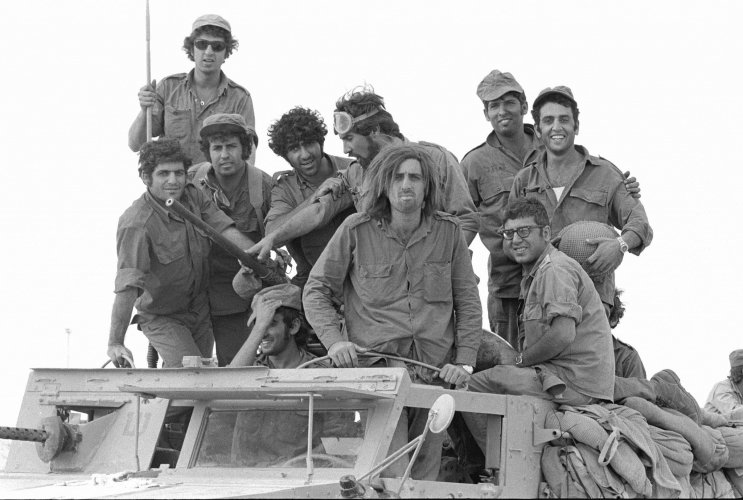
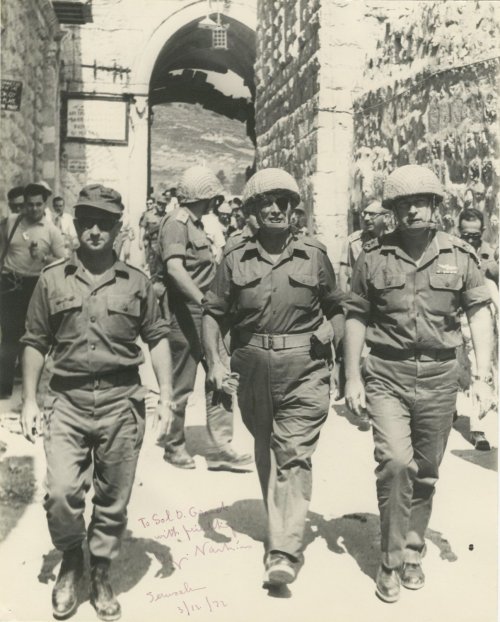
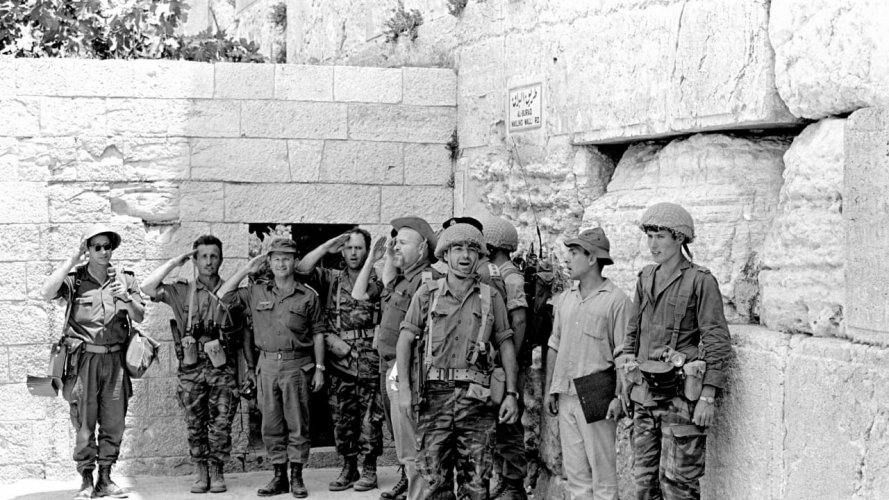
If all the old structures were anything to go by, they would have already been incorporated by the army that has won all the wars, but the Israelis do not consider them necessary, and reality shows that they are right.
 

Attachments

  • d2cc37f6-2c45-4ce9-b1c5-7d55428e9732_alta-libre-aspect-ratio_default_0.jpg
    d2cc37f6-2c45-4ce9-b1c5-7d55428e9732_alta-libre-aspect-ratio_default_0.jpg
    164.3 KB · Views: 5
  • 9.jpg
    9.jpg
    475.5 KB · Views: 5
  • 001-569.jpg
    001-569.jpg
    248.1 KB · Views: 4
  • 477490.jpg
    477490.jpg
    171.9 KB · Views: 5
A group of intelligent officers well trained in the latest logistical techniques is enough, in the 21st century no more is needed.

Map strategies and halls full of uniforms won't win future wars, that will be much better for strong AI.

The conscript to his home, the Iron Sergeant to his retirement and the robots to the battlefield.

If all the old structures were anything to go by, they would have already been incorporated by the army that has won all the wars, but the Israelis do not consider them necessary, and reality shows that they are right.
still wrong. Much like the people in the 1950's thought that the only future wars were nuclear.
Humans were fighting the Skynet drones and robots.
 
A group of intelligent officers well trained in the latest logistical techniques is enough, in the 21st century no more is needed.

Not true. The high-end NCO's need those skills more than officers do. They're the ones that really know what the troops need versus what the supply system tells them they do. For example, one of my particular exceptional skills as one of those NCO's was being able to go through a complex set of drawings for some 'thing' that more of was needed to be made where the drawings were under-explained, horribly outdated, etc., and find the parts, materials, or alternatives that worked instead.

I often called the "engineer(s)" who designed something that was under explained and asked, "Just what the f*** were you thinking?" Answers were usually, "Well, we had to put a spec on it..." or "We were on a deadline and figured the missing (whatever) would be filled in during production..."

AI can't do that, at least not yet, and likely not for decades to come. It requires making complex inferences, familiarity with what the thing is supposed to do and how, and creativity in coming up with alternatives. AI doesn't do those things well.
Map strategies and halls full of uniforms won't win future wars, that will be much better for strong AI.

I doubt it. AI isn't all that creative, just derivative.
The conscript to his home, the Iron Sergeant to his retirement and the robots to the battlefield.

That's fine. At the pointy end not a lot of thinking is required. Of course, industrial age warfare is quickly coming to an end as Russian and Ukraine are slowly realizing. The mass army of minimally trained troops is no longer necessary and what is replacing them is highly skilled technicians and decision makers who aren't expendable like ammunition.
If all the old structures were anything to go by, they would have already been incorporated by the army that has won all the wars, but the Israelis do not consider them necessary, and reality shows that they are right.

Navies and air forces are far more technical. That requires skilled technicians and skills require being paid adequately and treated as more than 'the help' who can maintain and operate increasingly complex systems. Reliance on a relative handful of civilian experts instead of in house (in the military) ones won't cut it in a war. Civilians will resist or refuse to work in areas of privation or danger without insane levels of compensation.

In the age of sail there was something of this system in place. You had three, maybe four, tiers of personnel on a ship.

Officers who ran the ship, were management, and maintained discipline and order.
Experts--call them "Masters" or warrant officers--who assisted the officers in making complex, technical decisions on specific areas of operation of the ship like navigation, sail choices, and the like.
Skilled craftsmen who oversaw hands on operation and repair of the ship. So, you'd have a sailmaker, carpenter, artificer, etc., each knowing a specific trade and overseeing the hands doing the work.
Crew. They were at various levels of skill in basic jobs on the ship.

The top three types got paid well to do what they did because they had skills that were hard to acquire. They were treated with respect. The crew was basically under their thumb on a short leash at all times.

Robots can replace the crew, but as for the others, not so much, at least not in the near future. It is those that the military needs to work out a new pay, respect, and benefit system for.
 
Last edited:
I often called the "engineer(s)" who designed something that was under explained and asked, "Just what the f*** were you thinking?" Answers were usually, "Well, we had to put a spec on it..." or "We were on a deadline and figured the missing (whatever) would be filled in during production..."
Yeah, I'll be honest--as someone who has been in sonar engineering for a couple of decades and has to regularly deal with the program office... it sucks sometimes.

Frankly, maybe 10% of the folks at NAVSEA/NUWC truly understand how things work, and they're calling all the shots. I can't fix anything they won't allow me to fix. (Although I do sometimes manage to piggyback improvements onto other fixes and surreptitiously sneak them in... because again, they don't know how anything works.)

The program office would rather all the focus be on new (largely unnecessary) capability instead of firming up the features we already have. (And in fairness, they have a lot of people in their ear.)

I can't stand going to a boat and hearing hey did you fix that thing that's been broken since APB11 and I have to say "sadly, no, but look at this new bullsh*t feature that no one asked for except some ACINT weenie who hasn't actually been to sea in 15 years."

This is why I'm glad that I mostly work in IRAD today. Although it's stuff that won't make it to sea for a while, at least I can work largely unmolested and no one can tell me how things should be done because we're doing things no on else has done yet.
 
Not true. The high-end NCO's need those skills more than officers do. They're the ones that really know what the troops need versus what the supply system tells them they do. For example, one of my particular exceptional skills as one of those NCO's was being able to go through a complex set of drawings for some 'thing' that more of was needed to be made where the drawings were under-explained, horribly outdated, etc., and find the parts, materials, or alternatives that worked instead.

I often called the "engineer(s)" who designed something that was under explained and asked, "Just what the f*** were you thinking?" Answers were usually, "Well, we had to put a spec on it..." or "We were on a deadline and figured the missing (whatever) would be filled in during production..."

AI can't do that, at least not yet, and likely not for decades to come. It requires making complex inferences, familiarity with what the thing is supposed to do and how, and creativity in coming up with alternatives. AI doesn't do those things well.


I doubt it. AI isn't all that creative, just derivative.


That's fine. At the pointy end not a lot of thinking is required. Of course, industrial age warfare is quickly coming to an end as Russian and Ukraine are slowly realizing. The mass army of minimally trained troops is no longer necessary and what is replacing them is highly skilled technicians and decision makers who aren't expendable like ammunition.


Navies and air forces are far more technical. That requires skilled technicians and skills require being paid adequately and treated as more than 'the help' who can maintain and operate increasingly complex systems. Reliance on a relative handful of civilian experts instead of in house (in the military) ones won't cut it in a war. Civilians will resist or refuse to work in areas of privation or danger without insane levels of compensation.

In the age of sail there was something of this system in place. You had three, maybe four, tiers of personnel on a ship.

Officers who ran the ship, were management, and maintained discipline and order.
Experts--call them "Masters" or warrant officers--who assisted the officers in making complex, technical decisions on specific areas of operation of the ship like navigation, sail choices, and the like.
Skilled craftsmen who oversaw hands on operation and repair of the ship. So, you'd have a sailmaker, carpenter, artificer, etc., each knowing a specific trade and overseeing the hands doing the work.
Crew. They were at various levels of skill in basic jobs on the ship.

The top three types got paid well to do what they did because they had skills that were hard to acquire. They were treated with respect. The crew was basically under their thumb on a short leash at all times.

Robots can replace the crew, but as for the others, not so much, at least not in the near future. It is those that the military needs to work out a new pay, respect, and benefit system for.
In any activity, there comes a time when advances in technology make humans unnecessary: agriculture, muscle transport, ships moved by oars... etc.

These changes are especially welcomed by society when they serve to free us from heavy and dangerous jobs and none is as dangerous as war, the time would have to come and it is coming, that or face the enemy's faster, stronger, smarter robots and who know all the combat and camouflage tactics that have existed.
 
The forum doesn't like the words I would like to use to express just how strongly I disagree with this thesis. So consider there to be at least 9.6TB of "pissed-off Sailor"-grade profanity redacted from this paragraph alone.

The key difference between enlisted and commissioned is that enlisted execute the plans, and commissioned make the plans. Yes, at the upper end of the enlisted tracks (E6 or E7 and above), there's a whole lot of the enlisted knowing/having learned how to make the plans because they're teaching the zero-experience O1s and O2s how to make the plans as part of the senior enlisted job description.

There's no shame in saying, "I don't like making plans, I just want to do the things and let someone else make the plans." But that also should not prevent you from getting pay increases for your own abilities and time served. You should not be stuck forever at E4 because you don't want to lead and/or you know that you don't have the correct skill set and personality to lead.

Let's use the basic infantryman as our example for training required to be considered "ready to deploy into combat" these days:
It takes roughly a year of training to get Joe Civilan turned into a Soldier that is ready to go fill a spot in a combat unit. That's from basic to specialty training (MGs, radio school, whatever). Then, once he shows up at his first unit, it takes another year of training to get the unit as a whole combat-ready. A one-year combat deployment, and then the unit is relaxing down and people going on leave. And now it's coming up on 4 years and Joe is deciding whether to reenlist or get out. That's not really a good return on the investment of how much training it takes to get a competent soldier in a competent unit. On the other hand, that gets us a soldier that would be better trained and prepared for combat than the WW2 special forces (Rangers or Commandos), and possibly better than the Vietnam era special forces.

On the matter of specialist versus (enlisted) leadership:
The US Army used to have a whole series of specialist, non-leading paygrades. For people like medics and other highly-trained jobs that needed to work by themselves without any leadership, but also whose jobs did not put them in a place to give orders (except as part of their specific skill set). This split started at the E4 paygrade, where you were either a Corporal or a Specialist. It then went all the way up to E9. This gave a pay bonus to people in training-intensive jobs, and gave them a choice between focusing on technical skills or leadership track. So you might have a Medical Specialist E9 and a Medical Sergeant-Major, where the Specialist-9 was like a Trauma Paramedic and the Sergeant-Major is in charge of the Hospital. For reasons I don't agree with, the Army got rid of that track except for Specialist E4.

On the officer side, this is the difference between Warrants and Commissions. A Warrant is the technical specialist, whether they're the Maintenance Officer or a helicopter pilot. A Commissioned Officer is the leader. The Warrant Officer paygrades also stop at W5, while Commissioned Officer paygrades go all the way up to O9. Admittedly, in order to step into Warrant Officer, you have to at least get up to E5 and then get your Warrant, so the Warrant pay starts a bit higher than a straight-out-of-OCS O1, but is more or less equivalent to the "prior-enlisted" Officer pay.
 
Only hiccup being humans are still cheaper than 'robots' or machines for 'soldiering' however unpopular it has become, and thus more expendable as a resource !

As an example, how many so called 'leaders' (and i can think of one expousing same just a year or so ago) have pledged to 'fight to the last man' :(

I do prefer the RAF. example, at least with regard specualist roles, first name terms, mutual respect, the normality of 'office hours' and 'weekends off', the latter two I know maligned by the other services, but does make for a happier and more equitable existence :)
 
Last edited:

Similar threads

Back
Top Bottom