How to make large costly radars less physically vulnerable

Cant do shell games with a radar. Its putting out massive amounts of energy, which any SIGINT satellite can easily geolocate. Its gotta be mobile.
Doesn't actually have to deny detection, just prevent precise targetting. I don't think SIGINT satellites with meter class accuracy is widely available (so you put dozens of radomes around the real thing, also put a tent over it to shuffle things at times) while imagery is commercial level.
 
Strengthen counter-espionage and national security education.
U.S. and Australian intelligence agencies have long been acquiring on-site photos of radar positions; exchanging $100 or a pair of sneakers for the location of a target worth several million dollars is quite a bargain. I remember that Mossad has done similar things as well. It’s actually quite clever.
That would require putting the freedom-maximal mentality behind the shed and putting it down, which is politically inconvenient at best, despite the idea now being a base requirement of governance and civilization.
 
The events of the recent "not-the-war-just-(special)-military-operation" in Iran demonstrated something that was suspected for a while; big, high-powerful radars, deployed near battlefield, are very vulnerable:

View attachment 804591

While the problem could be mitigated a bit by using mobile systems - aerial or naval - it's far from universal solution. Naval radars couldn't be efficiently deployed far from sea, and airborne radars have weight and size limitations. And land-based radars of large size are more transportable than mobile (if even transportable) anyway.

So... what could be done to reduce the vulnerability of large, high-powered radars near battlefield?

My idea: switch to multi-static radars. Deploy several transmitter antennas - made as compact and as sturdy as possible, and fully mobile - around one big complicated receiver antenna (fully passive and basically undetectable). Switch between transmitter antennas constantly, and move the inactive antennas around constantly. Any single transmitter antenna should stay active only as long as it took to move the other one on a new position. So the enemy would not have the good targeting solutions; the main (receiver) antenna is fully passive and invisible to detection (multiple decoys could be easily build to confuse satellite recon), and the active (transmitter) antennas are constantly switched between and moved around.

I don’t think this was proven in Iran, it was proven in Ukraine, crimea, and Russia lol.

In Iran you could say it was confirmed
 
Though that is facing an end with the likely passing of Liberal Democracy in the near future.
The big problem is that democracy as a whole has a surprisingly strict set of requirements, several of which have become permanently unattainable with modern technology.
If your country’s counterintelligence agencies take this view, that would be all the better.

Modern intelligence work is mostly a technical and systems problem.
My point is that calls to strengthen counterintelligence education should mainly apply to military personnel and organizations that actually handle classified information, not mainly to the general public.

If secrets can be leaked by a civilian, it usually means the system itself is flawed.
The problem is, most of the time the big secrets are getting leaked by a Congressional Staffer for clout in the bar.
One of the big problems with the US is that seditions, treason, and espionage are effectively political crimes, which makes enforcing them effectively impossible.

I mean, the US had a Congresscritter literally give (via bragging to the newspapers) the Imperial Japanese Navy the fact that their depth charges were set too shallow during WW2, and didn't even get a one-way trip to the firing line.
 
The solution is multi-facetted and layered:
  • The radar should be able to and encouraged to pack-up and relocate more often and in a much shorter time ;​
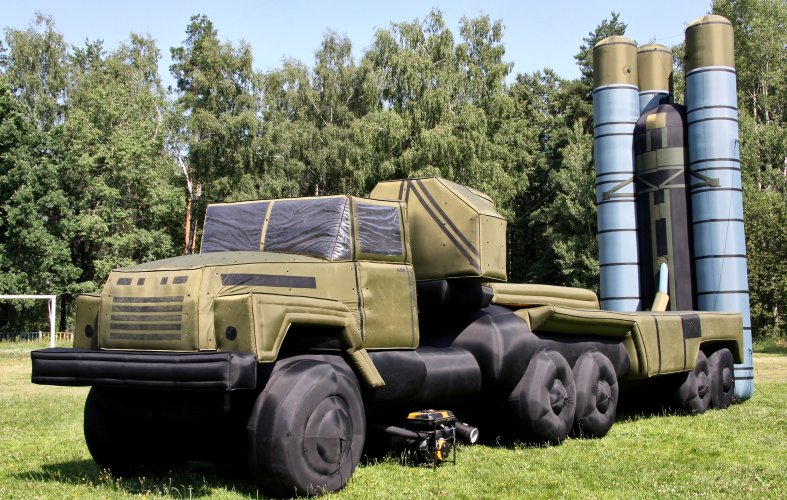
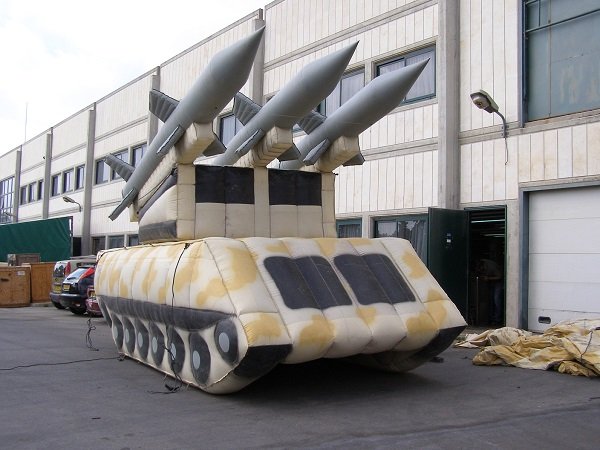
  • Decoys should be used as much as possible, be it basic inflatable ones or more elaborate ones with electronic signatures ;​
  • Electronic warfare vehicles could remain nearby and operate whenever needed ;​
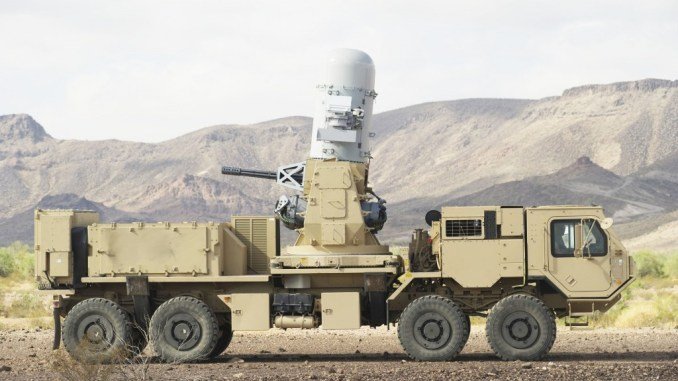
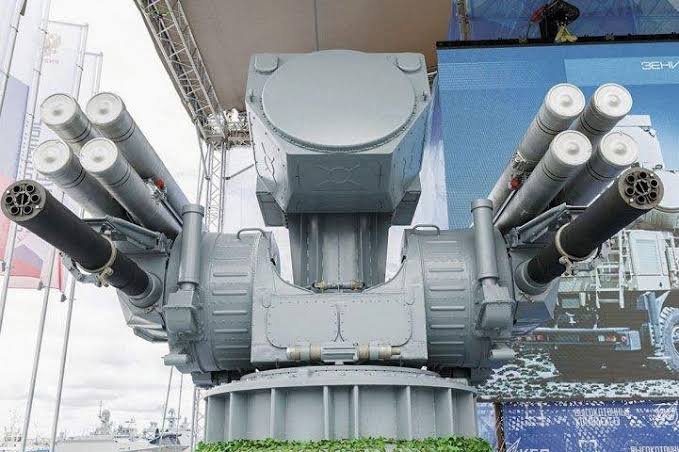
  • Directed enegy weapons, C-RAM and RWS could deal with small targets like OWA & FPV drones and others ;​
  • SHORAD could remain nearby so as to protect the higher value long-range systems and radars ;​
  • For the most critical systems, medium to long range SAM and ABM capabilities would be required.​
The lessons of the Ukraine war is that the kill chain is now much narrower. F2T2EA can be done more quickly than before. Any system (with the obvious exception of structures) should be able to relocate more quickly, and whenever possible and affordable, be accompanied by defensive measures.

Even in time of crisis, before the onset of war, your system must move as often as reasonable. Given enough time, any system can and will be spotted by IMINT, GEOINT, SIGINT, ELINT and so on... With how widespread social networks and such are and with how often people are glued to their phones and post photos and videos, OSINT can not be ignored either, and AI could further the risk.

Distributed systems like multistatic radars and cheaper mobile radars could help, and the technology is slowly allowing us to pursue those with a good degree of efficiency, but don't expect those to be a silver bullet.
Passive radar capabilities can be interesting, they could indeed complement existing systems, but currently, when the time comes for interception, the christmas tree will still need to light up. Still, EMCON has never been so primordial as today, but it is not possible for systems such as ABM radars as said previously. OPSEC is essential too.


In war, losses are to be expected, so redundancy is unavoidable if you want efficiency. Having a number of radars and systems you can redeploy to the theater to replenish losses will be necessary. You need inventory depth so that (expected) losses of critical systems don't create gaps in your coverage, and you need that inventory depth to be accompanied by good logistic capabilities that can quickly fill the gaps.

A few ideas were given for Domes and static radars. They are worth researching but I don't know enough about them.


Eventually, there will be gaps, flaws, failures and mishaps. If a military has a critical and invaluable system, it should accept and conform to the risk that it might lose it, and act accordingly.​
 
Interesting conversation, topical as well. On a cursory reading it's mostly getting our collective heads around the basics. Any innovations herein could of course be applied either which way.
 
The damage and destruction of American radars in this current Iran conflict could have been prevented easily enough with some appropriate SHORAD. Shaheds are a far easier target than a real cruise missile, yet there is an evident lack of close-in air defense to deal with the leakers that somehow got so close. Correct that issue first and worry about the rest second.
 
The damage and destruction of American radars in this current Iran conflict could have been prevented easily enough with some appropriate SHORAD. Shaheds are a far easier target than a real cruise missile, yet there is an evident lack of close-in air defense to deal with the leakers that somehow got so close. Correct that issue first and worry about the rest second.
Th pick-up mounted APKWS used in Ukraine would have been a cheap and easy way to defend them...But would have required the administration to actually prepare for war.
 
The damage and destruction of American radars in this current Iran conflict could have been prevented easily enough with some appropriate SHORAD. Shaheds are a far easier target than a real cruise missile, yet there is an evident lack of close-in air defense to deal with the leakers that somehow got so close. Correct that issue first and worry about the rest second.
Part of the problem is that the USAF has been more than willing to sink any air defense program the Army has pursued until very recently (and even then, it's still hard going).

You have to force the USAF to go to heel before you can actually begin to get an IADS in the US Army.
Th pick-up mounted APKWS used in Ukraine would have been a cheap and easy way to defend them...But would have required the administration to actually prepare for war.
Given that it's been increasingly likely that this admin is essentially a bunch of treasonous plants/useful idiots...

... and people wonder why I'm of the persuasion that democracy as we know it is already dead.
 
Yes, agreed - but on the other hand, having several transmitters allowed to have several "observation points" on target, thus partially compensating for precision loss.

The precision of multistatic radars (or passive radars working together with mere emitters) is good enough to dispatch a LOAL SAM at the target.
Their real weak spot is that they cannot be used with the relatively affordable and all-weather semi-active radar missile guidance tech. You need an additional directed illuminator emitter for that.

About hardening normal radars; use cheap old school antennas (reflectors) that you can easily replace (with the expensive parts hardened in bunker or behind thick armour plating) or use terribly much of a radome cover, but that would mean weaker signals and you would have to calibrate the radar even better to take the cover's uneven attenuation into account in processing.

Finally, use a retractable radar antenna that can be retracted into cover (while another, linked radar takes over the sensing and possibly illumination job).
 
The damage and destruction of American radars in this current Iran conflict could have been prevented easily enough with some appropriate SHORAD. Shaheds are a far easier target than a real cruise missile, yet there is an evident lack of close-in air defense to deal with the leakers that somehow got so close. Correct that issue first and worry about the rest second.
Also noting that SHORAD is generally not optimal for drones so some of the systems like APKWS should now be supplementing that by default. Maybe a mobile VSHORAD like the 30mm gun systems Germany is buying should be tasked with close-in and mobile defence, because the whole setup is vulnerable while on the move.
 
How to make large costly radars less physically vulnerable
You don't and you can't. Treating air defense as this golden cow that you cannot let be harmed is pure US MIC driven consumer bullshit. Imagine paying billions for a not-so-mobile ABM system and then put it comfortably into range of even the cheapest of munitions.

Just how in the early cold war anti-tank munitions greatly exceeded the capability of tank armor, right now missile technology and the increasing volume of low cost munitions have overtaken effective means to counter them. Which is why you see the lauded Patriots, S300s, Iron Domes, S400s and THAADS of this world get pummeled and overwhelmed constantly and the missiles and drones rain.

What's necessary is to adapt to this more dynamic style of air and counter air warfare. As others have already suggested SHORAD is a very important part. But so is mobility to pack things up, including your radar, when it becomes evident that you're getting overwhelmed. Ultimately there is no way around DEW, be it microwave or lasers. These are especially useful against the main problem of large volumes of cheap low-capability long range munitions. But the energy needs are immense, range in some cases leaves a lot to be desired and the manufacturing and acquistion cost is astronomical right now. So that's for the near future, with some tech demonstrators and prototypes already surfacing in somewhat reasonable shape.

But ultimately, putting all your eggs into a handful of baskets, putting these baskets into range of the adversary and then losing billions in radars and missiles to a few millions in drones and missiles is not a sustainable model. Highly mobile systems with quick set up and set down times can at least pull back when it becomes too hot. Something the various SAM batteries in the US or Israel seemingly couldn't, which is why they were overwhelmed and destroyed.

You cannot sufficiently harden any radar so it survives direct hits by drones or near impacts by ballsitic missile. So it's all about risk mitigation, knowing when and being able to pack up and leave and not pouring several billions into ultimately disposable assets. So mobile and more distributed systems are ultimately more survivable on the greater scale. And the idea of having a couple batteries and thinking you're invulnerable to missile attacks has always been laughable, there has yet to be an ADS that has a 100% successful interception rates, and there never will be. So there is little reasoning to remain put in place beyond a certain point, as munitions will have made it through at that point already. If the wave was small enough, you may have withered the storm with minimal damage, albeit at the cost of your missiles. If there is still more coming and several have already slipped through, then the objective is lost already and you should pack up and withdraw to set up position elsewhere again.
 
A radar set however costly doesn't qualify as a whole SAM battery being destroyed. It's hard to say with the available information but I doubtful any of these sites were individually overwhelmed versus hit by a drone that slipped through the kill zone and wasn't detected until too late. If any of these batteries did run out of missiles and were then hit, hopefully that comes out in later reporting.

All it would have taken is a single 35mm gun firing AHEAD or proximity fuzed ammunition to save a few hundred million $ worth of radar. Or any of the other options that could have intercepted such a target at very short range. But the US Army still hasn't invested enough in this area. Some of that is a failure to react fast enough to ongoing developments, but new short and very-short range air defense systems have been among the first items to be sacrificed to the budget gods for decades.

Most batteries shouldn't be tied to a static location but trying to move around more often means less missiles ready to intercept targets which is an obvious problem when it comes to the really dangerous threats like high performance ballistic missiles.
 
You don't and you can't. Treating air defense as this golden cow that you cannot let be harmed is pure US MIC driven consumer bullshit. Imagine paying billions for a not-so-mobile ABM system and then put it comfortably into range of even the cheapest of munitions.
It's less MIC-driven consumer bullshit and more just how many resources go into these sorts of things. Radar is part of the silicon segment of 'steel is cheap, silicon is expensive', and to get the radars for modern warfare, the pricetag rises significantly. The floor keeps rising, and most "Western" nations are very much unwilling to spend money on defense; even now, they're doing it kicking and screaming.
 
All it would have taken is a single 35mm gun firing AHEAD or proximity fuzed ammunition to save a few hundred million $ worth of radar. Or any of the other options that could have intercepted such a target at very short range. But the US Army still hasn't invested enough in this area. Some of that is a failure to react fast enough to ongoing developments, but new short and very-short range air defense systems have been among the first items to be sacrificed to the budget gods for decades.
Does Army have a concept of layered AD? Some of the new developments on the way seem to be aimed at specific threats like APKWS for drones, but no clear attempt to fill out a complete layer (like VSHORAD) against the range of threats.

In my view you need medium and short range filters like interceptor drones. SHORAD layer needs missiles (like NASAMS) and eventually the bigger lasers. VSHORAD isn't just CIWS, being mobile would allow it to continue protecting the battery while relocating, using lasers, airburst guns and the short range APKWS. If you dont have a mix of capability in each layer there will be attacks that aim to exploit the vulnerability of one AD type.
Most batteries shouldn't be tied to a static location but trying to move around more often means less missiles ready to intercept targets which is an obvious problem when it comes to the really dangerous threats like high performance ballistic missiles.
But sometimes these assets are detected while relocating and turn out to be virtually defenceless against even opportunity attacks.
It's less MIC-driven consumer bullshit and more just how many resources go into these sorts of things. Radar is part of the silicon segment of 'steel is cheap, silicon is expensive', and to get the radars for modern warfare, the pricetag rises significantly. The floor keeps rising, and most "Western" nations are very much unwilling to spend money on defense; even now, they're doing it kicking and screaming.
So the idea of a dispersed array of transmitters and passive receivers could be a strategy to mitigate both the costs and vulnerability. Having multiple receivers and control points also opens up the potential of relocating units without taking down the whole array or needing to shut down the whole battery to move it.
 
Does Army have a concept of layered AD? Some of the new developments on the way seem to be aimed at specific threats like APKWS for drones, but no clear attempt to fill out a complete layer (like VSHORAD) against the range of threats.
Yes, the Army understands defense-in-depth quite well.


In my view you need medium and short range filters like interceptor drones. SHORAD layer needs missiles (like NASAMS) and eventually the bigger lasers. VSHORAD isn't just CIWS, being mobile would allow it to continue protecting the battery while relocating, using lasers, airburst guns and the short range APKWS. If you dont have a mix of capability in each layer there will be attacks that aim to exploit the vulnerability of one AD type.
The problem is how long the governmental contract cycle takes.
 
I have also been thinking about this for several days: what if we set up one radar antenna, use multiple antennas while the radar electronics are somewhere underground, well protected, and if one antenna is hit, then another can be used, while the radar has signal amplifiers for the antenna, and in this way a radar system is obtained like the British used in World War II with multiple antennas along the North Sea. Or to put smaller radars on larger UAVs and have them patrol all the time or to put multiple radars on balloons in order to cover the entire territory and have those radars connected through a network
 
Decoys. 80 years since WWII we forgot Hollywood magic of set design and fakery .
1000042013.jpg
1000042014.jpg
Inflatable decoys may look chins, some argue better image resolution may discriminate. But better details and scattered objects hide installations. Decoys would also have produce fake EM signals, low power powered by rechargeable battery

1000042016.jpg
Not so Famous general who was in charge of feints and distraction projects contracted from Hollywood
If you can't protect it, Hide it, can't hide it? Fake it
 
Decoys. 80 years since WWII we forgot Hollywood magic of set design and fakery .
There is one big problem there. Radar is emitting a bright beam of electromagnetic radiation. Unless decoys emit too (and reasonably similarly), they could be easily discriminated.
 
At some point in decoy complexity and discrimination it actually becomes easier or more economical to just have another warhead^wradar site.
That's why I suggest a multistatic radars with several emitters (mobile, and/or hardened), and big receiver antenna (separated, camouflaged, hidden amongst decoys). The emitters could be detected, but they are constantly moving, switching between each other. The receiver is fully passive, not detectable at all, and placed amongst multiple decoys.
 
They are more fragile. Because they deal with RF they can't easily be "armored" in any meaningful way. Other fixed targets certainly can be. Radar antennas can't be covered by concrete, steel, etc. to protect them.
Caveat: not while they are in operation. You can cover/protect them while they’re off.
I have also been thinking about this for several days: what if we set up one radar antenna, use multiple antennas while the radar electronics are somewhere underground, well protected, and if one antenna is hit, then another can be used, while the radar has signal amplifiers for the antenna, and in this way a radar system is obtained like the British used in World War II with multiple antennas along the North Sea.
I like the concept, but it’s based on the assumption that the antennae is the cheap part, but we are firmly in the AESA age, and the antennae arrays themselves are expensive and hard to replace.

I agree with the overall sentiment that staying mobile with redundant arrays is probably the smartest play, but there will very likely still be instances where static installations are sometimes unavoidable.

One solution might be to have multiple redundant units that alternate operation, and are covered (or, I guess, retracted, if you want to be elaborate about it) when not in use. Randomize which ones are run at any given time, maybe try to close up and switch to another when you identify a direct incoming. So, not as much a shell game as whack-a-mole.

(Yes, I know this isn’t really practical against ballistic missiles unless you want to tag an extra billion in construction costs on, but let’s be real, a lot of what we’re talking about here is BMD arrays getting taken out by Shaheds because that’s not their usual target set and SHORAD is still losing the war on drone swarms.)

It’s either that, or juice the radars up so much that they can run as microwave DEWs and melt anything that gets too close, but you better expand your operator minimum safe distance.
 
If you can control phasing of the beams, you absolutely can turn an AESA radar into a MASER. Blasting whatever is in the sky with several hundred KW to low megawatts of RF.
 
There is virtually nothing you can do other than increasing the number of decoys, air defense assets, or simply possessing larger quantities of them.
 
They are more fragile. Because they deal with RF they can't easily be "armored" in any meaningful way. Other fixed targets certainly can be. Radar antennas can't be covered by concrete, steel, etc. to protect them.
Well, they can be armored if you turn them off, and interception related tech also involve early warning.

For a "dramatic" example
View: https://www.youtube.com/watch?v=dIXDFuAjoBw
 
They are more fragile. Because they deal with RF they can't easily be "armored" in any meaningful way. Other fixed targets certainly can be. Radar antennas can't be covered by concrete, steel, etc. to protect them.
What happened to the small-arms-and-fragments armored radomes from the US Army FCS program?
 

Similar threads

Back
Top Bottom