Dilandu
I'm dissatisfied, which means, I exist.
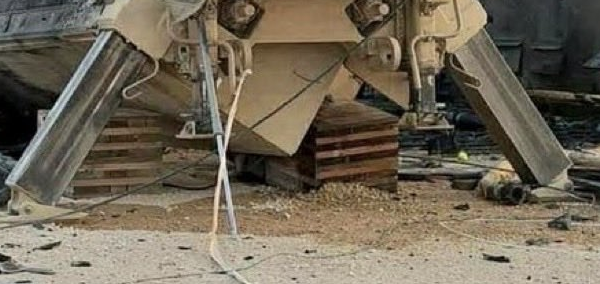
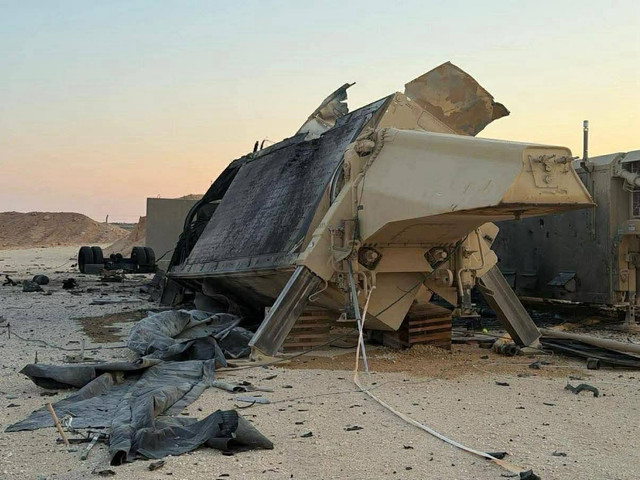
The events of the recent "not-the-war-just-(special)-military-operation" in Iran demonstrated something that was suspected for a while; big, high-powerful radars, deployed near battlefield, are very vulnerable:

While the problem could be mitigated a bit by using mobile systems - aerial or naval - it's far from universal solution. Naval radars couldn't be efficiently deployed far from sea, and airborne radars have weight and size limitations. And land-based radars of large size are more transportable than mobile (if even transportable) anyway.
So... what could be done to reduce the vulnerability of large, high-powered radars near battlefield?
My idea: switch to multi-static radars. Deploy several transmitter antennas - made as compact and as sturdy as possible, and fully mobile - around one big complicated receiver antenna (fully passive and basically undetectable). Switch between transmitter antennas constantly, and move the inactive antennas around constantly. Any single transmitter antenna should stay active only as long as it took to move the other one on a new position. So the enemy would not have the good targeting solutions; the main (receiver) antenna is fully passive and invisible to detection (multiple decoys could be easily build to confuse satellite recon), and the active (transmitter) antennas are constantly switched between and moved around.
While the problem could be mitigated a bit by using mobile systems - aerial or naval - it's far from universal solution. Naval radars couldn't be efficiently deployed far from sea, and airborne radars have weight and size limitations. And land-based radars of large size are more transportable than mobile (if even transportable) anyway.
So... what could be done to reduce the vulnerability of large, high-powered radars near battlefield?
My idea: switch to multi-static radars. Deploy several transmitter antennas - made as compact and as sturdy as possible, and fully mobile - around one big complicated receiver antenna (fully passive and basically undetectable). Switch between transmitter antennas constantly, and move the inactive antennas around constantly. Any single transmitter antenna should stay active only as long as it took to move the other one on a new position. So the enemy would not have the good targeting solutions; the main (receiver) antenna is fully passive and invisible to detection (multiple decoys could be easily build to confuse satellite recon), and the active (transmitter) antennas are constantly switched between and moved around.