
You are using an out of date browser. It may not display this or other websites correctly.
You should upgrade or use an alternative browser.
You should upgrade or use an alternative browser.
History of Stealth
- Thread starter Wahubna
- Start date

- Joined
- 27 December 2005
- Messages
- 18,713
- Reaction score
- 33,033
N-204 (1957) reconnaissance project specifically mentions low radar cross section
N-327 (1974) $100,000 USAF Low Observables Concept Study leading to XST
N-335 (1975) Northrop XST
N-345 (1978) TACIT BLUE
Dates are commencement of program rather than first flight, as we are mixing real aircraft with projects.
N-327 (1974) $100,000 USAF Low Observables Concept Study leading to XST
N-335 (1975) Northrop XST
N-345 (1978) TACIT BLUE
Dates are commencement of program rather than first flight, as we are mixing real aircraft with projects.

- Joined
- 6 August 2007
- Messages
- 4,374
- Reaction score
- 9,161
N-204 (1957) reconnaissance project specifically mentions low radar cross section
N-327 (1974) $100,000 USAF Low Observables Concept Study leading to XST
N-335 (1975) Northrop XST
N-345 (1978) TACIT BLUE
Dates are commencement of program rather than first flight, as we are mixing real aircraft with projects.
Between XST and TACIT BLUE there was Northrop work on TEAL DAWN, which looked at wing-body-tail configurations for cruise missiles, and heavily influenced TACIT BLUE.
John Cashen interview with Peter Westwick, 15 December 2010
CASHEN: All right. After XST—you asked the question, here it is. It was a DARPA program called Teal Dawn, which was a re-look at the intercontinental cruise missile. Northrop back in the '50s had built and fielded an intercontinental cruise missile, and it was called the Snark. This is basically going back and looking at the Snark as a potential weapon for the United States. This time, however, they had to be stealthy. DARPA created a program—this is a different DARPA now. It was not Perko's DARPA, which was tactical technology; it was a strategic technology office of DARPA. And the project was called Teal Dawn. We got a contract, and Boeing got a contract.
Anyway, Teal Dawn made us step back and think about what we'd done on XST and create for the very first time a wing-body-tail all-aspect design. What it was based on was the original Mark 12, the Minuteman reentry vehicle, the ice cream cone, had been studied by the Siegel group at Michigan to the extent that they were convinced it was the ideal radar cross section shape for the reentry application, that you could never do any better than the ice cream cone. It was ideal. And I think it's been proven that way over the decades since then. So, what is the ideal airplane? The ice cream cone's axially symmetric. An airplane can't be axially symmetric. An airplane's got to have wings. That by definition makes it planar. Maybe it's a flat plate, an infinitely thin flat plate. That would be the ideal radar cross section shape for an airplane. You can't make an airplane infinitely thin because you have to put a person and engines in it. So what you do is start out with a flat plate, and you grow above and below that plate the volume necessary to make it into a functional system, and minimize as much as possible the increased RCS due to the addition. But you start out with a flat plate.
CASHEN: They're aligned. Parallel. Parallel planforming we call it. Now, it turns out the design of an airplane historically starts out with a plan view, whether a designer hand draws it or does it on a computer. He starts out with a plan view, and then he starts to grow the third dimension. So the idea of RCS design, Stealth design, of an airplane that starts out with a plan view is consistent with the existing airplane design process. That's the process here at Northrop. It always has been, always will be. Lay out a plan form that you want, because your RCS pattern in azimuth is dominated by the plan form that you've created. And then change it as necessary in creating the real airplane. It's done that way with Tacit Blue—they're all that way. So, we learned that on Teal Dawn, a wing-body-tail cruise missile, and we created our Teal Dawn accordingly.

FighterJock
ACCESS: Above Top Secret
- Joined
- 29 October 2007
- Messages
- 6,689
- Reaction score
- 7,909
First time that I have ever seen anything about Teal Dawn, I take it that there will be no further info, design drawings or even images of the missile?
- Joined
- 27 December 2005
- Messages
- 18,713
- Reaction score
- 33,033
Northrop's Teal Dawn research led to Tacit Blue and TSSAM. I think you can extrapolate the likely basic shape of their Teal Dawn design.

- Joined
- 6 August 2007
- Messages
- 4,374
- Reaction score
- 9,161
First time that I have ever seen anything about Teal Dawn, I take it that there will be no further info, design drawings or even images of the missile?
Northrop design was super pointy.
Boeing design was different, probably a lot like a Boeing supersonic cruise missile posted in other threads.
You never know, drawings could appear in a few months.

- Joined
- 17 October 2006
- Messages
- 2,396
- Reaction score
- 1,278
Very interesting! Just fell down that rabbit-hole myself.... and had a couple of surprises...Bill Bahret provides many insights into the early development of low observables, and mentions at least one previously undisclosed program from the 1960s:
William F. Bahret: The Cold War Aerospace Technology History Project (Interview 1)
William F. Bahret: The Cold War Aerospace Technology History Project (Interview 1)
Squire Brown interviewed William Bahret on August 22, 2006 for the Cold War Aerospace Technologies History Project. In the interview Mr. Bahret discusses his role in the development of military technology during the Cold War.corescholar.libraries.wright.edu
William F. Bahret: The Cold War Aerospace Technology History Project (Interview 2)
William F. Bahret: The Cold War Aerospace Technology History Project (Interview 2)
Squire Brown interviewed William Bahret, an authority on radar signature, on May 27, 2009 for the Cold War Aerospace Technologies History Project. In the interview Mr. Bahret discusses his role in the development of military technology during the Cold War.
W.F. Bahret, "The beginnings of stealth technology", 1993
Scott Kenny
ACCESS: USAP
- Joined
- 15 May 2023
- Messages
- 16,973
- Reaction score
- 24,079
I would not consider the Scaled Composites/Rutan ARES to be a stealth design. It was made to see if a completely composite structure could survive the recoil of the GAU12 25mm cannon.Nor a complete list, but...
[...]
Model 151 ARES (1990)
I am not aware of any mention ever being made about that aircraft being designed with stealth in mind.
- Joined
- 6 August 2007
- Messages
- 4,374
- Reaction score
- 9,161
I would not consider the Scaled Composites/Rutan ARES to be a stealth design. It was made to see if a completely composite structure could survive the recoil of the GAU12 25mm cannon.
I am not aware of any mention ever being made about that aircraft being designed with stealth in mind.
ARES is constructed of fiberglass and Kevlar. It is “transparent” to radar, and I have seen radar diagnostic images that illustrate that the internal metal components of ARES are very visible to radar.
Nonetheless it is listed in at least one place as having made significant contributions to low observables. Why it is on this list is still an open question
- Joined
- 27 December 2005
- Messages
- 18,713
- Reaction score
- 33,033
A negative result is still a contribution?ARES is constructed of fiberglass and Kevlar. It is “transparent” to radar, and I have seen radar diagnostic images that illustrate that the internal metal components of ARES are very visible to radar.
Nonetheless it is listed in at least one place as having made significant contributions to low observables. Why it is on this list is still an open question
Just kidding. Its hard to see why its on the list indeed. Radar.... Infrared... Visual.... Acoustic.... not really seeing anything.
| Make | Model | Circa |
| ***PLACE HOLDER FOR LUFT'46 CONCEPTS THAT SEEM TO PREDICT FUTURE*** | 1940 | |
| Convair | GEBO II concepts (early B-58 Hustlers) | 1949 |
| Lockheed | U-2 "B-2" ( U-2 re-design based on RAINBOW lessons learned) | 1957 |
| Lockheed | GUSTO I | 1957 |
| Convair | FISH | 1958 |
| Lockheed | ARROW | 1958 |
| Lockheed | GUSTO II | 1959 |
| Lockheed | Archangel concepts | 1959 |
| Convair | KingFISH | 1959 |
| Convair | Various "Beyond KingFISH" concepts | 1959 |
| Lockheed | A-12 Blackbird | 1962 |
| Boeing | Quiet Bird | 1962 |
| Lockheed | SR-71 Blackbird | 1964 |
| Lockheed | D-21 TAGBOARD | 1964 |
| Ryan | 4246-C (
View: https://www.flickr.com/photos/sdasmarchives/33697614023/in/photostream/ ) | 1966 |
| Ryan | Model 244 (SANDY HOOK???):Tier II+???? (https://www.secretprojects.co.uk/th...ledyne-ryan-drones-rpvs-and-uavs.14318/page-2) | 1967 |
| Ryan | AQM-91 Compass Arrow | 1968 |
| Douglas | AQUILINE | 1968 |
| Ryan | Low Altitude Penetrator RPV Config 4 Model 147S-2 | 1971 |
| Ryan | Unknown Low RCS UAV test vehicle in 1971 hearing | 1971 |
| Ryan | Model 246 (PINE RIDGE???) | 1971 |
| Rockwell | "Surprise Fighter" 4-1 | 1972 |
| North American | "Silent Night Attack Aircraft" | 1973 |
| North American | "Flying Banana" | 1973 |
| Ryan | Model 237 Low RCS Vehicle | 1974 |
| Lockheed | Harvey | 1975 |
| Lockheed | Hopeless Diamond v1 | 1975 |
| Lockheed | Hopeless Diamond with wings single tail | 1975 |
| Ryan | Model 262 'Manta Ray' STAR ("Mini-RPV"???) | 1976 |
| General Dynamics | COLD PIGEON | 1976 |
| General Dynamics | ATS / ASTEI / Sneaky Pete / HAVE KEY | 1976 |
| Ryan | Model 268 XST; CASPR-D??? | 1977 |
| Northrop | XST (N-327?) | 1977 |
| Lockheed | HAVE BLUE | 1977 |
| McDonnell Douglas | Hi-Altitude Mach 1.8 Penetrator 252-303A | 1977 |
| General Dynamics | Sneaky Pete | 1977 |
| Lockheed | SENIOR PROM | 1978 |
| Boeing | ATB / ASPA | 1978 |
| Northrop | High Altitude Penetrator (pre B-2 DARPA study) | 1979 |
| Northrop | Low Altitude Penetrator (pre B-2 DARPA study) | 1979 |
| Other early B-2s; single chevron after inward canted tails were removed | 1980 | |
| General Dynamics | Model 100 | 1980 |
| Lockheed | F-117 | 1981 |
| MBB | Lampyridae | 1981 |
| General Dynamics | HAVE KEY | 1981 |
| Northrop | TACIT BLUE | 1982 |
| Vought | LOAVES | 1982 |
| Testors | F-19 | 1986 |
| Dornier | La-2000 | 1986 |
| Ryan | Model 324 Scarab | 1987 |
| Ryan | Model 350 Peregrine (BQM-145) | 1988 |
| Long Range Conventional Strike Weapon (LRCSM) | 1992 | |
| Denel | Flowchart 2 UAV | 1994 |
| Denel | Seraph high-speed, mission adaptive UAV | 1995 |
| McDonnell Douglas | Bird of Prey | 1996 |
| Lockheed | RQ-3 Darkstar | 1996 |
| McDonnell Douglas | X-36 | 1997 |
| DASA/EADS/MBB | TDEFS | 1997 |
| Lockheed | X-44A | 2001 |
| Boeing | X-45 | 2002 |
| Northrop | X-47A | 2003 |
| Lockheed | Polecat | 2005 |
| Northrop Grumman | Advanced Technology Survivability Demonstrator | 2008 |
| Northrop | X-47B | 2011 |
| Boeing | Phantom Ray | 2011 |
| Scaled Composites | 401 | 2017 |
| Scaled Composites | 437 | 2024 |
| McDonnell Douglas | "Quiet Attack" Model 226 | |
| Blitz Fighter | ||
| FATE | ||
| ICE | ||
| PHAE | ||
| Sensor Craft | ||
| QUARTZ | ||
| B-2 program competition designs | ||
| Pre-ATF designs | ||
| ATF designs | ||
| Pre-LWF designs | ||
| LWF designs | ||
| ATA | ||
| VFAX | ||
| VFX | ||
| Sneaky Pete/Sneeky Pete? | ||
| HiMAT? | ||
| TSSAM | ||
| AGM-129 | ||
| Grumman | Advanced Stealthy Penetrator | |
| Mystery Chinese RCS models (https://www.secretprojects.co.uk/threads/chinese-fighter-rcs-pylon-model.20847/) | ||
| ASTOVL concepts | ||
| JAST concepts | ||
| JSF concepts | ||
| Dassault | FACE | |
| Dassault | AVE | |
| Northrop Grumman | STAVE | |
| MRF concepts | ||
| Lockheed | "TACIT BLUE" competitor BSAX (https://www.secretprojects.co.uk/th...aircraft-by-peter-westwick.32241/#post-373761) | |
| Vought | ATLAS | |
| Grumman | Model 773 | |
| General Dynamics | ATF-SLO |
Well originally I started this list thinking I would make models of things....a few complications:
1) As I stalked some of you authors it became apparent some aircraft companies are a bit protective of historical configs....
2) This list is already FAR longer than I had anticipated! Might be a good thing, but I will have to re-think my approach and what I want to accomplish.
PS
Should we turn this into sort of a 'table of contents' at the top of the thread with links to relevant threads and topics of discussions for each concept? Sort of create a 1-stop-shop list for all SPF stealth related aircraft?
Last edited:

scautomoton
ACCESS: Secret
- Joined
- 19 January 2024
- Messages
- 249
- Reaction score
- 549
Can anyone advise where I can obtain a 3-view drawing of Replica? I've trawled the Net but am struggling to find anything.

ar020
ACCESS: Confidential
- Joined
- 8 January 2025
- Messages
- 79
- Reaction score
- 318
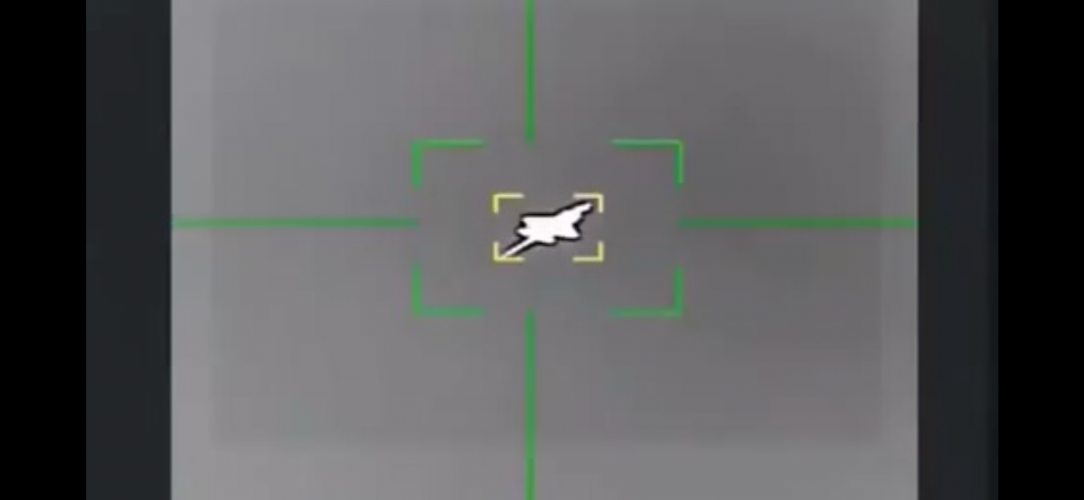
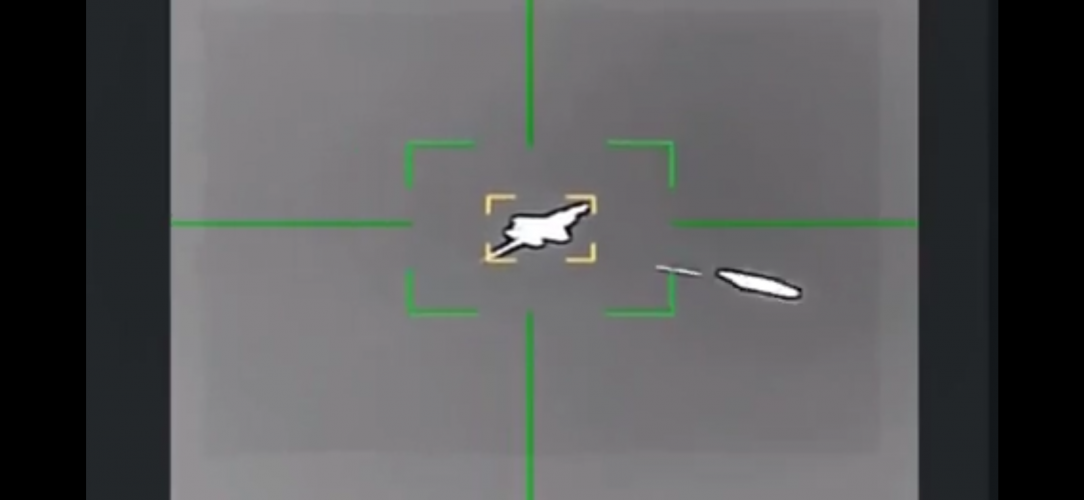
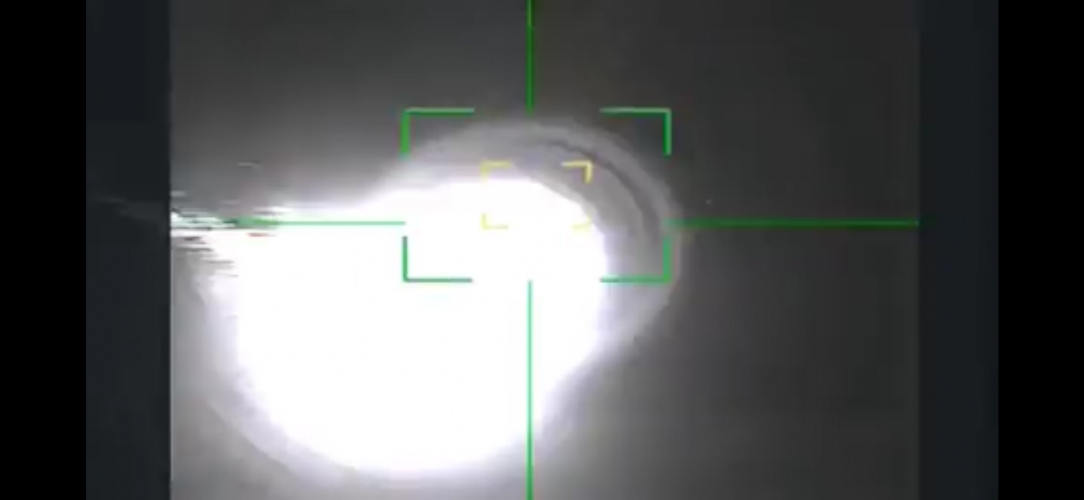
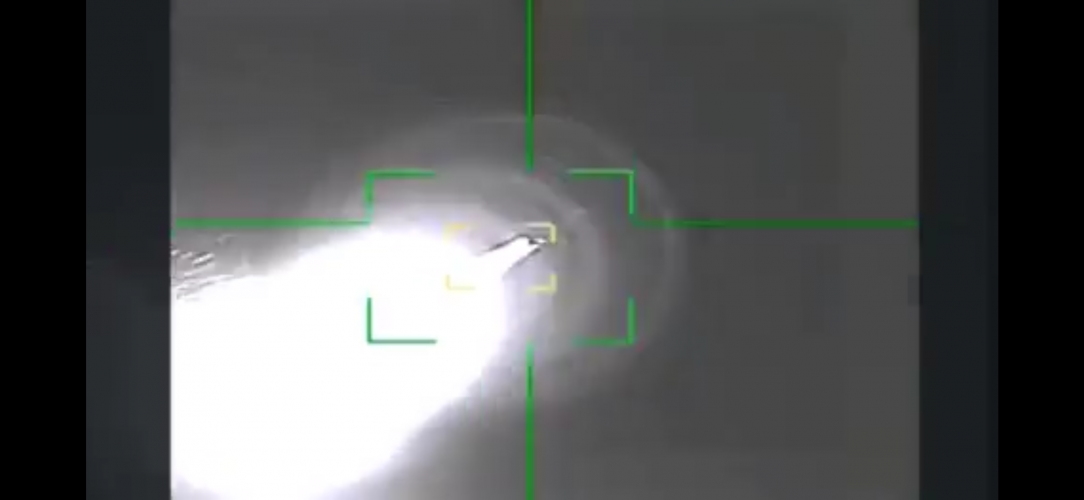
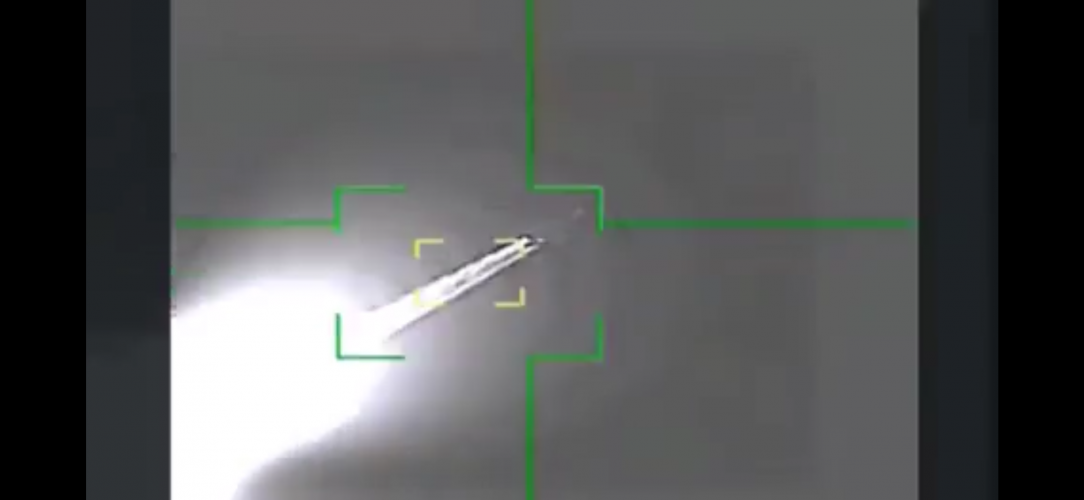
Could this tech be behind the recent Iranian strike of F-35? Asteroid tracking tech.
View: https://www.reddit.com/r/SECourses/comments/1muqn13/stealth_fighters_can_be_tracked_with_cheap/
If so, perhaps this is stealth 's final chapter
Planes can now return to being aerodynamic.
The universe has an odd sense of humor....an administration that spent more on the military and cut space spending may have lost an expensive military asset due to cheap space-related optics...the same administration hostile to green power has ironically caused more oil infrastructure to be shuttered than Al Gore.
Odd how all that works.
View: https://www.reddit.com/r/SECourses/comments/1muqn13/stealth_fighters_can_be_tracked_with_cheap/
If so, perhaps this is stealth 's final chapter
Planes can now return to being aerodynamic.
The universe has an odd sense of humor....an administration that spent more on the military and cut space spending may have lost an expensive military asset due to cheap space-related optics...the same administration hostile to green power has ironically caused more oil infrastructure to be shuttered than Al Gore.
Odd how all that works.
Last edited:
- Joined
- 6 August 2007
- Messages
- 4,374
- Reaction score
- 9,161
If so, perhaps this is stealth 's final chapter
Huh? If they’re close enough to see it’s already over.

EmoBirb
E.S.T
- Joined
- 18 January 2025
- Messages
- 2,209
- Reaction score
- 5,621
This implies that the observer has been identified/spotted. Which is never a given. A modern aircraft and modern ISR tools, be it space based or air based, are not granting omnipresence. Especially when directly operating over hostile territory, chances are combatants and non-combatants alike will notice your entrance and egress in a given area, be it with cameras, with drones, with binoculars, with satellites, with radar or the good old Eyeball Mark 1Huh? If they’re close enough to see it’s already over.
- Joined
- 6 August 2007
- Messages
- 4,374
- Reaction score
- 9,161
This implies that the observer has been identified/spotted. Which is never a given. A modern aircraft and modern ISR tools, be it space based or air based, are not granting omnipresence. Especially when directly operating over hostile territory, chances are combatants and non-combatants alike will notice your entrance and egress in a given area, be it with cameras, with drones, with binoculars, with satellites, with radar or the good old Eyeball Mark 1
It means it’s all over for the target.

Here we go again...If so, perhaps this is stealth 's final chapter
.
- Joined
- 19 February 2007
- Messages
- 1,600
- Reaction score
- 3,281
All this has happened before and it will happen again.If so, perhaps this is stealth 's final chapter
Am referring this post to the Department of Redundancy Department.

donnage99
ACCESS: Top Secret
- Joined
- 16 June 2008
- Messages
- 1,545
- Reaction score
- 1,546
The layer underneath such material can be made/shaped to be stealthy but not necessarily aerodynamic or IR friendly (air friction) or resilient had it been on the outer surface. I'd imagine these are used sporadically in very specific locations where reflection starts to behave weirdly and targeting specific range of frequenciesARES is constructed of fiberglass and Kevlar. It is “transparent” to radar, and I have seen radar diagnostic images that illustrate that the internal metal components of ARES are very visible to radar.
Nonetheless it is listed in at least one place as having made significant contributions to low observables. Why it is on this list is still an open question
- Joined
- 6 August 2007
- Messages
- 4,374
- Reaction score
- 9,161
The layer underneath such material can be made/shaped to be stealthy but not necessarily aerodynamic or IR friendly (air friction) or resilient had it been on the outer surface. I'd imagine these are used sporadically in very specific locations where reflection starts to behave weirdly and targeting specific range of frequencies
Yes, and I know of one are on (VERY CONTROVERSIAL AIRPLANE) they do that, using a "single" material that is made so that parts of the part are permissive and others reflective, more or less as you describe. Doing this on a larger scale seems to have a lot of issues though, like if you're making a reflective "endoskeleton" with a permissive "exoskeleton", you more often than not end up wondering what this bought you over just having a reflective... everything.
Anyway, you can see the SAR/ISAR RCS diagnostic image of ARES here:
All this on just one data point and using voodoo science for support.Could this tech be behind the recent Iranian strike of F-35? Asteroid tracking tech.
If so, perhaps this is stealth 's final chapter
Planes can now return to being aerodynamic.
The universe has an odd sense of humor....an administration that spent more on the military and cut space spending may have lost an expensive military asset due to cheap space-related optics...the same administration hostile to green power has ironically caused more oil infrastructure to be shuttered than Al Gore.
Odd how all that works.
But as usual it lacks facts and contains misinformation.
"The FY 2026 U.S. Space Force budget is $39.9B ($26.1B in discretionary and $13.8B in mandatory), an increase of $11.3B from the FY 2025 enacted budget."
A budget nowhere near USAF spending. I doubt Iran could reach any orbital weapon platforms, which would not need a week to sail into a theater.
Subs and stealth
View: https://m.youtube.com/watch?v=_bdmnZyp8xU&t=4s
Subs and stealth
Last edited:
That would wrong. Not the USAF's fault. Space Force has taken over programs, operations and budgets from Army and Navy and other government agencies. That is one of the reasons it is higher. Also an administration and congress willing to fund military space.A budget nowhere near USAF spending.
What orbital platforms?I doubt Iran could reach any orbital weapon platforms, which would not need a week to sail into a theater.
All new technologies have a certain useful life until countermeasures manage to nullify them.
What Publiusr says makes a lot of sense: the precision techniques developed for the detection of asteroids are based on the discrimination of almost invisible dark objects moving against the black background of space at distances millions of times greater than the distance of four hundred kilometers between a satellite and a stealth aircraft.
From what I understand of this technique, the system is based on detecting motion with respect to other fixed objects such as distant stars and it would be relatively easy to reprogram it to detect the motion of an airplane with respect to the details of the terrain below it.
If this technology is combined with that of infrared detectors capable of detecting objects a hundred light-years away, it would be possible to obtain enough data for automatic interception.
And if it is possible to do so, it is hardly credible that it has not already been done.
https://en.wikipedia.org/wiki/Asteroid_Terrestrial-impact_Last_Alert_System
https://en.wikipedia.org/wiki/NEO_Surveyor
https://en.wikipedia.org/wiki/Infrared_astronomy
https://science.nasa.gov/mission/webb/science-overview/science-explainers/infrared-astronomy/
https://www.esa.int/Science_Exploration/Space_Science/Herschel/The_infrared_explorers
What Publiusr says makes a lot of sense: the precision techniques developed for the detection of asteroids are based on the discrimination of almost invisible dark objects moving against the black background of space at distances millions of times greater than the distance of four hundred kilometers between a satellite and a stealth aircraft.
From what I understand of this technique, the system is based on detecting motion with respect to other fixed objects such as distant stars and it would be relatively easy to reprogram it to detect the motion of an airplane with respect to the details of the terrain below it.
If this technology is combined with that of infrared detectors capable of detecting objects a hundred light-years away, it would be possible to obtain enough data for automatic interception.
And if it is possible to do so, it is hardly credible that it has not already been done.
https://en.wikipedia.org/wiki/Asteroid_Terrestrial-impact_Last_Alert_System
https://en.wikipedia.org/wiki/NEO_Surveyor
https://en.wikipedia.org/wiki/Infrared_astronomy
https://science.nasa.gov/mission/webb/science-overview/science-explainers/infrared-astronomy/
https://www.esa.int/Science_Exploration/Space_Science/Herschel/The_infrared_explorers
Attachments



Last edited:

topspeed3
ACCESS: Secret
- Joined
- 31 January 2011
- Messages
- 481
- Reaction score
- 258
So Persian tactics in 53 BC are not relevant ?In my opinion this thread is dedicated exclusively to stealth techniques developed from the sixties. Invisibility techniques in the visible and infrared optical spectrum and radar-absorbing materials developed by the Germans during the two World Wars have no place here.
topspeed3
ACCESS: Secret
- Joined
- 31 January 2011
- Messages
- 481
- Reaction score
- 258
Reynolds used stealth tactics when attacking Brenner Pass in between Italy and Germany during WW2.
View: https://www.youtube.com/watch?v=jAihecVpVFI
- Joined
- 27 December 2005
- Messages
- 18,713
- Reaction score
- 33,033
Reynolds used stealth tactics when attacking Brenner Pass in between Italy and Germany during WW2.
View: https://www.youtube.com/watch?v=jAihecVpVFI
Dubious sources are dubious. Its just "content" for clicks, probably assembled by AI.Disclaimer: These stories are narrative retellings. While based on real events, elements are dramatized for storytelling and are not guaranteed to be historically accurate.For strictly academic verification, please consult professional historians and primary sources.
A continuous arrow resupply via camel train???So Persian tactics in 53 BC are not relevant ?
topspeed3
ACCESS: Secret
- Joined
- 31 January 2011
- Messages
- 481
- Reaction score
- 258
Dubious sources are dubious. Its just "content" for clicks, probably assembled by AI.
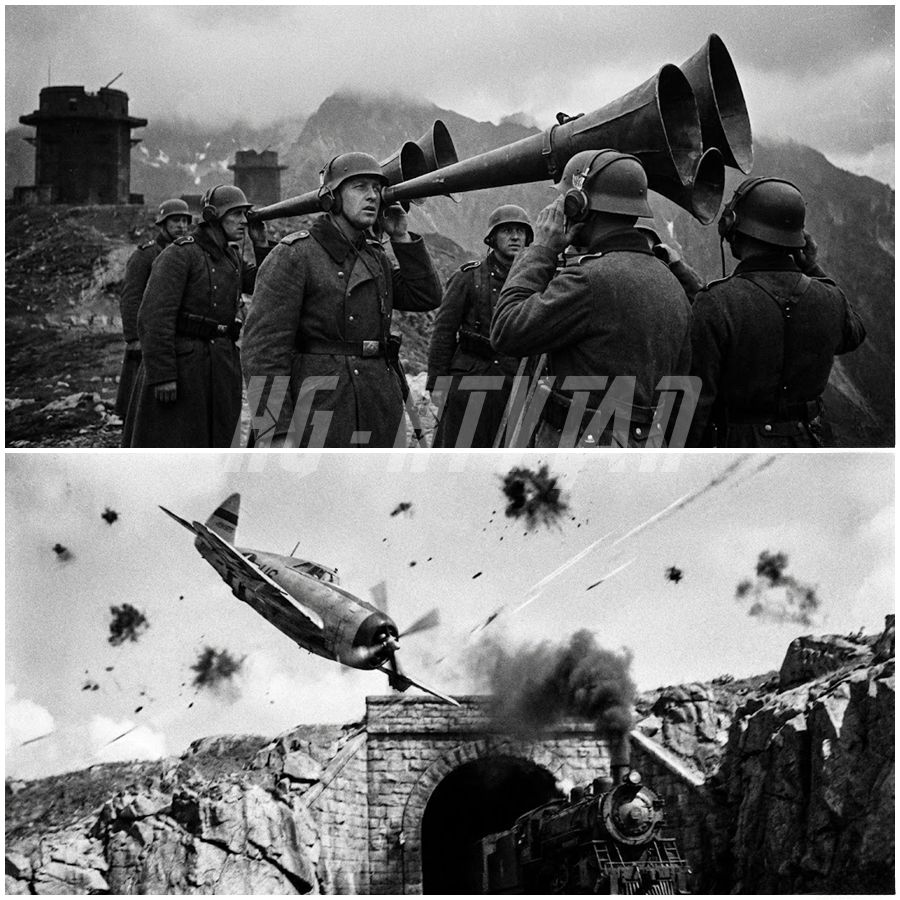
He Cut His Engine At 12,000 Feet — And Dropped A Bomb Inside The Tunnel. - Family Stories
At 9 in the morning on August 22nd, 1944, the most dangerous sound in the Italian Alps was silence. High above the Brener Pass, a single American...
usquicknews1.com
Similar threads
-
W“Invisible” Aircraft (Stealth: The Early Years)
- Started by Wingknut
- Replies: 96
-

-

-
How small can low observable (stealth) combat aircraft designs get?
- Started by helmutkohl
- Replies: 126
-
