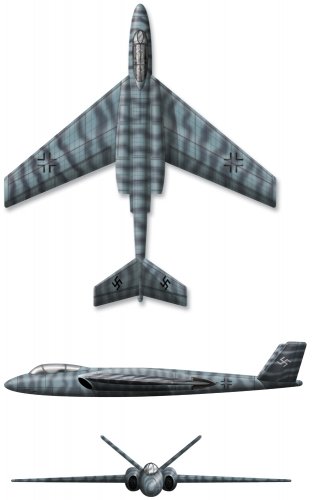
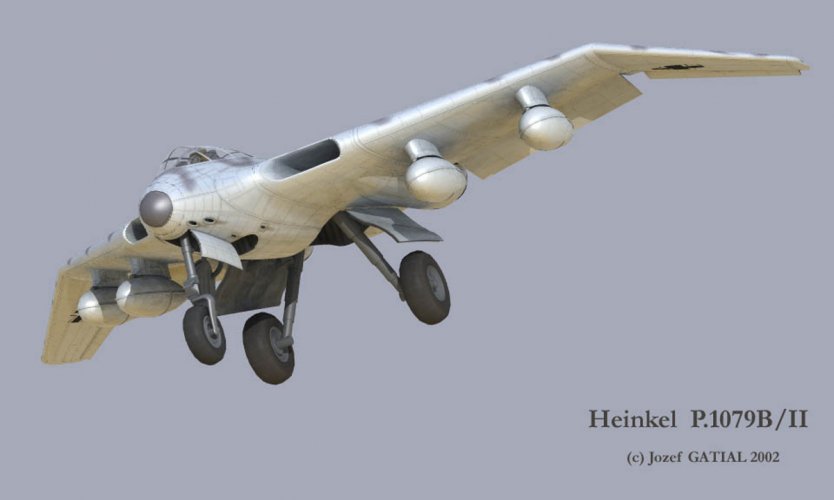
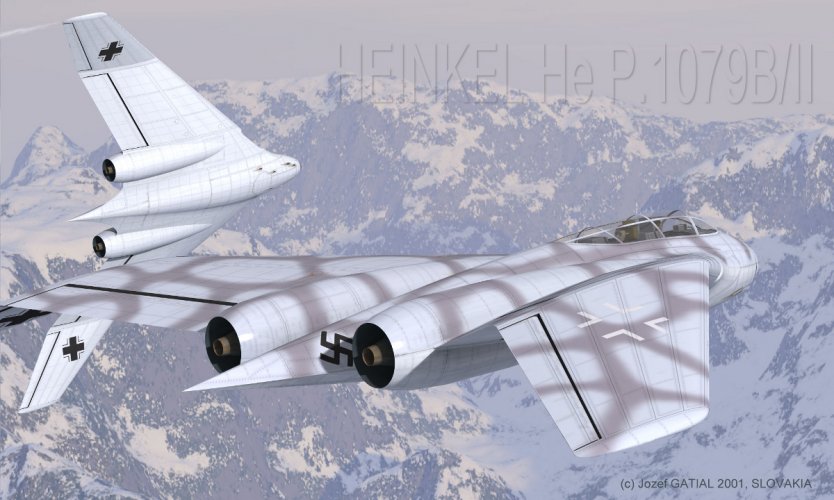
Heinkel He/P1079

Flitzer

ACCESS: Top Secret
Senior Member
Joined
28 October 2006
Messages
1,004
Reaction score
139
Hi all,
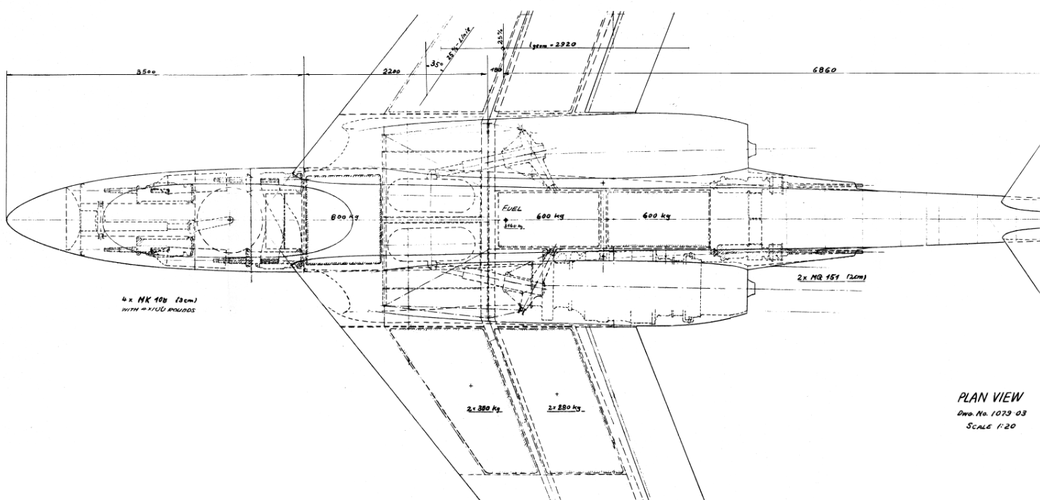
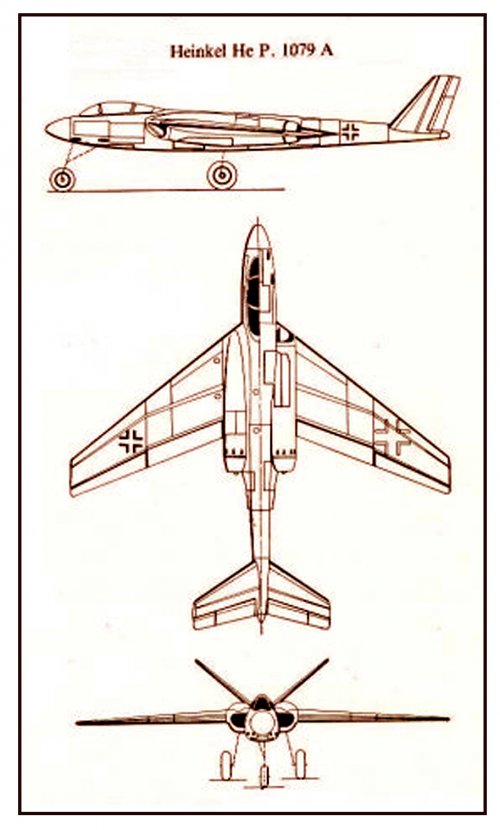
many refs state that the He 1079 would have had 6 machine guns/cannons; 4 firing forward, housed under the cockpit/nose. The remaining 2 were to have been rearward firing, but I can't work out where and how they might have been positioned and housed. The fuselage is very slim.

Any suggestions would be gratefully received.

Many thanks
P
 
nice solution, but is this usability ?
I mean the machine guns barrels gonna hang in the hot exhaust from jet engines...
 
Ah, then my eyes weren't fooled ?
In german bombers such fixed weapons were called "Abschreckwaffen" (scaring weapons),
just intended to throw an attacker from the rear off his firing position. What purpose could
they have had in a night fighter, which would have been much faster, than his enemies ?
For a new attack profile, firing while overshooting ? Or were the Heinkel designers aware of
the Gloster Meteor NF-series ? ;)
 
Jemiba said:
Ah, then my eyes weren't fooled ?
In german bombers such fixed weapons were called "Abschreckwaffen" (scaring weapons),
just intended to throw an attacker from the rear off his firing position. What purpose could
they have had in a night fighter, which would have been much faster, than his enemies ?
For a new attack profile, firing while overshooting ? Or were the Heinkel designers aware of
the Gloster Meteor NF-series ? ;)

IMHO were two considerations:
1. overshoot the target during attack and fire with back guns, because higher speeds
2. "Hey, if we build Jet Fighter, the British and Americans can also build them"...
 
Many thanks Orionblamblam
Spot on. Exactly what I was looking for.

And to all. Interesting.


A progress pic attached.
Thank you
Peter
 

Attachments

  • HeP1079A1.jpg
    HeP1079A1.jpg
    192 KB · Views: 353
Hi all,
many refs state that the He 1079 would have had 6 machine guns/cannons; 4 firing forward, housed under the cockpit/nose. The remaining 2 were to have been rearward firing, but I can't work out where and how they might have been positioned and housed. The fuselage is very slim.

Any suggestions would be gratefully received.

Many thanks
P
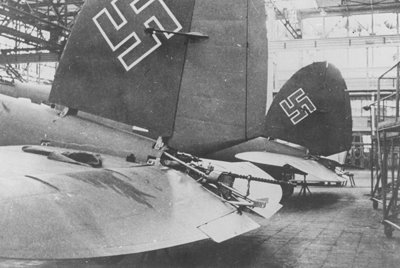
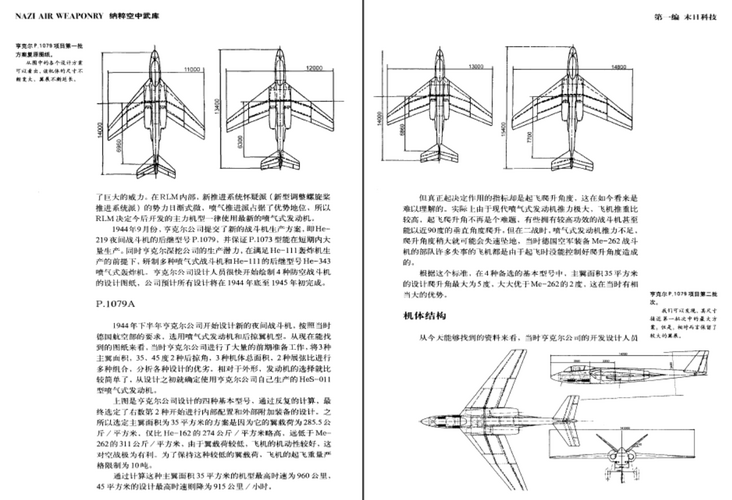
The P.1079 project actually would have had four MK 108 cannons in the nose. Drawings of the P.1079 (https://www.secretprojects.co.uk/threads/heinkel-p1079-diagrams.9112/) do not show any guns in the tail. The Jumo 004B-powered version of the P.1079B-1 had three MK 108 cannons. Therefore, the P.1079 had four cannons, not six.
 
On p286 of my book Secret Projects of the Luftwaffe Volume 1: Jet Fighters 1939-1945, there's a scrap of a drawing I found at the Imperial War Museum which suggests that the wartime design of the P 1079 had the rear-firing MG 151s outboard of the engines, in the wings. It seems as though when Guenter and co. were recreating their work for the Americans at Penzing in June-July 1945, they took the opportunity to improve their designs a little, moving the MG 151s to the position shown in the drawing in post #9.
 
From, Nazi Air Weaponry (Super Weapons in Secret Archives)
 

Attachments

  • 22.png
    22.png
    520.2 KB · Views: 184
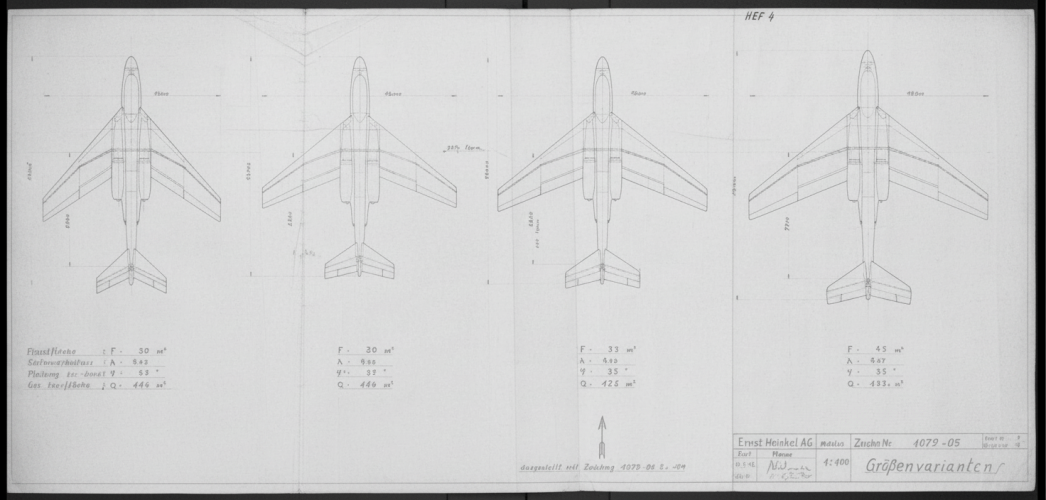
Oh and here is a few unseen wing angle variations
Very interesting, mein freund!


Might you happen to have this document in higher resolution, and may I ask where it originates from? Very nice find, should you have more, do share please!
 
I got the doc scan from Deutsches Museum and that is the high quality scan sadly
I have a 42 page pdf if your interested
I think we would all be interested to see it. Assuming of course there's no copyrights to it, which there probably aren't I would assume.
 
Opens well for me, you might want to refresh the page. Truly a treasure trove of information, I'll try to turn this into a model whenever I find the time. Once again, many thanks!
 
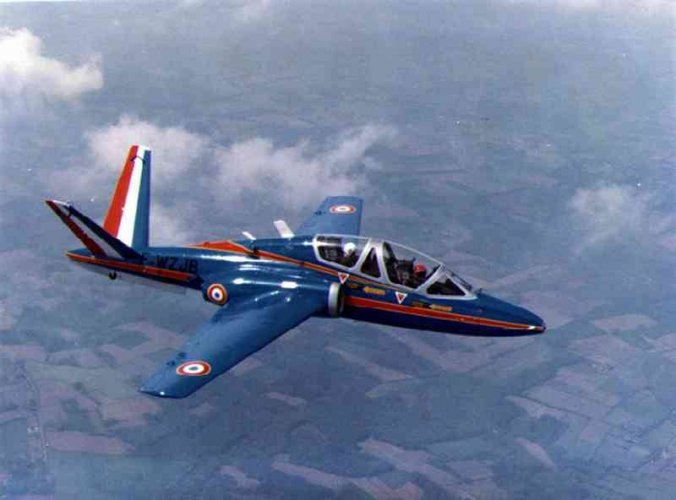
There is an eerie resemblance with the much later concepts for follow-on to the Fouga CM-170 Magister:
Fouga CM-173 Magister 90 aka Super-Magister 2x Marboré VI F.jpg
 
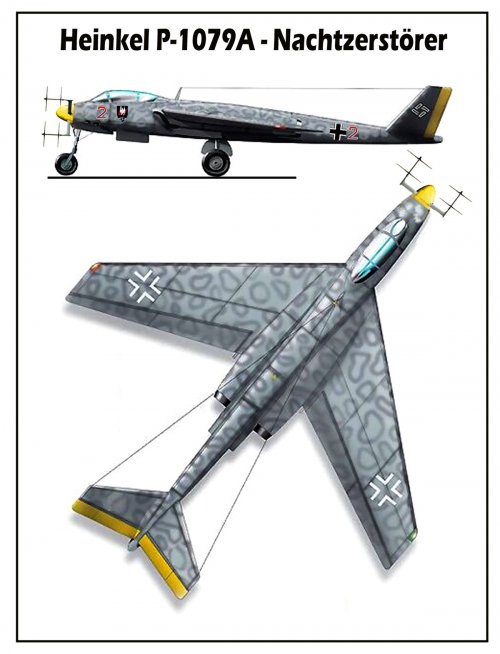
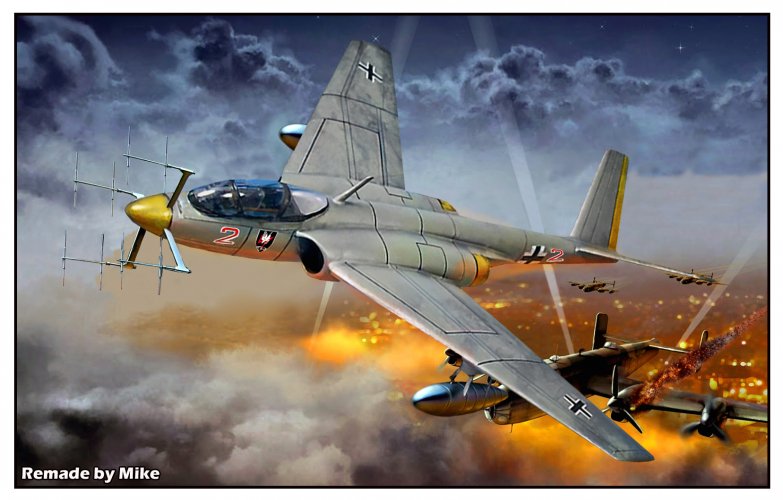
Hi! He P,1079A.

!All-weather fighter Heinkel He P.1079

The Heinkel He P.1079 was an all-weather V-tail fighter designed by Heinkel Flugzeugwerke in the late stages of World War II.

In 1945, the German Air Ministry requested new designs for a new generation of jet fighters, such as the Horten Ho 229 and Focke-Wulf Ta 183. One such design was the Heinkel He P.1079. The first variant, known as the P.1079A, was a night fighter with a V-tail and 35-degree swept wings. The second and third variants featured vertical tailfins, which replaced the P.1079A's V-tail. The P.1079.B2 was a completely tailless flying wing. None of the three designs were ever built, and development ceased at the end of World War II.

Variants:
He P.1079A – The original design with 35-degree swept wings and a V-tail. It was intended to be powered by Heinkel HeS 011 turbojet engines.
He P.1079B – The second variant, had a vertical tail and gull wings. It was a single-seat, all-weather heavy fighter with the same engines as the P.1079A.
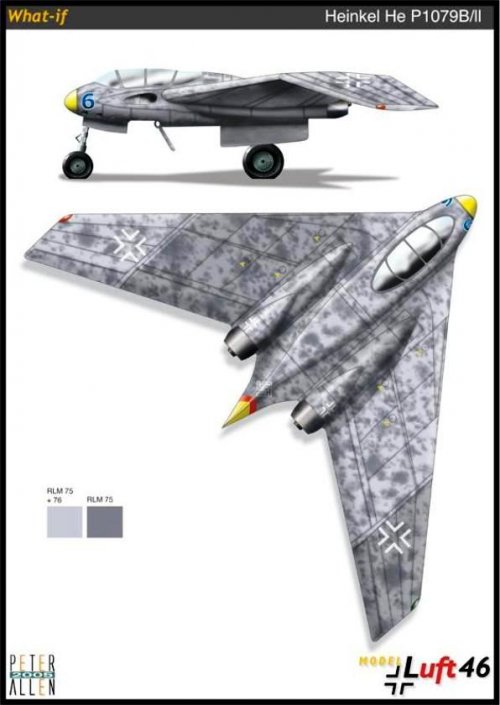
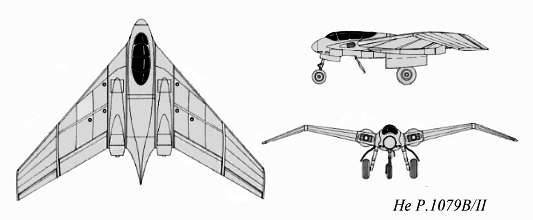
He P.1079B-2 (Entwurf II) – The final variant of the He P.1079 in a tailless version. This variant could accommodate six fuel tanks in the wings.

Crew: 2
Length: 14.25 m
Wingspan: 13 m
Height: 3.9 m
Powerplant: 2 × Heinkel HeS 011 turbojet engines, 12.74 kN thrust each
Maximum speed: 950 km/h
Armament: 4×30 mm MK108 cannons – a pair in the nose and one in each wing"


Attachments

  • 1079A 2.jpg
    1079A 2.jpg
    370 KB · Views: 26
  • 1079A.jpg
    1079A.jpg
    397.7 KB · Views: 26
  • He P.1079A.jpg
    He P.1079A.jpg
    809.7 KB · Views: 24
Last edited:
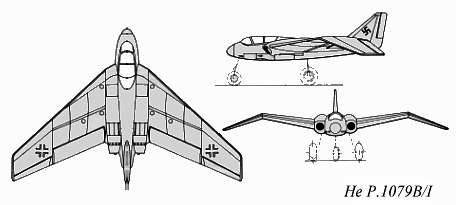
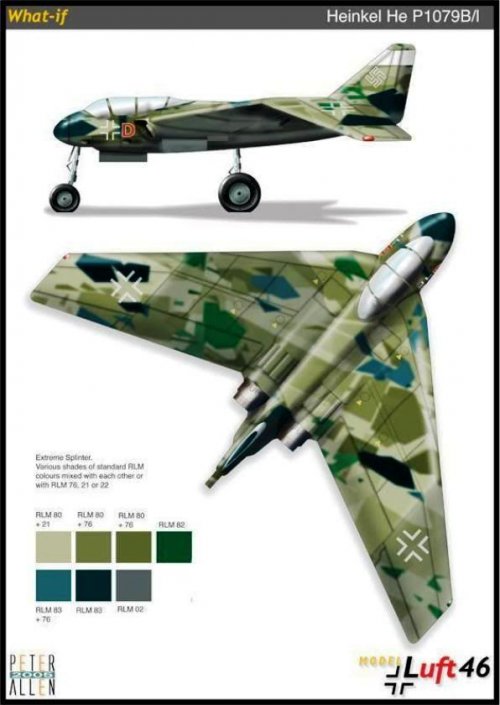
Hi! He P.1079B.
 

Attachments

  • heinkel_he_p_1079_bi_dibujo.jpg
    heinkel_he_p_1079_bi_dibujo.jpg
    13 KB · Views: 22
  • heinkel_he_p_1079_bi_siete.jpg
    heinkel_he_p_1079_bi_siete.jpg
    48 KB · Views: 21
Last edited:

Similar threads

Back
Top Bottom