The Luftwaffe’s night fighter serviceability rate was low (60 to 40 per cent) throughout the war.
By 1942 the Soviets began using obsolete wood-and-canvas biplanes Polikarpov R-5 and Polikarpov U-2 LNB, from 588th Night Bomber Regiment, to conduct night harassment missions against the German railways, fortifications, warehouses, fuel depots, armored vehicles and Flak searchlights.
The cruising speed of these airplanes was lower than the stalling speed of the Luftwaffe’s Messerschmitt Bf 109 and Focke-Wulf Fw 190 day fighters. It was necessary to train the crews of some Junkers Ju 87 D-5 and Ju 88 A-4 dive bombers to adapt to the low speed of the intruders using their dive brakes.
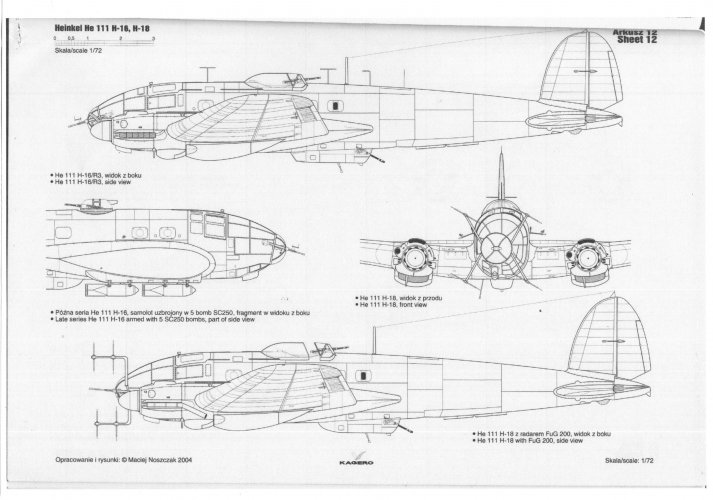
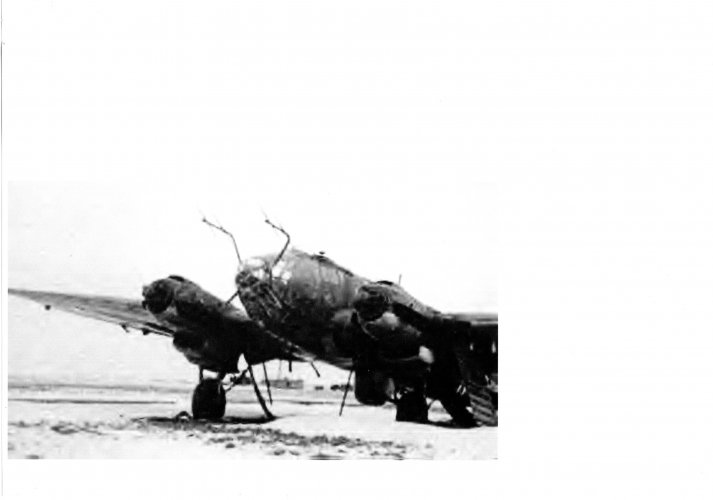
The Germans never had enough night fighters to defend the Reich, in the East Front it had to improvise using some Dornier Do 17 P, Heinkel He 111 P, He 111 H-3, He 111 H-6, Junkers Ju 88 A-4, Junkers Ju 87 D and Focke-Wulf Fw 58 bombers hastily modified as ‘night fighters’ during the summer of 1942.
In October several bomber and transport crews were transferred to NJG 101 and NJG 102 in Wiener Neustadt for night fighting training. And four Behefelskampstaffeln were created, the first German units specialized in night harassment combat.
In November they changed their name to Störkampfgruppen and were reformed as:
-St.KG/Luftflotte 1.
-St.KG/Luftkommando Don.
-St.KG/Luftkommando Ost.
In March 1943 they were re-named as:
-St.KG/Luftflotte 1.
-St.KG/Luftflotte 4.
-St.KG/Luftflotte 6.
By April 1943 the Luftwaffe had fourteen Nachtschlachtgruppen (Nos. 1, 2, 3, 4, 5, 6, 7, 8, 9, 10, 11, 12, 20 and 30) that were still in front-line service in May 1945.
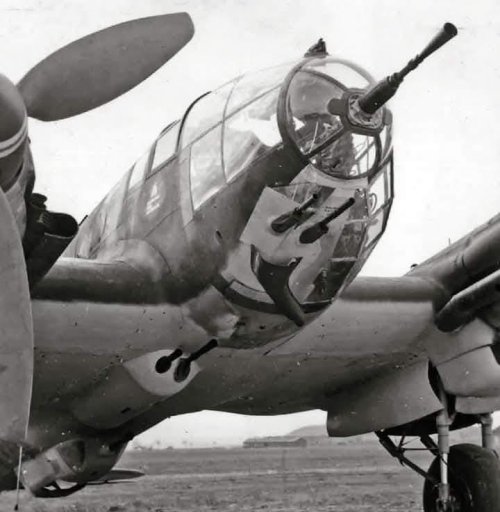
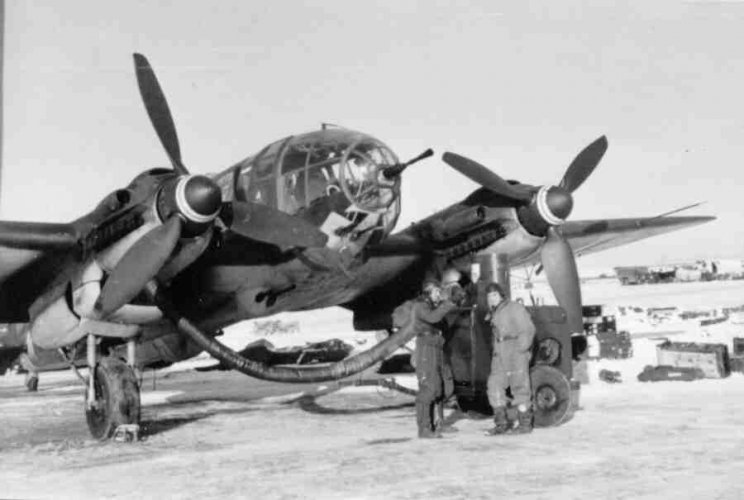
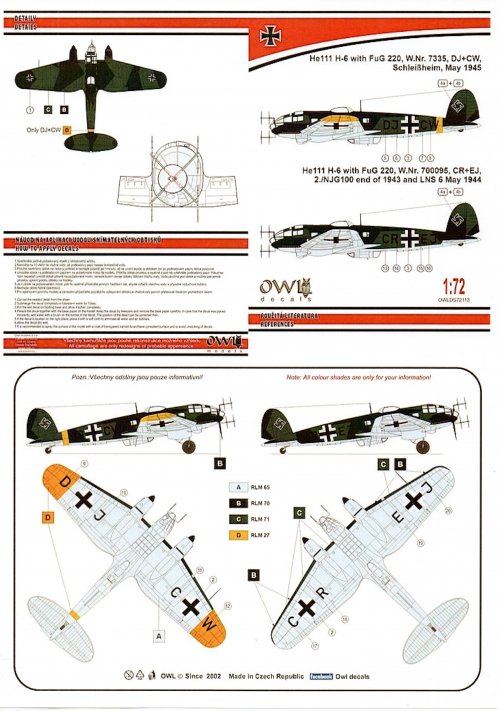
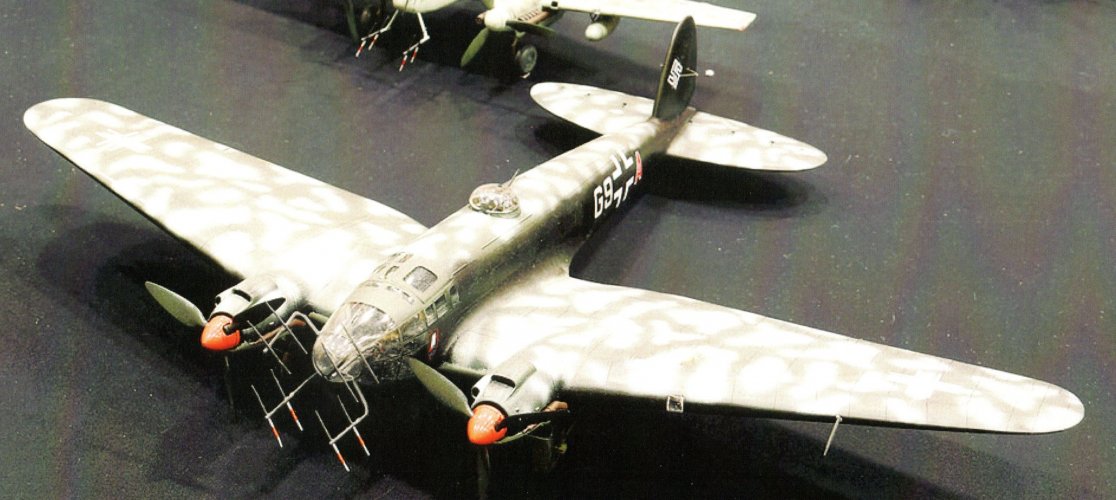
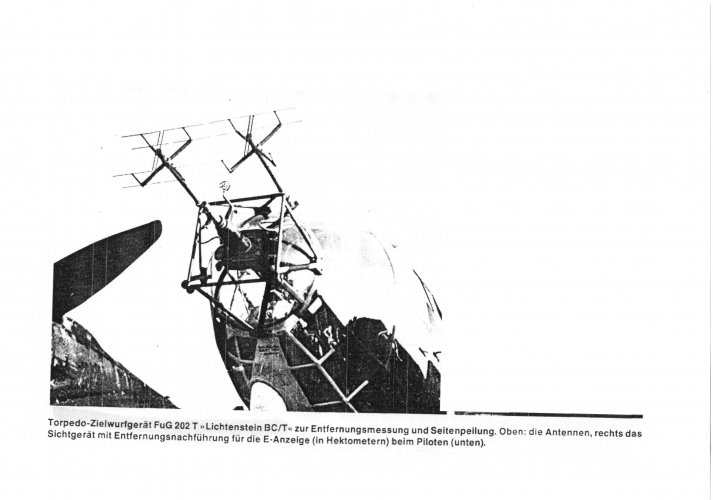
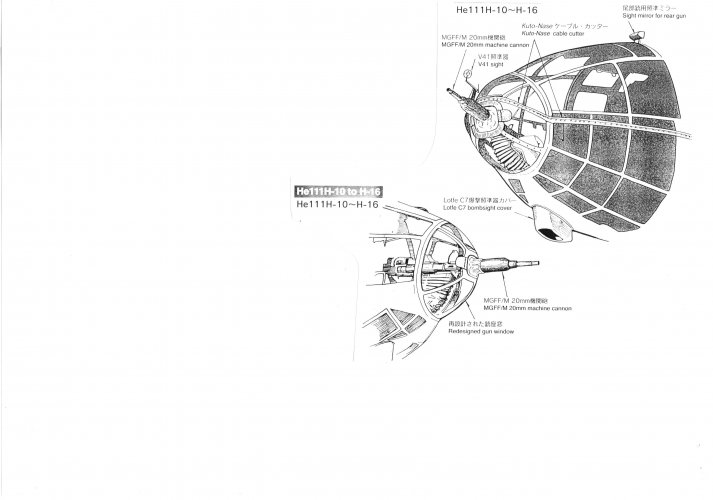
To combat the night attacks of the Kuriers (incoming Soviet medium bombers) Ilyushin DB-3/3F, North American B-25, Douglas A-20 and Tupolev SB-2, the Germans modified several Heinkel He 111s from KG 55 with a solid nose housing four 20-mm MG FF cannons.
To hunt the Polikarpov Po-2 and R-5 night harassment biplanes the Junkers Ju 87D-5 and Ju 88 transformed night fighters used their dive brakes to adapt to the low speed of the intruders. They flew also dawn and dusk patrols.
In 1943 one Fw 58 B-2 (2N+HV) and three Fw 58 C light bombers (D3+AH, D3+BH and D3+CH) were used as night fighters by the I./NJG 100 Nachtjägergeschwader, 10./ZG1, 12./ZG1 Zerstorergeschwadern, 1./NSGr.2, 3./NSGr.2, 2./NSGr.3 and NSGr.11 Nachtschlachtgruppen (night ground attack groups) and 1./St.KG/Luftflotte 6 Störkampfgruppe. These airplanes were fitted with exhausts flame dampers and armed with one MG 131 machine gun in their solid noses.
During the spring of 1944, one Fw 58 G-1 from was used by the I./NJG 100 (code W7) against the Polikarpov night intruders, fitted with one FuG 212 Lichtenstein C-1 AI radar. The modification comprised one 15-mm MG 151/15 or one 20-mm MG 151/20 mounted in Schräge Musik configuration, exhaust flame dampers, Peil G.IV direction finder device, Revi C/12B gunsight, FuBl2, FuG 17 R/T and FuG 25a IFF.
At least one Fw 58 B was used for AI radar operators training, fitted with one FuG 218 V/R and its Matrazte antenna mounted in the glazed nose.
The Fw 58 standard paint scheme was RLM70/71 ‘splinter’ upper surfaces over sprayed with Wintertarnung, a temporary washable winter camouflage of ‘Whitewash’ paint, RLM 65 under surfaces, RLM 22 codes and RLM 04 Gelb (Yellow FS 23538) East Front identification markings.
The winter camouflage was usually applied over the upper surfaces only, with codes and Yellow theatre bands repainted.
Some Fw 58 Cs from the Luftdienst-Kommando 65 had the upper surfaces still painted in RLM 02 Grau (Grey FS 3615) from the flying school with RLM 22 undersurfaces.
In the East Front the night fighters were vectored by nine rail-mounted Eisenbahn-Nachtjagd radar stations.
In September 1944 the 80 per cent of the available fighters were based at Germany.
By 1945 about 300 Ju 87 D-3 and D-5 dive bombers were transformed into D-7 and D-8 night intruders/night fighters (without dive-brakes) and used by the 1./NSGr.1, 1./NSGr.9, 1./NSGr.10, 3./NSGr.1 Nachtschlachtgruppen by the NJG 100 night fighter unit and by the experimental squadron Sonderstaffel Gamringer. Its night equipment comprised FuG 101 radio-altimeter, FuG 25 IFF, Peil G.IV direction/finder device, night flame dampers, ultra-violet illumination for the instruments panel, Revi C/12 B Nachtrevi gunsight, two wing mounted 20-mm MG 151 cannons with flash muzzles and one dorsal rear-firing 7.92-mm MG 81Z machine gun.
The Ju 87 D-7 and D-8 paint scheme was: mottled pattern in RLM 76 Lichtblau (Light Blue FS 36473) over the traditional ‘splinter’ RLM 70 Schwarzgrün (Black-Green FS 34050)/RLM71 Dunkelgrün (Dark Green FS 34079) upper surfaces and RLM 22 Schwarz (Satin Black FS 37038) undersurfaces.
In 1943, thirty Focke-Wulf Fw 189 A-4 reconnaissance airplanes were converted into night harassment light bombers, fitted with special night equipment and two ETC 50/VIIId underwings bomb racks.
Between 1943 and 1944, these planes were used by the 2./NSGr.4 (code 1k), NSGr.5 (code M9) and NSGr.10 (code 5B) groups against Soviet partisans, supply dumps, base camps and Po-2s airfields.
The Fw 189 A-4 was armed with two wing mounted 20-mm MG FF cannons and four SC50 bombs (with ‘Jericho Trumpets’ whistles) or four Abwurfbehälter AB-23 containers housing 23 x SD-2 anti-personnel bomblets.
During the spring of 1944, eight Fw 189 A-1 and A-4 reconnaissance airplanes were converted into Behelfsnachtjägern (auxiliary night fighters). The modification comprised one 15-mm MG 151/15 or one 20-mm MG 151/20 mounted in Schräge Musik configuration, exhaust flame dampers, Peil G.IV direction finder device, two Revi C/12B gunsights (forward and oblique firing), FuG 17 R/T and FuG 25a IFF.
These airplanes (coded W7+DB, W7+CB, W7+EB, W7+LB, W7+MB, W7+NL, W7+WM and W7+UH) were used by the I./NJG 100 and II./NJG 5 against the Polikarpov night intruders.
The W7+WM was fitted with one FuG 212 Lichtenstein C-1 AI radar.
The paint scheme was RLM70/71 ‘splinter’ over sprayed with mottles of RLM 77 upper surfaces, RLM 65 under surfaces, RLM 22 codes with Green individual letter outlined in RLM 77 and RLM 04 Gelb (Yellow FS 23538) East Front identification markings.