Re: Supersonic HP Victor
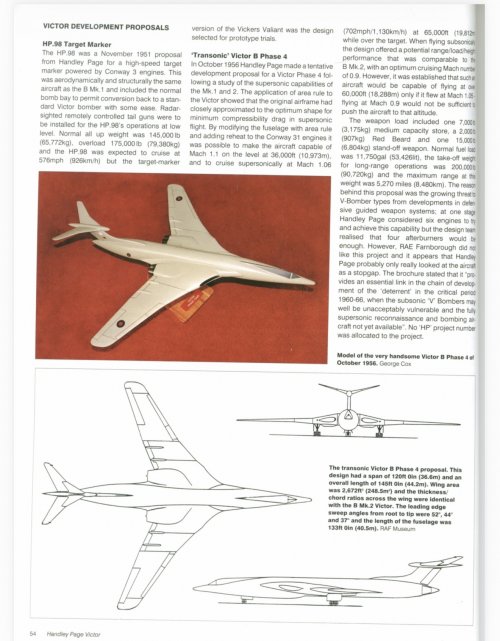
Snippet from Victor B Phase 4 brochure
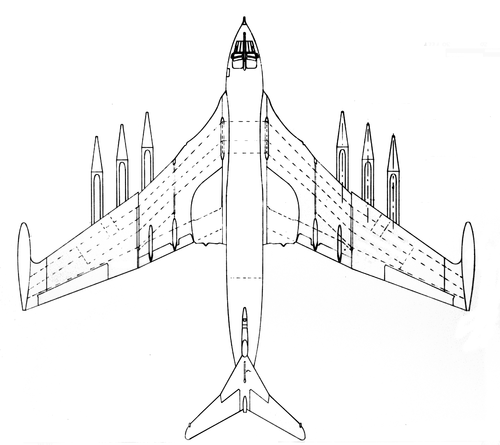
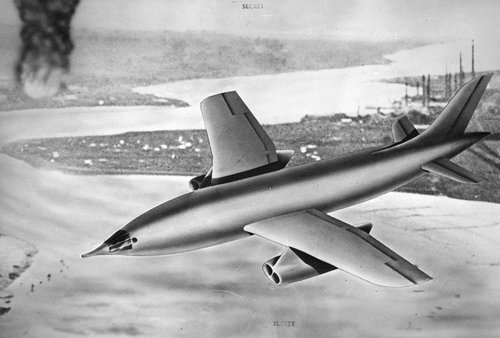
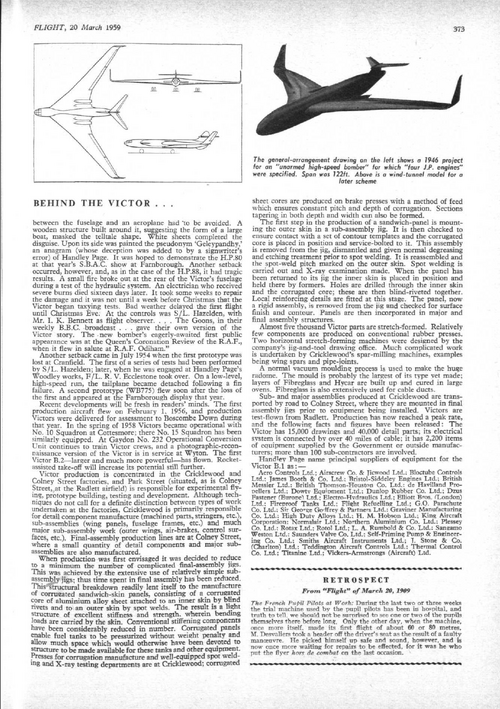
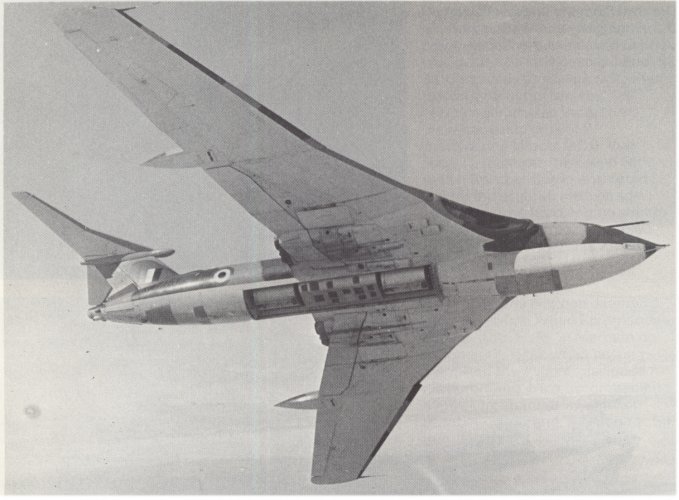
The Victor Phase 4 development proposal results from a study of the supersonic capabilities of the Victor B. Mk 1and 2 aircraft.
Application of the area rule to the Victor shows that it closely approximates to the optimum shape for minimum compressibility drag in supersonic flight. The supersonic Victor is derived by the simple expedient of modifying the fuselage shape and employing engine reheat.
An intensive supersonic wind tunnel testing programme is proposed to check the aerodynamic assumptions underlying this study together with flight tests on Victor B Mk 1.
Supersonically the Phase 4 cruises at 65,000ft over the target, whilst subsonically it has a range/load/height performance comparable with that of the B. Mk.2 with a optimum cruising Mach number of 0.9 (515 Knots, T.A.S.).
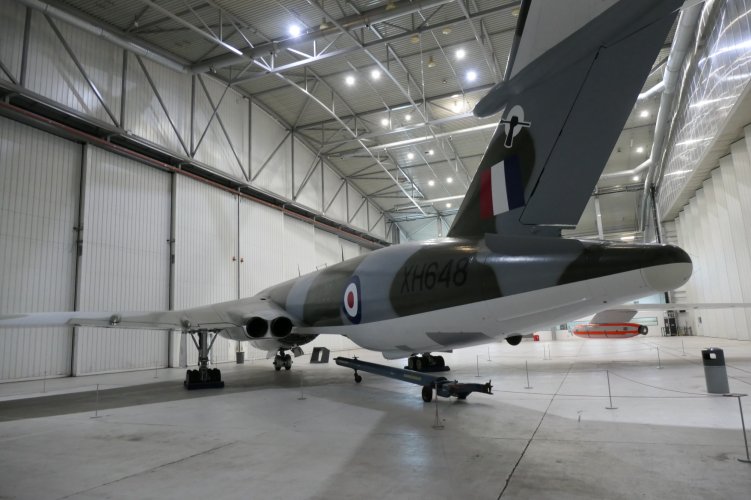
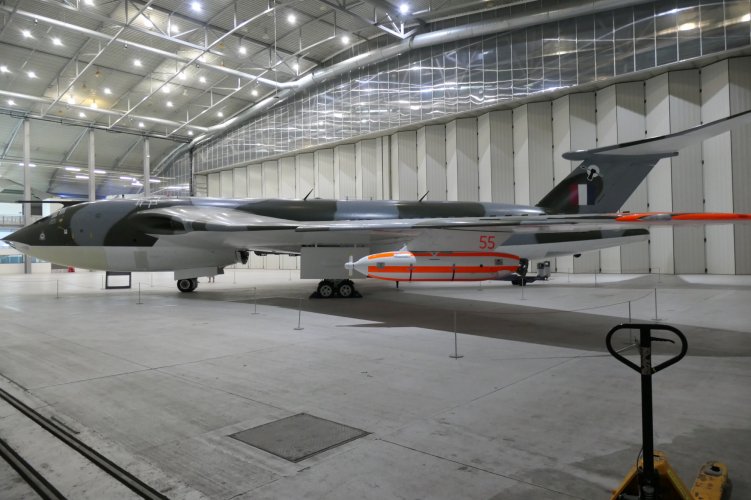
The development utilises existing B. Mk.2. Wings and tail unit, with a redesigned (area rule) fuselage. The Rolls Royce Conway 31 engines are fitted with afterburners.
High energy fuels, when available, can be used relatively simply in the afterburners and increase still further the “supersonic spurt” ranges.
“Supersonic spurt” over target = Boron!