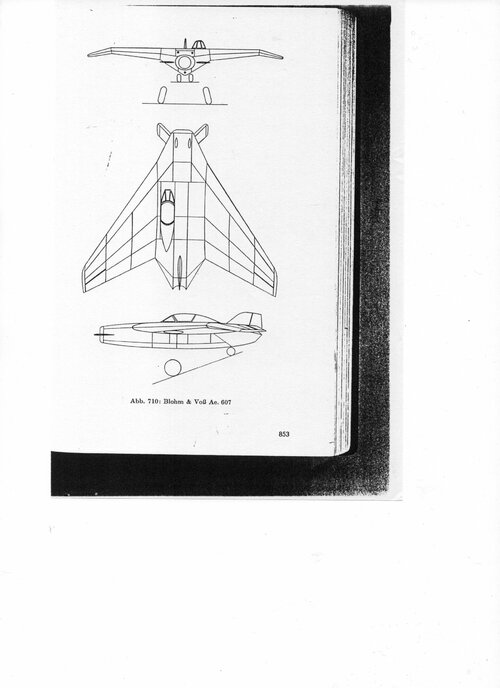
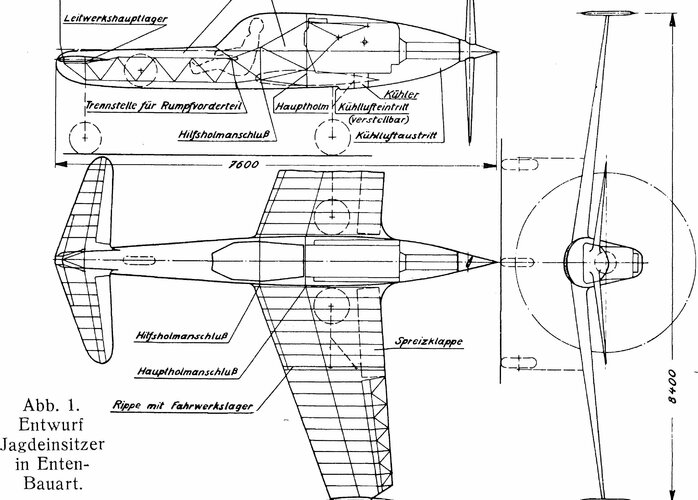
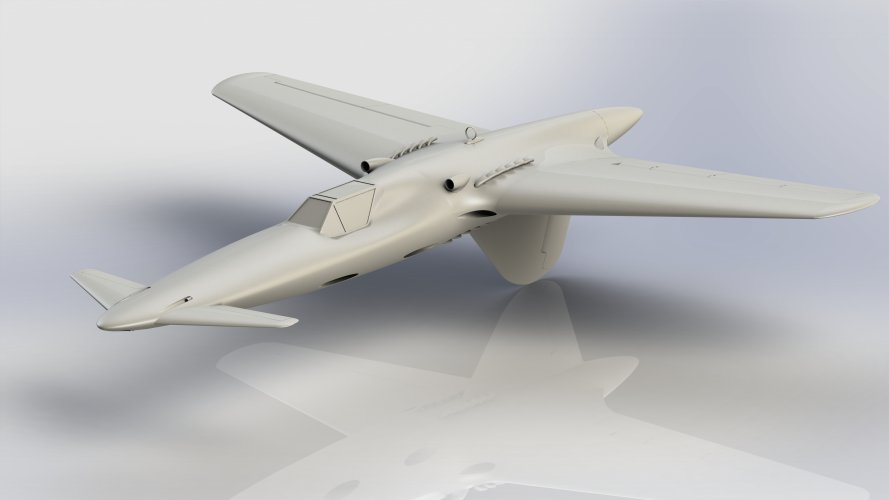
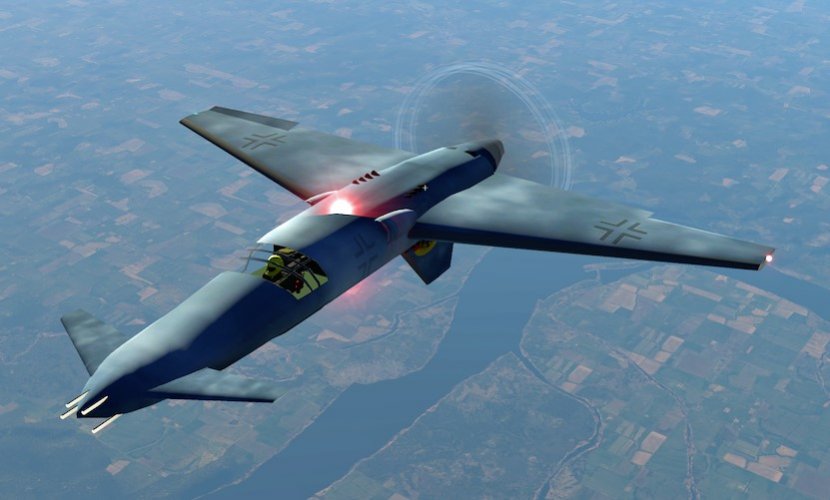
Rutan's first unusual design was the Vari-Viggen, a delta-wing canard like the Swedish fast jet from SAAB that inspired it. Canards have been around since the American Wright brothers. The swept-wing canard was included in British patent No 26441 by British pioneer JW Dunne and granted in 1910, and first appeared in the flesh (to my knowledge) in the Italian Ambrosini SS.4 of 1939. The German WWII work was widely circulated during the late 1940s, but had been assimilated and all but forgotten by the time Rutan's generation came along. SAAB developed the idea of close-coupling the canard to the wing, in order to obtain a positive interaction between them. None of the projects documented by Frost do this.Rutan may have been inspired by this, perhaps?
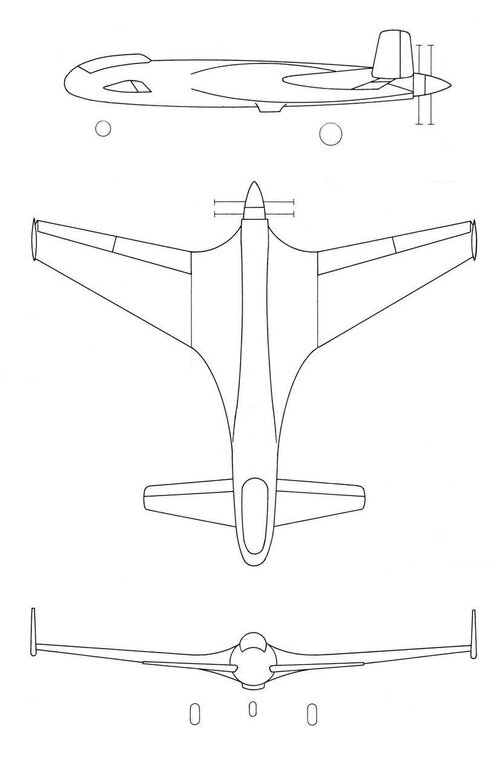
A mistery project to me, published in 1941, Flugsport magazine, heft 26-8. A fighter, with a DB 601. Maybe stemmed from a TH rather than an aircraft company.
that is the Skoda-Kauba V-7A mistery project to me, published in 1941, Flugsport magazine, heft 26-8. A fighter, with a DB 601. Maybe stemmed from a TH rather than an aircraft company.
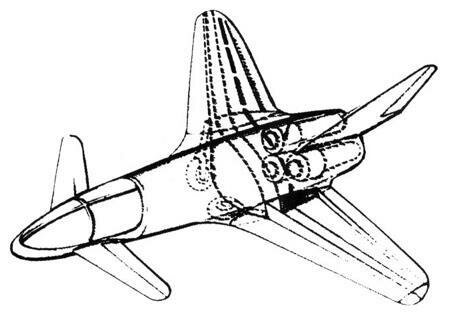
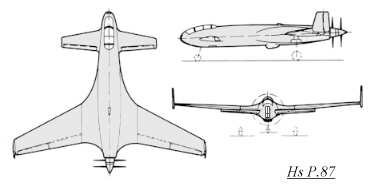
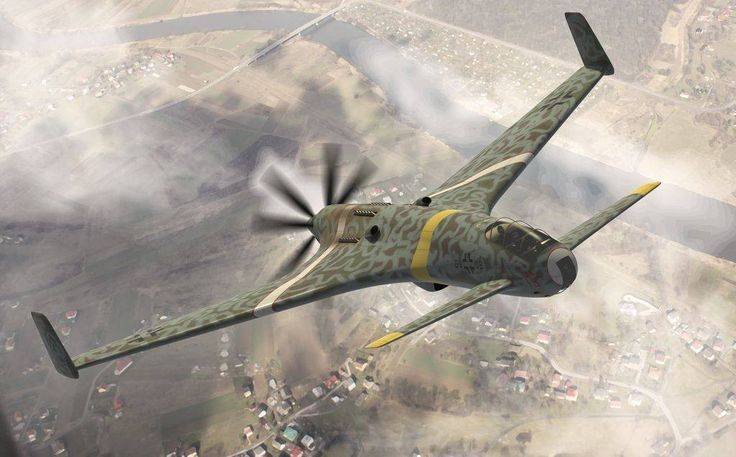
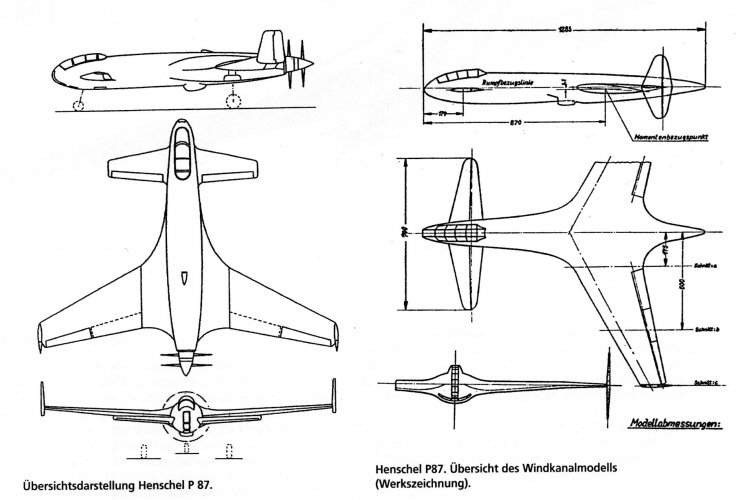
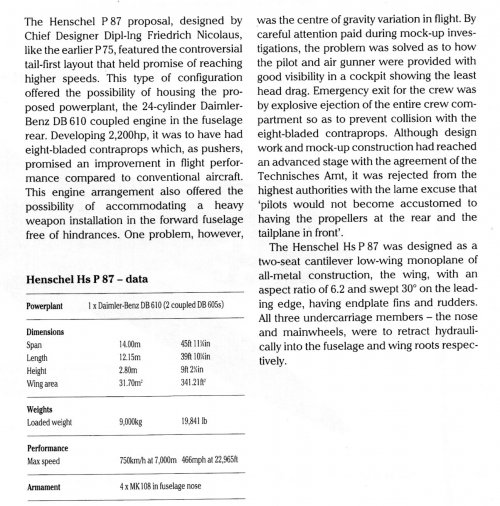
It is Henschel P 87 drawing board bomber.Where and when does this originate? (rhetorical question, but have a guess before looking down).
View attachment 675535
Answer: Henschel, 1942.
Günter Frost of the ADL has written a two-part monograph on early German canards (or "ente"):
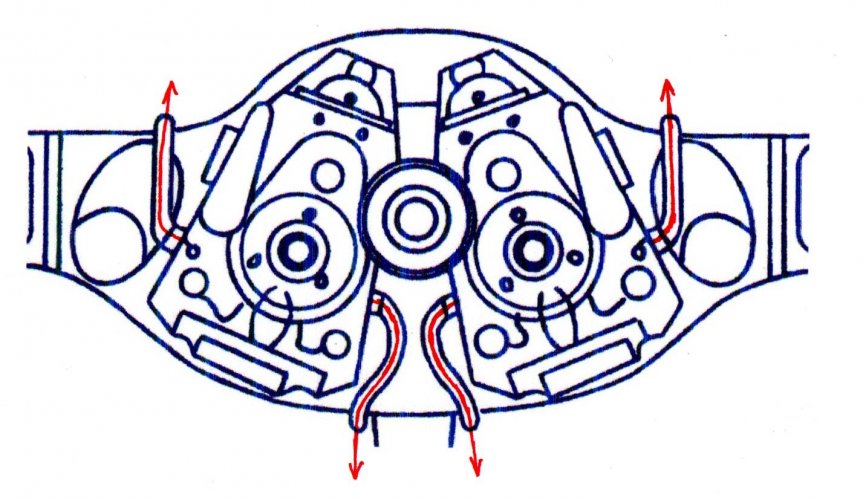
To me looks like it had flaps and two DB 603s running independently rotating a double shaft and contra props.Henschel P.87
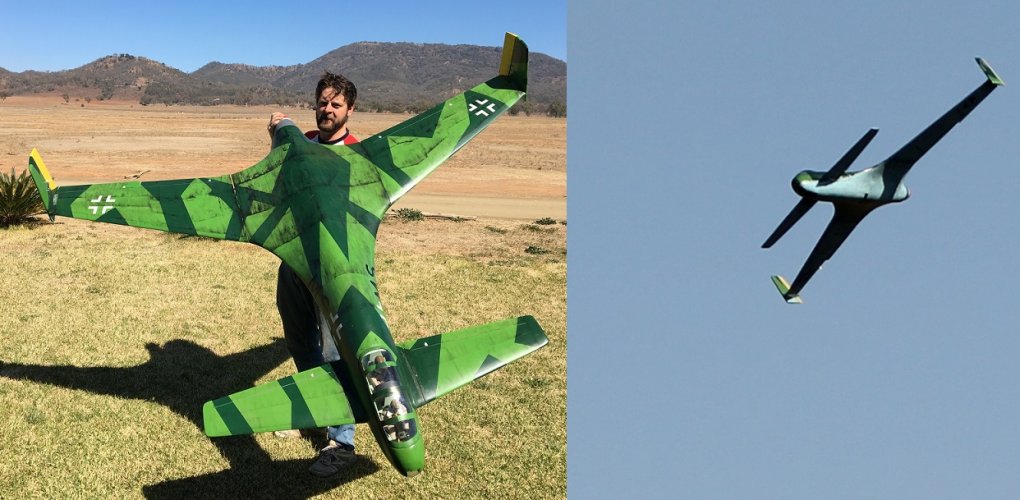
Yes, but I see topspeed3 just posted my plane, now designing bigger model of - Dornier P.252-1
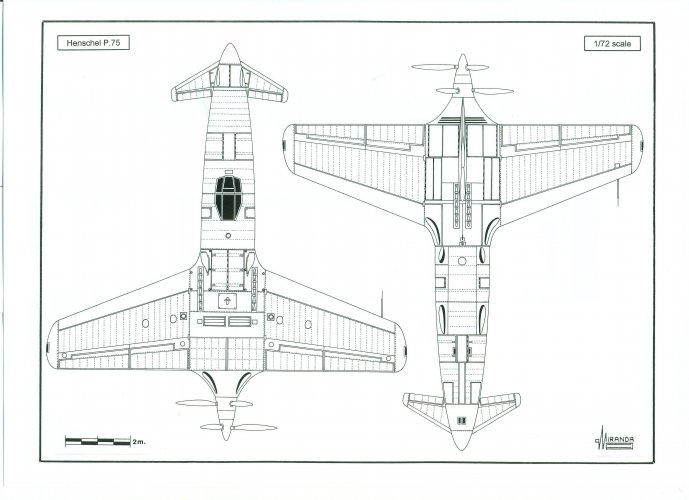
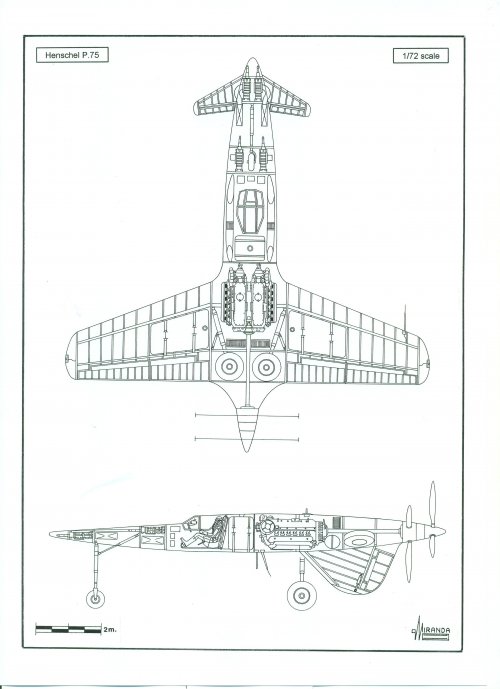
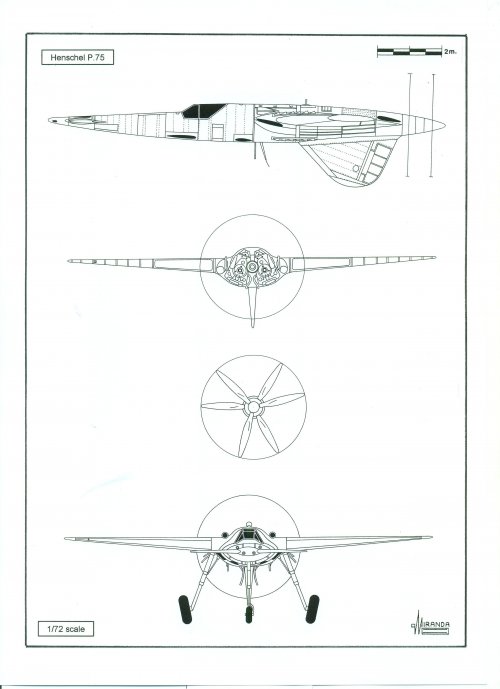
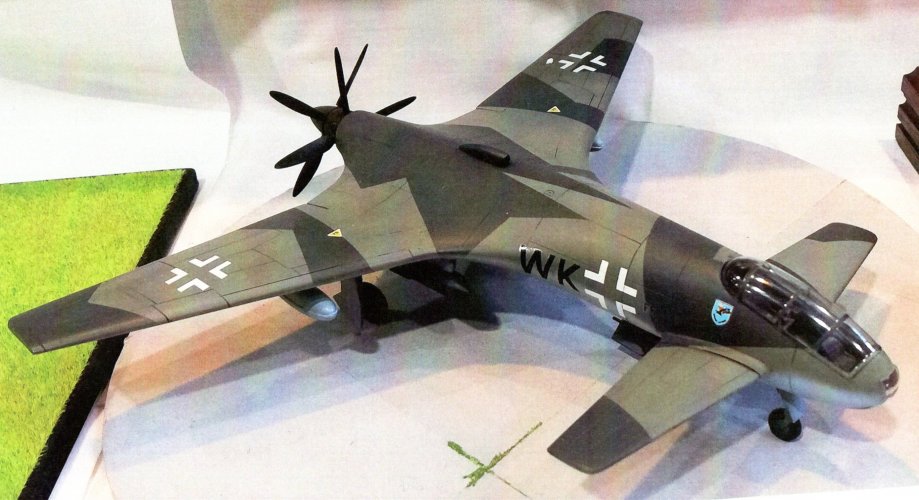
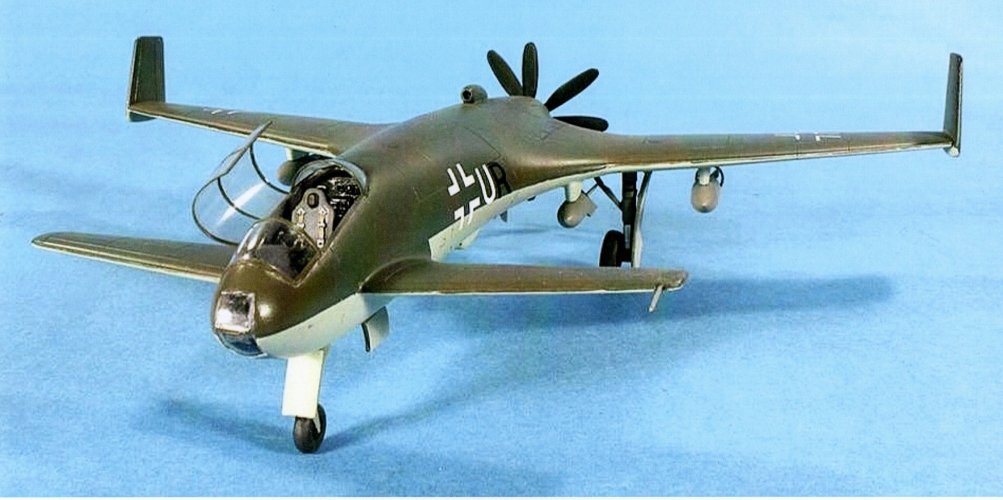
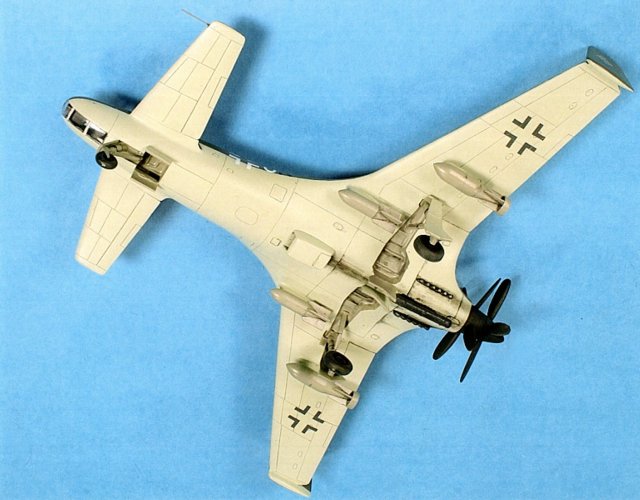
RC model of Henshel P.75 making tooHenschel P.75
Designed in 1941 to replace the Messerschmitt Bf 110 applying the ‘canard’ formula,
the most advanced at that time. The canard was also used for the S.A.I. S.S.4 fighter
in Italy, for the Kyushu J7W1 Shinden in Japan, and for the Curtis XP.55 Ascender and
Lockheed L-133 in USA.
With this new configuration the designers tried to elude the problem of compressibility buffeting by installing the wing behind the center of gravity.
The system had the advantages of allowing the installation of the armament in the
nose and improving the pilot’s visibility.
The downside was that the pusher configuration required the installation of an
ejector seat or a detaching system for the propeller blades, to abandon the airplane
during flights in an emergency.
The P. 75 was originally designed around the DB 610 power plant. However, due
to the bad results rendered by this engine during its service career with the He 177
bomber, it was necessary to adapt the project to the new DB 613 (of bigger size) in 1942.
This engine was formed by two coupled DB 603 driving two contra-rotating propellers
via an extension shaft.
Technical Data
Type: Canard-pusher heavy fighter.
Phase: Wind tunnel model.
Undercarriage: Tricycle type, hydraulically retractable.
Engine: One Daimler Benz DB 613 A/B liquid-cooled, 24 cylinders coupled engine with
3500 hp and contra-rotating propellers of 3.2 m of diameter.
Fuel tanks: Two in the wings and one in the fuselage behind the pilot.
Armament: Four 30 mm Mk 108 cannon in the nose.
Equipment: Pressurized cockpit, ejector seat.
Wingspan: 11.3 m.
Length: 12.2 m.
Height: 3.96 m.
Wing area: 28.4 sq. m.
Max. weight: 7,500 kg.
Max. speed: 790 km/h at 7,000 m.
Service ceiling 12,000 m.
SPECULATIVE DRAWINGS

Enormous LG demand.Henschel P.75
Designed in 1941 to replace the Messerschmitt Bf 110 applying the ‘canard’ formula,
the most advanced at that time. The canard was also used for the S.A.I. S.S.4 fighter
in Italy, for the Kyushu J7W1 Shinden in Japan, and for the Curtis XP.55 Ascender and
Lockheed L-133 in USA.
With this new configuration the designers tried to elude the problem of compressibility buffeting by installing the wing behind the center of gravity.
The system had the advantages of allowing the installation of the armament in the
nose and improving the pilot’s visibility.
The downside was that the pusher configuration required the installation of an
ejector seat or a detaching system for the propeller blades, to abandon the airplane
during flights in an emergency.
The P. 75 was originally designed around the DB 610 power plant. However, due
to the bad results rendered by this engine during its service career with the He 177
bomber, it was necessary to adapt the project to the new DB 613 (of bigger size) in 1942.
This engine was formed by two coupled DB 603 driving two contra-rotating propellers
via an extension shaft.
Technical Data
Type: Canard-pusher heavy fighter.
Phase: Wind tunnel model.
Undercarriage: Tricycle type, hydraulically retractable.
Engine: One Daimler Benz DB 613 A/B liquid-cooled, 24 cylinders coupled engine with
3500 hp and contra-rotating propellers of 3.2 m of diameter.
Fuel tanks: Two in the wings and one in the fuselage behind the pilot.
Armament: Four 30 mm Mk 108 cannon in the nose.
Equipment: Pressurized cockpit, ejector seat.
Wingspan: 11.3 m.
Length: 12.2 m.
Height: 3.96 m.
Wing area: 28.4 sq. m.
Max. weight: 7,500 kg.
Max. speed: 790 km/h at 7,000 m.
Service ceiling 12,000 m.
SPECULATIVE DRAWINGS