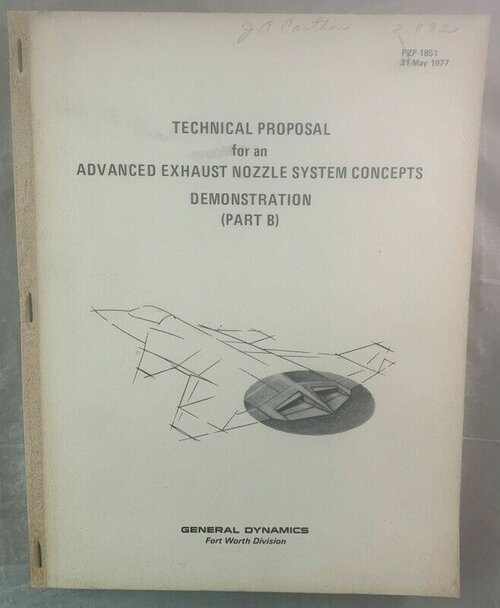
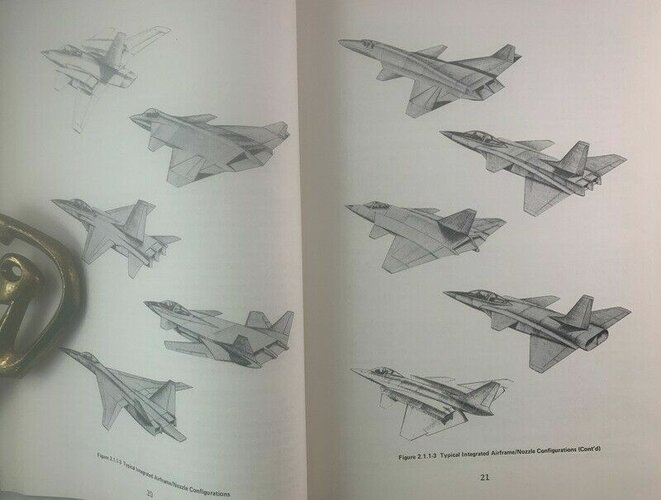
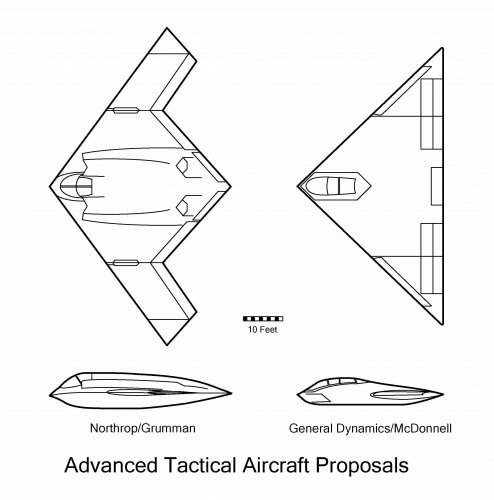
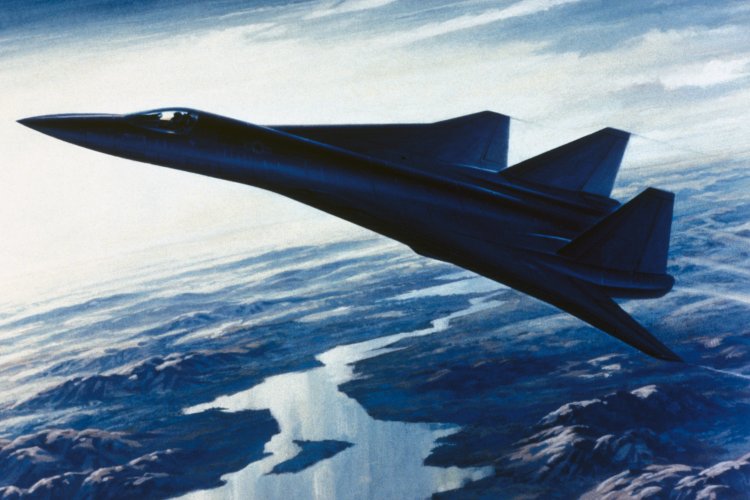
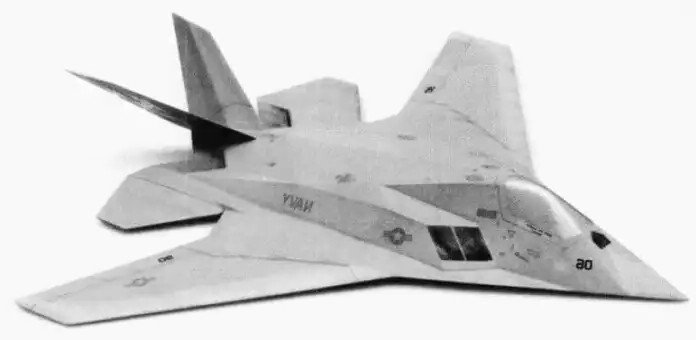
General Dynamics ATS, pre-ATF and ATF designs

The F-22's wing is a modified delta. A delta wing basically means it has a triangular shape in planform, it's just the trailing edge is slightly swept forward on the F-22. It doesn't have anything to do with whether or not the aircraft has a horizontal tail. The MiG-21 is one of the most famous delta winged aircraft around and it had a horizontal tail. But, I understand that most people think of tailless designs when they think of delta wings.
Right, the F-22 wing planform and aspect ratio aligns pretty well with a delta wing, I was simply highlighting the similarities between the GD ATF and the F-22 after the summer 1987 “fire drill” which saw the configuration change from swept trapezoidal wings to diamond-like delta.

Massively as the various materials (e.g. CodeOne magazine) make clear.
Well not necessarily; reading the article from Code One as well as Sherm Mullin’s account, a variety of configurations were explored when the swept trapezoidal wing design became untenable due to weight. The articles didn’t explicitly state that the chosen configuration was based on GD’s proposal, only that substantial weight savings while maintaining roughly comparable aerodynamics to the trapezoidal wings was the driving factor. That said, I wouldn’t be surprised if it did use a lot of work from GD’s submission.
 
Last edited:
Sherm's account emphasizes how much of a team effort it was, so trying to isolate specific features to specific companies might be fruitless.
 
a question about the tail..
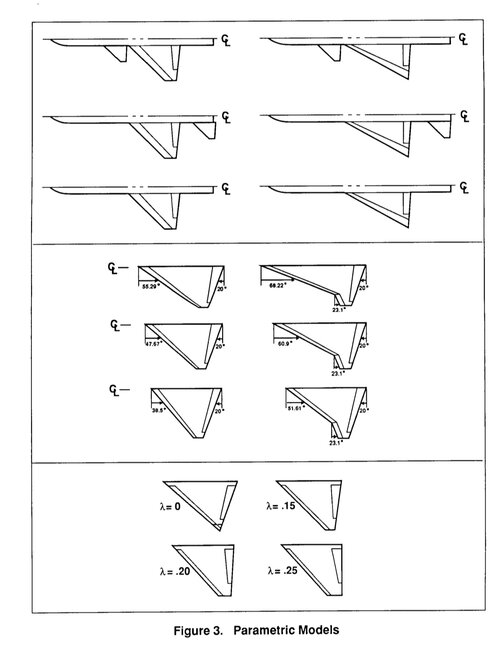
I think it was mentioned earlier that GD had some issues with the single tail.. were there any other alternative designs for the tail or planform?
 
a question about the tail..
I think it was mentioned earlier that GD had some issues with the single tail.. were there any other alternative designs for the tail or planform?
Yes there's lots of wind tunnel models where they tried lots of different things with the tail.
 
Moved posts to correct topic for General Dynamics ATF projects - original topic was a user artwork topic.
 
Oh the subject of the difficulties that GD had with twin vertical stabilizers in their ATF proposal, the F-22 would also end up encountering problems with vibrations and buffeting in the vertical tails at certain Mach numbers and g conditions, due to the vortex impingement at those specific conditions. This was reported back in 2000.

https://www.flightglobal.com/buffeting-problem-may-mean-airframe-changes-for-f-22-/34405.article
According to Jay Miller’s book on the F-22, this issue was eventually resolved with some strengthening of the vertical tails and flight control software changes.

Still, this makes me a bit curious on why GD abandoned twin canted vertical stabilizers. Perhaps there wasn’t enough time for them to fine-tune a satisfactory configuration before the RFP submission? Along with the inlet, vertical tails took among the longest time in wind tunnel testing for the Lockheed/Boeing/General Dynamics team, and even then, there ended up being buffeting from flow impingement that modeling had failed to predict.
 
Last edited:
I have an old Air Combat magazine with the design shown at the top of page 21 in it. I remember trying to model it out of sheets of basswood when I was a teenager.
 
Some very familiar planforms
 

Attachments

  • Screenshot_20230603_202034_ReadEra.jpg
    Screenshot_20230603_202034_ReadEra.jpg
    197.5 KB · Views: 323
  • 19890011559.pdf
    3.4 MB · Views: 94
  • atf_evol_part1_11_1267828237_1659.jpg
    atf_evol_part1_11_1267828237_1659.jpg
    187.6 KB · Views: 258
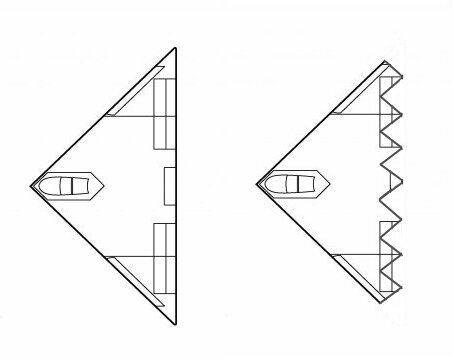
Looking at the General Dynamics ATF again, was there ever a rationale given for the "messy" trailing wedge shaping? While the angles would match the leading edge, having this many edge discontinuities seems to be even worse.
 
Worse compared to what? Apparently edge alignment was a major moving factor here.
 
Moved to correct topic.

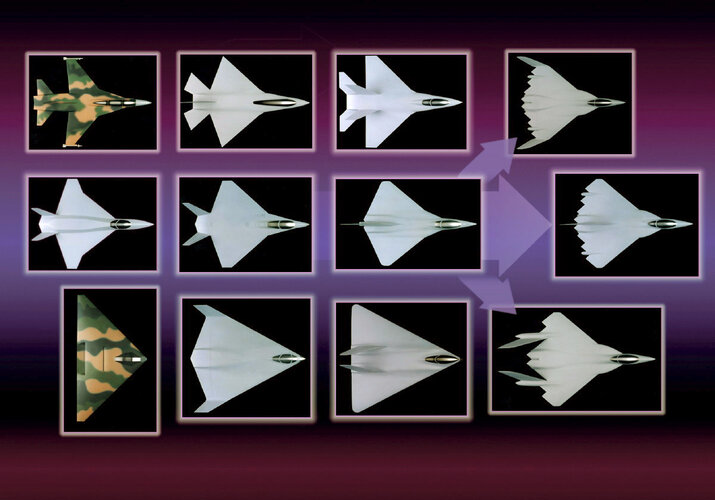
I think this diagram gives a hint:

atf_evol_part1_11_1267828237_1659-jpg.107799

The central thrust of General Dynamics ATF development prior to the "stealth reset" was a tailless delta. I imagine the 'serrated' edge approach was to align the trailing edge to the leading edges for decreased RCS reasons without departing too greatly from the existing wing geometry.
 
Last edited:
Moved to correct topic.

I think this diagram gives a hint:

The central thrust of General Dynamics ATF development prior to the "stealth reset" was a tailless delta. I imagine the 'serrated' edge approach was to align the trailing edge to the leading edges for decreased RCS reasons without departing too greatly from the existing wing geometry.
Drifting off topic, but would this approach have worked with the GD / MDD A-12 ?

cheers,
Robin.
 
Last edited by a moderator:
Worse compared to what? Apparently edge alignment was a major moving factor here.
I get that the numerous serrations were meant to align the trailing edge with the leading edge, but with so many discontinuities, I wonder if it would have been better if the trailing edge was just straight and at a less swept angle that doesn't match the leading edge (not perpendicular to the front, obviously).

However, based on the chart that overscan posted, it appears that a straight trailing edge had been considered but was dropped in favor of the serrated one. However, neither Lockheed's nor Boeing's submissions used this approach, and in the end the F-22 didn't either and went with a trailing edge that was at a less swept angle, although that could also be due to the integration of horizontal tails.
 
Last edited:
Goes back to requirements, requirements, requirements. And then tradeoffs. And edumacating the customer where needed. And where politically possible.
 
Last edited by a moderator:
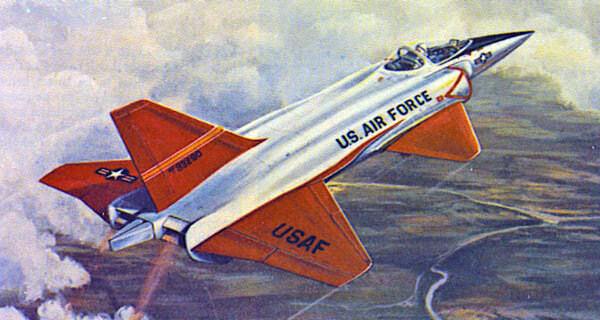
An artist's conception of the General Dynamics proposal for the Advanced Tactical Fighter (ATF) competition in response to USAF Request For Information (RFI) in 1981.
Source:
https://catalog.archives.gov/id/6415287
 

Attachments

  • 19860101_An artist's concept of General Dynamics Corporation's proposed advanced tactical fig...jpeg
    19860101_An artist's concept of General Dynamics Corporation's proposed advanced tactical fig...jpeg
    1.7 MB · Views: 186
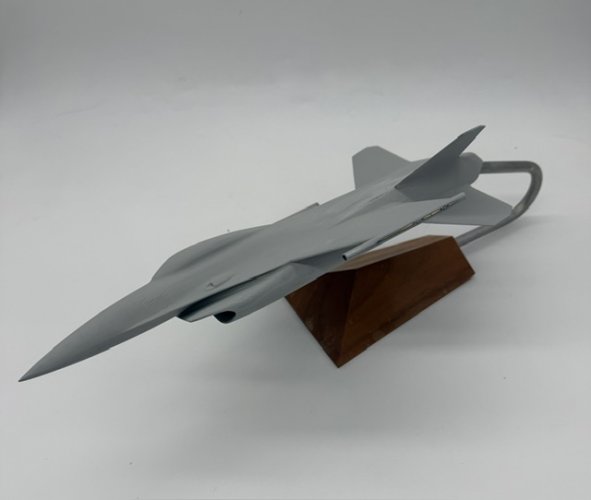
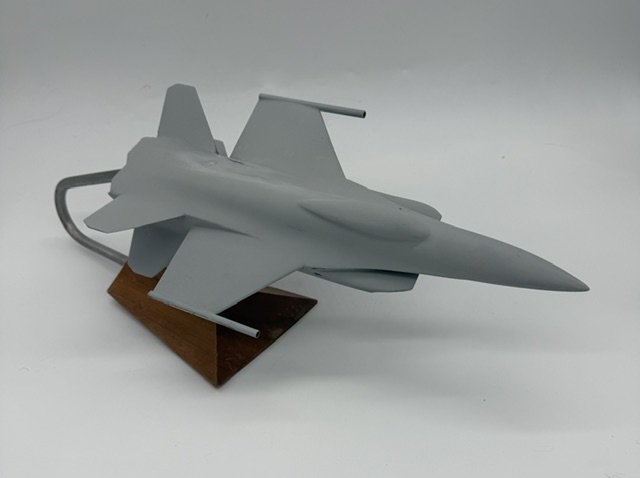
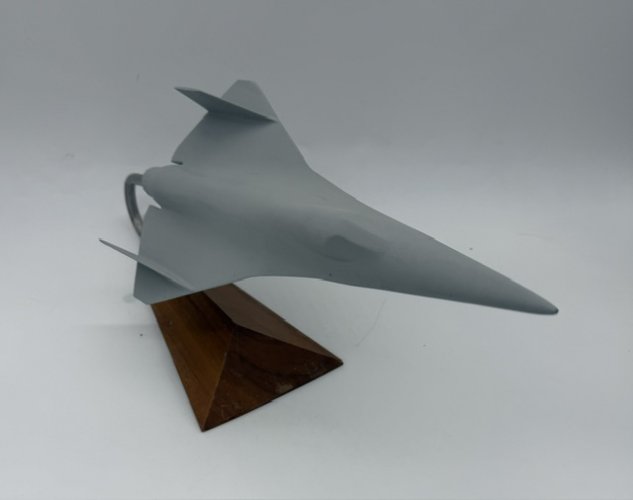
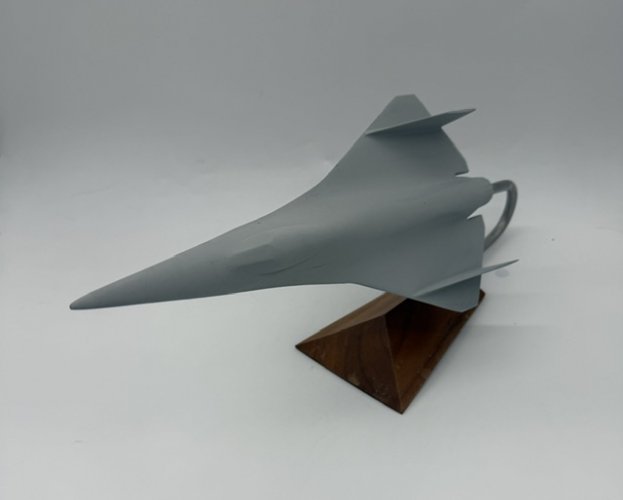
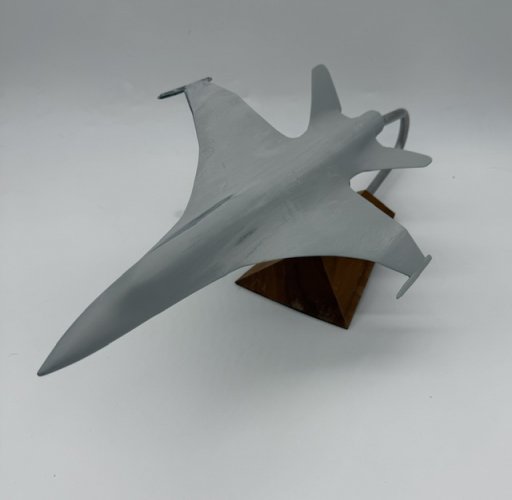
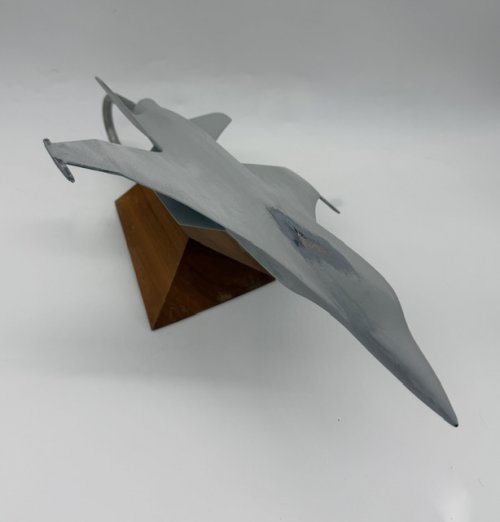
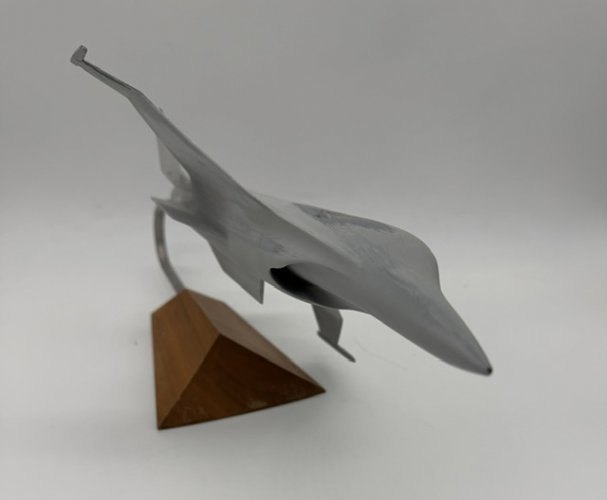
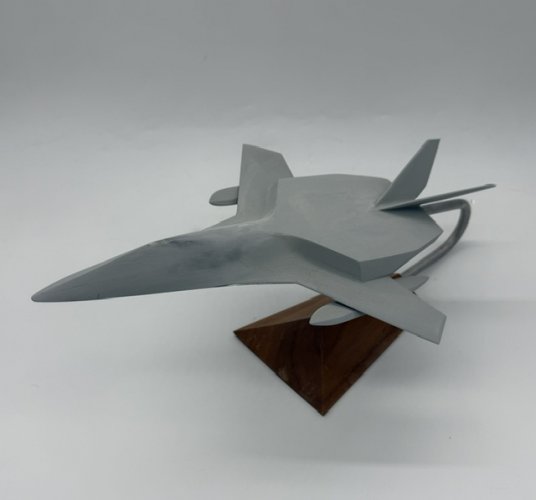
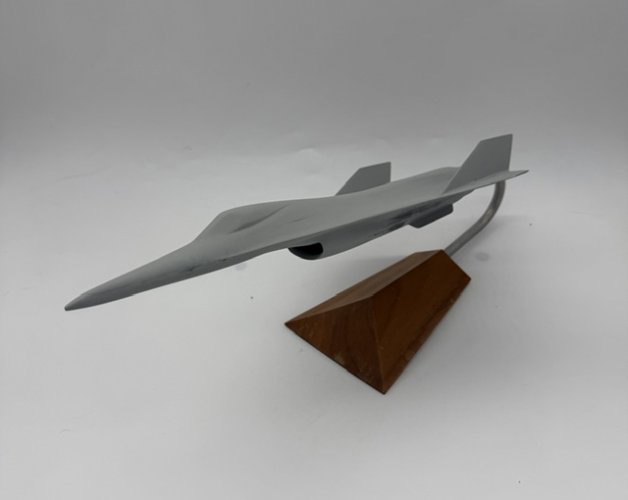
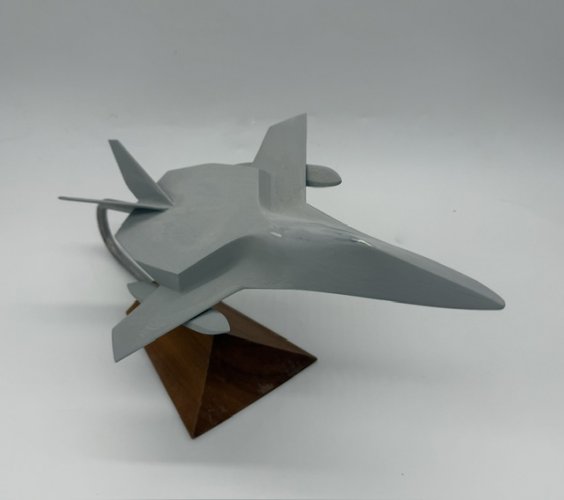
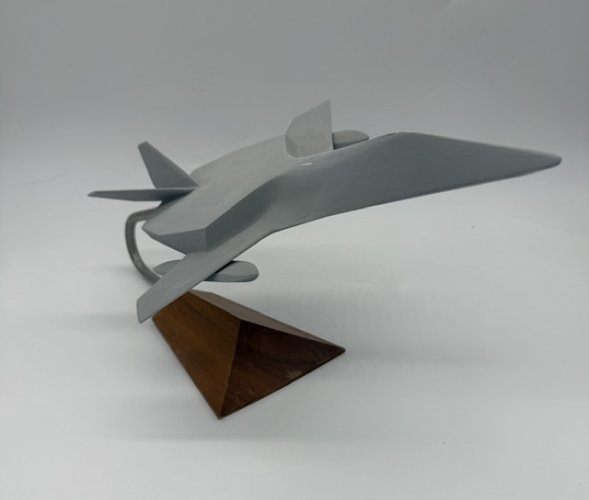
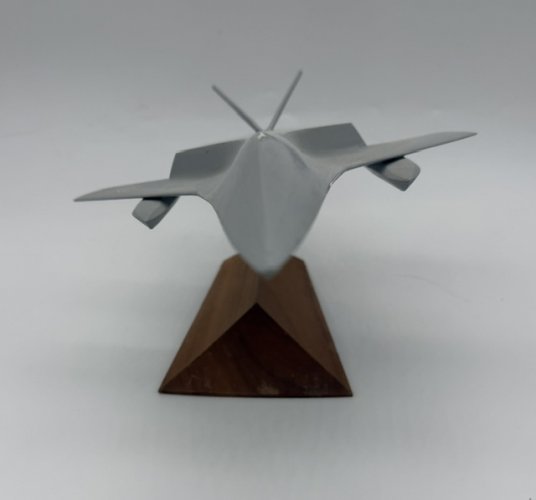
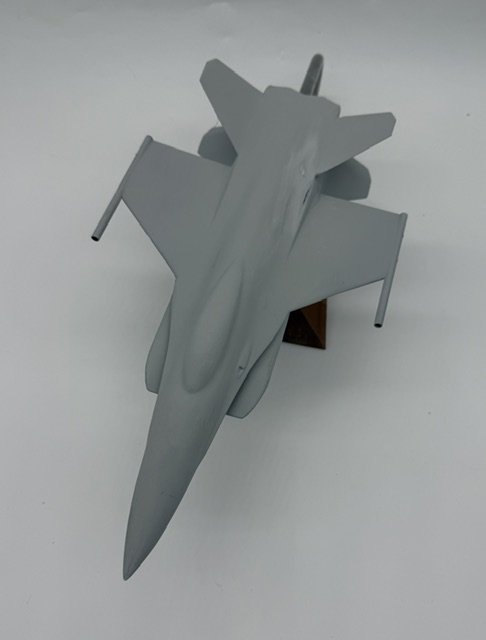
Found in a local estate sale from a General Dynamics exec, these models are head scratches to be sure. Anyone have design numbers to assign to these oddities. I am fixing them up and these are in the primer and sand stage as you can see and trying to decide how to paint them......if I should. Maybe grey and just a canopy methinks.
 

Attachments

  • IMG_2997.jpg
    IMG_2997.jpg
    75.2 KB · Views: 380
  • IMG_2998.jpg
    IMG_2998.jpg
    70.9 KB · Views: 89
  • IMG_2999.jpg
    IMG_2999.jpg
    72.8 KB · Views: 88
  • IMG_3002.jpg
    IMG_3002.jpg
    60 KB · Views: 90
  • IMG_3003.jpg
    IMG_3003.jpg
    73.1 KB · Views: 93
  • IMG_3004.jpg
    IMG_3004.jpg
    66.8 KB · Views: 380
  • IMG_3006.jpg
    IMG_3006.jpg
    63.7 KB · Views: 94
  • IMG_3008.jpg
    IMG_3008.jpg
    62.6 KB · Views: 92
  • IMG_3009.jpg
    IMG_3009.jpg
    79.3 KB · Views: 90
  • IMG_3011.jpg
    IMG_3011.jpg
    82.2 KB · Views: 88
  • IMG_3014.jpg
    IMG_3014.jpg
    64 KB · Views: 91
  • IMG_2996.jpg
    IMG_2996.jpg
    78.5 KB · Views: 91
  • IMG_3007.jpg
    IMG_3007.jpg
    65.8 KB · Views: 97
Found in a local estate sale from a General Dynamics exec, these models are head scratches to be sure. Anyone have design numbers to assign to these oddities. I am fixing them up and these are in the primer and sand stage as you can see and trying to decide how to paint them......if I should. Maybe grey and just a canopy methinks.
This is what happens when you let the kids use the design software on "bring your kids to work," day. I'm still trying to figure out the large over wing inlets and small v-tail. The tail would be completely blanked out at moderate alpha and "Why such large inlets?" They are definitely interesting, to say the least. Thanks for sharing.
 
Found in a local estate sale from a General Dynamics exec, these models are head scratches to be sure. Anyone have design numbers to assign to these oddities. I am fixing them up and these are in the primer and sand stage as you can see and trying to decide how to paint them......if I should. Maybe grey and just a canopy methinks.
Is the estate sale still ongoing or from some time ago?
 
This is what happens when you let the kids use the design software on "bring your kids to work," day. I'm still trying to figure out the large over wing inlets and small v-tail. The tail would be completely blanked out at moderate alpha and "Why such large inlets?" They are definitely interesting, to say the least. Thanks for sharing.
Or, given its current state, “bring your AI to work” day and let it go nuts on the CAD and 3D printer.
 
I meant with smaller serrations, more like this . . .
(rough sketch only . . .)View attachment 718067
Which, as a retired aerospace engineer coming decidedly from the space side of things, for the simple reason of symmetry, makes me wonder whether a serrated leading edge might have had any potential stealth advantages as well? Please feel free to educate/excoriate me.
 
Which, as a retired aerospace engineer coming decidedly from the space side of things, for the simple reason of symmetry, makes me wonder whether a serrated leading edge might have had any potential stealth advantages as well? Please feel free to educate/excoriate me.
For VLO, no. You want the edges to be as long as possible with no discontinuities. The B-21 shape is pretty optimal in the regard. I also think a serrated leading edge would be very "interesting" aerodynamically and structurally.
 
Found in a local estate sale from a General Dynamics exec, these models are head scratches to be sure. Anyone have design numbers to assign to these oddities. I am fixing them up and these are in the primer and sand stage as you can see and trying to decide how to paint them......if I should. Maybe grey and just a canopy methinks.
Eventually this comes into mind at once...
 

Similar threads

Back
Top Bottom