Focke-Wulf Fw 200 Condor Projects and Variants

https://ja.wikipedia.org/wiki/Fw_200_(%E8%88%AA%E7%A9%BA%E6%A9%9F)#.E5.B7.A8.E4.BA.BA.E6.A9.9F.E5.88.97.E4.BC.9D

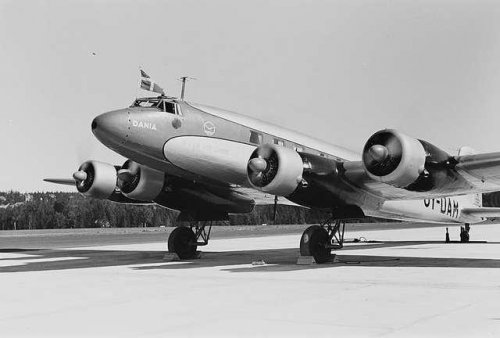
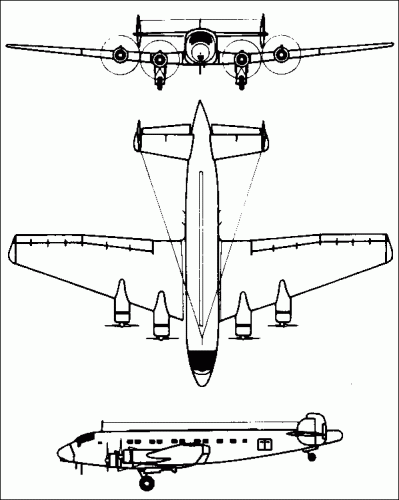
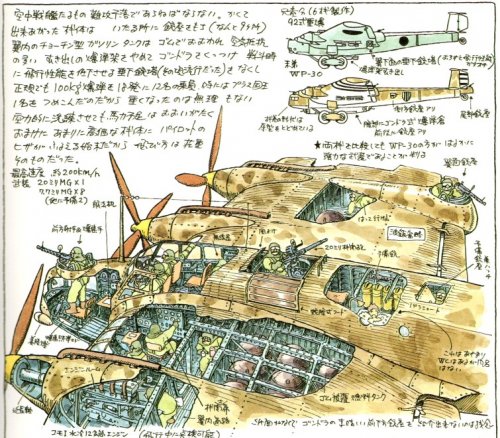
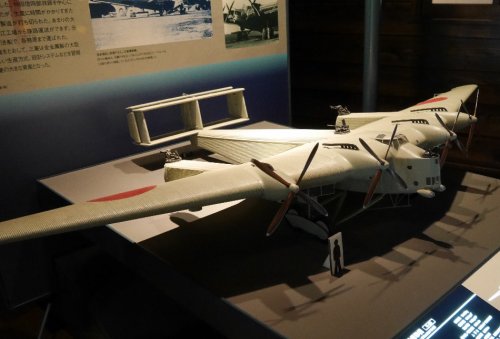
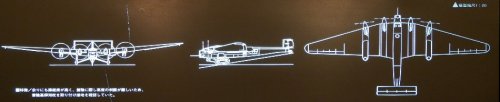
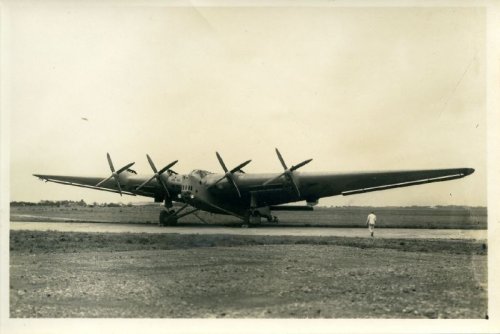
"The planned nonstop route between Germany and Manshukoku which planned by Manshukoku National Airways in cooperation with Lufthansa was not realized, because Japan-China war broke out during the day. Still the IJA planned to import Junkers Ju90 4 engine transport as a type 92 heavy bomber successor.The IJA sent Mitsubishi Heavy Industries Inc. Sales Manager and negotiated,but the negotiation was abandoned in 9/1938. Then Mitsubishi staff was intrigued Fw200, negotiated Fw200 flight to Japan and realized. Afterwards Mitsubishi ordered 5 FW200. But the IJA had interest for military type Fw200C, the purchase plan has been cancelled."

Mitsubishi type 92 heavy bomber.(Ki-20)
https://en.wikipedia.org/wiki/Mitsubishi_Ki-20
Ki-20 Model.
http://blog.goo.ne.jp/a_tranquil_smoker/e/34b2f9d9c995efd9c680c5ef99367e7d

https://www.youtube.com/watch?v=PQ9KntTSyG0
 

Attachments

  • Focke-Wulf Fw200.jpg
    Focke-Wulf Fw200.jpg
    29.5 KB · Views: 697
  • ju-90 transport.gif
    ju-90 transport.gif
    10.4 KB · Views: 306
  • 189b64f23abfd45c465bbe5c55b1956d.jpg
    189b64f23abfd45c465bbe5c55b1956d.jpg
    254.8 KB · Views: 331
  • Ki-20 model.jpg
    Ki-20 model.jpg
    140.2 KB · Views: 253
  • Ki-20.jpg
    Ki-20.jpg
    44.5 KB · Views: 545
  • Mitsubishi Ki-20 type 92 heavy bomber.jpg
    Mitsubishi Ki-20 type 92 heavy bomber.jpg
    51.3 KB · Views: 593
  • FW200C.jpg
    FW200C.jpg
    41.3 KB · Views: 684
  • Focke Wulf Fw200C.jpg
    Focke Wulf Fw200C.jpg
    223.7 KB · Views: 662
Another information.
https://en.wikipedia.org/wiki/Focke-Wulf_Fw_200_Condor
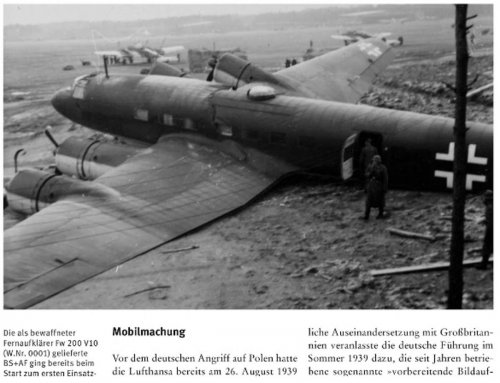
"The Japanese Navy requested a military version of the Fw 200 for search and patrol duties, so Tank designed the Fw 200 V10 with military equipment. This Fw 200 was held in Germany because war had broken out in Europe by that time. This aircraft became the basis for all later military models used by the Luftwaffe."
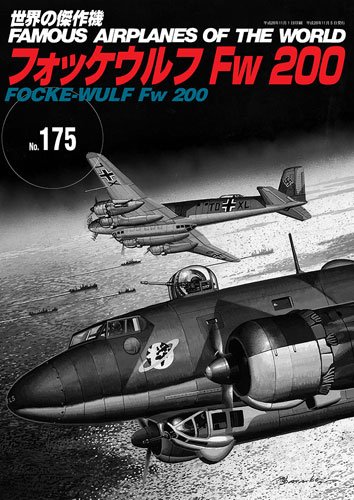
Bunrindo's FAMOUS AIRCRAFT OF THE WORLD, No.175 FOCKE-WULF Fw200, ISBN978-4-89319-249-3 says that....
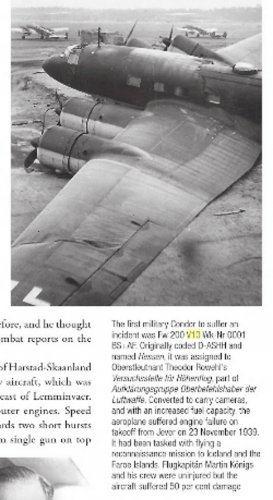
(1) V10 was a military version for Japan. (V10 : W.Nr.0001,"D-ASHH" Named Hessen)
(2) Later V10 converted to transport version and called Fw200B-1.
(3) One opinion says that this military version for Japan was called Fw200KC.
(4) The IJA planned to get 6 Fw200 military version but failed.
(5)The gondola with the short length was installed in an underside of a body forequarter of this airplane. This gondola was for defense armament(7.92mm MG15), and defense armament was equipped in a forward end and a back end. A bomb couldn't be loaded into this gondola.
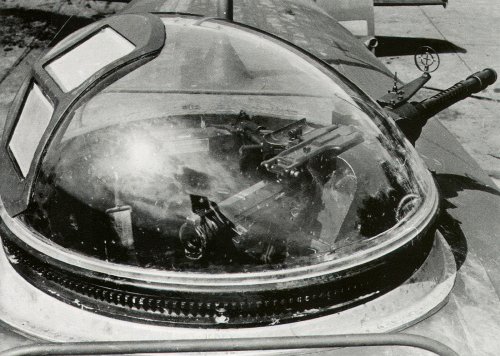
(6)Reinforcement members were seen side of the turret.
(7)Windows which loceted after part of the fuselage were covered.


You can see V10 picture in this book.(page 186) Please take care upper middle fuselage turret.
https://books.google.co.jp/books?id=vPthCgAAQBAJ&pg=PA183&lpg=PA183&dq=Focke+WULF+Fw200KC&source=bl&ots=u3SNXDduMW&sig=cCJ--WLQKKoAVaIAA5Nw-yfDOOE&hl=ja&sa=X&ved=0ahUKEwiTlcT7uc3QAhVKi7wKHcihB08Q6AEIOzAH#v=onepage&q=Focke%20WULF%20Fw200KC&f=false

http://www.warandtactics.com/smf/airpower/focke-wulf-fw-200-condor/
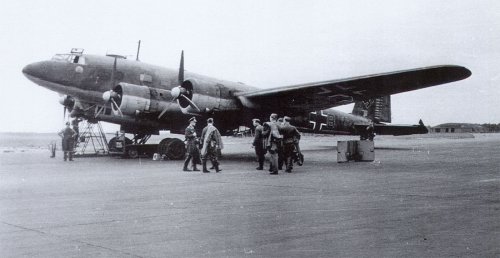
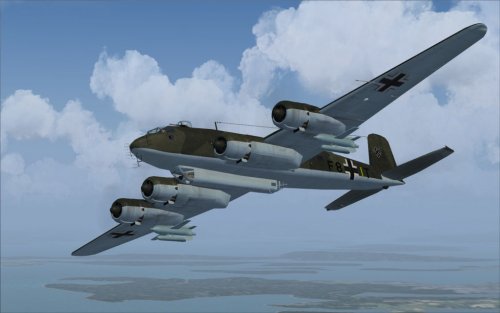
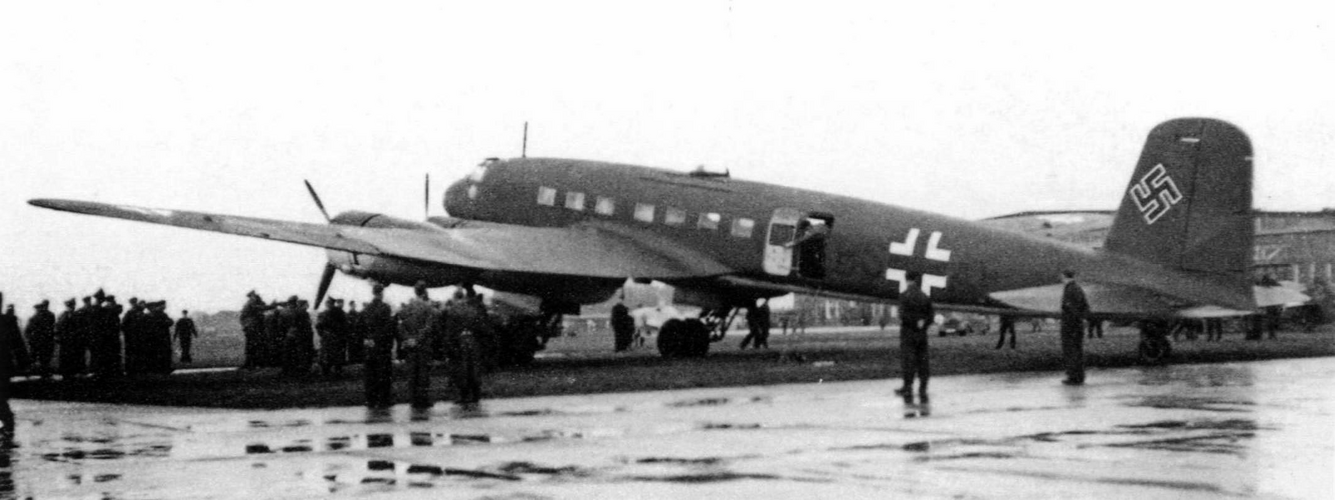
"The Focke-Wulf Fw 200 Condor was a German all-metal four-engined monoplane that entered service as an airliner. Later versions for the Luftwaffe were used as long-range reconnaissance and anti-shipping bomber aircraft as well as transport planes for troops and VIPs.
Fw 200 V1
First prototype.
Fw 200 V10
Military prototype.
Fw 200 A-0
Pre-production batch of fourth to ninth prototypes.
Fw 200 B-1
Transportation aircraft fitted with four BMW 132Dc engines.

Fw 200 B-2
Transportation aircraft fitted with four BMW 132H engines.
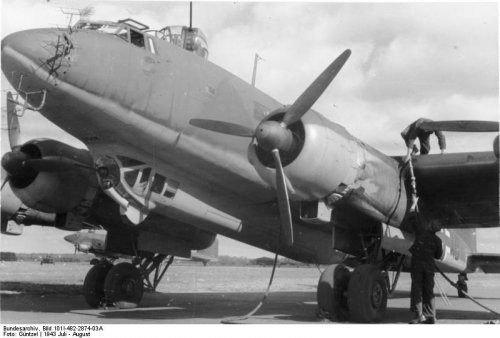
Fw 200 C-0
Pre-production batch of 10 aircraft, structural strengthening, the first four were manufactured as unarmed transports, the remaining six were fitted with armament.
Fw 200 C-1
First military production version, BMW 132H engines, lengthened ventral gondola, increased defensive armament, provisions for four 250 kg bombs.
Fw 200 C-2
Similar to C-1, but featured a ‘cutaway’ outboard engine nacelles which reduced drag and could carry a 250 kg bomb or a 300 liter drop tank.
Fw 200 C-3
Structurally strengthened, fitted with Bramo 323 R-2 radial engines
Fw 200 C-3/U1
Featured an increased defensive armament, a 15 mm MG 151 in a powered dorsal turret, the 20 mm MG FF replaced by a 20 mm MG 151/20 cannon.
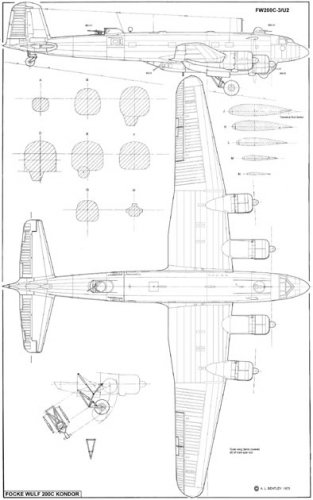
Fw 200 C-3/U2
Fitted with original dorsal turret, and had MG 151/20 cannon replaced with a 13 mm MG 131, which allowed space for instillation of a Lotfe 7D bombsight.
Fw 200 C-3/U3
Fitted with two additional 13 mm MG 131s.
Fw 200 C-3/U4
Had 7.92 mm MG 15s replaced by 13 mm MG 131s and carried an extra gunner.
Fw 200 C-4
Similar to C-3, but carried FuG Rostock search radar, late production aircraft used FuG 200 Hohentwiel radar.
Fw 200 C-4/U1
High-speed transport aircraft, only one example built. Used to transport Heinrich Himmler and Adolf Hitler.
Fw 200 C-4/U2
High-speed transport aircraft, only one example built.
Fw 200 C-6
Several aircraft were modified to carry Hs 293 missiles and re-designated C-6.
Fw 200 C-8
Fitted with FuG 203b Kehl III missile control equipment and fitted with Hs 293 missiles.
Fw 200 S-1
Special designation for Fw 200 V1 that was flown from Berlin to Tokyo. "
 

Attachments

  • 09281006_57eb177920c81.jpg
    09281006_57eb177920c81.jpg
    59 KB · Views: 300
  • 3D Focke-Wulf-Fw-200C-Condor (2).jpg
    3D Focke-Wulf-Fw-200C-Condor (2).jpg
    85.4 KB · Views: 345
  • Fw200B.jpg
    Fw200B.jpg
    43.4 KB · Views: 307
  • Fw200_V10.jpg
    Fw200_V10.jpg
    102.4 KB · Views: 252
Another e-book.
https://books.google.co.jp/books?id=T7OhDAAAQBAJ&pg=PA7&lpg=PA7&dq=Focke+Wulf+Fw200+V10&source=bl&ots=4FjEtBMWZ1&sig=OwVy6arThbfrLoO4MMPWJ67Rzk8&hl=ja&sa=X&ved=0ahUKEwi0qOrAxs3QAhVLUbwKHb8qAas4FBDoAQgrMAI#v=onepage&q=Focke%20Wulf%20Fw200%20V10&f=false
 

Attachments

  • V10.jpg
    V10.jpg
    146.8 KB · Views: 232
Hi!
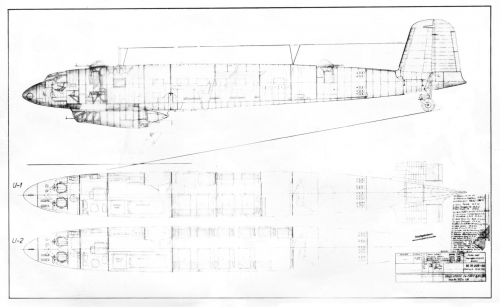
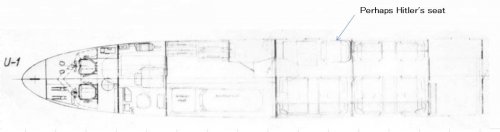
Fw200 C-4-U1/U2.
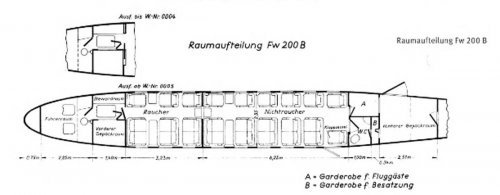
U1 had a Hitler's seat. Every passenger seat had a parachute.
Sorry for off topic.
 

Attachments

  • Fw200 C-4-U1.png
    Fw200 C-4-U1.png
    1.4 MB · Views: 273
  • Hitler's_seat.jpg
    Hitler's_seat.jpg
    24 KB · Views: 252
  • Fw200 turret.jpg
    Fw200 turret.jpg
    499.1 KB · Views: 235
Hi!
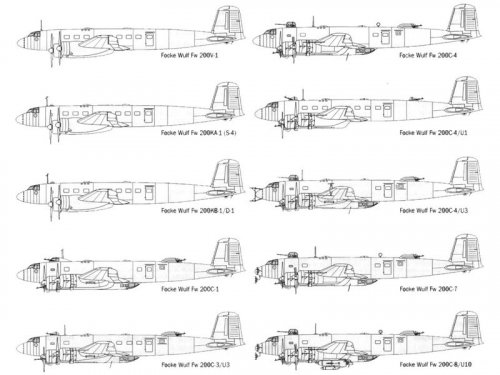
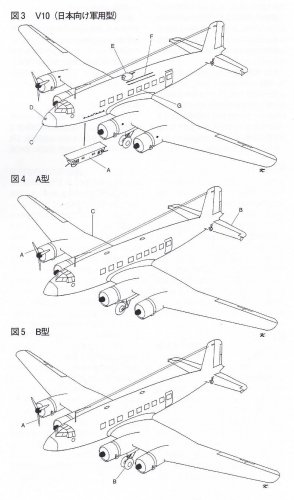
You can see V10 shape in the first drawing.
Bottom two picture shows Fw200 C-8/U10.
Fw200 C-8/U10 carried two Hs293 anti ship missile and FuG 200 anti ship radar.

Large image.
https://www.flickr.com/photos/x-ray_delta_one/13616714523/in/photostream/lightbox/
 

Attachments

  • 833214003205762121.jpg
    833214003205762121.jpg
    67.2 KB · Views: 207
  • Fw200 C-8 U10.jpg
    Fw200 C-8 U10.jpg
    46.5 KB · Views: 244
  • Fw200 V10, A and B.jpg
    Fw200 V10, A and B.jpg
    124.2 KB · Views: 266
Apparently the Italians also considered producing the Fw 200 at one point, there is a microfilm document at College Park discussing this matter.

Best Regards,

Artie Bob
 
Artie Bob said:
Apparently the Italians also considered producing the Fw 200 at one point, there is a microfilm document at College Park discussing this matter.

Best Regards,

Artie Bob
Oh thanks a lot. :D
 

Attachments

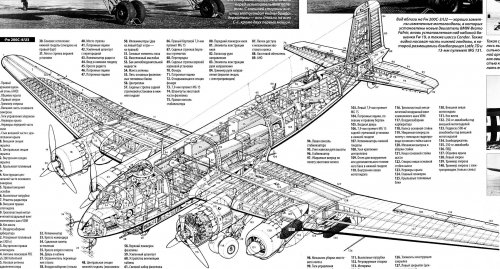
  • Cutaway.jpg
    Cutaway.jpg
    758 KB · Views: 277
Focke-Wulf Fw 200 Condor projects and variants.

I'll start; Fw 200 Condor modified for airborne deployment of V-1s and Fi 103s. The type was used for aerodynamic testing and evaluation, but never in combat. The photographs and footage I've attached for you are dated December 10th, 1942.

1749219558130.png 1749219589466.png 1749219619254.png 1749219691384.png

Footage and Photographs from this film: (Deployment from Fw 200 Condor at 5:40 - 7:49 timeframe).
View: https://www.dailymotion.com/video/x4tfphb
 
Focke-Wulf Fw 200 V3

The V3 was an Fw 200 prototype that was converted into a personal transport for Adolf Hitler on the request of his pilot, Hans Baur. The aircraft came with additional armor, a parachute-equipped recliner, and an escape hatch in the floor. In the event on an unpreventable crash, Hitler in his recliner would fall through the escape hatch, where the parachute would automatically deploy. An entire mock fuselage had to be constructed to test the validity of the system, and surprisingly it went through. There exists (to my knowledge) only a single photo of the actual aircraft's interior, but below is a somewhat accurate scale model presented to Hitler on April 20th, 1939.
1751776620173.png
1751777327183.png
 
'Aero' Focke Wulf Fw.200 Condor

a little less belligerent but a taste of 'what might have been' ...

... by the mid 1930's it became obvious that Aero would soon require larger and more modern aircraft for its growing international services. Plans were in hand for a service to start between London and Helsinki, an important step because of the growing trade between England and Finland at that time. A more immediate prospect was a large increase in travel to Finland in connection with the Olympic Games, scheduled to be held in Helsinki in 1940.

Early in 1938, serious discussions began with Focke Wulf at Bremen for the purchase of one or two Condors for the Aero airline. The Finns were not the only Nordic nation impressed with the type as the Danish airline, DDL. had placed an early order, and put its first aircraft into service in July 1938, just a few days after Deutsche Lufthansa had done so.
The second prototype Condor, D-AETA 'Westfalen', visited Helsinki on 30 June during a demonstration tour of Baltic countries and was inspected by Aero's technical director Bertel Aluin, and pilot Bo von Willebrand who expressed the suitability of the type (altho it was noted a suitable aircraft may also be avaliable from Britain too?).

In August 1938 Focke Wulf offered Aero a pre-production Fw.200A-0 for delivery the following year, but by 31 October, the offer had been changed to a Fw.220B model for delivery in September or October 1939. This variant featured BMW132H engines with 3 bladed propellors (instead of the 2 blade type fitted to earlier aircraft) On 1 November, Aero decided to specify Pratt & Whitney Hornet engines for its examples. The companies order for 2 aircraft of the type was signed on 27 January 1939.
Focke Wulf, whose technical director and chief designer Kurt Tank posessed a keen eye for publicity, imediately began preparing promotional material linking the Condor with the Helsinki Olympic Games. Aero alloted the names 'Karjala' (OH-CLA) and 'Petsamo' (OH-CLB) to the two aircraft.
During May 1939 Aero amended its original order by stipulating the more powerful S1E2G variant of the P&W. Hornet engine, a move thought neccessary for take offs from icy runways. An option for a third Condor (OH-CLC) was also placed at this time. This change of engine resulted in a new type certificate for the Aero Condors and they were designated Fw.200KB-1, Fw.200 V5 being used for certification work. Because of the technical revisions the first aircraft was delayed from November 1939 to early 1940.

Just a week after the Finnish-Soviet 'Winter War' hostilities, in March 1940, Aero was again in contact with Focke-Wulf to advise the names selected for the Condors should no longer be used, this was hardly surprising as both Karjala (Karelia) in the East and Petsamo in the North had taken on a political sensitivity with the Soviet demands on these areas of Finland.
Because of Germany's wartime need for the military version of the Condor for the Luftwaffe, work had stopped on the two Finnish aircraft by late Febuary. On 11 April 1940 the technical department of the German Air Ministry (Reichsluftfahrtministerium) declared the two aircraft confiscated for the German State (Reich). Aero's monetary deposits for the Condors were eventually returned.
Altho the original justification for the order had ben eroded by the advent of the Second World War, the aircraft would still have been of great use to Aero as a long distance passenger aircraft, this value being subsequently confirmed by their new owner, Deutsche Lufthansa and the Luftwaffe as VIP. transports when the airframes were completed and entered service as the Fw.200D-1.

One aspect, little publicised by Aero and behind the selection of the Focke Wulf Fw.200 Condor for the airline, was the establishing of a trans-atlantic route. For some years the thought of a trans-Atlantic service had intregued many airlines. In January 1939, the heads of the four Nordic airlines met in Oslo and decided a case should be made to the USA. for traffic rights on the North Atlantic route. Events in Europe dashed any hope of such a service, altho the idea of a joint Scandinavian consortium to fly the Atlantic did come to fruition after the Second World War.

Focke Wulf Fw.200KB-1 Condor, msn. 0009, OH-CLA, 'Karjala' (to Fw.200C-1, VB+TZ)
Focke Wulf Fw.200KB-1 Condor, msn. 0010, OH-CLB, 'Petsamo' (to Fw.200C-1, VB+UA)
Focke Wulf Fw.200KB-1 Condor, msn. 0046, OH-CLC, (to Fw.200C-3)

Ref. 'Finnair, the art of flying, 1923-1983', John Wegg, Finnair, ISBN. 951-99450-3-2, 1983
 

Attachments

  • FB_IMG_1751824427832.jpg
    FB_IMG_1751824427832.jpg
    30.4 KB · Views: 101
  • FB_IMG_1751824486038.jpg
    FB_IMG_1751824486038.jpg
    18.1 KB · Views: 115
Last edited:
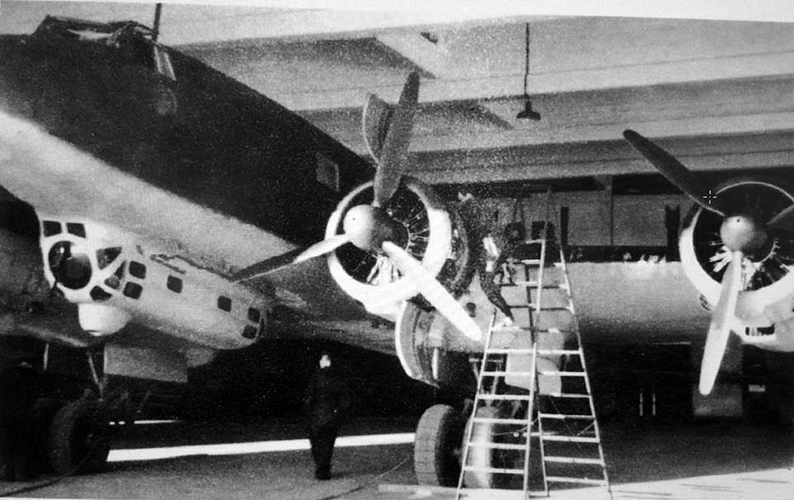
After Arjen identified one aircraft in my photograph as the Focke-Wulf Fw 200 I did find this..(browser translation needed)
https://fw200-restaurierung-bremen.de/
In 1988, a specimen was discovered off the Norwegian coast near Trondheim and recovered from the bottom of the sea under dramatic circumstances from 65m depth in 1999.
Through this rescue, it has become possible to completely restore the Fw 200 Condor and thus preserve it as the “last of its kind” to posterity.
The restoration of this legendary Fw 200 Condor has set itself the task of a partnership led by the Deutsches Technik Museum Berlin.
Now the last Condor has a home at the Tempelhof Hangar. You can find some nice shots on the website. Sorry if it's old news.
Fw200_THF_2024_04_20ba_1000a-994x368.jpg
 
From this book.
 

Attachments

  • 0.png
    0.png
    289.6 KB · Views: 59
  • 2.png
    2.png
    429.3 KB · Views: 68
Similar threads

Back
Top Bottom