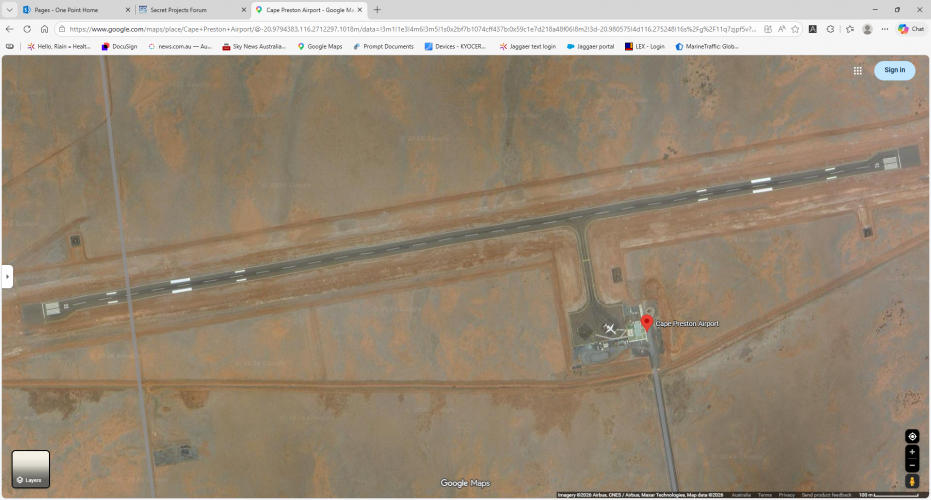
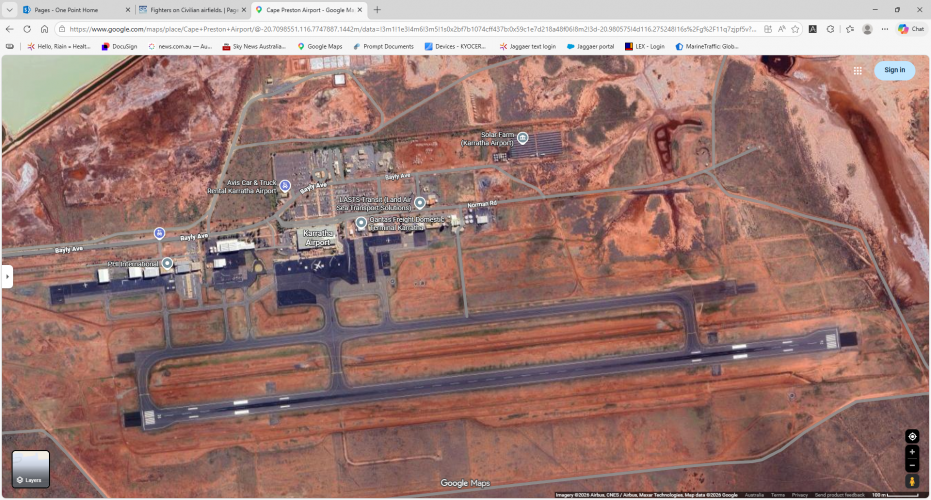
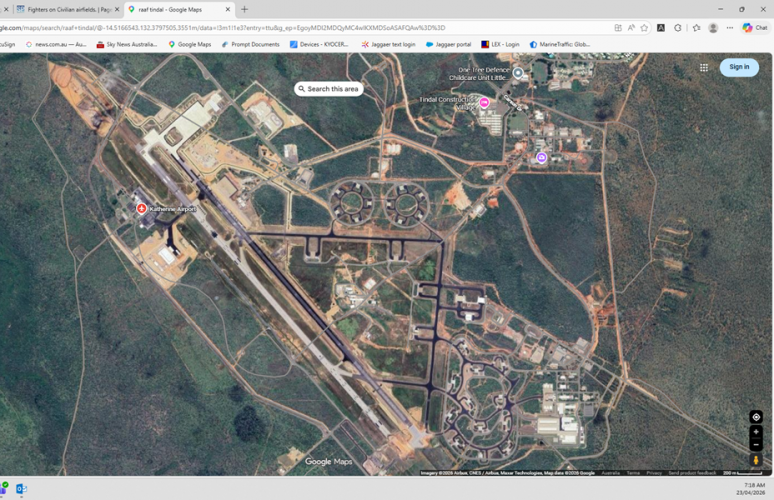
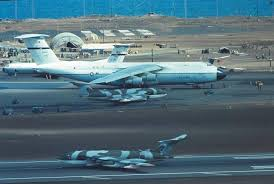
So, what does an airfield need to be considered fit for 'fighting', as opposed to a staging, transit or dispersal etc? I don't think purpose-built military airbases are the only option, many quite modest regional civilian airports have sufficient infrastructure to enable a reasonable number of combat aircraft to operate with reasonable intensity.
Firstly, the runway needs to be long and strong enough to handle fighters, I'd suggest 6,000' minimum for operations even though 5,000' is likely enough for secondary roles like staging and dispersal.
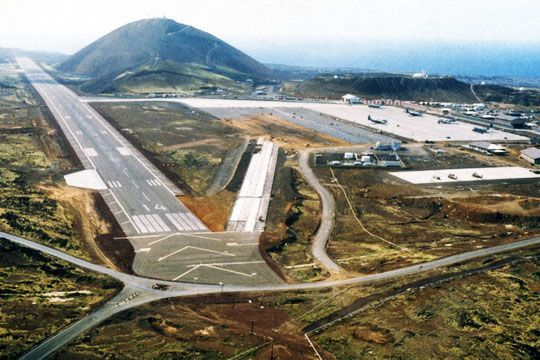
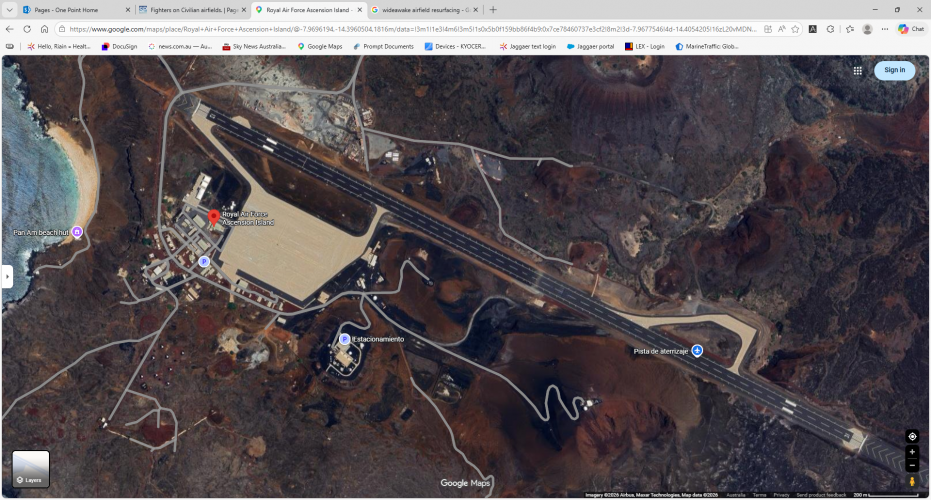
Secondly, there needs to be sufficient hardstand to park and easily move around a significant number of aircraft. Wideawake airfield on Ascension Island had these 2 factors in abundance, a 10,000' runway and a 1,500' x 1,000' hardstand which accessed the runway at 2 points.
Thirdly, there needs to be a way to get on-off the runway at either end (more or less), at minimum a loop if full taxiway isn't available.
For what it's worth the fighter airfields used by French Jaguars and Mirages in Africa in the 70s-80s typically had a lot less than that.
Mostly they shared facilities with "international" airports at N'Djamena (Chad), Bangui (Central Africa), Dakar (Senagal) and Libreville (Gabon). Single runways, no parallel taxiways, most didn't have loops at the runway ends. Usually there was a dedicated military hardstand that was fairly small, typically approx 500 x 500 ft, with only 1 way in and out. On the plus side, runways were fairly long (2,600-2,800m, 8,500-9,000 ft) to accommodate civilian airliners and C-135 tankers flying in very hot conditions.. Some runways had a single emergency arrestor wire. Munitions and petrol storage was quasi inexistant. Open air maintenance, most personnel housed in tents.
N'Djamena housed 20 fighters at its peak, Bangui 16 fighters, Dakar at least 10 fighters. Add 2-3 C135 tankers, 2-3 Transall transports, 1-2 Atlantic patrol aircraft, a few helicopters, plus a few aircraft from local air forces.
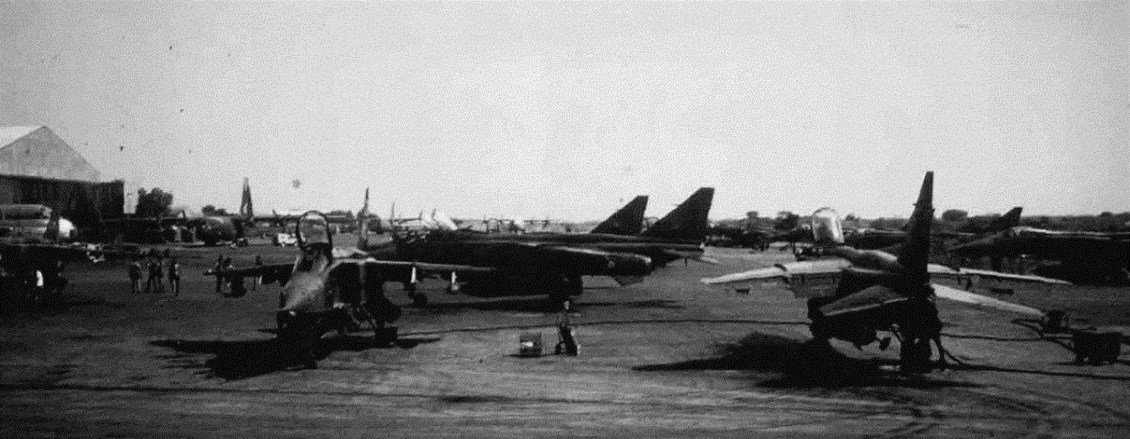
Bangui just before the Ouadi Doum strike: 12 Jaguars, 4 Mirage F1s, and 2 Atlantics in the foreground, 2 Transalls in the rear
N'Djamena packed with up to 12 Jaguars + 8 Mirage F1s
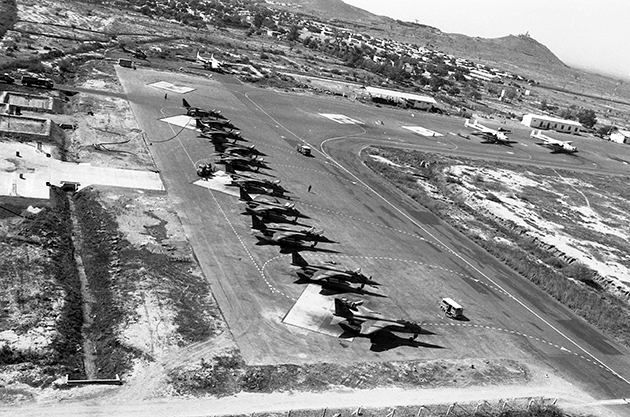
Dakar: 10 Jaguars lined up
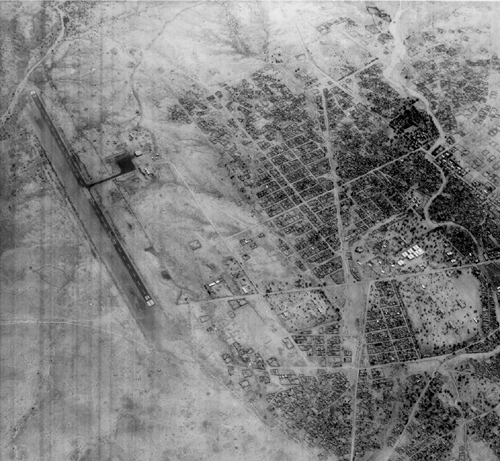
In addition, small detachments of 3-4 fighters were occasionally temporarily deployed to forward airfields such as Abeche (Chad), with no maintenance facilities and small hardstands.
Abeche forward airfield: runway lighting was inoperative, having been stolen by the locals. One pair of Jaguars landing at dusk had to ask the local ground crew to use their jeep’s headlights to light up the runway threshold!
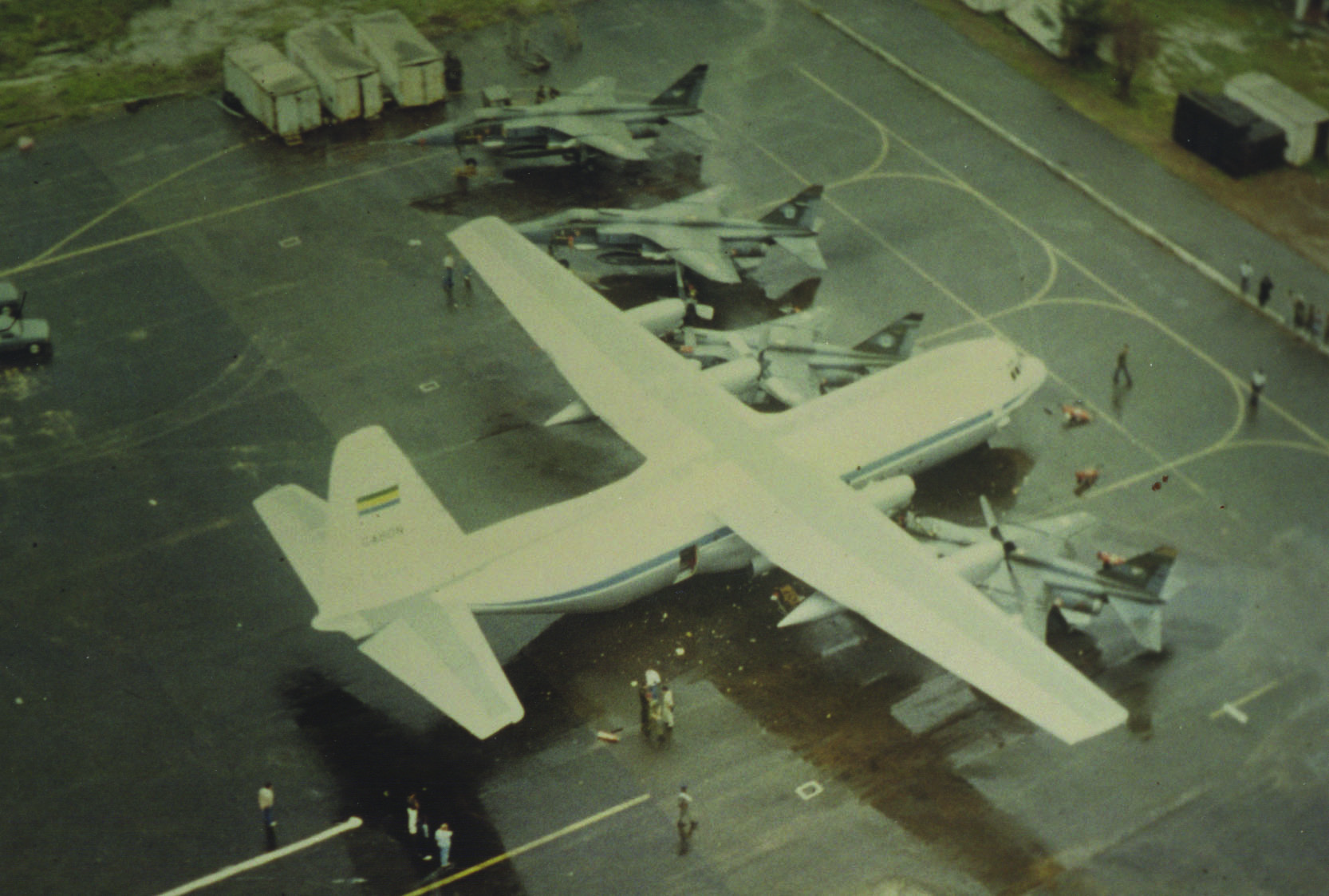
Libreville: High density parking created risks, especially when sharing space with poorly trained local crews who might forget the brakes!