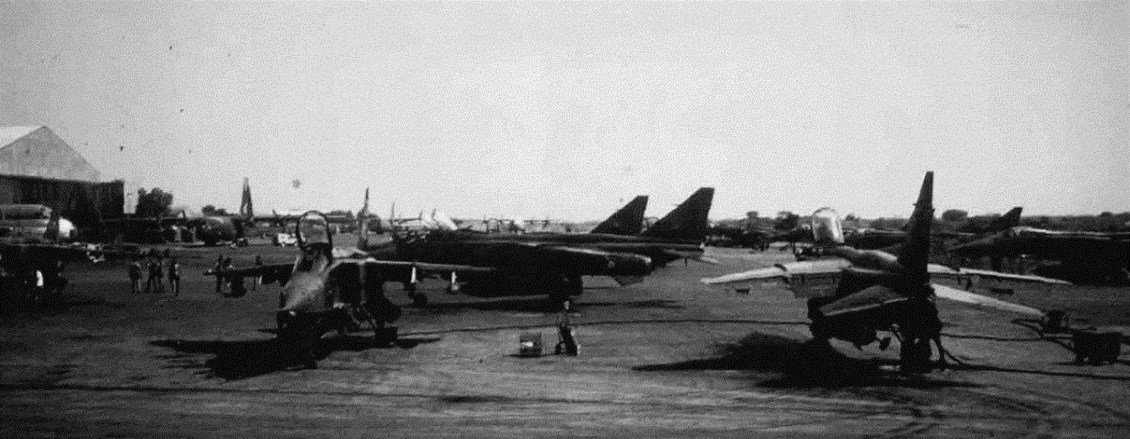
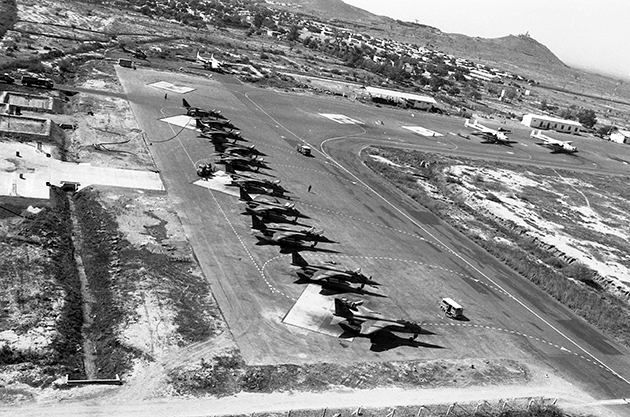
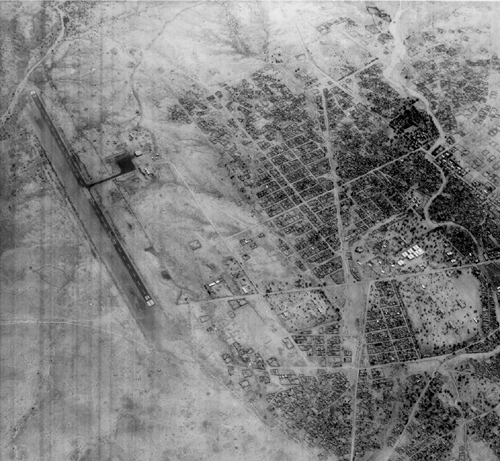
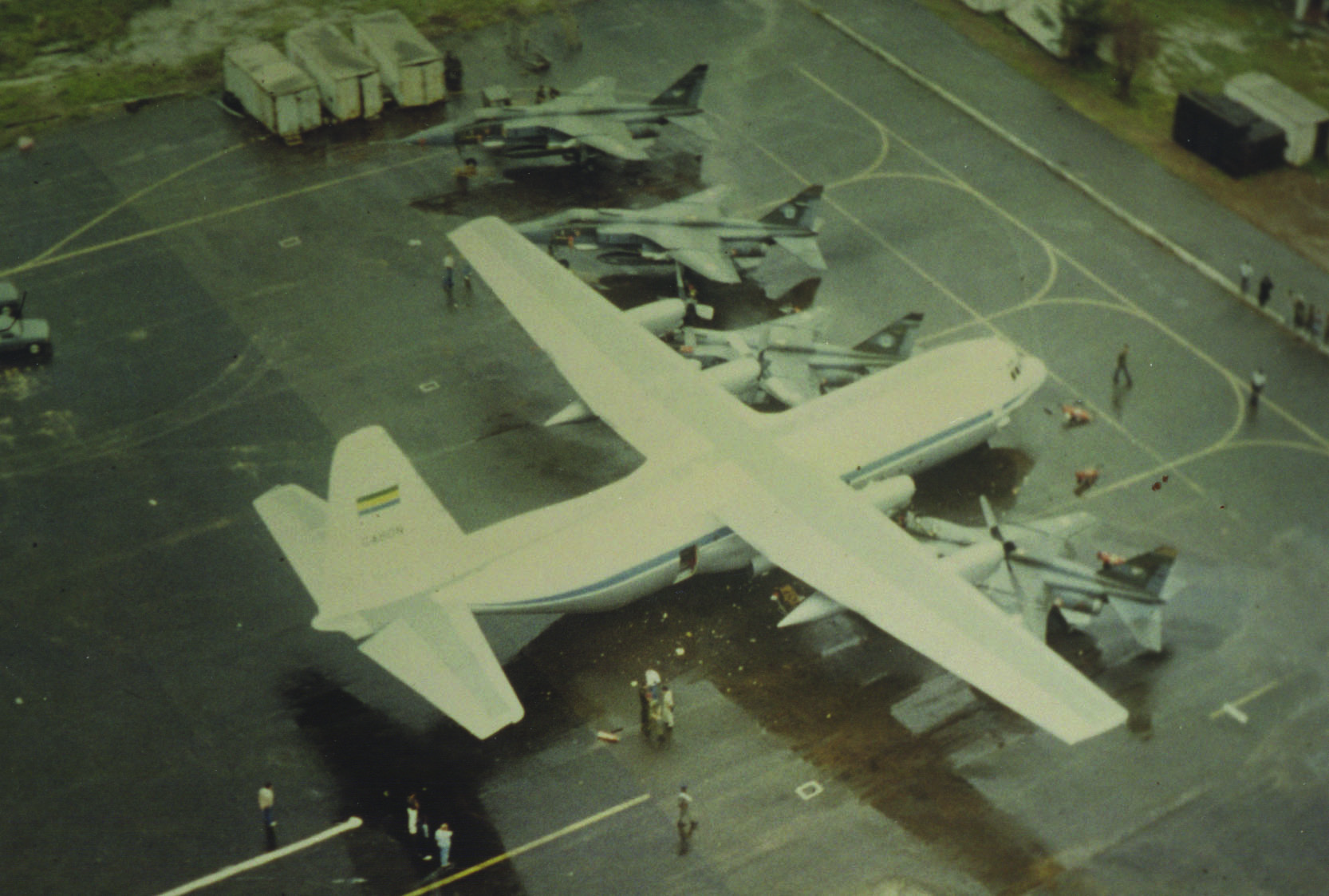
Fighters on Civilian airfields.

I easily picked out 25km of roadnet between Eliwara, the mine and the nearby village. I'd guess there's probably double that by the time you look in detail. Most of that looked tarmacked, but you don't need that, it just needs to be solid enough to tow a jet along behind a tractor, and you can use matting if needed. It's a bit short of buildings large enough to conceal aircraft in, but lots of lovely pre-built berms for dispersals and ordnance and if you string camo netting over all of them it creates an immediate targetting shell game.

Why go to all that effort at a single remote, austere airstrip when there another 16 similar airfields, 4 major civilian airports and 2 RAAF bases in northern WA alone? Personally I'd be prioritising the improvement of big civilian airports of Karratha, Port Headland, Broome and Kununurra in WA and Alice Springs in the NT. If others were to be upgraded, I'd be prioritising those with that little bit of extra infrastructure like Truscott-Mungalalu or Gove before doing much to Eliwana, Ginbata and others like it.

Can you tell that I've been poring over northern Australian airports for the last few days? :)
 
Why go to all that effort at a single remote, austere airstrip when there another 16 similar airfields, 4 major civilian airports and 2 RAAF bases in northern WA alone?
If you want to do dispersed basing, part of it is creating the shell game as to which bases you're using. It doesn't take a huge amount of effort to make an airfield look like you might be using it. And if they all look like you might be using them, which one does the enemy target?
 
I'm attempting to count how many of these airstrips there are north of RAAF Learmonth in WA and RAAF Townsville. I count 17, plus 4 civilian airports well equipped with taxiways etc as well as the 2 RAAF bases in northern WA.

I'm trying to count the ones in the NT and will try Qld after that, but so far it's looking like there might be several dozen.
Don't forget about RAAF Base Learmonth, it's a fully operational and maintained ghost airbase that can receive F-35s at a moments notice and there's another 2 similar from memory.
 
I've done a survey of the airfields north of the Tropic of Capricorn that I think could handle fighters, if need be, using the limited resources at my disposal. I'm sure I've missed some and my cut-off was 5,000' and there are some quite extensive airfields in the 4-5,000' range.

Bear in mind that the Tropic of Capricorn is about the same distance as LA to New York. The distances are so great and the targets so far apart that only the longest-range platforms/weapons are adequate.

The target load for hypersonics, kamikaze drones and more conventional weapons like cruise missiles and stand-off bombs is some 59 fighter-capable airfields: 6 RAAF bases, 8 major airports, 13 minor airports and 32 austere airstrips. That's a lot of targets, even for 6,000 Shahed drone missiles.
 

Attachments

  • Sealed airfields.xlsx
    10.6 KB · Views: 5
Why go to all that effort at a single remote, austere airstrip when there another 16 similar airfields, 4 major civilian airports and 2 RAAF bases in northern WA alone? Personally I'd be prioritising the improvement of big civilian airports of Karratha, Port Headland, Broome and Kununurra in WA and Alice Springs in the NT. If others were to be upgraded, I'd be prioritising those with that little bit of extra infrastructure like Truscott-Mungalalu or Gove before doing much to Eliwana, Ginbata and others like it.

Can you tell that I've been poring over northern Australian airports for the last few days? :)
The real challenge is convincing the Australian federal gov't to plan a decade into the future and add few hundred thousand pounds or dollars every time a municipality wants to add or upgrade or re-surface a runway or taxi-way. This sort of long-term investment will build more targets than the evil, invading %$#@! can damage in a pre-invasion strike.
Add in the ocassional hard-standing and NAFFI wagon and the bad guys will be over-whelmed by the huge variety of targets to chose from.
Finally, add in regular RAAF and reserve exercises and their attendant shell-games and bad guys will soon lose count of whether ISO shipping container "A" hides vital avionics or a load of moldy old socks.
 
The real challenge is convincing the Australian federal gov't to plan a decade into the future and add few hundred thousand pounds or dollars every time a municipality wants to add or upgrade or re-surface a runway or taxi-way. This sort of long-term investment will build more targets than the evil, invading %$#@! can damage in a pre-invasion strike.
Add in the ocassional hard-standing and NAFFI wagon and the bad guys will be over-whelmed by the huge variety of targets to chose from.
Finally, add in regular RAAF and reserve exercises and their attendant shell-games and bad guys will soon lose count of whether ISO shipping container "A" hides vital avionics or a load of moldy old socks.

It looks like the bare bones are there that would allow the 50+ civilian airports/airfields to be quickly turned into more operationally focused airbases, some more than others of course. It's also important to keep in mind that many of these airfields are so remote that they are effectively out of range of any 'action', so putting a lot of resources in upgrading these would be much less effective than upgrading better airports that are closer to the action.

The RAAF bases, while well overbuilt with redundant taxiways, extensive hardstand and irregular dispersal, are not really hardened with reinforced concrete aircraft shelters and the like.
 
This topic has come up again, as it often does, in the context of the Falklands war rather than VTOL/STOL or other things that cause airfields to become a topic of conversation.

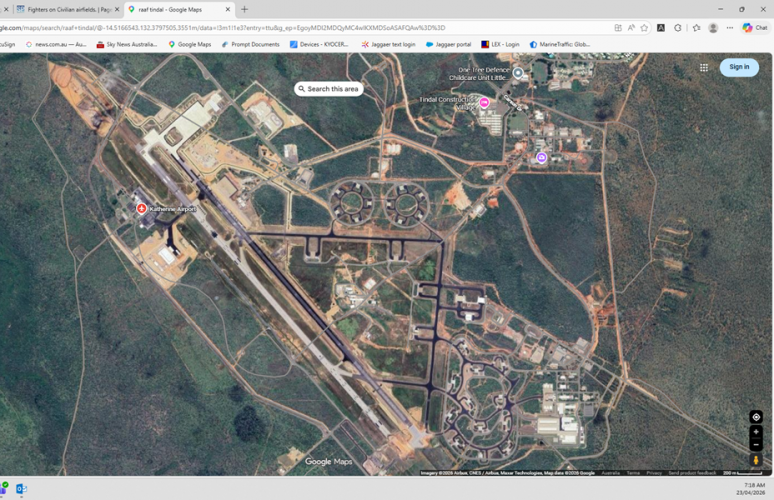
So, what does an airfield need to be considered fit for 'fighting', as opposed to a staging, transit or dispersal etc? I don't think purpose-built military airbases are the only option, many quite modest regional civilian airports have sufficient infrastructure to enable a reasonable number of combat aircraft to operate with reasonable intensity.

Firstly, the runway needs to be long and strong enough to handle fighters, I'd suggest 6,000' minimum for operations even though 5,000' is likely enough for secondary roles like staging and dispersal.

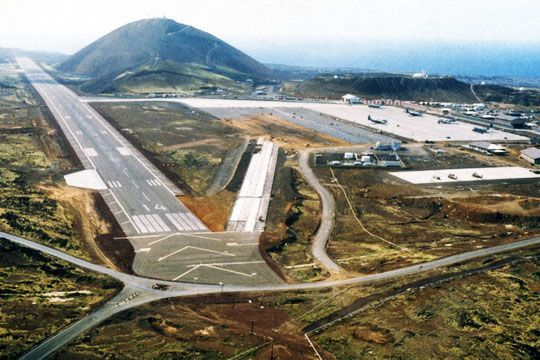
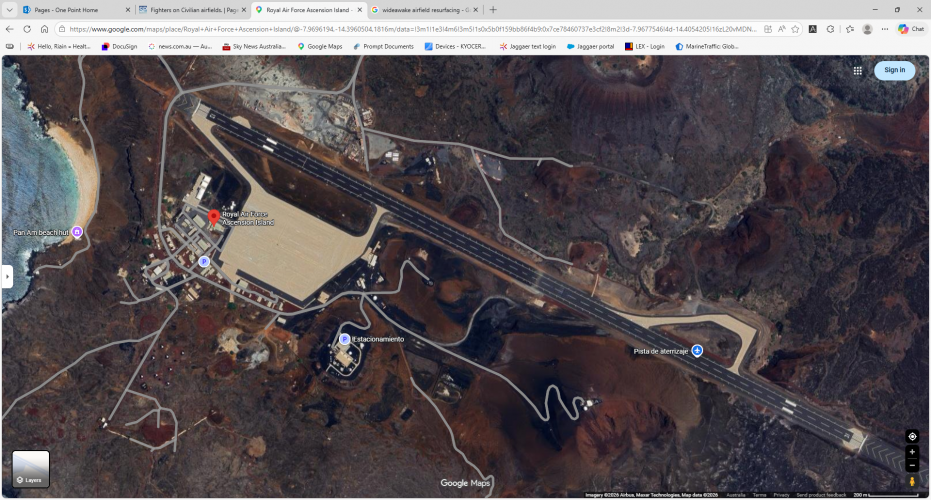
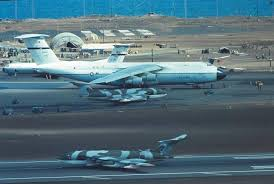
Secondly, there needs to be sufficient hardstand to park and easily move around a significant number of aircraft. Wideawake airfield on Ascension Island had these 2 factors in abundance, a 10,000' runway and a 1,500' x 1,000' hardstand which accessed the runway at 2 points.

Thirdly, there needs to be a way to get on-off the runway at either end (more or less), at minimum a loop if full taxiway isn't available. This is where Wideawake fell over. The waves of 6 Victor tankers landing after Black Buck had to park at the end of the runway while the aircraft behind them landed. The 6th aircraft faced 5 aircraft at the far end of the runway hoping he hit the runway close to the piano keys, the braking chute opened and the brakes worked so he wouldn't crash into the aircraft that landed before him. The British installed a loop at the far end of the runway in the 80s.

I'd suggest now that Wideawake has the minimum requirements for a fighting airfield, with the first 2 being quite generous.
 

Attachments

  • 1776818614496.png
    1776818614496.png
    415.6 KB · Views: 1
  • 1776819507579.png
    1776819507579.png
    2.9 MB · Views: 2
Also, it would be pretty easy to add turning loops with Marston Mat/PSP even without adding them in concrete for a super-quick upgrade. Nevermind the quick-set concrete that the Seabees came up with to be flight-ready in a week from the start of pour.

IIRC, though, most airports in the world today are WW2 leftovers or upgraded from those airfields, so may already have many of the pieces needed due to that heritage.
 
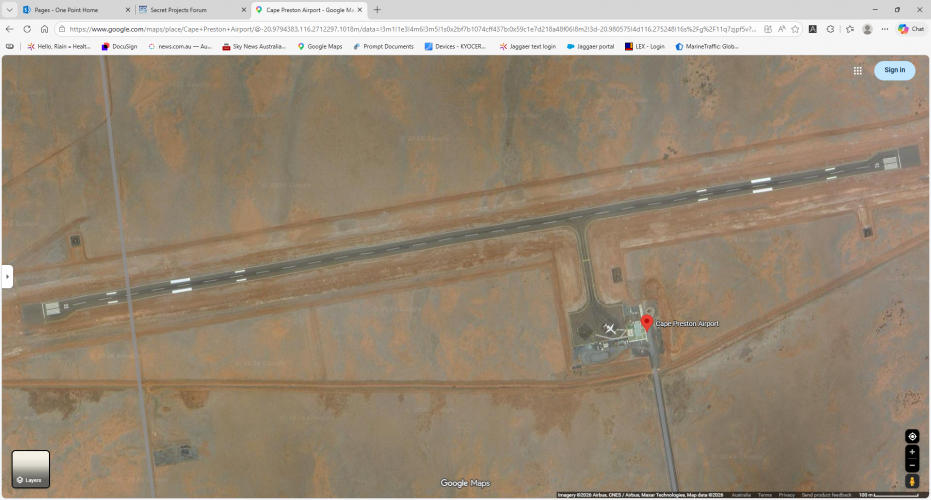
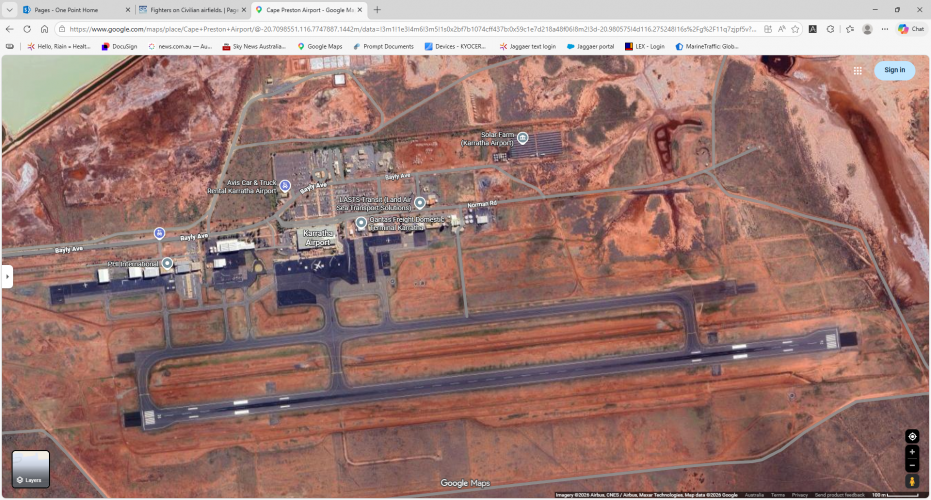
These two airports are 58km apart in northwest Western Australia. The first is Cape Preston, which in the last 2 elections billionaire Clive Palmer's party has tried to say is what the Chinese will use to establish an airhead to invade Australia. The second is at Karratha, a small and very remote city of 17,000 people.

Karratha looks like it could land a sqn of fighters tomorrow and be ready to go. In contrast Cape Preston would need significant work to handle any sort of combat aircraft operations, although it would be a good overflow strip to back up Karratha.
 

Attachments

  • 1776825507881.png
    1776825507881.png
    2.4 MB · Views: 2
  • 1776825617172.png
    1776825617172.png
    3 MB · Views: 2

Similar threads

Back
Top Bottom